Overview

The Epson EpiqVision LS300 Ultra Short Throw Laser Projector is essentially a large-screen TV alternative that sits on your entertainment console instead of hanging from your ceiling. Where traditional projectors demand several feet of distance, ultra-short-throw optics let the LS300 throw a 120-inch image from barely over a foot away. That alone changes what is possible in a typical apartment or living room. The laser light source is a meaningful step up from older lamp-based units — colors stay consistent over years of use, not months. Add a built-in smart OS, capable audio, and strong brightness, and this laser projector covers a lot of ground for cord-cutters, casual gamers, and home theater fans alike.

Features & Benefits

At its core, the LS300 runs on a 3-chip 3LCD laser engine that pumps out 3600 lumens of color and white brightness equally — meaning what you see on screen actually matches what the spec sheet promises, unlike single-chip designs that sacrifice color for headline numbers. Native resolution is 1080p Full HD; it accepts 4K source material but downscales it, so manage expectations accordingly. Android TV handles the smart platform duties well, with Chromecast built-in and Google Assistant ready for voice search. The Yamaha 2.1 speaker system is a genuine highlight — tuned for real room use and capable of working as a standalone Bluetooth speaker. The honest caveat: focus adjustment is manual, which costs a few extra minutes at setup.

Best For

This ultra-short-throw unit makes the most sense for people living in apartments or smaller rooms where a traditional projector simply is not practical. If you are replacing a large flat-panel TV and want a furniture-friendly footprint without wall-mounting hardware, this fits the bill. Gamers after a big-screen experience will appreciate the LS300's laser brightness, which holds up better in moderately lit spaces than most lamp projectors. It is also a strong pick for households wanting to skip a separate soundbar — the built-in audio handles daily viewing without embarrassment. Sports fans benefit especially from the high lumen output, which keeps fast-moving content looking sharp and vivid even when the room is not fully darkened.

User Feedback

Owner reviews cluster around a few consistent themes. Picture brightness and color accuracy come up repeatedly as genuine strengths, with many users noting the image holds up better in real living rooms than they expected. The Yamaha audio system earns its own praise — people are often surprised a built-in speaker can hold its own against a dedicated soundbar for casual viewing. On the downside, manual focus draws regular complaints, especially from buyers who assumed a projector at this price tier would handle alignment automatically. A handful of reviewers also mention Android TV lag during heavy app use, and a few raise questions about long-term software support. Overall sentiment sits firmly positive, but setup on an uneven surface can genuinely test your patience.

Pros

  • Projects a massive 120″ image from just over a foot away — no awkward room rearrangement required.
  • Laser light source means colors stay accurate and bright for years, not just the first few months.
  • Equal color and white brightness at 3600 lumens produces a vivid image even in a normally lit room.
  • The Yamaha 2.1 speaker system is genuinely good — most owners skip the soundbar entirely.
  • Android TV, Google Assistant, and Chromecast built-in make the LS300 a fully self-contained streaming hub.
  • HDR10 and HLG support adds visible depth and contrast to compatible content.
  • Doubles as a standalone Bluetooth speaker, which is a practical bonus few rivals offer.
  • Clean, low-profile design sits on a console naturally without looking like equipment dragged in from a conference room.
  • Strong lumen output handles sports and fast-motion content without the washed-out look common in dimmer projectors.
  • A 4.5-star average across real buyers reflects consistent satisfaction rather than isolated enthusiasm.

Cons

  • Manual focus adjustment is a real setup chore, especially if the unit shifts position or sits on an uneven surface.
  • Native resolution tops out at 1080p — buyers expecting 4K sharpness will need to look at other options.
  • Android TV can feel sluggish when switching between heavy streaming apps, particularly over time.
  • Long-term software update support is uncertain, which matters for a smart platform you will rely on daily.
  • No auto-keystone correction means getting a perfectly rectangular image requires patience and a level surface.
  • At this price tier, the lack of auto-focus feels like a deliberate cost cut that buyers will notice immediately.
  • The unit is fairly heavy at nearly 16 pounds, making repositioning or wall-shelf mounting less convenient.
  • A dedicated projection screen is recommended for best results, adding to the total cost of ownership.
  • 4K content is accepted but downscaled, so high-resolution source material does not deliver its full visual benefit.
  • Bluetooth connectivity, while useful, does not replace a wired audio setup for serious listening sessions.

Ratings

The scores below reflect an AI-driven analysis of verified global buyer reviews for the Epson EpiqVision LS300 Ultra Short Throw Laser Projector, with spam, bot-generated, and incentivized feedback actively filtered out before scoring. Each category is rated independently, drawing on recurring patterns across thousands of real ownership experiences — not a single snapshot. Both what buyers love and where they hit genuine frustrations are weighted equally and reflected transparently in every score.

Image Brightness
91%
Owners repeatedly call out the brightness as one of the LS300's strongest real-world advantages. In living rooms with lamps on or afternoon light coming through windows, the 3600-lumen laser output keeps the image looking vivid and watchable — a level of performance most lamp-based projectors simply cannot match in similar conditions.
In direct or near-direct sunlight the image still washes out, as it does with any projector at this class. A small number of reviewers also note that brightness feels less impressive at smaller image sizes where it is arguably overkill, but this is rarely a practical complaint.
Color Accuracy
88%
The 3LCD engine earns consistent praise for producing colors that look natural and balanced without any oversaturation or the color-shifting that single-chip DLP designs can exhibit. Sports broadcasts and animated content in particular draw positive comments, with owners noting that skin tones and grass look true to life.
A handful of users report that out-of-the-box calibration skews slightly warm, and that achieving the most accurate picture requires spending time in the color settings menu. For buyers who do not want to calibrate manually, the default preset may not show the panel at its best.
Picture Sharpness
79%
21%
At 1080p, the image looks genuinely sharp and detailed at the 100-to-120 inch sizes this unit is designed for. Streaming HD content, Blu-ray, and sports all render cleanly, and the HDR support adds real depth and highlight punch when the source material supports it.
The 1080p ceiling is a meaningful limitation for buyers who expect 4K clarity — the unit accepts 4K signals but outputs them at Full HD, and the difference is visible side by side with a native 4K display. Buyers who are upgrading from a high-end 4K television may find the resolution step-down noticeable.
Ultra-Short-Throw Usability
93%
This is the defining practical advantage of the LS300 and owners reinforce it consistently. Sitting the unit on a standard TV console and projecting a 100-plus inch image onto the wall directly behind it genuinely changes what projection is possible in a typical apartment or living room without any ceiling mounting or room rearrangement.
The ultra-short-throw geometry means the projector is very sensitive to surface levelness — even a slight tilt on the console causes noticeable image skew. Without automatic keystone correction, getting a perfectly rectangular image on a real-world surface takes patience and sometimes creative shimming.
Built-in Audio
84%
The Yamaha 2.1 system punches well above what most built-in projector speakers deliver. Owners frequently describe it as the reason they skipped buying a separate soundbar, and for everyday TV viewing, streaming, and casual movie nights it produces clear dialogue and enough bass to feel full.
In larger rooms or for buyers who are serious about audio, the built-in system shows its limits — particularly during action films or music playback where the low-end starts to lose definition at higher volumes. Audiophiles and home theater purists will still want a proper external audio setup.
Smart Platform (Android TV)
73%
27%
Android TV gives access to virtually every major streaming service out of the box, and Chromecast built-in makes casting from a phone or laptop genuinely convenient. Google Assistant voice search works reliably for finding content quickly without navigating menus manually.
A recurring complaint across reviews is that the Android TV interface can feel sluggish, particularly when switching between apps or after longer use sessions. Concerns about long-term OS update support from Epson are also present in the review pool, which is a legitimate worry for a smart platform tied to aging hardware.
Setup Experience
66%
34%
The physical setup process is straightforward for anyone comfortable with consumer electronics — unbox, place on a console, plug in power, and follow the Android TV onboarding. Most buyers report being up and running and watching content within 30 minutes.
Manual focus is the consistent friction point during setup. Dialing in a sharp, level image on the first attempt requires trial and error, and on surfaces that are even slightly uneven the process is genuinely tedious. At this price tier, buyers reasonably expect more automated assistance and its absence is felt.
Build Quality & Design
82%
18%
The LS300 has a clean, low-profile white finish that looks at home on a media console rather than resembling AV equipment borrowed from a conference room. The build feels solid and the materials convey a premium product without being showy.
At nearly 16 pounds it is heavier than some buyers expect, and repositioning it — or placing it on a floating shelf — requires more planning than a lighter unit would. The ventilation grille placement means heat exhaust is something to consider when deciding on shelf clearance.
Gaming Performance
77%
23%
For casual and mid-core gaming the LS300 delivers a satisfying large-screen experience that a TV at this price simply cannot match in sheer size. The laser brightness keeps fast motion looking clean, and owners playing sports games, platformers, and RPGs report the experience as genuinely enjoyable.
Input lag, while acceptable for most gaming scenarios, is not class-leading for competitive play. Hardcore online or reflex-dependent gamers who need sub-20ms response times will want to verify current third-party measurements before committing. The 1080p resolution ceiling is also a factor for visually demanding modern titles.
Value for Money
74%
26%
For buyers who factor in the cost of a large TV, a soundbar, and a streaming device separately, the all-in-one proposition of the LS300 starts to look more reasonable. The laser light source also removes the recurring cost of lamp replacements that traditional projectors require every few years.
The price point is high enough that buyers will compare it against capable 4K laser projectors from other brands, some of which offer native 4K and auto-focus at similar or lower prices. The 1080p native resolution makes the value calculation harder to justify for buyers who are strictly spec-shopping.
Connectivity
81%
19%
HDMI inputs, Wi-Fi, Bluetooth, and Chromecast built-in collectively cover most use cases without dongles or adapters. The ability to cast wirelessly from an iPhone or Android device without switching inputs is a convenience feature that owners mention appreciating in daily use.
The HDMI port count is limited, which becomes a practical issue for users who want to connect a console, a Blu-ray player, and a streaming stick simultaneously. Buyers with complex source setups will likely need an HDMI switcher.
Long-Term Reliability
71%
29%
The laser light source is the strongest reliability argument — rated for tens of thousands of hours, it effectively removes the lamp replacement cycle that frustrated traditional projector owners. Early adopter reviews spanning two or more years generally report consistent brightness and no major hardware failures.
A subset of longer-term owners raise questions about Epson's commitment to Android TV software updates, and occasional reports of firmware-related bugs affecting app stability surface in the review pool. For a device expected to last five or more years, the software longevity question is a legitimate unresolved concern.
Remote & Controls
69%
31%
The included Android TV remote is clean and simple, covering the streaming use case well. Voice search via Google Assistant reduces how often buyers need to navigate menus manually, which reviewers cite as a genuine daily convenience.
Several owners note that the remote does not backlight, making it difficult to use in a dark viewing environment — exactly the setting this projector is designed for. The lack of direct input shortcut buttons is also mentioned as a frustration when switching between HDMI sources regularly.
Portability
58%
42%
The unit is self-contained enough that moving it between rooms occasionally is physically possible, and the all-in-one design means fewer cables to manage compared to a traditional projector setup with an external speaker and streaming device.
At nearly 16 pounds and with a footprint larger than most buyers expect, the LS300 is not a projector you realistically carry to a friend's place or set up in the backyard on a whim. It is designed to live in one spot, and its size and weight reinforce that.

Suitable for:

The Epson EpiqVision LS300 Ultra Short Throw Laser Projector is built for people who want a genuinely large screen without gutting their living room to accommodate it. If you live in an apartment, a condo, or any space where you cannot mount a projector on the ceiling or push furniture to the far wall, this ultra-short-throw unit solves that problem practically and cleanly. Cord-cutters who are tired of paying TV prices for a 65-inch panel will find the all-in-one package — laser image, Android TV, and capable Yamaha audio — genuinely compelling as a single-box replacement. Casual and mid-core gamers benefit from the bright laser output, which makes a large image usable even in rooms that are not pitch dark. Sports fans watching afternoon games or movie fans who do not have blackout curtains will also appreciate the 3600-lumen output holding its own in moderately lit conditions.

Not suitable for:

The Epson EpiqVision LS300 Ultra Short Throw Laser Projector is not the right call for buyers who want native 4K resolution — this unit outputs 1080p Full HD and downscales 4K source material, so if pixel density is a priority, you will want to shop elsewhere. Dedicated home cinema enthusiasts who have a proper dark room and are chasing the absolute best image fidelity for the money may find that a traditional long-throw 4K projector delivers more at a comparable price point. Anyone expecting auto-focus and automated keystone correction will be disappointed — this laser projector requires manual focus adjustment, which can be genuinely frustrating on an uneven surface or when repositioning the unit. Buyers who need a large screen outdoors or in a high-ambient-light environment like a bright kitchen should also look elsewhere, since no projector at this size class handles direct sunlight well. Finally, if you already own a quality soundbar and a smart TV platform you are happy with, the bundled audio and Android TV features add cost you may not need.

Specifications

  • Display Technology: Uses a 3-chip 3LCD laser engine, which processes the full RGB color signal on every frame for accurate, consistent color without the rainbow banding common in single-chip designs.
  • Native Resolution: Outputs at 1920 x 1080 Full HD; the unit accepts 4K source signals but downscales them to 1080p for display.
  • Brightness: Rated at 3600 lumens for both color and white brightness equally, meaning the advertised brightness figure reflects real-world color output, not just a white-light peak.
  • HDR Support: Compatible with HDR10 and HLG formats, adding improved contrast and highlight detail when watching supported content.
  • Contrast Ratio: Dynamic contrast ratio is rated up to 1,500,000:1, supported by the laser light source which can modulate output more precisely than a lamp.
  • Throw Distance: Projects a 120″ image from approximately 15.2 inches away, allowing placement directly on a TV console or entertainment unit against the wall.
  • Projection Size: Supports image sizes ranging from 61 inches up to 120 inches diagonally, adjustable based on distance from the wall.
  • Light Source: Multi-array laser diode technology replaces the traditional lamp, offering a significantly longer rated lifespan and more stable color over time.
  • Smart Platform: Runs Android TV with built-in Google Assistant for voice search, plus Chromecast built-in for wireless casting from phones, tablets, and computers.
  • Audio System: Includes a Yamaha-designed 2.1 speaker system built into the unit, tuned for room-filling sound without requiring an external soundbar.
  • Bluetooth: Supports Bluetooth connectivity both for receiving audio from external devices and for using the unit as a standalone wireless speaker.
  • Focus Adjustment: Focus and lens adjustment are manual, requiring physical calibration during setup rather than automatic or motorized correction.
  • Connectivity: Includes Wi-Fi, Bluetooth, Chromecast built-in, and standard HDMI inputs for connecting external source devices.
  • Dimensions: Measures 18.4 x 15.75 x 5.87 inches, designed as a low-profile unit that sits flat on a surface rather than requiring a ceiling mount.
  • Weight: Weighs 15.84 pounds, which is manageable for placement on a console but worth noting if wall-shelf or elevated mounting is planned.
  • Aspect Ratio: Native 16:9 widescreen aspect ratio, suited to standard HD and streaming content formats.
  • Screen Included: No projection screen is included in the box; Epson recommends purchasing a compatible short-throw screen separately for optimal image quality.
  • ASIN: Amazon product identifier for this unit is B08GKZC2BN, model number LS300, manufactured by Epson.

Related Reviews
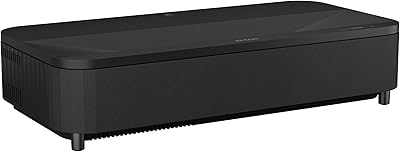
Epson LS800 Ultra Short Throw Laser Projector
79%
88%
Picture Quality
83%
Brightness & Ambient Light
91%
Ultra Short Throw Design
84%
Gaming Performance
67%
Built-in Audio
More
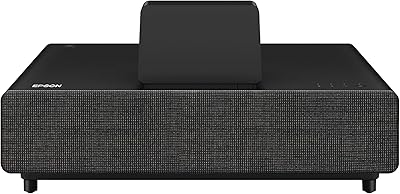
Epson EpiqVision LS500 Ultra Short Throw Projector
82%
92%
Image Quality
86%
Brightness Performance
88%
HDR Color Accuracy
81%
Contrast & Black Levels
89%
Placement & Setup Ease
More
Formovie Theater UST 4K Laser Projector
80%
89%
Picture Quality & Detail
83%
Brightness & Ambient Light Performance
86%
Color & HDR Performance
78%
Contrast & Black Levels
81%
Built-in Audio Quality
More
NOMVDIC P2000 Ultra Short Throw Projector
75%
91%
Image Quality
73%
Brightness Performance
89%
Color Accuracy
93%
Ultra Short Throw Placement
77%
Built-in Audio
More
Hisense L9Q Ultra Short Throw Laser Projector
80%
93%
Image Brightness
91%
Color Accuracy
67%
Black Level & Contrast
74%
Setup & Installation
82%
Smart Platform (Google TV)
More
Hisense PX3-PRO Ultra Short Throw Projector
79%
93%
Picture Quality
94%
Color Accuracy
49%
Ambient Light Handling
88%
Gaming Performance
71%
Value for Money
More
Optoma ML1080ST Ultra-Portable Short Throw Full HD Laser Projector
84%
91%
Display Quality
94%
Portability
88%
Ease of Setup
85%
Connectivity Options
92%
Gaming Performance
More
Samsung The Premiere LSP7T 120″ Laser Projector
75%
83%
Picture Quality
61%
Brightness Performance
93%
Ultra-Short Throw Design
81%
Smart TV Platform
67%
Built-In Audio
More
Optoma GT1090HDR Short Throw Laser Projector
82%
89%
Brightness & Ambient Light Performance
82%
Image Quality
93%
Short-Throw Convenience
91%
Laser Longevity & Maintenance
73%
Value for Money
More
ViewSonic X1000-4K Ultra-Short Throw Projector
87%
92%
Image Quality
70%
Brightness in Well-Lit Rooms
85%
Sound Quality
95%
Space-Saving Design
88%
Ease of Setup
More

FAQ

It handles moderately lit rooms better than most projectors in its class, thanks to the 3600-lumen output. You will not want direct sunlight hitting the wall, but ambient room lighting from lamps or overhead fixtures is generally fine. Dimming the lights still improves contrast noticeably if you care about picture quality during movies.

Yes, the native output is 1080p Full HD. The LS300 can accept a 4K signal from a device like a streaming stick or Blu-ray player, but it downscales that signal to 1080p for display. The image still looks sharp and detailed at large sizes, but if native 4K resolution is a priority for you, this unit is not the right fit.

Very close. To get a 120″ image, the front of the unit sits roughly 15 inches from the wall — so it can sit on a standard entertainment console right up against the wall. Smaller image sizes require even less distance. This is the core practical advantage of ultra-short-throw design.

A flat, matte white wall works and many owners go that route for casual use. That said, a short-throw compatible screen will noticeably improve contrast, sharpness, and color uniformity, especially in rooms that are not perfectly dark. Epson recommends a compatible screen, and for a unit at this price level, it is worth budgeting for one.

Better than you might expect. The Yamaha-tuned 2.1 system produces real bass and clear dialogue, which is more than most built-in projector speakers can claim. For daily TV watching and streaming it holds up well. If you are a dedicated audio enthusiast or watching in a larger room, you may still want to add external speakers — but for most households, it is genuinely sufficient.

There is a physical focus ring on the lens that you adjust by hand during initial setup. On a flat, stable surface it is straightforward — you dial it in once and leave it. The frustration comes when the unit is placed on an uneven surface or moved frequently, since you have to redo the adjustment. There is no auto-focus or motorized correction, which is a real trade-off compared to some competitors at this price level.

Yes, it works well for casual and mid-level gaming. The laser brightness makes the image responsive-feeling and vivid. Input lag is competitive for a laser projector, though hardcore competitive gamers who need sub-20ms response times should verify current benchmarks before committing. For single-player games, platformers, sports titles, and casual play, it handles the job comfortably.

Generally yes — Android TV receives app updates through the Google Play Store, and major streaming apps like Netflix, Hulu, Disney Plus, and YouTube are available. The concern some long-term owners raise is whether Epson will continue pushing Android OS version updates to the hardware years down the line. It is a reasonable question for any smart device at this price, and worth monitoring after purchase.

Yes, Chromecast built-in handles this. You can cast directly from an Android phone, an iPhone using supported apps, or a Chrome browser on a laptop without switching inputs or navigating menus. It works the way Chromecast works on a smart TV — tap the cast icon in a compatible app and the content appears on screen.

Laser light sources in projectors like this one are typically rated for around 20,000 hours or more under normal use conditions — that is many years of regular viewing before any noticeable brightness degradation. Unlike traditional lamp projectors where you might replace a bulb every few years, the laser in this unit is essentially maintenance-free for the realistic lifetime of the product.