Overview

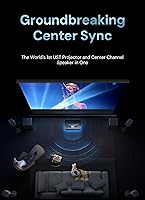
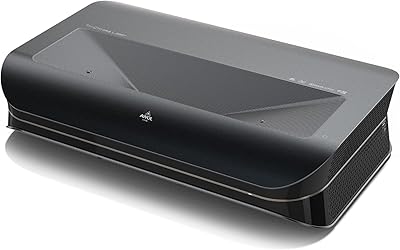
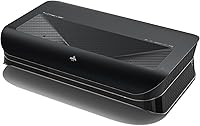
The AWOL VISION LTV-3000 Pro Laser Projector sits at the serious end of the ultra short throw market — not an impulse buy, but a deliberate step up for people who have outgrown large-panel TVs and want something genuinely cinematic at home. With a fixed 0.25:1 throw ratio, it can fill a 150-inch screen from roughly a foot away from the wall, which changes the room-planning conversation entirely. What sets it apart from every other UST projector on the market is the built-in center channel speaker — a first in this category — meaning dialogue clarity without a dedicated speaker cabinet. This is a high-investment purchase aimed at buyers who know exactly what they want.
Features & Benefits

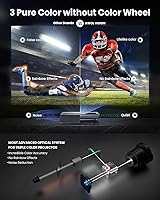
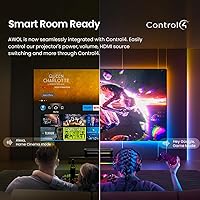
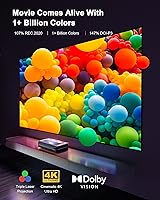
The LTV-3000 Pro uses a triple RGB laser light source — no color wheel, no rainbow artifacts — which translates directly into richer, more accurate color reproduction across a genuinely wide gamut. It covers 107% of BT.2020 and 147% of DCI-P3, meaning skin tones, sunsets, and deep shadows all look closer to what a director intended. Native 4K with both Dolby Vision and HDR10+ means it handles nearly any disc or streaming source without format conflicts. Active shutter 3D support is rare at any price point and worth flagging for enthusiasts. PJ Link control opens the door to Control4 and similar smart home setups without requiring a custom AV installer on speed dial.

Best For

This ultra short throw laser TV is a natural fit for homeowners dealing with limited room depth — spaces where a traditional long-throw projector would demand ceiling mounting or awkward furniture rearrangement. If you have been running a 77-inch or 85-inch OLED and want a genuine size jump without rebuilding your entire AV rack, this UST projector handles that transition well. It is also a strong choice for anyone building around a Dolby Vision and Atmos content stack — Apple TV 4K, 4K Blu-ray, that kind of setup. 3D Blu-ray enthusiasts rarely find hardware that supports them at this level anymore, making it a real differentiator for the right buyer.

User Feedback

Verified buyers consistently highlight color accuracy and image depth as standout qualities, particularly in light-controlled rooms where the triple laser source gets to show its range. The built-in center speaker draws genuine surprise — most people expect a marketing footnote and instead find it meaningfully improves dialogue clarity. That said, recurring feedback flags an honest cost reality: daytime performance often demands pairing with an ALR screen, which adds noticeably to the total investment. Setup can be fiddly — throw calibration takes patience, and the optional motorized slider is practically a necessity for certain cabinet depths. Cross-shoppers frequently mention having considered Hisense and Samsung UST alternatives first. The 4.6-star rating is strong, though the review count is still growing.

Pros

  • Triple RGB laser produces genuinely cinema-grade color accuracy with no color wheel artifacts to worry about.
  • Dolby Vision and HDR10+ support means virtually no compatibility gaps across discs, streaming, or external players.
  • The built-in center channel speaker is a real differentiator — dialogue clarity improves noticeably without adding a separate cabinet speaker.
  • A 0.25:1 throw ratio makes a 150-inch image possible from just about a foot away from the wall.
  • Active shutter 3D support is increasingly rare and a genuine draw for Blu-ray enthusiasts.
  • PJ Link IP control integrates cleanly with Control4 and similar home automation setups.
  • Laser light source efficiency is a long-term operational advantage over comparable LED or lamp-based displays.
  • 4K UHD resolution holds up at large screen sizes where lower-resolution sources would visibly fall apart.
  • Verified buyers consistently highlight color depth and image quality in controlled lighting as standout strengths.

Cons

  • ALR screen is practically required for satisfying results, adding significant unbudgeted cost to the overall setup.
  • Even with an ALR screen, bright sunlit rooms will expose real brightness limitations — this is not a daytime TV replacement without light control.
  • Throw distance calibration takes patience and is not a quick out-of-the-box experience for most buyers.
  • The optional motorized slider accessory is effectively a necessity for certain cabinet depths, yet sold separately.
  • At this price tier, cross-shoppers will find capable alternatives from Hisense and Samsung worth serious comparison before committing.
  • Review volume, while positive, is still building — the strong rating reflects early adopters more than a large statistically mature sample.
  • At 28 pounds, repositioning or adjusting the unit after initial placement is genuinely cumbersome.
  • No mention of a built-in smart TV platform means you will rely entirely on an external source device for streaming.

Ratings

The AWOL VISION LTV-3000 Pro Laser Projector earns a strong overall reception from verified buyers worldwide, and the scores below reflect an AI-driven analysis of that feedback — with spam, incentivized reviews, and outlier bot activity actively filtered out before any category was scored. Both the genuine highlights and the recurring frustrations are weighted honestly here, so prospective buyers get a clear-eyed picture of where this ultra short throw laser TV excels and where it asks for compromise.
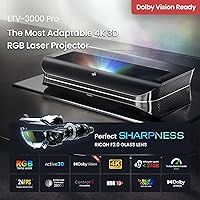
Image Quality
93%
Buyers consistently describe the picture as the single biggest reason they chose this unit over a large flat panel. The triple RGB laser produces colors that look genuinely cinema-accurate — HDR highlights in particular draw praise for appearing natural rather than overblown, and the wide color gamut makes a visible difference on well-mastered 4K content.
A small but vocal group notes that out-of-the-box color calibration is not always perfect and benefits from manual adjustment. Peak brightness, while impressive for a UST laser, does not quite match the specular highlights possible on a high-end OLED, which matters for some critical viewers.
Color Accuracy
91%
The 107% BT.2020 and 147% DCI-P3 coverage translates into real-world color depth that most buyers notice immediately on film content, especially in scenes with rich natural tones like landscapes or candlelit interiors. Compared to competing UST models, reviewers frequently call out color fidelity as a differentiating strength.
Achieving the full color accuracy potential requires pairing with a quality screen and spending time in the calibration menu — buyers who skip that step may find factory settings slightly oversaturated. A handful of reviews also note minor color uniformity variation toward screen edges at larger sizes.
Brightness & Ambient Light Performance
67%
33%
In a room with controlled lighting — drawn blinds, dimmed overheads, or a dedicated theater space — the image holds up impressively well and the laser output feels genuinely confident. Paired with an AWOL ALR screen, daytime usability improves meaningfully compared to a standard white screen setup.
Without an ALR screen, bright room performance disappoints — this is not a projector you can point at a white wall in a sun-lit living room and expect a satisfying result. Even with ALR, direct sunlight through uncovered windows remains a challenge, and buyers who underestimated their room brightness at purchase time represent one of the most common sources of post-purchase dissatisfaction.
Audio Performance
84%
The built-in center channel speaker genuinely surprised buyers who expected it to be a checkbox feature — dialogue anchors naturally to the screen position in a way that a soundbar sitting below the image simply cannot replicate. For buyers who pair it with a surround system, the Dolby Atmos output works cleanly and adds real spatial depth to compatible content.
Bass output from the built-in speaker system is limited, and buyers expecting cinematic low-end impact without a subwoofer will be disappointed. The center channel shines for dialogue-heavy content but shows its limits during action sequences where a full speaker setup would provide far more weight.
Setup & Installation
61%
39%
The fixed ultra short throw design actually simplifies placement compared to ceiling-mounting a traditional projector — there are no keystoning issues from extreme angles and no need to route cables across a room. Buyers who took time with the throw distance calibration process reported a rewarding end result.
Getting the throw distance exactly right for a given screen size is finicky work, and the fixed 0.25:1 ratio means there is no optical zoom safety net if your furniture depth is slightly off. Multiple buyers flagged that the motorized slider accessory, while effective, should arguably be included rather than sold separately given how often it is needed.
Build Quality
82%
18%
The unit feels appropriately substantial for its price tier — at 28 pounds it is clearly not designed for frequent repositioning, but the chassis communicates a sense of solidity that buyers appreciate when placing a high-value component in a living room cabinet. Fit and finish details draw mostly positive comments.
A few buyers noted that the glossy surfaces on parts of the chassis attract fingerprints and dust noticeably, which becomes a minor irritation given how close the unit sits to the screen. Some also wished the cable management design were more considered given the placement constraints of a UST installation.
3D Performance
79%
21%
Active shutter 3D support is rare enough in the current market that buyers who specifically wanted this feature treat it as a decisive advantage — the 3D image quality on 3D Blu-ray sources draws genuinely enthusiastic feedback from that subset of users. Depth and clarity in 3D mode compare favorably with older dedicated 3D projectors.
The requirement for active shutter glasses rather than passive glasses adds cost, and buyers need to ensure compatibility before purchasing glasses separately. 3D content availability via streaming remains limited, making a 3D Blu-ray player a near-requirement for anyone who wants to use this feature regularly.
HDR Format Compatibility
88%
Having both Dolby Vision and HDR10+ in a single UST projector removes the format anxiety that plagues some competing models — regardless of whether your source device outputs one or the other, this UST projector handles it without manual switching or compromise. Buyers running Apple TV 4K alongside 4K Blu-ray particularly appreciate this flexibility.
A small number of buyers reported occasional HDR handshake delays when switching between source devices, which required cycling inputs to resolve. This is not unique to this projector but is worth noting for setups involving frequent source switching.
Smart Home Integration
81%
19%
PJ Link IP control works as advertised with Control4 systems, and buyers who had existing home automation setups reported clean integration without requiring custom drivers or workarounds. For a product in this category, native smart home compatibility is a meaningful convenience that competing models do not always offer.
Buyers outside the Control4 ecosystem may find smart home integration less plug-and-play depending on their specific platform — PJ Link is widely supported but not universal. There is no built-in smart TV operating system, so all streaming requires an external source device, which some buyers found inconvenient compared to smart TV alternatives.
Value for Money
72%
28%
Taken as a complete home theater solution — considering the triple laser image quality, built-in center channel speaker, Dolby Vision plus HDR10+, and 3D support together — the LTV-3000 Pro offers a feature combination that genuinely has no direct equivalent at the same price. Buyers who went in with realistic expectations describe the overall value as fair for what they received.
The true cost of ownership is higher than the sticker price suggests once a quality ALR screen and potentially the motorized slider are factored in, which can add hundreds to over a thousand dollars to the total. Buyers who compared the all-in cost against a premium large-panel TV found the gap narrower than expected, which dampens the value perception for some.
Remote & Interface
69%
31%
The remote is functional and covers the basics well — input switching, volume, and menu navigation all work without unnecessary complexity. Buyers using the unit through a smart home controller largely bypass the remote entirely, which suits the target audience.
Several buyers found the remote layout unintuitive during initial setup, particularly for navigating projection and calibration settings. The lack of a backlit remote is a recurring minor complaint given that this projector is primarily used in darkened rooms.
Energy Efficiency
86%
The laser light source draws noticeably less power than a comparable large LED TV, which buyers in markets with high electricity costs specifically mention as a welcome long-term benefit. The efficiency advantage becomes more compelling the longer the unit is in daily use.
Actual power draw figures are not independently verified by most reviewers, so the one-tenth energy claim is taken largely on faith. Some buyers noted that fan operation during high-brightness modes is continuous, which has a minor but nonzero energy cost.
Screen Compatibility
74%
26%
When paired with an AWOL ALR screen designed for UST use, the combination works cohesively and buyers report that the screen recommendations in AWOL documentation are genuinely useful rather than just upselling. The step-up to ALR meaningfully changes the daytime usability picture.
The projector is optimized for AWOL's own screen lineup, and buyers who tried third-party UST ALR screens reported variable results — some excellent, some with hotspotting or gain mismatches. Being effectively steered toward a proprietary screen ecosystem adds cost and limits flexibility.
Long-Term Reliability
76%
24%
Laser light sources carry well-established longevity advantages over lamp-based projectors, and buyers who had prior lamp projector experience consistently express confidence in the light source durability. No widespread early failure reports have surfaced in the review pool analyzed.
The product has only been on the market since late 2023, which means long-term reliability data is still accumulating — the sample of buyers who have owned it for multiple years is small. Warranty terms and AWOL service responsiveness draw mixed feedback, with some buyers reporting slower support response times than expected for a premium product.

Suitable for:

The AWOL VISION LTV-3000 Pro Laser Projector is built for homeowners who have hit the ceiling of what a large flat-panel TV can offer and are ready to make a serious jump to a cinematic screen size without gutting their living room layout. Because of its ultra short throw design, it works exceptionally well in rooms where a conventional long-throw projector would be impractical — the kind of space where you want a 120 to 150-inch image but cannot afford to lose ten feet of floor depth. Buyers already running a Dolby Vision and Atmos content chain — whether through Apple TV 4K, a 4K Blu-ray player, or a streaming service that supports both formats — will get the most out of what this hardware actually delivers. It also suits 3D movie enthusiasts specifically, since active shutter 3D support has nearly vanished from the consumer projector market at any tier. For those with Control4 or similar smart home AV systems, the PJ Link integration is a practical advantage that removes the need for third-party workarounds.
Not suitable for:

This UST projector is not the right call for buyers expecting to drop it in a bright, sun-filled living room and walk away satisfied without additional investment. Even with an ambient light rejecting screen, daytime performance in high-brightness rooms is a real limitation — UST laser technology has made progress here, but physics still favors a darker environment, and honest buyers need to accept that. The all-in cost also rises meaningfully once you factor in a quality ALR screen, which most users will find necessary for optimal results, and potentially the motorized slider accessory for tight cabinet placements. If your budget is firm at the projector price alone, you may find yourself underwhelmed by the full setup cost. Casual viewers who want simple plug-and-play convenience or buyers who are perfectly content with a 75 or 85-inch flat panel will not find enough incremental value here to justify the complexity and spend. Finally, anyone sensitive to setup calibration — throw distance, keystone, focus — should know this takes patience to dial in correctly.

Specifications

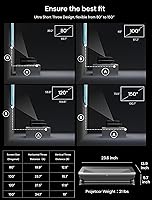
  • Throw Ratio: Fixed 0.25:1 ultra short throw ratio produces a 100″ image from approximately 8.54″ and a 150″ image from approximately 12.84″.
  • Resolution: Native 4K UHD at 3840 x 2160 pixels delivers sharp detail across the full recommended screen size range.
  • Light Source: Triple RGB laser system with no color wheel eliminates rainbow artifacts and supports a wide, accurate color gamut.
  • Color Gamut: Covers 107% of BT.2020 and 147% of DCI-P3, enabling cinema-grade color reproduction across a broad range of content.
  • HDR Support: Compatible with both Dolby Vision and HDR10+, covering the two dominant HDR formats used by streaming platforms and physical media.
  • Audio: Supports Dolby Atmos output and includes a built-in center channel speaker for improved dialogue clarity without a dedicated external speaker.
  • 3D Capability: Active shutter 3D ready, compatible with 3D Blu-ray players and 3D-formatted streaming or file-based content.
  • Connectivity: Includes HDMI input and PJ Link IP control for integration with home automation platforms such as Control4.
  • Smart Home: PJ Link protocol support makes the unit natively compatible with Control4 and similar professional AV control systems.
  • Screen Size: Recommended for use with screens up to 150″, with AWOL ALR screen pairings available for ambient light environments.
  • Power Efficiency: Laser light source is rated at approximately one-tenth the power consumption of a comparable large-screen LED TV.
  • Weight: Unit weighs 28.1 pounds, which should be factored into placement planning, especially for cabinet or furniture-mounted setups.
  • Dimensions: Package measures 28.25 x 19 x 12.5 inches, requiring adequate clearance for unboxing and initial positioning.
  • Certifications: Holds FCC and IEC certifications, confirming compliance with US electromagnetic interference standards and international safety requirements.
  • Remote Control: Includes a remote control powered by two AA batteries, which are included in the box.
  • ASIN: Amazon Standard Identification Number is B0CR13MB4F, first listed on September 18, 2023.
  • Availability: Listed as not discontinued by the manufacturer as of the most recent product data available.
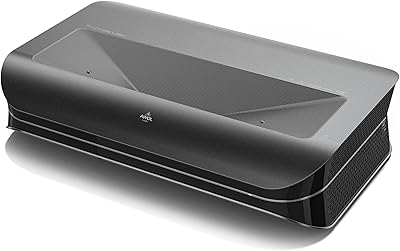
  • Color: Available in black finish only based on current product listing data.

Related Reviews

AWOL Vision LTV-3500 Pro UST Triple Laser Projector
86%
93%
Image Quality
90%
Brightness in Daylight
89%
Audio Performance (Dolby Atmos)
92%
Color Accuracy
68%
Ease of Setup
More
AWOL VISION LTV-2500 UST Laser Projector
78%
93%
Picture Quality
91%
Color Accuracy
88%
HDR Performance
63%
Setup & Installation
61%
Screen Compatibility & Requirements
More
AWOL Vision MW-150 150″ Projector Screen
77%
88%
Image Flatness
83%
Build Quality
61%
Shipping & Packaging
67%
Assembly Experience
79%
Matte White Performance
More
AWOL VISION MW-100 100-inch Projector Screen
86%
94%
Image Quality
91%
Viewing Angle
88%
Setup Ease
85%
Build Quality
90%
Compatibility
More
Hisense PX3-PRO Ultra Short Throw 4K Laser Projector
86%
94%
Image Quality
88%
Setup & Installation
91%
Brightness in Ambient Light
92%
Color Accuracy
85%
Sound Quality
More
AWOL VISION MW-120 120″ Projector Screen
80%
88%
Image Surface Quality
91%
Screen Flatness & Tension
83%
Assembly & Setup Experience
79%
Compatibility with Non-AWOL Projectors
86%
Viewing Angle Performance
More
Epson LS11000 4K Laser Home Theater Projector
79%
91%
Picture Quality
93%
Color Accuracy
83%
Brightness Performance
88%
HDR Performance
86%
Gaming Performance
More
Jimveo E30 Pro Portable Projector
79%
91%
Setup & Ease of Use
84%
Image Sharpness & Clarity
61%
Brightness & Daylight Performance
88%
Keystone & Projection Flexibility
79%
Wireless Connectivity
More
reiie HY300 Pro Mini Projector
83%
89%
Value for Money
94%
Portability
91%
Ease of Setup
87%
WiFi Connectivity
85%
Image Quality in Dark Settings
More
ONOAYO ONO3 Pro Portable Projector
80%
83%
Image Quality
71%
Brightness Performance
78%
Auto-Focus & Keystone Correction
86%
Built-in Smart OS & App Access
74%
Audio Quality
More

FAQ

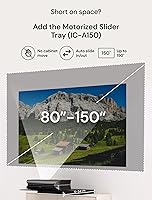
At a 0.25:1 throw ratio, you are looking at roughly 8.5 inches from the lens to the screen for a 100″ image, and about 12.8 inches for 150″. In practice, the body of the unit adds some depth, so budget around 15 to 20 inches of total cabinet or console depth to be comfortable. If your furniture is shallower than that, AWOL offers a motorized slider accessory that lets you push the unit forward as needed.

A standard white screen will work in a dark or dimly lit room and the image quality can be impressive in those conditions. The problem shows up in brighter environments — ambient light washes out the image quickly on a regular screen. If your room gets any meaningful daylight or you keep overhead lights on while watching, an ambient light rejecting screen is not optional, it is a practical necessity. That does add to your total cost, which is worth budgeting for upfront.

It is genuinely useful, which surprised a lot of early buyers. Because it sits inside the projector unit itself, it maps audio to the screen position rather than projecting sound from a soundbar sitting below or beside the screen. The result is that dialogue tracks more naturally to where you see characters speaking. It is not a replacement for a full surround sound system, but as a center channel anchor it performs better than most people expect.

You will need active shutter 3D glasses and either a 3D Blu-ray player connected via HDMI or a compatible media source that outputs 3D-formatted content. Standard streaming services like Netflix and Disney+ do not currently offer 3D streams, so a 3D Blu-ray player is the most reliable path. Make sure the glasses are compatible with the projector's sync method — AWOL specifies active shutter, so passive cinema-style glasses will not work.

All three are serious UST laser projectors competing in the same general price neighborhood, so the differences come down to specifics. The LTV-3000 Pro stands out with its built-in center channel speaker and simultaneous Dolby Vision plus HDR10+ support, which neither competitor offers in the same configuration. Hisense and Samsung both have strong brand ecosystems and their own ALR screen pairings. If built-in audio integration and broad HDR format coverage are priorities, this unit holds its own well against both alternatives.

Yes, PJ Link IP control is built in, which is the protocol Control4 uses for AV device management. That means power, input switching, and basic operational commands can be handled through your existing Control4 programming without proprietary drivers or workarounds. If you use a different home automation platform, check whether it supports PJ Link — many do, but it is worth confirming before purchasing.

Partially, depending on how much ambient light you are dealing with. The AWOL VISION LTV-3000 Pro Laser Projector is capable of producing a bright, detailed image, but UST projectors as a category perform best with at least some light control. In a room with drawn blinds or dimmed overhead lights, a paired ALR screen will give you a very satisfying image. In direct sunlight through uncovered windows, no UST projector at any price will look great — that is a physics limitation, not a product flaw.
For the full Dolby Vision and HDR10+ experience, an Apple TV 4K or a high-end 4K Blu-ray player are the top recommendations since both output Dolby Vision. Most 4K streaming sticks and boxes will work via HDMI, but check that your source device actually outputs Dolby Vision rather than just HDR10, since the difference in compatible content is meaningful. For 3D, a dedicated 3D Blu-ray player is the most reliable source.

The physical placement is straightforward enough, but calibrating the throw distance to hit the right image size on your specific screen takes some patience. The projector has a fixed throw ratio, so if the unit is not positioned correctly you will get an image that is either too large or too small with no optical zoom to compensate. Most buyers manage it without professional help, but expect to spend an hour or more getting everything dialed in rather than a quick 15-minute setup.

AWOL does not publish a specific decibel rating for fan noise, and user feedback on this point is mixed. Most buyers report that fan noise is not noticeable during normal movie watching at typical volume levels. A small number of users mention it becomes audible during quiet scenes at low volume. If you are particularly sensitive to fan noise or plan to watch in a very quiet environment, it is worth checking updated owner reviews for the most current impressions as production batches can vary.

Where to Buy