Overview

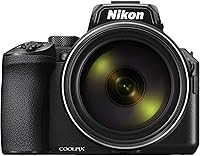
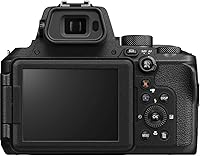
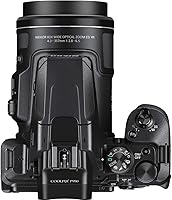
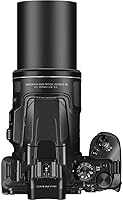
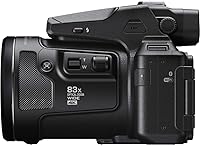
The Nikon COOLPIX P950 is one of the most capable bridge cameras available for photographers who want serious reach without the weight and expense of a dedicated telephoto kit. With an 83x optical zoom covering the equivalent of 24–2000mm, this superzoom camera handles everything from wide landscape shots to distant wildlife in a single body. It sits at the premium end of the bridge camera market, and the price reflects that — you are paying for refined optics, meaningful manual controls, and features usually reserved for higher-end systems. The chunky DSLR-style body weighs around 2.2 pounds, which feels substantial but makes sense given the tilting LCD, electronic viewfinder, and built-in lens assembly.

Features & Benefits

The reach of this bridge camera is genuinely impressive, but what makes it practical at 2000mm is the Dual Detect Optical VR stabilization — without it, handheld shots at full zoom would be unusable. Bird Detection AF gives wildlife shooters a dedicated tracking mode, and the Moon scene mode automatically dials in settings that reveal surface detail on lunar shots without manual fiddling. Shooting in RAW is a notable inclusion for a fixed-lens camera; it opens up real editing latitude in post. For video, 4K UHD at 30fps with a 3.5mm mic input is a solid package. The EVF and tilting LCD together cover almost any shooting angle you would encounter outdoors.

Best For

The P950 is squarely aimed at photographers who want extreme reach in a carry-anywhere package. Bird and wildlife photographers will get the most out of it — that 83x zoom effectively replaces a bag full of telephoto glass. Moon and planetary hobbyists will appreciate dedicated modes that remove the guesswork from astro shooting. Travel photographers who refuse to check luggage will find a full zoom range from wide-angle to super-telephoto in one lens genuinely liberating. It also works well for enthusiasts moving up from a basic point-and-shoot; the aperture priority, shutter priority, and full manual modes offer real creative control without requiring you to learn an entirely new camera system.

User Feedback

Among buyers, the zoom range earns near-universal praise — many specifically mention capturing shots that would be impossible with any other single-body setup. The comparison to the P900 keeps coming up: most agree this superzoom camera delivers noticeably sharper output at long focal lengths. That said, autofocus tracking draws consistent criticism in real-world conditions; keeping a fast-moving bird locked against a cluttered background during burst shooting is genuinely hit or miss. Battery life is another honest concern — the EN-EL20a does not last a full day of heavy shooting, so carrying a spare is practical advice, not optional. Above ISO 400, expect visible noise; the small sensor excels in daylight but struggles as light fades.

Pros

  • 83x optical zoom covering 24–2000mm equivalent lets you photograph distant wildlife without carrying a single extra lens.
  • Dual Detect Optical VR stabilization makes handheld shooting at extreme focal lengths genuinely viable in daylight.
  • Dedicated Bird Detection AF and Moon mode are practical tools that meaningfully reduce setup time in the field.
  • RAW file support is rare at this camera class and gives serious photographers real post-processing flexibility.
  • 4K UHD video with a 3.5mm mic input makes the P950 a capable hybrid tool for nature videographers.
  • The tilting LCD and electronic viewfinder together cover almost every framing angle you will encounter outdoors.
  • Manual exposure modes — including full manual — give enthusiasts real creative control without overwhelming complexity.
  • Built-in Wi-Fi and Bluetooth allow quick wireless transfer to a smartphone straight from the field.
  • Owners upgrading from the P900 consistently report sharper telephoto output and improved overall image rendering.
  • The DSLR-style grip and control layout feel intuitive for anyone with prior enthusiast camera experience.

Cons

  • Image noise above ISO 400 is a consistent complaint — this superzoom camera is not a low-light performer.
  • Autofocus tracking on fast, erratic birds in burst mode is unreliable enough to affect keeper rates noticeably.
  • Battery life on a single EN-EL20a charge falls short of a full active shooting day; a spare is nearly essential.
  • No weather sealing is a real limitation for outdoor wildlife and travel photographers caught in the elements.
  • The SnapBridge app has a history of pairing inconsistencies and a frustrating user interface on some devices.
  • Zoom motor noise is audible during video recording in quiet environments, limiting clean ambient audio capture.
  • The 1/2.3-inch sensor means dynamic range in high-contrast scenes trails larger-sensor cameras at this price tier.
  • Menu navigation follows layered Nikon conventions that take time to learn, especially under fast-changing field conditions.
  • At just over 2 pounds, extended handheld sessions during long hikes cause noticeable arm fatigue over time.
  • The LCD does not support touch-to-focus, which feels like a significant omission for a camera at this price point.

Ratings

The Nikon COOLPIX P950 has been put through its paces by bird watchers, travel photographers, and wildlife enthusiasts across dozens of verified buyer communities worldwide — and our AI has analyzed that feedback pool carefully, filtering out incentivized and bot-generated reviews to surface what real owners actually experience. Scores reflect both the areas where this bridge camera genuinely impresses and the corners it cuts, with no attempt to smooth over the frustrations that keep surfacing in long-term ownership reports.

Zoom Range & Reach
96%
The 83x optical zoom covering 24–2000mm equivalent is the undisputed reason most buyers choose the P950, and it rarely disappoints. Owners consistently report pulling in distant birds on a branch, filling the frame with the moon, or isolating wildlife subjects that would be completely invisible to the naked eye — all from a single body with no lens swap required.
At the very extreme end of the zoom range, even minor atmospheric haze or heat shimmer can visibly soften images, which is a physics limitation rather than a camera flaw. A small number of users also found the transition between optical and dynamic fine zoom to introduce a brief hesitation during continuous shooting.
Image Stabilization
88%
Dual Detect Optical VR makes the extreme focal lengths practically usable handheld in a way that impresses even experienced shooters. Owners shooting birds perched at 1000mm equivalent in decent daylight regularly report sharp frames without a tripod, which for a camera in this class is a meaningful achievement.
Stabilization holds up well in stationary or slow-panning scenarios but starts to show its limits when tracking fast, erratic movement at full zoom. A few buyers noted that in low-contrast or dim conditions, the VR system occasionally hunts before locking, adding slight blur to the first frame of a burst sequence.
Autofocus Performance
67%
33%
In good light against clean backgrounds, the 399-point contrast-detection system locks quickly and the Bird Detection AF mode is a genuine help for stationary or slow-moving subjects. Many birding enthusiasts specifically praised the dedicated mode for removing the guesswork on perched songbirds and larger raptors.
Fast, erratic birds in flight — especially against busy foliage or a cluttered sky — expose the contrast-detection ceiling clearly. Burst tracking in these conditions is inconsistent enough that owners report needing to shoot significantly more frames than they would expect to secure a keeper, which is an honest limitation at this price point.
Image Quality in Daylight
83%
In good natural light at lower ISO settings, the P950 produces detailed, well-exposed images that hold up comfortably for large prints and cropped wildlife shots. RAW support is a genuine differentiator for this camera class, giving post-processing enthusiasts meaningful latitude to recover highlights and fine-tune color balance.
The 1/2.3-inch sensor means dynamic range is limited compared to larger-sensor cameras, and heavily backlit scenes can lose shadow or highlight detail in a single exposure. Buyers coming from micro four-thirds or APS-C systems will notice this ceiling, particularly in high-contrast midday shooting situations.
Low Light & High ISO Performance
54%
46%
At ISO 100 to 200, images are clean and detailed enough that most buyers are satisfied for typical daytime use. The Moon mode is specifically optimized for night sky shooting and works well for its intended purpose, capturing surface detail on the lunar surface without requiring manual ISO adjustment.
Above ISO 400, noise becomes clearly visible, and by ISO 800 it is intrusive enough to limit the practical use of images beyond web resolution. This is the most consistent criticism across long-term owner reviews and should factor heavily into any buying decision for photographers who regularly shoot in indoor venues, dawn, or dusk conditions.
Battery Life
58%
42%
The EN-EL20a charges via the included AC adapter and holds enough charge for a casual morning outing or a shorter wildlife session without issue. Buyers who pack a spare battery report being able to manage full-day shoots without anxiety, which somewhat offsets the base capacity concern.
A single charge does not reliably last a full day of active shooting, especially with the electronic viewfinder and 4K video in heavy rotation. This comes up persistently across buyer reviews and is not a minor complaint — photographers heading out for extended field sessions should budget for at least one additional battery as a non-negotiable accessory.
Build Quality & Handling
79%
21%
The DSLR-style grip is substantial and comfortable to hold for extended shooting sessions, with well-placed physical controls that experienced photographers will appreciate. The overall construction feels solid for an unweatherproofed camera, and the weight distribution makes handheld shooting at zoom less fatiguing than expected.
The body is not weather-sealed, which is a genuine limitation for outdoor wildlife and travel photographers who get caught in light rain. A few owners also noted that at just over 2 pounds, the P950 starts to feel heavy during long hikes or multi-hour birding walks where the camera stays raised frequently.
Tilting LCD & Viewfinder
81%
19%
The 3.2-inch tilting LCD is a practical asset for low-angle ground-level wildlife shots and overhead crowd photography, and the 921k-dot resolution is sharp enough for accurate framing and exposure review. The electronic viewfinder is a welcome inclusion for outdoor shooting where screen glare is a real obstacle.
The LCD is not touch-sensitive for focus point selection or menu navigation, which feels like a missed opportunity at this price tier. The EVF, while functional, does not match the clarity or magnification of viewfinders found on more expensive mirrorless systems, and some buyers found it slightly dim in very bright conditions.
Video Quality
76%
24%
4K UHD at 30fps is a capable video specification for a bridge camera, and the 3.5mm mic input is appreciated by buyers who want to record narrated wildlife footage or event video with decent ambient audio. HDMI output rounds out a usable hybrid shooting package for non-professional video work.
Autofocus during video can hunt noticeably when subjects move or contrast changes, which limits the P950 as a primary video tool for anything requiring smooth, continuous tracking. Rolling shutter is also present when panning quickly, a common constraint of the sensor class that video-focused buyers should consider carefully.
Wireless Connectivity
72%
28%
Built-in Wi-Fi and Bluetooth allow images to transfer to a smartphone via the SnapBridge app without requiring a cable, which many travel photographers find genuinely useful for quick social sharing straight from the field. Remote shooting via the app also works reliably for stationary wildlife setups.
The SnapBridge app receives mixed reviews for its interface and occasional pairing inconsistencies, and several buyers reported needing to troubleshoot the Bluetooth connection after OS updates on their phones. Wireless transfer speeds for large RAW files are slow enough that owners with high-volume shooting sessions tend to default back to a card reader.
Zoom & Focus Speed
71%
29%
Zooming across the full range with the dedicated zoom rocker is responsive and reasonably smooth for casual to moderate shooting speeds. For composed, deliberate shots — typical in wildlife photography from a fixed position — the zoom speed is well-suited to the subject matter.
Continuous zoom from wide to full telephoto takes a noticeable moment to traverse, and in fast-developing wildlife encounters this can mean a missed shot. Some buyers noted that the zoom motor produces a faint mechanical noise audible in quiet environments during video recording.
Moon & Specialized Scene Modes
87%
The dedicated Moon mode is one of the genuinely distinctive features of this camera and receives consistent praise from owners who use it. Surface detail on a full moon at 2000mm with the mode active is the kind of result that surprises newcomers and keeps experienced users returning to it regularly.
Beyond Moon and Bird Detection, the specialized scene modes are fairly standard offerings found across the bridge camera category. Buyers who were hoping for more advanced astrophotography tools — such as star trail or deep-sky exposure stacking — will find those capabilities absent and need to work manually or look elsewhere.
Value for Money
74%
26%
For photographers whose primary need is extreme focal reach in a self-contained system, the P950 does deliver a capability set that would cost considerably more to replicate with an interchangeable-lens setup. RAW support, 4K video, a dedicated EVF, and Bird AF together represent a serious feature package for the bridge camera category.
At its asking price, buyers are also entering the lower range of mirrorless system cameras that offer larger sensors, better low-light performance, and more capable autofocus — making the value proposition feel less straightforward than it does compared to entry-level superzooms. The 1/2.3-inch sensor is the core trade-off that buyers need to consciously accept at this price tier.
Ease of Use & Learning Curve
84%
The physical control layout follows familiar DSLR conventions, making the transition straightforward for enthusiasts who have previously used an entry-level DSLR or advanced point-and-shoot. Auto modes are capable enough that less experienced buyers can get quality results quickly, while manual controls are accessible for those who want them.
The menu system reflects Nikon design conventions that can feel layered and non-intuitive to buyers coming from other brands or smartphone-first photographers. A few owners noted a learning curve specifically around navigating between scene modes and manual settings during fast-changing shooting conditions in the field.

Suitable for:

The Nikon COOLPIX P950 was built for a very specific kind of photographer, and if you fit that profile, it is hard to argue against. Bird watchers and wildlife photographers are the obvious primary audience — anyone who has stood at the edge of a wetland watching a heron fish 200 feet away and wished they could actually photograph it will understand the appeal of a 2000mm-equivalent reach in a single carry-on-friendly body. Moon and planetary hobbyists will find the dedicated shooting modes a practical shortcut that delivers genuinely impressive lunar detail without requiring an astronomy background. Travel photographers who are tired of hauling multiple lenses, or who simply want one camera that covers every situation from a wide street scene to a distant mountain detail, will appreciate the all-in-one convenience. This bridge camera also fits well for enthusiasts who are ready for manual exposure controls — aperture priority, shutter priority, and full manual are all here — but who are not ready to invest in a full mirrorless system with separate lenses.

Not suitable for:

The Nikon COOLPIX P950 is a harder sell if low-light photography is a regular part of your shooting life. The 1/2.3-inch sensor is a real constraint — indoor events, evening cityscapes, concerts, and anything shot much above ISO 400 will produce noticeably noisy images that limit your options in post-processing, even with RAW files. Action sports photographers and anyone hoping to track fast, unpredictable subjects in burst mode should also temper their expectations; contrast-detection autofocus tracking in challenging conditions is genuinely inconsistent, and there is no getting around that. If you shoot mostly in low-light environments or expect DSLR-grade tracking performance, a mirrorless camera with a larger sensor and phase-detect AF will serve you better even if it costs more and requires separate lenses. Buyers who want a camera that can go out in the rain without worry should also note that the P950 carries no weather sealing, making it a risky companion in genuinely wet field conditions.

Specifications

  • Sensor: 16 MP CMOS sensor with a 1/2.3-inch physical size, delivering a maximum effective resolution of 16 megapixels.
  • Optical Zoom: 83x optical zoom NIKKOR ED glass lens covering a 35mm-equivalent focal range of 24–2000mm.
  • Aperture Range: Variable maximum aperture of f/2.8 at wide angle to f/6.5 at full telephoto, with 6 diaphragm blades.
  • Stabilization: Dual Detect Optical Vibration Reduction (OVR) system compensates for camera shake across the full zoom range.
  • Autofocus: 399-point contrast-detection autofocus system with continuous-servo AF, Bird Detection mode, and manual focus override.
  • ISO Range: Native ISO sensitivity runs from ISO 100 to ISO 12800, selectable in both auto and manual exposure modes.
  • Shutter Speed: Mechanical shutter range spans 1/4000 sec at the fastest to 1 second at the slowest in standard modes.
  • Burst Shooting: Continuous shooting is rated at up to 7 frames per second at full resolution.
  • Video: Records 4K UHD (2160p) video at 30fps in MPEG-4 format, with a maximum continuous clip length of 30 minutes.
  • File Formats: Captures stills in JPEG (Fine) and 12-bit RAW, and records video in MP4 format.
  • Viewfinder: Built-in electronic viewfinder with 0.9x magnification, housed alongside a 3.2″ tilting LCD with 921,000-dot resolution.
  • Connectivity: Includes built-in Wi-Fi, Bluetooth, one USB 2.0 port, one HDMI output, and a 3.5mm stereo microphone input.
  • Storage: Single SD/SDHC/SDXC card slot compatible with UHS-I cards rated Speed Class 10 and write speeds up to 95 MB/s.
  • Battery: Powered by a rechargeable EN-EL20a Lithium-Ion battery, charged in-body via the included EH-73P AC adapter.
  • Body Weight: Camera body weighs approximately 1000g (35.5 oz) with battery and memory card inserted.
  • Dimensions: Body measures approximately 5.6 x 4.4 x 5.9 inches (142 x 112 x 149mm) at its widest points.
  • Filter Thread: Front lens element accepts 67mm screw-in filters, compatible with standard ND, polarizing, and UV filter accessories.
  • Lens Construction: NIKKOR zoom lens is built from 16 optical elements arranged in 12 groups, including ED (Extra-low Dispersion) glass elements.
  • Weather Sealing: The body carries no official weather or dust sealing rating and should be protected from moisture during use.
  • Warranty: Covered by a 1-year limited manufacturer warranty from Nikon against defects in materials and workmanship.

Related Reviews
Nikon COOLPIX P510
Nikon COOLPIX P510
84%
94%
Zoom Performance
89%
Image Quality
83%
Battery Life
88%
Ease of Use
60%
Autofocus in Low Light
More
Nikon COOLPIX AW100
Nikon COOLPIX AW100
83%
88%
Overall Durability
85%
Image Quality
90%
Ease of Use
91%
Waterproof Performance
83%
Video Quality
More
Nikon COOLPIX P1100 Superzoom Camera
82%
96%
Optical Zoom Performance
89%
Image Quality
82%
Ease of Use
77%
Battery Life
88%
Build Quality
More
Nikon COOLPIX P610 Digital Camera
83%
94%
Zoom Performance
87%
Image Quality
90%
Portability
72%
Battery Life
85%
Ease of Use
More
Nikon COOLPIX P7100 Digital Camera
82%
88%
Image Quality
94%
Manual Control Options
91%
Build Quality
63%
Autofocus Speed
67%
Low-Light Performance
More
Nikon COOLPIX S5200 Digital Camera
83%
88%
Image Quality
92%
Wi-Fi Functionality
90%
Ease of Use
85%
Build Quality
65%
Low-Light Performance
More
Nikon COOLPIX B700 Digital Camera
82%
92%
Zoom Performance
88%
Video Quality (4K UHD)
80%
Ease of Use
89%
Image Stabilization
75%
Battery Life
More
Nikon COOLPIX L820 16 MP Camera
82%
88%
Image Quality
92%
Zoom Performance
85%
Low-Light Performance
89%
Ease of Use
81%
Build Quality
More
Nikon Coolpix P100 10 MP Digital Camera
81%
86%
Image Quality
93%
Zoom Performance
88%
Stability/Shake Reduction
81%
Ease of Use
84%
Video Quality
More
Nikon COOLPIX L810 16.1 MP Digital Camera
79%
88%
Zoom Performance
91%
Ease of Use
84%
Battery Life
85%
Image Quality
76%
Build Quality
More

FAQ

Handheld shooting at full zoom is genuinely workable in decent daylight, thanks to the Dual Detect Optical VR system. That said, if light is fading or you need consistently sharp results across many frames, a monopod or tripod will make a real difference. Most owners use a monopod as a practical field compromise.

The Nikon COOLPIX P950 improves on the P900 primarily through sharper telephoto output, RAW file support, 4K video, and the addition of Bird Detection AF. If you shoot wildlife or do any post-processing, those are meaningful upgrades. If you only shoot JPEG and are happy with your P900 results, the gap is narrower than the price difference might suggest.

A UHS-I SD card rated at Speed Class 10 with write speeds of at least 95 MB/s is the recommended starting point. For 4K video and RAW burst shooting, a fast V30-rated card will reduce the chance of the buffer backing up mid-sequence. Stick with reputable brands — SanDisk Extreme or Lexar Professional cards are popular choices among P950 owners.

Honestly, a single EN-EL20a charge will not reliably cover a full active day, especially if you use the electronic viewfinder heavily or shoot 4K video. Most serious users carry at least one spare battery as standard practice, not as an afterthought. Third-party compatible batteries are available at reasonable prices if the cost of official spares is a concern.

It works well for its intended scenario — a bird that is relatively still or moving slowly against a clear background. Where it struggles is tracking fast, erratic birds in flight against cluttered foliage or a busy sky; in those conditions, contrast-detection autofocus has inherent physical limits regardless of the detection mode active. Think of it as a genuine help for perched birds and slow-fliers, not a solution for action-style bird photography.

Yes, the P950 supports RAW capture at 12-bit depth, and Nikon RAW files are compatible with Adobe Lightroom, Capture NX-D, and most major editing software. RAW support is genuinely useful here because it lets you recover highlights and adjust white balance in post — a meaningful advantage for outdoor shooting where light changes quickly.

It is a real, functional external microphone input and a notable inclusion for a bridge camera. Attaching a compact directional microphone eliminates most of the wind noise and motor hum that the built-in mic picks up, which makes a noticeable difference for narrated wildlife videos or event footage. If video quality matters to you, it is worth investing in a small external mic.

It can, particularly in quiet environments when you are adjusting zoom during a recording. The built-in microphone picks up the zoom motor as a faint mechanical sound. Using an external microphone via the 3.5mm jack largely eliminates this issue, and avoiding live zoom adjustments during takes is the simplest workaround.

No — the P950 has no weather or dust sealing, which is a genuine limitation for outdoor field use. Light mist or brief exposure is unlikely to cause immediate damage, but you should not rely on it in rain or dusty conditions. A rain sleeve or a simple protective cover is a practical accessory if you shoot outdoors regularly in unpredictable weather.

Yes, the front of the lens accepts standard 67mm screw-in filters. A circular polarizer is popular for reducing glare on water and deepening sky contrast, and an ND filter is useful for managing exposure in very bright conditions or slowing shutter speed for video. Just verify any filter you buy is labeled 67mm to confirm it fits correctly.