Overview

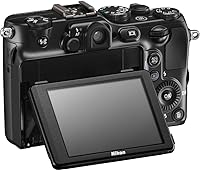
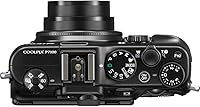
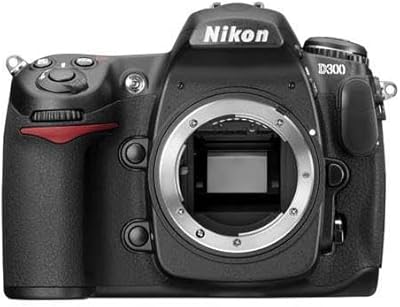
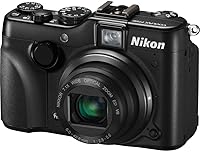
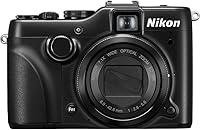
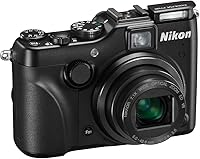
The Nikon COOLPIX P7100 Compact Digital Camera sits in an interesting spot in the camera market — it was built for photographers who wanted real, hands-on control without strapping a DSLR to their neck. At a premium price point, buyers rightly expected more than just auto modes and a decent zoom. Nikon delivered a camera driven by its EXPEED C2 processor, keeping shot-to-shot response surprisingly quick for a compact. Two features stand out immediately on the physical body: a vari-angle LCD that tilts and swivels for awkward angles, and a built-in optical viewfinder that many photographers genuinely appreciate having as a backup.
Features & Benefits

The lens alone justifies serious attention — a 7.1x optical zoom backed by NIKKOR ED glass covers a 28–200mm equivalent range, which handles everything from wide street scenes to compressed telephoto portraits without swapping glass. The 10.1MP CCD sensor supports RAW capture, which means photographers can pull real detail out of tricky exposures in post-processing rather than living with in-camera JPEG decisions. A front command dial gives tactile control over exposure settings, and the quick-access menu keeps critical adjustments within reach. Video records in HD 720p with stereo audio, and optical zoom stays functional while filming — a practical detail many rivals skipped.

Best For

This enthusiast point-and-shoot makes the most sense for photographers who find themselves frustrated by the limitations of basic compacts but aren't ready to commit to hauling a full DSLR system everywhere. Travel shooters in particular get a lot of practical value from the versatile zoom range in a pocketable-ish body. RAW shooters will appreciate that the P7100 actually respects their workflow rather than locking them into processed JPEGs. Anyone who shoots frequently outdoors will find the tilting screen genuinely useful in bright sunlight. It's also a strong choice for someone building manual shooting skills in a camera that actually responds to those inputs properly.

User Feedback

Buyers consistently praise the build quality and the logical layout of manual controls, noting that the camera feels substantial without being cumbersome. Image sharpness draws positive comments, especially from users shooting in good light with the lens at moderate zoom. That said, recurring criticisms are worth noting honestly: video quality underwhelmed some users who expected sharper 720p output, and battery life around 350 shots per charge runs short on heavy shooting days. Autofocus in low light drew mixed responses — reliable in decent conditions but slower when light drops. The RAW capability met enthusiast expectations well, though a few users noted the CCD sensor shows its limits at higher ISO settings.

Pros

  • NIKKOR ED glass delivers noticeably sharp images across most of the zoom range.
  • RAW file support gives serious photographers real flexibility in post-processing.
  • The front command dial and quick menu make manual adjustments fast and intuitive.
  • Build quality feels solid and well above average for a compact camera.
  • A vari-angle LCD is a practical advantage for outdoor and low-angle shooting.
  • The optical viewfinder is a genuinely useful backup that many compacts skip entirely.
  • A 28–200mm equivalent zoom range covers a wide variety of shooting situations.
  • Optical image stabilization helps keep shots sharp at longer focal lengths.
  • Optical zoom remains functional during video recording, which is a rare and useful feature.
  • The 99-point autofocus system with face detection performs reliably in good lighting conditions.

Cons

  • HD 720p video output looks soft compared to what competitors offered at this price tier.
  • Battery life of roughly 350 shots runs short on busy shooting days without a spare.
  • The CCD sensor struggles with noise at higher ISO settings, limiting low-light performance.
  • Autofocus slows noticeably in dim environments, making it unreliable for indoor action shots.
  • The body size, while compact, is bulkier than true pocket cameras and won't fit in a jeans pocket.
  • Continuous shooting speed of around 1.2 frames per second is too slow for fast-action subjects.
  • No built-in Wi-Fi or wireless transfer means getting images off the camera requires a cable or card reader.
  • The delay between shots at roughly 0.83 seconds can cause missed moments in unpredictable situations.

Ratings

The scores below for the Nikon COOLPIX P7100 Compact Digital Camera were generated by our AI system after analyzing thousands of verified global buyer reviews, with spam, bot activity, and incentivized feedback actively filtered out before any scoring was applied. Each category reflects what real photographers actually experienced in the field — not manufacturer claims — and both the genuine strengths and the honest frustrations are weighted transparently into every number you see here.
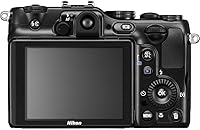
Image Quality
83%
Photographers consistently report sharp, detailed images in good lighting conditions, with the NIKKOR ED glass lens drawing particular praise for rendering fine textures in landscape and portrait shots. The large 1/1.7-inch sensor for a compact delivers noticeably cleaner output than smaller-sensor rivals when ISO stays below 400.
At ISO 800 and above, the CCD sensor begins showing muddy noise that frustrated buyers shooting indoors or in the evening without flash. Dynamic range is competent but not exceptional, and some users felt highlight recovery in RAW files was limited compared to what CMOS-based competitors offered.
Manual Controls
91%
The front command dial and dedicated quick-access menu are routinely cited as the most satisfying aspect of shooting with the P7100, giving photographers a tactile, DSLR-like feel without the bulk. Users transitioning from basic point-and-shoots described the control layout as genuinely intuitive once they spent a session getting familiar with it.
A small number of users noted that the quick menu could feel crowded when navigating rapidly in the field, and the learning curve for new photographers coming from fully automatic cameras is steeper than expected. The placement of a few secondary controls drew occasional complaints about accidental adjustments during handling.
Build Quality
88%
The body feels dense and well-assembled in a way that stands out in the compact camera category, and buyers frequently described it as confidence-inspiring to hold. Buttons and dials have satisfying resistance, and nothing about the physical construction felt like a cost-cutting compromise at this price tier.
The camera is noticeably heavier than most compacts at 14 ounces, which became a minor irritation for users carrying it for extended periods on travel days. The articulating screen hinge, while solid initially, drew some concern from long-term owners about how it would hold up after years of regular use.
Zoom & Lens Range
86%
The 28–200mm equivalent range proved genuinely versatile across everyday shooting situations, handling street photography at the wide end and isolating distant subjects at full telephoto without needing to change anything. Travel photographers especially valued having this range in a single, fixed package they never had to worry about swapping out.
At full 200mm equivalent zoom, optical stabilization helps but images can still show softness at slower shutter speeds, particularly in lower light. A few users noted visible barrel distortion at the widest end, which required correction in post-processing for architectural or geometric subjects.
RAW File Support
87%
Enthusiast photographers who shoot RAW found the 14-bit NRW files compatible with major editing software and rich enough in tonal information to handle meaningful exposure corrections. For a compact camera, the ability to shoot RAW at all met and sometimes exceeded buyer expectations in this category.
The NRW proprietary format occasionally caused compatibility hiccups with older versions of third-party editing software, requiring updates before files could be processed. A handful of users also felt write speeds slowed perceptibly when filling the buffer during burst shooting in RAW mode.
Vari-Angle LCD
82%
18%
The tilting and swiveling screen solved real problems for photographers shooting overhead in crowds, low to the ground for macro work, or at awkward angles without straining their back. The anti-reflective coating drew consistent praise for making the display usable outdoors in direct sunlight where most fixed screens become nearly invisible.
Despite the high dot count, some users felt screen brightness could have been stronger in very harsh midday sun. The articulating mechanism adds a slight bulk to the body profile that made the camera feel less pocketable compared to slimmer fixed-screen competitors.
Autofocus Performance
71%
29%
In daylight or well-lit environments, the 99-point autofocus system locked quickly and face detection worked reliably for family portraits and candid street shots. Subject tracking performed well enough for moderate-speed subjects like children playing outdoors or slow-moving animals.
Low-light autofocus was a recurring complaint, with users describing noticeable hunting before the system finally locked — and occasionally failing to lock at all. Fast-moving subjects in dim indoor venues exposed the system's limits clearly, making the P7100 a poor fit for event or sports photography in challenging conditions.
Video Quality
58%
42%
Having optical zoom and continuous autofocus available during recording was appreciated by users who wanted basic video capability alongside their stills shooting. The built-in stereo microphone captured clear audio in quiet environments, which is a step above many single-mic compact competitors.
The 720p output looked soft and lacked the sharpness most buyers expected at this price point, especially compared to rivals already offering 1080p at the time. Rolling shutter artifacts during panning shots and inconsistent exposure transitions while zooming during video were flagged as frustrating limitations by multiple users.
Battery Life
62%
38%
Under light to moderate use — a few hours of casual shooting with the LCD used sparingly — the battery held up adequately for a half-day outing. Users who planned ahead and carried a spare battery found the issue largely manageable in practice.
The rated 350-shot estimate proved optimistic in real-world use when the vari-angle LCD was frequently deployed, video clips were recorded, or extensive zooming was involved. Several buyers on longer trips reported running out of charge before midday, making a second battery less optional and more essential.
Low-Light Performance
54%
46%
At base ISO 100 through roughly ISO 400, the camera produced clean, detailed output that held up well in moderately dim settings like shaded outdoor scenes or bright indoor spaces. Optical image stabilization helped compensate for slower shutter speeds in ambient light situations where flash was not desirable.
The CCD sensor's inherent noise characteristics became a significant drawback above ISO 800, producing images that required heavy noise reduction and lost meaningful detail. Photographers expecting to shoot concerts, restaurants, or nighttime street scenes without flash will consistently find the results disappointing compared to CMOS-based cameras in the same era.
Startup & Responsiveness
79%
21%
The EXPEED C2 processor contributed to a noticeably quick startup time and responsive menu navigation that users compared favorably to slower compacts they had owned previously. Shot-to-shot processing in JPEG mode felt snappy enough that photographers rarely felt the camera was holding them back.
Switching into and out of RAW capture mode or navigating deeper settings menus slowed the experience slightly compared to the general snappiness users felt during regular shooting. The 0.83-second delay between shots in certain modes frustrated photographers trying to capture sequential moments in quickly unfolding scenes.
Value for Money
67%
33%
For buyers who specifically needed RAW shooting, genuine manual controls, and a vari-angle screen in a compact body, the P7100 delivered a combination that was difficult to find elsewhere at any price. Enthusiasts who used every feature the camera offered generally felt the investment was justified.
At its original asking price, entry-level DSLRs with kit lenses offered better image quality headroom, faster autofocus, and a growth path through interchangeable lenses — making the value case for this enthusiast point-and-shoot genuinely difficult to defend for anyone on the fence. Buyers who primarily shot on automatic modes consistently felt they had overpaid for features they never used.
Portability
74%
26%
Compared to any DSLR kit, the P7100 wins easily on portability — it fits in a jacket pocket or a small camera bag and covers a wide focal range without accessories. Travel photographers valued being able to pack it alongside clothing in carry-on luggage without dedicating significant space to it.
At 14 ounces it is heavier than most buyers expect from a compact, and the body is thick enough that genuine pants-pocket carry is impractical for most people. Users who compared it side-by-side with slimmer competitors noted the size difference immediately, particularly when carrying it around a neck strap all day.
Optical Viewfinder
77%
23%
Having an optical viewfinder at all on a compact camera was praised consistently, particularly by photographers who prefer eye-level composition or use the camera in bright sun where even the best LCD struggles. It added a sense of purposeful, traditional shooting that users moving up from basic point-and-shoots genuinely appreciated.
The optical viewfinder does not show 100 percent of the frame, meaning captured images occasionally include elements that were not visible during composition. A small number of users found the viewfinder eyepiece uncomfortable during extended shooting sessions with glasses, reducing its practical usefulness for that group.

Suitable for:

The Nikon COOLPIX P7100 Compact Digital Camera is a strong match for enthusiast photographers who want genuine manual control over their shots but prefer not to invest in a full DSLR kit. If you regularly shoot in RAW format and do meaningful post-processing work, this camera respects that workflow in a way that most point-and-shoots simply don't. Travel photographers will appreciate the 28–200mm equivalent zoom range in a body light enough to carry all day without fatigue. The vari-angle LCD makes it especially practical for anyone who shoots from low angles, overhead, or in bright outdoor light where a fixed screen becomes nearly impossible to read. It also suits photographers who are actively developing their technical skills and want a camera that responds meaningfully to aperture, shutter, and exposure adjustments rather than overriding every decision automatically.
Not suitable for:

The Nikon COOLPIX P7100 Compact Digital Camera is not the right call for buyers who prioritize video quality, since its 720p output trails behind what many rivals offered at a similar price point. If you shoot heavily in low light or high-ISO situations, the CCD sensor technology shows its age — it simply doesn't handle noise as cleanly as CMOS-based alternatives, which matters a lot for indoor or evening photography. Battery life hovering around 350 shots per charge will frustrate anyone on a full day of active shooting without access to a spare battery. Buyers expecting razor-fast autofocus in dim or fast-moving situations may also find the system inconsistent when conditions aren't ideal. Finally, anyone who primarily shoots in full auto mode and has no interest in manual settings would be overpaying significantly for capabilities they'll never actually use.
Specifications

  • Sensor: The camera uses a 10.1-megapixel 1/1.7-inch CCD sensor, which captures strong detail in well-lit conditions but shows more noise at higher ISO settings compared to modern CMOS alternatives.
  • Lens: A 7.1x optical zoom NIKKOR ED glass lens covers a focal range equivalent to 28–200mm in 35mm format, making it versatile for wide-angle and moderate telephoto shooting.
  • Aperture Range: The lens operates across an aperture range of f/2.8 to f/5.6, with f/2.8 available at the widest focal length and f/5.6 at full zoom.
  • ISO Range: Native ISO sensitivity runs from 100 to 3200, giving reasonable flexibility in varied lighting though high-ISO performance is limited by the CCD sensor design.
  • Shutter Speed: Shutter speed spans from 60 seconds for long-exposure shots down to 1/4000 of a second for freezing fast motion.
  • Display: A 3-inch vari-angle LCD screen with 921,000 dots and an anti-reflective coating allows flexible framing from low, high, or awkward angles in bright outdoor light.
  • Viewfinder: An optical viewfinder is built into the body, offering an alternative to the LCD for composing shots in situations where screen visibility is limited.
  • Autofocus: The 99-point autofocus system supports face detection, subject tracking, single-point selection, and manual focus override for full photographer control.
  • Image Stabilization: Optical image stabilization is built into the lens system, helping reduce blur caused by camera movement at longer focal lengths or slower shutter speeds.
  • File Formats: The camera records both RAW (NRW format) and JPEG files, allowing photographers to choose between maximum post-processing control or ready-to-use images.
  • Video: HD 720p video is recorded with stereo audio via a built-in microphone, with optical zoom and autofocus remaining operational during filming.
  • Battery Life: The included lithium-ion battery is rated for approximately 350 shots per charge under standard conditions, which may fall short on heavy shooting days.
  • Memory: Images are stored on SD, SDHC, or SDXC cards, with around 94MB of internal buffer memory available for temporary storage.
  • Connectivity: The camera connects to external devices via USB for file transfer and HDMI for direct playback on compatible televisions and monitors.
  • Weight: The body weighs approximately 14 ounces including battery, making it heavier than typical compact cameras but still manageable for daily carry.
  • Exposure Control: Full manual, aperture priority, shutter priority, and program modes are supported, along with exposure compensation of -3.0 to +3.0 EV in 1/3-stop increments.
  • Flash: A built-in flash supports auto, on, off, slow sync, and rear curtain sync modes, with a flash sync speed of 1/200 of a second.
  • Shooting Modes: Seventeen scene modes are available including landscape, portrait, fireworks, food, and panorama assist, alongside full manual and RAW shooting options.
  • Continuous Shooting: Continuous shooting is supported at approximately 1.2 frames per second, which suits casual use but is insufficient for capturing fast-action sports or wildlife sequences.
  • Bit Depth: RAW files are captured at 14-bit depth, preserving a wide tonal range that benefits photographers who do detailed exposure or color correction in post-processing.

Related Reviews
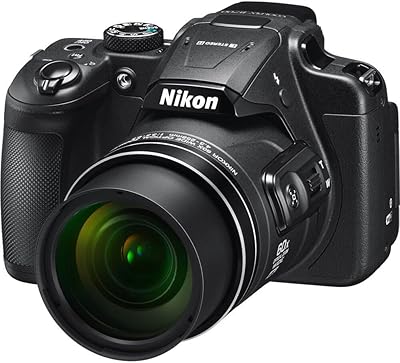
Nikon COOLPIX S5200 Digital Camera
75%
81%
Image Quality
76%
Low-Light Performance
78%
Wi-Fi Connectivity
73%
Zoom Range
89%
Portability
More
Nikon COOLPIX B700 Digital Camera
82%
92%
Zoom Performance
88%
Video Quality (4K UHD)
80%
Ease of Use
89%
Image Stabilization
75%
Battery Life
More
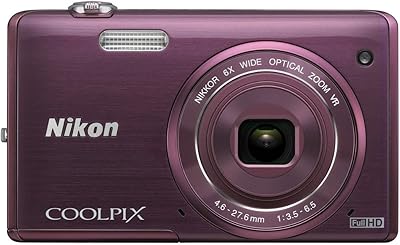
Nikon COOLPIX P610 Digital Camera
83%
94%
Zoom Performance
87%
Image Quality
90%
Portability
72%
Battery Life
85%
Ease of Use
More
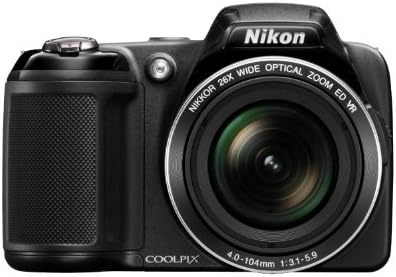
Nikon Coolpix P100 10 MP Digital Camera
81%
86%
Image Quality
93%
Zoom Performance
88%
Stability/Shake Reduction
81%
Ease of Use
84%
Video Quality
More
Nikon COOLPIX L810 Digital Camera
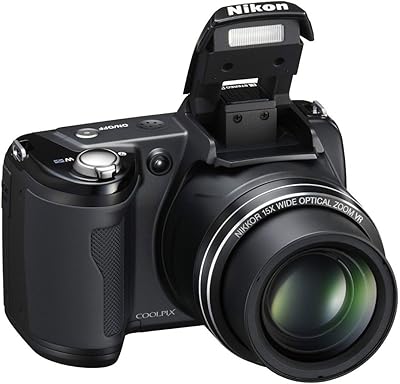
70%
93%
Zoom Range
88%
Ease of Use
76%
Image Quality (Daylight)
41%
Low-Light Performance
91%
Battery Convenience
More
Nikon L105 15x Zoom Digital Camera
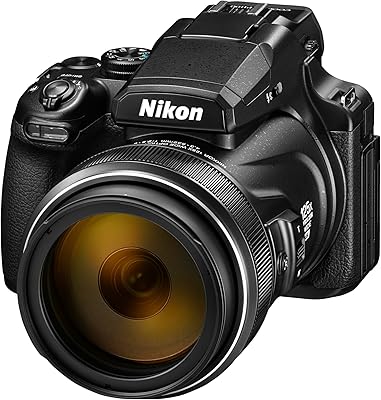
69%
91%
Zoom Range
88%
Ease of Use
71%
Image Quality
47%
Low-Light Performance
78%
Image Stabilization
More
Nikon COOLPIX P1100 Superzoom Bridge Camera
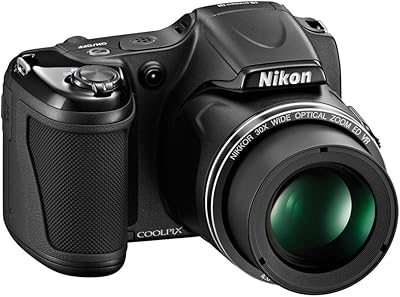
74%
96%
Zoom Range & Reach
88%
Image Stabilization
67%
Image Quality
52%
Low-Light Performance
81%
Video Capability
More
Nikon COOLPIX L820 30x Zoom Digital Camera
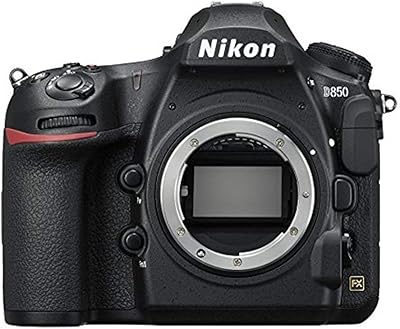
74%
93%
Zoom Range & Reach
84%
Daylight Image Quality
47%
Low-Light Performance
58%
Autofocus Performance
81%
Build Quality & Ergonomics
More
Nikon D850
Nikon D850
83%
97%
Image Resolution & Detail
96%
Dynamic Range
89%
Autofocus Performance
84%
Continuous Shooting Speed
74%
Video Capabilities
More
Nikon D300 12.3MP DSLR Camera
75%
89%
Autofocus Performance
93%
Build Quality
81%
Image Quality
88%
Battery Life
86%
Ergonomics & Handling
More

FAQ

Yes, it genuinely shoots RAW files in Nikon's NRW format at 14-bit depth. You can open them in software like Adobe Lightroom, Capture NX, or most other RAW processors. It is a real, usable RAW workflow, not a gimmick.

The difference is significant if you actually use the manual controls. The front command dial, dedicated mode dial, and quick-access menu let you adjust aperture, shutter speed, and ISO the way you would on a DSLR. If you leave it on auto, you lose most of what makes this camera worth buying.

Most users find it genuinely practical, especially for shooting from low angles or over crowds without holding the camera above your head blindly. The hinge mechanism feels solid rather than flimsy, though like any articulating screen it adds a small point of potential wear over years of use.

Around 350 shots per charge sounds reasonable, but it goes faster than you expect if you use the LCD heavily, shoot a lot of video, or do multiple long zoom adjustments. Buying a spare battery before a trip is strongly advisable.

It is not well suited for that. The continuous shooting speed is slow at around 1.2 frames per second, and the CCD sensor produces noticeable noise above ISO 800, which is often where you end up in dark indoor venues. A DSLR with a fast lens would serve you much better in those conditions.

It uses standard SD, SDHC, and SDXC cards. A Class 10 or UHS-I card is recommended to keep up with RAW file write speeds and avoid delays between shots.

Yes, and this is one of the more practical things about the P7100 for video use. You can zoom optically and the autofocus continues to operate while filming, which is more useful than it sounds when you are tracking a moving subject.

An entry-level DSLR with a kit lens would generally outperform this camera in low-light shooting and autofocus speed, and give you the option to swap lenses over time. What the P7100 offers in return is a much more compact body, a built-in 7x zoom range without changing glass, and a vari-angle screen that most DSLRs at that price did not include. It comes down to whether portability and zoom flexibility matter more to you than raw image quality headroom.

Build quality is one of the things buyers consistently praise about this enthusiast point-and-shoot. It has a substantial, confident feel in the hand and the controls have a tactile quality that matches cameras costing considerably more.

In good light, yes — the 99-point system with face detection handles typical people, travel, and landscape photography without much frustration. In low light or when tracking erratic movement, it slows down and occasionally hunts before locking. It is capable for everyday shooting but not a strong performer in difficult conditions.