Overview

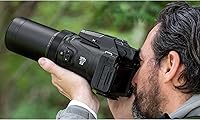
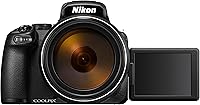
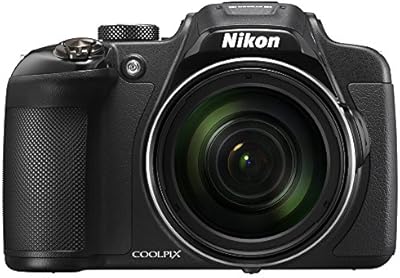
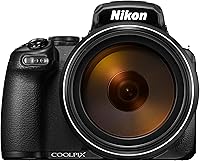
The Nikon COOLPIX P1100 Superzoom Bridge Camera sits at the serious end of the all-in-one camera market — a single-body solution for photographers who want extraordinary telephoto reach without hauling a bag full of interchangeable lenses. The headline is that 125x optical zoom, which is genuinely hard to match in any competing fixed-lens package. Nikon's COOLPIX P-series has long pushed the boundaries of what a fixed-lens camera can do, and the P1100 represents the most ambitious version yet. That said, buyers should be clear-eyed: this superzoom camera is a specialized tool built around reach and versatility, not a replacement for a mirrorless system.
Features & Benefits

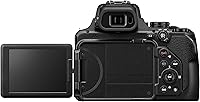
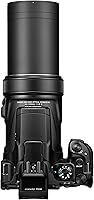
The 125x optical zoom — covering the equivalent of 24 to 3000mm — is the obvious centerpiece, but what makes it actually usable handheld is the Dual Detect Optical VR stabilization, rated at 4.0 stops. Without that, shooting at 3000mm would produce nothing but blur. The P1100 also records 4K UHD video with slow-motion and time-lapse options, adding real creative range for videographers. A dedicated Bird-watching Mode on the physical mode dial pre-configures settings for fast-moving distant subjects — practical, not gimmicky. The rotating articulating LCD and electronic viewfinder make awkward angles manageable, and RAW format support means serious photographers can work with the full file in post.

Best For

This bridge camera was practically built for wildlife and bird photographers who want extreme reach in a single carry-everywhere body — no lens swapping, no second bag. It also suits travel photographers shooting everything from sweeping landscapes to faraway street scenes, needing one camera to cover all of it. Beginners moving up from smartphones will appreciate the guided Auto modes, while the manual controls and RAW output give more experienced shooters room to grow. The 1cm macro capability is a genuine bonus for nature documenters who might be photographing a distant bird one minute and a tiny flower the next, all without switching gear.

User Feedback

With around 74 ratings and a 4.3-star average, early buyer sentiment for the P1100 leans positive — though that sample is still modest enough that the picture could shift with time. Reviewers tend to praise the zoom range and the stabilization's effectiveness at longer focal lengths, along with controls that are approachable for a camera of this complexity. The honest criticisms cluster where small-sensor physics would predict: low-light performance softens noticeably, and at the extreme zoom end, fine detail can disappoint. A handful of buyers also flag the weight and battery endurance as factors worth planning around on longer shooting days.

Pros

  • 125x optical zoom covers an extraordinary range from wide landscapes to extreme close-ups of distant wildlife.
  • The 4.0-stop Dual Detect Optical VR stabilization makes handheld shooting at long focal lengths genuinely workable.
  • 4K UHD video with slow-motion and time-lapse modes adds serious creative versatility beyond still photography.
  • A dedicated Bird-watching Mode on the mode dial removes setup friction when fast action appears unexpectedly.
  • Macro close-focus down to approximately 1 cm means the P1100 handles tiny subjects as well as far-off ones.
  • RAW file support gives experienced photographers full control over processing and image quality in post.
  • The rotating articulating LCD is practical for low-angle and overhead shots, not just a nice-to-have extra.
  • Hybrid autofocus with 179 points and face detection performs reliably for moving subjects across a wide range of scenarios.
  • USB-C connectivity and built-in Wi-Fi and Bluetooth keep file sharing and charging straightforward.
  • All-in-one convenience eliminates the cost and weight of carrying multiple lenses for varied shooting conditions.

Cons

  • The small 1/2.3-inch sensor struggles noticeably in low light, producing soft, noisy images at higher ISO settings.
  • Image sharpness and fine detail soften at the extreme end of the zoom range, even with stabilization engaged.
  • At 3.1 pounds, this bridge camera can become fatiguing during long shooting days or extended travel.
  • Battery life may require carrying a spare on full-day outings, especially when shooting 4K video.
  • The .NRW RAW format has limited support in some third-party editing software compared to standard formats.
  • Dynamic range is noticeably narrower than larger-sensor cameras, making high-contrast scenes harder to expose well.
  • Menu depth and customization options can feel overwhelming for beginners without a learning investment upfront.
  • The electronic viewfinder, while useful, does not match the clarity or responsiveness of optical finders in bright conditions.
  • With only 74 ratings at the time of writing, long-term reliability and real-world durability data is still limited.
  • No weather sealing means this superzoom camera needs extra care in rain, dust, or humid outdoor environments.

Ratings

The scores below for the Nikon COOLPIX P1100 Superzoom Bridge Camera were generated by our AI after analyzing verified buyer reviews from global marketplaces, with spam, bot-submitted, and incentivized feedback actively filtered out. This superzoom camera has a genuinely enthusiastic following, but the ratings also reflect the real frustrations that surface once buyers use it in the field. Both the standout strengths and the honest limitations are reflected here, so you get a complete picture before committing.
Zoom Range & Reach
96%
The 125x optical zoom is the single most praised feature across buyer feedback, and for good reason — wildlife photographers report filling the frame with a distant bird that would have been invisible to any other single-lens camera they previously owned. The jump from wide-angle street scenes to a subject hundreds of meters away without swapping anything is a practical advantage that buyers consistently call out.
A small number of reviewers note that finding and tracking a subject at maximum zoom takes practice — the field of view is so narrow that panning even slightly can lose the subject entirely. Beginners in particular report frustrating early sessions before developing the muscle memory to navigate extreme focal lengths.
Image Stabilization
88%
Buyers repeatedly describe being surprised at how many sharp handheld shots they retrieve from sessions at long focal lengths, crediting the Dual Detect Optical VR for results they did not expect from a fixed-lens camera. In good light, shooting at focal lengths that would have required a tripod on older superzooms now yields usable keepers consistently.
At the absolute maximum zoom end — particularly in overcast or fading afternoon light — even the stabilization cannot fully compensate, and buyers report a higher proportion of soft shots. A few users also mention that the stabilization takes a brief moment to settle, and shots fired too quickly after recomposing can still come out blurred.
Image Quality
67%
33%
In well-lit conditions at moderate zoom lengths, the P1100 produces clean, punchy images that look excellent on screen and hold up well for social sharing and moderate print sizes. Colors are rendered naturally with Nikon's typical character, and buyers shooting outdoors in daylight are generally satisfied with what they get.
The 1/2.3-inch sensor is the camera's most discussed limitation, and reviewers who push into higher ISO values or shoot at extreme zoom distances find detail, dynamic range, and noise control fall off noticeably. Photographers coming from larger-sensor cameras frequently flag this as the one area where the P1100 cannot close the gap, no matter how good the glass is.
Low-Light Performance
52%
48%
At base ISO and in environments with decent ambient light — golden hour, well-lit indoor events, or open shade — the P1100 handles itself reasonably well and produces images that are usable without heavy post-processing. For buyers whose primary shooting is daytime wildlife and travel, low light is rarely their main context anyway.
Once light drops and ISO climbs past 800, noise becomes intrusive and fine detail smears noticeably — a consistent complaint across independent buyer reviews. Evening wildlife photography or dimly lit indoor events expose the sensor's physical ceiling clearly, and several buyers describe this as their single biggest disappointment after purchase.
Video Capability
81%
19%
The inclusion of 4K UHD recording earns genuine praise from buyers who use the P1100 as a travel documentary tool, and the slow-motion and Super Lapse modes add creative options that go well beyond what most bridge camera buyers expect. Footage captured in good light is detailed and smooth, and the stabilization carries over effectively into video use.
Battery drain during extended 4K recording is a recurring complaint, and buyers shooting event video or long wildlife sequences frequently find themselves reaching for a spare battery earlier than expected. A handful of reviewers also note that autofocus during video occasionally hunts in lower contrast or lower light conditions.
Autofocus Performance
77%
23%
In most daylight shooting scenarios, the 179-point hybrid AF locks quickly and reliably, and face detection works well enough for family travel and casual portraiture. Bird and wildlife shooters in good light report a satisfying hit rate when using continuous AF on approaching or crossing subjects.
In lower contrast scenes or when subjects move unpredictably at longer focal lengths, autofocus confidence drops and occasional hunting is noticeable. A few buyers note that the AF can briefly lose a bird against a cluttered background and take an extra moment to reacquire, which costs shots in fast action situations.
Build Quality & Ergonomics
74%
26%
The P1100 feels solid and purposeful in hand, with a deep grip that buyers with larger hands specifically appreciate during long shooting sessions. The physical layout of controls — including the customizable ring and mode dial — is praised by more experienced photographers who value direct access over menu diving.
At 3.1 pounds, extended carry fatigue is a real and frequently mentioned concern, particularly among buyers who hike or travel with the camera all day. The body is also not weather-sealed, which a notable number of outdoor-focused buyers flag as a meaningful omission at this price point.
Battery Life
58%
42%
The USB-C charging port is a genuine quality-of-life improvement that buyers appreciate, allowing top-ups from a portable power bank during travel without carrying a dedicated wall charger. For shorter shooting sessions — a morning at a nature reserve or a few hours of street photography — battery life is generally sufficient.
Full-day shoots, particularly those involving 4K video, frequent Wi-Fi transfers, or extended telephoto use, routinely exhaust the battery before buyers are done shooting. Multiple reviewers recommend budgeting for a spare battery as an essential first accessory, which adds cost to an already significant purchase price.
Ease of Use
72%
28%
The dedicated Bird-watching Mode and other scene-specific presets accessible via the mode dial mean that less experienced users can get strong results quickly without navigating deep menus. The articulating touchscreen also makes the interface more intuitive than older bridge camera designs, which buyers upgrading from earlier Nikon COOLPIX models notice immediately.
The sheer depth of the menu system is a repeated source of frustration for beginners, who report feeling overwhelmed when trying to customize settings beyond the preset modes. Several reviewers mention that the manual and online resources, while available, require a genuine time investment before the camera starts feeling fully under control.
Display & Viewfinder
79%
21%
The 3.2-inch articulating LCD is genuinely one of the more praised physical features, with buyers in particular calling out how much the flexible tilt angle improves low-angle wildlife and ground-level macro shooting. The screen resolution is sharp enough for accurate review and composition in most conditions.
The electronic viewfinder, while functional, does not match the clarity or near-zero lag of optical finders, and a few experienced photographers note it feels slightly behind the curve compared to EVFs on current mirrorless cameras in its price bracket. Bright direct sunlight can also wash out the LCD enough to make precise composition difficult.
Macro Capability
84%
Buyers who shoot nature and wildlife are repeatedly delighted to discover how close the P1100 can focus — getting within roughly 1 cm of a flower or insect without a separate macro lens is a capability most did not fully factor into their purchase decision. Reviews from nature photographers in particular highlight this as an underrated strength of the system.
At such close distances, depth of field becomes razor thin and lighting the subject evenly is tricky, which leads to a higher proportion of rejected shots for buyers new to macro photography. The built-in flash at 1 cm distances is essentially useless, so natural light or an external solution is necessary for best results.
Connectivity & Transfer
76%
24%
Built-in Wi-Fi and Bluetooth enable wireless image transfer to smartphones for quick social sharing, which travel photographers and family documenters cite as a regular and appreciated part of their workflow. The USB-C port brings the P1100 up to a modern standard that earlier COOLPIX models lacked.
Several buyers describe the Nikon SnapBridge app connection as occasionally unreliable, requiring reconnection or a device restart before transfers complete cleanly. Transfer speeds over Wi-Fi for large RAW files or 4K video clips are slow enough that buyers with high-volume shooting habits typically resort to removing the SD card instead.
Value for Money
69%
31%
For buyers who specifically need extreme telephoto reach in a single portable body, the P1100 offers a capability set that would cost substantially more to replicate with an interchangeable-lens system and a quality 3000mm-equivalent lens. Wildlife and travel enthusiasts who understand what they are buying generally feel the price is justified by the zoom range alone.
Buyers who underestimate the sensor's limitations — or who compare image output directly against larger-sensor cameras at similar price points — frequently express disappointment with the value proposition after the fact. At this price tier, the gap between what the P1100 excels at and where it falls short is wide enough to leave some buyers feeling the investment did not fully pay off.
Portability
61%
39%
Relative to carrying a DSLR body plus a super-telephoto lens, the P1100 genuinely is more portable — one bag compartment covers everything from 24mm to 3000mm, which travel photographers and day hikers appreciate more than those who only use it locally. The integrated design also eliminates the risk of dust on a sensor during lens changes.
At 3.1 pounds, calling this camera light or compact would be misleading — it is a large, heavy body by any practical standard, and buyers who assumed bridge meant pocketable are often caught off guard. Shoulder and neck fatigue on full-day outings is a genuine concern raised by multiple reviewers, especially older buyers.

Suitable for:

The Nikon COOLPIX P1100 Superzoom Bridge Camera is purpose-built for photographers who want one camera that can do almost everything without the cost and complexity of a multi-lens system. Bird watchers and wildlife enthusiasts will find the extreme telephoto reach transformative — spotting a distant raptor and filling the frame without a 600mm prime lens is a genuine practical advantage. Travel photographers who move fast and pack light will appreciate covering wide-angle landscapes and far-off details with a single body. Nature documenters who regularly switch between distant subjects and close-up details will benefit from the macro capability sitting right alongside the telephoto range. Beginners transitioning from smartphones who want structured shooting modes today and manual controls to grow into later will also find this bridge camera a rewarding long-term choice.
Not suitable for:

The Nikon COOLPIX P1100 Superzoom Bridge Camera is not the right call for photographers who prioritize image quality above all else, particularly in low light or at the extreme end of the zoom range. The 1/2.3-inch sensor is a physical constraint no amount of processing can fully overcome — at high ISO or maximum zoom, fine detail and dynamic range will trail behind cameras with larger sensors. Studio photographers, portrait shooters, or anyone who needs consistently sharp, clean files for professional print work should look at mirrorless or DSLR systems instead. At 3.1 pounds, this is not a lightweight carry either, so minimalist travelers or anyone with wrist or shoulder concerns may find daily use tiring. Those already invested in an interchangeable-lens system will likely find little reason to add this alongside existing telephoto glass.

Specifications

  • Optical Zoom: The lens covers 125x optical zoom, equivalent to a 24–3000mm range in 35mm format.
  • Dynamic Zoom: Dynamic Fine Zoom extends reach to 250x by combining optical and digital zoom with reduced quality loss.
  • Sensor: A 1/2.3-inch CMOS sensor captures 16 megapixel still images in JPEG or .NRW RAW format.
  • Stabilization: Dual Detect Optical VR image stabilization provides approximately 4.0 stops of compensation for handheld shooting.
  • Video: Records 4K UHD (2160p) video in H.264/MP4 format, with additional slow-motion, time-lapse, and Super Lapse modes.
  • Display: A 3.2-inch articulating LCD screen with 921,000 dots rotates and tilts for flexible shooting angles.
  • Viewfinder: An electronic viewfinder is built in for composing shots in bright outdoor conditions.
  • Autofocus: Hybrid AF combines contrast-detect and phase-detect methods across 179 points, with face detection support.
  • ISO Range: Sensitivity runs from ISO 100 up to ISO 6400 for shooting in a range of lighting conditions.
  • Shutter Speed: Shutter speed spans from 30 seconds for long exposures down to 1/4000 sec for freezing fast motion.
  • Burst Rate: Continuous shooting runs at up to 7 frames per second for capturing fast-moving subjects.
  • Macro Focus: The macro mode allows focus at approximately 1 cm from the subject for extreme close-up photography.
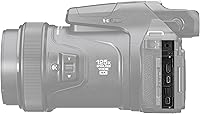
  • Connectivity: Built-in Wi-Fi, Bluetooth, and a USB-C port enable wireless file transfer and wired charging or data connection.
  • Memory: One SD card slot accepts standard SD, SDHC, and SDXC memory cards for image and video storage.
  • Battery: A rechargeable lithium-ion battery is included and supports in-camera charging via the USB-C port.
  • Weight: The camera body weighs 3.1 pounds, reflecting its large zoom lens and robust physical construction.
  • Aperture Range: The lens aperture ranges from f/2.8 at the wide end to f/8.0 across the zoom range.
  • Filter Thread: The lens accepts 77mm screw-in filters for neutral density, polarizer, or other optical attachments.
  • Hot Shoe: A standard hot shoe mount allows attachment of compatible external flash units or accessories.
  • Warranty: Nikon covers this camera with a 1-year limited manufacturer warranty against defects in materials and workmanship.

Related Reviews
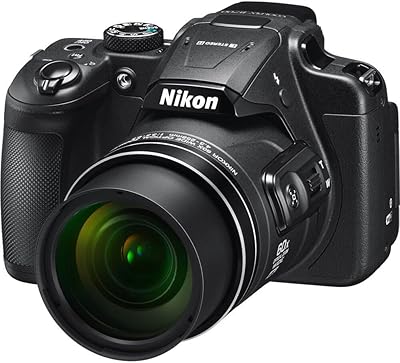
Nikon COOLPIX P7100 Digital Camera
82%
88%
Image Quality
94%
Manual Control Options
91%
Build Quality
63%
Autofocus Speed
67%
Low-Light Performance
More
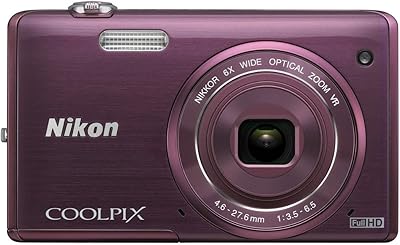
Nikon COOLPIX P610 Digital Camera
83%
94%
Zoom Performance
87%
Image Quality
90%
Portability
72%
Battery Life
85%
Ease of Use
More
Nikon COOLPIX B700 Digital Camera
82%
92%
Zoom Performance
88%
Video Quality (4K UHD)
80%
Ease of Use
89%
Image Stabilization
75%
Battery Life
More
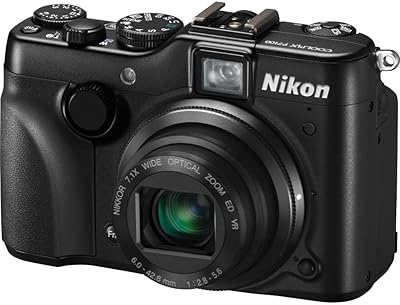
Nikon COOLPIX S5200 Digital Camera
83%
88%
Image Quality
92%
Wi-Fi Functionality
90%
Ease of Use
85%
Build Quality
65%
Low-Light Performance
More
Nikon COOLPIX L820 16 MP Camera
82%
88%
Image Quality
92%
Zoom Performance
85%
Low-Light Performance
89%
Ease of Use
81%
Build Quality
More
Nikon Coolpix P100 10 MP Digital Camera
81%
86%
Image Quality
93%
Zoom Performance
88%
Stability/Shake Reduction
81%
Ease of Use
84%
Video Quality
More
Nikon COOLPIX L810 16.1 MP Digital Camera
79%
88%
Zoom Performance
91%
Ease of Use
84%
Battery Life
85%
Image Quality
76%
Build Quality
More
Nikon COOLPIX P950
Nikon COOLPIX P950
76%
96%
Zoom Range & Reach
88%
Image Stabilization
67%
Autofocus Performance
83%
Image Quality in Daylight
54%
Low Light & High ISO Performance
More
Nikon COOLPIX AW100
Nikon COOLPIX AW100
83%
88%
Overall Durability
85%
Image Quality
90%
Ease of Use
91%
Waterproof Performance
83%
Video Quality
More
Nikon COOLPIX P510
Nikon COOLPIX P510
84%
94%
Zoom Performance
89%
Image Quality
83%
Battery Life
88%
Ease of Use
60%
Autofocus in Low Light
More

FAQ

Handheld shooting at extreme zoom is challenging on any camera, but the P1100 handles it better than most thanks to its 4.0-stop Dual Detect Optical VR stabilization. In good light, many users get acceptably sharp shots at long focal lengths without a tripod. That said, for critical shots at or near maximum zoom — especially in lower light — a monopod or tripod will noticeably improve your keeper rate.

Honestly, a dedicated telephoto lens on a larger-sensor camera will outperform the P1100 at equivalent focal lengths, especially for fine detail and low-light performance. The 1/2.3-inch sensor is small, and physics limit how much detail it can resolve at 3000mm. For wildlife identification shots, social sharing, or moderate print sizes, the quality is genuinely impressive given the convenience — just don't expect studio-grade sharpness at full stretch.

Yes, the P1100 shoots in Nikon's .NRW RAW format. Adobe Lightroom and Photoshop support .NRW files, as does Nikon's own NX Studio software. If you use less common editing tools, it is worth checking compatibility before you buy, since .NRW is not as universally supported as .NEF or standard DNG files.

The P1100 uses a standard SD card slot that is compatible with SD, SDHC, and SDXC cards. For 4K video recording, a UHS Speed Class 3 (U3) or Video Speed Class 30 (V30) card is recommended to avoid buffer slowdowns or dropped frames during extended clips.

It is genuinely well-suited for this use case, which is part of why Nikon included a dedicated Bird-watching Mode on the mode dial. That preset optimizes autofocus speed and exposure for fast-moving subjects in natural settings. The 179-point hybrid AF tracks moving birds reasonably well, and the 7fps burst rate gives you multiple frames to choose from. Results in good light are strong; low light or heavy overcast will show the sensor's limitations more clearly.

More than people expect. When you are shooting wildlife low to the ground, photographing flowers at ankle height, or holding the camera overhead in a crowd, being able to angle the screen rather than contort your body makes a real difference. It also helps when the camera is mounted on a tripod and you need to check framing without crouching behind the eyepiece.

Battery life is one of the P1100's more common buyer complaints, particularly when shooting 4K video or using Wi-Fi. For a full day of mixed shooting, carrying a spare battery is a smart habit. The USB-C port does support charging, so a portable power bank can top you up in the field if needed.

Yes, the hot shoe mount on top of the camera is compatible with standard Nikon-compatible external flash units and some third-party accessories. For most outdoor shooting scenarios this camera is aimed at, the built-in flash covers the basics, but having the hot shoe available is a useful option for event or indoor photographers.

It can be, but there is a learning curve worth acknowledging. The automatic and scene modes are approachable, and the camera does a lot of work for you when set to Auto. However, the menu system is deep and the physical controls are more numerous than a beginner might expect. If you are patient and willing to learn, the P1100 has genuine room to grow with you — but if you want something immediately simple, a more entry-level bridge camera might be a less frustrating starting point.

No, the P1100 does not have weather or dust sealing. It is built for outdoor use in the sense that its subject matter — birds, wildlife, landscapes — is typically outdoors, but it is not rated for rain or dusty environments. If you shoot in unpredictable weather, a rain cover sleeve is an inexpensive accessory worth keeping in your bag.