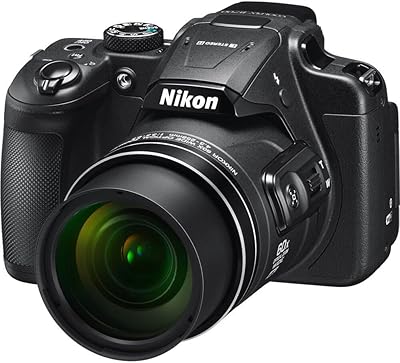
Nikon D850
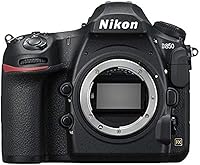
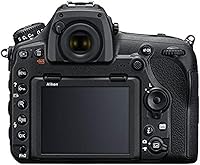
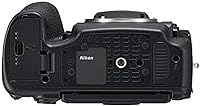
Overview
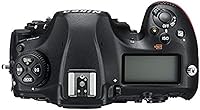
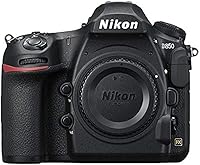
The Nikon D850 arrived in 2017 as Nikon's answer to photographers who refused to choose between resolution and speed — and it largely delivered on that promise. Built around a BSI full-frame sensor with no optical low-pass filter, this full-frame DSLR extracts exceptional detail and clean shadow tones even in demanding light. That design is not just a spec-sheet entry; it translates to richer tonal gradations that older sensors struggle to match. Sold as a body only, it fits naturally into any existing Nikon F-mount kit. Even against a wave of capable mirrorless alternatives, the D850 still holds up as a serious professional tool.
Features & Benefits
At 45.7 megapixels, the detail this full-frame DSLR resolves is hard to overstate — you can crop aggressively and still walk away with a print-worthy file. Burst shooting at up to 9 frames per second with continuous autofocus tracking means it does not buckle under fast-moving subjects, which is unusual for a body at this resolution tier. On the video side, 4K UHD recording and 1080p slow-motion at 120 fps give hybrid shooters genuine flexibility. The built-in focus stacking mode automates what once required tedious manual bracketing. And the tilting touchscreen, while not flashy, makes composing from awkward angles far less frustrating in the field.
Best For
This Nikon body is an obvious fit for landscape and studio photographers where resolution is the primary currency — the ability to render fine texture in rock faces, foliage, or fabric is genuinely hard to match in a DSLR. Wedding and portrait photographers will appreciate the reliable autofocus combined with the file latitude that makes post-processing corrections less painful. Wildlife shooters who have historically accepted lower megapixel counts in exchange for speed will find the burst rate here a solid compromise. Videographers already in the Nikon ecosystem get a capable hybrid option without abandoning their glass. Upgraders from the D800 or D810 will feel immediately at home.
User Feedback
Among working professionals, the D850's dynamic range draws consistent praise — pulling shadow detail in high-contrast scenes without clipping highlights is something owners mention repeatedly. Battery endurance is another genuine high point, with many photographers reporting full shooting days without reaching for a spare. On the other side, the body's size and weight become a real consideration during long handheld sessions; it is not a light travel kit. The menu system runs deep enough that newcomers sometimes report a steep learning curve before feeling fully in control. The tilting screen earns quiet appreciation from those moving up from older fixed-screen bodies, while core criticisms remain practical rather than fundamental.
Pros
- 45.7MP resolution and wide dynamic range make large-format printing genuinely impressive.
- Outstanding battery life gets most professionals through a full shooting day on a single charge.
- Burst shooting at up to 9 fps with full autofocus is unusually fast for a body at this resolution tier.
- Built-in focus stacking removes the need for third-party triggers during macro or product shoots.
- Reliable autofocus earns consistent praise for accuracy across both stills and video contexts.
- The tilting touchscreen adds real compositional flexibility for ground-level and overhead shots.
- Deep F-mount lens compatibility means photographers with existing Nikon glass face no transition cost.
- Native 4K and 8K time-lapse modes streamline workflows that previously required external intervalometers.
- Weather sealing and robust build quality hold up well in demanding outdoor professional use.
Cons
- 45.7MP raw files demand fast storage cards and a capable editing workstation to avoid workflow bottlenecks.
- Maximum 9 fps burst rate requires the optional battery grip and specific batteries — not achievable out of the box.
- 4K video captures with a crop factor, which frustrates videographers expecting full-width frame coverage.
- No in-body image stabilization makes handheld video work noticeably shakier than on competing mirrorless bodies.
- The deep menu system has a real learning curve that slows down new users before daily operation feels natural.
- Body weight above 2 pounds before adding a lens causes fatigue during extended handheld or travel sessions.
- Wireless file transfer options are limited and slow compared to what current mirrorless bodies offer natively.
- F-mount lens development has largely stalled as Nikon focuses on its Z-mount mirrorless system going forward.
- Low-light high-ISO performance, while strong, falls short of what the latest full-frame mirrorless sensors deliver.
Ratings
The Nikon D850 earns its reputation as one of the most capable full-frame DSLRs ever made, and the scores below reflect that — but they also reflect where real-world use reveals friction. These ratings were generated by AI after analyzing thousands of verified global buyer reviews, with spam, incentivized posts, and bot activity actively filtered out. Strengths and genuine pain points are both surfaced transparently so you can make an informed decision.
Image Resolution & Detail
Dynamic Range
Autofocus Performance
Continuous Shooting Speed
Video Capabilities
Battery Life
Build Quality & Ergonomics
Ease of Use & Menu System
Low-Light Performance
Value for Money
Tilting Touchscreen
Focus Shift (Stacking) Feature
Compatibility & Lens Ecosystem
Time-Lapse Capabilities
Connectivity & Workflow Integration
Suitable for:
The Nikon D850 was built for photographers who treat resolution and tonal depth as non-negotiable, and that profile still holds up today. Landscape photographers who print large or license images commercially will find the 45.7MP sensor and outstanding dynamic range worth every penny — pulling shadow detail in a high-contrast mountain scene without introducing noise is the kind of real-world capability that justifies the investment. Wedding and portrait photographers benefit from the combination of reliable burst autofocus and the generous file latitude that makes tricky mixed-lighting receptions far more forgiving in post-production. Wildlife shooters who previously had to choose between resolution and speed will appreciate that this Nikon body makes that trade-off much less painful than older high-res DSLRs did. Existing Nikon system owners upgrading from a D800 or D810 get an immediately familiar handling experience with a meaningful step up in nearly every measurable capability, making the transition practical rather than disruptive.
Not suitable for:
If your priority is a light, travel-friendly kit or you shoot primarily handheld for extended stretches, the Nikon D850 will likely feel like a commitment you are not always glad you made. Photographers seriously considering a long-term system investment should weigh the fact that Nikon's lens development has largely shifted toward its Z-mount mirrorless platform, which means the F-mount ecosystem, while deep, is not growing. Casual or enthusiast photographers who rarely push the boundaries of a 24MP file will find the large raw files, demanding storage requirements, and steeper learning curve difficult to justify at this price tier. Videographers looking for a primary motion camera will run into real limitations — the 4K crop factor and lack of in-body stabilization are friction points that newer mirrorless video bodies handle more cleanly. Anyone expecting a point-and-shoot experience or immediate out-of-the-box mastery should look elsewhere; this is a body that rewards time, experience, and intent.
Specifications
- Sensor: 45.7-megapixel back-side illuminated (BSI) full-frame CMOS sensor with no optical low-pass filter for maximum detail rendering.
- Dimensions: Body measures 5.8 x 3.1 x 4.9 inches (147 x 79 x 124 mm) and weighs 2.02 pounds (915 g) body only.
- Continuous Shooting: Shoots at up to 7 fps natively and up to 9 fps when paired with the optional MB-D18 battery grip and EN-EL18b/c battery.
- Shutter Speed: Mechanical shutter range spans 30 seconds to 1/8000s, with a separate electronic front-curtain shutter option available.
- Video Resolution: Records 4K UHD (3840 x 2160) video and supports 1080p slow-motion capture at up to 120 fps.
- Time-Lapse Output: Built-in interval timer supports in-camera time-lapse movie creation at resolutions up to 8K and 4K without external accessories.
- Viewfinder: Optical pentaprism viewfinder with 0.75x magnification and approximately 100% frame coverage.
- Rear Display: 3.2-inch tilting TFT touchscreen LCD with approximately 2.36 million dots resolution for live view and menu navigation.
- Autofocus System: Multi-CAM 20K II autofocus module with 153 focus points, of which 99 are selectable cross-type points.
- ISO Range: Native ISO sensitivity range of 64 to 25600, expandable to ISO 32 (Lo 1) and ISO 102400 (Hi 2).
- Card Slots: Dual memory card slots accepting one XQD card and one SD/SDHC/SDXC (UHS-II compatible) card simultaneously.
- Battery: Powered by the EN-EL15a lithium-ion battery, rated for approximately 1840 shots per charge under CIPA standard conditions.
- Connectivity: Includes USB 3.0 (Micro-B), HDMI Type C, 3.5mm stereo microphone input, 3.5mm headphone output, and Wi-Fi via optional SnapBridge.
- Lens Mount: Nikon F-mount with full compatibility across AF, AF-S, AF-I, and AI-S lenses, as well as D-type and G-type lenses.
- Focus Stacking: Built-in focus shift shooting mode automates focus bracketing sequences with user-defined step count and interval settings.
- File Formats: Captures 14-bit NEF (RAW), compressed or lossless compressed RAW, and JPEG; video recorded in MOV and MP4 containers.
- Weather Sealing: Magnesium alloy body construction with extensive dust and moisture sealing at all major joints, dials, and buttons.
- File Standard: Complies with DCF 2.0, EXIF 2.31, and PictBridge standards for broad compatibility with printers and software workflows.
Related Reviews
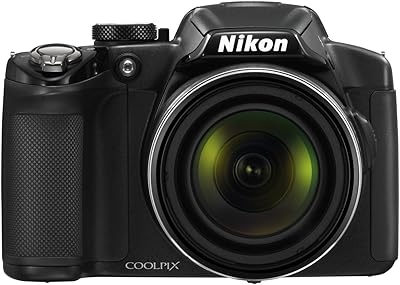
Nikon COOLPIX P510 Digital Camera
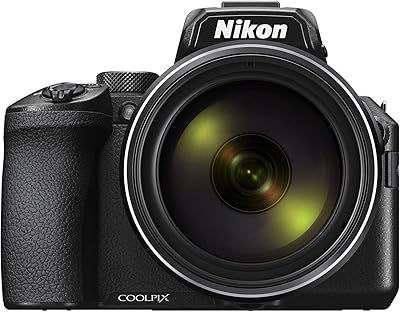
Nikon COOLPIX P950
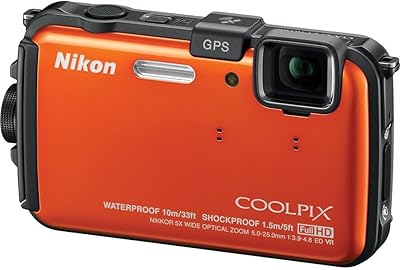
Nikon COOLPIX AW100 Waterproof Compact Camera
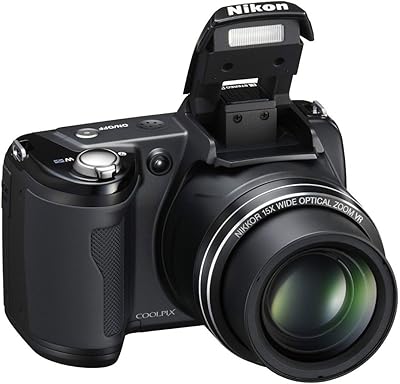
Nikon L105 15x Zoom Digital Camera
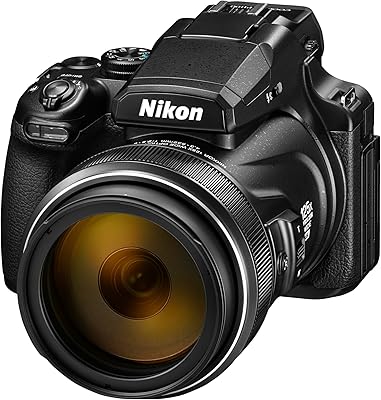
Nikon COOLPIX P1100 Superzoom Bridge Camera
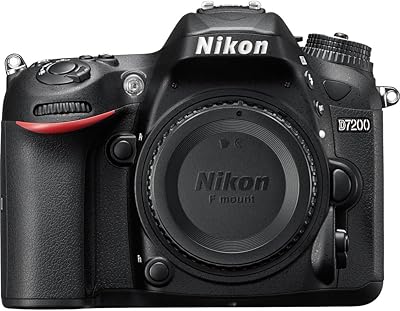
Nikon D7200
Nikon PROSTAFF P3 10x42 Binoculars
Nikon Z 7II Full-Frame Mirrorless Camera
Nikon Z 8