

Overview

The Firstnum M4 Portable 4G LTE Mobile Hotspot enters a crowded market with one genuinely interesting offer: a lifetime 1GB monthly data plan bundled with the hardware, no carrier contract required. It sits in the mid-range tier — faster and more flexible than a basic travel SIM, but not competing with premium 5G routers. Coverage spans the US and Mexico, which immediately makes it relevant for cross-border travelers. Firstnum is a newer brand, and that matters — buyer confidence here leans heavily on real user experiences rather than brand heritage. Whether the value holds up in practice is exactly what this review sets out to answer.

Features & Benefits

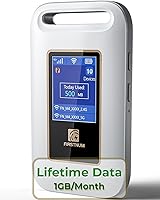
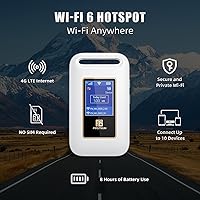
The eSIM-based design is where this travel hotspot earns its keep. Instead of fumbling with physical SIM cards at the airport, the device automatically connects to whichever supported US carrier — T-Mobile, Verizon, or AT&T — has the strongest signal nearby. Cross into Mexico and it quietly switches to Telmex or America Movil. Up to 10 devices connect simultaneously over dual-band Wi-Fi 6, though it is worth clarifying: the local wireless is Wi-Fi 6, but the internet connection itself runs on 4G LTE only. A small built-in screen shows battery level, connected devices, and daily usage at a glance, and USB-C fast charging keeps downtime short.

Best For

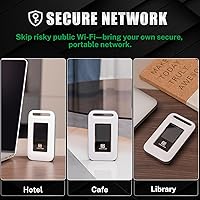
This pocket Wi-Fi device is a natural fit for anyone making regular trips between the US and Mexico — dual-country coverage removes the usual hassle of hunting for a local SIM at the border. Remote workers tired of unreliable hotel Wi-Fi will appreciate the private, encrypted connection it provides instead. Traveling as a group? One device handling up to 10 connections keeps everyone online without splitting costs across multiple plans. That said, it suits light data users best — the included monthly gigabyte covers navigation and messaging well, but heavy streamers or frequent video callers will burn through it quickly and need to budget for paid top-up plans.

User Feedback

Buyers generally find setup straightforward — eSIM activation takes a few minutes with no carrier store visit needed, and that earns consistent praise. Real-world battery life, however, lands closer to four hours when multiple devices are actively connected, suggesting the six-hour rating reflects lighter single-device use. Signal quality is region-dependent: reliable in urban areas, noticeably spottier in rural stretches. The free monthly gigabyte draws attention, but several users flag that rollover behavior and data cap details are not clearly communicated upfront, making additional costs feel uncertain. On build quality, the Firstnum M4 feels light in hand — the plastic casing is adequate but would not survive a serious drop without a case.

Pros

  • No physical SIM card needed — the eSIM activates in minutes without a carrier store visit.
  • Automatically switches between T-Mobile, Verizon, and AT&T to chase the strongest available signal.
  • Dual-country coverage across the US and Mexico with no plan changes or SIM swaps required.
  • Up to 10 devices share one connection simultaneously, making group travel much simpler.
  • The bundled 1GB monthly data allowance is free for the life of the device, not just a trial period.
  • Pay-as-you-go data plans by day, week, or month mean you never pay for coverage you are not using.
  • The built-in display shows real-time signal, battery, connected devices, and daily usage without needing an app.
  • USB-C charging is fast and convenient, using the same cable most travelers already carry.
  • At 114g, this travel hotspot slips into a shirt pocket or small bag without adding noticeable weight.
  • Firewall, MAC filtering, and PIN-based security offer meaningfully stronger protection than public Wi-Fi.

Cons

  • Real-world battery life under multi-device load runs closer to four hours, well short of the six-hour claim.
  • 4G LTE only — do not expect 5G speeds regardless of how strong the local signal appears.
  • Coverage is strictly limited to the US and Mexico; travelers heading elsewhere need a different solution.
  • The rollover policy and data cap behavior for the free 1GB plan are not clearly explained upfront.
  • Signal in rural or remote areas can be unreliable, even with three-carrier switching.
  • Top-up data pricing through the companion portal lacks transparency, making ongoing cost planning difficult.
  • The plastic casing feels light and adequate but would not survive a hard drop without a protective case.
  • Firstnum has a limited public track record, so long-term firmware support and customer service are unknowns.
  • Heavy data users — streamers, video callers, cloud workers — will outgrow the free allowance almost immediately.
  • No global coverage means the Firstnum M4 cannot serve as a single all-trip solution for multi-country itineraries.

Ratings

The scores below for the Firstnum M4 Portable 4G LTE Mobile Hotspot were generated by our AI engine after analyzing verified buyer reviews from global markets, with spam, bot activity, and incentivized feedback actively filtered out. Each category reflects honest user sentiment — both the genuine strengths and the real pain points — so you get a clear-eyed picture of where this travel hotspot delivers and where it asks you to compromise.

Ease of Setup
84%
Most buyers report that getting started is refreshingly straightforward — power on the device, follow the on-screen prompts, and the eSIM connects to the strongest available carrier automatically. No physical SIM card handling, no carrier store trips. For travelers who just want things to work from the moment they arrive, this is a genuine and consistent strength.
A notable subset of users hit friction during the initial data plan activation through Firstnum's web portal, particularly around account creation steps. Those less comfortable with online account management found the process less intuitive than the hardware setup itself, and customer support responsiveness for setup issues has drawn mixed reviews given the brand's limited track record.
Battery Life
61%
39%
Under light conditions — one or two devices browsing and using navigation — the 3000mAh battery holds up reasonably well for a half-day out. USB-C fast charging means getting back to a usable level happens quickly, which partially offsets the limited endurance. For short outings with access to a power outlet nearby, the runtime is workable.
With five or more devices actively pulling data, real-world battery life drops to three or four hours — well short of the six-hour manufacturer claim. Full-day travelers without a power bank will find this a genuine limitation that affects reliability. The battery is non-replaceable, so there is no field swap option when it runs out mid-trip.
Data Plan Value
76%
24%
The lifetime 1GB monthly data allocation bundled with the hardware is a meaningful differentiator — occasional light travelers essentially receive recurring data at no ongoing cost. Pay-as-you-go top-up flexibility means you are never locked into paying for coverage you do not need, which suits infrequent or unpredictable travel patterns well.
The 1GB monthly ceiling is exhausted fast by anyone doing more than basic navigation and messaging, and the rollover policy for unused data is not transparently documented anywhere buyers can easily find it. Several users were caught off guard by top-up pricing after the free allowance expired, making the true ongoing cost higher than the upfront purchase implies.
Signal & Coverage
69%
31%
Automatic switching across T-Mobile, Verizon, and AT&T genuinely helps in urban and suburban US areas, where having three networks to fall back on typically maintains a usable connection throughout the day. In major Mexican cities served by Telmex and America Movil, buyers report adequate coverage for navigation, messaging, and light browsing.
Rural and remote US locations expose the biggest weakness — carrier switching cannot compensate for genuine coverage gaps, and consistency in less-populated areas draws frequent complaints. Buyers traveling through mountain corridors, the rural Southwest, or remote highways have encountered dead zones that no amount of automatic switching can resolve.
Value for Money
73%
27%
For US-to-Mexico travelers who make the crossing regularly, the combination of no-contract flexibility, dual-country coverage, and included monthly data creates a cost structure that undercuts most prepaid roaming plans across multiple trips. The hardware price feels reasonable when weighed against what you avoid paying in carrier roaming fees over a year.
Buyers who travel infrequently or stay within a single country will struggle to justify the cost — cheaper prepaid SIM options exist for US-only use. Data top-up pricing after the free gigabyte is not prominently disclosed before purchase, making it difficult to calculate the true total cost of ownership upfront.
Connection Speed
66%
34%
In areas with strong LTE signal, the Firstnum M4 delivers throughput adequate for video calls, light cloud work, and standard-definition streaming. Users on T-Mobile LTE in major metro areas report download speeds consistent with a solid 4G connection — fast enough for the practical demands of most travel days.
Users accustomed to 5G speeds on modern smartphones will notice the ceiling immediately, particularly for large file transfers or simultaneous multi-device streaming. In congested urban areas during peak hours or in weaker signal zones, LTE throughput can slow considerably, making it unreliable as a primary connection for demanding remote work.
Multi-Device Support
83%
Supporting up to 10 simultaneous connections is a standout feature for families and travel groups who want to avoid the hassle of everyone managing separate data plans. Users running two or three of their own devices — laptop, phone, and tablet — report no meaningful speed degradation under moderate everyday use.
Connecting all 10 devices under heavy simultaneous load puts noticeable pressure on both battery life and per-device speeds. Users running multiple video streams or large downloads concurrently found throughput per device dropped meaningfully. The 10-device ceiling is a marketing headline, but comfortable real-world heavy use sits closer to five or six.
Portability & Design
88%
At 114g and roughly the footprint of a tall deck of cards, this pocket Wi-Fi device disappears into a jacket pocket or small pouch without a second thought. The clean white finish and built-in display give it a modern, purposeful look that does not feel cheap for its weight class — travelers consistently praise how little space it occupies.
The all-white plastic exterior shows scuffs and fingerprints quickly, which becomes a minor annoyance for users who keep it loose in pockets alongside keys or coins. No carry case is included in the box, so protecting the screen and casing during daily travel requires a separately purchased sleeve or pouch.
Build Quality
59%
41%
For everyday travel use tucked into a bag or coat pocket, the construction is adequate and feels deliberate for its target weight. The device does not creak or flex noticeably under normal handling, and the USB-C port holds up through repeated daily charging cycles according to the majority of user reports.
The lightweight plastic casing is the most consistent build criticism — it does not inspire confidence for drops or impacts, and several users reported cosmetic damage after minor falls onto hard surfaces. There is no water resistance rating whatsoever, so even light rain exposure warrants real caution. Long-term durability beyond six months of daily use remains an open question.
Display & Interface
77%
23%
The built-in screen punches above its weight for this category — showing signal strength, battery percentage, connected devices, and daily data usage at a glance without opening an app. Users frequently mention this as a convenience they did not expect and now rely on to catch the free data limit before it cuts them off mid-trip.
The display is small by necessity, and readability in direct sunlight requires shading the screen with your hand. No settings can be adjusted directly on the device — any configuration changes require going through the web portal or companion app, which several users found genuinely inconvenient when they needed to make adjustments while already traveling.
Data Management App
56%
44%
The web portal for purchasing and managing data top-ups is functional for the core tasks: checking usage, buying a day or weekly pack, and reviewing account history. Users who set it up at home before their trip generally report it works without major friction for straightforward plan management when on stable Wi-Fi.
Consistent criticism across buyer reviews points to a clunky portal interface, unclear billing presentation, and occasional loading failures — ironic given the device's purpose. Purchasing a top-up mid-trip on a slow LTE connection felt more cumbersome than it should be, and several users flagged that plan pricing transparency leaves meaningful room for improvement.
Security Features
81%
19%
A private, firewall-protected network with MAC address filtering is a meaningful security upgrade over shared hotel or café Wi-Fi, and most users set it up without touching any security settings. Remote workers handling sensitive documents or company email appreciate the protection without any configuration burden.
Firstnum has not published independent security audits or detailed documentation of its firewall implementation, which gives privacy-conscious buyers less to stand on. Users handling genuinely sensitive professional data would still be well advised to run a reputable VPN on top of the device's built-in protections rather than relying on them alone.
Cross-Border Performance
74%
26%
For the core use case of crossing between the US and Mexico, the automatic carrier handoff works well — users report the device picks up Mexican carrier signal within a few minutes of entering coverage range without any manual steps required. This quiet, hands-free transition is one of the most genuinely useful features for the target buyer.
Coverage quality in Mexican regions outside major cities is noticeably less consistent than the US experience, with users citing slower speeds and occasional drops in smaller towns and rural areas. The device supports no countries beyond the US and Mexico, so travelers whose trips extend further will need an entirely separate solution for those legs.
Carrier Switching
71%
29%
Automatic switching among three US carriers is a real differentiator compared to locked single-carrier SIM cards. In urban areas, users rarely notice the handoffs at all — the device manages them quietly in the background, which is exactly the experience travelers want when they have other things to focus on.
The switching algorithm is not user-configurable, so there is no way to manually force a preferred carrier even when you know one performs better in a specific location. Some users noted brief connectivity interruptions during carrier handoffs in fringe areas where signal from all three networks is simultaneously weak or marginal.

Suitable for:

The Firstnum M4 Portable 4G LTE Mobile Hotspot is a strong match for anyone who regularly crosses between the US and Mexico and wants one device that handles connectivity on both sides without touching a SIM tray. It works especially well for remote workers and digital nomads who need a private, secure connection rather than trusting shared hotel or café networks. Families and small travel groups get real value here too — sharing one data plan across up to 10 devices is considerably more practical than each person juggling their own roaming setup. Light data users will find the bundled 1GB monthly allowance genuinely covers the basics: maps, messaging, and occasional email without paying a cent extra. If your travel style involves short, frequent trips and you want the flexibility to buy data only when you need it, this pocket Wi-Fi device fits that workflow naturally.

Not suitable for:

The Firstnum M4 Portable 4G LTE Mobile Hotspot is a poor fit for anyone who depends heavily on fast, high-volume data — streaming video, conducting video calls all day, or backing up large files will exhaust the included gigabyte within hours and rack up add-on costs that undercut the value proposition quickly. Buyers heading outside the US and Mexico should look elsewhere entirely, as coverage does not extend beyond those two countries. If you travel to remote or rural areas, be aware that signal reliability is inconsistent and largely dependent on whichever carrier happens to have coverage there — the automatic switching helps, but it cannot manufacture signal where none exists. Power users accustomed to 5G speeds will find 4G LTE constraining, and those who are brand-loyal or want the assurance of an established manufacturer behind their hardware may feel uneasy with a relatively unknown label. Finally, if you need a device that can run all day in a bag without a recharge stop, the real-world battery window of roughly four hours under load is likely to disappoint.

Specifications

  • Brand: Manufactured and sold under the Firstnum brand, a newer entrant in the mobile hotspot category.
  • Model: The device carries the official model designation Firstnum M4.
  • Connectivity: Uses an embedded eSIM to connect via 4G LTE; no physical SIM card is required or inserted.
  • Wi-Fi Standard: Broadcasts a local Wi-Fi network over dual-band 2.4GHz and 5GHz using the 802.11ac/ax (Wi-Fi 6) standard.
  • Max Devices: Supports up to 10 client devices connected simultaneously over Wi-Fi.
  • Battery Capacity: Houses a 3000mAh built-in lithium-ion rechargeable battery that is not user-replaceable.
  • Rated Battery Life: Manufacturer rates battery endurance at up to 6 hours of continuous use under unspecified load conditions.
  • Charging Port: Recharges via a USB-C port with fast-charge support; a USB-C cable is included in the box.
  • Dimensions: The device measures 63mm × 108mm × 15.5mm, roughly the footprint of a large smartphone but notably thinner.
  • Weight: The device itself weighs 114g; total packaged weight including accessories is approximately 158.8g.
  • US Carriers: Automatically selects the strongest available signal from T-Mobile, Verizon, or AT&T within the United States.
  • Mexico Carriers: In Mexico, the eSIM connects to either Telmex or America Movil depending on available signal strength.
  • Included Data: Comes with 1GB of free data per calendar month for the operational lifetime of the device at no recurring fee.
  • Display: A small built-in screen shows current signal strength, battery percentage, number of connected devices, and daily data consumption.
  • Security: Includes a built-in firewall, MAC address filtering, and PIN/PUK-based access control to protect the network.
  • Internet Protocol: Supports both IPv4 and IPv6 addressing, ensuring compatibility with modern network infrastructure.
  • Color: Available in a single color option: White.
  • In the Box: Each unit ships with the hotspot device, one USB-C charging cable, and a printed user manual.

Related Reviews
RoamFi RoamWiFi R10 Portable Mobile Hotspot
71%
92%
Ease of Setup
78%
International Coverage
61%
Data Value & Plan Inclusivity
69%
Connection Speed
71%
Battery Life
More
Schok G140 4G LTE Mobile Hotspot
73%
83%
Value for Money
71%
Real-World Download Speeds
78%
Battery Life
67%
SIM Compatibility & Setup
81%
Connected Device Capacity
More
Karbor MF833-4G Portable 4G LTE WiFi Hotspot
71%
82%
Ease of Setup
71%
Network Coverage
63%
Connection Speed
58%
Data Plan Value
66%
Battery Life
More
TP-Link M7350 4G LTE Mobile Hotspot
76%
93%
Portability
88%
Ease of Setup
71%
Connection Speed
58%
Battery Life
74%
Signal Stability
More
KuWFi L100EU 4G LTE Mobile Hotspot
69%
83%
Band Compatibility
58%
Ease of Setup
61%
Wi-Fi Performance
63%
Battery Life
88%
Portability
More
GlocalMe DuoTurbo 4G LTE Portable WiFi Hotspot
75%
81%
International Coverage
88%
Ease of Setup
74%
Data Plan Flexibility
73%
Connection Stability
61%
Battery Life
More
Verizon MiFi 6620L Jetpack 4G LTE Mobile Hotspot
84%
91%
Battery Life
87%
Connectivity Reliability
85%
Portability & Size
78%
Ease of Setup
88%
Performance for Multiple Devices
More
Netgear Nighthawk MR1100 Mobile Hotspot Router
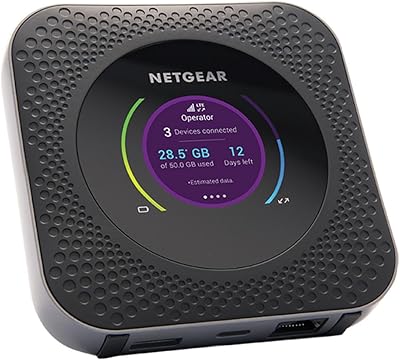
79%
93%
Carrier Flexibility
88%
Multi-Device Performance
86%
Signal Reception
61%
Battery Life
89%
Setup & Ease of Use
More
NETGEAR Nighthawk M1 4G LTE Mobile Hotspot
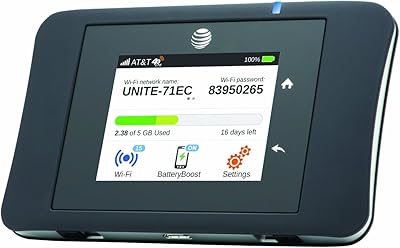
67%
58%
Carrier Compatibility
83%
Battery Life
76%
Signal Performance
81%
Multi-Device Capacity
78%
Ease of Setup
More
Netgear Unite Pro AC-781S Mobile Hotspot
68%
81%
Value for Money
74%
Connectivity Performance
67%
Carrier Compatibility
69%
Refurbished Condition
61%
Battery Life
More

FAQ

No, and that is one of the more practical advantages here. The device uses an embedded eSIM, so there is no physical card to source, insert, or swap. You power it on, go through the initial setup, and it connects to available carrier networks automatically.

According to the product listing, the 1GB monthly allocation is a lifetime data plan tied to the device, not a promotional trial that expires after a set period. That said, the fine print around rollover behavior and what happens to unused data at month-end is not clearly documented, so treat any unused gigabytes as expiring monthly until you confirm otherwise directly with Firstnum.

Once the monthly free gigabyte is used up, the device will stop routing internet traffic until you purchase an add-on data plan through Firstnum's portal. You can buy additional data by the day, week, or month depending on what suits your trip. The built-in screen helps you track daily usage so you can see the limit approaching before it cuts out.

It depends heavily on the location. The device automatically switches between T-Mobile, Verizon, and AT&T to find the strongest signal, which genuinely helps in most urban and suburban areas. In rural stretches, coverage can be inconsistent — rural T-Mobile in particular has gaps. If your travel takes you into remote areas regularly, this device may not be reliable enough as your only connectivity option.

It is a 4G LTE device for internet connectivity. The Wi-Fi 6 labeling refers to the local wireless standard it uses to connect your phones and laptops to the hotspot itself, not to the cellular network speed. Do not expect 5G download speeds — what you get is standard 4G LTE throughput from whichever carrier has the best signal in your area.

The six-hour rating appears to reflect light use with minimal connected devices. In practice, with five or more devices actively pulling data, expect closer to three to four hours before needing a recharge. Carrying a small power bank alongside the hotspot is a smart move for full-day travel days.

Technically yes, but it will drain your 1GB free allowance very quickly — a single hour of standard-definition streaming can consume 1GB on its own. If streaming or video calls are a regular need, plan to purchase additional data top-ups, and budget accordingly. The 4G LTE connection is generally capable of handling video calls when signal is strong.

No. Coverage is currently limited to the United States and Mexico only. If your trip includes other countries, this travel hotspot will not connect abroad and you would need a separate solution for those legs of your journey.

It is considerably more secure than hopping onto a shared hotel or airport Wi-Fi network. The device creates your own private network with firewall protection, MAC address filtering, and PIN-based access control. For sensitive work use, pairing it with a VPN on your laptop adds another layer of protection, which is a good practice regardless of what hotspot you use.

The casing is lightweight plastic, which keeps the weight low but does not inspire confidence for rough handling. It should hold up fine in a bag or pocket under normal travel conditions, but a hard drop onto a hard floor is likely to cause damage. A slim silicone sleeve or pouch is worth considering if you plan to carry it daily.

Where to Buy