Overview

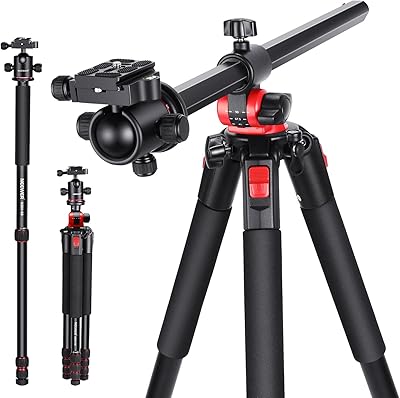
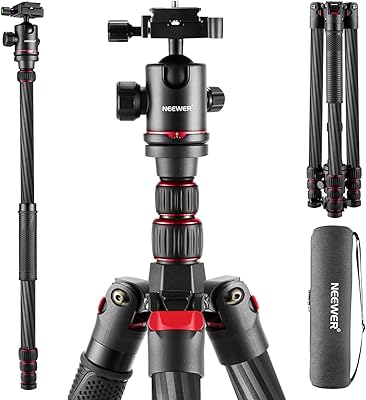
The NEEWER TP27 73.6″ Horizontal Aluminum Camera Tripod sits in a practical middle ground — sturdy enough for serious work, light enough to carry at under 6 lbs. It handles up to 22 lbs of gear, which covers most DSLR and mirrorless setups with room to spare. What separates it from the average aluminum stand is the multi-angle center column, which swings horizontal for overhead flat-lay setups, inverts for low macro work, or stays in a standard vertical position for everyday shooting. Converting it to a monopod takes less than a minute. For photographers tired of hauling multiple rigs to a location, this aluminum tripod makes a strong case.
Features & Benefits

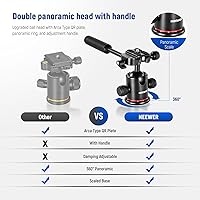
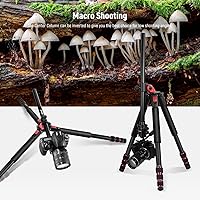
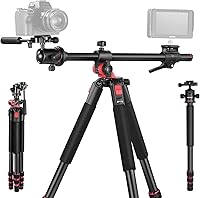
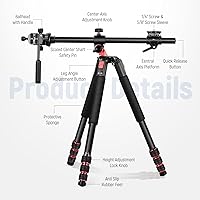
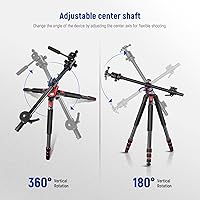
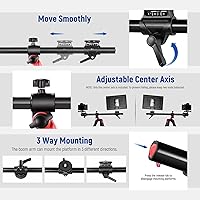
The horizontal center column is the TP27's defining trait, and it genuinely earns its keep. Swing it out for a flat-lay product shoot, flip it down for macro work close to the ground, or run it vertical for portrait and landscape work — all without swapping hardware. The Arca-type ballhead pairs with two damping knobs, letting you dial in resistance for smooth video pans or fully locked still shots. Leg spread locks at three angles — 23°, 50°, or 80° — which matters quite a bit on uneven terrain. There's also a central axis platform mid-column for attaching a monitor or second camera, though that setup demands careful attention to weight distribution at both ends.

Best For

This horizontal-arm tripod is a natural fit for product and flat-lay photographers who need a reliable overhead angle without rigging up a separate arm. Macro shooters benefit from the inverted column position, which drops the camera close to the ground without rebuilding the setup from scratch. Video creators who bounce between talking-head and tabletop shots will appreciate having one rig that handles both, and the monopod conversion adds a quick run-and-gun option when you need to move fast. At under 6 lbs, it's practical for on-location work too. Honestly, this is a beginner-to-intermediate tool — not really designed for heavy cinema builds or high-end broadcast rigs.

User Feedback

With a 4.6 rating across more than 3,000 reviews, the TP27 has earned consistent praise from a wide base of real users. The horizontal arm functionality is the most commonly cited highlight — buyers mention it specifically as something they couldn't find at this price point elsewhere. Ballhead smoothness also gets frequent positive notes, particularly from videographers doing slow pans. On the critical side, a handful of reviewers note that the center column loses some rigidity when fully extended horizontally under heavier loads — worth knowing if you plan to push close to the weight limit. The included storage bag is a tight fit once everything is packed, and the twist leg locks need a firm hand to feel truly secure.

Pros

  • The horizontal center column enables clean overhead flat-lay shots without a separate boom arm or additional rigging.
  • At under 6 lbs, the TP27 is light enough to carry comfortably during full-day location shoots.
  • Three selectable leg spread angles give genuine stability flexibility on uneven outdoor terrain.
  • The Arca-type ballhead is compatible with most existing quick-release plate collections, saving an immediate extra purchase.
  • Dual damping knobs on the ballhead allow real fine-tuning of resistance for smoother video panning.
  • Monopod conversion takes under two minutes and adds a practical handheld option without carrying extra gear.
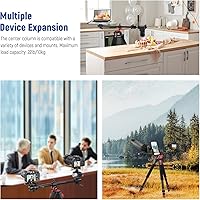
  • The central axis platform supports monitors, magic arms, and accessories via both 1/4″ and 3/8″ mounts.
  • A ballast hook on the center column provides a simple but effective stability boost in windy outdoor conditions.
  • Over 3,000 verified buyer reviews average 4.6 out of 5, reflecting broad satisfaction across varied use cases.
  • Includes a storage bag, central platform, and ballast hook — accessories that competitors typically charge extra for.

Cons

  • Twist leg locks require noticeably more hand force than flip-lever alternatives, especially after use in dusty conditions.
  • The center column loses some rigidity when fully extended horizontally under heavier camera and lens combinations.
  • The included storage bag zips closed with little room to spare, making repacking after a shoot slower than expected.
  • Four-section legs mean more individual adjustments compared to three-section designs when setting up quickly on location.
  • The ballhead can creep slowly under heavier bodies if not re-tightened periodically during long sessions.
  • Instruction documentation in the box is minimal, and first-time multi-angle column users will likely need an online tutorial.
  • The stock quick-release plate runs slightly small for larger DSLR bodies, which may prompt an immediate upgrade.
  • Dual-camera or monitor setups on the central platform require careful weight balancing and add meaningful complexity.
  • The storage bag zipper quality feels like a potential weak point under frequent heavy packing and travel use.
  • At its upper weight limits, overall stability drops enough that experienced users typically cap practical loads around 14 lbs.

Ratings

The NEEWER TP27 73.6″ Horizontal Aluminum Camera Tripod has been evaluated using AI-driven analysis of verified global buyer reviews, with spam, incentivized, and bot-generated feedback actively filtered out before scoring. The ratings below reflect what real photographers — from flat-lay product shooters to travel videographers — actually experienced across thousands of documented uses. Both the standout strengths and the honest pain points are represented here without sugarcoating.
Horizontal Column Versatility
91%
The ability to swing the center column fully horizontal is the single feature buyers mention most often, and for good reason — it lets photographers set up clean overhead flat-lay shots without a separate boom arm. Macro shooters also appreciate the inverted position, which drops the lens close to the ground in a matter of seconds.
At full horizontal extension with heavier rigs, a small number of users noticed a slight loss of rigidity in the column joint. It is not dramatic, but photographers pushing toward the upper weight limit on long lenses should be aware the arm benefits from some counterbalancing.
Build Quality & Materials
78%
22%
The aluminum alloy construction feels reassuringly solid for its price tier, and at under 6 lbs the TP27 does not feel like it sacrificed durability to hit that weight. Leg joints and the column locking mechanism both feel machined with decent tolerances — noticeably better than budget plastic-legged competitors.
A handful of reviewers noted that some contact points, particularly around the leg angle selector and column clamp, have a slightly plasticky feel that does not match the rest of the build. It is a minor gripe, but it is noticeable when handling the tripod extensively in the field.
Ballhead Performance
84%
The Arca-type ballhead with dual damping knobs gives users genuine control over resistance, which is especially useful for slow video pans where a single-knob head tends to be either too stiff or too loose. Videographers running talking-head or product demo setups praised the smooth movement under moderate loads.
Under heavier camera bodies with long lenses, the ballhead can require more frequent re-tightening than expected to prevent slow creep. A few users also found the damping range could be wider — at its loosest setting, fast movements still feel slightly restricted compared to dedicated video fluid heads.
Leg Stability & Spread Angles
82%
18%
Three selectable leg spread angles — 23°, 50°, and 80° — give real flexibility when shooting on uneven ground or when a very low shooting position is needed quickly. The wide 80° stance in particular makes the TP27 noticeably more stable on sloped outdoor terrain than single-angle tripods.
The four-section legs, while practical for compactness, require more individual adjustments than three-section legs when setting up on the fly. On very uneven surfaces, getting all four sections dialed in symmetrically takes a bit of patience.
Twist Lock Mechanism
71%
29%
Once properly tightened, the quick twist locks hold their position reliably through normal shooting use, and experienced users who are accustomed to twist-lock systems will find the setup fast. The locks have a clear tactile feedback point when fully engaged.
Multiple reviewers mention needing to apply more force than expected to fully secure the locks, especially after extended use outdoors in dusty conditions. First-time twist-lock users may find the learning curve slightly frustrating compared to flip-lever leg locks.
Monopod Conversion
76%
24%
The ability to detach a leg and attach it to the center column for instant monopod use is genuinely convenient for event or sports shooters who want one bag for both setups. The foam grip wrapping on the detachable leg makes extended handheld use comfortable.
The converted monopod is somewhat long for indoor or tight venue use, and the process, while simple, involves a few steps that feel slightly awkward mid-session. It works well as a secondary capability but is not as refined as a purpose-built monopod.
Central Axis Platform
67%
33%
The mid-column accessory platform is a thoughtful addition for content creators who want to run a monitor, magic arm, or secondary camera off the same rig. The dual screw mount options — 1/4″ and 3/8″ — cover most accessory compatibility needs without adapters.
In practice, loading both ends of the horizontal column requires careful weight balancing, and finding the right equilibrium takes some trial and error. Several users noted that once a heavier monitor is attached, the setup becomes noticeably more sensitive to column flex.
Maximum Height & Reach
86%
A fully extended height of 73.6 inches means taller photographers can shoot at eye level without hunching, which reduces fatigue during long sessions. This height also makes it easy to position a camera above a cluttered table for product work without improvising with extra gear.
The four-section legs mean the minimum folded height is still fairly long for packing into smaller bags, and the lowest usable shooting height of around 25.6 inches is adequate but not exceptionally low for ground-level macro work compared to dedicated low-profile tripods.
Weight & Portability
88%
At 5.73 lbs, this horizontal-arm tripod punches well above its weight in the portability category — it is light enough to carry all day during a location shoot without becoming a burden. The included storage bag makes transport straightforward, even on flights as checked luggage.
The storage bag, while a welcome inclusion, runs snug once the ballhead, column, and all accessories are packed together. A few travelers mentioned needing to remove components or repack them creatively to get the bag fully zipped, which adds minor friction at the end of a shoot.
Quick Release System
81%
19%
The standard Arca-type quick release plate means users with an existing Arca-compatible plate collection can swap cameras instantly without carrying the stock plate. The U-shaped side slot for vertical shooting orientation is a practical touch that many reviewers appreciated for portrait-format video.
The stock quick release plate is functional but basic — photographers with larger camera bodies noted it can feel slightly undersized. The plate's clamping mechanism works reliably but lacks the fine micro-adjustment rails that higher-end Arca clamps offer.
Stability Under Load
73%
27%
For setups in the 8 to 14 lb range, the TP27 holds steady on flat and moderately uneven ground without much drama. The integrated ballast hook on the center column lets users add a sandbag or heavy bag for extra anchoring in windy outdoor conditions, which genuinely helps.
Near the 22 lb rated maximum, some real-world wobble becomes apparent — particularly with the column in horizontal mode. The rating appears to be a peak mechanical tolerance rather than a recommended working load, and most experienced users suggest treating 14 to 15 lbs as the practical sweet spot.
Ease of Setup
83%
The overall setup process from bag to shooting-ready takes under two minutes for most users once familiar with the column adjustment system. The leg angle buttons and column locks are logically positioned and easy to operate with one hand while steadying the rig with the other.
First-time users of multi-angle center columns may find the column adjustment sequence less intuitive than a standard tripod. The instruction documentation included in the box is minimal and some buyers recommended watching a video tutorial before the first complex overhead setup.
Value for Money
89%
The TP27 consistently lands in buyer reviews as one of the better-value aluminum tripods in its category, offering a feature set — horizontal column, Arca ballhead, monopod conversion, accessory platform — that would cost significantly more from European or Japanese brands. For photographers who need overhead shooting capability on a practical budget, the value is hard to argue with.
Buyers expecting performance identical to professional studio tripods at three times the price will find gaps, particularly in ballhead fluid feel and column rigidity. The value proposition is strong relative to its price tier, but it has real limits at the edges of its specification range.
Accessories & Inclusions
72%
28%
The package comes with a storage bag, ballast hook, and a central axis platform that most competing tripods sell as separate add-ons. Having the Arca-compatible plate included out of the box saves an immediate additional purchase for most buyers.
The storage bag quality is the most common packaging complaint — it fits everything, but just barely, and the zipper feels like it could wear out with frequent heavy use. A few reviewers also wished the ballast hook came with a basic sandbag rather than just the hook hardware.

Suitable for:

The NEEWER TP27 73.6″ Horizontal Aluminum Camera Tripod is genuinely well-suited to photographers and content creators who need one rig to cover a wide range of shooting situations without hauling multiple stands. Product photographers who regularly set up flat-lay or overhead shots will get the most immediate value from the horizontal column — it removes the need for a separate boom arm in most tabletop scenarios. Macro shooters benefit equally, since the inverted column position lets them work close to the ground without rebuilding their entire setup. Video creators who split time between talking-head footage and tabletop product demos will find the Arca-type ballhead smooth enough for basic panning work, and the monopod conversion adds a useful run-and-gun option when mobility matters. Travelers and on-location photographers who want a capable, full-height stand that stays under 6 lbs will also find this aluminum tripod easy to justify — it packs into a carry bag and handles most real-world shooting conditions without drama.
Not suitable for:

The NEEWER TP27 73.6″ Horizontal Aluminum Camera Tripod has real limitations that certain buyers should weigh honestly before purchasing. Cinema and broadcast professionals running heavy camera builds, long telephoto lenses, or full rig setups approaching the stated 22 lb maximum will likely find the horizontal column less rigid than their workflow demands — the arm is best treated as having a practical working ceiling well below its rated capacity. Dedicated video professionals who need true fluid head performance for cinematic movement will also find the Arca ballhead insufficient; it is a solid stills-and-light-video head, not a replacement for a proper fluid drag system. If your primary need is extreme low-angle work, the minimum shooting height of around 25.6 inches is adequate but not competitive with dedicated low-profile or ground-level tripods. Buyers who prioritize a premium unboxing experience or long-term heavy daily use in professional studio environments may also find the build quality at certain contact points does not match higher-end European or Japanese alternatives at a steeper price.
Specifications

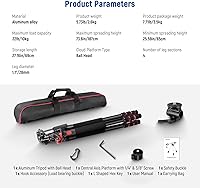
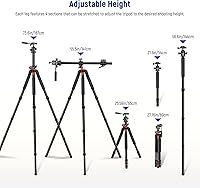
  • Max Height: The tripod extends to a maximum working height of 73.6″ (187 cm), suitable for eye-level shooting for most adult photographers.
  • Min Height: With legs fully lowered and spread wide, the minimum usable height is 25.59″ (65 cm), adequate for tabletop and low-angle work.
  • Tripod Weight: The complete aluminum alloy unit weighs 5.73 lb (2.6 kg), making it practical for travel and extended on-location use.
  • Max Load: The rated maximum load capacity is 22 lb (10 kg), though real-world stability is best maintained at or below approximately 14–15 lb in standard use.
  • Leg Sections: Each of the three legs consists of 4 individual sections secured by quick twist locks for height adjustment.
  • Leg Angles: The legs can be independently set to one of three spread angles — 23°, 50°, or 80° — to adapt to uneven terrain or very low shooting positions.
  • Center Column: The center column supports three orientations: standard vertical, fully inverted for low-angle macro work, and horizontal for overhead flat-lay shooting.
  • Head Type: The included head is an Arca-type ballhead with a standard 1/4″ quick release plate and a U-shaped slot for vertical camera orientation.
  • Ballhead Damping: Two independent damping adjustment knobs allow fine-tuning of ballhead resistance for both stills and smooth video panning.
  • Axis Platform: A central axis platform mounts mid-column and features both a 1/4″ screw and a 3/8″ screw sleeve for connecting monitors, magic arms, or a second camera body.
  • Monopod Use: One tripod leg is removable and attaches directly to the center column to form a functional monopod, with a foam grip wrap for comfortable handheld use.
  • Material: The legs, column, and primary structural components are constructed from aluminum alloy for a balance of rigidity and low overall weight.
  • Ballast Hook: An integrated hook on the lower end of the center column accepts a sandbag or weighted bag to improve stability in outdoor or windy conditions.
  • Quick Release: The Arca-type quick release system is compatible with standard Arca-format plates from third-party manufacturers, allowing fast camera swaps without proprietary adapters.
  • Packed Dimensions: When folded and stored, the tripod measures approximately 28.82 x 6.02 x 5.94 inches, fitting into the included carry bag.
  • Carrying Case: A zippered storage bag is included in the box for transporting the tripod and accessories, though fit is snug with all components packed together.
  • Compatibility: The 1/4″ screw standard and Arca-type ballhead are broadly compatible with Sony, Canon, Nikon, Fujifilm, and most other DSLR and mirrorless camera systems.
  • Model Number: The official model designation is TP27, manufactured and sold under the NEEWER brand.

Related Reviews

Geekoto 73-Inch Camera Tripod
86%
91%
Portability & Weight
88%
Stability & Load Capacity
84%
Ease of Use
80%
Build Quality
87%
Versatility (Tripod & Monopod)
More
Sirui Traveler 7A Aluminum Camera Tripod
86%
91%
Portability & Size
88%
Build Quality & Durability
89%
Ease of Setup
85%
Weight Capacity
90%
Monopod Conversion
More
NEEWER Basics Camera Tripod Monopod TP08
85%
88%
Ease of Use
91%
Portability
83%
Stability in Windy Conditions
90%
Versatility (Tripod & Monopod)
87%
Build Quality
More
NEEWER 72-inch Aluminum Camera Tripod Monopod
78%
78%
Build Quality
74%
Stability & Rigidity
88%
Maximum Height & Reach
67%
Ball Head Performance
86%
Center Column Versatility
More
NEEWER N55CR Carbon Fiber Camera Tripod
81%
88%
Build Quality
86%
Stability at Normal Heights
67%
Stability at Maximum Extension
93%
Weight & Portability
74%
Ball Head Performance
More
MOKOSE C100-6-12MM HDMI Camera with 6-12mm Manual Lens
85%
91%
Image Quality
87%
Ease of Use
94%
Video Performance (4K)
65%
Autofocus Performance
89%
Build Quality
More
ZOSI 2K NVR Security Camera System 1TB
76%
83%
Image Quality
79%
Night Vision Performance
76%
AI Detection Accuracy
77%
Setup & Installation
67%
App Experience
More
NEEWER Z160 Camera Flash
81%
94%
Portability & Form Factor
83%
Build Quality
61%
Flash Output Power
88%
Battery Life & Charging
86%
Recycle Time
More
SmallRig CT200 Horizontal Overhead Tripod
84%
88%
Stability and Performance
72%
Portability/Weight
85%
Ease of Use
90%
Build Quality
89%
Versatility
More
PHOPIK PT244 77″ Camera Tripod
86%
91%
Value for Money
95%
Portability & Size
88%
Build Quality
82%
Ease of Use
86%
Stability with Heavy Equipment
More

FAQ

Yes, within reason. The TP27 handles mid-weight rigs comfortably — a standard DSLR body with a kit or moderate zoom lens is no problem at all. Where you want to be careful is when running large telephoto lenses or heavy accessories simultaneously, especially with the column in horizontal mode. The 22 lb rating is a mechanical ceiling, not a recommended daily working load; most experienced users keep things under 14 to 15 lb for reliable stability.

Once you have done it a couple of times, it takes under a minute. You release the column clamp, rotate the column to horizontal, lock it back down, and rebalance your camera. The trickier part is getting the camera weight balanced over the center so the rig does not want to tip — a counterweight on the opposite end of the column helps a lot with heavier setups.

It handles light video use well — slow pans, static product shots, and talking-head setups all work fine. The dual damping knobs give you real control over resistance, which is a genuine advantage over single-knob heads. That said, if you are doing cinematic movement or need true fluid drag for broadcast work, this ballhead will feel limiting. It is genuinely solid for content creators but not a substitute for a dedicated fluid video head.

Yes. The NEEWER TP27 73.6″ Horizontal Aluminum Camera Tripod uses a standard Arca-type clamp system, so any Arca-compatible plate from brands like Really Right Stuff, Joby, Sunwayfoto, or similar should fit and function correctly. If you already own Arca plates for other tripods, you can use them here immediately without adapters.
They are secure once properly tightened, but they do require a firmer hand than most flip-lever systems. The key is making sure each lock gets a full, firm twist — a half-tightened twist lock will feel wobbly. It is a bit of an adjustment if you are coming from flip locks, but after a few sessions it becomes second nature. In dusty or outdoor conditions, give them an extra quarter-turn to be safe.

Yes, and it is straightforward. You unscrew one of the three legs, then attach it to the bottom of the center column using the same thread connection. The foam wrap on that leg serves as your grip. It works well as a lightweight monopod for events or moving through a venue quickly. It is not as refined as a dedicated monopod, but it is a genuinely useful secondary function that saves carrying an extra piece of gear.

Quite a bit, actually. The platform has both a 1/4″ screw and a 3/8″ screw sleeve, so you can mount a small monitor, a magic arm for lighting or a microphone, a laptop tray, or even a second camera body. The main thing to keep in mind is weight balance — the more you load onto the platform with the column horizontal, the more carefully you need to distribute weight on both sides to avoid stressing the column joint.

It gets the job done but it is not luxurious. Everything fits inside, but the zipper is under real tension once the ballhead, column, and accessories are all packed in together. For occasional travel it is fine. If you are packing and unpacking this tripod daily or checking it as luggage frequently, investing in a padded tripod bag with a bit more room would be worth it for long-term peace of mind.

Absolutely. The standard 1/4″ screw on the ballhead is the universal mounting thread used by phone adapters, GoPro mounts, and most small camera accessories. You would just need the appropriate adapter for your specific device, most of which are inexpensive and widely available.

With the legs spread to their widest 80° angle and the column inverted, you can get the camera fairly close to the ground — the minimum height with the column in standard position is around 25.6″ (65 cm). For truly ground-level macro work, the inverted column position pushes the camera lower still, but this is not a flat-to-the-floor setup like some dedicated low-profile tripods. For most macro and product shooting scenarios it is more than adequate.

Where to Buy