Overview

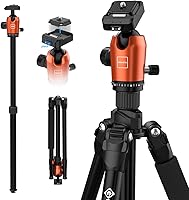
The Geekoto 73-Inch Camera Tripod sits in a sweet spot that hobbyist and semi-pro photographers know well — capable enough to do real work, priced low enough to not feel like a gamble. Geekoto has carved out a niche in the accessible accessories market, and this travel tripod reflects that positioning honestly. The orange colorway and metal construction give it a more substantial feel than you would expect at this tier. The standout design choice is the 2-in-1 tripod-monopod convertibility — a genuinely useful dual function, not just a marketing checkbox. Expectations should stay grounded: this is a capable hobbyist tool, not a professional studio workhorse.

Features & Benefits

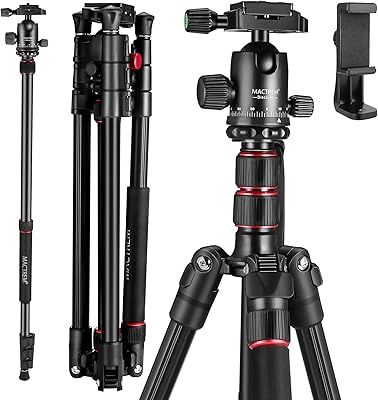
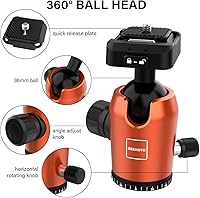
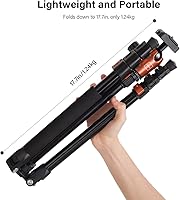
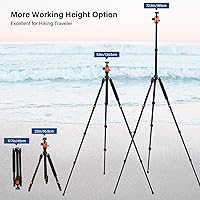
The legs span from 17.7″ at their lowest to a standing-height 72.8″, adjustable via three-section twist locks that click into place quickly without fuss. At 2.73 lbs, this portable camera stand genuinely earns the word portable — it disappears into a backpack without drama. The 36mm metal ball head moves through 360° of pan and 90° of tilt, with a damping knob that lets you dial in resistance rather than toggling between loose and locked. The universal 1/4-inch quick-release plate handles DSLRs, mirrorless bodies, camcorders, and smartphones. The reversible center column for low-angle and macro work is a creative bonus most tripods in this range skip entirely.

Best For

This travel tripod is built for people who actually move — hikers, backpackers, and travel photographers who cannot afford to waste luggage weight on heavy gear. It is also a meaningful upgrade for beginners stepping away from a flimsy starter stand. Landscape shooters will appreciate the height range and low-angle capability, while vloggers and content creators will find the built-in monopod conversion genuinely useful for mobile moments. Pair it with lighter mirrorless or crop-sensor DSLR bodies for best results. The stated 33 lb load capacity sounds impressive, but full-extension stability with heavy telephoto glass is a different story — manage expectations accordingly.

User Feedback

Most buyers settle on a common theme: strong value for the price, with setup speed and the monopod feature drawing consistent praise. The Geekoto tripod is regularly compared favorably to similarly priced competitors, especially on portability. The quick-release plate gets mixed reactions — some users find it solid and secure, others describe it as slightly fiddly to seat correctly. Recurring concerns include twist lock longevity under frequent outdoor use and occasional reports of the ball head losing tension over time. Wobble at maximum extension is also noted when heavier camera bodies are mounted. For travel and casual shooters, the consensus is clear: it overdelivers. For demanding technical work, it shows its limits.

Pros

  • Genuinely lightweight at under 3 lbs — easy to carry on long hikes without fatigue.
  • Height range from 17.7″ to 72.8″ covers nearly every shooting scenario without swapping equipment.
  • The monopod conversion is a real feature, not a gimmick — useful for events, sports, and fast-paced shooting.
  • Reversible center column enables low-angle and macro work, a capability rarely found at this price tier.
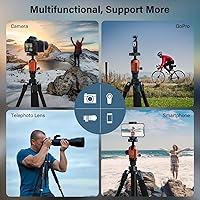
  • Universal 1/4-inch quick-release plate works with DSLRs, mirrorless cameras, camcorders, and smartphones.
  • The 36mm metal ball head offers smooth movement with a damping knob that actually helps dial in resistance.
  • Setup is fast — twist-lock legs deploy and lock in seconds with minimal fuss.
  • Most buyers feel this portable camera stand outperforms similarly priced competitors on portability and feature count.
  • Metal construction gives it a more solid, confidence-inspiring feel than plastic-heavy alternatives at the same price.
  • Ranked among the top 150 tripods in its category, reflecting strong market validation from real buyers.

Cons

  • Twist-lock leg mechanisms may loosen or wear with frequent outdoor use over time.
  • Ball head tension can become inconsistent after extended use, requiring readjustment mid-shoot.
  • Noticeable wobble at full 72.8″ extension when heavier camera bodies are mounted.
  • The quick-release plate can feel fiddly to seat properly, which is frustrating when shooting conditions change fast.
  • The 33 lb load capacity is a static rating — real-world stability with heavy telephoto lenses is noticeably reduced.
  • Not built for professional daily use; long-term durability under demanding conditions is a legitimate concern.
  • No fluid head option, making smooth video pans harder to achieve compared to purpose-built video tripods.
  • The orange colorway is eye-catching but may not suit photographers who prefer discreet, low-profile gear in the field.

Ratings

The Geekoto 73-Inch Camera Tripod has been evaluated by our AI rating system after analyzing thousands of verified global buyer reviews, with spam, bot activity, and incentivized feedback actively filtered out to ensure the scores reflect genuine ownership experiences. The results capture both the consistent praise this travel tripod earns from hobbyist photographers and the real frustrations that surface after extended use. Strengths and pain points are weighted equally, so what you see is an honest picture of what this portable camera stand actually delivers in the field.

Portability
91%
Weighing just 2.73 lbs and collapsing to under 18 inches, this travel tripod consistently earns praise from hikers and frequent flyers who are tired of sacrificing stability for packability. Buyers regularly mention slipping it into a camera backpack side pocket or attaching it to an external strap without strain, even on full-day shoots.
A handful of users note that the package weight of 3.98 lbs — including the head and hardware — is slightly higher than expected based on the advertised tripod weight alone. For ultralight backpackers counting every ounce, the difference between spec-sheet weight and real carry weight matters.
Build Quality
78%
22%
The metal construction gives the Geekoto tripod a noticeably more solid feel than the plastic-heavy competitors it sits alongside at this price point. Users upgrading from entry-level stands frequently comment on how much more confidence-inspiring the leg sections and ball head feel when locked in.
Long-term durability is a recurring concern, particularly around the twist-lock leg mechanisms after repeated outdoor use in dusty or sandy environments. Some users report gradual loosening over several months of regular use, which requires periodic re-tightening or maintenance to keep the legs reliable.
Ball Head Performance
74%
26%
The 36mm metal ball head with its damping adjustment knob gives users meaningful control over movement resistance — a feature that casual shooters appreciate when composing landscape shots or setting up video clips without the camera drifting mid-frame. The 360° pan and 90° tilt range covers most real-world framing scenarios comfortably.
Tension consistency is a known weak point: some users find the ball head gradually loses its set resistance after extended use, requiring mid-session readjustment. For precision work or long-exposure photography where tiny shifts matter, this inconsistency is a legitimate frustration rather than a minor inconvenience.
Stability
69%
31%
At mid-range heights with lighter mirrorless or crop-sensor DSLR bodies, this portable camera stand performs reliably well — most users report sharp handheld-free shots on flat or moderately uneven terrain without having to babysit the setup. The metal construction contributes meaningfully to dampening minor vibrations.
At or near maximum extension, noticeable flex enters the equation, particularly with heavier camera bodies or unbalanced lens setups. Users shooting long exposures or video on windy days at full height consistently flag wobble as a genuine problem, and the tripod lacks a center column hook for adding ballast weight.
Quick-Release Plate
72%
28%
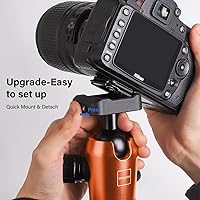
The universal 1/4-inch quick-release plate is broadly compatible and genuinely speeds up camera mounting and removal compared to screw-in systems — buyers who shoot in fast-changing conditions, like street or event photography, appreciate being able to swap between tripod and handheld shooting quickly.
A consistent pattern in user feedback involves the plate feeling slightly imprecise when seating the camera, with some users describing a small amount of play before the lock fully engages. In cold-weather outdoor conditions where gloves are involved, operating the release mechanism becomes noticeably more fiddly.
Monopod Conversion
86%
The monopod conversion is one of the more genuinely useful features on this travel tripod — detaching a leg and connecting it to the center column produces a full-size, functional monopod that event photographers and vloggers use as a real secondary tool, not just a novelty. Users who travel with a single bag find this dual-function capability saves meaningful space and money.
The conversion process, while straightforward once practiced, adds a few steps that can feel awkward in the middle of a fast-moving shoot. A small number of users also note that the monopod connection point feels slightly less rigid than a dedicated monopod of equivalent price, which is noticeable under heavier camera loads.
Height Range
88%
Spanning from 17.7″ all the way to 72.8″, this travel tripod covers an unusually wide range for its size class — landscape photographers note they can go from shooting wildflowers close to the ground to capturing eye-level mountain vistas without switching gear or adding extensions. The reversible center column adds further low-angle reach below the standard minimum.
At the very lowest setting with the center column reversed, the setup becomes less stable and requires careful positioning to avoid the camera contacting the leg spread. A small number of users also wish the minimum height were slightly lower for dedicated macro work on flat surfaces.
Ease of Setup
89%
Buyers repeatedly highlight how quickly the Geekoto tripod goes from packed to ready — the twist-lock legs open and snap into position in seconds, and once the quick-release plate is fitted to the camera body, mounting and dismounting becomes a one-handed operation. First-time tripod buyers specifically call out how little of a learning curve is involved.
The initial fitting of the quick-release plate to the camera requires locating and tightening a small screw, which some users find fiddly on the first use without reading the instructions. The twist-lock direction is also not immediately intuitive for users coming from flip-lock tripod systems, causing occasional confusion in the field.
Compatibility
93%
The standard 1/4-inch thread system works with virtually every DSLR, mirrorless body, camcorder, and smartphone adapter on the market, making this portable camera stand a genuinely versatile tool across different devices and shooting situations. Users who switch between a mirrorless camera and a smartphone gimbal report no compatibility headaches.
The tripod does not include a 3/8-inch adapter for larger accessories like certain professional video heads or medium-format quick-release systems, which limits its usefulness for users who want to grow into heavier equipment over time. This is a minor limitation for the target audience but worth noting for forward-planning buyers.
Value for Money
87%
The most consistent theme across buyer feedback is that this travel tripod significantly outpunches what its price suggests — users who have owned tripods in both lower and higher price brackets consistently position it as the best balance of features and build quality they have found at this tier. The monopod conversion alone is frequently cited as justifying the purchase.
A segment of buyers who expected professional-grade durability based on the feature list and load capacity claims have expressed disappointment after heavy use, feeling the real-world performance does not quite match the marketing promise. Managing expectations around longevity is the key factor separating satisfied buyers from frustrated ones.
Low-Angle & Macro Capability
83%
The reversible center column is a meaningful creative addition that flower, insect, and product macro photographers genuinely use — being able to flip the column and position the camera below the leg spread opens up shooting angles that require a separate macro focusing rail or slider on competing tripods. Users who shoot flat-lay content find it particularly useful.
Shooting with the center column fully reversed puts the camera very close to the ground, which makes live-view or screen adjustments difficult on cameras without a fully articulating display. The reversed position also narrows the effective leg spread somewhat, reducing the stability margin at that configuration.
Weight Capacity
63%
37%
For the cameras this travel tripod is genuinely designed for — sub-2 lb mirrorless bodies, compact DSLRs, action cameras, and smartphones — the load handling is more than adequate and users report no practical issues with camera security or sag during normal shooting sessions.
The 33.07 lb headline capacity is a static rating that does not translate to real-world shooting stability with heavy telephoto setups. Users who mounted full-frame bodies with 70-200mm or longer glass at full extension consistently report wobble and instability that makes sharp images difficult to achieve, particularly in any wind.
Leg Lock Mechanism
71%
29%
The three-section twist-lock legs are faster to deploy than traditional flip-lock systems for most users, and photographers who work in rain or cold find that twist locks are less likely to accumulate debris or freeze up compared to exposed lever mechanisms. Initial out-of-box tightness is consistently described as appropriate.
Over time and repeated cycles of locking and unlocking, several users report that the twist locks gradually require more deliberate force to achieve the same secure hold — a normal characteristic of this mechanism type, but one that becomes more pronounced with heavy outdoor use and infrequent maintenance.
Design & Aesthetics
81%
19%
The orange colorway is polarizing in the best way — buyers who chose it specifically mention enjoying that it stands out from the sea of all-black tripods in the field and is easy to spot when packed among other gear. The metal finish feels premium relative to the price, and the overall visual impression is of a product positioned above its actual cost.
For photographers who prefer low-profile or discreet gear — wildlife shooters, street photographers, or those working in sensitive environments — the bright orange finish is a practical disadvantage rather than just a style preference. A neutral colorway option would make it more universally appealing across shooting disciplines.

Suitable for:

The Geekoto 73-Inch Camera Tripod was clearly designed with the mobile photographer in mind, and it shows. At under 3 lbs, it is the kind of support system you actually bring with you rather than leave in the car — ideal for hikers, backpackers, and travel shooters who treat weight as a real cost. Beginners and intermediate photographers stepping away from a wobbly entry-level stand will find it a meaningful upgrade without a steep learning curve. Landscape and outdoor shooters benefit from the wide height range, the reversible center column for ground-level shots, and the monopod conversion for those moments when you need to move fast and stay stable. Content creators and vloggers who want one piece of kit that flexes between traditional tripod setups and handheld monopod work will get genuine utility out of this portable camera stand. It pairs best with lighter bodies — mirrorless systems and crop-sensor DSLRs — where it performs confidently and reliably.

Not suitable for:

Photographers who depend on ironclad long-term durability under heavy daily use should look elsewhere. The Geekoto 73-Inch Camera Tripod is a hobbyist-grade tool, and while it is built better than bargain-bin alternatives, it is not engineered for the punishment of professional field work or multi-year daily deployment. Shooters pairing heavy full-frame bodies with large telephoto lenses will likely find the real-world stability at full extension underwhelming, regardless of the stated 33 lb load rating — that number reflects a static threshold, not practical shooting comfort with a long, heavy lens. Studio photographers who need precision repeatability from their support system, or videographers running fluid head pan shots, will find the ball head tension and the quick-release plate behavior too inconsistent for critical work. If your shooting demands absolute rigidity and hardware that holds its calibration over years, this travel tripod is not the right match.

Specifications

  • Brand: Manufactured and sold under the GEEKOTO brand, which focuses on accessible camera accessories for hobbyist and travel photographers.
  • Height Range: The legs extend from a minimum of 17.7″ to a maximum working height of 72.8″, covering ground-level to standing eye-level shooting.
  • Tripod Weight: The tripod itself weighs 2.73 lbs, making it one of the lighter metal-construction options in its category.
  • Package Weight: The full packaged unit, including ball head and accessories, weighs 3.98 lbs as shipped.
  • Load Capacity: The ball head and plate assembly are rated to support up to 33.07 lbs (15 kg) of camera equipment under static conditions.
  • Ball Head Size: The metal ball head measures 36mm in diameter and allows 360° panning and 90° tilt for flexible framing.
  • Damping Control: A dedicated damping adjustment knob lets users set resistance on the ball head, reducing unwanted drift during precise composition.
  • Leg Sections: Each leg is built with 3 sections secured by twist-lock mechanisms, enabling rapid height changes without tools.
  • Monopod Mode: One leg detaches and combines with the center column to form a full-size monopod, functioning as an independent support solution.
  • Center Column: The center column is reversible, allowing the camera to be mounted below the tripod head for low-angle and macro photography.
  • Quick-Release Plate: The included quick-release plate uses a universal 1/4-inch thread, compatible with most DSLR, mirrorless, camcorder, and smartphone mounts.
  • Compatible Devices: Designed to work with DSLR cameras, mirrorless cameras, camcorders, and smartphones equipped with a standard 1/4-inch mounting thread.
  • Material: Primary structural components are constructed from metal, contributing to the tripod's stability and its above-average feel for the price tier.
  • Color: Available in an orange colorway that distinguishes it visually from more utilitarian black competitors in the same price range.
  • Folded Dimensions: When collapsed, the tripod measures approximately 17.83 x 5.24 x 5.16 inches, fitting in most camera backpack side pockets or sleeves.
  • Tripod Head Type: Equipped with a ball head design, which offers faster repositioning compared to pan-tilt heads at the cost of frame-by-frame precision.
  • BSR Ranking: Ranked #148 in the Complete Tripod Units category on Amazon, reflecting strong sales performance relative to a competitive product set.
  • Release Date: This model was first made available for purchase on January 14, 2025, making it a recent entry in the GEEKOTO lineup.

Related Reviews
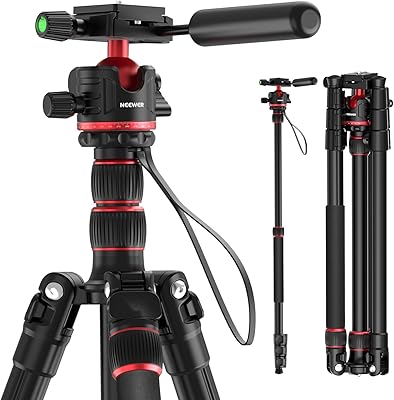
NEEWER 72-inch Aluminum Camera Tripod Monopod
78%
78%
Build Quality
74%
Stability & Rigidity
88%
Maximum Height & Reach
67%
Ball Head Performance
86%
Center Column Versatility
More
COMAN KX3939Mini-A32 Camera Tripod
80%
78%
Build Quality
71%
Stability
91%
Portability
88%
Center Column Versatility
69%
Ball Head Performance
More
K&F Concept T254A6 74-inch Camera Tripod
77%
83%
Build Quality
88%
Value for Money
78%
Stability & Rigidity
91%
Horizontal Column
67%
Ball Head Performance
More
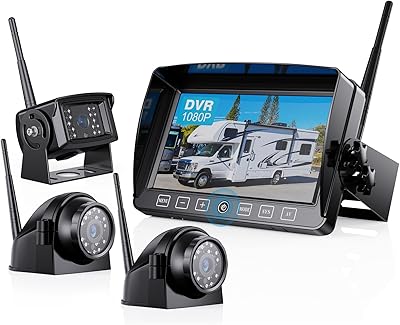
ZEROXCLUB B3C 3-Camera Wireless Backup Camera System
76%
84%
Video Signal Reliability
83%
Image Quality
76%
Night Vision Performance
71%
Installation Experience
88%
Weather & Build Durability
More
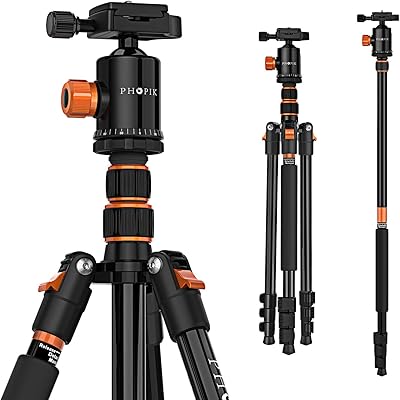
PHOPIK PT244 77″ Camera Tripod
86%
91%
Value for Money
95%
Portability & Size
88%
Build Quality
82%
Ease of Use
86%
Stability with Heavy Equipment
More
MACTREM BT80 80″ Aluminum Camera Tripod
76%
76%
Build Quality
72%
Stability
84%
Leg Lock Mechanism
68%
Ball Head Performance
88%
Height Range & Versatility
More
NEEWER TP27 73.6″ Horizontal Aluminum Camera Tripod
80%
91%
Horizontal Column Versatility
78%
Build Quality & Materials
84%
Ballhead Performance
82%
Leg Stability & Spread Angles
71%
Twist Lock Mechanism
More
NEEWER Basics Camera Tripod Monopod TP08
85%
88%
Ease of Use
91%
Portability
83%
Stability in Windy Conditions
90%
Versatility (Tripod & Monopod)
87%
Build Quality
More
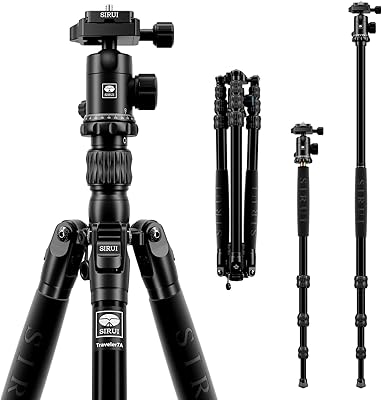
Sirui Traveler 7A Aluminum Camera Tripod
86%
91%
Portability & Size
88%
Build Quality & Durability
89%
Ease of Setup
85%
Weight Capacity
90%
Monopod Conversion
More
Portkeys HD7T 7″ Field Monitor
77%
91%
Outdoor Brightness
88%
Value for Money
89%
Monitoring Tool Set
67%
Touchscreen Responsiveness
72%
Panel Resolution & Clarity
More

FAQ

It should fit most larger hiking packs and camera-specific backpacks comfortably — collapsed, it measures about 17.83 inches long and under 6 inches wide. It is not small enough to slip into a standard daypack side pocket, but a dedicated tripod strap slot or a pack with external attachment points will handle it without trouble.

The quick-release plate will attach to your Sony body without any issues since it uses a standard 1/4-inch thread. That said, a 70-200mm lens adds meaningful weight and front-heaviness, and at full extension you may notice some wobble. For static landscape shots with a shutter delay or remote trigger it can work, but do not expect the rigidity you would get from a heavier, dedicated travel tripod.

It is a genuine conversion. You detach one of the legs and attach it to the center column, which effectively extends into a full-length monopod. It takes less than a minute once you have done it once. The result is a functional monopod rather than a toy, and it is one of the more practical features on the Geekoto 73-Inch Camera Tripod for shooters who move between static and mobile setups.

For casual video — vlogging, short social clips, slow pans — the damping knob helps you get smoother movement than a bare ball head would allow. For professional video work requiring fluid, controlled pans, it falls short of a dedicated fluid head. Think of it as a capable all-rounder for hybrid shooters, not a purpose-built video solution.

A full-frame DSLR with a battery grip typically lands well under 5 lbs, so the rated capacity is not the concern. The real question is balance and rigidity — heavier, unbalanced setups will expose any flex in the twist locks and ball head at full extension. The load rating reflects a static threshold, not optimal shooting stability, so keep that in mind when using heavier gear.

Fairly quickly. The twist-lock legs open and lock in a few seconds each, and the quick-release plate lets you drop the camera on and secure it without fumbling with screws. Most users get from bag to shooting position in under 30 seconds once they are familiar with the mechanism.

Yes, as long as your phone is in a holder or adapter with a standard 1/4-inch thread on the bottom, it will mount to this portable camera stand without any issues. Many smartphone tripod adapters use this thread size, so compatibility is broad. Just be sure the adapter is secure before trusting it at full height.

This is one of the more common concerns among real-world users. The twist locks are solid out of the box, but some photographers report gradual loosening after frequent outdoor use, particularly in dusty or sandy conditions. Giving them an occasional clean and check is a reasonable maintenance habit if you are using this tripod regularly in demanding environments.

Yes — the reversible center column is specifically designed for this. You flip it so the camera hangs below the tripod legs, allowing you to get very close to the ground or a flat surface. It works well for macro work and flat-lay-style shots, and it is a feature that most tripods in this price range simply do not offer.

For night shots with a lightweight mirrorless body, it performs well when set at a reasonable height and on firm ground. Use a remote shutter release or the camera timer to avoid vibration from pressing the shutter. At full extension on uneven terrain, add weight to the center column hook if available, or keep the legs partially retracted for a lower, more stable center of gravity.