Overview

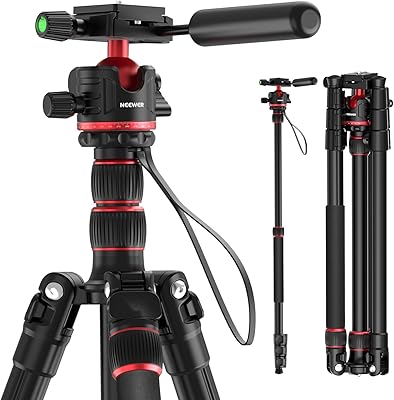
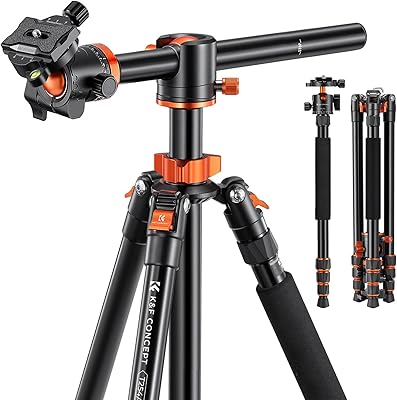
The NEEWER 72-inch Aluminum Camera Tripod Monopod sits squarely in the mid-range bracket, built for hobbyists and semi-pros who need serious height without serious cost. At full extension it clears 72 inches — a real advantage for taller photographers and anyone rigging an overhead shot. One leg detaches cleanly to function as a standalone monopod, so you're getting two tools in one package. It ships with a carrying bag, which adds to the overall value without inflating expectations. Just be clear-eyed: this is a capable, well-built support for its price tier, not a professional broadcast-grade rig.
Features & Benefits

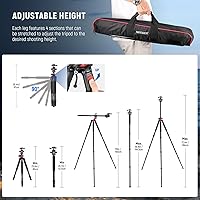
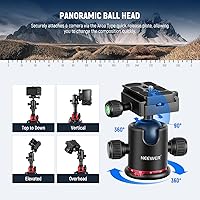
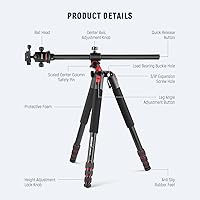
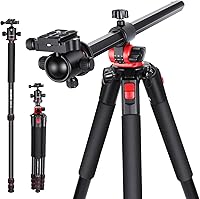
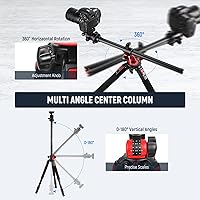
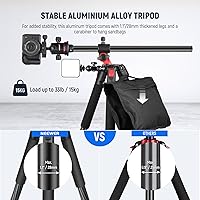
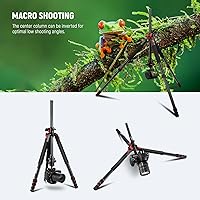
The center column is where this aluminum tripod-monopod combo earns its creative flexibility. It pivots through five vertical presets — from flat to fully horizontal — plus a complete 360° sweep, and you can reverse it entirely to shoot macro subjects close to the ground. The Arca-type quick-release plate handles fast camera swaps and fits most modern mirrorless and DSLR bodies without adapters. Four-section twist-lock legs extend to 72.4 inches and pack down to 26.4 inches, with adjustable spread angles for uneven ground. A carabiner hook under the column lets you hang a sandbag for extra stability in wind. The ball head knobs give you three distinct adjustment points, so locking a composition takes seconds.

Best For

This versatile camera support is well-suited for travel photographers who want a tall, packable rig without hauling heavy or expensive gear. Content creators shooting overhead flat-lays, product tables, or tutorial videos will find the center column and maximum height genuinely useful in real setups. When a shoot turns fast-paced, pulling one leg free and switching to a monopod is a practical move — not just a box-ticking extra. Beginners stepping up from a basic plastic stand will notice the jump in rigidity right away, and photographers carrying heavier glass will find the 33 lb capacity more than adequate for most standard camera-and-lens combinations.

User Feedback

With over 3,300 ratings and a strong overall score, buyer sentiment for this NEEWER tripod skews clearly positive. People consistently praise how easy it is to set up and how steady the legs feel once locked — reassuring for anyone buying without trying it first. Taller photographers tend to rate the maximum height more enthusiastically, which makes sense given most tripods top out well below 72 inches. On the critical side, some longer-term owners note that twist-lock leg sections can gradually loosen under repeated heavy loading — something to watch. The ball head draws mixed notes: smooth for stills, but it lacks the fluid drag videographers need for cinematic panning. The bag is a welcome practical bonus, not a premium carry case.

Pros

  • Reaches 72.4 inches fully extended — genuinely tall compared to most tripods in this price range.
  • The articulating center column handles overhead, angled, and macro shots without extra accessories.
  • Arca-type quick-release plate works with most modern mirrorless and DSLR bodies straight out of the box.
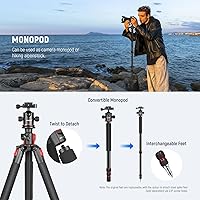
  • Detachable monopod leg is a practical option when you need to move fast between static and handheld shots.
  • Adjustable leg spread angles make it workable on stairs, hillsides, and uneven studio floors.
  • Dual bubble levels on the ball head help catch horizon errors before you shoot, not after.
  • Carabiner hook under the column lets you hang ballast weight for added stability in windy outdoor conditions.
  • Carrying bag, ball head, and quick-release plate are all included — a complete kit at purchase.
  • Folds to a compact 26.4 inches, fitting upright in most rolling carry-on luggage.

Cons

  • Ball head offers no fluid drag, making smooth video panning essentially impossible during recording.
  • Twist-lock leg sections can gradually lose their grip after months of repeated heavy use.
  • At nearly 4 pounds, this versatile camera support is heavier than many packable travel tripods.
  • The included carrying bag has minimal padding and won't protect against impacts in transit.
  • Horizontal center column positions create noticeable front-heaviness without a counterbalance weight.
  • Four-section legs introduce more flex points than three-section designs, affecting rigidity at full extension.
  • The included quick-release plate is small and may feel insecure under larger camera bodies or battery grips.
  • Twist locks are noticeably harder to operate while wearing gloves in cold outdoor conditions.
  • The converted monopod has no spike tip or interchangeable foot, limiting its usefulness on soft or slippery ground.

Ratings

The NEEWER 72-inch Aluminum Camera Tripod Monopod has accumulated thousands of verified purchases worldwide, and our AI-driven analysis combed through that feedback carefully — filtering out incentivized posts, duplicate accounts, and suspiciously vague five-star submissions — to extract what real photographers and content creators actually experience day to day. The scores below reflect an honest, balanced picture: where this aluminum tripod-monopod combo genuinely delivers and where it falls short of expectations.
Build Quality
78%
22%
The magnesium-aluminum alloy construction feels noticeably more substantial than similarly priced plastic-leg alternatives, and most users report no flex or rattle when the legs are fully locked. For hobbyists shooting landscapes or studio setups a few times a week, the overall rigidity holds up well across months of use.
A recurring pattern in longer-term feedback points to the twist-lock leg collars gradually losing their grip under repeated heavy loading — particularly when paired with a full-frame body and a large telephoto lens. This isn't an immediate problem, but it's one that shows up reliably after extended use.
Stability & Rigidity
74%
26%
On flat, solid ground this versatile camera support holds a locked composition without creep, which matters when you're waiting on a long exposure or framing a product shot that needs to stay locked for multiple takes. The carabiner hook for hanging ballast is a practical touch that genuinely helps in outdoor or windy conditions.
On uneven terrain — gravel, grass, or sloped pavement — some buyers note that micro-vibrations from wind or nearby movement transfer more than expected, especially at full extension. The four-section leg design inherently introduces more flex points than a three-section alternative would.
Maximum Height & Reach
88%
At 72.4 inches fully extended, this NEEWER tripod stands out in its price range — most competing models cap out well below that mark. Taller photographers in particular note how rarely they have to hunch or crouch to compose a shot, and it gives real room to work when rigging overhead angles for flat-lay or tutorial content.
Getting to maximum height requires extending all four leg sections, which takes slightly longer than a three-section setup. A small number of users also report that the top section feels marginally less firm than the lower ones at full extension, which can be an issue if you're shooting with a longer, heavier lens.
Ball Head Performance
67%
33%
For still photography — portraits, landscapes, product work — the ball head's three-knob system lets you lock and release a composition quickly and accurately. The dual bubble levels are well-positioned and genuinely useful for catching horizon drift before you shoot rather than fixing it in post.
Video shooters consistently flag this as the tripod's weakest point. The ball head has no fluid drag mechanism, so panning or tilting during a recording produces jerky, uncontrolled motion rather than the smooth arc a gimbal or fluid head would deliver. It is simply not designed for cinematic movement.
Center Column Versatility
86%
The ability to pivot the center column through five discrete angles — and swing it a full 360° horizontally — adds real creative range without requiring a separate arm accessory. Reversing the column for macro work or shooting at ground level is a feature that photographers actively use in practice, not just something listed on the box.
The column locking mechanism requires a firm, deliberate tightening to stay put at angled positions; a few users report the column drifting slightly under heavier cameras if the lock isn't fully engaged. It takes a little experience to know exactly how tight is tight enough.
Monopod Conversion
72%
28%
Pulling one leg free and using it as a standalone monopod is a genuinely practical option for event photographers or videographers who need to move between static and mobile shooting quickly. The detachment process is straightforward enough that you can do it without putting the camera down.
The converted monopod is functional but fairly basic — there is no foot spike or rubber tip swap included, and its length is fixed by the leg section you remove. Photographers who regularly rely on a dedicated monopod will likely find this a convenient backup rather than a true replacement.
Quick-Release Plate & Head Mount
81%
19%
Arca-type compatibility means the plate works with a wide range of L-brackets, camera cages, and third-party clamps without needing a proprietary adapter. Swapping bodies between shots takes seconds once the plate is mounted, which content creators working with multiple cameras genuinely appreciate.
The included plate itself is on the smaller side, and users with larger mirrorless bodies or cameras fitted with battery grips occasionally report that the contact area feels minimal. A few buyers replaced it early with a wider aftermarket plate for added security.
Portability & Packed Size
83%
Folding down to 26.4 inches and weighing under 4 pounds makes this aluminum tripod-monopod combo genuinely manageable as a travel companion. It fits in most rolling carry-on bags standing upright, and the included carrying bag keeps the legs and head organized without adding bulk.
At nearly 4 pounds it sits at the heavier end of the packable tripod category — ultralight backpackers or hikers who count every ounce will likely find lighter carbon fiber alternatives more appropriate. The carrying bag is also basic fabric construction, offering minimal padding if the tripod gets thrown in with other gear.
Ease of Setup
84%
Buyers consistently highlight how quickly they can go from bag to shooting-ready — typically under a minute for someone who has used it a handful of times. The leg angle selector and twist locks are intuitive enough that new users do not need to consult the manual after the first session.
The twist-lock system requires a specific wrist motion to engage properly, and a few first-time tripod buyers mention a short learning curve before they stop accidentally under-tightening a section. Gloves make the twist locks noticeably harder to operate in cold outdoor conditions.
Load Capacity Reliability
71%
29%
A 33 lb rated capacity covers virtually every consumer and prosumer camera-and-lens combination on the market — a full-frame DSLR with a 70-200mm f/2.8 zoom weighs well under 10 lbs, leaving a substantial safety margin. Most users in this category report zero issues with sag or instability under their actual gear.
The 33 lb figure is a static load rating, not a dynamic one — users report that sharp movements, such as quickly repositioning the ball head while the camera is mounted, can introduce momentary stress that exceeds what the head locks can comfortably absorb. Heavy video rigs benefit from slower, deliberate adjustments.
Leg Angle Adjustment
76%
24%
Independent leg angle settings make it practical to plant the tripod on stairs, hillsides, or uneven studio floors without resorting to workarounds. Photographers shooting in non-flat environments specifically call this out as more useful than it might initially appear.
The leg angle selector clicks between positions rather than offering infinite adjustment, which means finding a stable configuration on very irregular terrain can require patience and trial and error. The click mechanism on one leg occasionally feels stiffer than the others, according to a subset of buyers.
Overhead Shooting Capability
82%
18%
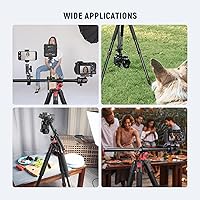
The horizontal center column position combined with the maximum height gives content creators a solid overhead mount for flat-lay photography, product videos, or recipe content — without purchasing a separate boom arm or overhead rig. For that specific use case, the value proposition is hard to dispute.
With the column extended horizontally and a camera mounted, the whole setup becomes noticeably front-heavy. Without a counterweight on the carabiner hook, some buyers report the tripod tipping slowly if the camera is positioned too far from center, which means sandbag use is less optional and more necessary in this configuration.
Value for Money
87%
Relative to what you get — Arca-type head, articulating center column, monopod conversion, carrying bag — buyers across the board agree that the price-to-feature ratio is strong for a hobbyist or semi-pro budget. It competes favorably with alternatives that cost more and offer fewer adjustment options.
Buyers who push this versatile camera support into semi-professional or frequent commercial work tend to hit its limits faster and end up upgrading to a fluid head or carbon legs within a year or two. The value case is strongest for occasional to moderate use, not daily heavy-duty sessions.
Carrying Bag Quality
58%
42%
The bag is the right size for the tripod, zips reliably, and has a shoulder strap that makes transport easy when you don't want to add it to a backpack. Most buyers treat it as a welcome practical inclusion rather than expecting anything more from it.
The material is thin and offers almost no padding, so the tripod is not protected against meaningful impacts if the bag gets knocked around during transit. Several buyers who travel frequently replaced the bag with a padded tripod sleeve within a few months of purchase.

Suitable for:

The NEEWER 72-inch Aluminum Camera Tripod Monopod is a strong match for hobbyists and semi-pros who need a versatile, tall support without committing to professional-grade pricing. Travel photographers will appreciate how it folds to 26.4 inches and weighs under 4 pounds, making it realistic to pack in carry-on luggage without sacrificing maximum working height. Content creators who shoot overhead flat-lays, tabletop product videos, or YouTube tutorials will get direct value from the articulating center column, which swings horizontally and reverses downward — capabilities that would otherwise require a separate boom arm. Beginners upgrading from a wobbly entry-level plastic tripod will notice the jump in build confidence immediately, and anyone shooting with a heavier kit lens will find that the 33 lb capacity covers virtually every consumer and prosumer camera combination without stress. The detachable monopod leg is genuinely useful for event photographers and videographers who move between static setups and handheld support in the same session.
Not suitable for:

The NEEWER 72-inch Aluminum Camera Tripod Monopod is not the right tool for videographers who need smooth panning and tilting during a recording — the ball head has no fluid drag mechanism, and the results on moving shots will look jerky compared to even a basic fluid head. Photographers planning to use this rig daily under heavy commercial loads should also think carefully: the twist-lock leg sections are serviceable for moderate use but show wear faster than higher-grade alternatives when pushed consistently hard. Ultralight backpackers and hikers who count grams will find this aluminum tripod-monopod combo on the heavier side of the packable tripod category, where carbon fiber alternatives exist at a premium but offer significant weight savings. If your work regularly involves shooting on very uneven terrain or in demanding weather, the basic carrying bag and lack of a rubber or spike foot option may leave you wanting more protection and grip than this setup provides. Professionals who need broadcast-ready stability or cinema-level head movement should treat this as the wrong category of product entirely.
Specifications

  • Maximum Height: The tripod extends to a full 72.4 inches (184 cm) at its tallest working position.
  • Folded Length: When collapsed, the unit packs down to 26.4 inches (67 cm) for transport and storage.
  • Item Weight: The complete tripod with head weighs 3.77 lb (60.32 oz), making it manageable for most travel scenarios.
  • Load Capacity: The rated maximum static load capacity is 33 lb (15 kg), covering virtually all consumer and prosumer camera rigs.
  • Frame Material: Legs and column are constructed from magnesium-aluminum alloy, balancing weight savings with structural rigidity.
  • Leg Sections: Each leg uses a 4-section twist-lock design with a maximum tube diameter of 1.1 inches (28 mm) at the widest point.
  • Leg Spread: Leg angles are independently adjustable across multiple positions to accommodate uneven or irregular shooting surfaces.
  • Head Type: The tripod ships with a ball head featuring three independent adjustment knobs for pan, tilt, and friction control.
  • Quick-Release Plate: The ball head uses an Arca-type compatible quick-release clamp, accepting standard Arca-style plates and L-brackets.
  • Bubble Levels: Two bubble levels are integrated directly into the ball head for independent horizontal and rotational leveling checks.
  • Center Column: The center column adjusts to five vertical angle presets (0°, 22.5°, 45°, 67.5°, and 90°) plus 360° horizontal rotation.
  • Column Reversal: The center column can be fully reversed to position the camera below the tripod apex for macro and ground-level work.
  • Monopod Conversion: One leg detaches from the main chassis and functions as a standalone monopod for mobile or fast-moving shooting situations.
  • Stability Hook: A carabiner hook is mounted under the center column to accept a sandbag or other ballast weight for added stability outdoors.
  • Included Accessories: The package includes the tripod with ball head, an Arca-type quick-release plate, a carabiner hook, a carrying bag, and a user manual.
  • Model Number: The manufacturer model designation for this unit is N284+G0.
  • Compatibility: The 1/4-inch and 3/8-inch mounting points are compatible with Canon, Nikon, Sony, and most other standard DSLR and mirrorless camera brands.
  • Product Dimensions: The packaged unit measures approximately 27.17 x 5.12 x 5.12 inches when stored in its carrying bag.

Related Reviews
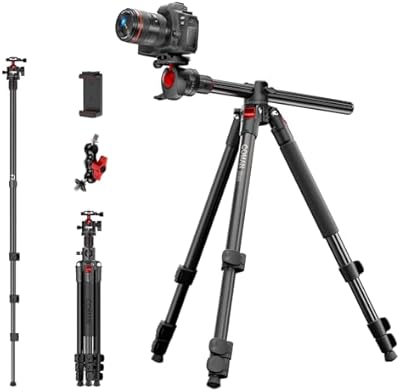
COMAN KX3939Mini-A32 72-inch Camera Tripod with Monopod
86%
87%
Stability & Performance
93%
Portability & Weight
82%
Build Quality
90%
Ease of Use & Setup
88%
Monopod Functionality
More
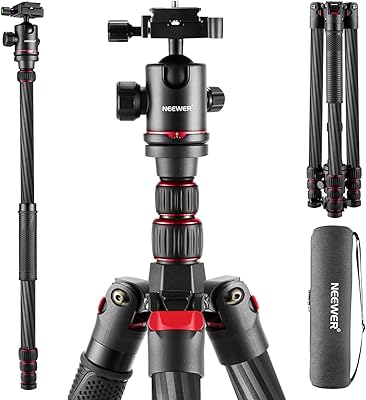
NEEWER Basics Camera Tripod Monopod TP08
85%
88%
Ease of Use
91%
Portability
83%
Stability in Windy Conditions
90%
Versatility (Tripod & Monopod)
87%
Build Quality
More
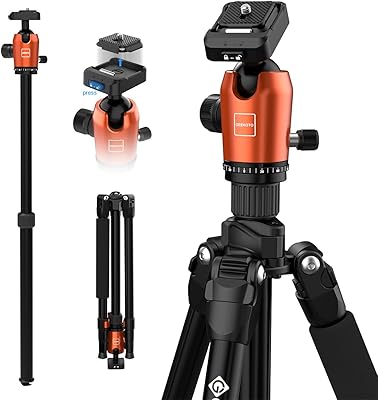
NEEWER N55CR Carbon Fiber Camera Tripod
81%
88%
Build Quality
86%
Stability at Normal Heights
67%
Stability at Maximum Extension
93%
Weight & Portability
74%
Ball Head Performance
More
Geekoto 73-Inch Camera Tripod
86%
91%
Portability & Weight
88%
Stability & Load Capacity
84%
Ease of Use
80%
Build Quality
87%
Versatility (Tripod & Monopod)
More
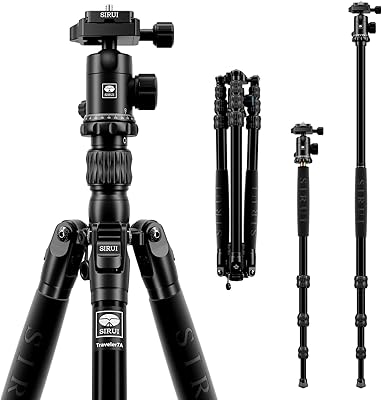
Sirui Traveler 7A Aluminum Camera Tripod
86%
91%
Portability & Size
88%
Build Quality & Durability
89%
Ease of Setup
85%
Weight Capacity
90%
Monopod Conversion
More
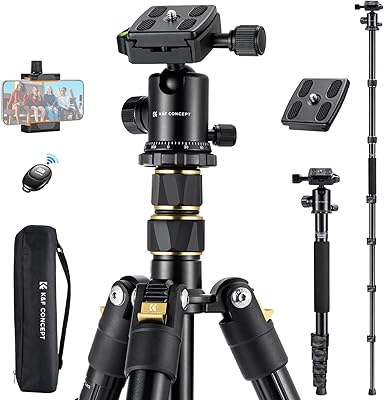
K&F Concept KF09.007V1 72-inch Aluminum Tripod
81%
93%
Portability & Packed Size
91%
Maximum Extended Height
71%
Ball Head Performance
84%
Leg Lock Mechanism
79%
Monopod Conversion
More
NEEWER F100 7-inch Field Monitor
78%
83%
Image Quality
66%
Outdoor Visibility
71%
Build Quality
68%
Ball Head & Mounting
78%
Battery Life
More
NEEWER RP19H 19-Inch Ring Light
78%
91%
Light Output Quality
88%
Color Accuracy
86%
Touch Screen Controls
67%
Tripod Stability
79%
Wireless Remote
More
Benro SystemGo Plus FGP18A Aluminum Tripod with Monopod Conversion
85%
94%
Portability & Size
88%
Versatility
85%
Stability
90%
Ease of Use
83%
Build Quality
More
K&F Concept 74-inch Camera Tripod T254A6+BH-28L
85%
89%
Build Quality
92%
Portability
85%
Versatility
88%
Stability for Heavy Cameras
84%
Height Adjustability
More

FAQ

Folded down to 26.4 inches, this aluminum tripod-monopod combo fits upright in most standard rolling carry-on bags. It won't fit horizontally in a typical overhead bin on its own, but packed inside a roller bag it travels without issue for most airlines. Just check your specific bag dimensions against your carrier's size limits to be safe.

Honestly, not without some frustration. The ball head does not include a fluid drag mechanism, which means controlled, cinematic panning during a recording will be very difficult to pull off. For static video shots or interviews where the camera stays locked, it works well. If smooth motion during recording is essential to your work, a dedicated fluid head would be a better pairing.

Yes — the clamp uses the Arca-type standard, so any Arca-compatible plate, L-bracket, or cage with an Arca rail should fit without needing an adapter. Just make sure the rail width on your accessory falls within the standard Arca range, roughly 38 to 42 mm, which covers the vast majority of third-party options on the market.

A full-frame DSLR or mirrorless body paired with a 100-400mm zoom typically comes in somewhere between 5 and 8 lb total — well within the 33 lb static load rating of this versatile camera support. You'll have plenty of headroom. That said, avoid abrupt movements or hard repositioning with the lens extended, as dynamic forces can briefly exceed what the ball head locks can absorb smoothly.

It's fairly straightforward. One of the three legs is designed to unscrew from the tripod apex, giving you a four-section monopod that extends to a usable working height. The detachment takes about 30 seconds once you've done it a couple of times. It's genuinely handy at events or crowded locations where carrying a full tripod isn't practical, though it doesn't include a monopod foot tip, so keep that in mind for soft or slippery surfaces.

Yes, and this is actually one of the stronger use cases for this rig. The center column swings out horizontally and rotates 360°, letting you position the camera directly above a subject without needing a separate boom arm or overhead rig. Just be aware that with the column fully horizontal and a camera mounted, the setup becomes front-heavy — hanging a counterweight from the carabiner hook underneath the column is strongly recommended to prevent tipping.

It's a known pattern with this type of leg design. Twist-lock collars can gradually work themselves slightly looser over time, especially with frequent heavy use. In most cases you can snug them back up manually. If a specific collar is consistently slipping under the weight of your camera, try cleaning any grit out of the threads and retightening — it usually resolves the issue without needing a replacement part.

For a first real tripod, it's a solid step up from the basic plastic options in the entry-level range. The build feels noticeably more substantial, the ball head is intuitive to learn on, and having the Arca-type plate means you're already set up for compatible accessories down the road. The learning curve is minimal — most users are comfortable with setup within a single session.

Mostly organization, to be honest. The bag is the right size and zips securely, with a shoulder strap for easy carrying. But the fabric is thin with minimal padding, so it won't do much against hard knocks or being thrown under a bus seat. If you're traveling frequently or checking luggage, consider wrapping the bag in clothing inside your main bag or investing in a padded tripod sleeve for better protection.

The independent leg angle adjustment helps a lot here — you can spread individual legs wider or narrower to compensate for slopes or irregular terrain. It takes a bit of trial and error to dial in on very uneven ground, but most users find a stable configuration without too much trouble. Using the carabiner hook with a ballast weight also adds meaningful stability when the ground isn't perfectly flat.

Where to Buy