Overview

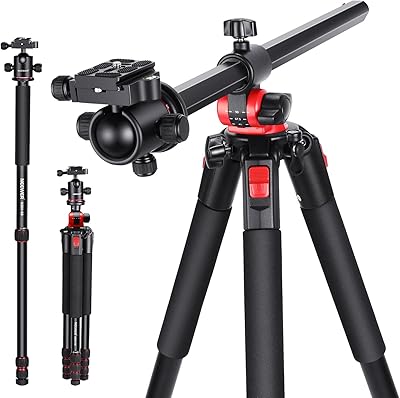
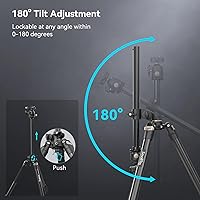
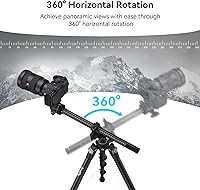
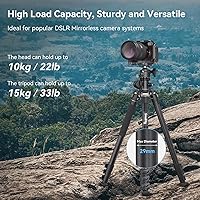
The SmallRig CT200 Overhead Camera Tripod is SmallRig's answer to a recurring problem in food and product photography: how do you get a proper top-down shot without spending a fortune on a dedicated boom arm? The defining feature is the lateral center column, which tilts 180° and rotates a full 360°, turning a conventional tripod into a genuine overhead rig. Built from aluminum alloy, this overhead tripod keeps its weight under 4.4 lb while supporting up to 33 lb total — though the head itself is rated to 22 lb, which is worth keeping separate in your mind. It handles still work and light video well, but don't expect it to carry heavy cinema setups.

Features & Benefits

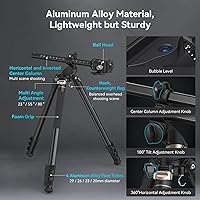
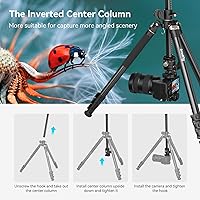
What makes the CT200 genuinely practical on a shoot is how quickly you can reconfigure it. The quick-lever leg locks click into three preset angles — 23°, 55°, and 80° — so spreading the legs for a low coffee-table setup takes seconds rather than minutes of fiddling. The center column reverses for true floor-level macro work without swapping any hardware. Along the horizontal axis, 1/4″-20 threaded ports let you hang a monitor or mount a microphone right where you need it. One practical standout is the included counterweight bag: when your camera is cantilevered out horizontally, that small sandbag makes a real difference in keeping things steady.

Best For

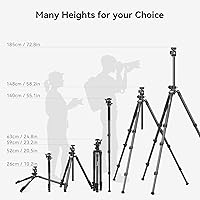
This flat-lay rig is a natural fit for food and product photographers who build their workflow around top-down compositions — the kind of work where a standard tripod simply gets in the way. Content creators filming overhead smartphone footage will appreciate the included holder and the fact that the whole kit packs into a manageable carry bag. It also converts into a monopod reaching up to 140 cm, making it a reasonable travel companion when you need to keep the bag count low. That said, if you are running a full cinema camera or a heavy anamorphic lens, this overhead tripod is not built for that load.

User Feedback

Buyers who have spent time with the CT200 consistently note how solid it feels for its weight — the aluminum tubes do not flex, and the overall build inspires more confidence than the price might suggest. The bundled accessory kit draws frequent praise too; people genuinely use the carry bag and weight bag rather than setting them aside. On the other side, a recurring frustration involves the center column drifting slightly when a heavier mirrorless body is mounted without proper counterweight placement — it rewards careful setup, not rushed ones. First-time overhead tripod users also mention a moderate learning curve during initial assembly, but most describe it as a one-time hurdle.

Pros

  • The horizontal center column tilts 180° and rotates 360°, covering overhead and panoramic angles most standard tripods cannot reach.
  • At under 4.4 lb, the CT200 is light enough to pack without second-guessing it on travel days.
  • Quick-lever leg locks make spreading and folding the legs fast — no twisting collars to fight with mid-shoot.
  • Three preset leg angles let you switch from a standard stance to a wide, low spread in seconds.
  • The included counterweight bag is a practical touch that genuinely helps balance a camera extended horizontally.
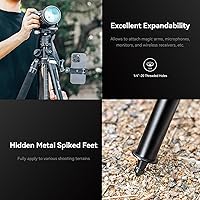
  • Hidden metal spikes beneath the silicone foot pads add real grip on outdoor surfaces without scratching indoor floors.
  • The reversible center column handles low-angle and macro setups without any additional accessories.
  • 1/4″-20 threaded ports along the horizontal axis let you attach a monitor or microphone right where you need it.
  • The bundled smartphone holder, carry bag, and weight bag add immediate utility straight out of the box.
  • Build quality feels noticeably solid for the price tier, with thick 29 mm aluminum tubes that inspire confidence.

Cons

  • The center column can drift under heavier camera bodies if the counterweight is not positioned carefully.
  • First-time overhead tripod users report a learning curve during initial setup that can be frustrating.
  • The ball head design lacks the fluid motion control that video-focused shooters typically expect.
  • Operating near the 22 lb head load limit horizontally demands extra attention and is not stress-free.
  • The leg angle system locks into only three preset positions, which can feel restrictive in tight or oddly shaped spaces.
  • Longer exposure work in outdoor or breezy conditions may reveal minor vibration sensitivity in the lightweight frame.
  • The carrying bag, while convenient, offers minimal padding and is not ideal for protecting the rig during rough transit.
  • Assembly instructions in the manual are sparse and may leave new users piecing together steps through trial and error.

Ratings

The scores below for the SmallRig CT200 Overhead Camera Tripod were generated by AI after analyzing verified buyer reviews from multiple global markets, with spam, incentivized, and bot-flagged submissions actively filtered out before scoring. Each category reflects both the genuine praise and the recurring frustrations real users reported across still photography, content creation, and travel use cases. Nothing has been smoothed over — where buyers ran into real limitations, the scores show it.

Build Quality
83%
Most buyers are genuinely surprised by how solid the aluminum frame feels given the weight. The 29 mm tubes resist flex during overhead setups, and the leg joints do not wobble the way cheaper tripods tend to after a few months of use.
A few users noticed that the horizontal column locking collar feels slightly less refined than the leg hardware — it works, but it does not inspire the same confidence under repeated heavy use. Finish quality on the smaller hardware pieces is occasionally inconsistent.
Stability
74%
26%
On flat indoor surfaces, the CT200 holds a camera steady without drama — food photographers setting up a flat-lay on a kitchen table report clean, blur-free shots at moderate shutter speeds. The wide leg spread at the 80° preset adds meaningful stability for horizontal column setups.
When the column is fully extended horizontally with a heavier mirrorless body, some center column drift does occur unless the counterweight is carefully positioned. On uneven outdoor ground, keeping the platform truly level requires patience and trial and error with the leg angle presets.
Overhead Functionality
89%
This is where the rig earns its price — the 180° tilt and 360° rotation of the horizontal column genuinely open up overhead and panoramic angles that a standard tripod simply cannot reach. Food and product photographers repeatedly call it the most practical feature for their daily workflow.
The horizontal reach, while sufficient for most tabletop subjects, does have limits — very wide flat-lay compositions may require repositioning the legs rather than just rotating the arm. Users with larger shooting surfaces occasionally wished the arm extended a few centimeters further.
Value for Money
86%
Compared to dedicated overhead boom arms or professional studio rigs, this overhead tripod delivers a surprisingly complete package at a mid-range price point. The bundled counterweight bag, smartphone holder, and carry bag add tangible utility that buyers consistently describe as feeling like genuine extras rather than afterthoughts.
For users who only need standard tripod functionality and will rarely shoot overhead, the price premium over a basic three-section tripod is hard to justify. A small number of buyers also felt the ball head quality does not quite match the rest of the kit at this price tier.
Ease of Setup
71%
29%
Experienced tripod users typically get the overhead configuration sorted within a few minutes of opening the box. The quick-lever leg locks in particular receive consistent praise for making height and angle adjustments fast and intuitive during an active shoot.
First-time overhead tripod owners frequently mention a frustrating initial learning curve, partly because the included manual covers the basics but leaves some configuration steps underexplained. Getting the counterweight balance right during a first session can burn through more time than expected.
Portability
81%
19%
At 4.4 lb with a packed size that slides into its own carry bag, this flat-lay rig is realistic to take on location shoots without overpacking. Travel photographers who want one piece of gear covering both tripod and monopod duties find it a practical consolidation.
It is noticeably bulkier than a minimalist travel tripod when packed, and the carry bag offers limited padding for rougher transit situations like checked luggage or motorbike panniers. Travelers with strict airline carry-on size limits may find it a borderline fit.
Leg Lock Mechanism
84%
The quick-lever locks draw consistent positive comments — photographers switching between the three leg angle presets mid-shoot appreciate that the mechanism clicks into place firmly and does not require readjusting after the first lock. It feels durable after extended regular use.
The three fixed angle presets work well in most scenarios but feel restrictive when a shooting surface demands a non-standard leg spread. Users working in tight corners or on stairs note that the preset system offers no middle ground between the available angles.
Monopod Conversion
67%
33%
The monopod mode is genuinely functional rather than a box-ticking feature — it reaches a practical 140 cm height and provides adequate support for mirrorless cameras during event or street photography when a full tripod is impractical to carry or set up.
The conversion process, while not complex, is not as fast or elegant as a purpose-built monopod would be. The resulting monopod also lacks a dedicated foot grip or wrist strap, which dedicated monopod users will notice immediately in fast-moving shooting conditions.
Counterweight System
78%
22%
The included counterweight bag is a differentiator that most competitors skip entirely, and buyers who use it properly report a meaningful improvement in horizontal column stability. Filling the bag with sand or small weights and positioning it on the opposite side of the camera genuinely reduces drift.
The bag itself is relatively small, and for heavier camera-and-lens combinations, users report needing to supplement it with additional weight to get reliable balance. There is also no clear guidance in the manual on how much weight to use relative to camera load.
Accessory Compatibility
82%
18%
The 1/4″-20 threaded ports along the horizontal arm are a practical feature that content creators make real use of — mounting a small monitor or a wireless microphone receiver directly on the arm keeps cable runs short and the overall rig tidy during a shoot.
The number of threaded ports is limited, so users building more complex multi-accessory setups may find themselves wanting more attachment points along the arm. A cold shoe adapter is not included, which adds a small extra cost for users who need one.
Foot Design
77%
23%
The dual-purpose foot design — soft silicone on hard floors, hidden metal spikes for outdoor terrain — is a genuinely thoughtful detail. Buyers who shoot both in studio kitchens and on outdoor surfaces appreciate not having to swap feet or carry extras.
The metal spikes require deliberate downward pressure to deploy properly, which caught some users off guard the first time they set up on grass. On polished concrete or tile, a few users noted minor marks after repeated setup in the same spot, suggesting the silicone is softer than ideal.
Head Quality
66%
34%
The included ball head gets the job done for still photography — it locks solidly once positioned and handles the weight of a standard mirrorless body without slipping during a session. For overhead flat-lay work where you set the angle once and leave it, it is adequate.
Video shooters who want smooth, controlled pans or tilts will find the ball head frustrating, as it lacks any drag adjustment for fluid motion. Several users noted that the ball head feels like the weakest component in the kit, and replacing it with a third-party head is a common upgrade path.
Load Capacity
72%
28%
The 22 lb head rating covers most mirrorless and DSLR setups that photographers using this class of tripod are likely to own. For the target audience — food photographers and content creators — the real-world headroom is more than sufficient in normal use.
The discrepancy between the 33 lb total system rating and the 22 lb head limit creates genuine confusion in buyer reviews, with some expecting to mount heavy rigs only to find the head bottlenecks the capacity. This distinction deserves clearer communication in the product materials.
Instruction Manual
48%
52%
The manual does cover the basic steps for leg adjustment and center column operation, which is enough for users who have previous experience with adjustable tripods and can fill in the gaps themselves without too much frustration.
For a product with as many configuration modes as this overhead tripod — standard, overhead, monopod, reversed column, counterweight — the manual is genuinely thin. Multiple buyer reviews specifically call out the lack of clear diagrams for the horizontal column setup and counterweight positioning as a pain point.
Durability Over Time
73%
27%
Buyers who have owned the CT200 for six months or more generally report that the lever locks and column rotation mechanism hold up well with regular use and do not loosen noticeably. The aluminum construction shows normal cosmetic wear without any structural degradation.
A small subset of longer-term users report that the quick-lever locks begin to feel slightly less snappy after heavy field use, particularly on the leg sections that get opened and closed most frequently. Long-term durability data beyond one year is limited given the product's relatively recent release.

Suitable for:

The SmallRig CT200 Overhead Camera Tripod is genuinely well-matched for food photographers, product stylists, and flat-lay content creators who need a reliable overhead angle without committing to a dedicated studio boom arm. If your workflow involves shooting dishes, jewelry, cosmetics, or any tabletop subject from directly above, this overhead tripod delivers that capability at a fraction of the cost of a full overhead rail system. Content creators who film top-down tutorials or unboxing footage with a mirrorless camera or smartphone will find the included holder and horizontal column setup refreshingly practical. It also suits travel photographers who want one piece of gear that handles both standard tripod duties and monopod use on location, since the whole kit folds down to a manageable carry bag. Studio hobbyists and small-scale videographers grabbing overhead B-roll on a tight budget will get strong value from the accessory bundle and the versatile leg angle presets.

Not suitable for:

The SmallRig CT200 Overhead Camera Tripod is not the right tool for cinematographers running heavy cinema cameras, large-format lenses, or bulky shoulder-rig setups — the tripod head is rated to 22 lb, and pushing close to that limit horizontally requires careful counterweight management that experienced users may find tedious on fast-moving sets. Professionals who need precision fluid-head video movement for smooth pans will also want to look elsewhere, since the ball head design prioritizes quick repositioning over cinematic motion control. If your shoots demand rock-solid stability for long exposures in windy outdoor environments, the lighter aluminum build may introduce more vibration than a heavier, more specialized rig would. Users who expect a plug-and-play experience right out of the box might find the initial assembly and horizontal column configuration requires patience, particularly those new to overhead tripod setups. Simply put, this flat-lay rig is a capable mid-range tool, but it is not engineered for demanding professional video production environments.

Specifications

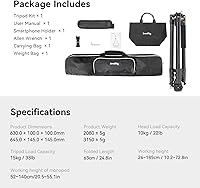
  • Material: The frame and tubes are constructed from aluminum alloy, providing a strong yet lightweight structure across the entire rig.
  • Tube Diameter: The main legs use 29 mm diameter aluminum alloy tubes, contributing to the overall rigidity and load-bearing stability.
  • Item Weight: The complete tripod unit weighs 2 kg (4.4 lb), keeping it light enough for travel without sacrificing structural integrity.
  • Max Load: The total system supports up to 15 kg (33 lb), though the tripod head itself is independently rated to a maximum of 10 kg (22 lb).
  • Height Range: Working height adjusts from 26 cm to 185 cm (approximately 10.2″ to 72.8″) depending on leg spread and center column position.
  • Monopod Height: When converted to monopod configuration, the maximum usable height reaches 140 cm (55.1″).
  • Column Tilt: The lateral center column tilts through a full 180° arc, enabling everything from standard vertical positioning to true horizontal overhead orientation.
  • Column Rotation: The horizontal axis rotates 360° around its base, allowing complete panoramic repositioning without moving the tripod legs.
  • Leg Angles: Three fixed leg angle presets — 23°, 55°, and 80° — are selectable via a quick angle adjustment plate lock for fast scene adaptation.
  • Leg Lock Type: Each leg section uses a quick-lever locking mechanism for fast, secure extension and collapse without requiring any twisting action.
  • Accessory Thread: Multiple 1/4″-20 threaded holes are located along the horizontal axis, enabling direct attachment of monitors, microphones, or wireless transmitters.
  • Tripod Head: The rig ships with a ball head, which prioritizes quick angle repositioning over the fluid drag motion found on dedicated video heads.
  • Foot Design: Each leg terminates in a silicone foot pad that conceals a retractable metal spike, suitable for both hard indoor floors and soft outdoor terrain.
  • Folded Size: When packed down, the tripod measures approximately 26 × 5.75 × 5.75 inches, fitting neatly into the included carry bag.
  • Compatible Devices: The CT200 is designed to support cameras, camcorders, and smartphones, with the smartphone holder included in the box.
  • In The Box: The package includes the tripod kit, a smartphone holder, a counterweight bag, a carrying bag, an allen wrench, and a printed user manual.
  • Center Column: The center column is reversible, allowing it to be flipped for low-angle and close-up macro shooting without any additional accessories.
  • Counterweight Bag: A dedicated counterweight bag is included to help offset the imbalance created when a camera is mounted at the far end of the horizontal column.
  • Brand: The CT200 is manufactured by SmallRig, a brand widely recognized among photographers and videographers for affordable, accessory-focused camera support gear.
  • Model Number: The official SmallRig model number for this tripod is 4288, which can be used to identify compatible accessories and replacement parts.

Related Reviews
SmallRig CT210 75″ Video Tripod
79%
78%
Build Quality
72%
Fluid Head Performance
91%
Leveling Base Convenience
86%
Monopod Conversion
83%
Height Range & Versatility
More
MACTREM BT80 80″ Aluminum Camera Tripod
76%
76%
Build Quality
72%
Stability
84%
Leg Lock Mechanism
68%
Ball Head Performance
88%
Height Range & Versatility
More
PHOPIK PT244 77″ Camera Tripod
86%
91%
Value for Money
95%
Portability & Size
88%
Build Quality
82%
Ease of Use
86%
Stability with Heavy Equipment
More
Geekoto 73-Inch Camera Tripod
80%
91%
Portability
78%
Build Quality
74%
Ball Head Performance
69%
Stability
72%
Quick-Release Plate
More
Sirui Traveler 7A Aluminum Camera Tripod
86%
91%
Portability & Size
88%
Build Quality & Durability
89%
Ease of Setup
85%
Weight Capacity
90%
Monopod Conversion
More
SmallRig AP-20 Carbon Fiber Tripod
78%
86%
Build Quality
92%
Weight & Portability
79%
Stability & Rigidity
74%
Ball Head Performance
88%
Ease of Setup & Height Adjustment
More
NEEWER Basics Camera Tripod Monopod TP08
85%
88%
Ease of Use
91%
Portability
83%
Stability in Windy Conditions
90%
Versatility (Tripod & Monopod)
87%
Build Quality
More
Nietoto NTT-011 2-in-1 Camera Hunting Tripod
79%
83%
Build Quality
76%
Stability at Working Height
71%
V-Yoke Rifle Rest Functionality
78%
Ball Head Performance
81%
Leg Adjustment & Flip-Locks
More
SmallRig AD-80 Video Tripod
81%
93%
Leg Lock System
89%
Fluid Head Smoothness
88%
Build Quality
74%
Counterbalance System
91%
Payload Capacity
More
COMAN KX3939Mini-A32 Camera Tripod
80%
78%
Build Quality
71%
Stability
91%
Portability
88%
Center Column Versatility
69%
Ball Head Performance
More

FAQ

It depends on the combined weight of your camera and lens. The head is rated to 22 lb, but when extended horizontally, physics works against you — even a moderately heavy setup can cause drift without proper counterweight placement. The included counterweight bag helps, but for rigs pushing close to the limit, you will want to fill it well and position it carefully before letting go of the camera.

Once you have done it a couple of times, it is straightforward. You loosen the column collar, rotate the arm to horizontal, and lock it back down. The first time takes a few minutes to figure out the sequencing, especially if you skip the manual — which, fair warning, is fairly sparse on detail.

Yes, it handles full-frame mirrorless bodies without issue, provided your lens is not excessively long or heavy. A standard 24–70mm zoom on a Sony A7 body sits well within the safe operating range for the head. Just keep the counterweight bag in use whenever the column is horizontal.

It is genuinely functional. You detach one leg section and use the remaining column assembly as a monopod up to around 140 cm tall. It is not as refined as a dedicated monopod, but for travel photographers who want one less piece of gear to carry, it does the job reasonably well.

The silicone pads are soft and should not mark finished floors under normal use. The metal spikes are recessed inside the pads and only make contact when you press down firmly on soft ground outdoors. On hardwood, tile, or laminate, you are working with the rubber surface only.

The included holder is sized for smartphones. If you want to mount a tablet, you would need a third-party clamp with a 1/4″-20 thread, which can attach to any of the accessory ports along the horizontal arm.

The three leg angle presets give you some flexibility, and the hidden metal spikes help anchor the feet on grass or gravel. That said, for very uneven terrain, you may need to work with just two of the three angles to get the column reasonably level. It is not a set-and-forget experience outdoors, but it manages better than many lightweight tripods.

For lighter setups like a small mirrorless or a smartphone, the bag is largely optional — the rig stays balanced on its own. Where it earns its keep is with heavier cameras positioned at the outer end of the horizontal column, where even a modest weight difference between the camera side and the leg side can cause slow drift.

Yes, the connection uses a standard 3/8″ screw fitting at the top of the center column, which is an industry-standard size. You can swap in a fluid head or a heavier-duty ball head if the stock one does not meet your needs, though the included head is adequate for most still photography applications.

The horizontal arm extends outward from the leg cluster, giving you enough clearance to position a camera directly above a typical tabletop subject like a dinner plate or a product flat-lay. The exact horizontal reach depends on how you orient the arm, but in practice it covers a standard 60–70 cm wide shooting surface comfortably when the legs are spread wide.