Overview

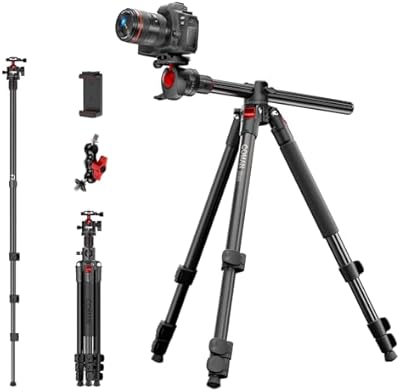
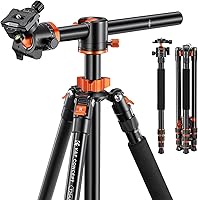
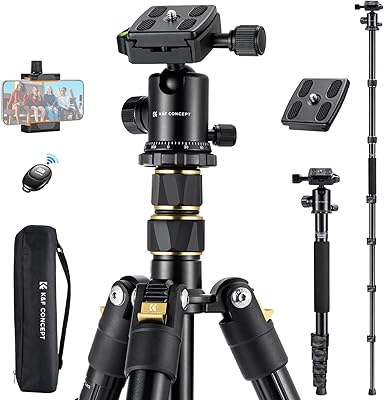
The K&F Concept T254A6 74-inch Camera Tripod sits in a sweet spot for hobbyist and semi-professional photographers who want more than a basic stand without spending serious money. What separates this K&F tripod from the crowded field of similarly priced rivals is its transverse center column, which lets you swing the camera fully horizontal — a feature usually reserved for pricier gear. The kit also includes a detachable monopod and a carrying bag, so you are not buying accessories separately. At 4.1 lbs with a 22-lb load capacity, it travels well and handles most DSLR and mirrorless bodies without complaint. K&F has kept this model in active production since 2016, which says something.

Features & Benefits

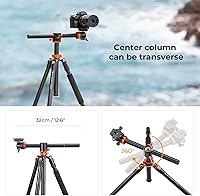
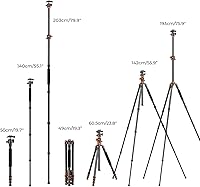
The standout feature is the center column's ability to swing fully horizontal, letting you position the camera directly overhead for flat-lay shots or low-angle macro work — angles that typically require a specialty arm or a much pricier stand. The four aluminum legs span from a low 24.2 inches to a full 74 inches tall, which is genuinely useful height for shooting at eye level, and they fold back to under 20 inches for transport. The 360-degree ball head locks down firmly for most standard rigs, and the included bubble level takes the guesswork out of leveling on uneven ground. A quick-release plate rounds out the package and speeds up swapping bodies in the field.

Best For

This aluminum tripod is a natural pick for landscape and travel photographers who want a tall, feature-packed stand that still packs into a carry-on. The horizontal column makes it particularly useful for food photographers and product shooters who need true overhead angles without buying extra gear. Hikers will appreciate that one of the legs detaches entirely and functions as a monopod or a walking pole on rough trails. If you are just stepping up from a cheap tabletop or a flimsy beginner stick, the T254A6 kit is a meaningful upgrade. One firm caveat: if you shoot with a heavy telephoto lens, plan on budgeting for a separate lens collar — this setup is not optimized for long glass.

User Feedback

Across more than 770 verified ratings averaging 4.4 out of 5 stars, the pattern is consistent: buyers are genuinely satisfied with what this K&F tripod delivers at its price point. The horizontal center column earns the most praise, with multiple reviewers calling it the deciding factor over similar options. The carrying bag also gets honest appreciation — people note it is actually well-made rather than a throwaway afterthought. The main criticisms center on two areas: the ball head can struggle to hold position under heavier telephoto loads, and new users sometimes find the leg-locking collars require a bit of practice to operate quickly. Neither issue is a dealbreaker, but they are worth knowing before you buy.

Pros

  • The transverse center column enables true overhead and horizontal shots that cheaper tripods in this category simply cannot replicate.
  • Four-section legs extend to 74 inches tall and fold back to under 20 inches, making real travel packing genuinely practical.
  • At just over 4 lbs, this K&F tripod is light enough for full day-long outdoor shoots without becoming a burden.
  • The included carrying bag is genuinely well-made and useful — not the flimsy throwaway accessory most kits include.
  • A 22-lb load capacity handles most DSLR and mirrorless setups comfortably without any noticeable flex or instability.
  • The detachable monopod conversion adds real shooting flexibility on uneven terrain or in tight, crowded locations.
  • A quick-release plate speeds up camera mounting and swapping, which matters most when light is changing fast.
  • The bubble level on the ball head makes horizon alignment fast and reliable, even on imperfect or sloped ground.
  • Over 770 verified buyers rate this aluminum tripod at 4.4 out of 5 stars, reflecting genuine and broad real-world satisfaction.
  • Build quality consistently punches above expectations for a mid-range price point, according to consistent real-world buyer feedback.

Cons

  • The ball head gradually loses holding power under heavy telephoto rigs, making it unreliable for serious long-lens work.
  • Telephoto shooters must budget for a separate lens collar — an added expense the product listing does not mention clearly.
  • The twist-lock leg mechanism has a real learning curve; new users frequently fumble with it under time pressure.
  • No fluid pan head option makes smooth cinematic video panning essentially impossible with this setup as shipped.
  • Aluminum legs are heavier than carbon fiber alternatives offering similar height and load capacity at comparable price points.
  • The horizontal column, when fully extended sideways, can introduce camera sway that negatively affects video stability.
  • This is a mid-range tool and will not withstand the daily punishment of professional commercial shoots over the long term.
  • Harsh outdoor conditions — extreme cold, persistent rain, or abrasive sand — can degrade the locking mechanisms faster than expected.

Ratings

Our AI scoring system analyzed hundreds of verified global buyer reviews for the K&F Concept T254A6 74-inch Camera Tripod, actively filtering out incentivized, bot-generated, and duplicate submissions before calculating any score. Each category below reflects the genuine distribution of real photographer experiences — from the features buyers rave about to the recurring pain points that show up consistently across independent feedback. The result is a balanced, transparent assessment designed to help you make a confident and informed buying decision.

Build Quality
83%
Buyers upgrading from entry-level stands consistently note that this K&F tripod feels solid and well-assembled for its price tier. The 25 mm aluminum alloy tubes resist flex under typical DSLR loads, and the overall construction delivers a confidence that budget alternatives rarely match during real outdoor shoots.
It is clearly a mid-range product, and reviewers who push it regularly notice that component tolerances are not as refined as those found on professional-grade carbon fiber systems. Finish quality on the leg collars can feel slightly rough, and long-term durability under sustained daily professional use remains a genuine question mark.
Value for Money
88%
The combination of a transverse center column, detachable monopod, 360-degree ball head, and carrying bag at this price is genuinely hard to fault. Photographers stepping up from entry-level gear find that the T254A6 kit delivers far more capability per dollar than comparable single-function stands competing in the same price tier.
Buyers shooting telephoto glass need to factor in the extra cost of a lens collar ring, which the listing does not flag clearly and can feel like a hidden expense after purchase. For photographers who never need overhead compositions, simpler and slightly cheaper tripods may offer more optimized builds for their specific shooting needs.
Stability & Rigidity
78%
22%
The 25 mm leg tubes and locking collars provide dependable stability for standard DSLR setups on flat surfaces and moderately uneven terrain. At landscape sessions, reviewers consistently report sharp shots without camera shake, even when the center column is at full vertical extension with a normal zoom attached.
Stability dips noticeably when the center column is swung fully horizontal, since the cantilevered weight introduces sway that can affect sharpness in slower exposures. On windy outdoor locations, hanging a bag from the center hook does not fully compensate for the inherent limitations of an aluminum mid-range frame.
Horizontal Column
91%
The transverse center column is the single feature most buyers cite when explaining why they chose this aluminum tripod over similarly priced alternatives. Swinging from vertical to fully horizontal in seconds, it opens up flat-lay product photography, food photography, and low-angle macro work without any add-on accessories or specialty rigs required.
When extended horizontally with a heavier camera body, some vibration dampening is lost compared to shooting with the column in its standard vertical position. Photographers who never shoot overhead compositions may find this feature irrelevant, meaning they could be paying for significant capability they will simply never use in the field.
Ball Head Performance
67%
33%
For standard DSLR rigs with a kit lens or moderate zoom, the 360-degree ball head locks down adequately and allows smooth repositioning during portrait, landscape, and street shoots. The friction adjustment is accessible and the overall action is intuitive enough that new users can start composing quickly without consulting any instructions.
Under heavier telephoto setups, the ball head is a consistent pain point — multiple buyers report it gradually loses grip and allows slow drift, which ruins bracketed exposures and precise architectural framing. The locking knob also lacks the fine-tuned tension control found on dedicated photo heads available in the next price tier up.
Portability
84%
Folding down to 19.3 inches and weighing just over 4 lbs, this K&F tripod fits in most carry-on backpacks and travels far more conveniently than its 74-inch maximum height would suggest. Hikers and travel photographers specifically appreciate the included carrying bag, which keeps all components organized and protected without meaningfully adding to pack bulk.
At 4.1 lbs, it is noticeably heavier than carbon fiber alternatives in this height range, which becomes relevant on multi-day treks or when overall weight budgets are tight. Photographers who prioritize ultralight travel kits may find the extra pounds accumulate noticeably across a full day of location shooting on foot.
Ease of Setup
72%
28%
Once familiar with the routine, most users find the twist-lock leg system reasonably quick to deploy — extending all four sections per leg takes well under a minute in the field. The quick-release plate is a particularly appreciated shortcut for photographers who swap bodies frequently or need to react fast to rapidly changing light.
First-time users frequently report confusion with the twist-lock leg collars, noting that an insufficiently tightened collar can cause a section to slip under load without any obvious advance warning. The learning curve is real, and a few buyers mention fumbling during time-sensitive golden-hour shoots before the locking motion finally becomes second nature.
Height Versatility
86%
Spanning from 24.2 inches at its lowest to a full 74 inches extended, this aluminum tripod covers an unusually wide shooting range without requiring separate stands for different scenarios. Landscape photographers get proper eye-level framing on slopes, while macro shooters can splay the legs wide and low to capture clean ground-level perspectives.
Reaching the maximum 74-inch height requires all four leg sections to be fully extended on each leg, which can slightly compromise rigidity on windy days or very uneven ground. Some taller photographers note that true eye-level comfort at full extension still depends on their specific camera-to-viewfinder height, which varies by system and shooting style.
Monopod Functionality
79%
21%
The detachable leg works as a genuine monopod in practice — wildlife photographers and event shooters report adequate stability for tracking moving subjects and handheld telephoto shots. Its rubber-tipped foot also doubles as a walking pole tip, a small but genuinely practical bonus for hikers covering distance between shooting locations on rough trails.
As a standalone monopod, it is somewhat shorter than a purpose-built dedicated unit, which can feel limiting for taller users or those shooting from elevated vantage points. Reattaching the leg to the tripod base requires careful thread alignment, which occasionally slows down transitions when switching between monopod and full tripod configurations under time pressure.
Carrying Bag Quality
81%
19%
Unlike the flimsy drawstring pouches that typically accompany tripods at this price, the included bag is consistently described by real buyers as structured, durable, and practically sized. It holds the full kit including the detached monopod with enough internal organization that packing up after a shoot does not become a frustrating puzzle.
The bag is not padded heavily enough for photographers who regularly check gear or travel through rough transit environments where impact protection matters. Several buyers note the shoulder strap is on the thin side for extended carrying, which can make longer hikes with a fully loaded bag noticeably uncomfortable over time.
Load Capacity
77%
23%
A 22-lb rated payload is competitive for this class of aluminum tripod and comfortably handles most DSLR and mirrorless combinations — body, standard zoom, and a flash unit — with capacity to spare. Reviewers shooting with Sony A7 or Canon R-series bodies report no flex or instability when the stand is properly deployed on flat ground.
The 22-lb limit applies to the leg structure, but the ball head is the practical bottleneck — it tends to soften well before the legs themselves reach their threshold, especially under heavier telephoto or tilt-shift lenses. The actual usable payload for precision work is therefore meaningfully lower than the headline specification alone implies.
Telephoto Compatibility
47%
53%
For photographers using moderate telephoto lenses up to around 200 mm paired with a lightweight body, this K&F tripod can be serviceable with careful ball head tension management and patience. The leg structure itself does not buckle under additional weight, so the platform at least remains physically solid even when the head starts showing limitations.
Anyone regularly shooting with a 300 mm or longer lens will need a separately purchased lens collar ring that the product listing does not mention clearly upfront, creating unexpected added cost. Beyond that missing accessory, the ball head does not maintain reliable grip under the torque that long telephoto glass generates, making precise framing a persistent frustration.
Leg Lock Mechanism
68%
32%
When operated correctly, the four-section twist-lock collars hold each leg extension securely and allow independent height adjustments per leg — a practical advantage on sloped terrain that landscape photographers encounter regularly. Users who take a few minutes to practice the motion at home before heading out consistently find the mechanism intuitive and dependable in the field.
The twist-lock collars have a narrow margin between properly tightened and dangerously loose, which catches new users off-guard when a section drops unexpectedly during initial setup. Several reviewers describe this as the most frustrating part of ownership, particularly in cold weather when gloves make it harder to feel whether each collar is fully and safely seated.

Suitable for:

The K&F Concept T254A6 74-inch Camera Tripod is built for hobbyist and semi-professional photographers who want a versatile, feature-loaded stand without stepping into professional-tier pricing. It is particularly well-suited for landscape and travel shooters — the four-section legs extend to a full 74 inches for eye-level shooting and collapse to under 20 inches for packing, making it a genuinely travel-friendly option. Food photographers, product shooters, and anyone who regularly needs true overhead or flat-lay angles will find the transverse center column a practical differentiator that cheaper stands simply cannot match. Hikers and outdoor photographers benefit from the detachable leg, which converts to a monopod or walking stick without any extra gear. Beginners stepping up from a flimsy entry-level stand will find this K&F tripod to be a meaningful jump in build quality and capability, all while remaining manageable in weight at just over 4 lbs.

Not suitable for:

This aluminum tripod was not designed for professional studio environments or heavy commercial use where day-in, day-out reliability under demanding conditions is non-negotiable — there are better-engineered options at higher price points for that. The K&F Concept T254A6 74-inch Camera Tripod is also a poor match for anyone shooting heavy telephoto glass — the ball head loses grip under serious load, and a separate lens collar becomes a required extra purchase that the listing does not flag upfront. Videographers who need a fluid pan head for smooth cinematic movement will find the ball head restrictive, as it is engineered for still photography rather than controlled video sweeps. If you plan to shoot regularly in harsh weather — driving rain, freezing temperatures, or sandy environments — the standard aluminum build and twist-lock legs are not rated for that level of sustained abuse. Anyone expecting carbon fiber-level vibration damping or a head that locks reliably under heavy long-lens loads should look at purpose-built alternatives instead.

Specifications

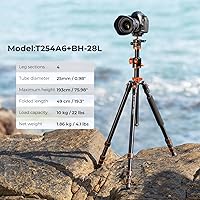
  • Leg Material: Legs are constructed from aluminum alloy with a 25 mm tube diameter, providing a workable balance between structural rigidity and overall pack weight.
  • Maximum Height: The tripod extends to a maximum working height of 74 inches (189 cm), sufficient for comfortable eye-level shooting for most adults.
  • Minimum Height: With all leg sections retracted, the minimum usable height is 24.2 inches, enabling low-angle and near-ground-level compositions.
  • Folded Length: When collapsed with legs reflexed upward, the unit measures 19.3 inches end to end, compact enough for most travel bags and carry-on backpacks.
  • Weight: The complete kit weighs 4.1 lbs (1.86 kg), making it portable enough for day hikes and extended location shoots.
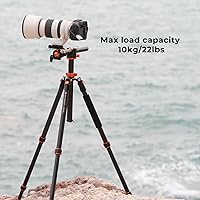
  • Load Capacity: The tripod supports a maximum payload of 22 lbs (10 kg), accommodating most DSLR and mirrorless bodies paired with standard zoom lenses.
  • Leg Sections: Each leg comprises 4 sections secured by twist-lock collars, which can also be set at independent angles for stability on uneven ground.
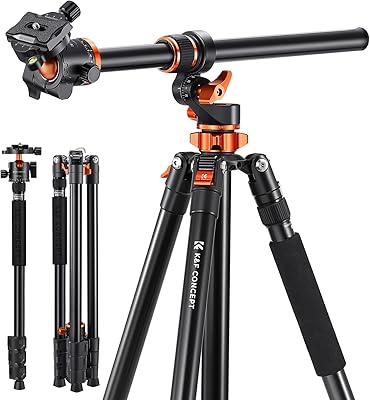
  • Center Column: The transverse center column rotates from fully vertical to fully horizontal (0–180 degrees) and pans 360 degrees, enabling direct overhead positioning for flat-lay and macro work.
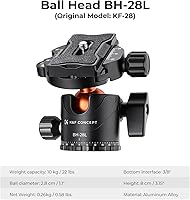
  • Ball Head: The included BH-28L ball head rotates a full 360 degrees with a friction-adjustable locking knob for securing camera position after framing.
  • Bubble Level: A built-in bubble level is mounted on the ball head, allowing quick visual confirmation of a level plane without a separate accessory.
  • Release Plate: A standard quick-release plate is included, enabling tool-free camera attachment and fast body swaps during a shoot.
  • Monopod: One leg unscrews fully from the tripod base and functions as a standalone monopod or a walking stick with its own rubber foot tip.
  • Carrying Bag: A dedicated soft carrying bag is included in the kit and is sized to hold the tripod, detached monopod, and head components together.
  • Compatibility: Compatible with DSLR and mirrorless cameras via a standard tripod thread; telephoto lens users require a separately purchased lens collar ring for proper load balance.
  • Model Number: The official model designation is T254A6+BH-28L, referring to the T254A6 tripod body bundled with the BH-28L ball head unit.

Related Reviews
K&F Concept KF09.126 75″ Tripod
79%
78%
Build Quality
71%
Stability
93%
Portability & Packed Size
86%
Height Range & Adjustability
74%
Pan Head Performance
More
K&F Concept KF09.119 T254A7+BH-28L 90″ Tripod
81%
93%
Overhead Shooting Capability
81%
Build Quality
78%
Stability & Vibration Control
88%
Portability & Packed Size
84%
Ball Head Performance
More
K&F Concept KF09.007V1 72-inch Aluminum Tripod
81%
93%
Portability & Packed Size
91%
Maximum Extended Height
71%
Ball Head Performance
84%
Leg Lock Mechanism
79%
Monopod Conversion
More
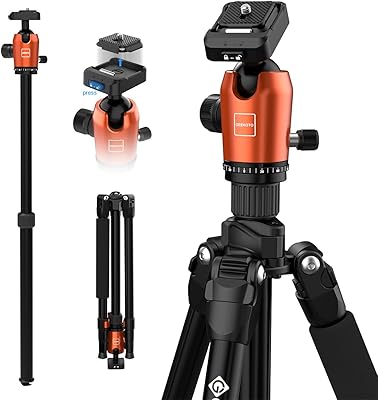
Geekoto 73-Inch Camera Tripod
80%
91%
Portability
78%
Build Quality
74%
Ball Head Performance
69%
Stability
72%
Quick-Release Plate
More
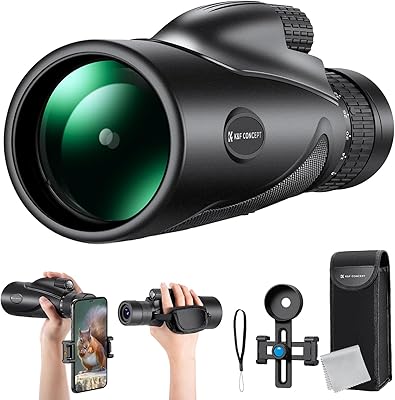
K&F Concept Sky Captain 12x50 Monocular
71%
74%
Optical Clarity
83%
Value for Money
88%
Portability & Size
53%
Handheld Stability
62%
Eye Comfort
More
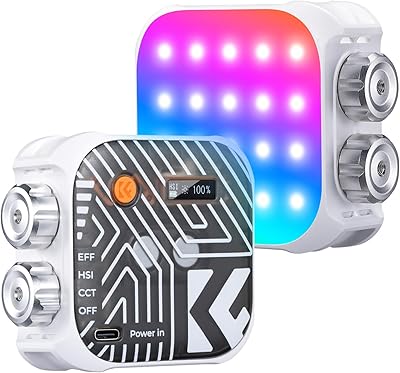
K&F Concept L01 RGB LED Video Light
78%
77%
Build Quality
88%
Color Accuracy
61%
Battery Life
86%
White Light Performance
67%
RGB Color Output
More
K&F CONCEPT KF08.050 Brushless Air Duster
84%
93%
Motor Efficiency
88%
High-Gear Runtime
91%
Ergonomics and Weight
86%
Speed Control Precision
82%
Attachment Versatility
More
K&F Concept 8-32X50 Zoom Monocular
75%
83%
Optical Clarity (Low-to-Mid Zoom)
57%
Optical Clarity (Max 32x Zoom)
81%
Build Quality & Durability
78%
Waterproofing & Weather Resistance
86%
Zoom Range & Flexibility
More
K&F Concept Magnetic Electric Air Duster
79%
93%
Motor Performance
84%
Battery Life
88%
Nozzle & Attachment System
71%
Thermal Protection
92%
Portability & Form Factor
More
K&F Concept L01 Bi-Color LED Video Light
84%
93%
Color Accuracy
91%
Color Temperature Range
88%
Build Quality
94%
Portability & Form Factor
72%
Battery Life
More

FAQ

It works well with both. The tripod uses a standard mount thread compatible with virtually every DSLR and mirrorless system on the market. As long as your camera and lens combination stays within the 22-lb load limit, you should have no issues at all.

It means the center column can swing sideways — from pointing straight up all the way to pointing fully horizontal. That lets you position your camera directly overhead without tilting the entire tripod, which is what makes the K&F Concept T254A6 74-inch Camera Tripod a go-to choice for product flat-lays, food photography, and macro close-ups. Most stands in this price range simply cannot do this, which is the core reason photographers specifically seek this model out.

You can mount one, but there are two things worth knowing upfront. First, the ball head tends to loosen under significant telephoto loads and may not hold position reliably. Second, you will need to purchase a separate lens collar ring for proper balance — without it, the weight distribution puts unnecessary stress on your camera body mount. If you regularly shoot with a 300 mm or longer lens, a more purpose-built telephoto setup would serve you better.

For standard camera-and-lens combinations, yes — it locks down reliably and gives you full 360-degree pan range before doing so. The friction is adjustable, which helps. The main complaint from real-world users is that it can soften gradually under very heavy telephoto loads, but for a typical DSLR body with a standard zoom, it holds position without drama.

One of the three legs unscrews from the base and operates as a standalone monopod — useful in crowded shooting locations, on hiking trails, or whenever you need to follow a moving subject quickly. Detaching and reattaching it takes a few seconds once you are familiar with the threading. The rubber tip at the foot doubles as a walking pole end, which hikers tend to appreciate as a small but practical bonus.

At 19.3 inches folded, this aluminum tripod fits in most checked bags and a good number of larger carry-on backpacks without much trouble. At 4.1 lbs it is not ultralight, but it is reasonable alongside a camera bag for a trip. The included carrying bag keeps all the components organized rather than loose in your luggage.

It is more straightforward than it looks. Most first-timers get comfortable after two or three practice sessions at home before heading out to shoot. The twist-lock collars on the leg sections are the part that takes the most getting used to — each collar needs a firm, snug twist to hold properly under load. Once the motion is familiar, extending and locking all four sections on each leg takes well under a minute.

It is noticeably better than the throwaway pouches most tripods include at this price point. A meaningful number of real buyers specifically mention it as well-constructed and practically sized — not a marketing add-on. It holds the tripod, the detached monopod, and the head components with room to spare.

The four legs can be set at independent angles and heights, which is genuinely useful on sloped or rocky ground like hillsides or beaches. Light drizzle is generally not a problem — the aluminum handles casual outdoor use without issue. It is not weatherproofed, though, so sustained exposure to heavy rain, sand, or extreme cold will wear on the twist-lock mechanisms over time. Think of it as a capable outdoor tool rather than a rugged all-weather workhorse.

The transverse center column is the clearest point of difference — overhead shooting capability is genuinely difficult to find at this price, and it is the feature that pulls most buyers toward this K&F tripod over similarly priced competitors. Build quality also earns consistent praise relative to cost. Where it trails some alternatives is ball head precision under heavy loads, and weight compared to carbon fiber options — though carbon fiber costs considerably more. For the feature set on offer, the value-to-price ratio holds up well across hundreds of real buyer reviews.