Overview

The Navionics MSD/NAV+EA Marine Chart Card is a preloaded microSD chart card built for boaters who want serious nautical coverage across North American coastal and inland waters. One thing worth clarifying upfront: this is a map data card, not a GPS unit — you need a compatible chartplotter or Android-based marine display to use it. Slip it into your plotter's card slot and it unlocks a dramatically richer layer of chart data than what ships with most devices out of the box. At its price point, it sits in mid-to-premium territory, and it shows in the depth and quality of the included data.
Features & Benefits

The NAV+EA card comes preloaded with Navionics+ nautical charts spanning North American coastal and inland waters — a substantial dataset right out of the packaging. Where it pulls ahead of basic chart cards is SonarChart, which delivers 1-foot HD contours sourced from real-world sonar data contributed by other Navionics users. SonarChart Live takes that further: while you are actually on the water with a sonar-equipped plotter, the card can build custom contour maps of any lake or river in real time. Advanced Map Options let you tweak depth shading, highlights, and satellite overlays, while Plotter Sync keeps your waypoints and routes aligned with the Navionics mobile app.

Best For

This marine chart card genuinely shines for freshwater anglers who care about what is happening under the surface — when you are trying to find a submerged point or a depth break at 18 feet, that 1-foot contour resolution makes a real difference. Coastal cruisers and offshore boaters benefit too, particularly those running North American routes where chart accuracy matters for safety, not just convenience. It is also a smart upgrade for anyone with an existing chartplotter that came with thin, manufacturer-bundled chart data. If you actively fish unfamiliar lakes and want to chart as you go, SonarChart Live is a legitimate reason to choose this card over cheaper alternatives.

User Feedback

Across roughly 193 ratings, this Navionics chart card holds a 4.2-star average — solid, but not without some honest friction points. Buyers consistently praise the depth contour accuracy and the sheer breadth of North American coverage, with many anglers specifically calling out SonarChart Live as worth the price on its own. The complaints are consistent enough to take seriously: some buyers are caught off guard discovering that annual chart updates cost extra after the initial purchase, and a handful of older plotter owners ran into compatibility snags. A few users also found the initial setup less intuitive than expected. Against Garmin BlueChart or Humminbird LakeMaster, opinions split mostly by which hardware ecosystem the buyer is already in.

Pros

  • Extensive North American coverage spans both coastal salt water and inland freshwater lakes out of the box.
  • SonarChart delivers 1-foot HD depth contours — far more detail than most bundled or budget chart cards offer.
  • SonarChart Live lets active anglers build their own real-time contour maps while on the water.
  • Plotter Sync keeps waypoints and routes consistent between the card and the Navionics mobile app.
  • Advanced Map Options allow meaningful display customization, including depth shading and satellite overlays.
  • microSD format fits a wide range of chartplotters without any adapters in most cases.
  • Strong 4.2-star average across nearly 200 real-world ratings reflects genuine satisfaction with chart accuracy.
  • USB update support makes it straightforward to pull fresh chart data when an update is available.
  • Anglers specifically praise the contour accuracy on lakes that other chart sources barely cover.

Cons

  • Annual chart updates are not free — buyers expecting a one-time purchase are often caught off guard by the ongoing cost.
  • SonarChart Live only works with sonar-equipped plotters, so the feature is unavailable to many users.
  • Compatibility with older chartplotter models is inconsistent and not always clearly communicated before purchase.
  • Initial setup and the update process have a learning curve that some less tech-savvy boaters find frustrating.
  • No value whatsoever without a separate compatible chartplotter — easy to overlook in the product listing.
  • Some users report that inland lake coverage, while broad, is thinner or less accurate for smaller or remote bodies of water.
  • The card does not include any hardware, display, or mounting solution despite its packaging dimensions suggesting otherwise.
  • Buyers switching from Garmin BlueChart or Humminbird LakeMaster may find the integration feels less native on non-Navionics hardware.

Ratings

The Navionics MSD/NAV+EA Marine Chart Card has been scored by our AI system after deep analysis of verified buyer reviews, actively filtering out incentivized, bot-generated, and duplicate feedback to surface what real boaters and anglers actually experience. Scores reflect both the genuine strengths that make this chart card stand out in a crowded category and the friction points that affect certain buyers more than others.

Chart Accuracy & Detail
88%
Anglers consistently report that the depth contour data holds up well when cross-referenced against known underwater structure — submerged humps, channel edges, and drop-offs match real-world conditions closely enough to trust on the water. Coastal boaters also note that harbor approaches and inlet depths are reliably depicted.
A small but vocal group of users found inaccuracies on less-trafficked lakes and remote coastal areas, suggesting that chart quality is partly dependent on how much sonar crowd-data has been contributed for a given region. Less popular waters simply have thinner, less verified data.
SonarChart Contour Quality
91%
The 1-foot HD contour intervals are the single most praised aspect of this card among serious freshwater anglers. Being able to identify a subtle 3-foot depth change along a shoreline flat — the kind of transition that holds bass or walleye in early spring — is something most bundled chart cards cannot come close to delivering.
Contour quality is uneven depending on location: heavily fished tournament lakes tend to have dense, well-validated contour data, while quieter or newer impoundments may show coarser or patchier coverage that is less useful for precision structure fishing.
Coverage Breadth
83%
The sheer volume of water covered — from Atlantic and Gulf coastal routes to thousands of inland lakes and river systems — is genuinely impressive for a single preloaded card. Boaters transitioning between coastal cruising and inland fishing trips appreciate not needing separate cards for each environment.
Coverage breadth does not translate evenly to coverage depth across all regions. Some users navigating Pacific Northwest inland waterways or fishing smaller Midwest reservoirs found their specific waters were present on the map but lacked the contour detail they were hoping for.
Plotter Compatibility
67%
33%
The NAV+EA card works reliably with current-generation Lowrance, Simrad, and B&G units, and a solid number of Humminbird owners report successful use as well. For boaters on supported hardware, the plug-and-play experience is smooth and the chart data loads without any configuration fuss.
Compatibility becomes a genuine problem with older plotter models or units outside the main supported brands. Several buyers discovered their hardware either could not read the card at all or supported it only partially — a frustrating outcome given the price, and one that Navionics compatibility documentation does not always prevent.
SonarChart Live Performance
78%
22%
Users who have a sonar-equipped plotter and actively fish new lakes describe SonarChart Live as a genuinely useful tool — watching your own contour map build in real time as you run the boat across a flat or a cove is both practical and satisfying. The resulting custom maps can be saved and reused on return trips.
The feature requires a compatible sonar transducer actively connected to a supported plotter, which excludes a meaningful portion of card buyers. Some users were disappointed to discover this limitation only after purchase, having assumed SonarChart Live was a passive feature available on any compatible display.
Value for Money
71%
29%
For boaters who actively use the full feature set — SonarChart contours, SonarChart Live, Advanced Map Options, and Plotter Sync — the initial investment is well-justified compared to upgrading chartplotter hardware. Anglers especially tend to see immediate fishing utility that feels proportional to the cost.
The value equation shifts noticeably once buyers factor in annual update costs, which are required to keep charts current and are not included in the purchase price. Users who use the card primarily as a basic nautical reference and skip the advanced features may feel underserved relative to what they paid.
Ease of Setup
62%
38%
For experienced chartplotter users, inserting the card and getting charts to display is quick and uncomplicated. Those already familiar with Navionics products from the mobile app will find the general interface logic translates reasonably well to the plotter environment.
Less technically inclined boaters report a steeper learning curve than expected — particularly around activating specific features like SonarChart Live or configuring Advanced Map Options for the first time. Initial registration and pairing with the Navionics app for Plotter Sync also drew complaints about unintuitive steps.
Chart Update Process
57%
43%
When the process works, USB-based chart updates via the Navionics web updater are functional and deliver genuinely refreshed data. Users who update annually before the boating season report that new SonarChart contributions from other users visibly improve coverage on lakes they frequent.
The update process is a recurring pain point in user feedback — software compatibility issues, unclear instructions, and the need to use a separate computer with a card reader all add friction. Combine that with the fact that updates require a paid subscription, and the experience feels more burdensome than it should for a mid-to-premium product.
App Integration
74%
26%
Plotter Sync works well when both the card and the Navionics mobile app are on current versions — waypoints created on the phone transfer to the plotter cleanly, which is genuinely useful for pre-trip planning done at home before heading to the launch ramp.
Sync reliability drops off when users are running older app versions or firmware, and some Android device users have reported inconsistent Bluetooth pairing behavior. The sync process also requires manual initiation rather than syncing automatically, which users occasionally forget to do before leaving the dock.
Map Customization
79%
21%
Advanced Map Options give experienced chartplotter users a meaningful level of control over how charts are displayed — depth shading, safety contour highlighting, and satellite overlay are all practical tools that anglers and cruisers use to tailor their display to the task at hand.
Customization options are only accessible on plotters that fully support the Navionics feature set, so buyers on partially compatible hardware may find these options grayed out or missing entirely. The settings menu for these features is also not particularly intuitive on first exploration.
Coastal Navigation Quality
84%
Offshore and coastal users navigating the Atlantic seaboard, Gulf Coast, and major Pacific routes report solid chart accuracy for harbor navigation, anchorage planning, and understanding tidal channel depths. The breadth of saltwater coverage is one area where this card competes confidently with Garmin BlueChart.
Some users navigating less-charted coastal areas — particularly smaller Gulf inlets or Pacific Northwest passages — noted that chart resolution thinned out in those regions. Coastal charts are strong for mainstream boating corridors but less authoritative the further off the beaten route you venture.
Inland Lake Coverage
76%
24%
Popular fishing lakes across the Midwest, Southeast, and Great Lakes region are generally well-represented, with contour data that anglers describe as noticeably better than free or manufacturer-bundled alternatives. Bass tournament fishermen in particular tend to speak positively about coverage on well-known impoundments.
Smaller, less-fished lakes and reservoirs are a weak spot — some users found their home lake listed on the card but with minimal contour data that added little over what was already on their plotter. Coverage quality here is directly tied to how much user-contributed sonar data exists for a given lake.
Data Freshness
69%
31%
Navionics benefits from an active user community that continuously contributes sonar data, meaning heavily used waterways and popular fishing lakes tend to see genuinely improved chart data with each annual update cycle. For engaged users who update regularly, the charts do get meaningfully better over time.
Out-of-the-box data freshness is limited to whatever was loaded at the time of manufacturing, and Navionics does not publicly communicate how recently charts were updated before shipping. Buyers who skip annual updates are effectively using a static snapshot that ages out of sync with real-world changes like shifting sandbars or updated marina depths.

Suitable for:

The Navionics MSD/NAV+EA Marine Chart Card is a strong choice for any boater who wants meaningfully better chart data than what their plotter shipped with, without having to replace hardware. Freshwater anglers will get the most obvious payoff — the 1-foot SonarChart contours are genuinely useful when you are trying to identify a specific underwater structure, drop-off, or depth transition that basic charts would never reveal. Coastal cruisers running North American routes also benefit, especially those who want the added assurance of dense, regularly updated nautical data rather than leaning on whatever generic charts came preloaded on their device. If you fish new or less-documented lakes often, SonarChart Live is a practical tool that lets you map water in real time using your own sonar returns, building charts specific to your experience. In short, this card suits boaters who treat their chartplotter as a serious tool and are willing to invest in the data layer that makes it actually useful.

Not suitable for:

Anyone expecting a standalone GPS device or a complete marine navigation system will be disappointed — the Navionics MSD/NAV+EA Marine Chart Card is purely a data card, and it does nothing without a compatible chartplotter or Android-based marine display to read it. Boaters with older plotters should verify compatibility before purchasing, since a handful of users have reported that their existing hardware did not support the card without firmware updates or simply could not read it at all. Casual day-trippers who only navigate familiar, well-marked local waters may find the investment hard to justify, particularly once they realize that keeping charts current after the first year means paying for annual updates. Budget-minded buyers looking for a one-time cost solution may also be frustrated — the ongoing update model is more like a subscription in practice than a permanent purchase. If you are already invested in the Garmin or Humminbird ecosystems and your plotter is optimized for BlueChart or LakeMaster data, switching to this card may not deliver the tight integration you are used to.

Specifications

  • Brand: Manufactured and distributed by Big Rock Sports under the Navionics brand.
  • Model: The model designation is MSD/NAV+EA, indicating a Navionics+ microSD card with East coverage for North America.
  • Card Format: Ships as a standard microSD card designed to insert directly into compatible chartplotter card slots.
  • Chart Coverage: Preloaded with Navionics+ nautical charts covering North American coastal waters and a broad range of inland lakes and rivers.
  • Contour Detail: SonarChart technology provides high-resolution depth contours at 1-foot intervals, built from aggregated real-world sonar data.
  • Live Mapping: SonarChart Live enables real-time generation of custom HD contour maps while actively on the water using a sonar-equipped plotter.
  • App Sync: Plotter Sync allows users to synchronize waypoints, routes, and chart updates between the card and the Navionics mobile app.
  • Display Options: Advanced Map Options support chart customization including depth shading, safety depth highlights, and satellite image overlays.
  • Connectivity: USB connectivity is used to connect the card to a computer for downloading chart updates via the Navionics web updater tool.
  • Compatible OS: Officially supports Android-based marine display systems in addition to a wide range of dedicated chartplotter hardware.
  • Map Type: Nautical chart data covers both saltwater coastal and offshore routes as well as freshwater inland navigation for North America.
  • Item Weight: The card and its packaging weigh 4 ounces, making it lightweight and easy to store or ship.
  • Package Size: Retail packaging measures approximately 7.5 x 5.4 x 0.9 inches.
  • User Rating: Holds a 4.2 out of 5 star average based on 193 Amazon customer ratings as of the time of writing.
  • Release Date: First made available on Amazon in July 2016 and has not been discontinued by the manufacturer.
  • Included Items: The package contains the preloaded microSD chart card only; no chartplotter, GPS hardware, or mounting accessories are included.

Related Reviews
Navionics Plus North Lakes SD Chart Card
78%
91%
Bathymetric Accuracy
88%
Lake Coverage Breadth
86%
Chartplotter Compatibility
74%
Chart Update System
69%
Community Edits Quality
More
Navionics Plus West Marine Chart SD Card
80%
91%
Chart Detail & Accuracy
88%
Lake Bathymetry
86%
Marine Coverage
74%
Update System
83%
Ease of Setup
More
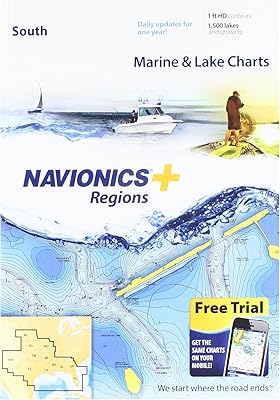
Navionics Plus South Region Marine Lake Chart SD Card
80%
88%
Chart Accuracy
91%
Freshwater Fishing Detail
84%
Marine Coverage
79%
Update System
93%
Ease of Installation
More
Anself 216-Color Nail Gel Polish Display Book
69%
83%
Color Organization
54%
Build Quality
49%
Tip Adhesion
71%
Value for Money
78%
Portability
More
C-MAP M-NA-Y214-MS Reveal Inland Lakes Chart Card
74%
88%
Bathymetric Accuracy
91%
Chart Detail & Clarity
67%
Depth Coverage Breadth
72%
Device Compatibility
63%
Value for Money
More
FOSA M5015 SAS SATA RAID Controller Card
68%
83%
Value for Money
78%
Compatibility
66%
Firmware Flashing Experience
61%
Build Quality
69%
Drive Detection Reliability
More
USCAMEL UW004 10x50 Marine Binoculars
77%
84%
Optical Clarity
91%
Waterproofing
78%
Build Quality
73%
Compass Usability
69%
Rangefinder Usability
More
Pyramid MDC6 5.25-inch Marine Speakers
73%
91%
Value for Money
88%
Ease of Installation
74%
Weather Resistance
71%
Sound Clarity
43%
Bass Performance
More
Pyle PLMR652W 6.5-inch Marine Speakers
75%
83%
Weather Resistance
71%
Sound Clarity
47%
Bass Performance
91%
Installation Ease
74%
Build Quality
More
Pyle PLMRA400 4-Channel Marine Amplifier
75%
88%
Value for Money
86%
Ease of Installation
71%
Water Resistance
63%
Power Output
79%
Build Quality
More

FAQ

The Navionics MSD/NAV+EA Marine Chart Card is purely a data card — it has no screen, antenna, or processing hardware of its own. You need a compatible chartplotter or Android-based marine display to read and use the chart data stored on it.

It works with a wide range of chartplotters that accept microSD cards and support Navionics chart format, including units from Lowrance, Simrad, B&G, and some Humminbird models. That said, compatibility with older or less common units is not guaranteed, so it is worth checking Navionics' compatibility list on their website before purchasing.

The initial purchase includes the preloaded charts, but keeping them current requires paying for annual updates separately through Navionics. This is a recurring cost that catches some buyers off guard, so it is worth factoring into the total cost of ownership before buying.

You connect the card to your computer using a USB card reader, then use the Navionics web updater tool to download and install the latest chart data. The process is straightforward once you have done it once, though some users find the first-time setup a bit fiddly.

SonarChart Live lets you generate your own real-time HD depth contour maps as you drive across a lake or river, using live sonar returns from your boat. The catch is that it only works if your chartplotter has an active sonar transducer connected and the feature is supported by your specific plotter model — it is not available on every compatible device.

It covers both. The Navionics+ data includes a large number of inland lakes and rivers across North America alongside coastal and offshore saltwater charts. Coverage density does vary — major fishing lakes tend to have excellent detail, while smaller or more remote bodies of water may have thinner data.

Most Garmin units use their own BlueChart format and are designed to work best with Garmin chart cards. While some Garmin plotters can physically read a Navionics microSD card, full feature compatibility — including SonarChart Live and Advanced Map Options — may be limited or unavailable. Check Navionics' compatibility tool with your specific Garmin model number before buying.

SonarChart refers to the pre-built 1-foot contour maps already loaded on the card, which are compiled from sonar data contributed by the broader Navionics user community. SonarChart Live is a different feature that actively maps depth contours in real time while you are on the water — it creates charts from your own sonar data during your trip rather than relying on pre-existing datasets.

All three are strong chart card options, but they tend to integrate most naturally with their respective hardware ecosystems. This Navionics card has a slight edge in SonarChart Live functionality for anglers who want real-time custom mapping, while LakeMaster is often praised for the quality of its freshwater lake contours on Humminbird units specifically. If you are not locked into a particular plotter brand, the NAV+EA card is a very competitive option on chart depth and coverage breadth.

That depends on your specific plotter model. Many chartplotters accept microSD cards directly, so no adapter is needed. If your unit only has a full-size SD slot, you would need a microSD-to-SD adapter, which is inexpensive and widely available but is not included in the box.