Overview

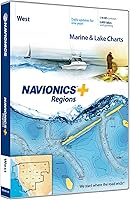
The Navionics Plus West Marine Chart SD Card is a regional charting solution built for boaters, anglers, and sailors operating across western US and Canadian waters. Loaded onto a compact SD or MSD card, it slots into most major chartplotters from brands like Garmin, Lowrance, and Simrad without any fuss. Coverage runs from Puget Sound and the Canadian Pacific coast through more than 2,600 lakes spread across twelve western states. This is not a budget option — it sits firmly in the premium tier, and that price reflects the depth and currency of the data you get in return.

Features & Benefits

The standout capability here is SonarChart HD bathymetry, which maps lake and coastal depths at one-foot resolution — far more granular than what most bundled chart packages offer. Once activated, the card pulls daily chart updates for a full year, so you are working with current data rather than charts that aged on a warehouse shelf. A Community Edits layer adds crowdsourced local intel from millions of Navionics app users, flagging hazards, marina tips, and anchorages that official surveys often miss. Auto-routing is also supported on compatible plotters, giving you dock-to-dock guidance whenever you need it.

Best For

This chart card makes the most sense for freshwater anglers chasing bass, trout, or walleye across the Mountain West — the one-foot bathymetry data alone justifies the investment for serious lake fishermen. Coastal sailors and cruisers working Puget Sound or pushing into Canadian waters will find the marine coverage genuinely useful too. Boaters upgrading from paper charts or bare-bones plotter maps will notice the jump in detail immediately. One practical note: check your chartplotter's card slot before buying, since some units take full SD while others require the MSD micro format.

User Feedback

Buyers consistently praise the chart detail and accuracy of the lake bathymetry, and most find setup straightforward — slide the card in and you are ready to navigate. The daily update system earns positive marks too, though a handful of users note it works best with a reliable internet connection on a paired device. On the downside, some buyers are caught off guard by the annual renewal cost once the included year expires — worth knowing upfront. A few users in very remote lake regions report thinner coverage than expected, and owners of older plotters occasionally encounter compatibility hiccups worth researching before committing.

Pros

  • One-foot HD bathymetry gives freshwater anglers unusually precise depth and structure data for western lakes.
  • Daily chart updates for the first year mean you are rarely working from outdated navigation information.
  • Plug-and-play setup is straightforward on most modern Garmin, Lowrance, and Simrad chartplotters.
  • Community Edits layer adds real-world local knowledge that official hydrographic surveys often leave out.
  • Marine coverage of Puget Sound and Canadian Pacific coastal waters is broad and well-regarded by cruisers.
  • The dual SD/MSD format makes this chart card compatible with a wide range of chartplotter hardware.
  • Auto-routing support on compatible devices adds practical dock-to-dock convenience for longer passages.
  • Coverage across 2,600-plus western lakes in twelve states makes this a genuinely regional all-in-one solution.

Cons

  • After the first year, continued chart updates require a paid renewal that catches some buyers off guard.
  • Coverage in very remote or lesser-known lakes can be sparse, despite the high overall lake count.
  • The activation process is not always intuitive and has tripped up a number of first-time users.
  • Older chartplotter models may have compatibility issues that are not apparent until after purchase.
  • Daily updates require pairing with the Navionics app and an internet connection, which adds a step some find inconvenient.
  • Buyers outside the defined western region get zero usable coverage for the price paid.
  • Annual renewal pricing after the included period can make long-term ownership costs higher than expected.
  • Some users report the Community Edits data varies significantly in quality depending on how active local boaters are in a given area.

Ratings

The scores below for the Navionics Plus West Marine Chart SD Card were generated by our AI system after analyzing verified buyer reviews from multiple global sources, with spam, incentivized, and bot-flagged submissions actively filtered out before scoring. Both the strengths that earned genuine praise and the frustrations that real boaters reported are reflected transparently in every category. The result is an honest picture of where this chart card excels and where it falls short for different types of buyers.

Chart Detail & Accuracy
91%
Anglers and cruisers consistently single out the depth and precision of the charts as the card's strongest quality. On popular lakes across Washington and California, the one-foot bathymetric contours match real on-water observations closely enough that many users have replaced their old paper charts entirely.
A small but consistent group of reviewers in less-trafficked mountain lakes found that chart accuracy dropped noticeably, with some depth contours feeling generalized rather than precisely surveyed. This is more a data-availability issue than a quality flaw, but it is worth knowing before you rely on it in remote terrain.
Lake Bathymetry
88%
The SonarChart HD layer is arguably the most valued feature for freshwater users. Anglers targeting structure in Colorado reservoirs and Oregon mountain lakes reported that the one-foot resolution helped them locate productive water far faster than their previous chart solutions allowed.
Coverage is strong on larger, more-visited lakes but noticeably thinner on smaller or more isolated bodies of water. A handful of users fishing remote Wyoming and Nevada lakes found the contour data sparse or missing in spots they expected to be charted.
Marine Coverage
86%
Sailors and cruisers navigating Puget Sound and pushing into Canadian Pacific waters gave the marine charts high marks for reliability and breadth. The inclusion of Canadian coastal waters alongside US coverage makes this a genuinely useful card for boaters doing extended Northwest cruises.
A few offshore cruisers noted that some anchorages and smaller Canadian inlets felt underdetailed compared to the main shipping lanes and popular destinations. Coverage quality is uneven at the fringes of the defined region, which is something to factor in for less-traveled routes.
Update System
74%
26%
Daily chart updates during the first year of activation are a real differentiator, and boaters who used the Navionics app regularly reported that the data genuinely felt current compared to older chart cards they had used. For rapidly changing coastal environments, the update cadence adds meaningful practical value.
The update process requires pairing with a smartphone or tablet running the Navionics app, which adds a step that some users find inconvenient, especially when storing boats between trips. Several reviewers also flagged confusion about when exactly the update year begins and how to track its expiration.
Ease of Setup
83%
For most modern chartplotters, setup is about as simple as it gets — insert the card, power on the plotter, and the charts load automatically. Users upgrading from blank or factory-default plotters frequently mentioned how much faster they were on the water compared to configuring chart software manually.
A recurring complaint involves the activation process, particularly around registering the card online and linking it to a Navionics account. Users who skipped this step or misunderstood the process sometimes found their update access delayed, which was frustrating given the time-limited nature of the update window.
Device Compatibility
77%
23%
The dual SD/MSD format gives this chart card a broader hardware reach than single-format competitors. Users with current-generation Garmin, Lowrance, and Simrad units almost universally reported clean compatibility with no additional drivers or configuration needed.
Owners of older chartplotter models, particularly units more than five or six years old, reported intermittent recognition issues that required firmware updates or, in some cases, remained unresolved. The SD versus MSD slot distinction also tripped up first-time buyers who did not check their unit specs before ordering.
Community Edits Quality
69%
31%
In active boating regions like Puget Sound and Lake Tahoe, the Community Edits layer added genuinely useful local intel — marina notes, hazard warnings, and anchorage tips that official chart data simply does not capture. Users who cross-referenced these edits with personal knowledge found them largely reliable in well-trafficked areas.
In quieter or less-popular boating regions, the Community Edits layer is noticeably sparse, sometimes showing no user contributions at all. The quality is entirely dependent on how active local boaters are within the Navionics ecosystem, which makes this feature inconsistent as a navigation tool across the full coverage region.
Value for Money
72%
28%
For boaters who actively use the update system and rely on precise bathymetry, the value proposition holds up well relative to the cost of comparable chart solutions. Anglers in particular tend to feel the investment pays off quickly when the depth data helps them find fish on unfamiliar lakes.
The annual renewal cost after the first year is the most common source of buyer regret. Several users expressed frustration that the card essentially becomes a static, non-updating product after year one unless they pay again, which feels at odds with the premium price of the initial purchase.
Regional Coverage Breadth
81%
19%
Twelve western states plus Canadian Pacific marine coverage is a genuinely wide footprint for a single card. Multi-state boaters — say, someone who fishes in Washington in the summer and Arizona reservoirs in the winter — can consolidate their charting needs onto one card rather than juggling multiple regional options.
The geographic scope is also the card's main limitation: it offers zero coverage east of the defined western region. Buyers who misread the product description and expected national coverage have left disappointed reviews, making it important that buyers confirm the coverage map against their specific boating areas before purchasing.
Navigation Features
79%
21%
Auto-routing and dock-to-dock navigation on compatible plotters adds real convenience for cruisers planning longer passages or unfamiliar marina approaches. Several sailors noted that the routing suggestions were logical and avoided obvious hazards, giving them a useful starting point even when they ultimately adjusted the route manually.
The usefulness of auto-routing is entirely contingent on the user having a compatible chartplotter model, and not all devices in the supported range enable this feature equally. Some users with mid-range plotters found the routing functions less refined than expected, with occasional suggestions that ignored shallow areas clearly visible on the chart.
Physical Card Durability
84%
The card itself is compact, lightweight, and holds up well to the marine environment when stored properly. Several long-term users reported using the same card through multiple boating seasons without any physical read errors or data corruption issues.
Like any SD-format card, it is vulnerable to damage if exposed to moisture directly or handled carelessly around salt water. A small number of users reported card recognition failures after drops or exposure, though it is unclear in most cases whether the card or the plotter slot was at fault.
App Integration
71%
29%
The Navionics Boating app ties the whole system together, allowing users to preview charts on their phone, push updates to the card, and access Community Edits before heading out. Boaters who embraced the app as part of their regular trip-prep routine found it added meaningful value to the overall package.
Users who prefer a simple plug-and-play experience without ongoing app dependency found the integration more burdensome than beneficial. The app has also received mixed reviews independently, with some users reporting sync issues or interface changes that complicated the update process mid-subscription.

Suitable for:

The Navionics Plus West Marine Chart SD Card is a strong match for any boater whose primary waters fall within the western United States or Canadian Pacific coast. Freshwater anglers who regularly work lakes across states like Washington, Montana, Colorado, or California will get the most from the one-foot HD bathymetry, which makes finding structure and depth changes far more precise than generic charts allow. Coastal sailors and power cruisers navigating Puget Sound or pushing north into Canadian waters will appreciate the breadth of marine coverage and the fact that charts are refreshed daily rather than sitting on a fixed release cycle. Boaters who are upgrading from outdated paper charts or the basic pre-loaded maps that came with their chartplotter will notice a significant jump in data quality right away. It is also a practical choice for kayakers and small-boat operators who venture into less-traveled western lakes and want reliable depth data before committing to unfamiliar water.

Not suitable for:

The Navionics Plus West Marine Chart SD Card is the wrong tool if your boating happens primarily east of the Rockies — the regional coverage simply does not extend there, and you would be paying a premium for data you cannot use. Boaters on a tight budget should also think carefully, because the included year of daily updates eventually expires, and continued access requires a paid renewal that some owners find frustrating to navigate. If you own an older chartplotter that uses a proprietary chart format rather than standard SD or MSD cards, this card may not be compatible at all, so checking your device specs before purchasing is essential. Casual recreational boaters who only go out a few times a year on familiar water, and who have no real need for precision depth mapping or current chart updates, are likely to find the cost hard to justify. Finally, anglers or paddlers focused on very small or extremely remote lakes should be aware that coverage in those areas can be thinner than what the overall lake count might suggest.

Specifications

  • Brand: Manufactured by Navionics, a well-established marine cartography company known for nautical and lake chart solutions.
  • Card Format: Comes as a dual-format SD/MSD card, compatible with both standard SD and micro SD chartplotter slots.
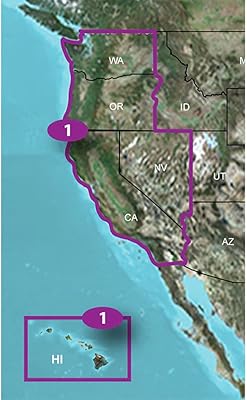
  • Region: Covers western United States and Canadian Pacific coastal waters, including Puget Sound and adjacent Canadian marine areas.
  • Lake Coverage: Includes more than 2,600 lakes across twelve western states: AZ, CA, CO, ID, MT, ND, NV, OR, SD, UT, WA, and WY.
  • Chart Type: Nautical charts with combined marine and freshwater lake coverage optimized for cruising, sailing, and fishing use cases.
  • Bathymetry: SonarChart HD provides one-foot resolution depth contour mapping for detailed underwater terrain visualization in lakes and coastal zones.
  • Update Frequency: Daily chart updates are available for one full year following card activation via the Navionics platform.
  • Community Data: Community Edits layer incorporates crowdsourced local navigation data contributed by millions of active Navionics Boating app users.
  • Navigation Support: Supports auto-routing and dock-to-dock navigation on compatible chartplotter devices from brands such as Garmin, Lowrance, and Simrad.
  • Item Weight: The physical card weighs 0.11 kg, making it a compact and lightweight storage medium for chart data.
  • Card Color: The card is black in color with a coated finish on its label surface.
  • Map Type: Charts are classified as nautical, covering both open-water marine routes and inland freshwater lake systems.
  • Compatibility: Designed for use with SD and MSD-slot chartplotters; buyers should confirm their specific device slot type before purchasing.
  • Data Source: Chart data is drawn from official hydrographic surveys supplemented by Navionics proprietary SonarChart depth data and user contributions.
  • Update Method: Chart updates are delivered digitally and applied to the card via a connected device running the Navionics Boating app.

Related Reviews
Navionics Plus South Region Marine Lake Chart SD Card
80%
88%
Chart Accuracy
91%
Freshwater Fishing Detail
84%
Marine Coverage
79%
Update System
93%
Ease of Installation
More
Navionics Plus North Lakes SD Chart Card
78%
91%
Bathymetric Accuracy
88%
Lake Coverage Breadth
86%
Chartplotter Compatibility
74%
Chart Update System
69%
Community Edits Quality
More
Avokadol Dual Dash Cam with 32GB SD Card
84%
87%
Video Quality
91%
Ease of Installation
85%
Night Vision Performance
79%
Rear Camera Visibility
88%
Field of View
More
StriVectin SD Advanced™ Plus Intensive Moisturizer 118mL
87%
88%
Effectiveness in Reducing Wrinkles
83%
Stretch Mark Reduction
91%
Hydration & Moisturizing
84%
Skin Texture Improvement
93%
Absorption Speed
More
Garmin Topo US 24K West Topographic Map Card
80%
86%
Map Data Accuracy
79%
Trail Coverage Depth
91%
Device Integration
88%
Hydrographic Detail
82%
Elevation Profile Utility
More
vebiliki H10 Hidden Spy Camera
69%
74%
Video Clarity
71%
Night Vision Performance
77%
Motion Detection Accuracy
81%
Battery Life & Standby
53%
App Experience (UBox)
More
ZTTAOLII Z20 5G Security Camera with 64GB SD Card
87%
88%
Value for Money
93%
Video Quality (4K Resolution)
85%
Battery Life
90%
Ease of Setup
87%
Motion Detection Accuracy
More
WKX W-A2 2K Security Camera with 64GB SD Card
83%
94%
Battery Life
87%
Ease of Setup
88%
Motion Detection Accuracy
82%
Night Vision Performance
68%
App Experience
More
SEMIER Small Cassette Tape Player Converter
73%
86%
Ease of Setup
67%
Audio Conversion Quality
81%
SD Card Recording
58%
Built-in Speaker
63%
Motor Speed Consistency
More
QAOLZCC DIYC Mini Hidden Camera
63%
58%
Video Quality
84%
Ease of Setup
62%
Battery Life
54%
Motion Detection
81%
Discreet Form Factor
More

FAQ

Most modern Garmin chartplotters with an SD or MSD card slot are compatible, but it depends on the specific model. Check Navionics compatibility tools on their website using your exact chartplotter model number before buying. Older Garmin units with proprietary chart formats may not support third-party Navionics cards.

Once you activate the card, you can pull updates daily for a year by connecting the card to a device running the Navionics Boating app. The app syncs the latest chart data to the card, and then you slot it back into your plotter. You do need an internet connection during that sync process.

The charts already loaded on the card remain usable, but you will stop receiving new updates unless you purchase a renewal subscription. Many boaters find the charts still practical for general navigation even without continued updates, though time-sensitive data like newly charted hazards or changed marina details may fall behind.

Yes, both states are included in the coverage area, and the one-foot HD bathymetry is one of the strongest reasons anglers in the Mountain West pick this chart card. It gives you detailed depth contours that help locate structure, drop-offs, and productive fishing zones far better than basic maps.

Most current Lowrance chartplotters with SD or micro SD slots are compatible. As with any brand, the safest approach is to run your unit model through the Navionics compatibility checker online before purchasing, since slot format and software version can both be factors.

It covers Canadian Pacific coastal waters, including areas adjacent to Puget Sound that extend into British Columbia. That said, the inland lake coverage is limited to the twelve listed US western states, so Canadian freshwater lakes are not part of the package.

The card comes in a dual SD/MSD format, so it is designed to fit both standard full-size SD slots and micro SD slots. Just confirm which type your plotter uses so you are inserting the correct side of the card.

For well-traveled and popular lakes, the SonarChart HD data tends to be very accurate and detailed. For very remote or lightly fished lakes, the coverage can be thinner, since Community Edits and sonar data contributions are naturally lower in areas with less boat traffic. It is worth checking the Navionics app preview for your specific lake before buying if that is your primary use case.

Community Edits is a layer of user-submitted information — things like hazard markers, anchorage notes, marina tips, and local waypoints contributed by other Navionics app users. The quality varies by location; in areas with active boating communities the data can be genuinely useful, while in quieter regions it may be sparse or outdated. Think of it as a helpful supplement to official chart data, not a replacement.

The card needs to stay inserted in your chartplotter while you are navigating, since the chart data is read directly from it. You only remove it when you want to connect it to the Navionics app for updates, and then you reinsert it into the plotter for your next trip.