
Overview

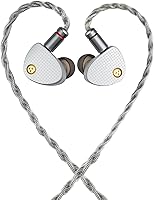
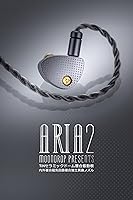
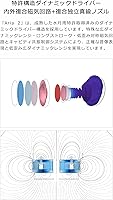
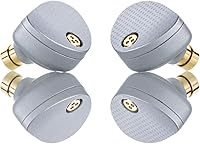
The Moondrop Aria 2 is the long-awaited follow-up to one of the most recommended budget-to-mid-range IEMs of recent years, arriving with meaningful hardware upgrades rather than just a cosmetic refresh. At its core is a new dynamic driver built around a composite magnetic circuit design — technology Moondrop previously reserved for more expensive models — paired with a brass acoustic cavity that gives the driver a more controlled physical environment. The shell is alloy-cast and CNC-milled, the nozzle is solid brass with a gold-plated finish, and the whole package ships with a cable offering both 3.5mm and 4.4mm balanced terminations. At 33Ω and 122dB sensitivity, easy to drive is an understatement — a decent dongle DAC is more than enough.

Features & Benefits

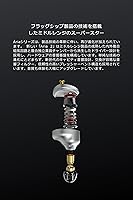
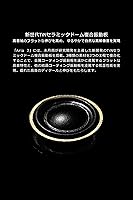
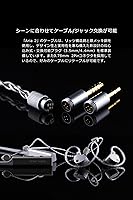
The engineering story centers on a diaphragm made through a genuinely unusual three-material, two-step process — a TiN ceramic-coated dome designed specifically to produce smoother treble extension with lower distortion than conventional single-coating approaches. In practice, this matters because cheaper metal-coated diaphragms can introduce a gritty edge to upper-frequency detail. The brass nozzle, gold-plated and precision-milled, adds tonal density to the overall sound. Distortion comes in under 0.05% THD at 1kHz — impressively controlled for a single dynamic driver. The detachable 2-pin cable makes this IEM future-proof for upgrades, and the included dual-plug setup — 3.5mm single-ended plus 4.4mm balanced — removes the need for immediate extra cable spending.

Best For

The Aria 2 makes the most sense as a step-up purchase for someone coming off sub-$50 earphones who wants noticeably better resolution and instrument separation without the learning curve of hard-to-drive gear. At 33Ω and high sensitivity, it pairs naturally with a phone, a basic DAP, or a small dongle — no desktop amp required. The tuning leans toward a balanced, slightly warm signature that rewards acoustic music, jazz, and vocals far more than punishing bass lines or wall-of-sound electronic mixes. Listeners who prioritize sub-bass slam may find the presentation restrained. Anyone planning to experiment with balanced output down the line will appreciate that the cable work is already handled out of the box.

User Feedback

Reception for Moondrop's mid-range earphone has been noticeably mixed, reflected in a 3.6-star average that sits below what this brand typically earns. The most common praise centers on detail retrieval and the included cable value; buyers upgrading from entry-level gear consistently mention a tangible improvement in treble smoothness. On the other side, a meaningful share of negative reviews traces back to fit — the nozzle diameter sits on the larger side, and some users find long-session comfort difficult without tip-rolling. A few critical voices also question whether the sonic improvement over the original Aria justifies the price difference, particularly with competitors like the Truthear Hexa and 7Hz Salnotes Zero 2 in the same bracket. Quality control complaints exist but are not dominant.

Pros

  • Refined treble presentation — the ceramic diaphragm noticeably reduces grain compared to older metal-coated designs.
  • Ships with both 3.5mm and 4.4mm balanced terminations on a single cable, saving immediate upgrade costs.
  • Solid zinc alloy and brass construction feels genuinely premium and built to outlast glued-together competitors.
  • Runs confidently from a smartphone or basic dongle — no amplifier required for full volume and control.
  • Screw-secured shell assembly eliminates the adhesive failure point that shortens the life of many rival IEMs.
  • The Moondrop Aria 2 brings trickle-down driver technology from pricier models at a more accessible price.
  • Instrument separation on acoustic and vocal recordings is above average for a single dynamic driver.
  • Detachable 0.78mm 2-pin cable makes repair or upgrade straightforward and inexpensive.
  • Packaging and unboxing experience exceed what the price tier typically delivers.
  • Very low measured distortion means the driver stays composed even during dynamic, wide-range recordings.

Cons

  • Nozzle diameter is wider than average — listeners with smaller ear canals frequently struggle to get a reliable seal.
  • Bass quantity will disappoint anyone accustomed to consumer-tuned earphones or bass-boosted wireless buds.
  • The improvement over the original Aria is real but incremental, making the upgrade case weak for existing owners.
  • Stock ear tip variety is limited; most users will need to budget for third-party tips to optimize fit and sound.
  • Cable microphonics are noticeable during walks or commutes when the wire rubs against clothing.
  • Competing IEMs at similar or lower prices — like the Truthear Hexa — make the value argument less clear-cut than it once was.
  • Passive isolation depends entirely on achieving a good seal, which is not guaranteed for all ear shapes.
  • No inline microphone or remote on the stock cable, making it impractical for hands-free calls.

Ratings

The Moondrop Aria 2 earns a nuanced scorecard — our AI has processed verified global buyer reviews, actively filtering out incentivized and bot-generated submissions, to surface what real listeners actually experience day to day. Scores reflect both where this IEM genuinely competes and where it falls short against a crowded mid-range field. Strengths and friction points are weighted equally, so nothing is glossed over.

Sound Quality
83%
Buyers with neutral or reference tuning preferences consistently praise the Aria 2 for its composed, non-fatiguing presentation. Treble detail comes through without the grain or sharpness common in cheaper metal-diaphragm earphones, which is especially appreciated during long listening sessions with acoustic guitar, piano, or vocal recordings.
Listeners who enjoy v-shaped or bass-heavy tuning — think EDM playlists or hip-hop commutes — often find the signature too restrained. The low end is present but not impactful enough for those stepping up from consumer earbuds that prioritize thump over accuracy.
Bass Performance
67%
33%
For detail-oriented genres like jazz or classical, the bass is well-controlled and textured rather than bloated. Sub-bass extension reaches respectably low without muddying the midrange, which is a real advantage when tracking individual bass lines in a mix.
Bass quantity simply will not satisfy buyers who want physical weight behind kicks and drops. Multiple reviewers specifically call out the lack of slam as a dealbreaker after switching from more consumer-oriented earphones, and the gap is noticeable enough that tip-rolling rarely fixes it.
Treble & Detail Retrieval
86%
The TiN ceramic diaphragm pays off most visibly here — reviewers routinely note that high-frequency detail feels refined rather than etched. Cymbals decay naturally, and sibilant vocal recordings come through without the harshness that plagues many competitors in this price range.
A small subset of buyers finds the treble slightly rolled off at the very top end, meaning micro-detail like room reverb or breath sounds can feel just slightly veiled compared to brighter-tuned alternatives. It is a preference issue more than a technical flaw, but it matters for critical listeners.
Soundstage & Imaging
74%
26%
Instrument separation is above average for a single dynamic driver at this price, and the brass cavity contributes a sense of space that makes orchestral recordings feel less congested. Left-right imaging is accurate enough for casual gaming and monitoring applications.
The soundstage is not wide by any objective standard — it is intimate rather than expansive. Buyers who have spent time with multi-driver IEMs or larger over-ear headphones often note that the Aria 2 feels slightly closed-in on dense, layered tracks.
Build Quality
88%
The zinc alloy shell feels genuinely solid in hand — not plasticky or hollow — and the customized screw assembly eliminates the adhesive failure point that plagues many competing earphones over time. The brass nozzle has a premium density to it that users notice immediately when handling the earphone.
A few buyers report minor finishing inconsistencies, particularly around the seam between the faceplate and shell. Nothing structurally alarming, but at this price point the expectation for flawless machining is higher, and the occasional rough edge does surface in critical reviews.
Comfort & Fit
61%
39%
The rounded housing shape sits passively in the ear without digging into the concha, and for buyers with average or larger ear canals, the fit seals well with the stock silicone tips. Several users mention wearing them for two-plus-hour sessions without notable fatigue.
The nozzle diameter is on the larger side, and this is the single most cited negative across all critical reviews. Users with smaller ear canals report an inability to achieve a proper seal regardless of tip size, leading to poor isolation and thin bass response. Tip-rolling with third-party foam or narrow-bore silicone tips is practically mandatory for a meaningful share of buyers.
Cable Quality & Included Accessories
79%
21%
Shipping a dual-termination cable — 3.5mm single-ended and 4.4mm balanced in one unit — is a genuinely practical decision that eliminates an immediate upgrade cost. The cable itself is supple, relatively tangle-resistant, and the 0.78mm 2-pin connectors seat firmly without looseness.
The cable is good for stock, not exceptional. Microphonics are present when the cable rubs against clothing, which matters during walking or commuting. A few buyers also note the cable chin slider is flimsy, and the overall feel does not quite reach the confidence of cables sold separately in the same price bracket.
Value for Money
72%
28%
The hardware specification — composite magnetic circuit, ceramic-coated diaphragm, brass nozzle, dual-plug cable — is hard to match at this price from a pure parts standpoint. For buyers who know what they are paying for, the engineering story holds up.
The competitive landscape has tightened significantly. The Truthear Hexa and 7Hz Salnotes Zero 2 both offer compelling sound at lower or comparable prices, and several buyers explicitly conclude they cannot justify the Aria 2 premium over these alternatives based on sound alone. The value equation is less obvious than it was for the original Aria.
Packaging & Unboxing
81%
19%
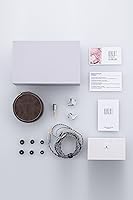
Moondrop consistently delivers above-average presentation, and the Aria 2 follows that tradition. The box is compact but structured, the earphones are presented neatly, and the inclusion of a certificate and service card reinforces a sense of brand accountability that budget-tier brands rarely bother with.
The stock ear tip selection is limited in variety. Users who need wide-bore or extra-small tips are left to source their own immediately, which feels like an oversight given how tip-dependent the fit and sound experience are for this particular earphone.
Isolation & Passive Noise Rejection
63%
37%
With a proper seal, the passive isolation is adequate for office environments and public transit at moderate noise levels. The zinc alloy shell does not transmit vibration noticeably, and background chatter gets pushed far enough back for focused listening.
Without a good seal — which many users struggle to achieve due to the nozzle size — isolation drops off sharply. There is no active noise cancellation, so in loud environments like commuter trains or open kitchens, external noise competes meaningfully with the audio. This is not unique to this IEM, but it amplifies the fit problem.
Source Compatibility
91%
At 33Ω and 122dB sensitivity, the Aria 2 runs loud and controlled directly from a smartphone headphone jack or a basic USB-C dongle. No hiss is reported from sensitive sources, which is a practical advantage for listeners who do not own a dedicated DAC or amplifier.
The flip side of high sensitivity is that very noisy output stages — low-quality laptop headphone jacks, for instance — can introduce a faint background hiss. It is not a widespread complaint, but users pairing this IEM with older PC motherboard audio occasionally mention it.
Upgrade Over Original Aria
66%
34%
Buyers who owned the original Aria and moved to the Aria 2 consistently describe the treble as more polished and the overall presentation as slightly more refined. The build quality improvement is immediately tangible, and the dual-plug cable is a concrete functional step forward.
Many returning Aria fans describe the sound difference as subtle rather than transformative in everyday listening. For users who were happy with the original tuning, the upgrade proposition is difficult to argue purely on sonic grounds — the improvement is real but not dramatic enough to feel essential.
Durability & Longevity
77%
23%
The elimination of adhesive in the shell assembly — replaced by precision screws — is a long-term reliability upgrade that previous Moondrop models could not claim. The detachable cable means the most failure-prone component is also the cheapest and easiest to replace.
Long-term durability data is still accumulating given the product's relatively recent release. A handful of reviews mention connector pin wear appearing earlier than expected, though this may correlate with frequent cable swapping rather than a manufacturing defect.
Aesthetic & Visual Design
82%
18%
The revised CMF design brings a fresher look compared to the original Aria, with a cleaner faceplate and a silver finish that reads as mature rather than flashy. The gold-plated brass nozzle adds a subtle luxury accent that most buyers respond positively to.
Design preference is subjective, and some buyers find the aesthetic too understated or anonymous compared to the more dramatic faceplates on competing earphones. It will not turn heads, which for some listeners is actually a positive — but those who enjoy expressive earphone designs may find it forgettable.

Suitable for:

The Moondrop Aria 2 is a strong match for listeners who are consciously stepping up from budget earphones and want a more technically capable wired IEM without diving into audiophile-tier complexity or cost. If your library leans toward acoustic instruments, jazz, singer-songwriter material, or anything where vocal texture and midrange honesty matter, this earphone rewards that kind of listening. It is equally well-suited to anyone who already owns a DAP or a USB-C dongle DAC and wants an IEM that scales reasonably with a better source without demanding one. The detachable 2-pin cable system also makes this a practical long-term buy for people who like the idea of experimenting with balanced output later, since the hardware foundation is already there. First-time buyers entering the mid-range IEM world who follow communities like Head-Fi or r/headphones will find this earphone sits comfortably within the tuning philosophy they have likely been reading about.

Not suitable for:

The Moondrop Aria 2 is a harder sell if your primary genres are bass-heavy — EDM, trap, or anything where physical low-end impact is the emotional core of the experience. The tuning prioritizes control and balance over weight, and no amount of EQ or tip-swapping will turn it into a bass-cannon earphone. Buyers with smaller ear canals should also approach with real caution: the nozzle diameter is on the larger end of the spectrum, and a meaningful number of users simply cannot achieve a comfortable or well-isolated fit regardless of which stock tips they try. If you owned the original Aria and were genuinely happy with it, the sonic jump here is incremental rather than dramatic — honest returning fans should calibrate their expectations accordingly. Finally, anyone wanting wireless convenience, active noise cancellation, or a lifestyle-oriented product will find nothing here; this is a strictly wired, technically focused earphone aimed at people who have already decided wired is the right tool for their situation.

Specifications

  • Driver Type: Single dynamic driver with a composite internal and external magnetic circuit design borrowed from higher-tier Moondrop models.
  • Diaphragm: TiN ceramic-coated dome composite, processed across three materials in two steps to reduce distortion and smooth treble response.
  • Impedance: 33Ω (±15%) measured at 1kHz, making it compatible with low-power sources including smartphones and USB-C dongles.
  • Sensitivity: 122dB per Vrms at 1kHz, meaning it reaches listening volume easily without requiring a dedicated headphone amplifier.
  • Frequency Response: Rated 16Hz–22kHz under free-field conditions, with a practical -3dB window of 20Hz–20kHz per IEC60318-4 standard.
  • Distortion: Total harmonic distortion is specified at under 0.05% at 1kHz, indicating strong driver linearity across dynamic passages.
  • Cable Connector: Detachable 0.78mm 2-pin configuration, a widely supported standard that makes third-party cable upgrades straightforward.
  • Cable Terminations: Included cable ships with dual plugs — a 3.5mm single-ended connector and a 4.4mm balanced connector — on a single cable unit.
  • Shell Material: Zinc alloy housing manufactured through alloy casting and CNC milling, secured with customized screws rather than adhesive.
  • Nozzle Material: Separate brass component, CNC-milled and gold-plated, designed for higher acoustic density and long-term surface durability.
  • Noise Isolation: Passive isolation only — no active noise cancellation is present, and isolation level depends entirely on ear tip seal quality.
  • Connectivity: Wired only via 3.5mm single-ended or 4.4mm balanced output; no Bluetooth or wireless functionality is supported.
  • Earpiece Shape: Rounded tip housing designed for in-ear placement, intended to seat passively inside the ear canal without over-ear hooks.
  • Package Contents: Includes one pair of earphones, one dual-plug cable, user manual, product certificate, and a service card.
  • Package Weight: The full retail package weighs approximately 11.3 oz, which includes all accessories and packaging materials.

Related Reviews
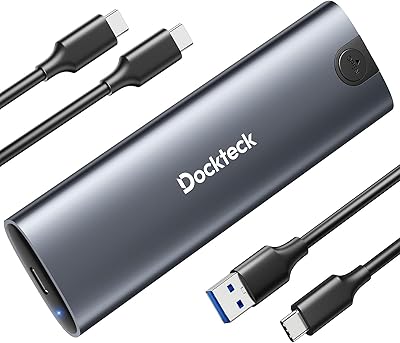
dockteck DH0002 M.2 NVMe/SATA SSD Enclosure

84%
88%
Transfer Speed (NVMe)
76%
SATA Drive Performance
83%
Build Quality
93%
Ease of Setup
79%
Thermal Management
More
Waxness Spa Choice Natural Honey Gel Hard Wax Beads 2.2 lb / 1 kg Pack of 2

85%
88%
Effectiveness for Coarse Hair Removal
91%
Gentleness on Sensitive Skin
84%
Ease of Use and Application
75%
Texture Consistency
90%
Pack Size and Value for Money
More
Nécessaire The Hand Cream, 2.2 fl oz
89%
91%
Hydration Effectiveness
94%
Absorption Speed
93%
Non-Greasy Formula
89%
Skin Sensitivity Compatibility
87%
Fragrance-Free Quality
More
SUIDEK HDMI KVM Switch 2 Monitors 2 Computers
83%
88%
Ease of Use
92%
4K Video Performance
85%
USB 3.0 Hub Functionality
90%
Display Modes (Extended/Mirrored)
60%
Compatibility with Laptops
More
ELAC Debut 2.0 B5.2 Bookshelf Speakers
82%
93%
Sound Quality
71%
Bass Performance
89%
Treble Clarity
88%
Soundstage & Imaging
84%
Build Quality
More
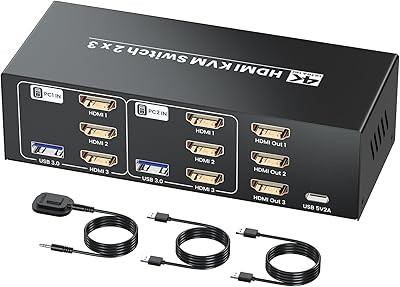
Seiryruc 2 Port HDMI KVM Switch 2 In 3 Out
84%
88%
Performance & Switching
90%
Visuals & Resolution
72%
Setup & Installation
86%
Connectivity & Compatibility
80%
USB Port Functionality
More
adidas Moves for Her 2 Piece Gift Set, 2.5oz
86%
87%
Fragrance Longevity
91%
Scent Freshness
92%
Value for Money
80%
Packaging Design
88%
Compact & Travel-Friendly Size
More
BolAAzuL 2-Port HDMI 2.1 KVM Switch
84%
91%
Value for Money
94%
Video Quality
88%
Ease of Setup
85%
Build Quality
80%
Usability and Controls
More
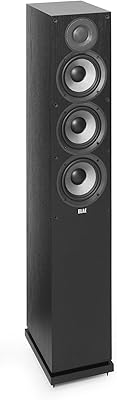
ELAC Debut 2.0 F5.2 Floorstanding Speaker

87%
95%
Sound Quality
92%
Bass Performance
88%
Build Quality
85%
Ease of Setup
91%
Value for Money
More
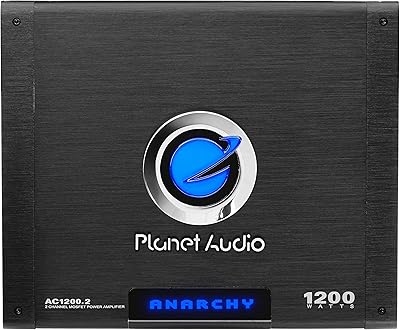
Planet Audio AC1200.2 2 Channel Car Amplifier
83%
88%
Power Output
90%
Sound Clarity
85%
Build Quality
91%
Value for Money
80%
Ease of Installation
More

FAQ

Not at all. At 33Ω and 122dB sensitivity, the Aria 2 runs loud and controlled straight from a smartphone headphone jack or a basic USB-C dongle DAC. A dedicated amplifier is not required, though a higher-quality source will reveal more of what the driver is capable of.

This is genuinely the most common concern with this IEM, and it is worth taking seriously. The nozzle diameter is on the larger side compared to many competitors, and users with smaller ear canals frequently report difficulty achieving a comfortable, well-sealed fit using the stock tips. If you have had fit issues with wide-nozzle earphones before, budget for a set of third-party tips — narrow-bore silicone or foam options often solve the problem.

The 3.5mm plug is a standard single-ended connection that works with virtually any phone, DAP, or dongle. The 4.4mm plug is a balanced output connection that requires a compatible source — many mid-range and high-end DAPs and dongles support it. Balanced output can reduce crosstalk and noise floor in supported gear, though the audible difference depends heavily on your source quality.

Honest answer: it depends on what you are comparing. The build quality improvement is immediately noticeable — the shell, nozzle, and cable are all meaningfully better. On the sound side, the treble is smoother and more refined, but the overall signature family is similar enough that existing Aria owners often describe the difference as incremental rather than transformative. If you never owned the original, the comparison is less relevant — judge it on its own merits against current competition.

The stock cable does not include an inline microphone or remote, so hands-free calling is not possible out of the box. You can use them to listen during calls if your phone outputs audio through the headphone jack or adapter, but your voice will not be picked up by the earphones themselves.

For the housings, a soft dry cloth or a lightly dampened cotton swab works well for removing skin oils and debris. The brass nozzle can be cleaned carefully with a small brush or a dedicated IEM cleaning tool to remove earwax buildup from inside the mesh. Avoid any liquid near the cable connectors or the 2-pin ports, and never submerge the earphones — they have no water resistance rating.

The 0.78mm 2-pin detachable standard is one of the most widely available IEM cable formats on the market, so replacement options range from budget to audiophile-grade and are easy to find. A functional replacement cable can be found for well under the cost of the earphones themselves, which is one of the practical advantages of this connector standard over proprietary solutions.

They are usable for gaming, particularly for single-player titles where instrument separation and positional accuracy matter. The soundstage is not exceptionally wide, but the imaging is precise enough for tracking footsteps in games that mix spatial audio well. The lack of a microphone is the main practical limitation for multiplayer gaming sessions.

Probably not as much as you would hope. Moondrop's mid-range earphone is tuned for balance and accuracy rather than bass emphasis, and the low-end presentation prioritizes control over physical weight. If heavy sub-bass and impactful kicks are important to your listening experience, this tuning will likely feel restrained and you would be better served by a more v-shaped or bass-forward IEM in the same price range.

Yes — the standard round nozzle accepts virtually any third-party silicone or foam ear tip designed for IEMs. For users who struggle with the stock fit, narrow-bore silicone tips (like the popular SpinFit or Azla Sedna range) tend to improve both comfort and bass response by creating a better seal. Foam tips also help with isolation if you use these in noisy environments like commuter transport.