

Overview

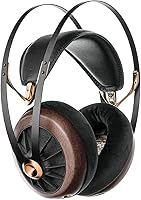
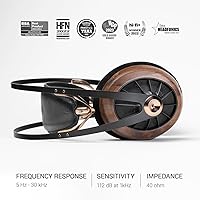
The Meze Audio 109 Pro Open-Back Headphones come from a Romanian brand that has quietly built a reputation for treating headphones as crafted objects rather than mass-produced electronics. The open-back design is a deliberate acoustic choice — it creates a wider, more natural soundstage and more convincing stereo imaging than closed-back alternatives, at the cost of zero noise isolation. Those genuine walnut wood earcups aren't just for looks; wood has natural resonance-damping properties that shape the overall sonic character. At this price tier, you're buying into a philosophy as much as a product: modular construction means every component is user-replaceable, which is increasingly rare and genuinely valuable over the long run.

Features & Benefits

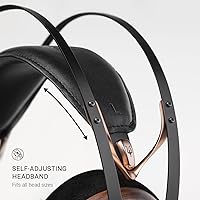
The 109 Pro's 50mm dynamic drivers span a frequency range that pushes well below audible bass and extends to the top of human hearing — in practice, this means full-bodied low end and open, airy highs rather than a scooped or artificially brightened response. At 40 ohms impedance and 112dB sensitivity, these open-back headphones genuinely work without a dedicated amplifier; your phone or laptop will drive them to satisfying volumes. That said, pairing them with even a modest DAC or amp will bring out more texture and control. The self-adjusting headband — spring steel reinforced under vegan leather — distributes pressure naturally across most head shapes, and the accessory bundle includes two cable lengths plus a solid EVA carry case.

Best For

This Meze Audio set is built for home listening sessions — the kind where you sit down intentionally, not the kind where you're commuting or sharing a workspace. Open-back designs bleed sound in both directions, so an office or public setting simply isn't a realistic environment for them. Where they shine is at a dedicated desk setup, driven by a phone, DAC, or modest amp, with music you actually care about. Audiophiles stepping up from mid-range headphones will notice the improved spatial presentation and tonal naturalness right away. Music producers and mixing engineers who prioritize listening comfort and an organic signature over clinical precision will also find them a genuinely strong fit.

User Feedback

With 79 ratings and a 4.5-star average, the reception for these open-back headphones is clearly positive, though the sample size is still modest enough that no pattern should be taken as definitive. Comfort and build quality come up repeatedly as strengths — people note the headband fits well and that extended sessions don't produce the usual fatigue. The sound signature draws consistent praise for feeling natural and unforced. On the downside, a handful of buyers flag the 375g weight as noticeable over very long periods, and a few mention sound leakage catching them off-guard — a genuine trade-off, not a minor footnote. Some also question whether the asking price is fully justified compared to competing options at the same tier.

Pros

  • Natural, open soundstage that makes music feel three-dimensional rather than stuck inside your head.
  • Genuinely easy to drive at 40 ohms — a decent phone or laptop is enough to get real performance.
  • Every pair of walnut wood earcups has a unique grain pattern, making each set visually one-of-a-kind.
  • The self-adjusting headband distributes pressure well, making extended listening sessions far more comfortable than most at this size.
  • Fully modular construction means cables, earcups, and even the driver can be replaced rather than discarded.
  • Wide frequency response delivers full, extended bass and genuine high-frequency detail without artificial boosting.
  • The included accessory bundle is thoughtful — two cable lengths, a quality adapter, and a protective hard case all included.
  • Two-year warranty provides meaningful coverage for a premium purchase.
  • Build materials feel high-quality and purposeful rather than decorative — metal fasteners, not glue.

Cons

  • Open-back design leaks sound in both directions — a dealbreaker for shared spaces, offices, or commuting.
  • At 375g without cables, long listening marathons may cause fatigue for those sensitive to headphone weight.
  • No noise isolation whatsoever, so ambient noise enters freely regardless of volume.
  • Performance improves meaningfully with a dedicated DAC or amp, adding cost on top of an already premium price.
  • The rating pool of 79 reviews is still relatively small, making it harder to assess long-term reliability confidently.
  • Wired-only connectivity with no wireless option may feel limiting for buyers accustomed to Bluetooth freedom.
  • Fit can vary across different head sizes and shapes — a try-before-you-buy opportunity is worth seeking out if possible.
  • Price-to-performance value relative to competitors at the same tier is a legitimate debate, not a settled question.
  • The carrying pouch protects during transport but does not compress for easy packing in a small bag.

Ratings

The scores below reflect an AI-driven analysis of verified global user reviews for the Meze Audio 109 Pro Open-Back Headphones, with spam, bot activity, and incentivized feedback actively filtered out to keep the picture honest. Each category is scored on a 0–100 scale, drawing on real buyer experiences across home listening, music production, and audiophile communities worldwide. Both the genuine strengths and the recurring frustrations are represented here without softening either side.

Sound Quality
91%
Listeners consistently describe the sonic character as natural and unfatiguing — the kind of sound that lets you stay in a long session without wanting to take the headphones off. Bass extension feels full without being exaggerated, and high-frequency detail comes across as airy rather than harsh, which is a difficult balance to strike at any price.
A handful of reviewers with clinical, measurement-first preferences find the tuning slightly warm and feel it lacks the analytical edge found in some competing open-back options at the same tier. Those expecting a flat, reference-style response may want to audition these before committing.
Soundstage & Imaging
89%
The open-back architecture genuinely pays off here — instruments are placed with convincing spatial separation, and the overall presentation feels wide without sounding artificially stretched. Listeners switching from closed-back headphones frequently describe the experience as hearing their music collection properly for the first time.
While the soundstage width is a clear strength, some users note that depth layering — the front-to-back positioning of instruments — is not quite as precise as competing planar magnetic designs at a similar price point. It is an open-back dynamic driver, and that context matters for expectations.
Build Quality
93%
The use of mechanical fasteners instead of adhesive bonding is a meaningful construction choice that experienced buyers notice immediately — it signals an intent to last rather than an intent to look good on a shelf. The walnut earcups feel solid and substantial, and the metal hardware throughout gives a premium tactile impression that holds up over repeated daily handling.
A small number of users mention that the plastic components connecting the headband assembly to the earcups feel slightly less premium compared to the wood and metal elements, creating a minor inconsistency in material quality perception across the headphone's structure.
Comfort & Fit
78%
22%
The self-adjusting spring steel headband is a practical design win for most head shapes — there are no notches to fiddle with, and the clamping force distributes naturally over the course of a session. Many reviewers specifically note that after the first 20 to 30 minutes, the headphones seem to settle into position and stop demanding attention.
At 375g without a cable attached, these are genuinely heavy compared to lighter competitors, and users with sensitivity to headphone weight report noticeable fatigue after two to three hours of continuous wear. Fit variance is also a real concern for listeners with very large or very small head circumferences, since the passive adjustment has a fixed range.
Value for Money
71%
29%
When the modular, fully repairable construction is factored into the long-term cost equation, the case for the price becomes more compelling — a headphone you can repair rather than replace has a meaningfully different total cost of ownership over five to ten years. The included accessory bundle also adds genuine functional value rather than token additions.
Taken purely on immediate sound-per-dollar terms, the competition at this price tier is fierce, and several buyers openly question whether the sonic performance alone justifies the ask without the craftsmanship premium. This is a headphone where you are paying for the object as much as the listening experience, and not every buyer finds that trade-off satisfying.
Ease of Driving
86%
At 40 ohms and 112dB sensitivity, these open-back headphones perform well straight out of a smartphone or laptop headphone jack — a meaningful practical advantage over higher-impedance alternatives that demand dedicated amplification to come alive. For buyers who want a plug-and-play experience without building a desktop audio stack, this is a genuine differentiator.
The amplifier-free claim, while technically accurate, understates the performance gap that a quality DAC or headphone amp introduces. Buyers who try them unamplified first and then add even a modest source upgrade frequently report a step-change in clarity and bass control that makes the initial experience feel incomplete in hindsight.
Cable Quality
67%
33%
Including two cable lengths — a shorter 1.5m option for desk use and a longer 3m cable for living room setups — is a genuinely practical touch that removes the need for an immediate aftermarket purchase. The OFC construction is appropriate for the price tier, and the detachable connection means a damaged cable is a simple fix rather than a warranty claim.
The included TPE cables have drawn enough criticism in user feedback to be worth flagging — several buyers describe them as prone to tangling and feeling slightly cheap relative to the premium impression the headphones themselves create. Third-party replacement cables are commonly recommended by experienced owners fairly early in the ownership cycle.
Noise Isolation
18%
82%
There is effectively nothing to say positively about noise isolation here, because the open-back design is built to provide none — and for the right user in the right environment, that is exactly the correct engineering decision rather than a flaw.
Sound leaks in both directions, freely and noticeably — nearby listeners will hear your music at moderate volumes, and ambient noise enters without any attenuation. This is a fundamental characteristic of open-back headphones and is not fixable; buyers who need any level of isolation should look elsewhere entirely.
Aesthetic Design
92%
The walnut wood earcups are visually distinctive in a category where most premium headphones default to matte black plastic or brushed aluminum, and the unique grain pattern on every pair means no two units look identical — a detail that buyers who care about owning something individual genuinely appreciate. The overall design language reads as refined and considered rather than styled for trend.
The brown and black colour palette, while elegant, is a fixed aesthetic and offers no alternative colourway options — buyers who prefer a more understated or differently toned appearance have no variant to choose from. The size and visual presence of the earcups is also quite large and may feel overstated to more minimalist tastes.
Accessory Bundle
81%
19%
The hard EVA carrying pouch provides real protection rather than the soft drawstring bags that typically accompany premium headphones at this price, and the inclusion of both a 3.5mm and a 6.35mm-compatible setup out of the box means the headphones work immediately with desktop amplifiers without a separate adapter purchase. The vegan leather cable pouch is a small but appreciated detail.
The carrying pouch, while protective, is bulky and not well-suited to fitting inside a standard bag alongside other items — it is more of a home storage solution than a travel-ready case. Buyers who intended to carry these open-back headphones regularly will likely feel the portability packaging falls short of their needs.
Repairability & Longevity
94%
Full component-level replaceability — including the dynamic drivers themselves — is rare at any price tier and represents a meaningful commitment from Meze Audio to long-term ownership rather than planned obsolescence. For buyers who have experienced the frustration of a repairable-feeling headphone that cannot actually be serviced, this is a substantial differentiator.
Spare parts and replacement components are currently only available through Meze Audio directly or authorised distributors, which adds a layer of friction compared to buying universal parts locally. Availability of specific components in certain regions is not guaranteed indefinitely beyond the two-year EU-mandated window.
Warranty & Support
77%
23%
A two-year manufacturer warranty is a reasonable and competitive coverage term for a premium wired headphone, and Meze Audio has a generally positive reputation among the audiophile community for responsive customer service and honouring warranty claims without unnecessary friction.
Two years is not exceptional in the context of what some competing brands offer at comparable prices, and given the repairability-focused ethos of the product, buyers might reasonably hope for a longer coverage window. International warranty support outside of Europe and North America can involve longer turnaround times depending on distributor arrangements.
Versatility of Use
62%
38%
Within the home environment, these open-back headphones are genuinely adaptable — they work well for critical music listening, casual gaming at a desk, and long-form content consumption, and the wide frequency response supports a broad range of genres and source material without obvious genre-specific tuning bias.
Outside of a private home setting, the use cases collapse almost entirely due to the open-back sound leakage and the wired-only connectivity. There is no wireless option, no inline microphone on either included cable, and no noise isolation, which collectively make these a dedicated home listening tool rather than a flexible daily-driver headphone.

Suitable for:

The Meze Audio 109 Pro Open-Back Headphones are genuinely well-matched to a specific kind of listener: someone who treats music as an activity rather than background noise, and who does most of their listening at home or in a private space. If you're upgrading from mid-range cans and have started noticing the ceiling on soundstage and tonal naturalness, these will answer those frustrations directly. Home studio musicians and mixing engineers who work in longer sessions will appreciate both the organic, non-fatiguing sound signature and the comfort engineering behind the self-adjusting headband. Buyers who think long-term — who hate the idea of throwing away a broken pair and buying new — will find the fully modular construction particularly compelling, since every component down to the driver is replaceable. You don't need a dedicated amplifier to get real value out of these, though pairing them with even a modest DAC will push performance noticeably further.

Not suitable for:

The Meze Audio 109 Pro Open-Back Headphones are the wrong tool for a significant portion of buyers, and it's worth being direct about that. Open-back designs leak sound in both directions — what you hear, others nearby will partially hear too, and ambient noise flows in freely — so commuters, office workers, and anyone in a shared space will find them impractical regardless of sound quality. If you need to take calls on the go, block out a noisy environment, or use headphones in transit, the form factor simply doesn't support that. At 375g without cables, they're on the heavier side, and listeners prone to fatigue during marathon sessions should try before committing. Finally, buyers hoping to stretch a tight budget into premium territory should be honest with themselves: competitors exist at this price point, and whether the craftsmanship and sonic character here justify the ask is a genuinely personal calculation, not a given.

Specifications

  • Driver Type: Each earcup houses a 50mm dynamic driver, a size that balances bass body with high-frequency clarity in an over-ear form factor.
  • Frequency Response: The drivers cover a range from 5Hz to 30kHz, spanning well below and above the standard limits of human hearing.
  • Impedance: At 40 ohms, these headphones present a manageable load that most smartphones, laptops, and portable players can drive without strain.
  • Sensitivity: Rated at 112dB SPL at 1kHz per 1mW of input, meaning adequate listening volume is achievable from low-power sources.
  • Weight: The headphones weigh 375g without any attached cable, which places them on the heavier side of the over-ear category.
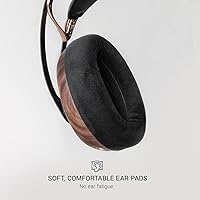
  • Earcup Material: Earcups are carved from genuine black walnut wood, which provides natural resonance-damping properties and a unique grain pattern on every unit.
  • Headband: The headband combines a vegan leather outer layer with an internal manganese spring steel band designed to self-adjust and distribute pressure across varying head shapes.
  • Design Type: Open-back over-ear configuration allows air and sound to pass freely through the earcup housing, producing a more natural soundstage at the cost of isolation.
  • Connectivity: Wired-only connection via detachable TPE OFC cables; no Bluetooth, wireless, or active noise-cancellation circuitry is included.
  • Included Cables: Two detachable TPE oxygen-free copper cables are included: a shorter 1.5m cable for desktop use and a longer 3m cable for home audio setups.
  • Jack & Adapter: Both cables terminate in a 3.5mm jack; a gold-plated 3.5mm-to-6.35mm adapter is included for connection to standard amplifier outputs.
  • Carrying Case: A hard EVA carrying pouch is included for protection during transport, along with a separate vegan leather pouch for cable storage.
  • Build Method: Construction uses precision mechanical fasteners rather than adhesive bonding, enabling full disassembly and component-level replacement by the user.
  • Replaceability: Every part — earcups, headband, cables, and dynamic drivers — is individually replaceable, supporting long-term ownership without full unit disposal.
  • Warranty: Meze Audio provides a two-year manufacturer warranty covering defects in materials and workmanship from the date of purchase.
  • EU Spare Parts: Spare parts are committed to be available for a minimum of two years under EU regulatory standards for the product lifecycle.
  • Earpiece Shape: Over-ear cup design fully encloses the ear within the earcup cavity rather than resting on the outer ear.
  • Noise Control: No active or passive noise isolation is provided by design; the open-back architecture is acoustically transparent to the surrounding environment.

Related Reviews
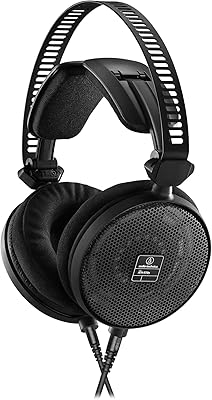
Audio-Technica ATH-R70x Open-Back Reference Headphones
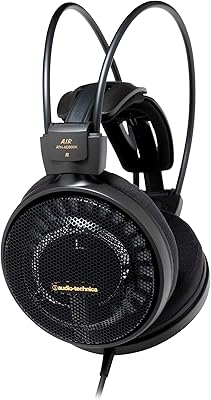
74%
93%
Sound Accuracy
91%
Comfort & Wearability
67%
Build Quality
82%
Value for Money
58%
Amplifier Dependency
More
Audio-Technica ATH-AD900X Open-Back Headphones
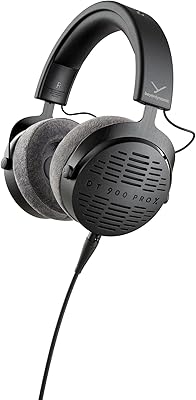
76%
93%
Soundstage Width
91%
Midrange Clarity
92%
Wearing Comfort
61%
Bass Response
88%
High Frequency Detail
More
Audio-Technica ATH-R50X
76%
91%
Sound Quality
88%
Soundstage & Imaging
86%
Comfort & Wearability
67%
Build Quality
83%
Cable & Connectivity
More
beyerdynamic DT 900 PRO X
81%
93%
Audio Clarity & Detail
88%
Build Quality & Durability
82%
Comfort & Ergonomics
96%
Device Versatility
89%
Soundstage & Imaging
More
Soundcore AeroFit Pro Open-Ear Headphones

82%
91%
Wearing Comfort
87%
Secure Fit During Exercise
76%
Audio Quality (General)
78%
LDAC Performance
93%
Battery Life
More
Shure SRH1840 Open-Back Over-Ear Headphones
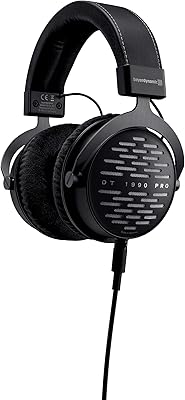
67%
93%
Soundstage & Imaging
88%
Frequency Accuracy
61%
Amplification Dependency
84%
Build Quality
81%
Long-Session Comfort
More
beyerdynamic DT 1990 Pro Open Studio Headphones
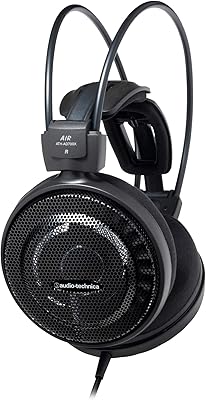
86%
96%
Sound Quality
93%
Build Quality
88%
Comfort for Long Sessions
72%
Noise Isolation
84%
Value for Money
More
DEMICEA LibreRun Pro X13 Open-Ear Headphones
79%
88%
Comfort & Fit
91%
Waterproof Performance
62%
Sound Quality
84%
Battery Life
57%
Charging System
More
Audio-Technica ATH-AD500X Open-Air Headphones
72%
91%
Soundstage & Imaging
88%
Vocal Clarity
61%
Bass Response
93%
Wearing Comfort
74%
Build Quality
More
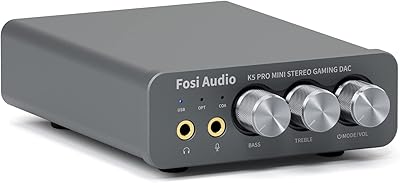
Fosi Audio K5 Pro
Fosi Audio K5 Pro
80%
88%
Sound Quality Improvement
91%
Value for Money
67%
Build Quality & Feel
83%
Headphone Amplifier Performance
86%
Input Versatility
More

FAQ

Your phone or laptop will drive the 109 Pro to reasonable listening volumes without any trouble — 40 ohms is a genuinely easy load and the sensitivity is high. That said, if you have a dedicated DAC or headphone amp available, it is worth using one; the improvement in clarity, dynamic range, and control is real and noticeable, not just theoretical.

Honestly, no — and this is worth taking seriously before buying. Open-back headphones allow sound to travel in both directions, so your coworkers will hear your music at moderate volumes, and you will hear the office around you. These are designed for private listening environments, not shared spaces.

With a closed-back design, sound reflects inside the earcup and can feel more pressurized or artificially intimate. Open-back lets the drivers breathe, which produces a wider, more natural sense of space — instruments feel positioned around you rather than inside your head. It is a meaningful difference on well-recorded music, particularly acoustic and orchestral material.

Black walnut is a dense, stable hardwood and holds up well under normal use. Meze Audio has been building wood-earcup headphones for years across multiple product lines, so the material choice is proven rather than experimental. You would want to avoid dropping them on hard surfaces, as you would with any premium headphone, but everyday handling is not a concern.

The headband uses a spring steel self-adjusting mechanism rather than a traditional ratchet or slider, which means it conforms passively to your head shape without manual sizing. That works well for most people, but fit variance does come up occasionally in user feedback — if you have an unusually large or small head, trying before buying at a retailer that stocks them is a sensible precaution.

Yes, and this is one of the more practical strengths of the design. The cables detach from the headphones and both included cables use a standard connector. Replacement cables are available from Meze Audio directly, and the connection does not require tools or technical skill to swap.

The Meze Audio 109 Pro Open-Back Headphones sit in a competitive segment that includes well-regarded options from brands like Sennheiser, Beyerdynamic, and Hifiman. The 109 Pro distinguishes itself through its craftsmanship and modular longevity rather than purely on measured technical performance. Whether that trade-off makes sense for you depends on how much you value build philosophy versus spec-sheet benchmarks.

The open-back soundstage actually works quite well for gaming — positional audio and environmental awareness benefit from the natural width that open-back designs provide. They are not ideal if you game with others in the room who would find the sound leakage annoying, but for solo gaming at home they are a capable and enjoyable choice.

At 375g, these are heavier than lightweight alternatives and it does become noticeable for some listeners over very long sessions. Most user feedback suggests the self-adjusting headband manages pressure distribution well enough that fatigue is not a frequent complaint, but if you are particularly sensitive to headphone weight, it is an honest consideration rather than a trivial one.

A dry or very lightly dampened soft cloth is all you need for the wood surfaces — avoid alcohol-based cleaners or anything that could strip the natural finish. The vegan leather headband can be wiped down with a slightly damp cloth as well. Keeping them away from prolonged direct sunlight will help preserve the wood's colour and finish over the years.

Where to Buy