Overview

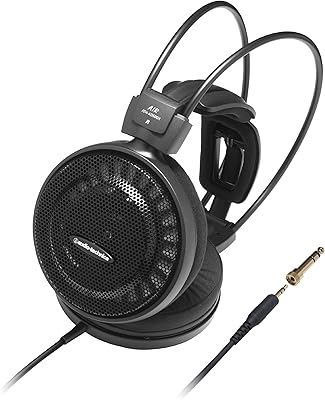
The Audio-Technica ATH-AD900X Open-Back Headphones represent one of the more thoughtful entries in Audio-Technica's audiophile lineup — a Japanese brand with decades of credibility among serious listeners. What defines these open-back headphones from the start is the open-air acoustic design: sound passes freely through the ear cups rather than being trapped, producing a listening character that feels far more natural and spacious than most closed alternatives. Worth knowing upfront — sound leaks both in and out, making them unsuitable for commuting or shared spaces. The 3D wing support system is another immediately distinctive trait, a self-adjusting mechanism that sits on your head without a conventional headband. These are purpose-built for focused home listening, priced for enthusiasts who take audio seriously.

Features & Benefits

At the heart of the ATH-AD900X are 53mm dynamic drivers wound with CCAW voice coils — a material prized for its low mass and conductivity, helping reproduce fine detail across a wide frequency range of 5 Hz to 35 kHz. In practice, that means highs that stay crisp without harshness and mids that carry real texture and presence. The open-back construction contributes meaningfully to the soundstage, giving instruments and vocals a sense of physical space that closed headphones rarely achieve. At just 0.6 kg, the aluminum build stays light enough for hours of wear, and the self-adjusting wing housing distributes weight without clamping. The generous 3-meter cable is a practical bonus for anyone at a proper desktop listening setup.

Best For

This Audio-Technica model shines brightest in quiet home environments — a dedicated desk setup, a listening chair, a proper audio corner. It is a natural fit for anyone who regularly plays classical recordings, jazz, or acoustic music and wants instruments to breathe and separate properly. The wide, airy soundstage also makes these open-back headphones a compelling choice for PC listeners doing critical listening or light mixing in a calm room. If you are transitioning from closed-back headphones and curious what a more speaker-like presentation feels like, this is a strong starting point. One honest caveat: if deep, impactful bass is your priority, this model may not satisfy. It rewards a quiet listening environment, not portable or bass-heavy use.

User Feedback

Across 855 ratings and a 4.4-star average, the ATH-AD900X earns its reputation through two consistent themes: long-session comfort and an open, detailed sound that holds up well over time. The wing system draws specific praise — many listeners report wearing these for three or four hours without fatigue, which is genuinely uncommon at any price. The mids and highs draw frequent compliments, though buyers expecting punchy bass should know clearly that this is not that kind of headphone. A handful of reviewers flag the non-detachable cable as a durability concern, and a few note that pairing with a DAC or headphone amp brings out noticeably better performance at lower volumes. That is a tip, not a dealbreaker.

Pros

  • The wing support system distributes weight so evenly that hours-long sessions regularly pass without discomfort or pressure points.
  • Sound imaging is exceptionally wide and natural, making instruments feel physically placed rather than smashed into your head.
  • The 53mm dynamic drivers handle midrange detail and vocal texture with real clarity and nuance.
  • A frequency response reaching down to 5 Hz and up to 35 kHz supports high-resolution audio sources without obvious ceiling limitations.
  • The aluminum build feels solid and purposeful without adding unnecessary weight to the 0.6 kg frame.
  • The 3-meter cable provides enough reach for a proper desktop setup without constantly fighting slack or strain.
  • Strong long-term owner satisfaction, with a 4.4-star average across over 850 ratings suggesting these hold up well with regular use.
  • Classical, jazz, and acoustic listeners consistently report that genre-specific detail and separation are notably better than similarly priced closed alternatives.
  • Even entry-level DAC pairing brings out a noticeable step up in performance, giving owners a clear upgrade path without replacing the headphones.

Cons

  • The non-detachable cable is a real durability risk — if it fails at the connector, repair options are limited.
  • Bass response will feel thin or unsatisfying to anyone accustomed to consumer-tuned or bass-boosted headphones.
  • Open-back design offers zero noise isolation, making background noise fully audible during listening sessions.
  • Sound leakage is significant enough to disturb people nearby, ruling out shared rooms or offices entirely.
  • Wired-only connectivity with no Bluetooth option limits placement flexibility compared to modern wireless alternatives.
  • Getting the best performance at lower volumes often requires a dedicated headphone amp or DAC, adding to the total cost of ownership.
  • The wing fit system works well for most head shapes but may feel insecure or loose for users with smaller heads.
  • At roughly 3 meters, the fixed cable length can feel excessive and unmanageable on a compact or minimalist desk setup.
  • No carrying case or travel-friendly accessories are included, reinforcing that these are strictly a stay-at-home proposition.

Ratings

The scores below for the Audio-Technica ATH-AD900X Open-Back Headphones were generated by our AI after analyzing verified buyer reviews from multiple global markets, with spam, bot-submitted, and incentivized feedback actively filtered out. Each category reflects the honest consensus of real long-term owners — strengths are credited where earned, and recurring frustrations are scored accordingly without being softened.

Soundstage Width
93%
Owners consistently describe the sense of space as unlike anything they experienced with closed-back headphones — instruments feel placed at a natural distance rather than pressed against the inside of the skull. For classical and jazz listeners in particular, the left-to-right and front-to-back separation is frequently cited as the single best reason to own these open-back headphones.
The wide, diffuse presentation does not suit all genres equally well. Electronic music and hip-hop listeners occasionally report that the expansive staging makes tracks feel less impactful or cohesive than they would on a more intimate closed design.
Midrange Clarity
91%
Vocals, strings, woodwinds, and acoustic instruments are consistently described as natural and present without any sense of coloration or harshness. Long-term owners who use these for critical listening of acoustic recordings often cite the midrange as the standout quality — detailed enough to catch subtle recording nuances most headphones obscure.
The clarity does expose source quality without mercy, which means compressed audio files or poor-quality streams sound noticeably flat. A few reviewers noted that tracks they had enjoyed on forgiving consumer headphones suddenly sounded thin or lifeless when played through the ATH-AD900X.
Wearing Comfort
92%
The 3D wing support system draws more sustained praise in user reviews than almost any other aspect of this model. Users routinely report wearing these for three to five hours in a single sitting without developing the pressure headaches or ear heat that plague conventional padded headbands, making them a standout option for marathon listening sessions.
A small but consistent minority of users with narrower or smaller-than-average heads report that the wing fit feels unstable or loose, occasionally requiring repositioning mid-session. The self-adjusting mechanism works best within a typical adult head size range, and it does not accommodate all head shapes equally.
Bass Response
61%
39%
Bass is controlled, accurate, and textured rather than absent — experienced listeners who appreciate flat, honest reproduction describe the low end as clean and well-defined on acoustic bass, kick drums, and lower register instruments. The ATH-AD900X does not editorialize the low end, which audiophile reviewers tend to appreciate.
For buyers arriving from Sony, Bose, or Beats-style tuning, the lean bass character is genuinely jarring and remains the single most common complaint across the review pool. It is not a flaw in absolute terms, but it is a significant mismatch for anyone who equates good sound with bass weight and impact.
High Frequency Detail
88%
Treble extension is airy and open, with cymbals, high strings, and vocal sibilance rendered with enough resolution to feel lifelike without tipping into harshness under normal listening volumes. Owners of high-resolution audio files specifically note that these headphones justify investing in better source material.
At higher volumes, a handful of users detect a slight sharpness in the upper treble on certain recordings, particularly bright mastered pop or rock tracks. This is infrequent enough not to be a disqualifier, but sensitive listeners should be aware it is occasionally raised.
Build Quality
78%
22%
The aluminum construction gives the frame a genuinely solid feel that holds up well over years of regular desk use, and the ear cups feel assembled with care rather than cheaply snapped together. Several owners with units over five years old report no structural degradation to the housing.
The non-detachable cable is the most significant durability liability — once the cable degrades or is damaged at the plug, repair requires soldering rather than a simple swap. The ear pad material also shows wear over time and is not the easiest component to replace affordably.
Value for Money
83%
At this price point, the combination of driver quality, comfort engineering, and soundstage performance is difficult to match within the open-back category. Long-term owners in particular report a strong sense that these have held their value as a daily listening tool compared to similarly priced alternatives that dated more quickly.
The price requires a committed buyer — someone who understands open-back listening and has a quiet space to use them. For more casual listeners, spending this amount on headphones that offer no isolation and lean bass can feel like a poor trade-off, especially when closed options at a lower price offer more immediate satisfaction.
Amp Compatibility
74%
26%
At 38 ohms impedance and 100 dB sensitivity, these open-back headphones are driveable from a laptop or phone and produce usable listening levels without any additional hardware, which lowers the barrier to entry for newer audiophiles.
A notable share of reviewers flag that the full performance potential only emerges with a dedicated DAC or headphone amp, effectively raising the real cost of ownership. Users who plug these directly into integrated laptop audio and expect a transformative experience are sometimes disappointed by the thinness of the output.
Cable Practicality
58%
42%
The 3-meter length is well-suited to a desktop setup where the source device sits at a distance, and the cable itself is flexible enough to avoid excessive tangling during normal seated use. For stationary home listeners, the reach is genuinely useful day-to-day.
The fixed, non-replaceable cable frustrates a meaningful portion of owners who prefer the flexibility and repairability of detachable designs. Several reviewers also find 3 meters unwieldy on compact desks where the excess pools untidily, and there is no shorter official variant available.
Noise Isolation
19%
81%
The complete lack of isolation is entirely by design for this product type, and buyers who understand open-back listening accept this trade-off knowingly. In a private room, the absence of the sealed sensation is actually perceived as a comfort benefit rather than a limitation.
For anyone who did not fully research what open-back means before purchasing, the isolation score is a genuine shock — ambient conversation, HVAC noise, and street sound enter freely during listening. This score is not a flaw of execution but a structural reality of the open-back format that catches uninformed buyers off guard.
Soundstage Depth
86%
Beyond simple width, these open-back headphones create a convincing sense of front-to-back layering that makes well-recorded orchestral and live music feel genuinely three-dimensional. Listeners who use binaural recordings or high-quality classical masters report an almost speaker-like sense of depth that is rare in any headphone at this price.
The depth imaging is more compelling on well-recorded acoustic material than on modern studio productions, where heavy processing limits how much the open design can extract. Casual listeners who play mainstream streaming content may not notice the depth advantage clearly enough to appreciate what they are paying for.
Long-Session Fatigue
91%
The combination of the wing support, lightweight aluminum frame, and open-back design means that listening fatigue — both physical and sonic — is remarkably low during extended sessions. Users who spend entire afternoons at a desk report these as among the least tiring headphones they have owned, which is a meaningful practical benefit for work-from-home listeners.
In warmer environments, the ear pads can generate mild heat during very extended wear, a limitation shared by most over-ear designs regardless of price. A few users in warmer climates note this as a minor but recurring summer inconvenience.
Imaging Precision
84%
Instrument placement within the stereo field is consistently described as accurate and stable, making these a reliable tool for light mixing checks and critical listening where knowing exactly where each element sits in the mix matters. Owners who use them alongside studio monitors report good agreement between the two.
The ATH-AD900X is not a reference studio headphone in the professional sense, and mixing engineers who need clinically precise imaging for commercial work may find some ambiguity at the edges of the soundstage. It is precise for the price, but not a substitute for dedicated studio cans.
Genre Versatility
69%
31%
Acoustic, classical, jazz, folk, and vocal-centric music genuinely shine on these open-back headphones, and the honest tonal balance rewards well-recorded material across many styles. Listeners with eclectic but acoustically rooted tastes will find these adapt well to a wide personal library.
Electronic, hip-hop, metal, and pop genres that rely on bass weight and sonic density feel underpowered and thin by comparison, limiting the appeal for listeners whose primary diet leans toward those styles. The open-back tuning philosophy simply does not favor music engineered for maximum impact over tonal accuracy.

Suitable for:

The Audio-Technica ATH-AD900X Open-Back Headphones are a strong match for dedicated home listeners who want a more natural, spacious sound than closed-back headphones typically provide. If you spend long stretches listening to classical recordings, jazz, acoustic guitar, or vocal-heavy music at a desk or in a quiet room, the open-back design rewards that kind of focused attention with a sense of air and instrument separation that is hard to replicate otherwise. The self-adjusting wing system makes these genuinely comfortable across multi-hour sessions, so they suit anyone who has experienced fatigue or pressure headaches from conventional headbands. PC audiophiles, casual home mixing enthusiasts, and anyone building their first serious desktop audio setup will find real value here. Pairing them with a modest DAC or headphone amp is worth considering to get the most out of the drivers at comfortable volume levels.

Not suitable for:

The Audio-Technica ATH-AD900X Open-Back Headphones are a poor fit for anyone who needs noise isolation or plans to use them outside the home. The open-back design means sound bleeds in from your surroundings and out to anyone nearby — commuters, office workers in shared spaces, and gym users will find this a genuine daily frustration rather than a minor inconvenience. Buyers who have grown up on bass-heavy consumer headphones should also recalibrate expectations: the low-end response here is lean and controlled, not punchy or emphasized, and that difference can feel like a step backward if tonal warmth and impact are what you value most. Wireless users will be immediately ruled out, as this is a wired-only design with a non-detachable cable, which introduces a longer-term durability concern. If portability, isolation, or a dominant bass response are non-negotiable for your use case, a different category of headphone will serve you better.

Specifications

  • Driver Size: Each ear cup houses a 53mm large-aperture dynamic driver, which is notably larger than the 40mm drivers found in most consumer headphones.
  • Voice Coil: The drivers use CCAW (Copper-Clad Aluminum Wire) voice coils, chosen for their low mass and high conductivity to improve transient response and detail retrieval.
  • Frequency Response: The stated frequency response spans 5 Hz to 35 kHz, covering the full range of human hearing and extending into high-resolution audio territory on both ends.
  • Ear Form Factor: These are open-back, over-ear headphones, meaning the ear cups sit fully around the ear with a perforated rear housing that allows air and sound to pass freely.
  • Cable Length: The attached cable measures 3 meters, providing generous reach for desktop and home listening setups without requiring an extension.
  • Connector: The cable terminates in a 3.5mm stereo jack, compatible with standard headphone outputs on computers, DACs, amps, and most audio devices.
  • Weight: The complete headphone assembly weighs 0.6 kg (approximately 1.32 lbs), kept manageable through the use of aluminum and lightweight composite materials.
  • Support System: A 3D self-adjusting wing housing replaces a conventional headband, automatically conforming to different head sizes without manual adjustment or clamping pressure.
  • Ear Pad Material: The ear pads use a soft, over-ear fitting material designed to sit comfortably around the ear for extended listening sessions without causing heat buildup or pressure.
  • Housing Material: The primary structural components are constructed from aluminum, contributing to the overall rigidity and longevity of the frame without adding excessive weight.
  • Noise Isolation: As an open-back design, these headphones provide no passive noise isolation — ambient sound enters freely, and audio leaks out to those nearby.
  • Connectivity: These headphones are wired only, with no Bluetooth, NFC, or wireless functionality of any kind.
  • Cable Design: The cable is non-detachable and fixed at the headphone end, meaning it cannot be swapped or replaced without technical intervention if damaged.
  • Water Resistance: There is no water or moisture resistance rating on this model; it is not designed for outdoor, gym, or humid-environment use.
  • Compatible Devices: The ATH-AD900X is compatible with desktops, laptops, tablets, gaming consoles, televisions, and any device equipped with a 3.5mm headphone output.
  • Control Type: An in-line media control is present on the cable, allowing basic playback management without reaching for the source device.
  • Impedance: The ATH-AD900X has an impedance of 38 ohms, low enough to be driven by most consumer devices but responsive enough to benefit from a dedicated headphone amplifier.
  • Sensitivity: Sensitivity is rated at 100 dB/mW, meaning these headphones produce adequate volume from portable sources but perform best with a clean, moderately powered output stage.

Related Reviews
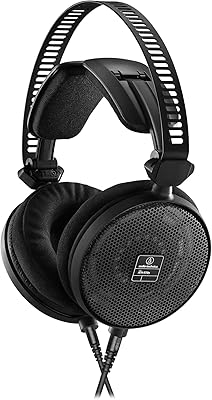
Audio-Technica ATH-R70x Open-Back Reference Headphones
74%
93%
Sound Accuracy
91%
Comfort & Wearability
67%
Build Quality
82%
Value for Money
58%
Amplifier Dependency
More
Audio-Technica ATH-R50X
76%
91%
Sound Quality
88%
Soundstage & Imaging
86%
Comfort & Wearability
67%
Build Quality
83%
Cable & Connectivity
More
Audio-Technica ATH-AD500X Open-Air Headphones
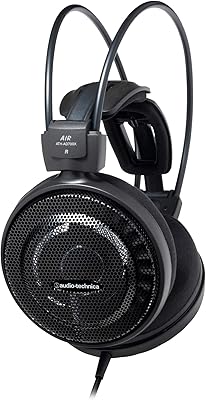
72%
91%
Soundstage & Imaging
88%
Vocal Clarity
61%
Bass Response
93%
Wearing Comfort
74%
Build Quality
More
Audio-Technica ATH-AD700X
73%
93%
Soundstage & Imaging
89%
Treble & Midrange Clarity
61%
Bass Response
84%
Comfort Over Long Sessions
78%
Build Quality & Durability
More
Audio-Technica ATH-M60x
87%
93%
Audio Clarity
94%
Build Durability
88%
Portability
67%
Initial Comfort
79%
Passive Noise Isolation
More
Audio-Technica ATH-M20x
82%
88%
Audio Accuracy
84%
Passive Sound Isolation
94%
Value for Money
81%
Long-Session Comfort
87%
Studio Build Durability
More
Audio-Technica ATH-AVC200
74%
88%
Value for Money
84%
Comfort & Fit
76%
Sound Quality
61%
Build Quality
73%
Passive Noise Isolation
More
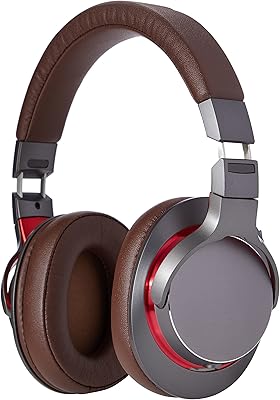
Audio-Technica ATH-MSR7BK Over-Ear Headphones
79%
88%
Sound Quality
91%
Build Quality
74%
Comfort & Fit
93%
Cable System
67%
Passive Isolation
More
Audio-Technica ATH-CLR100iS In-Ear Headphones
74%
83%
Sound Quality
91%
Value for Money
77%
Comfort & Fit
61%
Build Quality
68%
Microphone Quality
More
Audio-Technica ATH-MSR7b Over-Ear Headphones
80%
89%
Sound Quality
64%
Bass Response
93%
Midrange Clarity
87%
Treble & Detail
86%
Soundstage & Imaging
More

FAQ

They will work plugged directly into a laptop or phone — the impedance is low enough that you will get usable volume. That said, pairing them with even a budget DAC or headphone amp makes a noticeable difference in clarity and control, especially at lower listening volumes. It is not mandatory, but it is worth considering if you want to hear what they are fully capable of.

It is significant enough to matter in shared spaces. People sitting nearby — a partner, a roommate, a colleague — will be able to hear what you are playing at moderate to higher volumes. These open-back headphones are genuinely a private-room proposition. If you are in a quiet home office alone or in a dedicated listening space, it is a non-issue.

Most glasses wearers report that the wing system helps here because there is no conventional headband adding downward pressure on frames. The ear cups are large and soft enough that they accommodate temples reasonably well, though comfort will vary depending on frame thickness. It tends to be better than most tight-clamping over-ear designs.

Noticeably leaner and more restrained. Consumer-oriented headphones from those brands tend to boost low frequencies for impact and perceived excitement. The ATH-AD900X takes a flatter, more accurate approach — bass is present and textured, but it is not emphasized. If you have only used bass-heavy headphones before, the difference will be immediately apparent and may take some adjustment.

Unfortunately, no — the cable is permanently attached and not user-replaceable through a standard detachable connector. If the cable is damaged near the jack or at the headphone entry point, repair would require soldering or professional service. This is one of the more common criticisms from long-term owners.

They work well for gaming in quiet environments, particularly single-player or story-driven games where the wide soundstage adds depth and positional detail. For competitive multiplayer where you need to hear subtle directional cues, the open design can introduce enough ambient noise to be distracting. For immersive audio in a calm room, though, they are a genuinely enjoyable gaming headphone.

Instead of a traditional padded headband, the Audio-Technica ATH-AD900X Open-Back Headphones use two wing-shaped extensions that rest lightly on the top of the head and flex to fit. For most adult head sizes, the system adapts well and removes the pressure points that come with fixed headbands. Users with smaller heads occasionally find the fit a little loose, but the majority report it as one of the most comfortable designs they have tried.

Yes, provided your turntable setup includes a phono preamp with a standard line-level or headphone output. These headphones are well-suited to the warmth and spatial qualities of vinyl playback, and the open-back design pairs nicely with the natural character of analog sources. Just make sure your preamp can drive a headphone output at a reasonable volume.

The ATH-AD900X uses larger 53mm drivers compared to the 53mm drivers also found in the 700X, but the key differences lie in driver quality, CCAW voice coil construction, and overall refinement. Most listeners report that the ATH-AD900X produces better detail retrieval and more controlled bass than the 700X, making the step up worth it if you are a more serious listener. The 700X remains a strong entry point, but the difference is audible on quality source material.

Audio-Technica typically covers their headphones with a limited warranty against manufacturing defects, though terms vary by region — it is worth checking their official site for your specific country. Their customer support has a solid long-term reputation, and replacement ear pads for this family of headphones have historically remained available for several years after launch. For a product first released in 2012, the continued availability of parts and support is a reasonable sign of brand commitment.

Where to Buy