



Overview

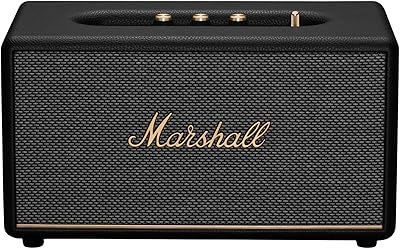
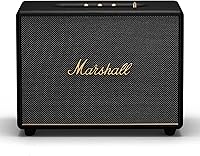
The Marshall Woburn III is Marshall's most ambitious home speaker to date, carrying decades of rock-and-roll credibility into a living room format that's hard to ignore. The design takes clear cues from the brand's guitar amplifier heritage — stripped back, confident, and built to stand out on a shelf. This is firmly a premium home speaker, competing with the likes of Sonos, Bose, and Klipsch at the top end of the market. Worth noting: the build is PVC-free and made from 70% recycled plastic with only vegan materials, which adds a sustainability credential without compromising on build quality. And one thing to get straight upfront — the Woburn III is corded and stays where you put it. This is a room anchor, full stop.

Features & Benefits

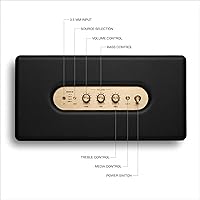
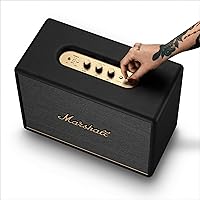
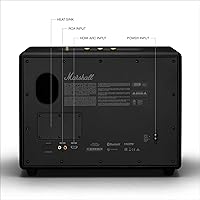
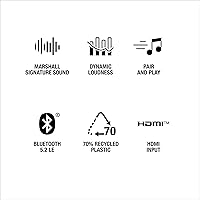
At 150 watts, room-filling stereo sound is not just marketing copy here — the Woburn III genuinely pressurizes a medium-sized room without breaking a sweat, with a frequency response starting at 35 Hz that gives bass real weight. Bluetooth 5.2 LE pairs quickly and holds steady up to 33 feet, and the next-gen Bluetooth architecture means this speaker should stay relevant as the standard evolves. The wired inputs — HDMI, RCA, and 3.5mm aux — make it genuinely versatile: hook up a turntable, a TV, or an older CD player without fuss. Physical bass and treble knobs sit on top for quick tuning, and the companion app adds deeper control when you want it. At nearly 16.5 pounds and over 15 inches wide, the physical presence matches the sonic one.

Best For

This Marshall speaker makes the most sense for design-conscious home listeners who want audio gear that doubles as a room centerpiece — not just a black box tucked under a shelf. Vinyl collectors will appreciate the RCA input, which connects directly to most turntables without a preamp in between. In a living room or home office of modest-to-medium size, this home speaker can comfortably replace a full component setup: no separate amp, no receiver, no cable clutter. The HDMI input also makes it a credible TV companion for households where music comes first. Just know that portability is completely off the table — this one lives where you put it, and that's by design.

User Feedback

With a 4.6 out of 5 rating across roughly 390 reviews, buyer satisfaction is consistently high for this price tier — and the praise is specific, not vague. Most owners point to sound quality and aesthetics as the top reasons they'd buy it again, often noting it competes well against pricier multi-component systems. Setup gets repeat praise too: pair it, plug it in, done. On the critical side, a handful of users flag app reliability — occasional connectivity drops or sluggish response — though this reads as a minority experience rather than a widespread issue. A few buyers upgrading from the Woburn II note meaningful gains in clarity. Head-to-head comparisons with Sonos or Bose often favor this Marshall speaker on warmth and character, though rivals tend to edge ahead on app ecosystem maturity.

Pros

  • Warm, room-filling 150W stereo sound that outperforms most single-speaker alternatives in its size class.
  • RCA, HDMI, and 3.5mm inputs make this Marshall speaker genuinely compatible with turntables, TVs, and legacy devices.
  • Bluetooth 5.2 LE pairs fast, holds a stable connection, and is built to stay relevant as the standard evolves.
  • Physical bass and treble knobs let you tune the sound instantly without touching your phone.
  • The amplifier-inspired design is one of the most distinctive-looking speakers in the premium home audio market.
  • At 70% recycled plastic with a PVC-free, vegan build, it offers real sustainability credentials — not just marketing language.
  • Out-of-box setup is refreshingly simple: plug in, pair, and play with no account or hub required.
  • Buyers upgrading from the Woburn II consistently note meaningful gains in clarity and soundstage width.
  • Corded-only design means zero battery degradation — the sound stays consistent for the life of the unit.
  • Strong long-term owner satisfaction, with most users reporting no hardware decline after a year or more of use.

Cons

  • The companion app suffers from recurring connectivity drops and sluggish response that feel unfinished for a premium product.
  • No optical input limits compatibility with TVs and devices that lack HDMI ARC or analog outputs.
  • Turntables without a built-in phono preamp require an additional external preamp — this is not clearly communicated upfront.
  • Stereo imaging narrows noticeably if you sit off-axis, making speaker placement more critical than with a two-speaker setup.
  • At maximum volume, the sound can compress slightly and lose the openness it has at moderate listening levels.
  • The rear panel feels visibly less premium than the front-facing materials, which is noticeable up close.
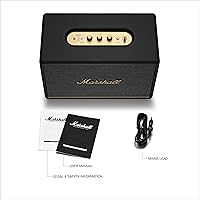
  • The printed documentation covers only basics — users exploring wired inputs or app features are largely left to figure it out online.
  • The brand premium built into the price is real, and buyers focused purely on sonic value may find better options elsewhere.
  • Very large or open-plan rooms may push the speaker closer to its effective output ceiling than the wattage figure implies.
  • Long-term software support and firmware update cadence remain unclear, raising questions about app feature longevity.

Ratings

The Marshall Woburn III earns consistently high marks across a wide range of verified buyer reviews worldwide, and our AI-generated scores reflect that — built by analyzing real purchase feedback while actively filtering out incentivized, bot-generated, and outlier noise. Across categories from sound performance to app reliability, both the genuine strengths and the friction points are reflected honestly in the scores below.

Sound Quality
93%
Buyers repeatedly describe the audio as warm, full, and surprisingly authoritative for a single speaker unit. The 150W output and 35 Hz low-end response mean bass lines feel physical in a way that smaller Bluetooth speakers simply cannot replicate, and most users in small-to-medium rooms report never needing to push it past 60% volume.
A minority of critical listeners feel the high-frequency detail, while solid, doesn't quite match dedicated hi-fi separates at this price. Some note that at maximum volume, the sound can compress slightly and lose the openness present at moderate levels.
Design & Aesthetics
96%
This is where the Woburn III earns near-universal praise. Buyers describe it as a genuine room centerpiece, with the amplifier-inspired grille cloth, brass-toned knobs, and solid rectangular form drawing compliments even from guests unfamiliar with the brand. For many, the look alone justifies the purchase consideration.
Its visual boldness is a double-edged sword — a few buyers mention the speaker's size and strong personality make it difficult to blend into minimalist or Scandinavian-style interiors. It demands attention, which not every room or owner wants.
Build Quality
88%
The chassis feels dense and purposeful, with metal and plastic construction that gives it a planted, furniture-grade solidity. At 16.4 pounds, it doesn't shift around, and the control knobs have a satisfying tactile resistance that feels deliberate rather than cheap.
Some users note that the plastic rear panel feels slightly less premium than the front-facing elements, creating a minor mismatch in perceived quality up close. A small number of long-term owners have reported that the top-panel knobs can develop minor resistance inconsistencies over time.
Connectivity & Inputs
91%
The combination of HDMI, RCA, and 3.5mm alongside Bluetooth 5.2 LE makes this one of the more versatile single-speaker solutions in its class. Vinyl owners in particular highlight the RCA input as a direct, hassle-free connection to their turntables, and TV users appreciate having a single-cable HDMI option.
There is no optical input, which frustrates a portion of TV users whose sets lack HDMI ARC compatibility. A few buyers also note that input switching could be more intuitive, requiring a moment of trial-and-error when toggling between sources.
Bluetooth Performance
84%
Pairing is fast and consistent for the majority of users — most describe a connect-and-go experience with phones, tablets, and laptops that requires no repeated re-pairing after the first setup. The 33-foot range holds up reliably in open-plan spaces without dropout.
A subset of users reports intermittent disconnections when the paired device is in a different room or separated by walls, suggesting the range figure is best achieved in line-of-sight conditions. A few Android users note slightly less stable connectivity compared to Apple device owners.
App Experience
61%
39%
For users who engage with it, the companion app extends control beyond the physical knobs, offering a more granular sound-shaping experience that some audiophile-leaning buyers appreciate. Initial setup through the app is generally described as straightforward.
App reliability is the most consistent criticism in the review pool. Users report dropped connections within the app, delayed response to commands, and occasional failures to recognize the speaker after a restart. For a speaker at this price, the software experience feels like an unfinished afterthought relative to the hardware.
Ease of Setup
94%
Nearly every reviewer mentions how refreshingly simple the out-of-box experience is. Plug it in, pair via Bluetooth, and it works — no hub, no account creation required if you skip the app. First-time speaker buyers and less tech-savvy users frequently call this out as a highlight.
The quick-start guide covers only the bare minimum, and users who want to explore wired inputs or app features report needing to search online for clearer guidance. A printed full manual is notably absent from the box.
Volume & Power Output
92%
At 150 watts, this home speaker handles large open-plan living spaces with convincing authority. Buyers in loft apartments and open-kitchen setups consistently note that volume levels well below maximum are already more than sufficient, implying significant headroom.
In very large rooms or outdoor-adjacent spaces, a handful of users found the output reached its effective ceiling sooner than expected. This is still very much an indoor home speaker — it is not designed to compete with multi-speaker outdoor rigs.
Bass Response
87%
The 5.25-inch subwoofer driver delivers a bass response that most buyers describe as present and satisfying without being overwhelming. For genres like jazz, rock, and hip-hop, the low-end feels appropriately weighted and adds genuine dimension to the listening experience.
Purists who listen to bass-heavy electronic music or EDM occasionally feel that the low end, while capable, lacks the visceral punch of a dedicated subwoofer-and-satellite setup. The physical bass knob helps tune it, but it can only compensate so far.
Value for Money
74%
26%
For buyers who prioritize design and brand heritage alongside sound quality, the pricing feels justified — and many state outright they would buy it again. The build longevity and versatile inputs add to the sense of long-term value rather than a disposable purchase.
At this price point, the app shortcomings and lack of optical input are harder to forgive, and several buyers acknowledge that pure audio-focused alternatives from Sonos or Klipsch offer comparable or better sound for less. The Marshall name carries a premium that not every buyer feels is fully earned on performance alone.
Soundstage & Stereo Imaging
83%
Buyers frequently describe the stereo separation as impressively wide for a single cabinet speaker, with instruments and vocals sitting in distinct positions across the room rather than emanating from a single point. This makes it feel closer to a proper stereo pair than most competitors in this format.
Listeners coming from a true two-speaker stereo system will notice the physical limitations of a single-box design — the stereo image, while good, narrows noticeably if you sit off-axis from the speaker's center. Placement matters more than it does with a full stereo pair.
Sustainability & Materials
89%
The PVC-free, 70% recycled plastic construction and fully vegan materials are meaningfully verified claims, not just marketing language. Environmentally conscious buyers specifically call this out as a deciding factor, particularly when comparing against competitors offering no equivalent commitment.
The recycled materials, while credible, are not immediately apparent from touch or feel — a few buyers expected a more pronounced visible or tactile difference from the sustainable build. The environmental story is largely invisible once the product is in use.
Portability & Flexibility
29%
71%
There is essentially nothing to say in favor of portability here — and that is by deliberate design. Buyers who understood this before purchasing are uniformly unbothered and praise the corded format for its consistency and lack of battery degradation over time.
This speaker is strictly a plug-in, stationary unit. At 16.4 pounds with no battery, it cannot be moved between rooms easily, taken outdoors, or used during a power outage. Buyers who discovered this after purchase represent a notable share of the lower-star reviews.
Compatibility with Turntables
91%
Record player owners highlight the RCA input as a natural fit, especially for turntables with a built-in phono preamp. The warm tonal character of this Marshall speaker also pairs well sonically with the analog warmth of vinyl, making it a popular choice in the audiophile-adjacent community.
Turntables without a built-in preamp require a separate phono preamp before connecting, which some buyers discovered only after purchase. The packaging and product listing could do more to clarify this compatibility nuance upfront.
Long-Term Reliability
78%
22%
Most buyers with extended ownership — a year or more — report no degradation in sound quality or hardware function. The build materials and overall construction suggest it is engineered for longevity, and the limited warranty provides some baseline assurance.
Long-term software reliability is less certain. With the app experiencing recurring issues and no clear firmware update roadmap communicated to buyers, there is some concern about whether the connected features will remain functional as mobile operating systems evolve over the years.

Suitable for:

The Marshall Woburn III is the right call for home listeners who want a single speaker to do serious heavy lifting — both sonically and visually. If you're the kind of person who spends real time at home with music and considers the gear part of the room's personality, this home speaker delivers on both fronts without compromise. Vinyl enthusiasts will find the RCA input a natural fit, and the warm, full-range sound character pairs well with the analog texture of records. It also works convincingly as a TV room centerpiece if your priority is music first and dialogue clarity second — the HDMI input makes the connection clean and simple. For buyers who want to consolidate a cluttered component setup into one well-built, durable unit that won't need replacing in two years, this Marshall speaker makes a strong practical case alongside its aesthetic one.

Not suitable for:

The Marshall Woburn III is a poor match for anyone who needs their speaker to travel, move between rooms, or operate away from a power outlet — it is a corded, stationary unit that weighs over 16 pounds, full stop. Budget-conscious buyers or those primarily focused on raw audio performance per dollar will find that pure-audio alternatives from Sonos, Klipsch, or even lower-priced separates can match or exceed the sound output without the brand premium. If you rely heavily on a companion app for daily control and customization, the reported reliability issues are a genuine friction point that this home speaker has not consistently resolved. Listeners with very large rooms, open-plan loft spaces exceeding medium size, or outdoor listening needs will likely find the output ceiling limiting. And if your TV or audio source only has an optical output, the absence of a TOSLINK input is a real compatibility gap worth solving before committing.

Specifications

  • Output Power: The speaker delivers 150 watts of total output, providing enough headroom to fill small-to-medium rooms at high volume without audible distortion.
  • Frequency Response: Audio reproduction starts at 35 Hz on the low end, giving bass lines genuine physical weight rather than a thin, rolled-off sound.
  • Bluetooth Version: Bluetooth 5.2 LE is built in, with architecture designed to support next-generation Bluetooth features as they become available via firmware.
  • Bluetooth Range: Wireless connectivity maintains a stable signal up to 33 feet, best achieved in open line-of-sight conditions between the speaker and paired device.
  • Wired Inputs: Three wired input options are included: HDMI (ARC-compatible), RCA stereo, and a 3.5mm auxiliary jack for analog connections.
  • Audio Output Mode: The speaker operates in stereo mode, with dedicated drivers and a 5.25-inch subwoofer working together inside a single freestanding cabinet.
  • Subwoofer Driver: A 5.25-inch dynamic subwoofer driver handles low-frequency reproduction, contributing to the speaker's ability to deliver bass with physical presence.
  • Dimensions: The unit measures 15.75″ wide, 12.48″ tall, and 7.99″ deep — a substantial footprint that requires dedicated shelf or floor space.
  • Weight: The Woburn III weighs 16.4 pounds, making it a stationary home unit that is not designed to be moved between rooms or taken outside.
  • Power Source: The speaker is corded electric only, requiring a constant mains power connection with no internal battery or portable operation mode.
  • Control Methods: Sound can be adjusted via physical bass and treble knobs on the unit itself, or through the Marshall Bluetooth app for more granular control.
  • Build Materials: The cabinet is constructed from metal and plastic, with the plastic components comprising 70% recycled material and the overall build being fully PVC-free.
  • Sustainability: All materials used in the build are certified vegan, and the product carries no PVC components, aligning with Marshall's stated sustainability commitments.
  • Compatible Devices: The speaker is compatible with desktops, laptops, smartphones, tablets, and record players equipped with a built-in phono preamp via RCA output.
  • Speaker Type: The Woburn III is a freestanding, floor-standing unit designed to anchor a fixed listening position in a living room, study, or home office.
  • Warranty: The product is covered by a limited manufacturer warranty; buyers should verify the specific duration and terms with the retailer at point of purchase.
  • Color: The reviewed configuration is available in black, with a grille cloth and brass-toned control knobs consistent with Marshall's amplifier-heritage aesthetic.
  • Included Contents: Each unit ships with the Woburn III speaker, a power cable, a quick-start guide, and legal and safety documentation — no audio cables are included.

Related Reviews
Marshall Emberton III
89%
94%
Sound Quality
96%
Battery Life
91%
Portability
90%
Durability
93%
Water Resistance
More
Marshall Stanmore III Bluetooth Speaker
81%
94%
Sound Quality
89%
Build Quality
91%
Ease of Setup
93%
Bass Performance
90%
Bluetooth Connectivity
More
Marshall Acton III Bluetooth Speaker
84%
92%
Sound Quality
89%
Bass Response
90%
Design & Build Quality
85%
Ease of Use
70%
Portability
More
Marshall Monitor III ANC
77%
96%
Battery Life
74%
Active Noise Cancellation
88%
Sound Quality
83%
Comfort & Fit
91%
Build Quality
More
Enermax Revolution III 850W
89%
91%
Performance under Load
94%
Quiet Operation
88%
Build Quality & Durability
87%
Ease of Installation
80%
Value for Money
More
Canon EOS 5D Mark III
79%
93%
Autofocus Performance
89%
Image Quality
82%
Low-Light Capability
91%
Build Quality & Durability
61%
Video Capability
More
Vansuny 2TB SATA III SSD
83%
91%
Value for Money
88%
Performance
94%
Ease of Installation
77%
Durability
89%
Compatibility
More
HyperX Cloud III Gaming Headset
87%
94%
Sound Quality
90%
Comfort for Long Sessions
89%
Microphone Clarity
85%
Build Quality
88%
Compatibility Across Devices
More
Transcend 1TB SATA III SSD
83%
92%
Value for Money
88%
Performance (Speed)
78%
Ease of Installation
90%
Reliability/Durability
85%
Compatibility
More
Canon PowerShot G7 X Mark III
77%
91%
Image Quality
88%
Video Performance
93%
Portability & Form Factor
83%
Low-Light Performance
67%
Autofocus Performance
More

FAQ

It depends on your turntable. If your record player has a built-in phono preamp — which most modern entry-level and mid-range turntables do — you can connect directly via the RCA input with no extra gear. If your turntable outputs a raw phono signal, you will need an external phono preamp between the two. Check your turntable's spec sheet or manual to confirm before buying.

Yes, the speaker includes an HDMI input that supports ARC (Audio Return Channel), which allows your TV to send audio back through the same HDMI cable used for video. This makes it a clean, single-cable connection for TV audio. Just make sure your TV's HDMI port is labeled ARC — not all HDMI ports on a TV support it.

Absolutely. The app is entirely optional. The physical bass and treble knobs on top of the unit let you adjust the sound without touching your phone, and Bluetooth pairing works through standard device settings just like any other speaker. The app adds deeper customization, but the speaker functions completely without it.

Loud enough that most buyers report never exceeding 60 to 70 percent volume in a standard-sized living room. At 150 watts with a frequency response starting at 35 Hz, this home speaker generates real low-end presence and volume that can comfortably fill a medium-sized open-plan space. Pushing it to maximum in a smaller room will be genuinely very loud.

No — the Woburn III does not currently support a stereo pairing mode between two units. The speaker itself outputs stereo sound from a single cabinet using its internal driver array, but there is no multi-room or dual-speaker pairing feature available through the app or Bluetooth at this time.

For most users, it is very reliable in direct line-of-sight or within the same room. The 33-foot range is achievable in open spaces, but walls and obstructions do reduce it meaningfully. A consistent minority of users report occasional drops when the paired device is in a different room, so if your listening setup involves the source device being far away or behind walls, a wired connection will serve you better.

Honestly, the app is worth trying but not worth depending on. It does offer more precise sound control beyond what the physical knobs allow, which some listeners appreciate. However, user feedback consistently flags connectivity drops, delayed responses, and occasional failure to recognize the speaker after restart. For casual listeners, the physical controls are sufficient and more dependable.

The short answer: this Marshall speaker tends to win on warmth, character, and visual design, while rivals like Sonos generally lead on app ecosystem maturity and multi-room integration. If your priority is a single-room speaker with a distinctive look and natural sound tonality, this home speaker holds its own strongly. If you want a reliable multi-room smart audio system with polished software, Sonos is probably the better fit.

Yes, the 3.5mm aux input works with any device that has a standard headphone output — desktops, laptops, or older audio sources. Just connect a 3.5mm cable from your computer's audio out port to the speaker's aux input and select that input on the speaker. It is a simple, lag-free connection that bypasses Bluetooth entirely.

Small to medium-sized rooms — think a typical living room, bedroom, or home office up to roughly 300 to 400 square feet — are where this home speaker performs most convincingly. In very large or high-ceilinged spaces, you may find the output starting to thin out at the edges of the room before reaching its volume ceiling. It is not designed for large open-plan areas or outdoor use.