Overview

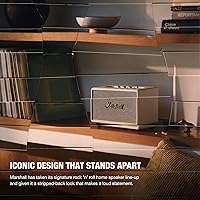
The Marshall Acton III Bluetooth Bookshelf Speaker is the third generation of Marshall's flagship home speaker line, and it carries the brand's unmistakable vintage character into a modern living room without looking out of place. The cream colorway is a deliberate departure from the sea of black boxes that dominate this category — it reads more like furniture than electronics, which matters when it's sitting on a shelf or desk all day. This is a plug-in home speaker, not a portable unit, so it draws AC power and stays put. At this price point, it competes with the likes of Klipsch and Sonos for buyers who want both serious audio performance and something worth looking at.

Features & Benefits

One of the most noticeable upgrades in this generation is the wider stereo soundstage — in practice, that means instruments and vocals have more air between them, making music feel less compressed and more dimensional. The 60W amplifier driving a 4-inch woofer and dual 0.75-inch tweeters handles everything from punchy bass lines to crisp highs without obvious strain. Bluetooth 5.2 keeps the connection stable and low-latency across a reasonable 10-meter range. The on-unit analog controls — separate bass and treble dials plus a master volume knob — are genuinely satisfying to use. A 3.5mm aux input covers wired sources, and the chassis is built from 70% recycled plastic with no PVC or animal-derived materials, worth noting without overstating.

Best For

The Acton III is a strong fit for anyone who wants a statement shelf speaker that doubles as room décor — the cream finish and vintage styling make it look intentional rather than tucked away. It suits streaming and vinyl listeners equally, especially those who'd rather reach for a physical knob than open an app. If you're stepping up from a small Bluetooth speaker and want a real improvement in sound depth and scale, this Marshall speaker delivers that jump noticeably. Home office users, bedroom listeners, and anyone furnishing a living space where both audio quality and appearance matter will find it well-suited. One caveat: if you need wireless multi-room audio or voice assistant integration, look elsewhere.

User Feedback

Buyers consistently highlight rich, full-bodied sound as the standout quality — particularly the bass response, which tends to surprise people given the speaker's relatively compact footprint. The physical controls get a lot of appreciation too; there's something satisfying about fine-tuning bass and treble without diving into a phone app. On the critical side, some owners feel the Bluetooth range underperforms through walls, and a recurring frustration is the absence of Wi-Fi connectivity or multi-room support — notable omissions at this price tier. The cream finish draws mixed reactions over time, with a handful of users noting it shows fingerprints and dust more readily than expected. Most buyers still consider it a worthwhile investment, though those wanting smart home integration tend to walk away less satisfied.

Pros

  • Stereo soundstage is noticeably wider and more dimensional than what most single-box speakers at this size can achieve.
  • The 60W amplifier drives bass with real weight — low frequencies feel full without becoming muddy at moderate volumes.
  • On-unit bass and treble dials give you hands-on tone control that most Bluetooth speakers simply don't offer.
  • Bluetooth 5.2 maintains a stable, low-latency connection that holds up reliably within a normal room.
  • The cream finish and vintage-inspired design make this bookshelf speaker look at home on a shelf or desk without hiding it.
  • A 3.5mm aux input means you're not locked into Bluetooth — wired sources connect instantly without any pairing fuss.
  • Built from 70% recycled, PVC-free materials for buyers who factor sustainability into purchasing decisions.
  • Physical power switch and dedicated controls mean no app dependency whatsoever — just plug in and listen.
  • Broad frequency range of 45–20,000 Hz means the speaker handles both low-end warmth and high-end clarity with confidence.

Cons

  • No Wi-Fi, AirPlay, or multi-room support — a real gap for buyers expecting smart speaker functionality at this price.
  • Bluetooth range through walls is shorter than the rated 10 meters in real-world conditions, according to multiple owners.
  • The cream finish attracts fingerprints and shows dust more visibly than darker speaker enclosures.
  • No companion app means there are no EQ presets, firmware updates, or remote control options beyond the physical knobs.
  • At 6.28 pounds with an AC power requirement, it is not remotely portable — placement decisions are more or less permanent.
  • No optical or USB audio input limits connectivity for users with TVs, DACs, or more complex desktop setups.
  • Single-unit stereo output means the soundstage, while wide for its format, cannot match a true separated speaker pair.
  • No voice assistant integration for buyers who expect Alexa or Google Assistant support in this price tier.

Ratings

The scores below reflect an AI-driven analysis of verified global buyer reviews for the Marshall Acton III Bluetooth Bookshelf Speaker, with spam, bot-generated, and incentivized feedback actively filtered out before any scoring was applied. Every category — from sound quality and connectivity to finish durability and value — captures both what real owners love and where they've run into genuine frustration. Nothing has been smoothed over to make the product look better than it is.

Sound Quality
91%
Buyers consistently describe the sound as full-bodied and surprisingly expansive for a single enclosure — the kind of stereo width that makes a playlist feel like it's filling a room rather than coming from a box on a shelf. The balance between the woofer and tweeters earns specific praise for handling everything from jazz to hip-hop without one frequency range trampling another.
At very high volumes, a small but vocal group of owners notes that the low end can get slightly loose, and the 2.0 configuration without a dedicated subwoofer means deep bass-heavy genres occasionally feel like they're hitting a ceiling.
Bass Response
86%
For a compact bookshelf unit, the low-end output surprises most buyers — the 4-inch woofer punches noticeably harder than the speaker's footprint suggests, and the on-unit bass dial gives listeners direct control without opening any app. Rock, electronic, and R&B listeners in particular tend to mention this as a standout strength.
Audiophiles accustomed to a separate subwoofer setup will find the bass technically adequate but ultimately limited by the enclosure size. The bass boost dial can also introduce a slight muddiness at its maximum setting in smaller rooms where reflections compound.
Stereo Soundstage
88%
The wider stereo imaging in this generation is a genuine and frequently mentioned improvement — listeners placing the Acton III on a desk or media shelf describe instruments and vocals having distinct spatial separation, which is uncommon in single-box stereo configurations at this price tier.
The soundstage, while wide for a single speaker, still can't replicate what a properly spaced pair of bookshelf monitors would produce. Buyers who later set it up in larger rooms sometimes feel the imaging narrows perceptually with increased distance from the listening position.
Bluetooth Reliability
74%
26%
Day-to-day Bluetooth 5.2 performance in open-room conditions is stable and reconnects quickly when returning to range — most buyers report pairing it once and rarely thinking about the connection again for typical desk or couch listening sessions.
Real-world range through walls is a consistent complaint; the rated 10-meter distance drops off meaningfully when concrete or multiple interior walls are involved. Several owners flag occasional audio stuttering when the source device is in a different room, even at distances that should theoretically be within spec.
Connectivity Options
63%
37%
The 3.5mm aux input is a practical and welcome inclusion — vinyl listeners with a phono preamp, laptop users, and anyone with an older audio source appreciate having a wired fallback that works instantly without any pairing steps.
Beyond Bluetooth and the single aux jack, connectivity is bare. There is no optical input, no USB audio, no Wi-Fi, no AirPlay, and no multi-room protocol — a meaningful gap for buyers in this price bracket who expect at least one of those options as standard.
Build Quality
83%
The physical construction feels substantial for a plastic enclosure — the rotary dials have a satisfying resistance and don't feel cheap or wobbly, and the overall chassis inspires confidence that it's built to last years of stationary use. Most owners describe the tactile experience of the controls as one of the genuinely enjoyable aspects of daily use.
Some buyers note that the plastic housing, while solid, doesn't have the premium weight or cold-touch finish of metal-bodied competitors at a similar price. A handful of longer-term owners have reported minor cosmetic wear around the control knobs after extended use.
Design & Aesthetics
93%
The vintage-inspired aesthetic is arguably the Acton III's most discussed feature outside of sound — buyers repeatedly mention that it looks more like a considered interior design choice than a piece of consumer electronics. The cream colorway in particular draws compliments from people seeing it for the first time on a shelf or desktop.
The distinctive styling is inherently subjective, and a minority of buyers find the retro look doesn't integrate well with contemporary minimalist interiors where clean, unadorned speakers blend in more naturally. It's a statement piece, and not everyone wants their speaker to make a statement.
Ease of Use
89%
Setup is genuinely straightforward — plug in, hold the Bluetooth button, pair your device, and you're listening within a minute. The absence of an app is actually praised by a surprising number of buyers who are tired of mandatory software ecosystems just to operate a speaker.
The same simplicity that some buyers love becomes a limitation for others — there are no EQ presets, no remote control, and no way to adjust settings from across the room beyond your device's volume. Users who want to fine-tune sound without walking to the speaker will find this frustrating.
Finish Durability
67%
33%
The cream finish has held up well cosmetically for most owners in terms of structural integrity — there are no widespread reports of cracking, peeling, or significant color change from normal indoor use over the medium term.
Fingerprints and dust accumulate on the cream surface noticeably faster than on a black finish, and several owners mention needing to wipe it down more frequently than expected. A smaller number of buyers in sunnier environments have reported subtle yellowing on panels exposed to consistent direct light.
Value for Money
72%
28%
For buyers who place equal weight on sound performance and visual design, the Acton III delivers a package that feels coherent and intentional — most owners who fall into that camp feel the price is genuinely justified by what they're getting in both audio quality and aesthetic presence.
Compared to competitors like Klipsch or even entry-level powered bookshelf monitor pairs, the lack of Wi-Fi, multi-room capability, and optical input starts to erode the value argument for feature-conscious buyers. At this price, several alternatives offer more connectivity even if they sacrifice some of the visual appeal.
Analog Controls
92%
The physical bass, treble, and volume knobs are a defining feature that earns outsized appreciation — buyers describe the experience of reaching over and dialing in the tone as genuinely more satisfying than tapping a phone screen, and the controls respond predictably without sudden jumps or dead zones.
The analog-only approach means there is absolutely no way to adjust EQ remotely or save preferred settings — if someone else moves the dials while you're away, you start fresh. A small number of users also wish there were more tonal controls beyond just bass and treble.
Setup Experience
87%
The out-of-box experience is clean and fast — the included quick start guide is minimal but sufficient, and the speaker is ready to use within a few minutes of unboxing. Buyers who have set up more complex audio systems describe this as a refreshingly low-friction process.
Users coming from smart speaker ecosystems occasionally feel underprepared for the absence of any digital onboarding — there is no app walkthrough, no firmware check, and no guided setup process. If something goes wrong with pairing, the troubleshooting options are limited to the basics.
Eco-Conscious Materials
78%
22%
The use of 70% recycled plastic and a fully PVC-free, vegan build resonates with environmentally conscious buyers who actively factor sustainability into purchase decisions — it's a meaningful commitment that goes beyond typical marketing language for the category.
The sustainable material choices don't translate into any tactile or acoustic premium that buyers can perceive in daily use — for buyers who aren't motivated by sustainability credentials, this aspect adds nothing to the ownership experience and doesn't offset the connectivity or feature gaps.

Suitable for:

The Marshall Acton III Bluetooth Bookshelf Speaker was built for a specific kind of home listener — one who cares about how their space sounds and how it looks in equal measure. If you're setting up a home office, bedroom, or living room and want a speaker that functions as an intentional design object rather than an afterthought, this is a natural fit. Streaming listeners and vinyl enthusiasts who prefer reaching for a physical knob over unlocking their phone will appreciate the tactile bass and treble controls, which invite genuine fine-tuning rather than just setting and forgetting. It also makes a lot of sense for buyers who are stepping up from a compact Bluetooth speaker and want to hear what a real stereo soundstage actually feels like in a home environment. The wired aux input is a practical bonus for anyone who occasionally connects a turntable, laptop, or older audio source without Bluetooth.

Not suitable for:

The Marshall Acton III Bluetooth Bookshelf Speaker is a poor match for anyone expecting smart home integration, Wi-Fi streaming, or multi-room audio — none of those features exist here, and at this price point that absence is genuinely worth pausing over. If your household already runs on a Sonos or similar ecosystem where you control music room-by-room from a single app, this speaker sits outside that world entirely. It also requires a permanent AC power connection, so anyone hoping to move it between rooms or use it outdoors is going to be disappointed — this is a stay-put speaker by design. Buyers sensitive to surface maintenance should know the cream finish shows fingerprints and dust more readily than a standard black enclosure. And if raw loudness or party-level output is what you're after, the 60W output is respectable for a room but not a substitute for a powered bookshelf pair or a full AV setup.

Specifications

  • Output Power: The speaker delivers 60 watts of total amplified output, providing enough headroom for a medium-sized room without distortion at higher volumes.
  • Driver Config: A 2-way driver setup pairs a 4-inch woofer for low-end body with dual 0.75-inch tweeters that handle the upper frequencies.
  • Frequency Range: The Acton III covers a frequency range of 45–20,000 Hz, capturing bass warmth at the low end and crisp detail at the high end.
  • Bluetooth Version: Bluetooth 5.2 LE is built in, offering a stable, low-latency wireless connection with forward compatibility for future Bluetooth features.
  • Bluetooth Range: The rated wireless range is 10 meters (approximately 33 feet) in open-air conditions, though walls and obstructions will reduce this in practice.
  • Wired Input: A single 3.5mm auxiliary input on the rear panel allows direct wired connection from turntables, laptops, or any analog audio source.
  • Power Source: The speaker runs on corded AC power only and ships with a power cable; it has no battery and is not designed for portable use.
  • Dimensions: Physical dimensions measure 10.24″ deep, 5.91″ wide, and 6.69″ tall, making it a compact but substantial presence on a shelf or desk.
  • Weight: The unit weighs 6.28 pounds, which gives it a solid, planted feel while still being manageable for single-person repositioning.
  • Stereo Config: Audio output is configured as 2.0 stereo, meaning the single enclosure produces a left-right soundstage without a dedicated subwoofer channel.
  • Controls: All playback controls are mounted directly on the unit, including individual bass and treble rotary dials, a master volume knob, and a power switch.
  • Special Feature: A dedicated bass boost function is built into the on-unit controls, allowing listeners to add low-frequency emphasis without any external app or software.
  • Material: The chassis is constructed from 70% recycled plastic and is entirely PVC-free, with no animal-derived materials used anywhere in the build.
  • Color: This variant is finished in Cream, a warm off-white colorway that differs visually from the standard black version of the same model.
  • Warranty: Marshall provides a limited warranty with the Acton III; buyers should confirm specific duration and coverage terms through Marshall or their retailer at time of purchase.
  • Included Items: The box contains the speaker unit itself, a power cable, a quick start guide, and a legal and safety information booklet.

Related Reviews
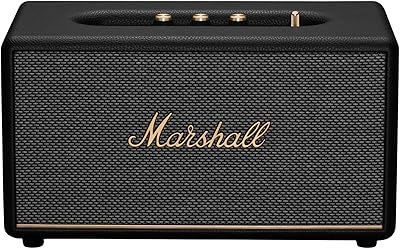
Marshall Stanmore III Bluetooth Speaker
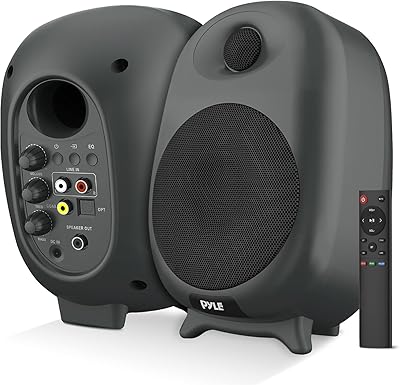
81%
94%
Sound Quality
89%
Build Quality
91%
Ease of Setup
93%
Bass Performance
90%
Bluetooth Connectivity
More
Marshall Woburn III
Marshall Woburn III
82%
93%
Sound Quality
96%
Design & Aesthetics
88%
Build Quality
91%
Connectivity & Inputs
84%
Bluetooth Performance
More
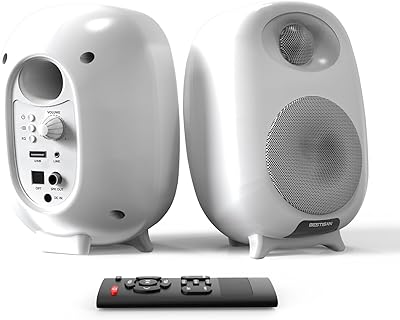
BESTISAN SR06 Bookshelf Speakers
75%
78%
Sound Clarity
61%
Bass Performance
91%
Input Flexibility
74%
Bluetooth Stability
88%
Ease of Setup
More
Saiyin DS6801S Powered Bluetooth Bookshelf Speakers
77%
78%
Sound Quality
72%
Bass Response
61%
Turntable Compatibility
83%
Bluetooth Connectivity
81%
Build Quality & Finish
More
Pyle PBKSR40 Bookshelf Speaker Set
77%
88%
Value for Money
74%
Sound Quality
91%
Connectivity Options
83%
Bluetooth Performance
67%
Build Quality
More
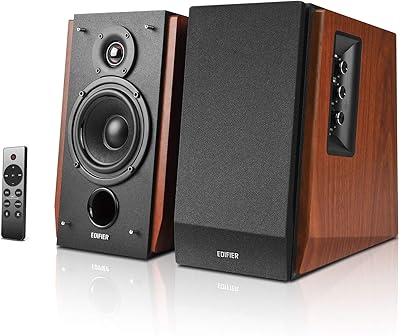
Edifier R1700BTs Bluetooth Bookshelf Speakers
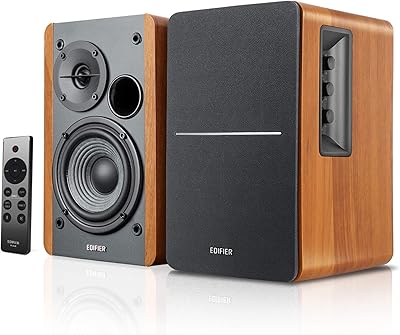
82%
86%
Sound Quality
83%
Bass Response
71%
Bluetooth Performance
89%
Build Quality
88%
Value for Money
More
Cinnkeyi C5201 Bookshelf Speakers
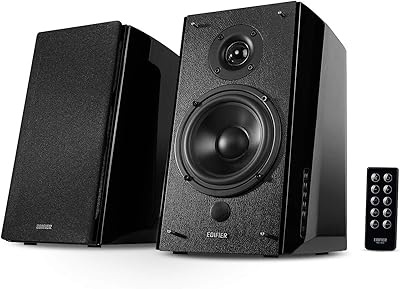
71%
78%
Sound Quality
82%
Bass Performance
69%
Build Quality
63%
USB Connectivity
74%
Bluetooth Performance
More
Bestisan SR04
Bestisan SR04
74%
78%
Sound Quality at Moderate Volume
61%
Bass Performance
91%
Connectivity & Input Options
67%
Bluetooth Reliability
88%
Ease of Setup
More
Saiyin DS6701 Bookshelf Speakers
74%
78%
Sound Quality
84%
Value for Money
88%
Connectivity & Input Options
67%
Bluetooth Performance
76%
Build Quality & Design
More
Edifier R1280DBs
Edifier R1280DBs
77%
83%
Sound Quality
67%
Bass Performance
79%
Build Quality
91%
Connectivity & Input Options
72%
Bluetooth Performance
More

FAQ

Yes, but indirectly — the speaker connects via Bluetooth, so whatever you play through your phone or tablet streams to it. There is no built-in Wi-Fi or native app support, so you control playback entirely from your device rather than through the speaker itself.

You can, as long as your turntable has a built-in phono preamp or you use an external one. The Acton III has a 3.5mm aux input, so you would need a phono preamp outputting to a 3.5mm cable or an appropriate adapter. Without a preamp, the signal from a standard turntable cartridge will be too weak.

The third generation brings Bluetooth 5.2 (up from 5.0), a redesigned driver layout intended to widen the stereo image, and a more sustainable build using recycled materials. The physical form factor and analog control philosophy remain similar, so if you liked the Acton II's hands-on approach, the newer model keeps that intact while updating the internals.

Some owners have reported that the cream finish can show dust and fingerprints more readily than a black finish, but significant yellowing from age is not a widely documented issue. Keeping it out of direct sunlight and wiping it occasionally with a dry or lightly damp cloth should help maintain its appearance.

Not directly through Bluetooth on most TVs, since many televisions have limited or unreliable Bluetooth audio output. Your best option would be to connect via the 3.5mm aux input if your TV has a headphone or audio output jack. An optical-to-3.5mm DAC adapter could work too, though that adds cost and complexity.

No, there is no app at all. The Acton III is intentionally designed around physical controls — you adjust bass, treble, and volume directly on the unit. That is a deliberate design choice, but it does mean you get no EQ presets, no remote control beyond your device volume, and no firmware update mechanism through a phone.

At 60 watts into a standard bedroom or home office, it gets genuinely loud — loud enough that most people will never push it to full volume in a living space. For large open-plan rooms or outdoor use it may feel limited, but for typical indoor listening it has plenty of headroom.

Neither option is available. The Acton III does not support Wi-Fi, multi-room protocols like Sonos or AirPlay, or stereo pairing with a second unit. Each speaker operates as a standalone 2.0 stereo device. If multi-room audio is important to your setup, this speaker is not the right fit.

Yes, when you return within range your device should reconnect automatically, provided it was previously paired. The Bluetooth 5.2 connection is generally stable within a normal room, but going through multiple walls or floors will reduce the effective range below the rated 10 meters.

It is more of a noticeable enhancement than a dramatic transformation — the Acton III already produces solid low-end on its own, and the bass boost dial adds warmth and weight rather than making it boom. Most listeners find the sweet spot somewhere between neutral and full boost depending on the music genre.

Where to Buy