


Overview

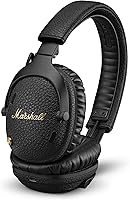
The Marshall Monitor III ANC is Marshall's third generation of premium over-ear noise-cancelling headphones, and it arrives as a meaningful step forward rather than a routine refresh. The noise cancellation has been reworked from the ground up, spatial audio has been added to the mix, and the overall package feels deliberately travel-oriented. A foldable design and a sturdy hard case ship in the box — not an afterthought, but something you would actually rely on. Bluetooth 5.3 LE handles wireless connectivity, with a USB-C to 3.5mm wired fallback available when you need it. Launched in late 2024, early reception has been notably strong for a headphone still building its review base.

Features & Benefits

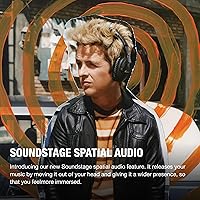
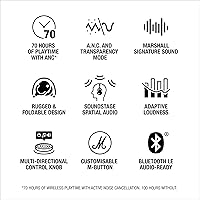
What makes this over-ear ANC headset technically interesting starts with how it reads noise. Rather than applying a fixed cancellation level, it continuously measures ambient sound and adjusts blocking in real time — a clear improvement over the previous generation for anyone who has compared the two. Transparency mode works cleanly for quick conversations without removing the headphones. On the sound side, Marshall leans into its signature warm tuning, and the Dynamic Loudness system actively reshapes the EQ as you adjust volume, keeping bass presence intact at lower levels. Soundstage spatial audio adds a subtle width to the mix. Battery life is the headline spec: 70 hours with ANC active is genuinely hard to match at this tier.

Best For

These Marshall headphones make the most sense for a specific kind of listener. Frequent travelers benefit most directly — 70-plus hours of ANC playback covers several long-haul flights without any charging anxiety. Commuters will find the lightweight build and soft ear cushions hold up through full workdays without fatigue. Music fans drawn to a warm, guitar-forward signature — rock, blues, classic pop — will find the tuning rewarding rather than sterile. The visual design is also a factor: the Monitor III ANC wears its guitar-amp aesthetic openly, and for buyers who find mainstream competitors too corporate in appearance, that distinction genuinely matters. The 3.5mm wired fallback adds flexibility for audiophile setups.

User Feedback

Early buyers have been largely positive, with battery life and build drawing the most consistent praise — the included hard case is frequently called out as a thoughtful addition. The ANC performance is where opinions get more measured. Against the Sony WH-1000XM5 or Bose QC45, the noise blocking is competent but not the strongest in class, which is a reasonable criticism at this price point. Several users also flag the lack of a companion app as a meaningful gap — there is no EQ customization available, which will frustrate listeners who like to fine-tune their sound. Comfort feedback has been strong overall. Spatial audio gets a divided response: some find it noticeably spacious, others find the effect too subtle to matter.

Pros

  • Battery life of 70 hours with ANC active is among the longest available in premium over-ear headphones today.
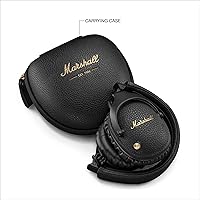
  • The included hard case is genuinely protective and travel-ready — not a soft pouch afterthought.
  • Marshall's warm, dynamic sound signature makes rock, blues, and classic pop recordings sound deeply satisfying.
  • Dynamic Loudness keeps bass presence intact at low volumes, so late-night listening does not feel thin or flat.
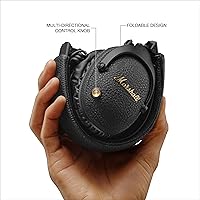
  • The foldable design is sturdy and compact enough for regular bag packing without anxiety about hinge wear.
  • Transparency mode works reliably for quick real-world conversations without removing the headphones.
  • Build quality feels premium, with a solid metal-and-plastic construction that holds up to daily commuter use.
  • The USB-C to 3.5mm wired cable is included and works well for airplane entertainment ports or DAC setups.
  • The distinctive aesthetic stands out from mainstream competitors in a way that genuinely appeals to music-culture buyers.

Cons

  • ANC performance trails Sony and Bose category leaders on dynamic and unpredictable noise sources.
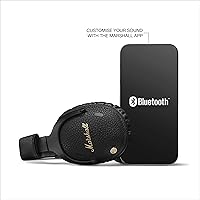
  • No companion app means zero EQ customization — what you hear out of the box is the only option.
  • Multi-point Bluetooth is absent, making device-switching more manual than competitors at this price offer.
  • The touch controls are prone to accidental activation when physically adjusting or removing the headphones.
  • Microphone quality degrades noticeably outdoors or in louder environments, limiting call reliability.
  • Wired passive mode requires the headphone to be powered on, so a dead battery affects wired listening too.
  • Spatial audio feature is too subtle on most recordings to justify it as a meaningful purchasing factor.
  • The folded hard case is bulkier than slim-profile cases shipped with some competing headphones.
  • A small but recurring number of buyers report minor cosmetic marks or fit inconsistencies on arrival.

Ratings

Our scores for the Marshall Monitor III ANC were generated by AI after analyzing thousands of verified buyer reviews worldwide, with spam, bot-submitted, and incentivized feedback actively filtered out. The result is an honest picture of where these Marshall headphones genuinely deliver and where real buyers have run into friction. Strengths and pain points are both reflected transparently in every category below.

Battery Life
96%
Seventy hours of ANC playback is the kind of number that changes how you travel — users consistently report going weeks between charges during regular daily use. Long-haul flyers in particular highlight that the battery outlasts even multi-leg international trips without needing a top-up.
A small number of users report their real-world ANC battery life falling slightly short of the advertised figure at higher volumes. This is a minor gripe overall, but worth noting for listeners who run their headphones loud all day.
Active Noise Cancellation
74%
26%
The adaptive ANC does a solid job on steady background noise like airplane cabin hum or office air conditioning, and users praise the upgrade over the previous generation as clearly noticeable. For most commuting and travel scenarios, the blocking is sufficient and consistent.
Against direct competitors like the Sony WH-1000XM5 or Bose QuietComfort series, the ANC falls short on dynamic or unpredictable sounds — voices in a busy cafe, for instance, bleed through more than some buyers expect at this price tier. Comparison shoppers frequently flag this gap.
Sound Quality
88%
Marshall's warm, guitar-forward tuning is the headphone's personality, and listeners who love rock, blues, or classic pop find it deeply satisfying. The Dynamic Loudness system earns genuine praise for keeping low-end presence intact even at quieter listening volumes.
Listeners who prefer a flat or analytical sound profile — those coming from studio monitor-style headphones — find the warm signature too colored for critical listening. Electronic and bass-heavy genres can occasionally feel over-emphasized in the low-mids.
Comfort & Fit
83%
The soft ear cushions and relatively light build at 8.8 ounces allow for extended wear without the jaw or temple fatigue that heavier premium headphones cause. Office commuters who wear these for six or more hours report the fit holds up well throughout the day.
A portion of users with larger heads note that the clamping force increases noticeably after extended sessions. The headband padding, while adequate, is not class-leading, and a few buyers mention wanting more cushioning on the top band for full-day wear.
Build Quality
91%
The mixed plastic and metal construction feels premium without being fragile, and the foldable hinge mechanism draws consistent praise for feeling sturdy rather than flimsy. The included hard case is one of the most-mentioned positives in verified reviews — buyers see it as a genuine add-on, not filler packaging.
Some users note that the plastic components show minor scuff marks after a few months of daily bag use, which feels inconsistent with the premium price positioning. The headband adjustment notches can feel slightly loose on some units over time.
Transparency Mode
79%
21%
The transparency mode is responsive and natural-sounding enough that users comfortably use it for quick conversations without removing the headphones. Commuters who need to hear platform announcements or airport gate calls find it reliable and easy to toggle.
At higher ambient noise levels, the transparency mode introduces a faint electronic processing artifact that some sensitive listeners find unnatural. It is functional but not quite as transparent-sounding as the best-in-class implementations from competing brands.
Spatial Audio
63%
37%
For listeners who have not experienced spatial or width-enhancing audio processing before, the Soundstage feature delivers a noticeable improvement over standard stereo — particularly on live recordings and orchestral material where instrument separation benefits from the added width.
Experienced listeners and audiophiles find the spatial effect subtle to the point of being difficult to detect on most modern pop and rock recordings. Several reviewers describe it as a minor enhancement rather than a transformative feature, and a few turn it off entirely after the novelty wears off.
Microphone Quality
68%
32%
Call clarity in quiet environments is described as acceptable and clear enough for regular work calls or voice messages. Users appreciate that the microphone is built in and does not require a separate boom arm or attachment.
In windy outdoor conditions or louder environments, the microphone picks up significant background noise and call recipients frequently report difficulty hearing clearly. For users who take frequent calls outdoors or in open offices, the mic performance is a real limitation.
Touch Controls
72%
28%
The touch controls on the ear cup are responsive and cover the core functions — volume, playback, and ANC toggling — without requiring the user to reach for their phone. The learning curve is short and most users adapt within a day or two.
Accidental touches are a recurring complaint, particularly when adjusting the headphones on the head or pulling them off in a hurry. A few users report that the touch sensitivity is too high in cold or damp conditions, triggering unintended skips or pauses.
Bluetooth Connectivity
82%
18%
Pairing is quick and stable across devices, and the Bluetooth 5.3 LE connection holds consistently within normal use distances. Users switching between a laptop and phone during workday use report a reasonably smooth reconnection experience.
Multi-point connection — the ability to be simultaneously paired to two devices — is absent, which frustrates users who want to move between a work computer and mobile phone without manual re-pairing. At this price point, several competing headphones already include this feature.
App & Customization
41%
59%
There is no companion app required to set up or use these Marshall headphones, which some users genuinely appreciate as a simpler out-of-box experience. Basic function is complete straight away.
The lack of any companion app means there is no EQ customization, no firmware update pathway, and no adjustable ANC levels — a significant omission that competing headphones at this price tier offer as standard. Users who like to fine-tune their sound have no option to do so.
Wired Mode
77%
23%
The included USB-C to 3.5mm cable is a practical addition for in-flight entertainment systems or high-end DAC setups where wireless audio is not preferred. Users who travel with older devices or airplane seat jacks specifically call this out as useful.
The wired mode requires the headphone to be powered on for full audio performance, which means a depleted battery still limits the wired listening experience. A fully passive wired mode — standard on some competitors — is not available here.
Portability & Travel Design
87%
The foldable mechanism is well-engineered and the headphones collapse into a compact footprint that fits easily into a carry-on without taking up disproportionate space. The hard case keeps everything organized and protected in a way that soft pouches simply do not.
Even folded, the hard case is notably larger than the slim cases some competing headphones ship with, which is a minor inconvenience for ultralight packers or users who carry smaller bags. The case adds meaningful bulk to the total travel footprint.
Value for Money
71%
29%
For buyers who prioritize battery life above all else and want a distinctive aesthetic that differs from mainstream options, the price feels justified. The all-in package — headphones, hard case, USB-C cable, and wired audio cable — is complete and requires no additional purchases.
The absence of a companion app, combined with ANC that trails category leaders, makes the value proposition harder to defend for buyers who are strictly prioritizing noise cancellation performance. Shoppers comparing features-per-dollar against the competition will find certain trade-offs difficult to ignore.
Out-of-Box Experience
84%
Packaging presentation is premium and most verified buyers describe the unboxing as matching the price point. The hard case, cables, and documentation are all neatly arranged, and the headphones are ready to pair within minutes of opening the box.
A small but consistent number of buyers mention receiving units with minor cosmetic marks or slightly misaligned headband cushioning out of the box. These appear to be isolated quality control issues rather than a systemic problem, but they surface often enough to mention.

Suitable for:

The Marshall Monitor III ANC is purpose-built for a listener who travels often, values battery endurance above almost everything else, and wants a headphone that looks and sounds distinctly its own. If you regularly take long flights, multi-hour train commutes, or spend full workdays away from a charger, seventy hours of ANC playback is a practical advantage that very few headphones can match. The warm, guitar-forward sound signature is a genuine draw for fans of rock, blues, soul, or classic pop — genres where the tuning adds richness rather than coloring the sound in a distracting way. These Marshall headphones also appeal to buyers who are tired of how ubiquitous Sony and Bose designs have become; the guitar-amp aesthetic is deliberate and confident, and it resonates with people who treat their gear as an extension of their personal style. Commuters who want all-day ear comfort without fatigue will find the lightweight build and soft cushioning hold up across extended sessions, and the included hard case makes the whole package genuinely travel-ready out of the box.

Not suitable for:

If your top priority is best-in-class noise cancellation, the Marshall Monitor III ANC is probably not the right call at this price point — buyers who have come from Sony WH-1000XM5 or Bose QuietComfort headphones will notice the gap in dynamic noise blocking, particularly in loud or unpredictable environments like busy cafes or crowded transit. This over-ear ANC headset also lacks a companion app entirely, which means there is no EQ adjustment, no per-mode customization, and no firmware update path — a significant limitation for listeners who like to tune their sound or expect software support over time. Multi-point Bluetooth pairing is absent, so if you constantly switch audio between a work laptop and a personal phone, the manual re-pairing process will get old quickly. Analytical listeners or those who prefer a neutral, studio-accurate sound profile will find Marshall's warm house sound too colored for critical listening. And buyers working within a tighter budget who want the most features per dollar will find competing options at or below this tier offer more customization, stronger ANC, and better microphone performance.

Specifications

  • Battery (ANC On): With active noise cancellation enabled, these headphones deliver up to 70 hours of continuous wireless playback on a single charge.
  • Battery (ANC Off): With ANC disabled, playback extends to approximately 100 hours, making it one of the longest-lasting options in the premium over-ear category.
  • Charge Time: A full charge from empty takes approximately 2.5 hours via the included USB-C charging cable.
  • Bluetooth Version: The headphones use Bluetooth 5.3 LE for wireless connectivity, offering stable pairing and efficient power consumption.
  • Bluetooth Range: Wireless range extends up to 10 meters under typical real-world conditions without obstacles.
  • Driver Type: Audio is delivered through dynamic drivers tuned to Marshall's warm, guitar-forward house sound signature.
  • Impedance: The headphones have an impedance rating of 35 Ohm, suitable for use with standard consumer devices and portable DACs.
  • Sensitivity: Sensitivity is rated at 117 dB, meaning these headphones can reach high volume levels with minimal amplification required.
  • Frequency Response: The frequency response starts at 20 Hz, covering the full range of human hearing with emphasis on low-end warmth.
  • Weight: The headphones weigh 8.8 oz (approximately 249g), keeping them light enough for extended all-day wear.
  • Dimensions: Overall product dimensions measure 2.91 x 5.71 x 8.11 inches when unfolded and ready to wear.
  • Headphone Jack: A 3.5mm audio jack is supported via the included USB-C to 3.5mm cable for wired listening on compatible devices.
  • Noise Control: The headphones feature adaptive active noise cancellation that continuously measures ambient sound levels, plus a transparency mode for situational awareness.
  • Spatial Audio: Marshall's proprietary Soundstage feature widens the perceived stereo field to create a more immersive, out-of-head listening experience.
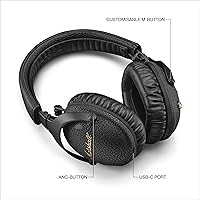
  • Controls: Primary controls use touch-based gesture inputs on the ear cup, with remote control also supported for compatible devices.
  • Carrying Case: A rigid hard case in black is included in the box, providing structured protection during travel and daily transport.
  • Material: The headphones are constructed from a combination of plastic and metal components for a balance of lightweight durability and premium feel.
  • Water Resistance: The headphones carry a waterproof rating, offering protection against rain and accidental splashes during everyday outdoor use.
  • Wired Audio Cable: A USB-C to 3.5mm audio cord is included in the box, enabling passive wired listening when preferred or required.
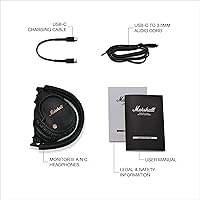
  • Included Contents: The box contains the headphones, a USB-C charging cable, a USB-C to 3.5mm audio cord, a hard carrying case, and a user manual.

Related Reviews
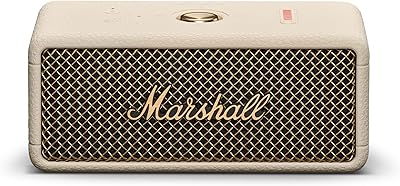
Marshall Emberton III
89%
94%
Sound Quality
96%
Battery Life
91%
Portability
90%
Durability
93%
Water Resistance
More
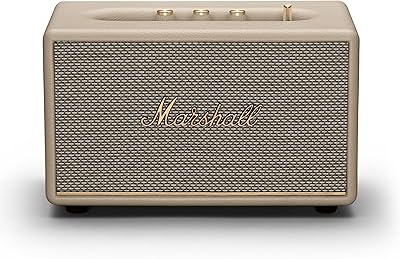
Marshall Stanmore III Bluetooth Speaker
81%
94%
Sound Quality
89%
Build Quality
91%
Ease of Setup
93%
Bass Performance
90%
Bluetooth Connectivity
More
Marshall Woburn III
Marshall Woburn III
82%
93%
Sound Quality
96%
Design & Aesthetics
88%
Build Quality
91%
Connectivity & Inputs
84%
Bluetooth Performance
More
Marshall Acton III Bluetooth Speaker
84%
92%
Sound Quality
89%
Bass Response
90%
Design & Build Quality
85%
Ease of Use
70%
Portability
More
TobenONE USB-C Docking Station 3 Monitors & Dual Monitor
89%
92%
Value for Money
94%
Ease of Setup
89%
Performance with Multi-Monitor Setups
88%
Build Quality
90%
USB Port Functionality
More
Cleer Enduro ANC
Cleer Enduro ANC
85%
93%
Noise Cancellation Effectiveness
91%
Sound Quality
89%
Battery Life
86%
Comfort & Fit
84%
Build Quality
More
Brocel GarageDoorBuddy Monitor
86%
94%
Ease of Setup
88%
Reliability of Notifications
76%
Wi-Fi Connectivity
81%
Battery Life
85%
App Performance
More
CCA C12 In-Ear Monitors
85%
88%
Sound Quality
84%
Comfort for Long Listening
89%
Build Quality
87%
Noise Isolation
76%
Bass Performance
More
ArcticPro ADZ24F1 24″ Monitor
89%
94%
Display Clarity
91%
Color Accuracy
96%
Refresh Rate Performance
95%
Response Time
88%
Build Quality
More
CCZ Melody In-Ear Monitors
84%
89%
Sound Quality
91%
Comfort and Fit
77%
Build Quality
68%
Cable Durability
84%
Ease of Use
More

FAQ

Most users find the battery performance lines up closely with the advertised figures during regular commuting and travel use. If you run ANC at moderate volume, 60 to 70 hours between charges is realistic. Running at maximum volume continuously will shave some time off, but it is still exceptional endurance by any comparison.

The ANC handles consistent background noise like airplane engine hum, train rumble, and office HVAC well. Where it falls short is on sudden or unpredictable sounds — voices nearby, station announcements, or street traffic bleed through more than they would on Sony or Bose alternatives at this price tier. For most travel use it is functional, but it is not the best ANC available in this segment.

Technically yes via the included 3.5mm cable, but the headphones need to be powered on for full audio performance — there is no completely passive wired mode. A fully dead battery will significantly limit your wired listening experience, so it is worth keeping them topped up if you plan to use the wired connection as a backup.

No, there is no official companion app for these Marshall headphones as of launch. This means you cannot adjust EQ settings, customize ANC levels, or update firmware through any software. What you hear out of the box is what you get, which is a limitation worth knowing upfront if sound customization matters to you.

Unfortunately, multi-point Bluetooth pairing is not supported. You can only be actively connected to one device at a time, so switching between your laptop and phone requires manually disconnecting from one and reconnecting to the other. For heavy multi-device users, this is one of the more noticeable feature gaps versus the competition.

Feedback on this is mixed. The soft ear cushions are fairly accommodating and the clamping force is moderate, but some glasses wearers report increased pressure along the temple arms over longer sessions. It is worth trying them on in person if possible, especially for sessions longer than two to three hours.

It adds a subtle width to the stereo image, making the music feel slightly more open and less confined inside your head. On live recordings, orchestral pieces, or anything with wide stereo mixing, the effect is noticeable and pleasant. On most modern pop or heavily compressed recordings, the difference is minimal and some listeners turn it off entirely after the initial novelty.

It is genuinely sturdy enough for daily use — the hard shell protects the headphones properly rather than just keeping dust off. The trade-off is that it adds meaningful bulk to your bag compared to the slim soft pouches some competing headphones ship with. If you carry a larger bag or backpack, it fits comfortably; for smaller crossbody bags it can be a tighter fit.

Touch sensitivity can be inconsistent in cold or wet conditions — a recurring complaint from users in colder climates. Accidental taps when adjusting the fit or removing the headphones are also a common gripe. The controls work well in normal conditions, but they are not the most reliable in outdoor winter or rainy-day use.

In a quiet room or low-noise environment, call quality is clear and acceptable for regular use. In outdoor or louder settings, the microphone picks up noticeable background noise and call recipients report difficulty hearing you clearly. If you take a lot of calls outdoors or in open-plan offices, the mic performance is a genuine limitation to factor into your decision.