Overview

The Enermax Revolution III 850W Power Supply enters a crowded field where Seasonic, Corsair, and be quiet! have long dominated the conversation — and it earns its place. Enermax has been building PSUs since the 1990s, and this 850W model represents a mature, focused offering rather than a flashy newcomer. What stands out immediately is its ATX 3.1 compliance, which matters if you are running a current-generation GPU that demands cleaner, faster power delivery. Pair it with an RTX 4070 or 4080-class card and you have comfortable headroom. The 10-year warranty is also hard to ignore — that kind of coverage signals genuine confidence in component longevity.
Features & Benefits

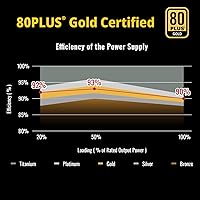
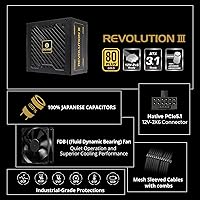
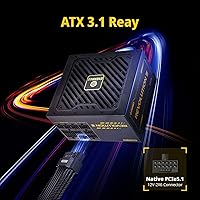
What separates this 850W Gold PSU from budget alternatives comes down to a handful of decisions that builders actually feel. The native 12V-2x6 connector delivering 600W is worth highlighting — using a native cable instead of an adapter reduces resistance and potential failure points under sustained GPU loads. On the efficiency side, the 80 Plus Gold certification at 93% under 50% load means less wasted energy becomes heat inside your case, which keeps temperatures and fan noise in check. The FDB fan is noticeably quieter than sleeve-bearing alternatives under typical gaming workloads. Add 200% power excursion headroom for transient GPU spikes and fully modular cabling, and the practical build experience is genuinely cleaner.

Best For

The Revolution III 850 hits a sweet spot for builders running RTX 4070 Ti or RX 7900 XT class hardware — enough headroom without paying for wattage you won't use. The fully modular design is especially useful in mid-tower cases where cable routing space is tight. It's also a reasonable pick for long-term reliability over pure budget wins; the Japanese capacitors and decade-long warranty reflect a total cost-of-ownership mindset rather than a race to the bottom. One niche but genuine advantage: certification at up to 5,000 meters altitude makes this Enermax unit a rare option for builders in high-altitude environments where most PSUs quietly lose efficiency headroom.

User Feedback

Across more than 850 verified ratings, this 850W Gold PSU holds a 4.3 out of 5 average — a solid score in a category where buyers tend to be technically demanding. Recurring praise centers on quiet operation and overall build quality, with several owners noting the fan stays near-silent under typical gaming loads. Cable quality and the modular connection points also draw consistent positive mentions. On the critical side, some buyers flag that packaging and documentation feel underwhelming relative to the price point, and a handful note the unit runs slightly warm under heavy sustained load. Long-term owners generally report stable performance, though deeply extended ownership impressions are still limited given the relatively recent release.

Pros

  • The native 12V-2x6 cable delivers 600W directly to the GPU, eliminating adapter-related resistance and potential failure points.
  • A 10-year warranty puts this 850W Gold PSU among the most confidently backed units in its class.
  • ATX 3.1 compliance ensures the unit works cleanly with current high-draw GPUs without needing firmware or adapter workarounds.
  • The 120mm FDB fan stays near-silent during typical gaming loads and is virtually inaudible at idle.
  • Japanese industrial-grade capacitors contribute to stable voltage output and reduce the risk of performance degradation over time.
  • Fully modular cabling means unused cables stay out of the case entirely, making builds noticeably cleaner.
  • 80 Plus Gold efficiency reduces heat generated inside the chassis, which benefits overall component temperatures during long sessions.
  • 200% power excursion headroom absorbs the sharp transient spikes that modern high-performance GPUs routinely produce.
  • Altitude certification to 5,000 meters makes this one of very few Gold-rated units suitable for high-elevation builds.
  • Six onboard protection circuits — covering overcurrent, overvoltage, and thermal events — provide a solid safety net for connected hardware.

Cons

  • At 850W, the Revolution III 850 is overkill for mid-range GPU builds, making it an unnecessary expense for lighter rigs.
  • Packaging and unboxing presentation have drawn criticism from buyers who expected more refinement at this price tier.
  • Documentation in the box is reportedly sparse, which can be frustrating for first-time builders working through installation.
  • A subset of owners report the unit runs warmer than expected under prolonged, heavy sustained loads.
  • Compared to Seasonic or Corsair at a similar price, Enermax has a smaller retail footprint, making pre-purchase hands-on evaluation harder.
  • As a product that launched in early 2025, independent long-term failure-rate data simply does not yet exist for verification.
  • Some buyers find the included cables feel slightly stiff, which complicates routing inside cases with tight cable management channels.
  • Buyers who want a well-established owner community for troubleshooting will find the review pool still relatively thin compared to older models.

Ratings

The Enermax Revolution III 850W Power Supply has been scored by our AI system after analyzing verified buyer reviews from global marketplaces, with spam, bot activity, and incentivized submissions actively filtered out before any score was calculated. Across more than 850 confirmed ratings, this 850W Gold PSU surfaces clear patterns — genuine strengths in noise output, power delivery, and internal component quality sit alongside real friction points around documentation and packaging. Both what buyers consistently praise and what genuinely frustrates them are reflected transparently in each scorecard below.
Build Quality
88%
Builders consistently point to the chassis rigidity and quality of internal soldering as standout impressions on first inspection. The 100% Japanese capacitors are a tangible indicator of internal build discipline — they run cooler and hold tolerances longer than the generic alternatives found in many competing units at this price. Most owners feel they are handling something built to last.
A small number of buyers note that the exterior casing finish shows minor scuff marks more readily than premium alternatives from be quiet! or Seasonic. The unit is also slightly heavier than some competitors, which is not a performance concern but can be noticeable when positioning it inside a case without a PSU shroud bracket.
Noise Level
91%
The 120mm FDB fan is where the Revolution III 850 earns some of its loudest praise — during typical gaming sessions, most owners describe audibility as ranging from faint to completely inaudible against the rest of their system. Under heavy workloads the fan spins up noticeably but stays well short of intrusive.
A handful of users running sustained compute workloads — think long rendering jobs or extended encode sessions — report the fan ramp-up becomes more audible than expected, though still below what sleeve-bearing alternatives produce. This is a minor concern for most gaming setups, but buyers with extremely noise-sensitive environments should factor it in.
Value for Money
74%
26%
When buyers factor in the 10-year warranty alongside Japanese capacitors and ATX 3.1 compliance, a lot of them conclude the pricing is defensible as a long-term investment rather than a day-one sticker shock. The native 12V-2x6 cable alone eliminates the cost and risk of sourcing an aftermarket connector for high-draw GPUs.
Buyers comparing this Enermax unit against similarly priced options from Seasonic or Corsair will notice those brands offer more established review ecosystems and sometimes marginally better cable flexibility for a comparable outlay. For budget-conscious builders who do not need the full feature set, a well-reviewed 650W unit from an established brand offers better per-watt value.
Power Delivery
93%
Owners running high-load gaming rigs — particularly those with RTX 4070 Ti and RX 7900 XT class GPUs — report rock-solid system stability with no unexpected shutdowns or voltage-related artifacts during extended sessions. The 200% power excursion headroom means the unit absorbs transient GPU spikes cleanly, which is a genuine differentiator over older ATX 2.x designs.
Very few critical notes exist around power delivery specifically, though a small cohort of users running extreme overclocked configurations report the unit performs conservatively near its upper wattage limits. This is expected behavior for any PSU operating close to rated capacity and is better addressed by sizing up to a 1000W unit for those edge cases.
GPU Compatibility
92%
ATX 3.1 compliance combined with a native 12V-2x6 connector puts the Revolution III 850 ahead of many Gold-rated competitors for builders running current-gen high-draw GPUs — there is no need to source a third-party cable or worry about adapter safety under sustained load. Owners with RTX 4070 Ti and RX 7900 XT setups consistently report clean, problem-free operation from day one.
Builders targeting an RTX 4090 in a high-TDP CPU configuration may find 850W limiting under sustained all-core workloads, which is less a compatibility issue and more a capacity one. A single 12V-2x6 output also means this unit will not suit dual-GPU or specialized multi-card rendering setups that require two high-current GPU connections simultaneously.
Cable Quality
76%
24%
The modular cables are well-sleeved and connect securely, and several owners specifically call out the native 12V-2x6 cable as noticeably higher quality than the adapters bundled with competing units. In a mid-tower build the overall cable management experience is smooth, with lengths that handle standard routing without extensions.
The most common cable-related complaint is that the cables feel stiffer than expected, which creates friction when routing behind a motherboard tray in a mid-tower with a deep cable channel. Full-tower builders have also flagged that some cable lengths fall slightly short for clean rear routing without extensions, which adds cost.
Efficiency
87%
Running a gaming rig for 4 to 6 hours daily, the 80 Plus Gold rating at 93% efficiency under 50% load translates to less heat inside the case compared to Bronze-rated alternatives, keeping ambient temps meaningfully lower. Over a full year, this efficiency gap can add up to a real reduction in electricity costs.
At full load — think a GPU under heavy render workloads combined with a high-TDP CPU — efficiency dips below the 93% sweet spot, which is standard for the Gold tier but can disappoint buyers who expected the peak figure across all load conditions. Platinum-rated alternatives offer better efficiency at high loads if that matters for your specific use case.
Modular Design
89%
Builders consistently highlight the modular system as one of the most satisfying aspects of working with this 850W Gold PSU — particularly during installation, when only the needed cables are connected, making the inside of a mid-tower noticeably cleaner and easier to work in. Cable swaps during future upgrades are also substantially quicker.
Some users note that the modular connectors on the PSU side require firm pressure to seat fully and can feel slightly resistant compared to Corsair, which some interpret as a quality concern even though snug connections are generally preferable. A couple of owners also report that the port labeling on the PSU body itself could be clearer for first-time builders.
Warranty Coverage
96%
Ten years of manufacturer coverage is a meaningful differentiator — it signals Enermax is confident in the Japanese capacitors and overall construction to back this unit longer than most competitors will. For builders who keep a system running 5 to 7 years before a full overhaul, that warranty materially reduces long-term ownership risk.
The warranty process requires dealing with Enermax support directly rather than the retailer, and a limited number of buyers mention that the RMA documentation is not as clearly laid out as Corsair's streamlined systems. Regional warranty terms may also differ, so buyers outside North America and Europe should verify local coverage specifics before purchasing.
Installation Ease
82%
18%
The fully modular design reduces the cable management burden substantially during initial builds — only the cables the system needs are connected, removing the step of stuffing excess cables into a PSU shroud. The unit fits standard ATX case mounts without adjustment, and the connector labeling is generally clear enough for experienced builders.
First-time builders may find the printed documentation sparse relative to brands like Corsair, which include more detailed illustrated guides in the box. The modular connectors require confident, firm seating to avoid intermittent connection issues, and a few owners mention they initially mistook a partially seated cable for a fully connected one.
Voltage Regulation
88%
Under typical mixed gaming loads — GPU and CPU both pulling significant power simultaneously — the Revolution III 850 holds voltages within tight tolerances, which directly contributes to system stability and is reflected in the near-absence of instability reports from the broader review pool. The Japanese capacitors play a real role in maintaining output consistency over time.
The absence of detailed independent bench test data — oscilloscope ripple measurements, crossload testing — in the current review pool makes it difficult to compare voltage regulation against Seasonic Focus or Corsair RMx units at a technical level. Enthusiasts who base purchasing decisions on measured data rather than general impressions will have to wait for lab reviews to fill that gap.
Thermal Management
84%
The FDB fan and Gold-efficiency rating work together to keep temperatures inside this 850W Gold PSU lower than what comparably loaded Bronze-rated units produce — owners running sustained gaming loads in well-ventilated cases report no thermal shutdowns or OTP-triggered events. The altitude certification also implies robust thermal headroom in non-standard environments.
A subset of owners running the unit in poorly ventilated cases report that PSU exhaust runs warmer than expected under sustained full load, occasionally leading to audible fan spin-up. Case airflow configuration matters more with this unit than with some larger-fan competitors whose passive cooling modes run longer before the fan engages at all.
Packaging & Docs
61%
39%
The packaging does its job in terms of physical protection — the unit arrives intact, and the box contains the minimum essentials needed to complete an installation, including modular cables and mounting hardware. Buyers who only need a working PSU in the box without extra accessories will find the contents adequate.
This is the category that draws the most consistent criticism — multiple buyers flag that printed documentation is brief and lacks the illustrated guidance that Corsair and be quiet! include as standard. The unboxing experience also feels less premium than what the price point implies, shaping first impressions in a way some buyers find genuinely disappointing.
Long-term Reliability
83%
The internal component choices — Japanese capacitors, FDB fan, and six protection circuits — create a solid theoretical foundation for long-term reliability that aligns with Enermax's confidence in offering a 10-year warranty. Early owners who have run this 850W Gold PSU for six to twelve months report no degradation in stability, noise, or power output.
Because this unit only entered the market in early 2025, the review pool lacks the 3-to-5-year owner impressions that give genuine long-term confidence, and drawing conclusions from a 12-month window has real limitations. Buyers who weight multi-year failure rate data heavily should note that comparable Seasonic and Corsair units have much larger bodies of extended-use evidence available.

Suitable for:

The Enermax Revolution III 850W Power Supply is built for builders who are serious about their hardware investment and want a unit that keeps pace with current GPU demands without cutting corners on internal components. It is a particularly strong fit for anyone pairing their system with an RTX 4070 Ti, RTX 4080, or AMD RX 7900 XT class card, where ATX 3.1 compliance and a native 12V-2x6 cable connection are genuinely relevant rather than just marketing checkboxes. If you tend to keep a PC running for five or more years before a full rebuild, the 10-year warranty and industrial-grade Japanese capacitors shift the long-term value argument firmly in this unit's favor compared to cheaper alternatives that may need replacing mid-cycle. Builders working inside mid-tower cases will also appreciate the fully modular cabling during both the initial build and any future component swaps. It is one of the few units on the market explicitly altitude-certified to 5,000 meters, making this 850W Gold PSU a practical choice for anyone building in mountainous regions or high-elevation environments.
Not suitable for:

Shoppers assembling a budget or mid-range gaming PC around something like an RTX 4060 or RX 7700 should take a hard look at whether the Enermax Revolution III 850W Power Supply actually fits their needs — 850W is a meaningful overshoot for those GPU tiers, and a well-reviewed 650W unit would free up real money for other components without any performance trade-off. At the other extreme, builders planning workstation-class loads that could sustain draws above 900W should look at the higher-wattage models in the Revolution III family or consider Seasonic's Prime series, which has a deeper track record in that range. Buyers who place significant weight on unboxing polish and thorough printed documentation may also find this Enermax unit falls short of what Corsair or be quiet! deliver at a comparable price point, based on what a portion of owners have noted. Finally, anyone who relies heavily on a large pool of multi-year real-world owner data before committing should be aware that this model only launched in early 2025, so deeply extended reliability impressions are simply not available yet.
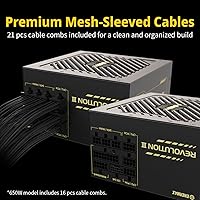
Specifications

  • Output Wattage: Delivers a continuous 850W of DC power, suited to high-end single-GPU gaming and workstation builds.
  • Efficiency Rating: Certified 80 Plus Gold with 93% efficiency at 50% load, reducing wasted energy converted to heat inside the chassis.
  • ATX Standard: Fully compliant with the ATX 3.1 specification, meeting current Intel platform power delivery requirements for modern components.
  • GPU Connector: Includes one native 12V-2x6 connector rated at 600W for direct connection to high-power GPUs without requiring an adapter cable.
  • Power Excursion: Supports up to 200% power excursion headroom to absorb the brief transient spikes that current-generation GPUs routinely produce under load.
  • Modular Design: Fully modular cable system lets builders connect only the cables required, keeping unused cables out of the case entirely.
  • Capacitors: Built with 100% Japanese industrial-grade capacitors, which offer greater thermal stability and longer operational lifespan than standard-grade alternatives.
  • Cooling Fan: Uses a 120mm Fluid Dynamic Bearing (FDB) fan rated for quieter operation and a longer service life than conventional sleeve-bearing fans.
  • Dimensions: Measures 5.51 x 5.91 x 3.39 inches (L x W x H), conforming to the standard ATX power supply form factor.
  • Weight: Weighs 5.1 pounds, consistent with a fully equipped 850W modular unit using higher-grade internal components.
  • Warranty: Backed by a 10-year manufacturer warranty, placing it among the longest-covered options in the 850W Gold-rated PSU segment.
  • Protections: Incorporates six protection circuits — OCP, OVP, UVP, OPP, SCP, and OTP — to guard connected components against electrical faults and instability.
  • Altitude Rating: Certified for operation at altitudes up to 5,000 meters, ensuring performance margin in high-elevation environments where air-cooling efficiency drops.
  • Connector Types: Supports ATX and PCI Express connector types, covering standard motherboard, storage, and GPU power requirements for desktop configurations.
  • Model Number: The official manufacturer part number is EP-RV3-850G-FR, useful for verifying authenticity and locating warranty registration documentation.

Related Reviews
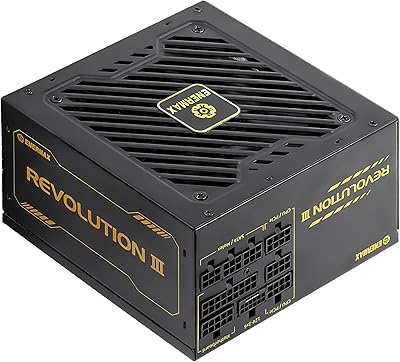
Enermax Revolution III 1000W Power Supply
85%
91%
Power Delivery Reliability
88%
Efficiency & Heat Output
83%
Noise Level
89%
Build Quality & Materials
86%
Cable Quality & Flexibility
More
Enermax Revolution III 650W Fully Modular Power Supply
89%
92%
Performance & Power Delivery
89%
Quiet Operation
90%
Cable Management
87%
Efficiency & Power Saving
95%
Build Quality & Durability
More
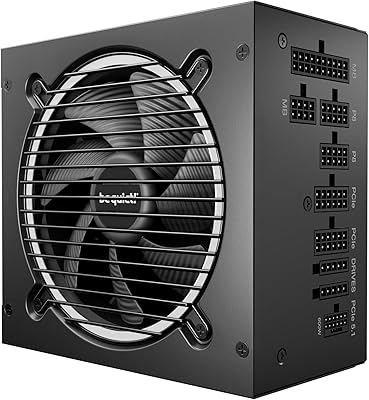
be quiet! Pure Power 13M 850W PSU
85%
93%
Acoustic Performance
88%
Build Quality
91%
Voltage Stability
94%
Future Compatibility
79%
Value for Money
More
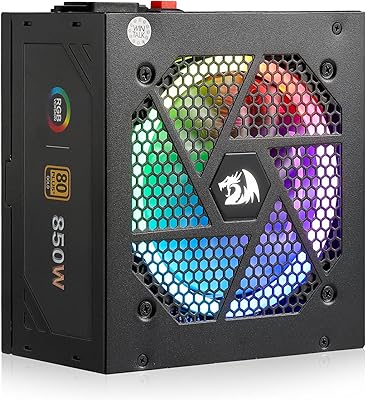
Redragon RGPS-850W 850W Power Supply
80%
78%
Power Delivery Stability
81%
Build Quality & Components
86%
Noise Level & Fan Behavior
84%
Modular Cable System
88%
PCIe 5.1 & ATX 3.1 Compatibility
More
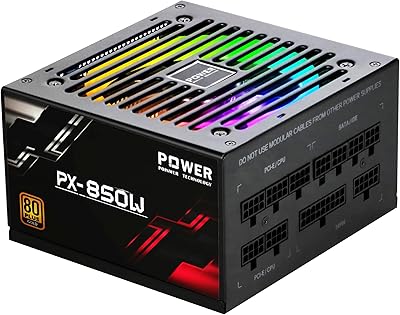
POINWER PX-850W 850W Power Supply
80%
86%
Power Delivery Stability
89%
Energy Efficiency
74%
Build Quality & Components
83%
Cable Management & Modularity
81%
Noise Level
More
be quiet! Pure Power 12 M 850W Modular Power Supply
88%
94%
Quiet Operation
88%
Ease of Installation
89%
Build Quality
92%
Power Delivery Stability
90%
Energy Efficiency
More
Enermax PlatiGemini 1200W ATX Power Supply
83%
92%
Power Delivery Stability
89%
Build Quality
91%
Noise Level
74%
Cable Quality & Selection
88%
Compact Form Factor
More
Montech Century II 850W
85%
91%
Build Quality
89%
Efficiency & Power Delivery
88%
Noise Level
86%
Modular Cable System
93%
ATX 3.1 & PCIe 5.1 Compatibility
More
Thermaltake GF1 850W (2024)
83%
91%
Noise Level
84%
Build Quality
88%
Cable Management
86%
Voltage Stability
82%
Value for Money
More
ARESGAME AGT 850W ATX Power Supply
82%
91%
Value for Money
78%
Build Quality
83%
Noise Level
86%
Voltage Stability
76%
Modular Cable System
More

FAQ

It can power an RTX 4090 in most gaming configurations, but you should run a full system power estimate first. The RTX 4090 alone can spike well past 400W under peak load, and when paired with a high-core-count CPU and multiple drives, total draw can push close to or beyond 850W under sustained workloads. For RTX 4090 builds, stepping up to a 1000W unit generally gives more comfortable long-term headroom.

It is native — no adapter is needed. The cable included with this Enermax unit plugs directly into the 12V-2x6 port on compatible GPUs. That distinction matters because adapters introduce an additional resistance point and have been associated with connector reliability issues on high-draw cards when used under sustained load.

Most owners describe it as quiet to near-silent during typical gaming workloads. The 120mm FDB fan spins at low RPM under moderate load, and the fluid dynamic bearing produces less friction noise than sleeve-bearing alternatives. At idle or during light tasks, a large number of builders report they cannot hear it at all over the rest of their system.

Yes, 850W is a well-matched pairing for that combination. A typical RTX 4080 gaming system with a top-tier CPU draws roughly 450 to 600W under full load, leaving meaningful headroom for drives, fans, and moderate overclocking. Just factor in all components when running your power estimate to avoid surprises.

In practical terms, ATX 3.1 tightens voltage regulation and updates how the PSU responds to the rapid, high-amplitude power spikes that modern GPUs produce during rendering or gaming bursts. Combined with the 200% power excursion support on this 850W Gold PSU, it means the unit handles those transient draws without tripping protection circuits or causing system instability — something older ATX 2.x units can struggle with on current-generation GPUs.

Warranty claims are handled directly through Enermax rather than the retailer where you bought it, so keeping your proof of purchase is important. The process typically involves contacting Enermax support, registering the product, and following their RMA procedure. Ten years is genuinely one of the longer coverage periods in this category, but it is worth reviewing the specific regional terms before purchasing to understand what is and is not covered.

Yes — at 5.51 x 5.91 x 3.39 inches it sits well within the standard ATX form factor dimensions that virtually every mid-tower and full-tower case accommodates. The fully modular design is a particular advantage in tighter builds, since you only run the cables your system actually uses, which reduces the bundle of unused cables that would otherwise fill up the PSU shroud area.

Seasonic and Corsair have larger pools of long-term real-world data and stronger retail visibility, which is a legitimate factor if you rely heavily on independent long-term reviews before buying. The Revolution III 850 competes on internal component quality and warranty length — its 10-year coverage matches or beats most Gold-tier Seasonic offerings. The honest trade-off is that Enermax has a smaller English-language owner community, so you will find fewer independent multi-year impressions to draw on compared to those established brands.

For most users at or near sea level, it is not a deciding factor. However, if you are building in a city like Denver, Bogota, Addis Ababa, or anywhere significantly above sea level, thinner air reduces fan cooling efficiency and can push components toward thermal limits. This 850W Gold PSU is explicitly certified to 5,000 meters, which is a concrete guarantee most competitors simply do not provide, making it a meaningful differentiator for that specific group of builders.

The cables are well-suited to mid-tower builds, but in a large full-tower chassis — especially one with a deep cable management channel behind the motherboard tray — some builders find the lengths tighter than ideal. It is worth checking the specific cable lengths against your case dimensions before committing. If you do need more reach, quality extension cables are widely available and inexpensive.

Where to Buy