


Overview

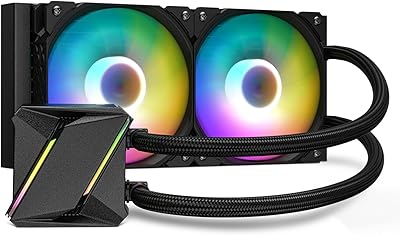
The Mars Gaming ML-ONE240 240mm Liquid CPU Cooler sits in an interesting spot — it's a European budget brand taking a real swing at the mid-range AIO market with looks that punch well above its price. The standout feature right away is the infinity mirror pump head, which gives it a visual depth that most competitors at this price simply don't bother with. Socket compatibility is genuinely broad, covering current Intel LGA 1700, AMD AM5, AM4, and a long tail of legacy platforms, making it a solid choice for builders upgrading existing rigs. With a rated 400W TDP, it has enough thermal headroom for mainstream processors, though expectations around build quality should stay realistic for a value-tier brand.

Features & Benefits

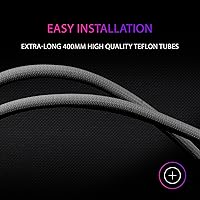
The pump head's fixed rainbow RGB is the first thing worth understanding — it cycles through colors automatically with that layered mirror effect, but there's no software, no sync, no per-zone control. What you see is what you get, permanently. The OPTI-CHAMBER pump design claims to move heat away from the CPU block more efficiently by improving internal flow dynamics, which is plausible if hard to verify independently. Tubing runs 400mm in length with a Teflon coating, giving you more slack during installation than most budget AIOs allow. The dual FDB fans top out at 2600 RPM and are rated at just 9 dB at idle, which holds up reasonably well at light workloads. The 240mm radiator suits mainstream chips comfortably but won't tame a heavily overclocked high-end desktop processor.

Best For

This 240mm AIO makes the most sense for builders running mid-range CPUs — think Ryzen 5 or Core i5 class chips where the 400W TDP rating gives comfortable headroom without overspending on cooling. If you want a liquid cooler that looks like it costs twice as much behind a case window, this one delivers that. The extra-long tubing is genuinely helpful in larger cases where most AIO kits leave you wrestling with stiff, too-short hoses. It's also a practical pick for anyone still on an older Intel or AMD platform who doesn't want to buy a new mounting solution — the socket support list is unusually comprehensive. That said, if synchronized lighting across all your components matters, the fixed RGB will disappoint.

User Feedback

Buyers consistently highlight easy installation and generally complete accessory kits — not a given at this price point. The infinity mirror effect earns real praise from people building eye-catching rigs on a tighter budget. On the downside, the fixed lighting generates genuine frustration; users migrating from brands with full RGB ecosystems find the lack of software control annoying once the novelty fades. Pump noise at sustained heavy loads has surfaced in multiple reviews, and it doesn't always match the near-silent marketing figures. Long-term reliability is harder to assess with a relatively young brand, but no widespread leaking reports have emerged so far. Cooling performance relative to price lands as respectable for stock or lightly loaded chips — solid, but not class-leading.

Pros

  • Infinity mirror pump head looks genuinely impressive inside a windowed case, especially at this price.
  • Broad socket support covers AM5, LGA 1700, and a long list of legacy platforms with no extra hardware needed.
  • 400mm Teflon-coated tubes give real routing flexibility that shorter competing kits can't match.
  • Dual FDB fans run very quietly at idle and light loads, keeping the system peaceful during everyday use.
  • Installation is straightforward with a complete accessory kit — no scrambling for missing screws or brackets.
  • Solid thermal performance for mid-range CPUs, meaningfully better than stock coolers in sustained workloads.
  • Available in both black and white finishes, making it easy to match common build color schemes.
  • The 400W TDP rating gives ample headroom for mainstream processors without running the fans hard.

Cons

  • RGB lighting is permanently fixed — no color control, no sync with other components, no software support whatsoever.
  • Pump noise under sustained heavy load has been reported to exceed the near-silent marketing figures noticeably.
  • Brand longevity and long-term reliability data are limited, which adds uncertainty for multi-year builds.
  • The 240mm radiator is a real constraint for power-hungry or overclocked processors that generate significant heat.
  • Mars Gaming lacks the ecosystem support and warranty reputation of established cooling brands like Corsair or be quiet!
  • No active fan speed control via software means you depend entirely on motherboard headers for adjustment.
  • The fixed rainbow cycle may clash with deliberately monochrome or single-color build themes with no workaround.

Ratings

The scores below for the Mars Gaming ML-ONE240 240mm Liquid CPU Cooler were generated by our AI engine after analyzing verified purchase reviews from buyers worldwide, with spam, bot-submitted, and incentivized feedback actively filtered out. Each category reflects the honest balance of what real builders praised and what genuinely frustrated them — nothing is softened to protect the brand. Where the cooler earns strong marks, you'll see why; where it falls short, we don't look away.

Thermal Performance
73%
27%
For mainstream CPUs like the Ryzen 5 or Core i5, this liquid cooler keeps temperatures meaningfully lower than stock coolers during gaming sessions and moderate workloads. Builders running these chips report stable thermals even during extended use, which is what most buyers in this price range actually need.
Push this AIO with anything more demanding — a heavily loaded Ryzen 9 or an overclocked Core i9 — and it starts to struggle noticeably. The 240mm radiator simply doesn't have the surface area to tame high-TDP chips under sustained all-core load, which is a real ceiling for ambitious overclockers.
Noise Level
68%
32%
At idle and during light desktop use, the dual FDB fans are genuinely quiet — the kind of quiet where you stop noticing the PC is running. Buyers working in home offices or using their rigs for everyday tasks consistently report a pleasant acoustic experience during low-demand scenarios.
The pump noise under heavy sustained load is where the 9 dB marketing figure stops being useful. Several users describe an audible hum or whine from the pump when the system is under real stress, which breaks the illusion of silence that the spec sheet implies.
RGB & Aesthetics
81%
19%
The infinity mirror effect on the pump head genuinely turns heads inside a windowed case — it creates a layered depth of light that looks far more expensive than the price suggests. Builders who care about visual presentation but don't want to spend flagship money frequently single this out as the best-looking feature of their entire build.
The fixed rainbow cycle is a real sticking point for anyone trying to maintain a cohesive color theme. There is no way to change the colors, slow the cycle, or sync it with other components, and for builders invested in a monochrome or single-color build, that limitation is more than cosmetic — it's a dealbreaker.
Installation Experience
84%
The mounting process is straightforward even for first-time AIO builders, with a clear bracket system and a complete accessory kit that doesn't leave you hunting for missing screws. The extra-long 400mm tubes make radiator positioning noticeably less stressful than with shorter-tubed competitors.
A handful of users noted that the mounting instructions could be clearer, particularly for legacy AMD sockets where the bracket orientation isn't immediately obvious. Nothing insurmountable, but it adds friction for less experienced builders who expect a foolproof guide.
Socket Compatibility
91%
The breadth of supported sockets is one of the strongest arguments for choosing this cooler — covering AM5, LGA 1700, and a long tail of older Intel and AMD platforms without needing additional hardware. Builders upgrading aging systems especially appreciate not having to budget for a separate mounting kit.
While the socket list is impressively long, there are no specific torque or pressure guidelines for different socket types, which can leave builders second-guessing how firmly to tighten the standoffs. This is a minor documentation issue rather than a hardware failure, but it surfaces in user discussions occasionally.
Build Quality
62%
38%
The radiator feels solid and the Teflon-coated tubes have a quality finish that sets them apart from basic rubber alternatives found on some budget rivals. For the price tier, the physical construction passes a basic inspection without immediately raising red flags.
Compared to established brands like Corsair or Fractal Design, the pump head housing and overall material feel noticeably lighter and less premium. Some buyers describe a slight plasticky quality to the block that undermines confidence, particularly when they're trusting it to protect an expensive CPU.
Value for Money
86%
Relative to what comparable AIOs cost from big-name brands, this liquid cooler delivers a compelling package — visual impact, broad compatibility, and adequate thermal performance for mainstream builds, all in a single box. Buyers on a strict budget who've done the comparison shopping frequently describe it as the obvious choice at this tier.
The value proposition weakens if you need software-controlled lighting or plan to run a high-end processor, because you'll either be disappointed by the fixed RGB or underpowered by the thermal ceiling. In those scenarios, stretching the budget toward a premium AIO actually makes more financial sense long term.
Fan Performance
71%
29%
The FDB fans spin smoothly across their RPM range and contribute meaningfully to radiator airflow during gaming or rendering workloads. At moderate speeds, airflow-to-noise ratio is genuinely competitive for this price bracket, keeping CPU temperatures in check without becoming a distraction.
At maximum RPM the fans are audible enough to notice, and without PWM control the speed adjustment through a 3-pin header is less precise than many builders prefer. Users accustomed to premium fan curves may find the control granularity frustrating during demanding sessions.
Pump Reliability
61%
39%
There are no widespread leaking or pump failure reports for this model, which is reassuring for a younger brand entering a category where catastrophic failures can damage entire systems. Most buyers report the pump running consistently over their first year of ownership without audible degradation.
Mars Gaming simply doesn't have the multi-year reliability data that Corsair or NZXT have accumulated, and that uncertainty is real for buyers planning a long-term build. The pump noise under load also leaves some buyers questioning whether the unit is working harder than it should.
Tube Quality & Flexibility
79%
21%
The 400mm tube length is a genuine practical advantage that becomes obvious the moment you're routing inside a full-tower case — there is simply more room to work without forcing awkward bends. The Teflon coating adds a layer of confidence around kink resistance and long-term permeation compared to bare rubber alternatives.
Some users working in smaller mid-tower cases found the extra length created too much slack, making cable management tidier than tube management. The tubes hold their shape reasonably well but can look ungainly if you haven't planned the routing path before installation.
Packaging & Accessories
76%
24%
The box arrives well-organized, with mounting hardware for multiple socket types separated and labeled well enough that most builders can identify the correct bracket without consulting instructions. Thermal paste is included and performs adequately for stock configurations right out of the box.
A small but consistent group of reviewers mention minor packaging issues — a slightly crushed corner or loosely secured accessory bag — that don't affect the product but suggest cost-cutting in the unboxing experience. It's not a dealbreaker, but it does shape first impressions before the cooler is even installed.
Software & RGB Control
29%
71%
There is no software required to run this cooler, which means zero driver conflicts, no bloatware installation, and a plug-and-play experience that less technically experienced builders may actually appreciate. The lighting activates automatically on power-on without any configuration needed.
The complete absence of lighting control is by far the most criticized aspect of the entire product across user reviews. Buyers expecting to match their build's color palette or sync with Corsair iCUE or Aura Sync are left with no recourse whatsoever — the fixed rainbow cycle is the only option, permanently.
Cooling Headroom
67%
33%
For the vast majority of users running stock or mildly boosted mid-range CPUs, the thermal headroom is comfortable enough that the fans rarely need to spin hard. Day-to-day gaming and productivity tasks stay well within the cooler's operating range, keeping the system quiet and stable.
Anyone who intends to push a processor past its rated TDP will encounter the limits of a 240mm radiator sooner than they'd like. The 400W TDP rating is achievable, but it leaves minimal buffer for sustained peak loads, and temperatures can climb faster than expected during prolonged stress testing.

Suitable for:

The Mars Gaming ML-ONE240 240mm Liquid CPU Cooler is a strong fit for budget-conscious PC builders who want the visual appeal of liquid cooling without paying flagship prices. It makes particular sense for anyone running a mainstream processor — Ryzen 5, Core i5, or similar chips — where the 400W TDP rating provides comfortable thermal headroom without over-engineering the solution. Builders working in mid or full-tower cases will appreciate the extra-long 400mm tubing, which makes routing genuinely easier than with most budget AIOs. If you're upgrading from an older platform and dreading compatibility headaches, the unusually wide socket support list spanning both current and legacy Intel and AMD sockets removes that friction entirely. It's also a solid pick for anyone who wants a visually striking build on a tight budget and doesn't need software-controlled lighting to enjoy the effect.

Not suitable for:

Buyers who rely on unified RGB ecosystems — whether Corsair iCUE, ASUS Aura Sync, or any other platform — should approach this liquid cooler with caution, since the rainbow lighting is fixed and completely outside any software's reach. Enthusiasts pushing high-end desktop processors or heavily overclocked chips will likely find the 240mm radiator a bottleneck, and this is not the cooler to pair with a Core i9 or Ryzen 9 running sustained all-core workloads. Those who prioritize near-silent operation under heavy load should also temper expectations, as pump noise at higher thermal demands has been a recurring complaint despite the low idle figures. Anyone expecting build quality on par with Corsair, NZXT, or Fractal should recognize that Mars Gaming is a value-oriented European brand, and the materials and fit-and-finish reflect that positioning honestly. Long-term reliability data is still limited given the brand's relative youth, which may be a concern for builders who keep systems running for five or more years.

Specifications

  • Radiator Size: The cooler uses a 240mm radiator measuring 10.83″ in length, 4.72″ in width, and 1.06″ in thickness.
  • Fan Configuration: Two fixed FRGB fans are included, each capable of spinning up to 2600 RPM using fluid dynamic bearing (FDB) technology.
  • Noise Level: Fans are rated at 9 dB at idle, making the cooler very quiet during light or everyday computing workloads.
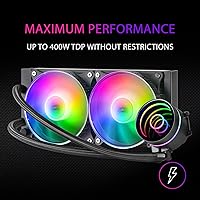
  • TDP Rating: The cooler is rated to handle up to 400W TDP, providing adequate thermal headroom for mainstream desktop processors.
  • Pump Technology: The pump block uses Mars Gaming's OPTI-CHAMBER design, intended to improve coolant flow and heat extraction efficiency at the CPU contact point.
  • Tubing: Both tubes measure 400mm in length and feature a Teflon coating for durability and flexibility during case installation.
  • Lighting: The pump head features a fixed rainbow RGB infinity mirror effect; lighting colors and patterns cannot be changed or synced via software.
  • Intel Compatibility: Supported Intel sockets include LGA 2066, 2011, 1700, 1200, 1156, 1155, 1151, and 1150.
  • AMD Compatibility: Supported AMD sockets include AM5, AM4, AM3+, AM3, AM2+, AM2, FM2, FM1, sTRX4, sTR4, and SP3.
  • Power Connector: Fans connect via a standard 3-pin header, compatible with motherboard fan control without requiring additional adapters.
  • Voltage: The cooler operates at 12V, consistent with standard desktop PC fan and pump power delivery.
  • Cooler Weight: The complete cooler assembly weighs 2.43 lbs, which is typical for a 240mm AIO with radiator, fans, and pump block included.
  • Tube Material: Tubes are Teflon-coated to resist kinking, reduce permeation over time, and maintain flexibility across various case layouts.
  • Fan Bearing Type: Both fans use fluid dynamic bearings (FDB), which generally offer lower noise and longer lifespan compared to sleeve bearing alternatives.
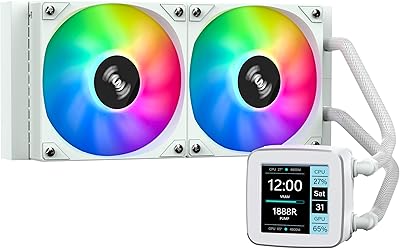
  • Available Colors: The cooler is sold in two separate finish options, black and white, to suit different build aesthetics.
  • Compatible Devices: This cooler is designed exclusively for desktop PCs and is not intended for use in laptops or small form-factor systems.
  • Rotational Speed: Maximum fan speed is 2600 RPM, which represents the upper performance limit under full thermal load conditions.

Related Reviews
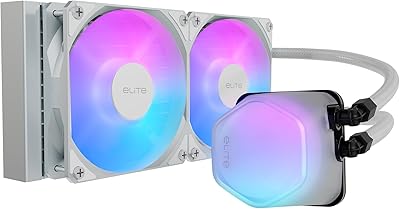
Cooler Master 240 Elite Liquid White CPU Liquid Cooler
85%
91%
Cooling Performance
84%
Noise Levels
92%
Ease of Installation
89%
Build Quality
88%
aRGB Lighting Effect
More
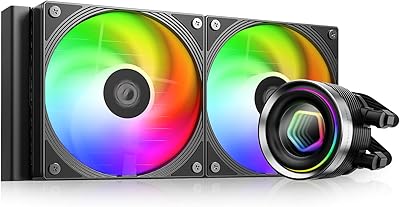
SAMA LD 240 AIO Liquid CPU Cooler
77%
88%
Value for Money
74%
Thermal Performance
83%
LCD Display Quality
71%
Noise Level
76%
Build Quality
More
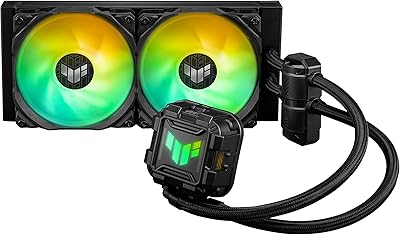
ID-COOLING FX240 INF 240mm AIO Liquid Cooler
81%
83%
Thermal Performance
81%
Noise Level
91%
Design & Aesthetics
72%
ARGB & Lighting Control
78%
Build Quality & Materials
More
ASUS TUF Gaming LC II 240 ARGB AIO Cooler
80%
76%
Thermal Performance
81%
Noise Levels
74%
Build Quality
88%
Installation Experience
69%
Pump Reliability
More
Cooler Master MasterLiquid Atmos 240 Liquid Cooler
82%
76%
Thermal Performance
88%
Noise Level
82%
Build Quality
84%
Pump Performance
91%
RGB & Lighting
More
Cooler Master MasterLiquid Atmos 360 AIO Cooler
83%
88%
Thermal Performance
91%
Noise Level
83%
Build Quality
87%
Installation Experience
84%
RGB & Lighting Quality
More
Cooler Master MasterLiquid ML240L V2 AIO Cooler
77%
78%
Thermal Performance
91%
Installation Experience
63%
Pump Noise & Vibration
82%
Fan Performance
88%
ARGB Lighting
More
Osprey 240mm AIO CPU Cooler
86%
91%
Cooling Performance
87%
Noise Level
88%
ARGB Lighting Customization
75%
Installation Ease
82%
Software/CSM Utility App
More
DARKROCK D360 CPU Liquid Cooler
87%
94%
Cooling Performance
88%
Noise Level
91%
RGB Lighting Customization
70%
Installation Difficulty
92%
Build Quality
More
DARKROCK D240 240mm AIO Liquid Cooler
75%
71%
Thermal Performance
58%
Pump Noise
84%
Installation Experience
88%
ARGB Lighting
67%
Build Quality
More

FAQ

No, it does not. The lighting on this liquid cooler is completely fixed — it runs a continuous rainbow cycle and cannot be controlled, remapped, or synced through any software platform. If RGB synchronization across your build is important to you, this cooler will likely frustrate you.

Yes, both AM5 and LGA 1700 are fully supported out of the box. The mounting kit covers a wide range of current and legacy sockets, so most builders won't need to source any additional hardware to get it installed.

Honestly, it's a stretch. The ML-ONE240 is well-suited for mid-range chips like a Ryzen 5 or Core i5, but high-end processors pushing sustained all-core workloads will likely push this cooler close to its limits. For those CPUs, a 280mm or 360mm AIO would be a safer long-term choice.

The 9 dB figure reflects idle behavior, and real-world noise under sustained heavy load is noticeably higher — particularly from the pump. Several users have flagged that the pump can become audible when the system is under prolonged stress. At light to moderate loads it stays very quiet, though.

Generally, yes. The mounting hardware is well-organized and the process is fairly standard for a 240mm AIO. Most users report a smooth installation experience, and the 400mm tubes give you extra slack that makes positioning the radiator less fiddly than with shorter-tubed alternatives.

The Teflon coating adds a meaningful layer of durability compared to basic rubber tubing, and the 400mm length means you're not forcing them into tight bends. That said, Mars Gaming is a younger brand without a long track record, so long-term data beyond a couple of years is limited.

Yes. The fans connect via standard 3-pin headers, so your motherboard's fan control — whether through BIOS settings or software like Fan Xpert — can adjust speed based on temperature. You won't get PWM precision, but basic thermal ramp control works fine.

Thermal paste is included in the box, which is standard for AIOs at this price point. Most users report the included paste performs adequately; you can always swap it for a premium compound if you want to squeeze out a few extra degrees.

The pump head sits directly on the CPU socket, so clearance depends on your specific case and motherboard layout rather than the cooler's footprint. The radiator mounts in a standard 240mm fan slot, which the vast majority of mid-tower and full-tower cases support without issue.

Leaking is always a valid concern with any closed-loop liquid cooler, but no widespread leaking reports have emerged for this model specifically. As with any AIO, inspecting the tubing connections after installation and checking periodically during the first few weeks is sensible practice regardless of brand.