
Overview

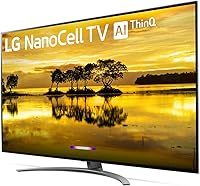
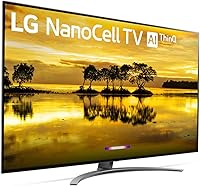
The LG Nano 9 65-inch 4K NanoCell TV arrived in 2019 as one of LG's most capable upper-mid-range sets, sitting just below their OLED lineup in both price and outright contrast performance. The 65-inch NanoCell panel is the defining feature here — a display technology that uses nano-sized particles to filter impure color wavelengths, producing noticeably richer and more consistent color than a standard LED. Driving the picture intelligence is the α7 Gen 2 processor, which handles upscaling and AI-based image adjustments. Fair warning: this is not an OLED. Deep blacks and absolute contrast are not its strengths. For most living rooms, though, this 65-inch LG set represents strong value, especially at the discounted and refurbished prices it commonly fetches today.

Features & Benefits

What makes the Nano 9 Series genuinely interesting is how its technologies translate into everyday viewing. The NanoCell color filtering keeps reds and greens from muddying at high brightness — a real difference you notice during sports or animated content. Full Array Dimming steps ahead of edge-lit panels, though dark-room movie watchers will still catch some blooming around bright highlights; it is better than most LEDs, just not OLED-precise. The 120Hz refresh rate keeps fast motion clean without judder, which sports fans and console gamers will notice right away. Dolby Vision, Dolby Atmos, AirPlay 2, and three voice assistants built in mean this LG NanoCell TV handles a wide range of setups without demanding extra hardware.

Best For

The Nano 9 Series suits a few buyer types particularly well. If you want a cinematic picture without the cost of OLED, this 65-inch LG set delivers a satisfying result for streaming, movies, and general viewing. Apple ecosystem households will appreciate native AirPlay 2 — no adapters needed. The IPS panel's wide viewing angle also makes it a smart choice for larger living rooms where seating spreads out; color stays accurate well off center. Gamers and sports viewers benefit from the 120Hz panel, and the four HDMI ports mean you can keep a console, streamer, and cable box all connected simultaneously without rotating cables.

User Feedback

Buyers rate this LG NanoCell TV highly overall, and the 4.5-star average looks like genuine satisfaction rather than launch-day hype. Color vibrancy and the responsiveness of the webOS interface come up frequently as highlights, with many owners also praising how intuitive the Magic Remote feels after a short adjustment period. On the negative side, blooming in dark scenes is a recurring complaint, and several buyers note the local dimming still falls short of what an OLED delivers at a similar price point. The WiSA wireless audio feature frustrated some users who did not realize the transmitter dongle is sold separately. Since this is a 2019 model, multi-year reliability reports from long-term owners are worth seeking out before purchasing.

Pros

  • NanoCell color filtering produces noticeably richer, more accurate colors than standard LED panels at comparable sizes.
  • The 120Hz refresh rate keeps sports broadcasts and fast-action gaming visually clean without motion blur.
  • IPS panel technology maintains consistent color accuracy even from wide viewing angles, ideal for large group seating.
  • Native AirPlay 2 support lets Apple device users cast content instantly without adapters or extra hardware.
  • Dolby Vision and Dolby Atmos support ensures compatible streaming content looks and sounds its best.
  • webOS is one of the more intuitive smart TV platforms available, and the Magic Remote makes navigation genuinely easy.
  • Four HDMI ports give you room for a console, streaming stick, soundbar, and cable box without cable-swapping.
  • Both Amazon Alexa and Google Assistant are built in, giving households real flexibility for voice-controlled smart home setups.
  • At current used and refurbished prices, the Nano 9 Series offers premium-tier features at a fraction of its original cost.
  • Dolby Atmos through the built-in 40W speaker system delivers better-than-average audio without immediately needing an external soundbar.

Cons

  • Full Array Dimming still produces blooming around bright objects in dark scenes — a persistent complaint from owners watching films at night.
  • This is a 2019 model, which means long-term software support and future app availability are legitimate concerns.
  • The WiSA wireless audio feature requires a separately purchased transmitter dongle that most buyers do not expect at this price tier.
  • WiSA support is capped at 5.1 channels, limiting the system for buyers hoping for a full immersive audio configuration.
  • No Dolby Vision gaming support — a real gap for current-gen console owners who want HDR gaming at its best.
  • The α7 Gen 2 processor, while capable, shows its age compared to what newer mid-range panels now offer in upscaling performance.
  • USB ports are limited to USB 2.0, which can result in slower media playback for large local video files.
  • At 61.9 lbs with the stand, installation without a second person is genuinely awkward and risks damage during setup.

Ratings

The scores below for the LG Nano 9 65-inch 4K NanoCell TV were generated by our AI system after analyzing verified buyer reviews from multiple global markets, with spam, incentivized, and bot-flagged submissions actively filtered out before scoring. The result reflects where real owners are genuinely satisfied and where recurring frustrations surfaced — no category has been inflated to flatter the product or the brand.

Picture Quality
83%
Owners consistently praise the NanoCell panel for producing rich, accurate colors that hold up well in normally lit rooms — especially noticeable during sports broadcasts and HDR streaming on Netflix. The color uniformity across the screen is a regular highlight, with many buyers noting how saturated reds and greens look compared to their previous LED sets.
Dark-scene performance draws the most criticism, with blooming around bright objects in dim environments being a persistent complaint. Buyers who regularly watch films in a darkened room find the Full Array Dimming noticeably less precise than OLED panels, and some report visible bright patches near subtitles on black backgrounds.
Contrast & Black Levels
67%
33%
The Full Array Dimming system does a respectable job for an LED panel — step-down lighting in dim rooms improves perceived depth, and casual viewers upgrading from an older edge-lit set will notice a genuine improvement in shadow detail during evening viewing.
This is where the Nano 9 Series draws the clearest line against OLED alternatives. Buyers who come from OLED backgrounds or who regularly watch content in dark rooms find the black levels disappointing, with gray-ish shadows and visible halo effects around bright elements that OLED handles effortlessly.
Color Accuracy
88%
NanoCell technology genuinely delivers on its color promise — multiple reviewers with calibration experience note that out-of-box color performance is above average for an LED TV at this tier, requiring minimal adjustment. Wide color gamut coverage makes animated content, nature documentaries, and HDR movies look particularly vibrant.
While color accuracy is strong for an LED panel, it still cannot match the per-pixel precision of OLED displays, and some buyers report slight color drift when viewing off-axis at extreme angles despite the IPS panel's wider-than-typical viewing cone.
Motion Handling
84%
The native 120Hz panel is genuinely appreciated by sports fans and gamers who switched from 60Hz televisions — fast pans in football broadcasts and quick camera movements in action films are rendered cleanly without the soap-opera effect that plagues over-aggressive motion processing. Most users leave TruMotion at a moderate setting and are satisfied.
At default settings, some buyers find the motion processing a little too aggressive, creating an artificial look that needs manual calibration to tame. A small number of users also report that fast-scrolling content in games occasionally shows slight judder that required disabling certain processing modes to resolve.
Smart TV Platform
86%
WebOS receives consistently positive feedback for its speed and layout clarity — users appreciate that major apps like Netflix, YouTube, Disney Plus, and Prime Video launch quickly without sluggishness, and the customizable home bar makes switching inputs and apps genuinely fast. The Magic Remote pointer system earns praise from almost every reviewer who mentions it.
As a 2019 model running an older webOS version, some buyers are beginning to encounter apps that no longer update or function correctly, and a handful of niche streaming services are missing from the app library. Long-term platform support is the most frequently raised concern among owners who have lived with the set for several years.
Voice Assistant Integration
81%
19%
Having Alexa, Google Assistant, and LG ThinQ AI all available natively is something buyers in mixed smart home ecosystems genuinely value — you are not locked into one ecosystem, and basic commands like switching inputs, adjusting volume, or launching apps via voice work reliably without needing a separate smart speaker in the room.
Voice recognition accuracy in noisy environments draws some criticism, with users reporting that commands occasionally need repeating. A few reviewers also note that LG ThinQ AI feels less capable than Alexa or Google Assistant for broader smart home control tasks, functioning more as a TV-specific assistant than a true hub replacement.
Gaming Performance
71%
29%
The 120Hz panel and reasonably responsive input lag in Game Mode make the Nano 9 Series a capable TV for last-generation console gaming — PS4 Pro and Xbox One X users report smooth, enjoyable performance, and the wide viewing angle is a bonus for couch co-op setups with players sitting at different positions.
The absence of HDMI 2.1, VRR, and Dolby Vision gaming support is a real limitation for PS5 and Xbox Series X owners who want to access those consoles at their technical best. Competitive gamers sensitive to input lag also note that while Game Mode reduces it significantly, it does not match the sub-5ms figures achievable on more recent gaming-focused displays.
Audio Quality
73%
27%
The built-in 40W 2.2-channel system with Dolby Atmos decoding outperforms what most reviewers expect from integrated TV speakers — dialogue clarity is strong, and casual viewers watching news, streaming shows, and sports are regularly satisfied without adding external audio hardware. Several owners report using the set for a year or more before feeling compelled to add a soundbar.
For movie watching and anything demanding real bass or surround immersion, the built-in speakers hit their limits quickly, with thin low-end response being the most common complaint. Buyers expecting the Dolby Atmos badge to deliver cinematic sound from the internal speakers are often disappointed — Atmos decoding from a flat panel speaker array has physical constraints no software can fully overcome.
WiSA Wireless Audio
54%
46%
For buyers who specifically want a wireless speaker system without running cables across the room, WiSA compatibility does work as advertised once properly set up, and audio synchronization is reported as solid by the small subset of owners who have invested in a compatible WiSA speaker system.
The WiSA transmitter dongle being sold separately catches a significant number of buyers off guard, and the feature is limited to 5.1-channel configurations — no 7.1 or object-based wireless audio is possible. The added purchase cost, limited speaker ecosystem, and setup complexity make this feel like an incomplete feature for most buyers rather than a genuine differentiator.
Connectivity
87%
Four HDMI ports, three USB ports, built-in Wi-Fi, Bluetooth, AirPlay 2, and an Ethernet port give this 65-inch LG set a well-rounded connection profile that accommodates most modern living room setups without requiring a switch or additional hub. The four HDMI ports in particular draw praise from households with multiple devices permanently connected.
All USB ports are USB 2.0, which limits media playback speed for large locally stored video files and is a noticeable omission at this tier. A few buyers also note the lack of USB-C connectivity, which has become more relevant as laptop and mobile device ecosystems have shifted toward that standard since 2019.
Setup & Installation
78%
22%
Most owners describe the initial setup process as straightforward — the webOS guided setup walks through Wi-Fi, streaming app login, and input labeling clearly, and the majority of buyers report being up and running within 30 minutes. Stand assembly is described as simple and secure by most reviewers.
At nearly 62 lbs with the stand attached, physical installation is consistently flagged as a two-person job — a number of buyers mention struggling solo and risking damage during unpacking or wall-mounting. Wall-mount buyers also note that the included documentation on VESA spacing is minimal, requiring them to look up specifications independently.
Build & Design
79%
21%
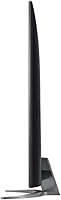
The slim profile — just 2.5 inches deep without the stand — earns consistent compliments, and the dark bezel is understated enough to blend into most room aesthetics. Buyers note that the overall construction feels solid and premium relative to the price tier, with no flexing or creaking in the chassis reported by the majority of owners.
The stand design positions the TV lower than some buyers prefer, and its relatively wide footprint requires a large surface for stable placement without wall-mounting. A few long-term owners report that the plastic back panel shows minor scuffing or discoloration after extended use in warm entertainment cabinet setups.
Value for Money
82%
18%
At the discounted and refurbished prices this 2019 model typically commands today, the Nano 9 Series represents strong value for buyers who want a big, feature-rich smart TV without paying current-year OLED prices. The combination of NanoCell color performance, 120Hz, Dolby Vision, AirPlay 2, and a four-port HDMI layout is a genuinely competitive package at its current market value.
At the original full launch price, the value proposition was tighter and the competition stiffer — buyers paying new-product prices for a five-year-old panel should weigh it against current-generation mid-range sets that offer HDMI 2.1, better local dimming, and longer software support windows. The age of the model is the primary factor that limits its score here.
Long-term Reliability
69%
31%
A meaningful portion of verified multi-year owners report no significant hardware issues after several years of regular daily use, and LG's panel quality has historically been regarded as durable among the NanoCell lineup from this era. For buyers purchasing from reputable refurbished sellers with warranties, failure rates appear reasonable.
Being a 2019 model means it is now operating beyond what most manufacturers consider a primary support window, and a growing number of long-term owners report software-related degradation including slower app loading and occasional webOS crashes that have become more frequent with age. Buyers should factor the absence of a manufacturer warranty into any refurbished purchase decision.

Suitable for:

The LG Nano 9 65-inch 4K NanoCell TV is a strong match for households that want a big, capable screen with smart platform flexibility and do not need absolute black-level performance to enjoy their content. Families with mixed device ecosystems will find genuine utility here — AirPlay 2 for iPhone and Mac users, Google Assistant for Android households, and Alexa for those already running Amazon smart home setups all work natively without added hardware. Sports fans and console gamers will benefit from the 120Hz IPS panel, which keeps fast motion sharp and maintains accurate colors across a wide seating angle, making it well-suited for large living rooms where not everyone sits dead center. Streaming-heavy households running Dolby Vision content on Netflix or Apple TV Plus will see a noticeable improvement over standard HDR sets. And for anyone shopping the used or refurbished market today, this 65-inch LG set can represent solid value relative to what it originally cost at launch.

Not suitable for:

The LG Nano 9 65-inch 4K NanoCell TV is not the right choice for buyers who prioritize deep black levels and precise contrast above all else — if dedicated home cinema performance in a dark room is the primary goal, an OLED panel will deliver meaningfully better results. The Full Array Dimming system, while an improvement over edge-lit alternatives, still produces visible blooming around bright objects against dark backgrounds, which will frustrate critical viewers during night scenes or letterboxed movies. Buyers expecting a complete wireless surround sound system out of the box should also look elsewhere — WiSA compatibility sounds impressive until you discover the required transmitter dongle is sold separately and the system only supports up to 5.1 channels. Anyone who demands the latest smart TV software updates and long-term app support should weigh the fact that this is a 2019 model; platform support for older webOS versions has limits. If picture-perfect dark-room viewing is your benchmark, a more recent OLED or a current mini-LED panel is a more practical investment.

Specifications

  • Screen Size: The panel measures 65 inches diagonally, making it well-suited for living rooms and home theater setups where viewing distances typically range from 8 to 13 feet.
  • Display Type: Uses NanoCell LED technology with an IPS panel, which filters impure color wavelengths using nano-sized particles for wider color accuracy and consistent off-angle viewing.
  • Resolution: Native 4K Ultra HD resolution at 3840 x 2160 pixels delivers approximately four times the pixel density of a standard 1080p display.
  • Processor: The α7 Gen 2 Intelligent Processor handles 4K upscaling, noise reduction, and AI-assisted picture optimization for non-native content.
  • Refresh Rate: Native 120Hz refresh rate reduces motion blur during fast-moving content such as live sports, action films, and console gaming.
  • HDR Support: Compatible with Dolby Vision, HDR10, and HLG formats, covering the major HDR standards used by streaming platforms and physical media.
  • Dimming Tech: Full Array Dimming divides the backlight into independently controlled zones, improving local contrast over standard edge-lit LED panels.
  • Audio System: Built-in 2.2-channel speaker system rated at 40W total output with Dolby Atmos decoding for compatible streaming and broadcast content.
  • Smart Platform: Runs LG webOS with ThinQ AI integration, providing access to major streaming apps, voice search, and a customizable home dashboard.
  • Voice Assistants: Supports Amazon Alexa and Google Assistant natively, as well as LG ThinQ AI, allowing voice control without an external smart speaker.
  • Wireless: Includes built-in Wi-Fi, Bluetooth, and AirPlay 2 for wireless streaming directly from Apple devices including iPhone, iPad, and Mac.
  • HDMI Ports: Four HDMI 2.0 ports support connection of multiple devices simultaneously, including gaming consoles, streaming sticks, and AV receivers.
  • USB Ports: Three USB 2.0 ports allow playback of locally stored media files and connection of compatible peripherals.
  • Additional Inputs: Connectivity also includes one Ethernet port, one optical digital audio output, one composite AV input, and one RS-232C mini jack for external control.
  • WiSA Audio: WiSA-compatible for wireless speaker systems supporting up to 5.1-channel configurations; a WiSA transmitter dongle is required and sold separately.
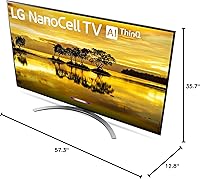
  • Dimensions: With stand, the unit measures 57.3″ wide, 35.7″ tall, and 12.8″ deep; without stand, depth reduces to 2.5″.
  • Weight: Weighs 61.9 lbs with the stand attached and 58.2 lbs without, requiring two people for safe handling during installation.
  • Included Items: Package includes the TV, power cable, Magic Remote with batteries, quick start guide, and an electronic manual accessible via the TV.
  • Launch Year: Originally released in April 2019 as part of LG's upper-mid-range NanoCell lineup, positioned below the brand's OLED series.
  • Model Number: The exact model designation is 65SM9000PUA, which identifies the 65-inch North American variant of the SM9000 NanoCell series.

Related Reviews
LG SM8600PUA 65-inch NanoCell 4K Smart TV
78%
81%
Picture Quality
88%
Viewing Angles
58%
Contrast & Black Levels
84%
Motion & Refresh Rate
77%
HDR Performance
More
LG 65UA7700P 65-inch 4K Smart TV
83%
92%
Picture Quality
72%
Sound Quality
88%
Ease of Setup
85%
Smart Features / WebOS
90%
Gaming Performance
More
LG UN7300 65-inch 4K UHD Smart TV
73%
74%
Picture Quality
88%
Smart Platform (webOS)
91%
Magic Remote Usability
83%
Viewing Angles
61%
HDR Performance
More
LG NanoCell 90 55-inch 4K Smart TV
76%
78%
Picture Quality
82%
Color Accuracy
61%
Contrast & Black Levels
88%
Gaming Performance
81%
Motion Handling
More
LG OLED B4 65-inch Smart TV
81%
93%
Picture Quality
96%
Contrast & Black Levels
91%
Gaming Performance
82%
Smart TV Platform (WebOS 24)
58%
Audio Performance
More
LG SM8600PUA 49-inch NanoCell 4K Smart TV
78%
82%
Picture Quality
86%
Color Accuracy
84%
Viewing Angles
71%
HDR Performance
88%
Smart TV Platform
More
LG UQ7570 65-inch 4K Smart TV
78%
82%
Picture Quality
61%
Refresh Rate & Motion Handling
88%
Smart TV Platform (webOS 22)
86%
Value for Money
53%
Audio Quality
More
LG 65UK6300PUE 65-inch 4K Smart TV
71%
71%
Picture Quality
83%
Viewing Angles
58%
Backlight Uniformity
62%
Motion Handling
67%
HDR Performance
More
LG QNED85 65-inch Mini-LED Smart TV
79%
91%
Picture Brightness
88%
Color Accuracy
67%
Contrast & Black Levels
84%
HDR Performance
82%
Gaming Performance
More
LG 65UK6090 65-inch 4K HDR Smart LED UHD TV
85%
92%
Picture Quality
89%
Smart Features
88%
Ease of Setup
85%
Design & Aesthetics
90%
HDR Performance
More

FAQ

The 120Hz panel is native, not interpolated, so it does make a real difference for fast-paced games and reduces motion blur compared to 60Hz sets. That said, this is a 2019 model and lacks some features that current-gen gamers expect, such as HDMI 2.1, VRR, or Dolby Vision gaming support. For casual and last-gen gaming it performs well; for PS5 or Xbox Series X users who want to take full advantage of those consoles, the port limitations are worth knowing upfront.

NanoCell and OLED are genuinely different technologies. OLED produces perfect blacks because each pixel generates its own light and can switch off completely, while NanoCell is still a backlit LED panel — just a more refined one. If dark-room contrast and black levels are your priority, OLED wins clearly. But the LG Nano 9 65-inch 4K NanoCell TV holds its own in bright rooms, offers wider viewing angles than most LED sets, and typically comes at a lower price than comparable OLEDs, especially on the used market.

AirPlay 2 works reliably on this set without any additional hardware required — just make sure the TV and your Apple device are on the same Wi-Fi network. Mirroring and casting from iPhone or Mac is responsive for video and audio content. It is not ideal for low-latency gaming mirroring, but for streaming video, music, and photos it performs as expected.

You need a separately purchased WiSA USB transmitter dongle to enable wireless speaker connectivity — it does not come in the box. Once you have it, the system supports up to 5.1-channel WiSA-certified speaker setups. If you were hoping for a plug-and-play wireless surround sound experience out of the box, this is a legitimate extra step and added cost that LG does not make obvious in the product description.

LG has historically provided webOS updates for several years after a model's launch, but support for 2019 models is not guaranteed to continue indefinitely. As of recent years, app availability and security patches for older webOS versions have become increasingly limited. Most major streaming apps — Netflix, Disney Plus, YouTube, and Prime Video — still function, but you may eventually find that some newer apps or features are unavailable on an older firmware version.

Most owners adapt to the Magic Remote quickly. It functions both as a traditional point-and-click remote and as a motion-based pointer, which you can use like a mouse on the webOS interface. The shortcut buttons for popular streaming apps are genuinely useful. If you are used to a standard linear remote, the motion pointer feels slightly unusual at first, but most users find it intuitive within a day or two.

Yes, the Nano 9 Series is wall-mount compatible. The VESA mounting pattern for the 65-inch model is 300 x 200mm. Make sure the mount you purchase is rated for a display of at least 61 to 65 lbs, as the panel without the stand weighs approximately 58 lbs. A mount rated for 100 lbs or more is a safer choice.

Dolby Vision support is the highlight here — services like Netflix and Apple TV Plus that stream in Dolby Vision will look noticeably more detailed and dynamic on this panel compared to standard HDR10. The Full Array Dimming helps by controlling brightness zones independently, though bright highlights against very dark backgrounds can still produce mild blooming. For the majority of HDR streaming content in a normally lit room, the results are genuinely impressive.

The 40W 2.2-channel system with Dolby Atmos decoding is better than average for a built-in TV speaker setup, and many owners are satisfied using it as their primary audio source for casual viewing. For movies and anything where audio immersion matters, a soundbar or external speaker system will make a meaningful improvement. It is not a speaker you need to replace immediately, but it is also not a substitute for a proper audio setup in a dedicated home theater room.

A few things are worth verifying. First, check for backlight uniformity issues — display a solid gray or white screen and look for bright patches or clouding around the edges or corners. Second, test all four HDMI ports with an active device. Third, confirm the Magic Remote is included and the USB dongle slot is undamaged if WiSA was previously used. Finally, look for long-term owner reviews rather than first-impression feedback, since a 2019 panel that has been used heavily for five-plus years may show aging in brightness consistency or backlight performance.