Overview

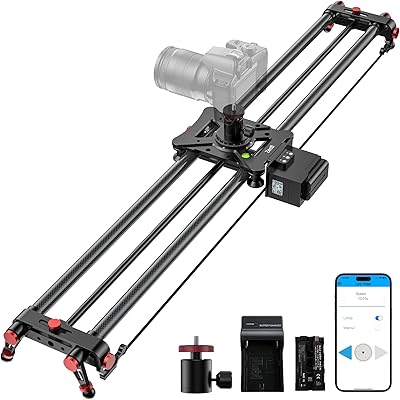
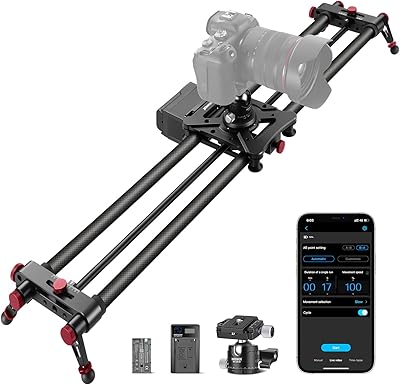
The KONOVA P1 S2 60cm Motorized Camera Slider is a mid-range carbon fiber system built for videographers and content creators who need automated motion without hauling a full crew. Unlike a basic passive track, this is an integrated system — the P1 carbon rail and S2 motor unit work together as one cohesive setup. The 60cm travel length hits a practical sweet spot: long enough for meaningful camera movement, compact enough to fit in a carry bag and survive location shoots. With 55 ratings averaging 3.8 stars, it sits in honest territory — respected by the right users, questioned by others. This is a capable, specialized tool, not something you hand to a beginner.

Features & Benefits

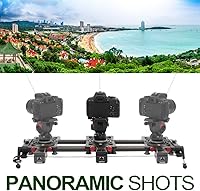
The carbon fiber rail keeps the entire rig at around 3kg — light enough to carry to a rooftop or a remote overlook without dreading the walk. The S2 motor is the real draw here. It operates quietly enough to run during live audio recording, and its speed range — from a near-standstill crawl to 42.8mm per second — gives you control over slow-burn timelapses and real-time cinematic moves alike. Two distinct panning modes expand its creative range: inward for parallax effects and outward for panoramic sweeps. Horizontal payload tops out at 5kg, covering most mirrorless and DSLR bodies comfortably, though diagonal payload drops sharply to 1.5kg — a real constraint if you ever shoot on an angle.

Best For

This carbon fiber slider system makes the most sense for solo filmmakers who need repeatable, hands-free motion without a second operator on set. Timelapse photographers — especially those shooting architecture, landscapes, or product work — will get motorized precision that manual sliders simply cannot match. Content creators running mirrorless setups under 5kg are in the ideal zone. The panning capability also makes it a strong pick for anyone building parallax or panorama sequences where consistent speed matters across multiple takes. That said, this is not the right tool for heavy cinema rigs, and vertical motion is not part of its design. Know what you need before you commit.

User Feedback

At 3.8 stars across 55 reviews, the KONOVA P1 S2 earns a measured endorsement. Buyers who matched it to the right setup praise the quiet motor performance and smooth travel, noting the build quality holds up well for the price tier. Where things get complicated: the control system has a genuine learning curve, and some users report drift or backlash at the lowest speed settings — worth knowing if precision timelapse is your primary goal. The diagonal payload cap frustrates shooters with heavier glass. One process worth flagging: KONOVA asks for your camera model to send a matching shutter cable, which is considerate in theory but can feel like friction before you even shoot your first frame.

Pros

  • The carbon fiber rail keeps the full system under 3kg, making it genuinely portable for location shoots.
  • Motor noise is low enough to run during live audio recording in quiet interior environments.
  • A speed range from 0.7mm to 42.8mm per second covers both slow timelapse and real-time cinematic moves.
  • Built-in inward and outward panning adds parallax and panoramic shot modes with no extra hardware.
  • The 5kg horizontal payload comfortably handles most mirrorless and DSLR bodies with standard lenses.
  • Repeatable, programmable motion means consistent slider passes across multiple takes — critical for compositing.
  • The included carry bag makes the system ready to pack without an immediate additional purchase.
  • KONOVA matches and ships the correct shutter release cable to your camera model, reducing compatibility guesswork.
  • At its price tier, this motorized slider offers motor-driven panning capabilities that would cost significantly more in dedicated cinema tools.

Cons

  • The diagonal payload limit of 1.5kg rules out angled mounting for almost any real-world camera and lens combination.
  • The control interface has a steep learning curve that first-time users consistently flag as a frustration.
  • Some users report subtle drift and backlash at the lowest speed settings, which can compromise precision timelapse frames.
  • The carry bag padding and zipper quality fall noticeably short of the hardware they are meant to protect.
  • The shutter cable matching process requires extra communication with KONOVA and can delay a complete, ready-to-shoot setup.
  • Switching between panning modes mid-shoot is not fluid, which can interrupt momentum on fast-paced productions.
  • The printed manual does not adequately bridge the gap for new users setting up the system for the first time.
  • Customer support response times appear inconsistent based on buyer reports, with some users waiting longer than expected.
  • Vertical motion is entirely outside the design scope, limiting the system to a single axis of movement.

Ratings

The KONOVA P1 S2 60cm Motorized Camera Slider has been scored below by our AI system after analyzing verified buyer reviews from global markets, with spam, bot-submitted, and incentivized feedback actively filtered out before any score was calculated. The results reflect a realistic picture of where this carbon fiber slider system genuinely delivers and where it falls short — no score has been softened to protect the brand. If you are weighing this motorized slider against alternatives, these ratings are designed to surface exactly the tradeoffs that matter to working videographers and timelapse shooters.

Motor Smoothness
84%
The S2 unit earns consistent praise for its quiet, fluid travel — users running timelapse sequences in quiet environments report that the motor noise is negligible, even during live audio recording. At moderate speeds, the motion is notably consistent, which matters when you need identical passes across multiple takes.
At the lowest end of the speed range, a small but vocal group of users report subtle drift and occasional backlash, which can ruin a long-exposure timelapse frame if left unchecked. It is not a universal issue, but shooters demanding absolute precision at near-zero speeds should be aware.
Build Quality
79%
21%
The carbon fiber rail feels solid and noticeably rigid for its weight class — users who have owned cheaper aluminum sliders tend to remark on the difference immediately. The overall fit of the system inspires confidence on location, where flexing or rattling rails are a real problem.
Some buyers note that the connection points between the motor unit and the rail feel less refined than the rail itself, with minor play that becomes apparent under heavier loads. The carry bag, while included, has drawn criticism for thin zippers and loose padding that do not quite match the quality of the hardware inside.
Ease of Setup
61%
39%
Once a user has gone through the initial setup process two or three times, the system comes together reasonably quickly on location. Experienced videographers familiar with motorized rigs report that the learning curve levels off after a few shooting sessions.
Out of the box, the control system is not intuitive, and the manual does not close the gap well. First-time users frequently report spending significant time troubleshooting before getting a clean, controlled move — a real problem if you are setting up on a deadline or in the field without internet access.
Timelapse Performance
86%
This is arguably where the motorized slider performs most convincingly. The low minimum speed of 0.7mm per second allows for extremely slow, almost imperceptible camera movement across long timelapse sequences, producing results that are difficult to replicate with manual sliders at any price.
The control interface for programming timelapse intervals and durations has a steeper learning curve than the physical setup itself. Users who need quick, on-the-fly timelapse adjustments in changing light conditions may find the programming workflow slows them down more than expected.
Payload Capacity
67%
33%
The 5kg horizontal payload is genuinely workable for the majority of mirrorless and mid-range DSLR users — a Sony A7 series body with a standard zoom lens sits well within that ceiling, and the slider handles the load without audible strain from the motor.
The diagonal payload limit of 1.5kg is a hard wall that catches users off guard. Anyone shooting on an angled surface or rigging a heavier telephoto lens will hit this ceiling quickly, and the product listing does not foreground this limitation as prominently as it should.
Carbon Fiber Rail Quality
82%
18%
The rail itself is one of the stronger elements of the package. It resists flex under load, the surface finish keeps the carriage moving consistently, and the overall weight saving versus aluminum rails of comparable length is meaningful when packing for a remote shoot.
A few users report that the rail surface shows scuff marks more readily than expected after moderate field use. While this is cosmetic rather than functional, it is a minor disappointment for a component that is otherwise well-constructed.
Panning Modes
74%
26%
Having both inward and outward panning built into a single unit is a genuine creative advantage. Videographers who shoot real estate walkthroughs or product reveals find the panoramic mode particularly useful, while the parallax capability adds a cinematic depth effect that requires no additional hardware.
Switching between panning modes is not as fluid as it could be, and the range of panning adjustment is somewhat limited compared to dedicated pan-tilt systems. Users expecting broadcast-level pan control will find this satisfying but not exceptional.
Portability
77%
23%
At roughly 3kg for the full system, this carbon fiber slider system is light enough to fit into a camera backpack alongside a body and two lenses without tipping the load into uncomfortable territory. The included carry bag makes transport straightforward for day trips and studio use.
The carry bag itself is the weak link in the portability story — the padding is thin, the zippers feel underbuilt, and a few users have reported the bag showing wear or seam stress after regular travel use. For air travel or rough handling, a third-party case is worth considering.
Speed Range Versatility
81%
19%
The breadth of the speed range — from 0.7mm per second up to 42.8mm per second — means the same unit can serve a slow architectural timelapse in the morning and a dynamic real-time video move in the afternoon. That versatility in a single motor unit is practically useful.
Dialing in a precise intermediate speed requires patience with the control interface. Users report that jumping between very different speed settings mid-shoot is not as quick as spinning a physical dial, which can interrupt creative momentum on fast-paced shoots.
Compatibility
73%
27%
Support for DSLR, mirrorless, and even smartphone mounting gives the system flexibility across different production setups. The brand's offer to match and send a specific shutter release cable based on your camera model is a thoughtful touch that shows attention to real-world compatibility issues.
The cable-matching process — where you must notify KONOVA of your camera model to receive the correct RC-02 shutter cable — is an unusual friction point that some buyers find confusing or frustrating, especially if they discover the need mid-order or after delivery.
Noise Level
88%
Multiple users specifically call out the motor noise as impressively low for a motorized system in this category. Running the slider during documentary-style interviews or in quiet interior spaces is reported to be fully viable without picking up motor hum on the audio track.
At higher speed settings, a faint mechanical sound becomes more noticeable — not disruptive in most scenarios, but audible enough in very quiet environments that a few users recommend keeping speeds moderate when recording dialogue or ambient sound.
Value for Money
71%
29%
For solo videographers who actually use the timelapse and parallax features regularly, the system delivers enough creative output to justify its position in the mid-range market. The carbon fiber construction and dual motor modes would cost considerably more in a purpose-built cinema tool.
Buyers who primarily want basic lateral movement and do not need the motorized panning capabilities may find the value proposition harder to defend. The setup complexity and the bag quality also chip away at the sense that every dollar in the purchase price was well allocated.
Customer Support
69%
31%
Users who have engaged KONOVA directly — primarily around the shutter cable matching process — generally report responsive communication and a willingness to resolve issues. The proactive cable-matching offer itself suggests the brand is aware of compatibility pitfalls and tries to address them.
Support responsiveness appears inconsistent based on buyer reports, with some users describing quick resolution and others waiting longer than expected for replies. The reliance on email communication for the cable process can feel slow compared to brands that resolve compatibility questions automatically at checkout.
Repeatability of Motion
83%
One of the core advantages of a motorized system over a manual slider is the ability to repeat identical moves across multiple takes — and this unit delivers on that for most users. Product photographers who shoot focus stacks or composites particularly benefit from consistent, programmable travel.
Minor variations between passes have been reported by a subset of users, particularly at very low speeds where the motor is more sensitive to surface irregularities. For single-take shooting this is rarely an issue, but for compositing workflows where frame-perfect repeatability is required, it is worth testing carefully.

Suitable for:

The KONOVA P1 S2 60cm Motorized Camera Slider is built for solo videographers and content creators who need automated, repeatable camera movement without relying on a second operator. Timelapse photographers will find it particularly well-matched to their workflow — the motor's near-crawl minimum speed allows for the kind of imperceptibly slow motion across long exposures that manual sliders simply cannot replicate consistently. Architecture and product photographers who shoot in controlled environments will appreciate the dual panning modes, which open up parallax and panoramic shot types without any additional hardware investment. Content creators running mirrorless cameras or mid-range DSLRs under 5kg are squarely in the intended use case, and the carbon fiber rail keeps the total carry weight low enough that this system fits into a real location kit rather than sitting in a studio permanently. If you are a working one-person production shooting real estate walkthroughs, short films, or branded content and you want cinematic slider motion without hiring additional crew, this motorized slider is a genuinely practical choice.

Not suitable for:

The KONOVA P1 S2 60cm Motorized Camera Slider is not the right tool for every shooter, and understanding where it falls short can save you a frustrating return. Anyone running a heavier cinema camera body with a large lens — think cine-style rigs approaching or exceeding the 5kg horizontal payload ceiling — will find the system stressed, and the 1.5kg diagonal payload cap rules out angled mounting entirely for most real setups. Videographers who need vertical motion or complex multi-axis moves will hit a hard wall; this is a horizontal slider and nothing more. Beginners who expect to pull the system out of the box and immediately start shooting will likely be disappointed — the control interface has a real learning curve that requires patience and time investment before it becomes second nature in the field. Shooters who need the shutter release cable immediately should also factor in KONOVA's cable-matching process, which requires communicating your camera model and waiting for the correct RC-02 to be confirmed or shipped, adding a step that some buyers find unexpectedly slow. If you already own a basic passive slider and are simply looking for an entry-level motorized upgrade on a tight budget, this carbon fiber slider system sits at a price point and complexity level that may exceed what your current projects actually demand.

Specifications

  • Rail Material: The rail is constructed from carbon fiber, providing a high rigidity-to-weight ratio that keeps the system responsive under load without adding unnecessary bulk.
  • Motor Unit: The S2 motorized system drives the carriage and panning functions, operating quietly enough for use in environments where ambient sound is being recorded simultaneously.
  • Slider Length: The travel length is 60cm (23.6″), offering meaningful camera movement for studio and location shoots without pushing the system into unwieldy territory.
  • Max Speed: The motor reaches a maximum linear travel speed of 42.8mm per second, suitable for dynamic real-time video moves requiring visible, continuous motion.
  • Min Speed: The minimum speed is 0.7mm per second, slow enough to produce imperceptible motion across extended timelapse sequences shot over many minutes or hours.
  • Horizontal Payload: The system supports a maximum horizontal payload of 5kg (11 lbs), accommodating most mirrorless and mid-range DSLR camera and lens combinations.
  • Diagonal Payload: When mounted at an angle, the maximum supported payload drops to 1.5kg (3.3 lbs), a significant constraint for shooters planning to use the slider on inclined surfaces.
  • System Weight: The complete system weighs approximately 3kg, making it portable enough to include in a standard camera backpack alongside other shooting essentials.
  • Product Dimensions: The unit measures 28.35 x 9.45 x 3.54 inches, reflecting the footprint of the full assembled rail and motor system as packaged.
  • Item Weight: The packaged item weight is 6.6 lbs (approximately 3kg), consistent with the carbon fiber construction keeping overall mass low relative to comparable aluminum systems.
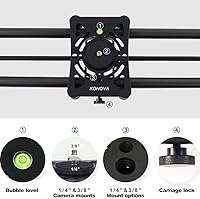
  • Compatible Devices: The system is designed for use with DSLR cameras, mirrorless cameras, and smartphones, covering the majority of current consumer and prosumer shooting platforms.
  • Shot Modes: Four distinct shot modes are supported: timelapse, live motion, inward parallax panning, and outward panoramic panning, all within the single S2 motor unit.
  • Shutter Release: An RC-02 shutter release cable is included or sourced by KONOVA based on the buyer's camera model, enabling automated shutter triggering during timelapse sequences.
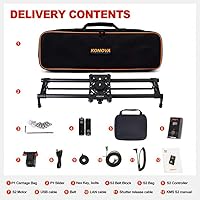
  • Included Accessories: The package includes a carry bag for transport and storage, along with the matched RC-02 shutter release cable appropriate to the buyer's specified camera.
  • Brand & Model: The system is manufactured by KONOVA and carries the model designation P1 S2, where P1 refers to the carbon rail series and S2 to the motorized drive unit.
  • Color: The system is finished in black across both the carbon fiber rail and the S2 motor housing, presenting a consistent, professional appearance on set.
  • Power Source: The S2 motor unit requires external power to operate; buyers should confirm battery or adapter requirements based on their intended shooting duration and location conditions.
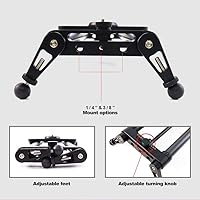
  • Panning Direction: The motor supports both inward panning for parallax effects and outward panning for panoramic sweeps, with the panning axis controlled through the S2 unit directly.

Related Reviews
GVM Motorized Camera Slider 31″
86%
92%
Smoothness of Motion
85%
App Control Experience
90%
Portability and Weight
88%
Build Quality and Durability
84%
Ease of Setup and Use
More
GVM 120cm Motorized Carbon Fiber Camera Slider
79%
88%
Motion Smoothness
83%
Build Quality
67%
App Control & Connectivity
91%
Shooting Mode Versatility
86%
Portability & Weight
More
Zecti ZT-706 47″ Motorized Camera Slider
77%
88%
Motion Smoothness
83%
Build Quality & Materials
67%
App Control & Connectivity
81%
Load Capacity & Stability
84%
Time-Lapse Performance
More
GVM G5-J120D Motorized Camera Slider
76%
88%
Build Quality
84%
Motion Smoothness
66%
Remote Controller Usability
83%
Load Capacity
81%
Shooting Modes Versatility
More
NEEWER ER1-100 100cm Motorized Camera Slider
70%
78%
Motor Smoothness
61%
App Control & Connectivity
66%
Build Quality & Materials
71%
Ease of Setup
74%
Value for Money
More
NEEWER ER1-120 120cm Motorized Camera Slider
79%
88%
Motion Smoothness
91%
Noise Level
84%
Build Quality
61%
App Control & Interface
79%
Remote Control (RT-08)
More
NEEWER ER1-80 80cm Motorized Camera Slider
82%
91%
Motion Smoothness
83%
App Control & Usability
88%
Build Quality
89%
Motor Noise Level
61%
App-to-Remote Parity
More
3D-PAS P1 1080P HD Spy Camera 64GB
86%
92%
Portability
89%
Video Quality
88%
Ease of Use
85%
Storage Capacity
75%
Battery Life
More
OKIOCAM S2 Pro
OKIOCAM S2 Pro
79%
88%
Image Quality
84%
Build Quality
91%
Ease of Setup
79%
OKIOPoint Smart Pointer
62%
Software Experience
More
eufy Security E340 Floodlight Camera
78%
88%
Image Clarity & Resolution
91%
Night Vision & Floodlight Performance
84%
360° PTZ Coverage
79%
AI Detection Accuracy
58%
Installation Experience
More

FAQ

For most interior and controlled environments, yes — users consistently report that the S2 motor produces very little noise during operation. That said, at higher speed settings there is a faint mechanical sound, so if you are recording dialogue in an extremely quiet space, it is worth doing a quick audio test before committing to a full shoot.

Most mirrorless bodies — Sony A7 series, Fujifilm X-T series, Canon R series — paired with a standard zoom or prime lens will sit comfortably within the 5kg horizontal limit. Where people run into trouble is with larger telephoto lenses or heavier DSLR bodies paired with fast glass, so weigh your full rig before assuming it will be fine.

The diagonal payload cap is 1.5kg, which applies any time the slider is mounted on an angled surface rather than perfectly flat. In practice, this rules out most real camera and lens combinations for angled use — it is a genuine constraint, not a footnote. If you plan to shoot on inclines regularly, this is a dealbreaker worth taking seriously before purchasing.

KONOVA asks you to let them know which camera model you are using so they can match and include the correct RC-02 cable for your shutter port. If you do not specify, they will either reach out or send a default version. It is an unusual step compared to most accessories, but it is their way of handling the fact that different cameras use different connector types. Just make sure you communicate your camera model when ordering to avoid delays.

It genuinely handles both. The wide speed range — from 0.7mm per second up to 42.8mm per second — means you can dial in near-imperceptible timelapse motion or run dynamic real-time video moves with the same unit. Most buyers find timelapse to be where the motorized control really shines, but live video moves are fully viable within the system's payload limits.

Honest answer: it takes time. The physical assembly is manageable, but the control interface for programming speed, panning mode, and timelapse intervals has a learning curve that catches a lot of first-time users off guard. The manual does not fully bridge the gap, so budget a few sessions of trial and error before you rely on this system for a paid shoot.

No — this is a horizontal slider only. The S2 motor handles lateral travel and panning, but there is no vertical axis or tilt capability built into the system. If you need multi-axis motion, you would need a separate pan-tilt head or a different rig entirely.

It does the job for light use and studio transport, but it is one of the more commonly criticized elements of the package. The padding is thin and the zippers feel underbuilt for a system this size. If you plan to travel with this motorized slider regularly or check it in baggage, a dedicated hard case or a better-padded third-party bag is a worthwhile investment.

Smartphones are listed as compatible, and with a standard cold shoe or phone mount adapter, it works fine for mobile content creators. The payload limit is obviously not a concern with a phone, but the motorized panning and timelapse features are equally accessible — so if you shoot high-quality timelapse content on a phone, this carbon fiber slider system is a legitimate upgrade.

At moderate to higher speeds, the motion is generally smooth and consistent. The issue some users flag is at the very low end of the speed range — near or at the 0.7mm per second minimum — where a small subset of buyers report subtle drift or backlash between passes. For most timelapse work this is not a significant problem, but if your workflow requires frame-perfect repeatability across many identical passes, it is worth testing carefully before a critical shoot.