Overview

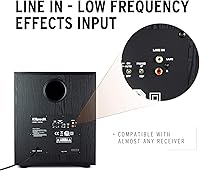
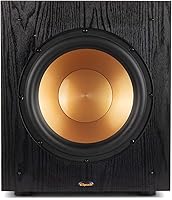
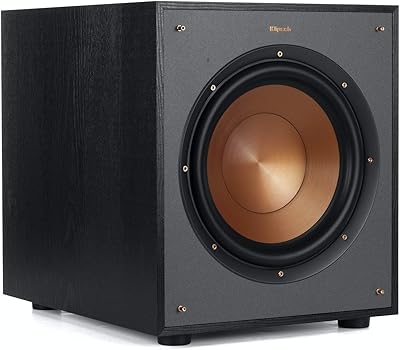
The Klipsch Sub-100 10-inch Subwoofer sits at the entry point of Klipsch's Synergy Black Label lineup, offering a solid balance between real-world performance and a practical price. Klipsch has long built a reputation for efficient, dynamic sound, and this Klipsch subwoofer carries that DNA without asking you to spend audiophile money. It works well in small-to-medium rooms — living rooms, dedicated theater spaces, or tighter apartments. One thing worth knowing upfront: it is not plug-and-play. This unit requires an AV receiver, processor, or pre-amp to operate, so factor that into your setup plans before purchasing.
Features & Benefits

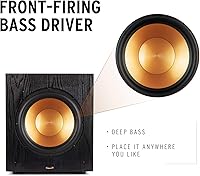
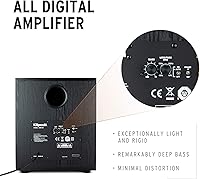
The Cerametallic woofer at the heart of the Sub-100 uses spun copper construction to stay rigid under heavy excursion, which keeps distortion low even when the driver is working hard. The all-digital amplifier pushes 150 watts continuously, but the 300-watt dynamic headroom is where this sub really shows up — during an on-screen explosion or a deep cinematic rumble, that extra headroom delivers clean, sudden impact rather than a compressed thud. The front-firing orientation means you can push it close to a wall or tuck it into an entertainment unit without choking the output. The removable grille and understated black finish help it blend into most room setups without drawing attention.

Best For

The Sub-100 is a natural fit for anyone building or upgrading a home theater system on a realistic budget. It pairs particularly well with Klipsch bookshelf or satellite speakers in a 2.1 or 5.1 configuration — the house sound stays consistent across the lineup. If you live in an apartment or a room where bass buildup along back walls has been a problem, the front-firing design gives you more control over placement. That said, this Klipsch subwoofer is less suited to large, open-plan spaces or listeners who prioritize deep, reference-level low-end extension for music. Think practical home theater use, not critical listening sessions.

User Feedback

Most buyers arrive at two consistent takeaways: the bass is tight and punchy rather than boomy, and the cabinet feels solid with no cheap flex. Setup experience gets high marks — integrating with an AV receiver is reportedly straightforward, with no unusual compatibility headaches. Where criticism surfaces, it clusters around larger rooms, where the Sub-100 can feel like it runs short on authority during demanding content. A handful of users report a low-level hum, typically traced back to grounding differences between components rather than a fault in the unit itself. Overall, value perception skews strongly positive — most buyers feel the performance punches above what they paid.

Pros

  • Tight, controlled bass response with minimal boominess makes it easy to dial in for movie watching.
  • The front-firing driver allows flexible placement near walls or inside entertainment units without degrading output.
  • 300 watts of dynamic headroom delivers clean, sudden impact during action scenes and cinematic effects.
  • Straightforward integration with most AV receivers means setup rarely takes more than a few minutes.
  • Solid cabinet construction with no flex or rattle, even at higher volume levels.
  • The removable grille gives you the option to run it open-faced or covered depending on your room aesthetic.
  • Pairs especially well with Klipsch bookshelf and satellite speakers for a consistent house sound.
  • The all-digital amplifier runs efficiently without generating noticeable heat during extended use.
  • Understated black finish blends into most living spaces without looking out of place.
  • Most buyers report the real-world performance exceeds what they expected given the asking price.

Cons

  • Requires an AV receiver or pre-amp to function — not suitable for simple, standalone setups.
  • The Sub-100 may struggle to fill larger rooms with satisfying bass pressure at reference listening levels.
  • Sub-bass extension below 30 Hz is limited, which matters for music-focused listening or bass-heavy genres.
  • Some users report a low-level hum that can require troubleshooting grounding issues between components.
  • At 25.5 pounds, it is not the easiest unit to reposition frequently once placed.
  • No wireless connectivity option, so cable management is a consideration in cleaner room setups.
  • Limited warranty coverage may concern buyers who expect longer protection on powered speaker equipment.
  • Volume and crossover controls are basic — not ideal for users who want granular tuning options.

Ratings

Our AI has analyzed thousands of verified global user reviews for the Klipsch Sub-100 10-inch Subwoofer, actively filtering out incentivized, bot-generated, and spam submissions to surface what real buyers actually experienced. The scores below reflect a transparent picture of where this sub genuinely delivers and where it falls short — no cherry-picking, no spin. Strengths and frustrations are weighted equally so you can make a fully informed decision.

Bass Performance
83%
For movies and TV, the Sub-100 consistently earns praise for its tight, punchy low-end that adds real weight to action sequences and cinematic effects without turning muddy. Users setting it up in dedicated theater rooms or mid-sized living spaces report that explosions, rumbles, and soundtrack bass hit with satisfying impact.
Buyers coming from larger or more powerful subs notice the extension starts to soften below 30 Hz, which becomes apparent in bass-heavy music genres or very large rooms. It punches well for its class, but it is not going to rattle walls in a spacious open-plan space.
Build Quality
88%
The cabinet feels dense and well-constructed — users consistently note there is no hollow resonance when you knock on it and no flex in the panels even when the driver is working hard. At 25.5 pounds, it has the kind of heft that signals proper internal bracing rather than just deadweight.
A small number of users report minor cosmetic imperfections on the cabinet finish out of the box, mainly around edges and corners. Nothing structural, but for a product positioned as a quality brand entry point, the occasional QC inconsistency does surface in longer-term feedback.
Value for Money
91%
The most recurring theme across buyer reviews is genuine surprise at how much performance the Sub-100 delivers relative to its price tier. Users who shopped around before buying regularly comment that competing options at the same price felt noticeably cheaper in build or thinner in output.
The value equation shifts if you are buying into the ecosystem without an existing AV receiver, since the required additional hardware investment adds significantly to the true total cost of ownership. For first-time buyers who factor that in, the value proposition looks less clear-cut.
Setup & Integration
86%
Users with an existing AV receiver in their chain report that getting the Sub-100 up and running takes under 15 minutes — connect the RCA cable, run your receiver's auto-calibration, and it is essentially done. The straightforward wiring approach is frequently cited as a strength compared to more finicky wireless or DSP-heavy alternatives.
The mandatory AV receiver dependency catches a meaningful number of buyers off guard, particularly those upgrading from soundbar setups who assume it will work standalone. This single requirement drives a disproportionate share of the negative reviews and returns.
Placement Flexibility
87%
The front-firing driver design is a practical win that buyers with smaller rooms or apartments genuinely appreciate. Placing it flush against a wall or inside an entertainment cabinet does not compromise output the way rear-ported or down-firing designs often do in tight corners.
Despite the placement advantages, users in rooms with parallel hard surfaces still encounter some room-mode bass buildup that requires careful positioning to resolve. The sub lacks any built-in room correction, so those with acoustically challenging spaces are relying entirely on their receiver to compensate.
Dynamic Headroom
84%
The gap between 150 watts continuous and 300 watts dynamic output is noticeable in real use — during sudden loud bass transients like cinematic explosions or percussive music drops, the sub responds cleanly without obvious compression or distortion. That responsiveness makes movie watching noticeably more engaging.
Sustained heavy output at high volumes over extended sessions can cause the amplifier to throttle back slightly to manage heat, which some users notice as a subtle loss of punch during very long, loud viewing sessions. It is not a common complaint, but it surfaces in detailed long-term reviews.
Noise & Hum
67%
33%
The majority of users report a completely clean, quiet noise floor once the sub is properly integrated into their system. When the setup is working correctly — good cables, matched components, clean AC power — the Sub-100 sits silent between bass events without any audible hiss or hum.
A notable minority of reviewers describe a persistent low-level hum that proves frustrating to diagnose and resolve. In most documented cases it traces back to grounding differences or receiver compatibility quirks rather than a unit defect, but the troubleshooting process is not intuitive for non-technical buyers.
Driver Quality
85%
The spun copper Cerametallic cone is one of the more premium material choices at this price point, and users who dig into the technical side of their purchase appreciate that it contributes to cleaner output at higher excursion levels compared to standard paper or poly cones.
While the driver handles home theater content cleanly, critical music listeners note that the character of the Cerametallic cone leans toward impact and efficiency rather than the warmth or texture that some audiophile-leaning subwoofer designs prioritize.
Room Size Suitability
72%
28%
In rooms up to roughly 300 to 350 square feet, the Sub-100 holds its own comfortably and delivers satisfying bass pressure without needing to be pushed to its limits. Users in apartments and dedicated smaller home theater rooms consistently land positive outcomes.
In open-plan spaces or rooms exceeding 400 square feet, users report the sub starts to feel underpowered during demanding content — there is simply not enough air displacement to maintain bass authority at appropriate listening levels across the full room.
Aesthetic Design
81%
19%
The understated black finish and clean cabinet lines earn consistent positive remarks from users who want their audio gear to blend into the room rather than dominate it. The optional grille adds another layer of visual flexibility for different room styles.
The design is conservative to the point of being plain, which suits most buyers but leaves those who prefer a more distinctive or premium visual statement underwhelmed. There is no variant finish option, so the all-black look is the only choice regardless of your decor.
Music Listening Performance
69%
31%
For general music playback — rock, pop, acoustic, film scores — the Sub-100 adds a satisfying low-end foundation that casual listeners genuinely enjoy. It integrates well enough with main speakers that most users do not notice an obvious handoff point at the crossover.
Dedicated music listeners, particularly those into electronic, hip-hop, or orchestral recordings, find the sub-bass extension insufficient for the kind of low-frequency texture and depth those genres demand. The Sub-100 is clearly optimized for home theater dynamics, not music reproduction.
Long-term Reliability
79%
21%
Users who have owned the Sub-100 for a year or more generally report it continues performing without degradation in output quality or any mechanical issues. The Klipsch brand carries a reasonable reliability track record that longer-term owners reference with confidence.
The limited warranty terms leave some buyers uneasy about what is actually covered and for how long, and Klipsch's warranty support experience draws mixed reviews. A handful of long-term users also report amplifier issues appearing after the warranty window closes.
Crossover & Controls
63%
37%
For most users routing setup through an AV receiver with its own crossover management and auto-calibration, the Sub-100's onboard controls are sufficient — volume and basic tuning are accessible and functional for everyday adjustments.
Users who want granular manual control over crossover frequency, phase adjustment, or EQ directly on the unit will find the control set fairly basic. Compared to some competitors at a similar price, the onboard tuning options feel limited, pushing all the heavy lifting onto the receiver.
Unboxing & Packaging
78%
22%
The packaging is sturdy enough that the vast majority of buyers report receiving the unit without any transit damage, and the included accessories cover everything needed to get started — power cord and manual are both present and practical.
The unboxing experience is purely functional with no premium presentation touches, which some buyers feel is slightly mismatched with the brand positioning. No accessory cable is included, so a quality RCA interconnect needs to be sourced separately before setup can begin.

Suitable for:

The Klipsch Sub-100 10-inch Subwoofer is a strong pick for anyone putting together a first real home theater system in a small or medium-sized room without wanting to overspend. It fits naturally into 2.1 or 5.1 setups, especially alongside other Klipsch speakers where tonal consistency across the lineup matters. If you already own an AV receiver and simply need a capable subwoofer to round out the low end for movies and TV, the Sub-100 slots in cleanly without a complicated configuration process. The front-firing driver design is a genuine practical advantage in apartments or tighter spaces where back-wall placement tends to make bass sound bloated and uncontrolled. Buyers who value a reputable brand name, solid build quality, and punchy dynamic impact over chasing maximum low-frequency depth will find this sub punches well above its price tier.
Not suitable for:

The Klipsch Sub-100 10-inch Subwoofer is not the right tool for large, open-plan living spaces where you need consistent bass pressure across a bigger volume of air. Listeners who prioritize music reproduction — especially genres like electronic, hip-hop, or orchestral that rely heavily on sub-bass extension below 30 Hz — may find this sub falls short of what they are chasing. It is also not a plug-and-play device; without an AV receiver, processor, or pre-amp already in the chain, this unit simply will not work, and buyers who overlook that requirement consistently end up frustrated. If you are building a dedicated two-channel audiophile system focused on critical stereo listening rather than home theater, the Sub-100 is not really designed with that use case in mind. Anyone shopping for a wireless or self-powered solution that does not require additional components should look elsewhere.
Specifications

  • Driver Size: The subwoofer uses a 10-inch front-firing driver for low-frequency reproduction.
  • Driver Type: The woofer cone is constructed from spun copper Cerametallic material, which provides high stiffness and low distortion under heavy excursion.
  • Continuous Power: The built-in amplifier delivers 150 watts of continuous RMS power output.
  • Dynamic Power: Peak dynamic power output reaches 300 watts, providing headroom for sudden, transient bass demands.
  • Amplifier Type: The unit uses an all-digital amplifier design for high efficiency and accurate signal reproduction.
  • Frequency Response: The rated frequency response extends down to 20 Hz, covering the full range of cinematic low-frequency content.
  • Connectivity: The subwoofer connects via wired input and requires an external AV receiver, processor, or pre-amplifier to operate.
  • Dimensions: The cabinet measures 15.7″ deep, 12.5″ wide, and 14″ tall.
  • Weight: The unit weighs 25.5 pounds, typical for a floor-standing powered subwoofer in this class.
  • Mounting Type: The Sub-100 is designed for floor-standing placement and does not support wall or ceiling mounting.
  • Grille: The front grille is removable, allowing the user to run the driver exposed or covered based on preference.
  • Finish & Color: The cabinet features a contemporary black finish designed to integrate with modern home decor.
  • Surround Config: The unit operates as a single 1.0 subwoofer channel within a larger surround sound system.
  • Series: This subwoofer belongs to the Klipsch Synergy Black Label 100 series.
  • Included Items: The package includes the subwoofer unit, a power cord, and a printed manual.
  • Power Source: The unit is powered by a standard corded AC electrical connection.
  • Warranty: Klipsch provides a limited warranty with this product; specific terms and duration should be confirmed directly with Klipsch.
  • Manufacturer: The Sub-100 is designed and manufactured by Klipsch Group, Inc., a U.S.-based audio brand.

Related Reviews
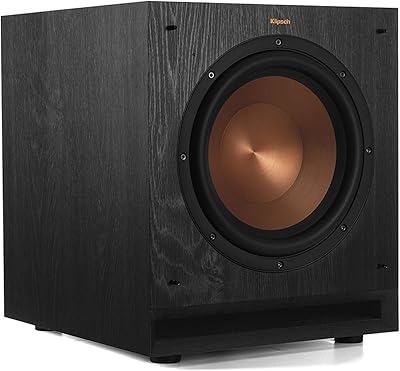
Klipsch SPL-100 10″ Powered Subwoofer
80%
93%
Bass Output & Impact
88%
Bass Clarity & Accuracy
91%
Build Quality
86%
Placement Flexibility
84%
System Integration
More
Klipsch Synergy Sub-12HG 12-Inch Subwoofer
82%
94%
Bass Performance
88%
Ease of Integration
91%
Value for Money
85%
Build Quality
72%
Size and Weight
More
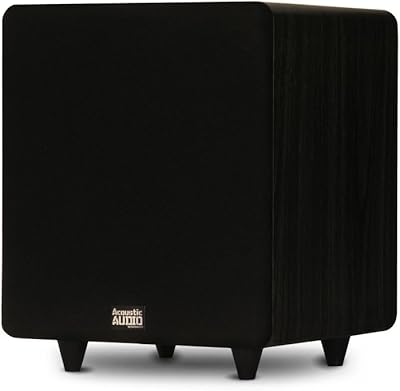
Acoustic Audio PSW400-10 10-Inch Powered Subwoofer
85%
91%
Bass Performance
88%
Ease of Setup
85%
Sound Quality
92%
Value for Money
87%
Build Quality
More
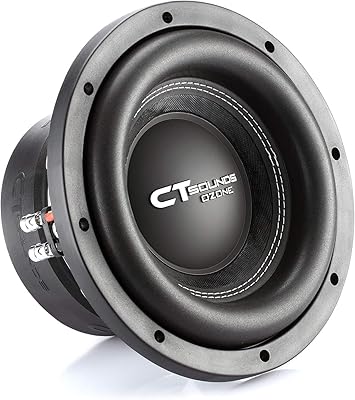
CT Sounds OZONE-10-D4 10-inch Car Subwoofer
84%
91%
Bass Performance
88%
Power Handling
92%
Value for Money
85%
Sound Clarity
86%
Build Quality
More
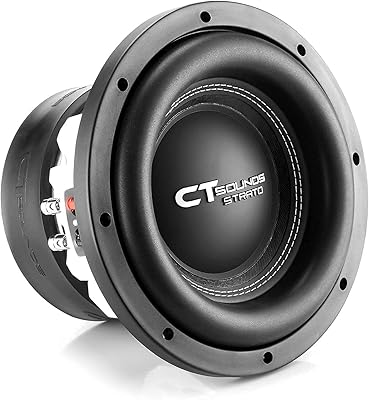
CT Sounds STRATO-10-D2 10 Inch Dual 2 Ohm Car Subwoofer
87%
91%
Bass Performance
89%
Build Quality & Durability
92%
Power Handling
88%
Sound Clarity
83%
Ease of Installation
More
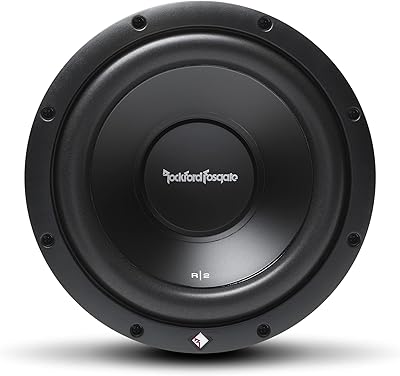
Rockford Fosgate R2D2-10 10-Inch Car Subwoofer
82%
83%
Bass Output Quality
88%
Build Quality
91%
Value for Money
86%
Installation Ease
79%
Amplifier Compatibility
More
Klipsch R-100SW 10″ Subwoofer
86%
92%
Bass Quality
89%
Sound Clarity
91%
Integration with Klipsch Systems
85%
Compactness/Size
88%
Ease of Setup
More
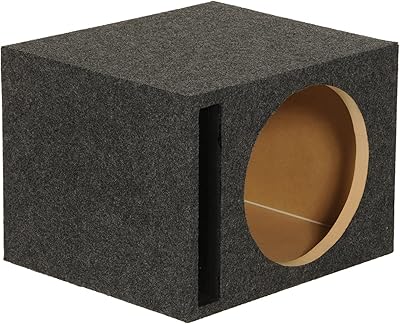
QPower QHD110V 10-Inch Vented Subwoofer Box
76%
91%
Value for Money
78%
Build Quality
84%
Bass Output
88%
Ease of Installation
69%
Driver Compatibility
More
DS18 SLC-10S 10-Inch Car Subwoofer
78%
88%
Value for Money
79%
Bass Output & Impact
83%
Build Quality
67%
Power Handling (RMS)
86%
Ease of Installation
More
Orion XTR104D 10-Inch Car Subwoofer
75%
83%
Bass Output Quality
81%
Build Quality
78%
Value for Money
61%
Power Handling Accuracy
58%
Enclosure Sensitivity
More

FAQ

You do need an AV receiver, processor, or pre-amplifier in your signal chain — the Sub-100 cannot be connected directly to a TV's standard audio outputs and function properly. This is one of the most important things to sort out before purchasing. If your TV has a dedicated subwoofer pre-out or a compatible optical setup routed through a receiver, you are good to go.

Yes, it works with speakers from other brands as long as you are routing audio through a compatible AV receiver with a subwoofer pre-out. That said, it pairs particularly well with other Klipsch speakers since the tonal character stays consistent across the lineup. With non-Klipsch speakers, some crossover tuning on your receiver may be needed to blend the sub smoothly.

The front-firing driver design is a real advantage here — because the sound comes out of the front rather than the bottom or rear, placing it close to or even against a wall does not choke the output the way a down-firing or rear-ported sub would. You still want to experiment with positioning to minimize room resonance, but tight wall placement is a realistic option with this design.

It handles movie soundtracks very well — punchy, dynamic, and responsive during action sequences. For music, it performs competently on most genres, but listeners who are deep into bass-heavy electronic music or who want to feel sub-bass frequencies below 30 Hz with full impact may find the extension a bit limited. For casual music listening alongside home theater use, it is more than adequate.

A low-level hum is occasionally reported, but it is almost always traced back to a grounding issue between the subwoofer and the connected receiver rather than a fault in the sub itself. Trying a different AC outlet, using a ground loop isolator, or checking the cable connections between components usually resolves it. If you are experiencing persistent hum right out of the box, check your receiver's sub output settings and swap the RCA cable before assuming the unit is defective.

Yes, the Sub-100 is well-suited to rooms in that range. At 150 watts continuous and 300 watts of dynamic headroom, it handles a typical living room or dedicated home theater space without straining. Where it starts to feel underpowered is in very large, open-concept rooms where the bass has more air to fill — in those cases, you would want to consider a larger or more powerful unit.

Technically, if your AV receiver has two subwoofer pre-outputs or supports a dual-sub configuration, you can run two units simultaneously. Many mid-range receivers only have a single sub output, so you would need a splitter cable in that scenario. Running two subs in a room does improve bass distribution and can smooth out dead spots, so it is worth considering if your setup allows for it.

The physical setup is simple — connect a single RCA cable from your receiver's subwoofer pre-out to the sub, plug in the power cord, and you are essentially done. The more involved part is dialing in the crossover frequency and volume level on your AV receiver, but most modern receivers walk you through this during their automatic calibration process. Overall, users report that setup is straightforward and does not require much technical background.

Removing the grille does allow the driver to operate with slightly less physical obstruction in front of it, which some listeners prefer. In practical terms, the difference in sound is subtle at best under normal listening conditions. It mostly comes down to aesthetics — leave it on for a cleaner look, or remove it if you prefer the industrial appearance of the exposed driver.

At 25.5 pounds, the Sub-100 has genuine heft to it, and the cabinet does not exhibit any flex or hollow resonance when you knock on it. The finish is clean and consistent, and the overall construction feels appropriate for a product in its price tier. It is not the kind of sub that feels fragile or like something you need to handle carefully during placement.