Overview

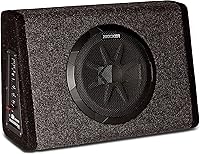
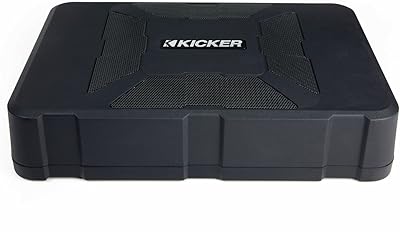
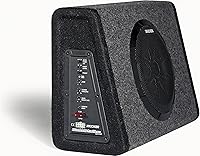
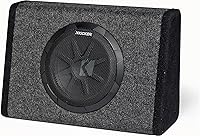
The KICKER BassStation 10″ Powered Subwoofer Enclosure is built for the driver who wants real, tangible bass without spending a weekend under the dash sorting wires. It bundles a 10-inch woofer, a purpose-built sealed enclosure, and an onboard amplifier into one tidy box — no separate amp rack, no crossover tuning from scratch. The pricing puts it squarely in mid-range territory: you're getting genuine performance without the complexity of buying separates and making everything play nice together. What really stands out during setup is the Molex quick-connect harness, which makes installation — or moving it between vehicles — about as painless as car audio gets. If your factory stereo leaves you wanting more, this all-in-one subwoofer is a sensible first step.
Features & Benefits

At 100W RMS, this powered sub enclosure produces the kind of low-end presence that genuinely transforms a vehicle cabin — kick drums hit with weight, bass lines feel physical rather than suggested. The adjustable low-pass crossover, spanning 50 to 120Hz, gives you enough range to blend it cleanly whether you're running a stock head unit or a custom aftermarket setup. There's also a subsonic filter cutting in below 25Hz to protect the driver from frequencies it can't cleanly reproduce. The KickEQ bass boost — variable up to +6dB at 40Hz — adds punch on demand, and the 0°/180° phase switch is genuinely useful when you notice bass cancellation against door speakers. The included remote bass knob is the finishing touch.

Best For

This all-in-one subwoofer makes the most sense for drivers upgrading from a factory system who have no desire to wire in a separate amplifier, run new RCA cables, and then troubleshoot why everything hums. It's also a smart pick for renters, students, or anyone who regularly swaps between vehicles — the quick-disconnect harness means you can pull it out and reinstall it without starting from zero each time. Compact sedan owners will appreciate that the enclosure, while not tiny, fits most trunks without completely sacrificing cargo space. Bass-heavy music listeners — hip-hop, EDM, trap — will get the most out of it. It's not built for competition or high-SPL applications, but for a daily driver upgrade, it delivers exactly what it promises.

User Feedback

Sitting at 4.1 stars across 75 ratings, the BassStation 10″ earns mostly positive marks — but the picture is nuanced. Buyers consistently praise the straightforward installation experience and note the bass output feels solid and satisfying for everyday listening, particularly in smaller cars. Build quality draws positive comments too. Where owners push back: the enclosure's footprint is genuinely substantial, and a few buyers mention it takes up more trunk real estate than the photos suggest. Running the KickEQ boost anywhere near maximum also draws complaints about audible distortion. The remote knob gets occasional criticism for feeling cheap. Nobody seems alarmed by long-term durability, though a handful of users mention the amp running warm during extended sessions. Value for the price comes up often — most buyers feel it was worth it.

Pros

  • Combines woofer, enclosure, and amplifier in one unit — no separate amp purchase needed.
  • The Molex quick-connect harness makes installation and removal genuinely fast and painless.
  • Works with both factory and aftermarket head units via high- and low-level inputs.
  • The adjustable crossover and subsonic filter give more tuning flexibility than most all-in-one subs offer.
  • Included remote bass knob lets you dial output up or down without touching the box.
  • 100W RMS produces satisfying, physical bass in smaller vehicle cabins like sedans and hatchbacks.
  • The 0°/180° phase switch is a practical tool for eliminating bass cancellation against door speakers.
  • Build quality is consistently praised by buyers — it feels solid and well-constructed for the price.
  • Straightforward wiring setup makes it accessible even for first-time car audio installers.
  • The BassStation 10″ holds a 4.1-star average, reflecting genuine buyer satisfaction across diverse vehicles.

Cons

  • The enclosure is larger in person than many buyers expect — trunk space takes a meaningful hit.
  • Pushing the KickEQ bass boost toward its maximum regularly causes noticeable distortion.
  • The built-in amplifier cannot be swapped out or upgraded if you want more power later.
  • The remote bass knob feels plasticky and cheap relative to the rest of the unit.
  • Amp warmth during extended listening sessions has been flagged by several long-term owners.
  • Output can feel thin and underpowered in larger vehicle cabins like full-size trucks or SUVs.
  • An all-in-one sealed design limits low-frequency extension compared to a custom-ported alternative.
  • High-level input wiring still requires locating speaker wires at the head unit — not completely tool-free.
  • Buyers who already own a quality external amp will find the integrated amplifier redundant and wasteful.

Ratings

Our AI rating engine analyzed verified global buyer reviews for the KICKER BassStation 10″ Powered Subwoofer Enclosure, actively filtering out incentivized, duplicate, and bot-generated feedback to surface what real owners actually experienced. The scores below reflect a transparent cross-section of genuine praise and recurring frustrations — nothing has been softened or omitted to protect the product's image. Where buyers consistently agreed, the scores are decisive; where opinions split, that tension is reflected honestly.

Ease of Installation
88%
The Molex quick-connect harness is the standout feature here — buyers routinely describe the wiring process as the fastest they have experienced with a car subwoofer. Even first-timers with no prior car audio experience report getting everything connected within an hour, which is a genuine accomplishment for this product category.
A handful of buyers note that running the power wire from the battery and finding a solid ground point still requires basic mechanical confidence, and a few report the harness fit feeling slightly loose in their specific vehicle. It is simpler than most, but not entirely foolproof for complete beginners.
Bass Output & Impact
83%
For a compact sealed enclosure pushing 100W RMS, the low-end output consistently surprises buyers who expected less. In smaller cabins — sedans, hatchbacks, compact crossovers — the bass is physical and satisfying, with kick drums and bass lines gaining real weight that factory audio simply cannot produce.
Owners of larger vehicles, particularly full-size trucks and three-row SUVs, frequently report that the output feels thin and underwhelming at highway speeds. The sealed enclosure also inherently limits extension and efficiency compared to a well-tuned ported box, so maximum output has a ceiling that dedicated separates would push through.
Value for Money
79%
21%
Most buyers conclude that paying for an all-in-one solution — sub, enclosure, and amplifier bundled — represents fair value when you factor in the cost and effort of sourcing those three components separately. The consensus from verified purchasers is that it delivers on its core promise without requiring any additional purchases to function.
A vocal minority argue that for a similar outlay, a carefully selected separate sub and compact mono amp would outperform this unit in raw output and tuning flexibility. Those buyers feel the convenience premium is real, and buyers who later develop a taste for car audio tend to outgrow this all-in-one subwoofer fairly quickly.
Sound Quality & Clarity
71%
29%
At moderate volume levels with the KickEQ boost set conservatively, the BassStation 10″ produces clean, reasonably tight bass that integrates well with door speakers after phase and crossover adjustments. The subsonic filter helps keep the driver from breaking up on infrasonic content, which preserves clarity in normal listening conditions.
Push the bass boost past the midpoint and distortion becomes audible, particularly on heavily compressed music. Several owners describe a muddiness at higher output levels that reveals the limits of the sealed box and the onboard amplifier working near their combined ceiling — a consistent theme in critical reviews.
Build Quality
82%
18%
The enclosure itself feels dense and well-constructed, with the box showing no flex or resonance issues that would compromise bass accuracy. Buyers describe the overall assembly as reassuringly solid for a mid-range product, noting the unit does not rattle or buzz even after months of daily use.
The included remote bass knob is the weakest link physically — multiple buyers describe it as feeling cheap and plasticky compared to the rest of the unit. A small number of longer-term owners also report minor connector wear on the Molex harness after repeated removal and reinstallation cycles across different vehicles.
Tuning Flexibility
67%
33%
Having an adjustable low-pass crossover, a subsonic filter, a phase switch, and a bass boost all onboard is genuinely more than many comparable all-in-one units offer. Buyers with some car audio experience appreciate being able to dial in the crossover point to their specific speaker configuration rather than accepting a fixed setting.
Compared to running a standalone DSP or a quality head unit with dedicated subwoofer output controls, the onboard adjustments feel coarse and limited. There is no parametric EQ, no time alignment, and no way to fine-tune the bass boost frequency — limitations that become frustrating once buyers develop more precise listening preferences.
Trunk Space Impact
54%
46%
The enclosure's 18-inch depth fits within the trunk of most standard sedans and hatchbacks without requiring any structural modification, and the rectangular shape makes it relatively easy to position against the rear wall of a trunk. Buyers in compact cars generally find the trade-off acceptable given the audio improvement.
This is one of the most recurring complaints across all reviews — buyers consistently report that the unit is larger than it appears in product photos, and the real-world footprint in a trunk is significant. Owners who regularly carry luggage, groceries, or sports equipment find it a constant inconvenience, and a few ultimately returned it for this reason alone.
Compatibility
86%
The dual-input design covering both high-level speaker wire connections and low-level RCA inputs means this all-in-one subwoofer genuinely works with almost any vehicle audio setup without an additional line output converter. Buyers connecting to everything from decade-old factory OEM head units to modern aftermarket receivers report successful, clean integration.
A small number of buyers with DSP-equipped factory systems — particularly luxury vehicles with Bose, Harman, or Bang and Olufsen audio — report integration challenges where the signal levels or equalization from the factory amp create tonal inconsistencies. These are edge cases, but worth researching before purchasing for higher-end OEM audio systems.
Remote Bass Control
62%
38%
Having a wired remote knob at all is a practical convenience that buyers appreciate — being able to nudge bass levels up when a good track comes on, or dial it back in traffic, without reaching into the trunk is a feature that becomes a daily habit for most owners who have it.
The knob's physical quality draws consistent criticism for feeling insubstantial, and a few buyers report the control becoming unresponsive or intermittent after extended use. The cable length may also prove limiting depending on vehicle size and routing path, with some owners wishing for an extra foot or two of reach.
Amplifier Thermal Performance
68%
32%
Under typical daily driving conditions — 30 to 60 minute commutes at moderate volume — the integrated amplifier runs warm but within normal operating parameters, and the vast majority of buyers report no thermal shutdowns or heat-related issues across months of regular use.
Extended listening sessions at higher volumes, particularly when the bass boost is engaged, cause the amp section to run noticeably hot. A handful of verified long-term owners flag heat as a concern when the enclosure is placed in a poorly ventilated trunk area, and thermal throttling under sustained load has been mentioned in a small number of critical reviews.
Low-Frequency Extension
72%
28%
The 25Hz subsonic filter and the driver's rated frequency response give this powered sub enclosure enough reach to reproduce the lowest bass content in hip-hop and EDM production with reasonable conviction. For most everyday music listening, the extension feels satisfying and full rather than artificially cut off.
A sealed enclosure by design rolls off bass output more steeply below its tuning point than a ported alternative, meaning very deep sub-bass — below 30Hz — loses energy and authority. Buyers who favor pipe organ recordings, movie soundtracks, or certain electronic genres with genuine sub-30Hz content will notice the limitation.
Portability & Transfer
84%
Weighing only 10 pounds and featuring the Molex quick-disconnect system, this is one of the more practical subwoofer solutions for buyers who share a sub between vehicles or need to remove it regularly. Owners who commute in one car and road-trip in another report the transfer process taking well under ten minutes once wiring is pre-run in both vehicles.
While the unit itself is light and manageable, pre-running power and ground wires in a second vehicle is a one-time job that still requires time and basic tools. Buyers who expected true plug-and-play portability without any vehicle-side wiring preparation were disappointed to discover the initial setup overhead for each new car.
Phase & Crossover Integration
76%
24%
The phase switch proves genuinely useful in practice — buyers who took the time to test both 0° and 180° settings frequently report a clear, audible improvement in bass fullness after switching, indicating real cancellation was occurring before the adjustment. The crossover range is wide enough to accommodate most speaker configurations.
Without a real-time analyzer or test tones, dialing in the crossover point by ear is a trial-and-error process that some buyers find frustrating. A few owners also note that the crossover and phase controls lack detents or markings precise enough to return to a known setting after accidental adjustment.

Suitable for:

The KICKER BassStation 10″ Powered Subwoofer Enclosure is an ideal fit for everyday drivers who are tired of their factory audio's thin, bass-light sound but have no interest in sourcing a separate amplifier, running dedicated RCA cables, and figuring out how to mount everything cleanly. It's particularly well-suited to renters, students, or anyone who switches vehicles regularly, since the Molex quick-connect harness turns what is normally a tedious removal into a five-minute job. Owners of compact sedans, hatchbacks, and smaller SUVs will find the sealed enclosure fits reasonably well in most trunks without consuming every inch of cargo space. Fans of bass-driven genres — hip-hop, trap, EDM — will get the most visceral return from this all-in-one subwoofer, where punchy low-end impact matters more than flat, reference-grade accuracy. If your benchmark is simply sounding dramatically better than stock without hiring an installer, this powered sub enclosure is a genuinely practical choice.
Not suitable for:

Serious car audio enthusiasts who already own a capable head unit and want to push a dedicated amplifier into a custom-ported box will find this all-in-one subwoofer limiting — the built-in amp, while competent, cannot be upgraded independently, and a sealed enclosure will never match a well-tuned ported box for raw output. Buyers with larger vehicles like full-size trucks, vans, or three-row SUVs may find the 100W RMS output underwhelming in a bigger cabin, where the bass simply gets lost in the space. Anyone who regularly hauls gear, groceries, or luggage will notice the enclosure's 18-inch depth takes a real bite out of usable trunk real estate. If you run your bass boost near maximum regularly, distortion becomes a genuine complaint rather than a theoretical concern, so heavy-handed listeners may find the headroom frustrating. This powered sub enclosure is also not the right tool for SPL competition or anyone expecting near-audiophile precision — it is built for fun and convenience, not for critical listening.

Specifications

  • Woofer Size: The unit houses a 10-inch dynamic driver mounted in a purpose-built sealed enclosure optimized for tight, accurate bass reproduction.
  • RMS Power: The onboard amplifier delivers 100W RMS continuously at 14.4V DC, which is the standard operating voltage of a running vehicle electrical system.
  • Peak Power: Short-burst peak output reaches 200W, giving transient bass hits — like kick drums — extra impact without sustained thermal stress on the amp.
  • Frequency Response: The system is rated to reproduce frequencies from 25Hz to 120Hz, covering the full range of low-frequency content found in music and film soundtracks.
  • Low-Pass Crossover: An onboard 12dB-per-octave low-pass crossover is adjustable between 50Hz and 120Hz, allowing the user to blend the sub cleanly with existing speakers.
  • Subsonic Filter: A 24dB-per-octave high-pass subsonic filter engages at 25Hz to block infrasonic frequencies that waste amplifier power and can stress the driver.
  • Bass Boost: The KickEQ circuit provides a variable bass boost of up to +6dB centered at 40Hz, adding punch to bass-heavy music without an external equalizer.
  • Phase Switch: A 0°/180° phase toggle allows the user to align the subwoofer's output with door or dash speakers to prevent bass cancellation.
  • Input Sensitivity: Low-level RCA inputs accept signals from 125mV to 5V, while high-level speaker wire inputs handle 250mV to 10V, covering virtually all head units.
  • Input Voltage: The amplifier is designed to operate at 14.4V DC, the typical voltage present at a car's electrical system when the engine is running.
  • Dimensions: The loaded enclosure measures 18″ deep by 8″ wide by 14″ tall — a footprint that fits most standard car trunks but will consume a meaningful portion of cargo space.
  • Weight: The complete assembled unit weighs 10 pounds, making it manageable for a single person to carry and position without assistance.
  • Enclosure Type: The enclosure is a sealed design, which prioritizes tighter, more accurate bass over the higher output efficiency of a ported or vented box.
  • Connectivity: All power, signal, and remote turn-on connections route through a single Molex quick-connect harness, simplifying both installation and removal.
  • Remote Control: A wired remote bass level knob is included in the box, allowing the driver to adjust subwoofer output from the front seat without touching the unit.
  • Mounting Type: The enclosure supports car mount, plug mount, and strap mount configurations, giving flexibility for different vehicle trunk layouts.
  • Warranty: KICKER covers this product under a limited warranty; buyers should confirm current terms directly with KICKER or their retailer at the time of purchase.
  • Power Source: The unit draws power from the vehicle's 12V electrical system via a corded wired connection — no battery or wireless power option is available.

Related Reviews

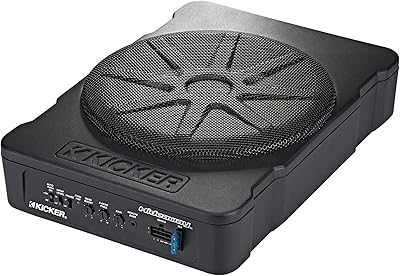
Kicker Hideaway HS10 10-Inch Powered Subwoofer
82%
92%
Build Quality
81%
Bass Output
94%
Installation Ease
88%
Sound Tuning Flexibility
91%
Factory Stereo Compatibility
More
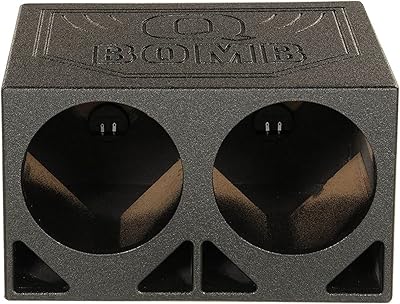
Q Power QBOMB10TB Dual 10-Inch Subwoofer Enclosure
80%
88%
Build Quality
91%
Finish & Appearance
83%
Bass Performance
79%
Ease of Installation
62%
Terminal Quality
More
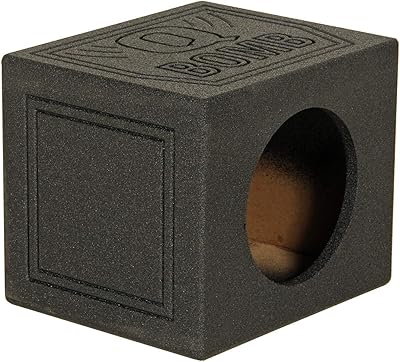
Q Power QBOMB10S 10″ Sealed Subwoofer Enclosure
80%
83%
Build Quality
88%
Value for Money
79%
Bass Accuracy
91%
Ease of Installation
82%
Finish & Aesthetics
More
Kicker CompC 10″ Thin-Profile Enclosed Subwoofer
77%
78%
Bass Output Quality
83%
Enclosure Build Quality
74%
Installation Ease
71%
Amplifier Compatibility
67%
Physical Fitment
More
American Sound Connection Kicker Dual 10″ Subwoofer Enclosure for Ford F250
88%
94%
Bass Performance
88%
Ease of Installation
90%
Build Quality
95%
Compatibility with Ford F250
87%
Sound Clarity
More
Q Power QBOMB-DODGE10-4DR 10 Inch Dual Chamber Subwoofer Box Enclosure
88%
92%
Bass Performance
90%
Build Quality
88%
Ease of Installation
89%
Durability
91%
Compatibility with Dodge/Ram Trucks
More
Acoustic Audio PSW400-10 10-Inch Powered Subwoofer
85%
91%
Bass Performance
88%
Ease of Setup
85%
Sound Quality
92%
Value for Money
87%
Build Quality
More
KICKER 48CWR104 CompR 10″ Subwoofer
87%
93%
Bass Performance
89%
Build Quality
91%
Durability
85%
Cooling Performance
90%
Sound Clarity
More
KICKER Hideaway Powered Enclosure HS8
85%
89%
Bass Performance
95%
Size & Portability
92%
Ease of Installation
82%
Sound Clarity
86%
Build Quality
More
Kicker 43KMW104GS 10″ Marine Subwoofer
87%
85%
Sound Quality
90%
Build Quality
88%
Ease of Installation
92%
Durability in Marine Environments
87%
Bass Performance
More

FAQ

No — that is the whole point of this design. The amplifier is built directly into the enclosure, so all you need to connect are a power wire, a ground wire, a remote turn-on wire, and your audio signal. No external amp required.

It works with both. The KICKER BassStation 10″ Powered Subwoofer Enclosure includes high-level speaker wire inputs specifically for connecting to factory head units that lack RCA preamp outputs. If your aftermarket head unit has RCA outputs, you can use the low-level inputs instead.
For most people with basic DIY confidence, yes. The Molex quick-connect harness consolidates all connections into one plug, which cuts down on the usual tangle of separate wires. You will still need to run a power wire from the battery, find a grounding point, and locate the remote turn-on lead — standard tasks for any car audio install. If you have never done it before, a YouTube tutorial specific to your vehicle makes a big difference.

More than some buyers expect from photos alone. At 18 inches deep and 14 inches tall, this powered sub enclosure occupies a real chunk of trunk real estate. It fits comfortably in most sedan and hatchback trunks, but if you regularly haul large bags or bulky gear, you will feel the trade-off.

Technically the boost will not damage the unit on its own, but running it near maximum for extended sessions is where distortion becomes noticeable — several buyers have flagged this. A more practical approach is to set the boost somewhere in the middle and let the crossover and volume do the heavy lifting. Your ears will thank you.

It genuinely matters in certain installs. If you notice the bass sounds thin or hollow even at higher volumes, it often means the subwoofer's output is partially canceling the bass your door speakers are producing. Flipping the phase switch to 180° frequently resolves this and produces a noticeably fuller sound.

Yes, and this is one of the BassStation's practical strengths. Because all wiring routes through the Molex connector, you can disconnect the sub in minutes and reinstall it in another vehicle as long as you have the wiring harness pre-run in both cars. Some owners do exactly this — one set of wiring per vehicle, one shared sub.

It can work, but you may find yourself wanting more. Larger cabins require more acoustic energy to fill, and 100W RMS in a sealed enclosure is well-suited to compact cars and smaller SUVs. In a full-size truck or three-row SUV, the bass can feel underwhelming, especially at highway speeds. If your vehicle is on the larger side, a higher-powered dedicated setup would serve you better.

Some owners have mentioned the amp runs warm during extended listening, which is normal behavior for any Class AB amplifier built into a compact space. It should not reach concerning temperatures under typical daily use. If you notice it getting very hot, check that the enclosure has adequate airflow around it and is not shoved directly against the trunk lining with no breathing room.

It works reliably for most users, but it is not the most premium-feeling accessory — the construction is fairly basic plastic. For everyday use, adjusting your bass level from the front seat, it does the job fine. If you are rough on accessories or plan to route the cable through tight spaces, handle it with a bit of care during installation to avoid stressing the connector.

Where to Buy