Overview

The Kinisium Kini SafeAlert Wi-Fi Motion Sensor arrived in late 2023 as a deliberate answer to a specific frustration: why should protecting a gun safe or storage cabinet require a monthly monitoring fee? Kinisium LLC built this no-subscription sensor around a straightforward promise — detect motion, alert your phone within seconds, and stay out of your business otherwise. It sits at a mid-range price for a single unit, worth acknowledging upfront. You pay for hardware, not a service, and for the right buyer that trade-off makes real sense. Its early Amazon ranking suggests it found its audience quickly.
Features & Benefits

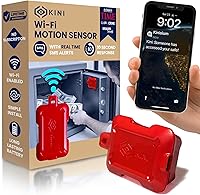
At just under an ounce and barely two and a half inches tall, this Wi-Fi motion sensor is smaller than most people expect. It sticks or tethers onto almost any surface using the included 3M fasteners or a plastic-coated steel cable — no drilling, no tools. The rechargeable battery is rated for over a year on a single charge, and a USB-C cable comes in the box. Alerts hit your phone via SMS, email, or push notification in roughly ten seconds. There is also IFTTT support for anyone who wants to build custom automations around motion events. Privacy-wise, the device sends no location data and complies with both GDPR and TCPA standards — a genuine advantage for users who want their security device to stay quiet.

Best For

This no-subscription sensor makes the most sense for a fairly specific type of buyer. Gun safe owners are the obvious primary audience — anyone who wants to know the moment a cabinet is disturbed without paying a monitoring company indefinitely. Renters and frequent travelers will appreciate that it requires no screws, no wall damage, and no installation commitment. Small business owners keeping an eye on a stockroom or server closet on a tight budget will find the value proposition appealing. For users skeptical of GPS-heavy or cloud-dependent security ecosystems, the privacy-first design is a genuine draw rather than a compromise. Those without fixed Wi-Fi can pair it with an optional hotspot, making it usable in RVs, cabins, or rental properties.

User Feedback

Buyers consistently praise how quick setup is — most report being up and running in minutes, which matters for a device that promises instant alerts. Alert speed also holds up in real-world use, with many users confirming notifications arrive well within the advertised window. That said, some reviewers flag occasional false positives, particularly when the sensor is placed inside enclosed spaces with air circulation. A handful of users report that actual battery life falls somewhat short of the one-year estimate under frequent alert conditions. The mounting hardware gets mixed marks — 3M fasteners hold well on smooth surfaces but can lose grip on textured materials. Overall, the Kini SafeAlert earns its rating, though buyers should temper expectations on battery longevity and placement sensitivity.

Pros

  • No subscription fees — ever — which makes the upfront cost easier to justify over the long run.
  • Alerts genuinely arrive fast, with most users confirming notifications well within the ten-second window.
  • The rechargeable battery lasts a surprisingly long time between charges under normal use conditions.
  • Tool-free installation takes minutes and leaves zero damage behind, ideal for renters.
  • At under an ounce, this Wi-Fi motion sensor is small enough to place almost anywhere without being noticed.
  • IFTTT support opens the door to useful automations for tech-comfortable users who want more than basic alerts.
  • No GPS and no location tracking make this a genuinely privacy-respecting choice in a crowded market.
  • The included steel tether cable adds a practical anti-removal layer beyond just detecting motion.
  • Works off-grid when paired with a compatible hotspot, useful for cabins, RVs, or remote properties.
  • USB-C charging and a low-battery alert mean you are unlikely to be caught off guard by a dead device.

Cons

  • Single-unit pricing is steep if you need to cover more than one or two locations.
  • Battery life under high alert frequency falls noticeably short of the advertised one-year estimate.
  • No camera or recording means you get an alert but no evidence of what actually triggered it.
  • False positives have been reported in enclosed spaces with airflow, which can make the sensor feel unreliable.
  • 3M fasteners lose grip on textured or uneven surfaces, limiting reliable no-drill placement options.
  • No native integration with major smart home platforms like Alexa, Google Home, or HomeKit.
  • Wi-Fi dependency means any router outage or network hiccup kills your alerting entirely.
  • The Kini SafeAlert ships without batteries included, which is a minor but avoidable friction at setup.
  • No professional monitoring option exists, so response to an alert depends entirely on the user.
  • Limited color options and a basic physical design may not suit buyers who care about aesthetics.

Ratings

The scores below for the Kinisium Kini SafeAlert Wi-Fi Motion Sensor were generated by AI after analyzing verified purchase reviews from buyers worldwide, with spam, bot-submitted, and incentivized feedback actively filtered out. The analysis covers a broad range of real use cases — from gun safe monitoring to travel security — and reflects both the genuine strengths buyers praise and the recurring frustrations that show up consistently across markets. No score has been inflated to favor the product; where users found real limitations, those are transparently reflected in the numbers.

Alert Speed
88%
The ten-second alert promise holds up reliably in real-world conditions, which is the single most important thing buyers need to trust. Gun safe owners and travelers consistently report that their phone buzzes almost immediately after motion is detected, giving them enough time to react meaningfully rather than just reviewing a notification after the fact.
A small portion of users report occasional delays longer than expected, typically tied to Wi-Fi network congestion or router distance rather than the sensor itself. These cases are not common, but they matter because the core value proposition depends entirely on speed.
Setup & Pairing
82%
18%
The majority of buyers get the sensor live and sending alerts within minutes, which is a meaningful bar for a Wi-Fi-connected security device. The pairing process is straightforward enough that non-technical users, including older buyers setting it up on a gun safe, report completing it without needing help.
A subset of users encounter friction when their router uses a 5GHz-only or mixed-band setup, leading to failed pairing attempts until they adjust network settings. This issue is solvable but creates a frustrating first impression for buyers who are not network-savvy.
Battery Life
71%
29%
Under low-to-moderate alert frequency, the rechargeable battery comfortably lasts many months between charges, and the built-in low-battery warning gives users enough advance notice to avoid a lapse in coverage. For passive monitoring situations — a cabinet that rarely gets touched — longevity is genuinely strong.
Users who place the sensor in higher-traffic areas or who receive frequent alerts report that real-world battery life falls noticeably short of the one-year rating. This gap between advertised and experienced performance is a recurring complaint that surfaces consistently across reviews.
Mounting & Installation
76%
24%
The tool-free approach using 3M Dual Lock fasteners and a steel tether cable is well-suited to renters and travelers who cannot drill or modify surfaces. Buyers using it on smooth metal safes report that it stays firmly in place without any issues over extended periods.
On textured, powder-coated, or rubberized surfaces — common on many gun safes — the adhesive fasteners lose grip more quickly than expected. Several users note that the tether cable becomes the primary anchor in these cases, which limits flexible placement options.
False Positive Rate
67%
33%
In clean, controlled placements — attached to the exterior of a safe in a low-airflow room — the sensor performs accurately and does not generate nuisance alerts. Buyers using it in still environments report a high-quality detection experience with very few spurious notifications.
False positives are a documented issue when the sensor is placed inside enclosed spaces with any air circulation, such as near vents or inside cabinets with fans. For buyers who experience repeated false alarms, the credibility of each alert erodes quickly, which undermines the device's core purpose.
Privacy & Data Handling
93%
The complete absence of GPS tracking, location data collection, and cloud recording is a genuine differentiator that resonates strongly with privacy-conscious buyers. GDPR and TCPA compliance signals that Kinisium has taken regulatory responsibility seriously, which builds trust among users in both the U.S. and Europe.
The privacy-first design is almost universally praised, and meaningful criticism in this category is rare among verified reviewers. The only minor concern raised is that SMS delivery depends on third-party carriers, meaning some data does pass through telecom infrastructure outside Kinisium's control.
Value for Money
74%
26%
When evaluated as a one-time purchase with zero recurring fees, the per-year cost compares favorably against subscription-based competitors, especially for buyers who only need to monitor one or two locations. Over two or three years, the math clearly favors this no-subscription sensor for its target audience.
The single-unit price is a genuine barrier for buyers who need to cover multiple locations simultaneously, since costs multiply without any bundle pricing available. Buyers comparing it to basic adhesive sensors at a fraction of the cost will need to weigh whether Wi-Fi alerting justifies the premium.
Build Quality
79%
21%
For its size and weight class, the device feels well-made and durable in hand, with nothing cheap or flimsy about its physical construction. Buyers who have had it deployed for six months or more generally report that it shows no signs of degradation under normal indoor conditions.
A small number of users note that the plastic casing shows scuffs and surface wear more readily than expected, particularly on the red variant. There are also occasional reports of the USB-C charging port feeling slightly loose after repeated charge cycles.
Off-Grid Compatibility
72%
28%
The ability to pair with a 4G hotspot opens up genuinely useful scenarios — RV owners, cabin users, and property managers of remote rentals all report that the hotspot setup works as described once configured correctly. This flexibility meaningfully extends the device's addressable market.
The hotspot is sold separately and adds meaningful cost on top of the sensor itself, which the product listing does not make entirely clear upfront. Users who buy the sensor expecting off-grid functionality out of the box sometimes feel misled when they discover the additional purchase required.
Smart Home Integration
51%
49%
IFTTT support gives technically inclined users a bridge to build custom workflows — linking motion events to smart lights, logging systems, or notification tools that go beyond standard SMS alerts. For a niche segment of buyers, this is a legitimate and appreciated feature.
There is no native integration with Alexa, Google Home, or Apple HomeKit, which is a real limitation for buyers who have already built out smart home ecosystems on those platforms. IFTTT requires a separate account and some configuration effort that casual users are unlikely to pursue.
Notification Reliability
83%
On stable Wi-Fi networks, alert delivery via SMS, push, and email is consistent and dependable across multiple simultaneous notification channels. Buyers who rely on redundant delivery — getting both a push and an SMS — appreciate that the system covers them even if one channel has a brief delay.
Network-dependent devices carry inherent reliability risk, and some users report missed alerts during Wi-Fi outages or periods of poor router performance. There is no offline fallback or local alarm, so a dropped connection means a silent gap in coverage with no warning to the user.
Portability
91%
At under an ounce and smaller than a standard USB drive, this Wi-Fi motion sensor is the kind of device that fits in a jacket pocket and can be redeployed in a new location in under two minutes. Frequent travelers consistently highlight it as the most portable security device they have used.
Portability is one of the device's clearest strengths, and substantive criticism in this category is genuinely limited. The only practical friction point is remembering to bring the USB-C charging cable along when traveling, since the battery will eventually need a top-up during extended trips.
App & Notification Setup
77%
23%
Buyers generally describe the notification configuration process as more intuitive than they expected, with SMS alert setup in particular requiring minimal technical steps. The ability to receive alerts on multiple devices or phone numbers is a valued option for couples or small teams sharing monitoring responsibilities.
Some users report that push notification settings require careful configuration on iOS due to background app refresh restrictions, leading to delayed or missed alerts if the settings are not tuned correctly. First-time setup documentation could be clearer on this platform-specific nuance.
Discreetness
89%
The compact footprint and understated design allow the sensor to blend in naturally on a safe, shelf, or cabinet without drawing attention. Buyers who specifically need a covert deterrent — whether for workplace monitoring or home security — consistently praise how invisible it looks in context.
The red color variant is noticeably more visible than the gray option in neutral or dark environments, which slightly undercuts the discreetness advantage for buyers who did not opt for the gray. Color choice matters more than it might seem for placement on dark-colored gun safes.

Suitable for:

The Kinisium Kini SafeAlert Wi-Fi Motion Sensor was clearly designed with a particular kind of buyer in mind, and it delivers best when that buyer's priorities align with what it actually does well. Gun safe and firearm cabinet owners are the most natural fit — anyone who wants an immediate text or push alert if someone touches their safe, without handing money to a monitoring company every month, will find this a genuinely practical tool. Renters and frequent travelers are another strong match, since the tool-free mounting means it can be repositioned, packed, and redeployed in a hotel room or short-term rental without leaving a mark. Small business owners keeping a passive eye on a server closet, supply cabinet, or back-office area will also get solid value here, especially when weighed against the cumulative cost of subscription-based systems. Privacy-focused users who want security without a company harvesting their location or building a behavioral profile around them will appreciate that this device simply sends an alert and nothing else.

Not suitable for:

The Kinisium Kini SafeAlert Wi-Fi Motion Sensor is not the right tool for buyers expecting a full home security ecosystem from a single device. It has no camera, no audio, no video recording, and no professional monitoring option — if your goal is to capture evidence of intrusion or have someone dispatch help automatically, you will need to look elsewhere. Buyers wanting to cover multiple rooms or entry points affordably should also reconsider, since the per-unit cost adds up quickly and there is no bundled multi-sensor discount currently available. Anyone without a stable Wi-Fi connection and no interest in purchasing a separate mobile hotspot will find the core alerting feature unreliable or non-functional. Users hoping for deep integration with smart home platforms like Google Home, Amazon Alexa, or Apple HomeKit will be disappointed, as IFTTT is the extent of the automation support. Finally, buyers who tend to place sensors in enclosed or air-exposed spaces should know that false positives have been reported in those conditions, which can erode trust in the device over time.

Specifications

  • Brand: Manufactured by Kinisium LLC, a U.S.-based company focused on privacy-first security accessories.
  • Model Number: The unit is identified by model number Kini-01-R, corresponding to the red color variant.
  • Dimensions: The sensor measures 0.74″ deep, 1.56″ wide, and 2.48″ tall, making it exceptionally compact for discreet placement.
  • Weight: The device weighs just 0.26 ounces, light enough to mount on vertical surfaces without stressing adhesive fasteners.
  • Power Source: Powered by a built-in rechargeable battery charged via USB-C cable, which is included in the box.
  • Battery Life: Rated for over one year on a single charge under typical use conditions, with a built-in low-battery alert system.
  • Connectivity: Operates over Wi-Fi and is also compatible with a 4G mobile hotspot for deployment in locations without fixed internet.
  • Alert Methods: Sends real-time alerts via SMS text message, email, push notifications, and supports IFTTT-based custom automation triggers.
  • Alert Speed: Motion events are reported to the user's smartphone within approximately 10 seconds of detection.
  • Mounting Hardware: Includes 3M Dual Lock reclosable fasteners and a plastic-coated steel tether cable for tool-free, damage-free installation.
  • Color Options: Available in red (model Kini-01-R) and gray, both sharing identical functionality and specifications.
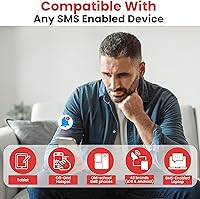
  • Compatible Devices: Designed to pair with smartphones; compatible with both iOS and Android devices that support SMS and push notifications.
  • Privacy Standards: The device collects no GPS data and no location information, and is compliant with GDPR and TCPA regulations.
  • Recording: The sensor detects motion only and does not include a camera, microphone, or any audio or video recording capability.
  • Batteries Included: No batteries are included in the box; the internal rechargeable cell must be charged before first use via the included USB-C cable.
  • Date Available: The product was first made available for purchase on Amazon in December 2023.
  • UPC: The product carries UPC code 644197314221 for retail identification purposes.
  • Market Rank: Ranked #68 in the Motion Detectors category on Amazon Electronics at the time of review, indicating solid category traction.

Related Reviews

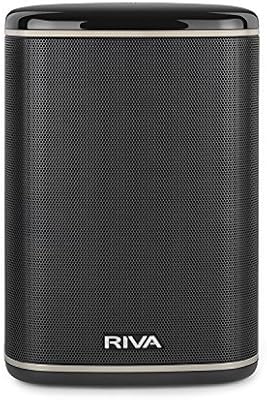
RIVA Arena
RIVA Arena
76%
84%
Sound Quality
68%
Bass Performance
89%
Multiroom & Ecosystem Integration
61%
Setup & App Experience
91%
Streaming Platform Support
More
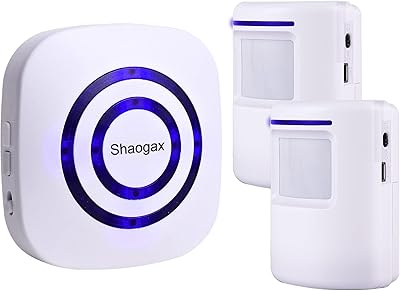
Shaogax Wireless Motion Sensor Driveway Alarm System
71%
91%
Ease of Setup
83%
Wireless Range
88%
Alert Customization
58%
False Alert Rate
61%
Build Quality
More
RIVA Concert Wi-Fi Bluetooth Smart Hi-Fi Speaker
85%
93%
Sound Quality
85%
Alexa Integration
88%
Connectivity Options
90%
Ease of Setup
87%
Multiroom Audio Compatibility
More
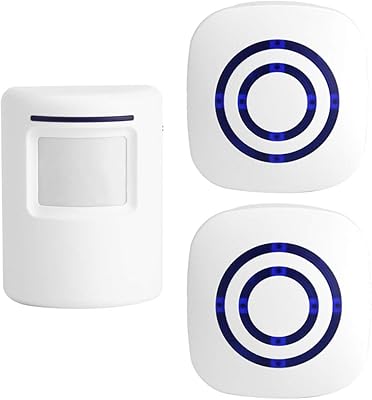
Actpe Wireless Motion Sensor Driveway Chime
69%
93%
Ease of Setup
88%
Value for Money
76%
Detection Reliability
81%
Wireless Range
61%
Battery Life
More
Fibaro Motion Sensor HomeKit Multisensor
71%
83%
Motion Detection Accuracy
88%
HomeKit Integration
61%
Setup Experience
54%
Temperature Accuracy
57%
App Experience
More
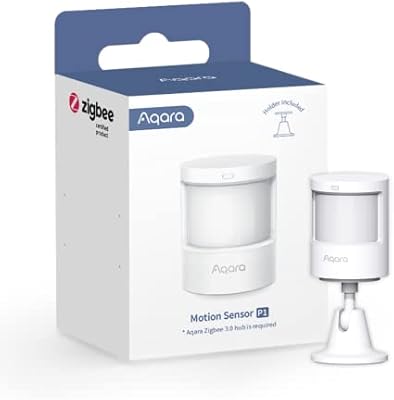
Aqara Motion Sensor P1 Zigbee Sensor
77%
93%
Battery Life
84%
Detection Accuracy
41%
Hub Dependency
76%
App & Configuration
81%
Detection Range & Angle
More
Shelly BLU Motion Bluetooth Motion Sensor
74%
78%
Ease of Setup
81%
Motion Detection Accuracy
67%
Indoor Range
84%
Battery Life
76%
Lux Sensor Usefulness
More
eufy Security Motion Sensor
85%
90%
Detection Accuracy
95%
Ease of Installation
93%
Battery Life
87%
Sensitivity Adjustment
89%
App & Notification System
More
Synology RT2600ac Wi-Fi Router
85%
88%
Performance
91%
Wi-Fi Speed & Coverage
80%
Setup & Installation
90%
Security Features
84%
Ease of Use
More
GREENCYCLE M-SF20R Wireless Driveway Alarm
78%
91%
Ease of Setup
78%
Detection Reliability
62%
Wireless Range
88%
Chime & Alert Volume
61%
Battery Life
More

FAQ

No, there is no subscription required at any point. Once you buy the device and connect it to your Wi-Fi, alerts come directly to your phone at no ongoing cost. That is one of the clearest advantages this no-subscription sensor has over most competing products on the market.

Most buyers report getting the device connected and sending alerts within a few minutes. You will need a 2.4GHz Wi-Fi network and a smartphone to complete the pairing process. If you have set up any smart home device before, this should feel familiar and straightforward.

Yes, but you will need to pair it with a compatible 4G mobile hotspot, which is sold separately by Kinisium. This makes the Kini SafeAlert a practical option for cabins, RVs, rental properties, or any location without fixed broadband. Without either a Wi-Fi network or a hotspot, the alerting feature will not function.

No, it does not. The Kinisium Kini SafeAlert Wi-Fi Motion Sensor is a detection-and-alert device only — there is no camera, no microphone, and no recording of any kind. For some buyers, especially privacy-conscious ones, this is actually a feature rather than a drawback.
The rated battery life is over one year under typical conditions, but real-world results vary depending on how frequently motion is detected and alerts are sent. Users who place the sensor in higher-traffic areas report shorter intervals between charges. The device does send a low-battery alert so you will not be caught off guard.

Not directly. The Kini SafeAlert supports IFTTT, which means technically savvy users can build custom automations that tie into other platforms indirectly. However, there is no native integration with Alexa, Google Home, or Apple HomeKit out of the box, so if deep smart home compatibility is a priority, you should factor that in before buying.

For most smooth-surfaced safes, the 3M Dual Lock fasteners hold reliably and the included steel tether cable adds an additional layer of tamper resistance. That said, on heavily textured or powder-coated surfaces, the adhesive can lose grip over time. The tether cable is the more dependable anchor point in those cases.

Yes, as long as your phone receives SMS messages or has mobile data for push notifications, alerts will reach you regardless of where you are. The sensor itself just needs a working Wi-Fi or hotspot connection on its end. International SMS delivery depends on your carrier plan, so it is worth confirming that before you travel.

It is genuinely tiny — roughly the size of a large thumb drive or a thick USB stick. At under a quarter of an inch in weight and just under two and a half inches tall, it disappears easily on the side of a safe or inside a cabinet without drawing attention.

Unfortunately, no. The sensor depends entirely on an active Wi-Fi or hotspot connection to send alerts. If your router drops or loses power, the device cannot communicate and you will not receive notifications until connectivity is restored. This is a real limitation worth considering if your internet reliability is inconsistent.

Where to Buy