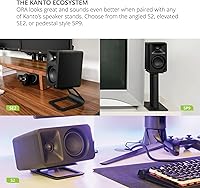
Overview
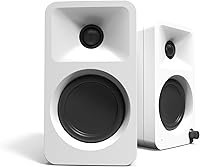
The Kanto ORA Powered Reference Desktop Speakers occupy an interesting middle ground — compact enough for a crowded desk but engineered with enough care to satisfy listeners who have outgrown cheap PC speakers. Kanto tuned these with a bi-amplified Class-D setup and onboard DSP, which is a meaningful step up from the passive crossover designs common at this price level. They are not studio monitors in the professional sense, but they are honest enough sonically to be useful for casual mixing or critical listening. Since launching in mid-2024, the ORA speakers have climbed into the top 100 computer speakers on Amazon — a fast rise that suggests they found their audience quickly.
Features & Benefits
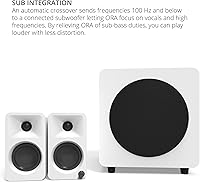
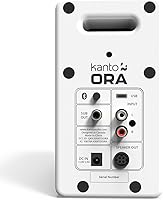
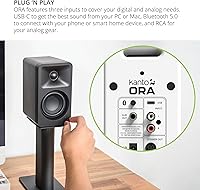
The input options alone make this powered speaker pair worth a closer look. The USB-C input handles digital audio directly from a laptop or Mac — no external DAC required, which removes a real friction point for anyone who has dealt with that extra box on their desk. Bluetooth 5.0 connects quickly and stays stable for phone or tablet listening, while RCA keeps older gear in the picture. The automatic crossover is a genuinely useful touch: plug in a subwoofer and the speakers automatically hand off bass duties, letting them stay cleaner at higher volumes. Each cabinet also carries a rear 1/4-inch-20 threaded insert, so wall or ceiling placement is possible without aftermarket adapters.
Best For
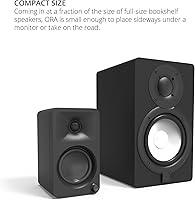
These Kanto desktop speakers make the most sense for people who need one pair to do several jobs well. If you produce music at home on a budget, they are honest enough to mix on without completely misleading you, while also sounding good for an evening of casual listening. Remote workers and podcasters will appreciate the clean midrange and flexible input switching. Anyone running a tight desk setup will notice how the narrow footprint — or even a sideways orientation — frees up real space. And if you are already thinking about adding a subwoofer down the line, these speakers are built for it; the crossover handles the handoff automatically with nothing to configure.
User Feedback
Across more than 200 ratings, the ORA speakers hold a 4.5-star average, which suggests most buyers leave satisfied. The most common praise centers on bass performance — owners frequently note that the low end sounds bigger than you would expect from 3-inch drivers, which is a fair observation. The USB-C input also draws repeated mentions as a deciding factor for Mac and PC users who wanted to skip an external DAC. On the critical side, some buyers find the touch volume control a bit awkward to adjust precisely mid-session. A smaller group of comments points to limited low-end extension at high volumes — a real physical constraint of the driver size, and one worth factoring into your decision.
Pros
- The bi-amplified design delivers noticeably cleaner stereo separation than typical single-amp desktop speakers.
- USB-C input works plug-and-play with modern laptops and Macs, no external DAC needed.
- Bass output consistently surprises buyers given how compact the cabinets are.
- Bluetooth 5.0 pairs quickly and holds a stable connection across typical room distances.
- The automatic subwoofer crossover makes upgrading to a 2.1 system genuinely straightforward.
- RCA input keeps older turntables and analog gear in the mix without extra adapters.
- Rear mounting threads let you wall or ceiling mount these without buying a special bracket.
- A 2-year manufacturer warranty is stronger coverage than many competitors offer at this tier.
- The slim footprint fits sideways under a monitor, which is a practical option for tight desks.
- A 4.5-star average across 200-plus ratings reflects consistent real-world satisfaction.
Cons
- No 3.5mm AUX input, which rules out a lot of common legacy devices and headphone splitters.
- Touch volume controls can feel imprecise when you need a quick adjustment mid-session.
- Low-end extension thins out at higher volumes without a subwoofer to pick up the slack.
- At this price point, buyers reasonably expect more intuitive daily controls than a touch interface offers.
- No optical input means users with TVs or gaming consoles may need an adapter or alternative solution.
- The speakers require an AC power connection, limiting placement flexibility compared to powered options with battery backup.
- DSP tuning adds some coloration that may not suit purists who prefer a completely flat response.
- Bluetooth-only users cannot access the full audio quality that the USB-C digital path provides.
Ratings
The scores below reflect an AI-driven analysis of verified global buyer reviews for the Kanto ORA Powered Reference Desktop Speakers, with spam, bot activity, and incentivized feedback actively filtered out before scoring. Each category is weighted against real-world usage patterns reported by actual owners, not marketing materials. Both the genuine strengths and the recurring frustrations are captured here transparently, so you can make a fully informed decision.
Sound Quality
Bass Performance
Connectivity & Inputs
Bluetooth Reliability
Volume Controls & Ergonomics
Build Quality
Setup & Ease of Use
Subwoofer Integration
Mounting Versatility
Value for Money
Stereo Imaging
Warranty & Support
Desk Footprint
Suitable for:
The Kanto ORA Powered Reference Desktop Speakers were built for people who want noticeably better sound without surrendering half their desk or adding a stack of external gear. If you work from home and spend hours on calls, podcasts, or background music, the cleaner midrange and bi-amplified separation will make a real difference over what most built-in laptop audio or budget PC speakers can offer. Home studio hobbyists who record, mix lightly, or produce beats will find these honest enough for reference listening without needing a dedicated monitor setup. The USB-C input is a particular draw for Mac and modern laptop users who want straightforward plug-in audio without buying a separate DAC. Content creators, streamers, and anyone who switches constantly between a laptop and a phone will appreciate being able to juggle multiple sources without unplugging anything. If a subwoofer is already in your plans down the road, these speakers are a natural starting point for a 2.1 system that can grow with your setup.
Not suitable for:
The Kanto ORA Powered Reference Desktop Speakers are not the right call if your priority is raw, room-filling volume or deep extended bass from the speakers alone. The 3-inch woofers perform well for their size, but there are physical limits — at higher listening levels without a subwoofer, the low end starts to thin out, and that is simply a constraint of the driver diameter, not a flaw in the design. Serious audio professionals who depend on studio monitors for mixing decisions should look at purpose-built near-field monitors instead; these are reference-quality desktop speakers, not production tools. If you need a 3.5mm AUX input for a headphone splitter, gaming controller, or older device, you will have to find a workaround since that connection is not included. Buyers who prefer tactile knobs for quick volume adjustments may find the touch controls fiddly during fast-paced listening sessions. And if budget is the primary constraint, there are more affordable options that cover basic desktop audio needs without this level of engineering.
Specifications
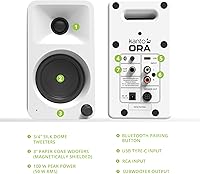
- Peak Power: The speakers deliver 100W peak power, with 50W total RMS split across the dedicated tweeter and woofer amplifiers in each cabinet.
- Amplifier Class: Class-D bi-amplification is used, with separate amplifier channels for the high and low frequency drivers to reduce interference and improve clarity.
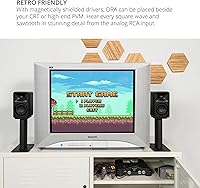
- Woofer Driver: Each speaker uses a 3-inch paper cone woofer that is magnetically shielded, making it safe to place near monitors and other sensitive electronics.
- Tweeter Driver: A 3/4-inch silk dome tweeter handles high-frequency reproduction, contributing to a smoother, less fatiguing treble response.
- Frequency Response: The ORA speakers cover a frequency range of 70 Hz to 22 kHz, reflecting their compact driver size and DSP-tuned output characteristics.
- Inputs: Three input options are available: USB-C for digital audio, Bluetooth 5.0 for wireless streaming, and RCA for line-level analog connections.
- Subwoofer Output: A dedicated subwoofer output is included, with an automatic crossover that activates when a sub is connected to redistribute bass frequencies.
- Bluetooth Version: Bluetooth 5.0 is built in, providing stable pairing and adequate range for typical desktop and small-room listening scenarios.
- Control Method: Volume and input selection are managed via touch controls integrated into the speaker cabinet rather than traditional rotary knobs.
- Dimensions: Each speaker measures 5.6″ deep by 3.9″ wide by 6.9″ tall, making it feasible to place sideways under a monitor if vertical space is limited.
- Weight: Each unit weighs 4.4 pounds, giving the cabinets a solid, planted feel on a desk without being difficult to reposition.
- Mounting: A rear 1/4-inch-20 threaded insert on each speaker allows wall or ceiling mounting using any compatible standard speaker bracket.
- Power Source: The speakers are AC-powered and include a power cord in the box, so they require a nearby outlet and are not battery-operated.
- Configuration: The ORA ships as a 2.0 stereo pair, with a 4-pin cable connecting the passive speaker to the active unit.
- Included Accessories: The package includes a 6-foot 4-pin speaker connector cable, a power cord, eight rubber feet for stability, and a printed manual.
- Warranty: Kanto covers these speakers with a 2-year manufacturer warranty against defects in materials and workmanship.
- Compatibility: The speakers are designed to work with desktops, laptops, smartphones, tablets, and televisions depending on which input is used.
- Speaker Material: The cabinet is constructed from plastic with a matte finish, keeping the overall weight low while allowing the compact form factor.
Related Reviews
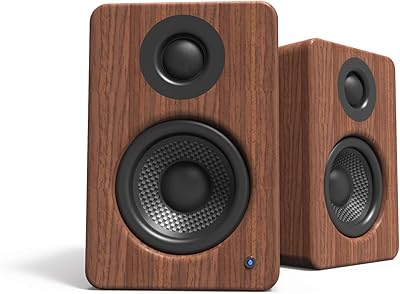
Kanto YU2 Powered Desktop Speakers
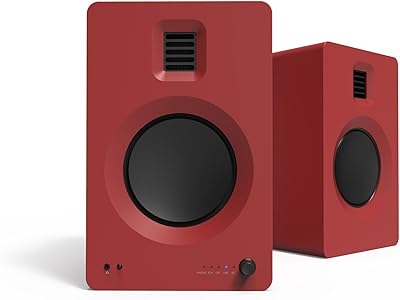
Kanto TUK Powered Bookshelf Speakers
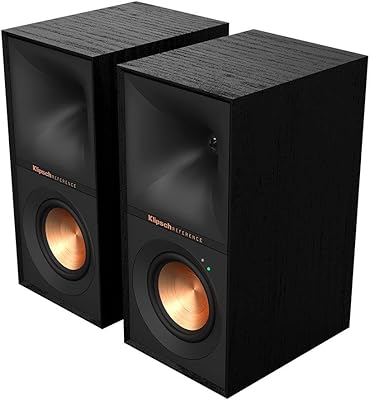
Klipsch R-40PM
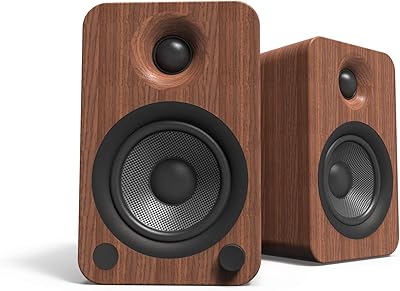
Kanto YU4 Powered Speakers
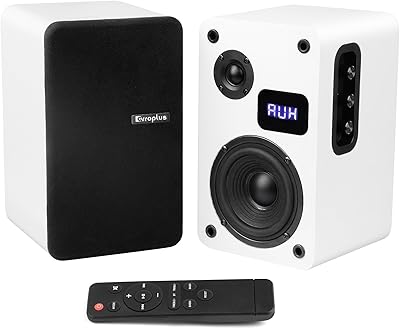
Orroplus OR-02 Powered Bookshelf Speakers
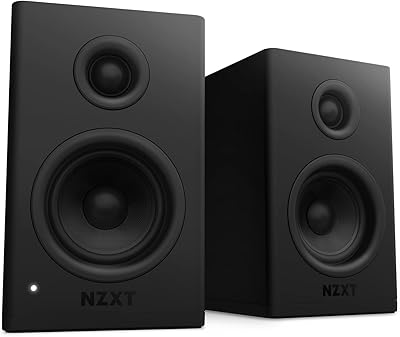
NZXT Relay Speakers
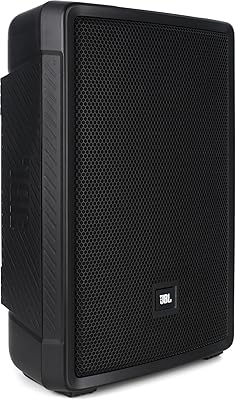
JBL IRX112BT Powered PA Speaker
Audioengine A2+
Majority D100 Bookshelf Speakers