Overview

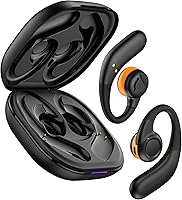
The Jzones CT11 Open Ear Headphones enter a crowded market as a genuinely affordable option for anyone who wants music without surrendering awareness of their surroundings. Unlike in-ear buds that seal off the world or bone conduction designs that vibrate through your skull, these rest lightly on the outer ear — a different experience entirely. Jzones isn't a household name, and that's worth acknowledging upfront. What you're buying is judged on specs and real user patterns, not brand legacy. The all-plastic build feels light, almost surprisingly so, which works in your favor during long runs or extended desk sessions where added weight becomes a real nuisance.

Features & Benefits

The 16.2mm drivers are notably large for an open-ear format, and that size does help push more volume and a fuller mid-range than you'd expect from this style. Bass, though? Honest answer: it's modest. Open-ear physics work against deep low-end reproduction, so if thumping bass is your priority, these aren't your pair. Battery life is where this sport headset genuinely delivers — a single charge covers a full workday of listening, and the case tops them up several more times before you reach for a cable. Bluetooth holds steady at reasonable indoor distances, touch controls work reliably once you learn the gestures, and the IPX5 rating handles sweat and a surprise drizzle without complaint. Submersion, though, is a different story entirely.

Best For

These open-ear buds shine brightest for runners, cyclists, and anyone whose safety depends on hearing what's happening around them. That situational awareness — cars, a cyclist overtaking, a colleague calling your name — is the whole point, and it works as advertised. Remote workers who spend hours on calls will appreciate the absence of ear canal pressure over a long shift. They're also a smart secondary pair for gym sessions or outdoor workouts where you'd rather not wear more expensive earphones. Compatibility is broad — Android, iPhone, most Bluetooth-enabled TVs and laptops — so pairing is rarely a headache. If immersive, bass-heavy listening is your goal, look elsewhere. But for open, aware, comfortable daily use, these deliver.

User Feedback

Across several hundred ratings, the CT11 earphones have settled at a strong average, driven largely by buyers who genuinely needed what open-ear delivers: all-day comfort and solid endurance between charges. Those two themes repeat consistently in positive reviews. The criticism is more nuanced. Audio leakage is real — people nearby can hear your music at moderate volume — and low-end response is thin, though neither is a product defect; they're simply inherent to the format. Some users flag occasional touch control oversensitivity, where accidental taps trigger unintended actions. Connectivity hiccups appear in a handful of lower-rated reviews but seem sporadic. Disappointed reviewers largely expected in-ear-level audio isolation — a mismatch of expectations, not a failure of the earphones themselves.

Pros

  • All-day comfort with no ear canal pressure, even during extended wear sessions.
  • Battery endurance is exceptional — multiple full charges stored in the case covers most of a working week.
  • Open-ear design keeps you aware of traffic, colleagues, and surroundings without removing a bud.
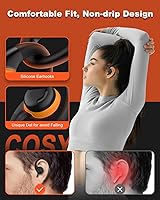
  • Silicone earhooks hold securely during runs and workouts without pinching or shifting.
  • Charges quickly via USB-C, reaching full capacity well within two hours.
  • Broad device compatibility means pairing works across phones, laptops, tablets, and most Bluetooth TVs.
  • Lightweight construction makes these easy to forget you're wearing them during long sessions.
  • IPX5 rating handles sweat and light rain reliably — practical for outdoor exercise.
  • Touch controls function consistently once you spend a session learning the gesture set.
  • Priced accessibly enough to serve as a dedicated workout pair without significant financial risk.

Cons

  • Bass response is noticeably thin — inherent to open-ear physics, but still a real limitation for music lovers.
  • Audio leakage is unavoidable; people nearby in quiet environments will hear what you're playing.
  • Touch controls can misfire from accidental contact during physical activity, triggering unintended commands.
  • Jzones is a lesser-known brand with limited long-term reliability data compared to established competitors.
  • No active noise cancellation or passive isolation — loud environments will drown out your audio at moderate volumes.
  • Some users report inconsistent Bluetooth connectivity in environments with heavy wireless interference.
  • The plastic construction, while light, does not inspire confidence in long-term durability under heavy use.
  • Open-ear fit is not universally comfortable — ear shape varies widely and the hook may not suit everyone.

Ratings

The scores below for the Jzones CT11 Open Ear Headphones were generated by our AI rating engine after analyzing verified global purchase reviews, actively filtering out incentivized, repeated, and bot-flagged submissions to surface genuine buyer sentiment. Each category reflects both the real strengths users consistently praised and the friction points that drove lower ratings — nothing is glossed over. The result is a transparent, balanced scorecard that helps you understand exactly what these open-ear buds deliver and where they fall short.

Wearing Comfort
88%
Buyers who switched from in-ear designs consistently highlight how much more comfortable these open-ear buds feel after two or three hours of continuous use. The silicone earhooks distribute weight gently without any canal pressure, making them a genuine relief for anyone prone to earache during long commutes or extended work-from-home sessions.
A recurring minority of reviewers note that the earhook sizing does not suit all ear shapes equally well, with some finding the fit either slightly loose or mildly pinching after prolonged wear. People with smaller ears in particular have flagged that the hook can slip during high-intensity movement if the initial positioning is not perfectly calibrated.
Battery Life
91%
Battery endurance is one of the most consistently praised aspects across verified buyer reviews, with many users reporting that they routinely get through a full five-day work week before the case needs a charge. For travelers and commuters, the ability to go several days without hunting for a cable is a practical, tangible advantage that regularly exceeds expectations set by competing budget earphones.
A handful of reviewers noted that the stated maximum playtime figures assume relatively modest volume levels, and real-world usage at higher volumes does trim the per-charge duration noticeably. A small number of long-term owners also flagged that battery capacity appeared to degrade more quickly than expected after several months of daily charging cycles.
Sound Quality
67%
33%
For an open-ear format at this price tier, the CT11 earphones handle vocals, podcasts, and mid-range audio with clarity that buyers describe as better than expected. Call quality in particular receives consistent praise, with remote workers noting that both sides of a conversation come through cleanly without distortion even during longer meetings.
Bass response is genuinely limited, and this is a structural constraint of the open-ear design rather than a tuning choice — sound simply escapes rather than building pressure. Music genres that depend heavily on low-frequency impact, like hip-hop or electronic, come across as noticeably flat, and this alone accounts for most of the one- and two-star reviews from buyers who did not fully understand the format before purchasing.
Situational Awareness
93%
This is where these open-ear buds genuinely earn their place — runners and cyclists consistently describe hearing approaching vehicles, pedestrians, and ambient cues with zero compromise while their audio plays simultaneously. Unlike bone conduction alternatives, there is no distortion introduced to ambient sound, so environmental awareness feels completely natural rather than filtered.
The same openness that makes ambient awareness excellent also means noisy environments fight back against your audio at moderate volume levels, effectively making these less usable in loud subway cars or busy construction zones. Users who expected to tune out the world while also staying aware found the balance harder to strike than anticipated in genuinely chaotic acoustic environments.
Secure Fit During Activity
79%
21%
For moderate-intensity activity — jogging at a steady pace, cycling, and gym sessions — the earhook design holds reliably without the fatigue of tight in-ear seals. Multiple runners report completing five- and ten-kilometer runs without needing to readjust, which speaks well to the ergonomic intent of the hook geometry.
At higher intensities involving sudden directional changes, jumping, or vigorous head movement, the fit becomes less dependable for some users. The lack of adjustable hook sizing means buyers with atypical ear anatomy have a noticeably higher chance of finding the stability insufficient for sprint intervals or contact sports.
Bluetooth Reliability
73%
27%
In clean environments — home offices, parks, and quiet gyms — the Bluetooth connection holds steadily and auto-reconnects quickly when returning the earbuds from the case. Range across a typical room-sized space is consistent, and the initial pairing process draws almost no complaints from reviewers across both Android and iOS ecosystems.
In environments with heavy wireless congestion, such as open-plan offices or crowded public transport, a subset of users reports periodic dropouts and momentary audio stutters. A handful of reviewers also noted occasional sync issues between the left and right earbuds, requiring a manual reset to resolve — a minor but recurring frustration.
Touch Controls
61%
39%
Once the gesture pattern is internalized after a few days of regular use, the touch controls handle basic playback and call management adequately. Users who take the time to read through the included manual generally report fewer frustrations, as the tap sequences follow a fairly logical structure.
Accidental touch triggers are the most cited control-related complaint — adjusting the earhook position, wiping sweat, or even a hat brim making contact can pause playback or skip tracks unexpectedly. The sensitivity threshold appears tuned too high for active use, and there is no way to lock or adjust it, which is a notable gap for a sport headset.
Water Resistance
74%
26%
The IPX5 rating holds up reliably in the scenarios it is actually designed for — sweaty training sessions, drizzly morning runs, and general outdoor use where splashing is inevitable. Buyers who use this sport headset consistently for exercise report no moisture-related failures over extended periods of regular use.
A meaningful number of negative reviews trace back to buyers misunderstanding what IPX5 actually covers, with some attempting to wear these in the shower or during water sports. Even within the intended splash-resistant scope, a few users reported moisture ingress after particularly intense sweat sessions, suggesting the seal is not equally robust across all unit production batches.
Build Quality
62%
38%
The lightweight plastic construction keeps the overall package genuinely featherweight, which is a real functional advantage for long wear sessions where a heavier frame would add fatigue. The earhook feels flexible enough to avoid brittleness during normal daily handling and bag storage.
The plastic material does not inspire confidence over the long haul, and a recurring theme in lower-rated reviews is that the casing feels cheaper than the price point implies. Some users report minor cracking or earhook stress marks appearing after four to six months of daily use, raising questions about durability beyond the first year.
Value for Money
82%
18%
Buyers who purchased these specifically for outdoor sport and situational awareness use report a strong sense of value — the feature set, particularly the extended battery endurance and reliable IPX5 protection, outpaces what similarly priced in-ear alternatives typically offer. For users treating these as a dedicated activity pair rather than their sole set of headphones, the cost-to-utility ratio reads as genuinely favorable.
Buyers who expected premium closed-back audio quality at this price point consistently rate the value lower, which reflects a mismatch between the format and their expectations rather than an outright poor deal. The plastic construction also nudges a portion of reviewers to question whether the long-term durability justifies the cost compared to spending a bit more on an established brand.
Call Performance
81%
19%
Remote workers and frequent phone callers rate call clarity as one of the stronger practical attributes of the CT11 earphones, with voices coming through cleanly and the microphone picking up speech accurately in quiet indoor environments. Several reviewers specifically switched to these from in-ear buds to avoid discomfort during multi-hour call days, and most report satisfaction with the audio fidelity.
In outdoor environments with wind or background crowd noise, microphone performance degrades noticeably and callers on the other end begin to complain about audio quality. The open-ear design, while great for the wearer's awareness, does not help the microphone isolate the speaker's voice from environmental sounds during calls taken outside.
Charging Convenience
86%
The switch to USB-C is a practical quality-of-life improvement that buyers consistently appreciate, since it means one fewer proprietary cable to track. The relatively short charge time to reach full capacity means even a brief lunch break topped up during travel provides a meaningful boost to available listening time.
The case itself does not support wireless charging, which is a small but noted omission as wireless pads become more common on desks and nightstands. A few reviewers also noted that the charging contact points between the earbuds and case can feel slightly finicky, occasionally requiring repositioning to confirm a proper charge connection.
Device Compatibility
89%
Pairing across different device types — switching between a phone during a morning run and a laptop during a work session — is described by most buyers as uncomplicated once the initial pairing is established. The broad compatibility covering Android, iOS, smart TVs, and PCs makes these genuinely flexible as a daily-use wireless audio option.
Multi-point connection, allowing simultaneous pairing to two devices, does not appear to be supported, meaning users who regularly switch between a phone and laptop must manually manage the reconnection each time. This is a minor but recurring friction point for users in hybrid work environments who expect modern earbuds to handle device switching automatically.
Portability
84%
The overall package is compact enough to slip into a jacket pocket or a small bag pouch without the bulk that larger over-ear or neckband alternatives impose. The case itself is described by buyers as a reasonable size for everyday carry, and the lightweight total weight means you barely notice it alongside other daily carry items.
The case lacks a physical latch or magnetic closure system that clicks with real tactile confidence, and a handful of reviewers mention the lid feels slightly loose, raising minor concern about the earbuds shifting or being exposed if the case is jostled at the bottom of a bag. It is a small ergonomic oversight that a more refined case design could easily address.

Suitable for:

The Jzones CT11 Open Ear Headphones are genuinely well-matched for people whose daily routines demand both audio and environmental awareness at the same time. Runners, cyclists, and commuters on foot will find the open-ear design practical rather than just novel — hearing traffic and ambient noise isn't a compromise here, it's the entire point. Remote workers who spend long stretches on video calls or listening to background music will appreciate how the earhook design sidesteps the fatigue that comes from hours of in-ear pressure. If you've ever pulled out a bud mid-run just to catch what someone said, or suffered sore ear canals after a full workday, these open-ear buds solve that problem without asking you to sacrifice much. The multi-day battery endurance also suits travelers or anyone who forgets to charge nightly — going several days between cable sessions is a genuinely practical perk for this crowd.

Not suitable for:

The Jzones CT11 Open Ear Headphones are simply the wrong tool for buyers who prioritize immersive, bass-forward audio — the open-ear format leaks sound in both directions by design, so you'll hear the world and the world will faintly hear you. Commuters in loud subway cars or open-plan offices will find the lack of any passive noise isolation genuinely frustrating, since external noise competes directly with your audio at higher volumes. Audiophiles or anyone accustomed to premium closed-back or in-ear sound reproduction will likely find the sonic output thin and unsatisfying, particularly in low frequencies. Those looking for a single all-purpose pair that handles both gym sessions and focused listening at home may find the CT11 earphones too specialized. Finally, buyers who need submersion-proof protection — swimming laps or caught in heavy rain — should look for a higher water-resistance rating, since IPX5 covers sweat and splashes but nothing more.

Specifications

  • Driver Size: Each earbud houses a 16.2mm dynamic driver, which is notably large for an open-ear format and helps produce fuller volume output than smaller drivers typically allow.
  • Bluetooth Version: The earphones use Bluetooth 5.2, offering stable wireless connectivity with low latency and efficient power consumption compared to older Bluetooth standards.
  • Wireless Range: Rated for a maximum range of up to 100 meters in open, unobstructed conditions, though real-world performance through walls or in crowded spaces will be shorter.
  • Battery Per Charge: A single full charge of the earbuds supports up to 12 hours of music playback or approximately 10 hours of continuous call time.
  • Charging Case: The included case carries a 1000mAh internal battery, capable of recharging the earbuds approximately four additional times before the case itself needs power.
  • Total Playtime: Combined earbud and case capacity provides up to 60 hours of total listening time under typical usage conditions, with actual results varying by volume and environment.
  • Charge Time: The earbuds charge fully in approximately 1.5 hours via the included USB-C cable, which is a reasonably fast turnaround for a case battery of this size.
  • Water Resistance: Rated IPX5, meaning the earbuds can withstand sweat, splashing water, and light rain, but are not designed for submersion or use while swimming.
  • Ear Placement: These use an earhook design that rests on the outer ear without inserting into or sealing the ear canal, allowing ambient sound to pass through freely.
  • Impedance: The earbuds operate at 20 Ohm impedance, a standard figure for wireless consumer earphones that pairs well with typical smartphone and tablet output levels.
  • Weight: The combined weight of both earbuds and the charging case is approximately 150 grams, making the overall package light and easy to carry in a pocket or bag.
  • Charging Port: Both the earbuds and case use USB-C for charging, a modern standard that eliminates the need to keep older micro-USB cables on hand.
  • Controls: Playback and calls are managed via touch-sensitive controls on each earbud, with a separate physical volume control included for more precise audio adjustment.
  • Compatibility: The earphones connect wirelessly to Android and iOS smartphones, Windows and Mac computers, tablets, and most Bluetooth-enabled televisions without requiring additional software.
  • Form Factor: The silicone earhook design secures the earbuds to the outer ear during physical activity without applying pressure to the ear canal or requiring ear tips of any size.
  • Noise Control: These earphones include no active noise cancellation and provide no passive noise isolation by design, as the open-ear format is intended to preserve ambient sound awareness.
  • Audio Driver Type: Both earbuds use dynamic drivers, which reproduce sound through a traditional moving-coil mechanism rather than balanced armature or planar technologies.
  • Material: The outer shell and earhook structure are constructed from plastic, keeping the overall weight low while maintaining a practical level of durability for sport use.

Related Reviews
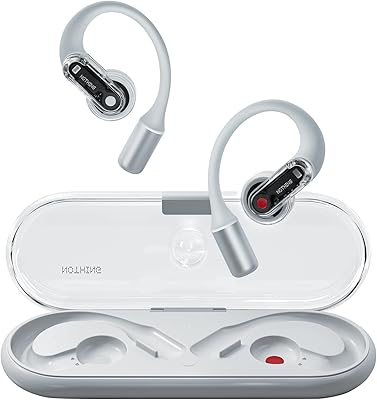
Nothing Ear (Open) Open-Ear Earbuds
79%
91%
Wearing Comfort
83%
Workout Stability
74%
Sound Quality
77%
Call Quality
49%
Sound Leakage
More
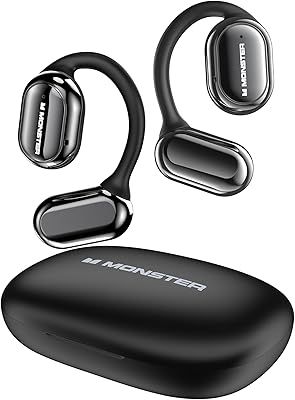
Monster AC100 Open-Ear Bluetooth Headphones
76%
88%
Battery Life
79%
Comfort & Fit
67%
Sound Quality
83%
Bluetooth Stability
71%
Call Quality
More
OJW Open Ear Wireless Sport Headphones
80%
93%
Battery Innovation
88%
Wearing Comfort
86%
Waterproofing
84%
Workout Stability
74%
Audio Clarity
More
UGREEN 45785 Open Ear Wireless Headphones
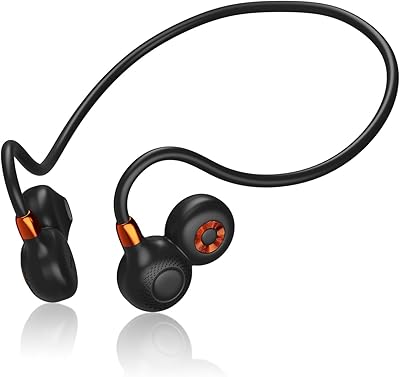
79%
91%
Wearing Comfort
83%
Fit & Stability
74%
Sound Quality
89%
Battery Life
69%
Microphone & Call Quality
More
TTQ CT26 Open-Ear Wireless Earbuds
81%
91%
Comfort & Wearability
88%
Fit Security During Activity
74%
Sound Quality
58%
Sound Leakage
87%
Battery Life
More
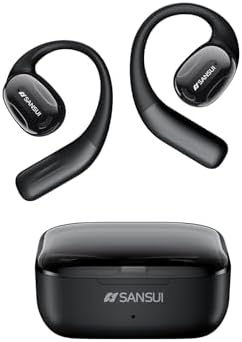
SANSUI W93 Open-Ear Wireless Earbuds
78%
91%
Wearing Comfort
88%
Stability During Exercise
67%
Sound Quality
94%
Situational Awareness
86%
Battery Life
More
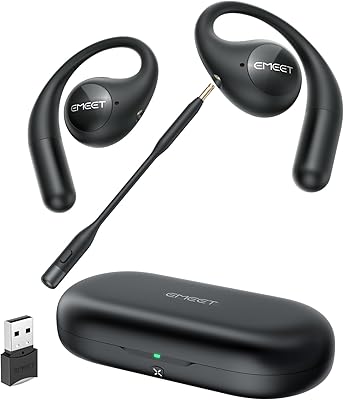
EMEET AirFlow Open-Ear Wireless Headphones
75%
93%
Wearing Comfort
81%
Call Clarity & Microphone Performance
89%
Battery Life
67%
Sound Quality for Music
52%
Noise Isolation (Listening Side)
More
Ortizan OpenCirclet I10 Open-Ear Headphones
76%
93%
Wearing Comfort
88%
Secure Fit During Activity
67%
Sound Quality
96%
Situational Awareness
21%
Noise Isolation
More
CXK EP03 Open Ear Headphones
82%
89%
Comfort and Fit
93%
Battery Life
74%
Sound Quality
88%
Ease of Use
85%
Connectivity (Bluetooth)
More
OpenRock S2 Open-Ear Wireless Sports Earbuds
80%
92%
Wearing Comfort
83%
Fit Stability
78%
Audio Quality
89%
Battery Performance
76%
Call Quality
More

FAQ

The silicone earhooks are designed to grip the outer ear securely, and most users report they hold up well even during vigorous activity like running or cycling. That said, ear shape varies considerably from person to person, so it is worth doing a short test run before committing to a long session. The hook design specifically avoids relying on ear canal friction, which tends to be more reliable for high-movement workouts.

These open-ear buds support mono use, so you can wear just one side while leaving the other in the case. This is handy for calls or situations where you want one ear completely free. Either side can function independently.

Honestly, it is not a fair apples-to-apples comparison. In-ear headphones seal off your ear canal and can deliver more bass and detail as a result. The CT11 earphones, by design, sit on the outside of your ear and let ambient noise in, which naturally reduces perceived bass and fullness. For podcasts, calls, and casual music listening, the sound is clear and pleasant. If deep bass and immersive audio are priorities for you, an open-ear design will disappoint regardless of driver size.

At moderate to high volumes, yes — some audio leakage is unavoidable with any open-ear design. In a quiet room, a person sitting close to you will likely catch what you are playing. In louder environments like a street or a gym, it is far less noticeable. This is a fundamental characteristic of the format, not a defect specific to this sport headset.

That is genuinely one of the strongest use cases for this style of headphone. Because they do not seal your ears, you can hear approaching vehicles, other cyclists calling out, or pedestrians around you while still listening to music or a podcast. It is a much safer option than in-ear buds for road use, though you should always exercise common sense about volume levels near traffic.

Take both earbuds out of the case and they should automatically enter pairing mode, indicated by a flashing light. Open the Bluetooth settings on your phone, look for the device name in the available list, and tap to connect. Most users report a straightforward first-time setup without needing to consult the manual. Subsequent connections happen automatically when you remove the earbuds from the case near a previously paired device.

Yes, as long as your TV has Bluetooth output capability, which most modern smart TVs do. You pair them the same way as with a phone — put the earbuds in pairing mode and select them from your TV's Bluetooth device list. The 100-meter range spec means cord-free listening across a typical living room is not an issue. If your older TV does not have built-in Bluetooth, you would need a separate Bluetooth transmitter.

The IPX5 rating covers sweat and direct water splashing, so a light rain shower during a run is fine. However, IPX5 does not mean waterproof in the submersion sense — wearing these in the shower or swimming is not recommended and risks damaging the internals. Think of the rating as sweat-proof and splash-resistant, not water-proof in the full meaning of the word.

The 12-hour single-charge figure is a reasonable real-world estimate at moderate volume levels, which is solid for an all-day use case. The case extending that across multiple charges makes these genuinely useful for multi-day trips or people who often forget to charge nightly. Expect the stated figures to be slightly optimistic at high volumes or in cold temperatures, as is standard with any lithium battery product.

There is a short adjustment period. The gesture set — taps for play, pause, skip, and call management — is fairly standard, but the sensitivity can feel a little eager at first, occasionally registering accidental touches when you adjust the earhook. Most users get comfortable with them after a day or two of regular use. The separate physical volume control is a nice addition that takes some pressure off the touch interface for the most frequently needed adjustment.