Overview

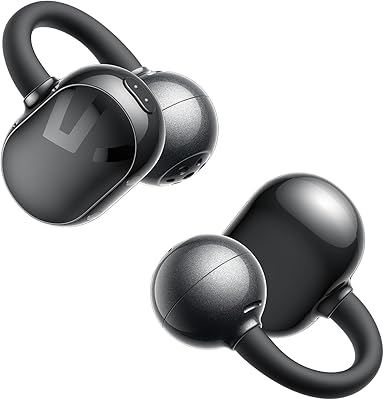
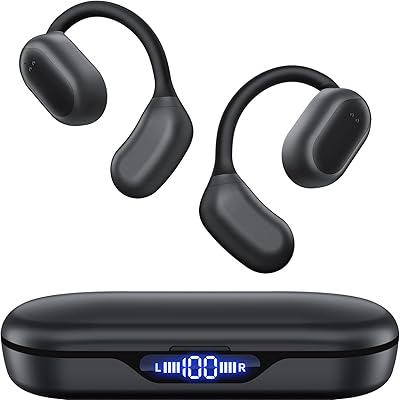
The TTQ CT26 Open-Ear Wireless Earbuds enter a growing niche in the sports audio market — built specifically for people who don't want anything stuffed into their ear canal. TTQ focuses squarely on workout-oriented gear, and the CT26s sit comfortably in the mid-range alongside competitors like Shokz OpenRun and Oladance. The earhook design is the real draw: drivers rest just outside the ear, letting ambient sound pass through naturally. That's a meaningful advantage when you're running near traffic or cycling on busy roads. Just don't come in expecting concert-hall audio — these are built for awareness and endurance, not critical listening.
Features & Benefits

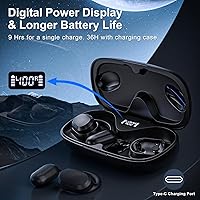
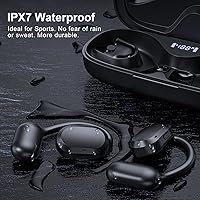
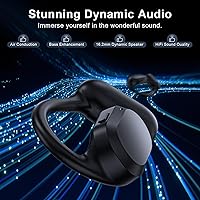
The open-ear architecture keeps your ear canal clear and dry — no moisture buildup, no pressure headaches after a long session. IPX7 waterproofing handles heavy sweat and unexpected rain without hesitation. Bluetooth 5.3 keeps the connection solid within about 10 meters, and real-world pairing is quick and consistent. The 16.2mm dynamic drivers produce decent, punchy sound with some bass presence, helped by directional sound tech that reduces audio bleed to those nearby — though at high volumes, some leakage is simply unavoidable with any open design. Battery life is a genuine strength: eight hours per charge and 36 total from the case, enough to cover four or five full workout weeks without hunting for a cable.

Best For

These open-ear earbuds are a natural pick for outdoor athletes — runners, cyclists, and anyone navigating busy streets who needs to stay aware of their surroundings without pulling buds out every few minutes. They also suit gym sessions where sealed buds feel claustrophobic after 45 minutes. The dual-mic setup makes these sport earbuds a reasonable option for commuters who spend significant time on calls, especially in windy or noisy conditions. People with ear sensitivity — from canal shape or past irritation — often find open-ear hardware a genuine relief. Drivers and outdoor workers who need audio without blocking ambient sound will find the CT26s a practical, low-hassle fit.

User Feedback

With a 4.5-star rating across nearly 450 reviews, the CT26s have clearly found an appreciative audience. The most consistent praise centers on fit and comfort — the earhooks stay secure during vigorous runs and workouts without the soreness in-ear buds cause over time. Call quality in outdoor settings earns positive marks, with the dual-mic system handling wind better than many single-mic alternatives. That said, a recurring complaint is sound leakage at higher volumes in quiet spaces like offices or libraries — an honest trade-off inherent to the open-ear format. A handful of buyers also mention that the physical button, while satisfying to press, can be tricky to locate mid-run without breaking stride.

Pros

  • Earhook fit stays secure through running, cycling, and intense gym sessions without constant readjusting.
  • Open-ear design eliminates ear canal pressure, making all-day wear far more comfortable than traditional earbuds.
  • IPX7 waterproofing handles heavy sweat and rain without any performance concerns.
  • Situational awareness is excellent — nearby traffic, voices, and environmental cues come through clearly.
  • Battery life covers roughly a full week of regular workouts before needing a wall charge.
  • Dual-mic noise cancellation handles outdoor call conditions, including moderate wind, better than most rivals.
  • Bluetooth 5.3 pairs quickly and stays connected reliably across typical outdoor distances.
  • Physical button controls are far easier to operate mid-run with sweaty fingers than touch-sensitive surfaces.
  • Fast charging support means a short plug-in adds useful playback time when you are in a hurry.
  • The LED battery display on the case removes all guesswork about remaining charge before heading out.

Cons

  • Audio leaks noticeably to people nearby at volumes above roughly 60% — a real issue in quiet indoor spaces.
  • Bass response is noticeably thinner than sealed in-ear competitors, which disappoints buyers expecting deep, full sound.
  • Button control sequences take time to memorize, and triggering the wrong action mid-run is a common early frustration.
  • Call clarity drops significantly in very loud environments like busy construction sites or crowded gym floors.
  • The charging case feels plasticky and slightly bulky compared to the more compact cases rivals offer at similar prices.
  • Auto-reconnection to a previously paired device occasionally fails after charging, requiring a manual pairing step.
  • Earhook fit can feel inconsistent for users with smaller ears, requiring adjustment before finding the right positioning.
  • Long-term durability data is limited since the product has only been on the market since early 2024.
  • The 10-meter Bluetooth range is standard but shrinks meaningfully when walls or other obstructions are involved.
  • Situational awareness benefit decreases at higher volumes, reducing the open-ear safety advantage during fast cycling.

Ratings

The TTQ CT26 Open-Ear Wireless Earbuds have been scored by our AI system after processing verified buyer reviews from global markets, with spam, bot-generated feedback, and incentivized posts actively filtered out. These scores reflect the honest consensus of real users — the praised strengths and the genuine frustrations alike. The result is a transparent picture of where the CT26s genuinely deliver and where they ask for compromise.

Comfort & Wearability
91%
The earhook design consistently earns high marks from buyers who wear the CT26s for 60, 90, even 120 minutes without discomfort. Unlike in-ear tips that cause canal pressure or soreness over time, the open-ear format sits lightly against the outer ear — a genuine relief for users with sensitive ears or narrow canals.
A minority of users with smaller ears report that the earhooks feel slightly loose during the first few wears before they find the right positioning. There are occasional mentions that the hook material, while soft, can feel slightly warm against the skin during intense summer workouts.
Fit Security During Activity
88%
Buyers who run, cycle, and do HIIT workouts consistently note that the CT26s stay firmly in place without readjusting. The earhook wrap provides a mechanical hold that does not depend on ear canal friction, which means vigorous head movement rarely dislodges them — a major advantage over traditional sports tips.
A handful of reviewers mention that during very high-intensity lateral movement — like agility drills or jumping exercises — the fit can shift slightly. This seems more related to individual ear geometry than a design flaw, but it is worth noting for buyers whose workouts involve frequent sudden direction changes.
Sound Quality
74%
26%
For an open-ear design at this price point, the 16.2mm drivers produce surprisingly full-bodied sound with acceptable mid-range clarity. Vocals come through cleanly during podcast listening, and the bass has enough presence to keep workout music feeling energetic rather than thin and flat.
Bass depth does not compare to sealed in-ear competitors — physics simply does not allow it when the driver is not creating a closed chamber against the ear canal. At higher volumes, audio quality plateaus, and the sound stage feels limited compared to over-ear alternatives in a similar price range.
Sound Leakage
58%
42%
The DT 6.0 directional sound tech does make a measurable difference compared to older open-ear designs, reducing how much audio escapes outward at moderate volumes. In outdoor environments — where the CT26s are clearly intended to be used — leakage is essentially a non-issue for those around you.
In quiet indoor settings like offices, libraries, or public transit, users report that audio at 60% volume or above is audible to nearby people. This is an inherent limitation of the open-ear format rather than a TTQ-specific failure, but buyers who plan to use these sport earbuds indoors regularly should factor this in carefully.
Battery Life
87%
Eight hours per charge is genuinely practical — enough to cover a full workday of casual listening or roughly five to six typical workout sessions before needing the case. The 36-hour total capacity from the charging case means most users go a full week or more between wall charges, which reduces the mental overhead of battery management considerably.
A few buyers note that real-world battery life during phone calls lands slightly below the advertised nine-hour figure, especially in areas with weaker Bluetooth signal strength. The LED case indicator, while useful, does not show granular percentage levels — just broad charge stages.
Waterproofing & Durability
89%
IPX7 is one of the stronger waterproof ratings in the sports earbud category, and users report confidently wearing the CT26s through heavy rain, intense sweat sessions, and even brief accidental splashes near sinks or pools. Multiple reviewers specifically mention relief at not needing to remove them when the weather turns unexpectedly.
Long-term durability feedback is limited given the product's relatively recent market entry. A small number of reviewers mention cosmetic wear on the earhook material after several months of daily outdoor use, though functional performance appears to remain intact in those cases.
Bluetooth Connectivity
83%
Bluetooth 5.3 provides fast initial pairing and a stable connection that most users describe as rock-solid during outdoor use. Reconnecting to a previously paired device is quick and reliable, which matters when you are gearing up for a run and do not want to troubleshoot connections before heading out.
A modest number of reviewers report occasional brief audio dropouts in crowded urban environments with heavy wireless traffic — think busy train stations or packed gyms. The 10-meter range is standard but not exceptional, and walls or obstructions reduce it noticeably in practice.
Call Quality
79%
21%
The dual-mic noise cancellation performs well enough during outdoor calls to satisfy commuters and active users as their primary call headset. Wind handling in particular is better than many single-mic competitors, and voices come through clearly for most callers on the receiving end during low-to-moderate ambient noise.
In very noisy environments — construction sites, heavy traffic, loud gym floors — call quality drops noticeably and recipients occasionally report struggling to hear the speaker clearly. Indoor call quality is good but not exceptional, and the open-ear design means the user hears significant room noise during calls.
Controls & Usability
76%
24%
The physical button control is frequently praised as a practical choice for active users — tangible buttons are far easier to operate with sweaty fingers mid-run than touch-sensitive surfaces. Being able to adjust volume, answer calls, and control playback from a single button without unlocking a phone is a convenience that buyers genuinely appreciate.
Learning the button sequences for different functions takes a short adjustment period, and a few users mention accidentally triggering the wrong action mid-workout before fully memorizing the controls. Locating the button quickly without looking can also be awkward during high-intensity activity.
Situational Awareness
93%
This is arguably where the CT26s shine most clearly. Runners near traffic, cyclists on open roads, and outdoor workers all consistently report feeling much safer compared to using sealed earbuds. The ability to hear approaching vehicles, pedestrians, and environmental cues without removing the earbuds is the core value proposition — and it delivers reliably.
At volumes above roughly 70%, ambient sound awareness drops more than some users expect. A few cyclists mention that road and wind noise already reduces situational clarity at speed, which somewhat limits how much the open-ear design helps in practice during fast outdoor riding.
Charging Case Design
72%
28%
The LED battery display on the case is a practical touch that removes the guesswork of whether the case has enough charge for another session. Fast charging support means a short plug-in while getting ready can add meaningful playback time in a pinch, which regular commuters specifically appreciate.
The plastic casing feels functional rather than premium, and a few users flag that the hinge or lid feels less sturdy than they expected. The case is not pocketable in the way truly compact earbud cases are — it sits somewhere between compact and bulky, which can be mildly inconvenient for minimalist carry.
Value for Money
82%
18%
Positioned in the mid-range of the open-ear market, the CT26s offer a competitive feature set for the price — IPX7 waterproofing, Bluetooth 5.3, dual-mic noise cancellation, and strong battery life together represent solid value. Buyers who switch from premium open-ear brands often note genuine surprise at how capable these sport earbuds are relative to cost.
Buyers expecting sound quality or build premium equivalent to higher-priced rivals like Shokz will find the comparison unflattering. The value equation is strong when assessed on its own terms, but users who stretch their budget for the CT26s expecting a flagship experience may feel mildly underwhelmed in the finer details.
Setup & Initial Pairing
84%
Most reviewers report that initial pairing is quick and frustration-free across both Android and iOS devices. The earbuds enter pairing mode automatically when removed from the case, which reduces friction for buyers who are not technically inclined or who simply want to start using them immediately.
A small number of users report that the earbuds occasionally fail to auto-connect to the last paired device after a charging session, requiring a manual reconnect. This seems inconsistent rather than universal, but it is mentioned frequently enough to be worth flagging for buyers who depend on truly automatic reconnection.
Microphone Placement & Voice Pickup
71%
29%
The dual-mic configuration captures voice clearly enough for casual outdoor calls and remote work video meetings when conditions are reasonably controlled. Users on moderate walking commutes and light cycling report call partners hearing them clearly without needing to raise their voice significantly.
Mic pickup in strong crosswinds or very loud environments is inconsistent — some callers report voice breaking up or sounding muffled even when the wearer feels conditions are acceptable. The microphone placement relative to the mouth is less direct than a boom-style headset, which limits absolute clarity in demanding call scenarios.

Suitable for:

The TTQ CT26 Open-Ear Wireless Earbuds are purpose-built for active people who spend meaningful time outdoors and cannot afford to tune out their environment. Runners who train on roads or shared paths will appreciate being able to hear approaching traffic, cyclists get that same safety margin without fumbling with a single earbud, and outdoor workers who need audio throughout a shift can wear them all day without the ear soreness that in-ear tips cause over time. Gym-goers who have always found sealed buds sweaty and claustrophobic after 45 minutes will find the open-ear format a genuine improvement to their workout experience. The CT26s also make a practical daily driver for commuters who take frequent calls — the dual-mic setup handles wind better than most in this category, and the physical controls work reliably with sweaty or gloved hands. Anyone who has struggled with ear canal sensitivity, recurring irritation, or simply never found an in-ear tip that fits comfortably will likely find these sport earbuds a welcome alternative worth trying.
Not suitable for:

If your primary use case is focused, indoor listening — whether at a desk, in a library, or on a quiet commute — the TTQ CT26 Open-Ear Wireless Earbuds are probably not the right call. The open-ear format means audio leaks outward at moderate-to-high volumes, which will bother people nearby in shared spaces and is simply unavoidable physics with this design. Bass depth is also noticeably limited compared to sealed in-ear or over-ear alternatives — listeners who want a rich, immersive low end for music will find the CT26s underwhelming regardless of the volume they set. Audiophiles or anyone who expects the kind of sound isolation that allows them to focus in noisy environments will be disappointed — these are not built for that use case at all. Buyers on a tighter budget who are weighing these against basic wired earbuds should also think carefully, since the open-ear sound experience at lower volumes is quite different from what most people are used to.

Specifications

  • Form Factor: Open-ear design with rigid earhook; drivers rest outside the ear canal without any insertion required.
  • Bluetooth Version: Bluetooth 5.3 for fast, stable wireless pairing with a practical range of up to 10 meters.
  • Waterproof Rating: IPX7-rated, meaning the earbuds can withstand immersion in water up to 1 meter deep for 30 minutes.
  • Driver Size: 16.2mm dynamic audio driver delivers broad sound reproduction with an emphasis on mid-range clarity and moderate bass.
  • Sound Technology: DT 6.0 directional sound transmission technology is applied to reduce audio leakage toward surrounding listeners.
  • Battery Per Charge: Up to 8 hours of music playback or 9 hours of continuous phone call use on a single charge.
  • Total Battery Life: Combined battery capacity of the earbuds and charging case provides up to 36 hours of total listening time.
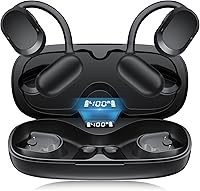
  • Charging Case: Plastic charging case with an LED battery level display and support for fast charging via USB-C.
  • Microphone: Dual-microphone array with AI-assisted noise cancellation designed to reduce ambient noise during phone calls.
  • Controls: Single physical multi-function button per earbud handles media playback, call management, and volume adjustment.
  • Wireless Range: Rated Bluetooth range is 10 meters in open-air conditions; walls and obstructions will reduce effective distance.
  • Driver Type: Dynamic driver configuration tuned for broad-spectrum audio reproduction suited to speech, podcasts, and workout music.
  • Compatibility: Compatible with any Bluetooth-enabled device including smartphones, tablets, and computers across iOS and Android platforms.
  • Item Weight: Combined weight of the earbuds and charging case is approximately 7.8 ounces (221 grams).
  • Package Dimensions: Retail packaging measures 5.87 x 3.82 x 1.65 inches, housing the earbuds, charging case, and USB charging cable.
  • Materials: Earbud housing and charging case are constructed from hard ABS plastic with a soft flexible material used for the earhook contact points.
  • Earpiece Shape: Hook-style earpiece wraps around the outer ear to secure the driver in position without inserting into the canal.
  • Control Method: Physical tactile button — not a touch surface — providing reliable operation during exercise with wet or gloved hands.
  • Model Number: Manufacturer model designation is CT26, produced by TTQ and first made available in January 2024.
  • Included Contents: Package includes the CT26 earbuds, charging case, and a USB charging cable; no ear tips or silicone accessories are included.

Related Reviews
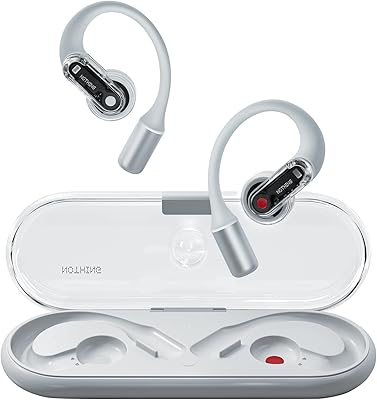
Nothing Ear (Open) Open-Ear Earbuds
79%
91%
Wearing Comfort
83%
Workout Stability
74%
Sound Quality
77%
Call Quality
49%
Sound Leakage
More
Monster AC338 Open-Ear Bluetooth Earbuds
75%
83%
Comfort & Fit
78%
Battery Life
61%
Audio Quality
86%
Water & Sweat Resistance
81%
Bluetooth Connectivity
More
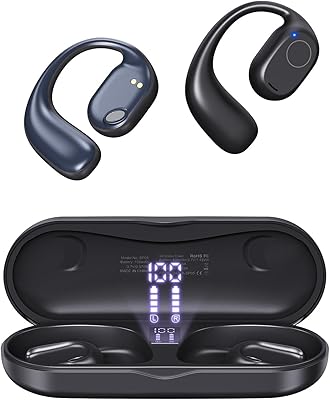
Haowolf SP05 Open-Ear Bluetooth Sports Earbuds
80%
88%
Comfort & Wearability
83%
Fit & Stability
92%
Battery Life
67%
Sound Quality
71%
Call Quality
More
Htcmf O8 Open Ear Earbuds
84%
75%
Sound Quality
90%
Comfort & Fit
95%
Battery Life
88%
Waterproof Durability
84%
Bluetooth Connectivity
More
Monster Open AC601 Clip-On Wireless Earbuds
73%
83%
Wearing Comfort
61%
Sound Quality
69%
Call Quality
74%
Fit & Stability
88%
Battery Life
More
Sennheiser ACCENTUM Open Wireless Earbuds
82%
88%
Comfort & Fit
80%
Sound Quality
93%
Battery Life
84%
Water Resistance
82%
Connectivity (Bluetooth)
More
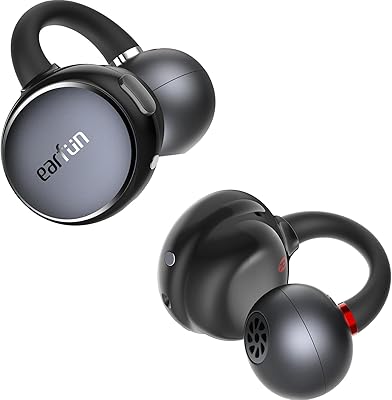
EarFun Clip Open-Ear Earbuds
75%
88%
Wearing Comfort
83%
Audio Quality
71%
Call Quality
74%
Fit Stability
91%
Battery Life
More
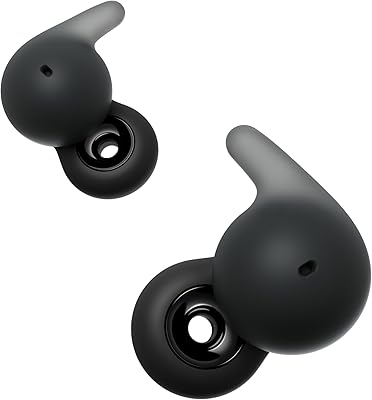
Sony LinkBuds Open Wireless Earbuds
86%
91%
Comfort for Long Listening
87%
Ambient Sound Transparency
92%
Battery Life
83%
Sound Quality
86%
Voice Pickup Clarity
More
LOBKIN S18 Open Ear Clip On Earbuds
83%
73%
Sound Quality
88%
Comfort & Fit
85%
Battery Life
92%
Water Resistance
79%
Build Quality
More
PSIER EP20 Open Ear Bluetooth Earbuds
86%
85%
Sound Quality
92%
Comfort & Fit
90%
Battery Life
88%
Waterproof Performance
86%
Bluetooth Connectivity
More

FAQ

The earhook design is genuinely different from standard in-ear tips in terms of how it anchors to your ear — rather than relying on canal friction, the hook wraps around the outer ear and holds the driver in position mechanically. Most runners and cyclists report a secure fit even through vigorous head movement. That said, ear geometry varies, so buyers with very small ears occasionally need a short adjustment period to find the right positioning before the fit feels truly dialed in.

Yes — the IPX7 waterproof rating is one of the stronger certifications in this category. It means the earbuds can handle full submersion up to 1 meter for 30 minutes, so heavy rain, intense sweat, and accidental splashes are all well within their tolerance. Just avoid submerging the charging case, which is not rated to the same standard.

At moderate volumes — roughly 50 to 60 percent — audio leakage is minimal enough that people nearby are unlikely to notice. At higher volumes in quiet indoor environments like offices or public transit, some leakage is audible to those sitting close. This is a physical characteristic of any open-ear design, not a flaw specific to these sport earbuds, so it is worth factoring in if you plan to use them primarily indoors.

Better than most single-mic earbuds in the same category. The dual-mic noise cancellation system is specifically tuned to handle outdoor wind noise, and most callers report hearing the speaker clearly during moderate conditions like city walking or light cycling. In strong crosswinds or very loud outdoor environments, voice clarity drops noticeably — but for everyday outdoor commuting or casual workouts, call performance is genuinely solid.

The single physical button on each earbud uses a combination of single press, double press, triple press, and press-and-hold inputs to handle all functions — play, pause, skip, answer calls, and volume adjustment. It takes a few sessions to memorize the sequences, but once you do, the physical button is notably easier to use mid-workout than touch-sensitive surfaces. A quick reference guide typically comes in the box.

A full charge from empty to 100 percent takes around 1.5 to 2 hours for the earbuds, and somewhat longer for the case itself. Fast charging is genuinely useful here — a 15 to 20 minute charge before a workout can add a couple of hours of playback if you forgot to charge the night before. It is not instantaneous, but it is noticeably quicker than older earbuds without this feature.

Almost certainly, yes. The entire design premise of these open-ear earbuds is that nothing enters the ear canal — the driver sits just outside and sound travels through open air. There is no silicone tip pressing against sensitive skin, no pressure buildup, and no moisture trapping inside the canal. Users who specifically switched from in-ear designs due to irritation or soreness consistently report that the open-ear format resolves those issues entirely.

They pair with any Bluetooth-enabled device, including laptops, tablets, and desktop computers with a Bluetooth adapter. For video calls on a computer, the dual-mic pickup works through whatever conferencing platform you use — Zoom, Teams, Google Meet, and similar software all recognize the CT26s as a standard Bluetooth headset without needing any drivers or special software.

If you work out for roughly 45 to 60 minutes a day, the earbuds alone last through about seven or eight sessions before the buds need to go back in the case. The case then recharges the earbuds multiple times over, so a typical user who exercises daily could realistically go a full week — sometimes more — without ever plugging the case into a wall. It is one of the stronger practical battery setups in this market segment.

Yes, the CT26s pair with both iOS and Android devices without any compatibility issues. Basic controls — play, pause, skip, volume, and call management — work reliably on both platforms. Some advanced features on competing earbuds require companion apps that are platform-specific, but the CT26s use hardware button controls that function identically regardless of what device they are connected to, which actually simplifies the experience.