Overview

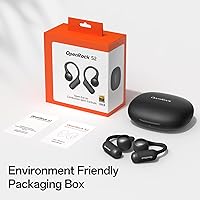
The OpenRock S2 Open-Ear Wireless Sports Earbuds enter a category that has been gaining serious traction among athletes who simply want to hear the world around them without sacrificing music. Open-ear designs appeal to runners, cyclists, and hikers who need that ambient sound awareness — traffic approaching from behind, a trail companion calling out, or just the general rhythm of a city commute. The S2 positions itself as a capable mid-range option in this space, using a hook-clip frame rather than bone conduction or ear canal insertion. OpenRock's design philosophy centers clearly on outdoor fitness, and that intent shows in nearly every feature choice made here.
Features & Benefits

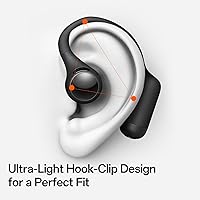
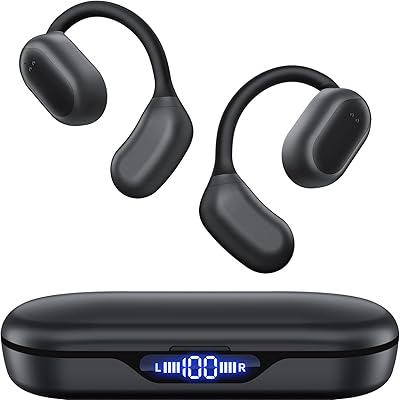
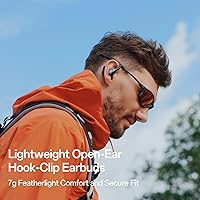
At just 7 grams per earbud, the OpenRock S2 is genuinely featherlight on the ear — a titanium filament frame wrapped in soft silicone means most people forget they're wearing it within minutes. The BassDirect system channels low frequencies toward the ear canal rather than dispersing them openly, which does produce a more satisfying low-end than typical open-ear designs, though it still won't match in-ear bass depth. LDAC support is a meaningful addition at this price point, enabling high-resolution audio streaming from compatible Android devices — you notice the difference on layered tracks. The four-microphone array handles wind and environmental noise well on calls, Bluetooth 6.0 ensures a stable, low-latency connection, and the bonus camera shutter shortcut is surprisingly handy for solo outdoor photography.

Best For

The S2 makes most sense for runners and cyclists who train in environments where tuning out completely would be dangerous or just plain impractical. The all-day comfort from that ultralight frame also makes it a solid choice for remote workers or commuters who want music or calls without the fatigue of traditional in-ear buds worn across a long workday. Outdoor creators who frequently shoot solo content will genuinely appreciate the camera control shortcut — it removes an awkward reach to the phone mid-activity. Heavy sweaters who've had other earbuds fail on them will find the layered moisture protection reassuring. That said, if you want deep bass, active noise cancellation, or complete audio isolation, this open-ear sport earbud is simply the wrong category.

User Feedback

Buyer sentiment around the OpenRock S2 is generally positive, with most praise directed at the comfortable, secure fit — though a minority of users with unusually small or large ears report needing adjustment time. Call quality in moderate wind draws consistent compliments, while a handful of reviewers note that truly strong gusts still challenge the microphone array. The companion app offers EQ presets and adjustments, and most users find it functional rather than impressive. Long-term durability data is limited given the product's relatively recent availability, so coating and hinge wear remain open questions. On sound leakage, open-ear users generally accept that others nearby can faintly hear audio — that's the trade-off of the format, not a flaw unique to this earbud.

Pros

  • At just 7 grams per earbud, the S2 is light enough that most users genuinely forget it is there during long sessions.
  • LDAC codec support enables noticeably higher audio quality on compatible Android devices compared to standard Bluetooth codecs.
  • The hook-clip titanium frame stays secure during vigorous activity without the discomfort of ear canal pressure.
  • A full day of use and then some is realistic — battery life with the charging case covers multi-day trips without anxiety.
  • Five minutes of charging delivering a full hour of playback is a genuinely useful safety net before a morning run.
  • The four-microphone array handles call clarity in moderate wind better than most open-ear competitors at this price.
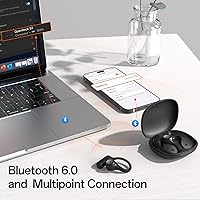
  • Bluetooth 6.0 multipoint lets you stay connected to a phone and laptop simultaneously without manual re-pairing.
  • The remote camera shutter feature is a small but practical differentiator for solo hikers and outdoor creators.
  • The layered sweat-resistance approach goes beyond a simple coating, addressing multiple failure points that typically kill sport earbuds early.
  • Open-ear design means full situational awareness — a real safety advantage for road runners and urban cyclists.

Cons

  • Bass depth is limited by the open-ear format — no engineering workaround fully closes that gap with in-ear designs.
  • Sound leakage is inherent to the design, making the S2 a poor choice for quiet offices or shared workspaces.
  • The companion app offers only basic EQ adjustments and lacks the depth that competitors at this price point provide.
  • Long-term durability of the titanium hinge and nano-coating remains uncertain given the product's limited time on the market.
  • Bluetooth range is rated at around 10 meters, which is on the shorter end for users who leave their phone at a distance.
  • Users with smaller or atypically shaped ears may struggle to achieve a stable, comfortable fit without repeated adjustment.
  • Extreme wind conditions can still challenge the microphone array despite the wind-resistant structure claim.
  • The open-ear format is inherently niche — buyers expecting traditional earbud performance will likely feel underwhelmed.
  • No active noise cancellation means the S2 is unsuitable for focus work in noisy environments.
  • The physical button control scheme can feel limited for users accustomed to full touch gesture interfaces.

Ratings

The scores below reflect AI-driven analysis of verified global user reviews for the OpenRock S2 Open-Ear Wireless Sports Earbuds, with spam, bot-generated, and incentivized feedback actively filtered out to ensure accuracy. Each category is scored based on real buyer sentiment, capturing both the genuine strengths that keep users coming back and the friction points that affect day-to-day satisfaction. Nothing here is glossed over — the trade-offs are reflected as honestly as the praise.

Wearing Comfort
92%
The 7-gram weight is the most consistently praised aspect across user feedback — active users report wearing the S2 for three or four hours into a gym session or trail run without the ear fatigue that plagues heavier hook-style buds. The soft silicone frame adapts to the outer ear without creating any canal pressure, which is a meaningful relief for users who have historically struggled with in-ear designs.
A subset of users with smaller ears or very low-profile ear shapes report that the hook sits slightly loosely and needs repositioning after aggressive head movement. This is not a universal issue, but it is consistent enough to flag for buyers who already know hook-style earbuds have not worked well for them in the past.
Fit Stability
83%
During moderate to high-intensity activity — cycling, running, HIIT workouts — the titanium clip holds its position reliably for the majority of users, and the open-ear format removes the suction-and-slip problem common to in-ear sport buds. Athletes who previously dealt with earbuds falling mid-stride tend to appreciate the mechanical simplicity of the hook design.
Edge cases exist: users with particularly smooth or narrow outer ear ridges have noted that the clip loses grip during sudden directional changes or heavy head movement. The fit is not adjustable, so there is no way to fine-tune the tension if the default size does not match your anatomy well.
Audio Quality
78%
22%
For an open-ear design, the S2 delivers genuinely competitive sound — the directed bass system produces more low-frequency body than most comparable clip-style earbuds, and LDAC support on Android results in a noticeably more detailed mid and high-frequency presentation on complex tracks. Commuters and casual listeners are largely satisfied with the overall tonal balance.
Bass depth is the honest limitation here, and users who switch from in-ear monitors or over-ear headphones will notice the gap immediately. Open acoustics mean low frequencies partially dissipate before reaching the ear, and no amount of driver engineering fully compensates — a trade-off inherent to the format, not a flaw specific to the S2.
Battery Performance
89%
Total endurance across the earbuds and case easily covers multi-day use for most people without needing a wall outlet, which is exactly what active outdoor users need on longer trips or travel days. The emergency quick-charge capability — a short top-up yielding an hour of playback — has saved more than a few pre-run charging panics according to user anecdotes.
The per-earbud battery life, while reasonable, does drop noticeably at higher volumes or when LDAC is active, which can catch users off guard if they are used to quoting the maximum figure. A few users also noted the case charging indicator could be more precise — it is not always clear how much case battery remains at a glance.
Call Quality
76%
24%
In calm indoor environments and light outdoor conditions, call recipients consistently report clean, natural-sounding audio from the four-mic array. The AI noise filtering handles keyboard clatter, coffee shop ambience, and light traffic without making the caller's voice sound processed or compressed, which puts it ahead of many single-mic open-ear competitors.
Strong wind is where the microphone setup noticeably struggles — gusts introduce audible buffeting that the wind-resistant structure cannot fully suppress, and some callers on the other end do find it disruptive during outdoor use in exposed conditions. This is a meaningful limitation for cyclists and runners who take calls at speed.
Sweat & Water Resistance
88%
The layered protection approach addresses real failure modes that basic IPX-rated earbuds ignore, particularly sweat channeling away from the internal cavity rather than simply coating the outside. Heavy-sweating users who have a history of moisture-related earbud failures report noticeably greater confidence and durability with the S2 during intense sessions.
Long-term coating durability is still an open question given how recently the product launched, and there is limited data from users who have put it through a full year of intense daily training. Nano-coatings can degrade with repeated exposure to sweat acids over time, so sustained resistance over twelve or more months remains unverified.
Bluetooth Connectivity
86%
Bluetooth 6.0 delivers fast, consistent pairing — most users report the earbuds connecting almost instantly when removed from the case near a previously paired device. Multipoint dual-device connection works reliably in practice, with audio switching between a phone call and laptop audio happening quickly and without requiring manual intervention.
The effective wireless range is shorter than some competing earbuds, which becomes relevant if you frequently leave your phone in a bag or on a shelf across the room. A handful of users also noted that multipoint performance can become inconsistent when both connected devices are actively transmitting audio simultaneously.
App Experience
63%
37%
The companion app covers the basics — EQ presets, control remapping, and firmware updates — and is accessible enough that non-technical users can navigate it without frustration. For users who simply want to flip between a bass-boosted preset and a flat profile, it does the job adequately.
Compared to the companion apps from established audio brands at a similar price point, the OpenRock app feels underdeveloped — EQ customization is limited to presets rather than full parametric control, and the feature set has not expanded meaningfully since launch. Users expecting a polished, feature-rich software experience will find it underwhelming.
Ambient Awareness
94%
This is the core functional advantage of the open-ear format and the S2 delivers it without compromise — road runners can hear approaching vehicles, cyclists can track surrounding traffic, and commuters can catch station announcements without removing the buds. No transparency mode or passthrough algorithm is needed because the ear is genuinely open.
The same openness that makes situational awareness excellent means there is essentially no way to reduce environmental intrusion when you actually want quiet. In loud environments like construction zones or busy transit hubs, external noise competes directly with audio and there is no way to create even partial acoustic separation.
Sound Leakage
58%
42%
At low to moderate listening volumes, leakage is minimal enough that seated nearby strangers in a quiet office or train generally do not react, which is better than some open-ear designs that broadcast audio like a small speaker. Casual listening volume is genuinely workable in most public settings.
At higher volumes — which is often where the bass performance becomes satisfying — leakage becomes socially noticeable in quiet environments. Library users, open-plan office workers, or anyone sharing a bedroom with a light sleeper will find themselves self-limiting volume, which can undercut the audio quality experience.
Build Quality
81%
19%
The combination of ABS housing, metal filament, and silicone feels considered rather than cheap — the hinges and joints have a solid tactile quality, and the charging case clicks shut with a reassuring snap that suggests reasonable manufacturing tolerances. First impressions out of the box are consistently positive among users.
As with moisture resistance, long-term structural durability data is thin. A small number of early adopters have reported minor surface wear on the silicone coating after several months of daily use, and hinge flex over time is a common concern with clip-style earbuds that cannot yet be fully evaluated for this model.
Control Usability
72%
28%
Physical buttons give tactile confirmation of each press, which is genuinely easier to operate mid-run or while wearing gloves than capacitive touch surfaces that require precision. The camera shutter shortcut is a practical bonus that outdoor content creators have responded to positively in feedback.
The button layout is limited compared to touch-gesture interfaces — accessing less common functions requires multi-press sequences that are easy to mis-trigger during vigorous activity. Users who have come from earbuds with full gesture controls sometimes find the physical button scheme feels like a step backward in convenience.
Value for Money
79%
21%
For buyers specifically seeking a sport-oriented open-ear earbud with LDAC support, Bluetooth 6.0, and serious sweat resistance, the S2 sits at a price that undercuts several established competitors offering similar feature sets. The overall package — hardware, battery, and codec support — represents solid engineering for the tier.
Buyers comparing purely on audio performance against in-ear alternatives at a similar price may feel the open-ear format does not justify the cost premium over a well-tuned in-ear model. The limited app depth and unproven long-term durability also make the value proposition feel slightly less certain than for brands with a longer track record.
Quick Charge Speed
87%
The fast-charge efficiency is genuinely useful rather than a spec-sheet footnote — a very short charge window before a workout yielding a full hour of playback is a realistic lifeline that active users have actually relied on. Multiple reviewers specifically called this out as a feature they use regularly rather than just occasionally.
Quick charging requires the case to have sufficient stored charge itself, and if both the earbuds and case are simultaneously depleted, users are back to waiting for a standard charge cycle. The case does not support wireless charging, which is a minor convenience miss at this price point for users accustomed to that feature.

Suitable for:

The OpenRock S2 Open-Ear Wireless Sports Earbuds are built for people who spend serious time outdoors and cannot afford to be aurally cut off from their surroundings. Runners who train on roads, cyclists who share paths with traffic, and hikers on busy trails will appreciate the ability to hear their environment clearly while still enjoying music or taking calls. The ultralight hook-clip design also makes this open-ear sport earbud a strong pick for remote workers or commuters who wear earbuds for hours at a stretch and end up with ear fatigue from traditional in-ear models. Heavy sweaters who have burned through moisture-damaged earbuds will find the layered sweat-resistance system a practical upgrade over basic IPX ratings. Solo outdoor content creators get a genuine bonus in the camera shutter shortcut, removing the need to fumble with a phone mid-activity. Anyone who streams high-resolution audio from an Android device and wants to hear the difference on a pair of open-ear buds will find the LDAC support a meaningful step up at this price tier.
Not suitable for:

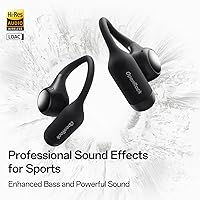
The OpenRock S2 Open-Ear Wireless Sports Earbuds are a poor fit for anyone whose primary concern is noise isolation or deep, immersive bass. Open-ear by design means sound leaks in and out — if you work in a loud office, commute on a noisy subway, or simply want to block out the world, this format will frustrate you regardless of how good the audio tuning is. Bass enthusiasts who judge earbuds by low-end punch will find the S2 underwhelming compared to a well-fitting in-ear model, even with BassDirect technology doing its best work. Audiophiles chasing studio-accurate monitoring or flat frequency response should also look elsewhere — the 40 kHz range and LDAC support are impressive on paper, but open-ear acoustics introduce too many variables for critical listening. If app-based customization is important to you, buyer feedback suggests the companion app is functional but not particularly deep or refined. Finally, users with very small or unusually shaped ears have reported inconsistent fit, so anyone who has struggled with hook-style earbuds in the past should try before committing.
Specifications

  • Earbud Weight: Each earbud weighs just 7 grams, making it one of the lightest hook-clip designs currently available in the open-ear category.
  • Driver Size: A 12mm dynamic driver powers audio output, which is a larger driver than many competing open-ear models at this price tier.
  • Audio Codec: The S2 supports the LDAC codec and carries Hi-Res Audio certification, enabling high-resolution wireless streaming from compatible Android devices.
  • Bluetooth Version: Bluetooth 6.0 is used for device pairing, offering faster connection establishment and more stable transmission than previous Bluetooth generations.
  • Multipoint Connection: The earbuds can maintain simultaneous Bluetooth connections to two devices, allowing quick audio switching between a smartphone and a laptop without manual re-pairing.
  • Battery – Earbuds: A single full charge delivers approximately 8 hours of continuous playback at moderate volume levels.
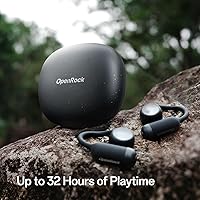
  • Battery – Total: Combined with the charging case, total available playtime extends to around 32 hours before the case itself needs recharging.
  • Quick Charge: A 5-minute charge via the case provides roughly 1 hour of playback, useful as an emergency top-up before a workout.
  • Microphones: Four microphones are arranged in a beamforming array with AI-driven noise cancellation to filter environmental noise during calls.
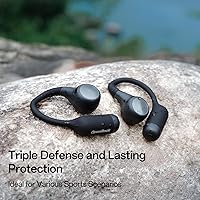
  • Water Resistance: Protection is achieved through three layers: an angled fit that directs sweat away, an isolated internal cavity shielding electronics, and a nano-coating on internal components.
  • Fit Style: The hook-clip frame uses a 0.6mm titanium filament core wrapped in soft liquid silicone, conforming to a range of ear shapes without exerting canal pressure.
  • Materials: The outer shell is constructed from ABS plastic combined with metal and silicone elements for a balance of lightweight rigidity and skin-safe comfort.
  • Impedance: The rated impedance is 22 Ohms, which is well within the range that standard smartphones and portable devices can drive without amplification.
  • Frequency Response: The driver is rated to reproduce frequencies up to 40 kHz, extending beyond the standard 20 kHz threshold of human hearing for high-resolution audio compatibility.
  • Controls: Physical button controls on the earbud handle playback, calls, and the camera shutter, while the companion app enables EQ adjustment and additional settings.
  • Bluetooth Range: The specified wireless operating range is approximately 10 meters under typical open-air conditions without obstructions.
  • Connectivity: The earbuds are compatible with smartphones, laptops, and tablets via standard Bluetooth, with no proprietary dongle required.
  • In the Box: Each package includes the earbuds, a charging case, and a user manual — no additional ear tips or accessories are included given the open-ear design.

Related Reviews
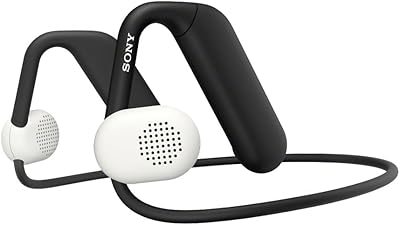
OpenRock Pro Bluetooth 5.2 Wireless Open-Ear Headphones
85%
83%
Sound Quality
91%
Comfort for Long Use
90%
Battery Life
88%
Water Resistance (IPX5)
75%
Fit and Stability During Exercise
More
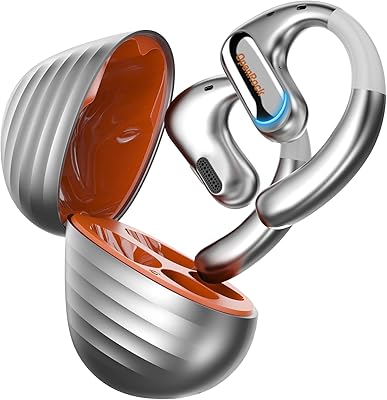
Sony Float Run Open-Ear Sport Headphones
77%
91%
Wearing Comfort
94%
Situational Awareness
83%
Fit Stability
61%
Audio Quality
78%
Battery Life
More
Nothing Ear (Open) Open-Ear Earbuds
79%
91%
Wearing Comfort
83%
Workout Stability
74%
Sound Quality
77%
Call Quality
49%
Sound Leakage
More
vnilrgle T15 Open-Ear Bluetooth Earbuds
76%
88%
Value for Money
84%
Battery Life
81%
Comfort & Fit
67%
Sound Quality
93%
Situational Awareness
More
Sennheiser Sport True Wireless Earbuds
86%
88%
Sound Quality
94%
Battery Life
85%
Comfort & Fit
90%
Durability (Water & Sweat Resistance)
78%
Touch Controls
More
Sennheiser ACCENTUM Open Wireless Earbuds
82%
88%
Comfort & Fit
80%
Sound Quality
93%
Battery Life
84%
Water Resistance
82%
Connectivity (Bluetooth)
More
Haowolf SP05 Open-Ear Bluetooth Sports Earbuds
80%
88%
Comfort & Wearability
83%
Fit & Stability
92%
Battery Life
67%
Sound Quality
71%
Call Quality
More
Monster AC338 Open-Ear Bluetooth Earbuds
75%
83%
Comfort & Fit
78%
Battery Life
61%
Audio Quality
86%
Water & Sweat Resistance
81%
Bluetooth Connectivity
More
EarFun Clip Open-Ear Earbuds
75%
88%
Wearing Comfort
83%
Audio Quality
71%
Call Quality
74%
Fit Stability
91%
Battery Life
More
JLab JBuds Open Sport Open-Ear Earbuds
76%
88%
Fit & Stability
67%
Sound Quality
83%
Battery Life
62%
Call Quality
74%
Comfort Over Time
More

FAQ

For most users, yes. The titanium hook-clip conforms closely to the outer ear and does not rely on in-canal pressure to stay put. That said, users with unusually small or large ears have occasionally reported needing to reseat them, so if you have had issues with hook-style buds in the past, that is worth keeping in mind.

Honestly, open-ear designs will never match a well-sealing in-ear model for low-end punch — physics simply works against them. The S2 uses a directed bass system that channels low frequencies toward the ear canal rather than letting them disperse, which does produce a fuller sound than most open-ear competitors, but bass lovers used to in-ear monitors should calibrate their expectations accordingly.

Yes, they pair with any Bluetooth-enabled device including iPhones. Keep in mind that LDAC is an Android-specific codec, so iOS users will connect via AAC instead, which is still a solid wireless audio format but will not unlock the full high-resolution streaming capability.

Yes, the earbuds can operate independently, which is handy if you want to keep one ear completely free during a run or a call. The mono mode battery life will differ from the paired stereo figure.

Better than average for the category. The physical wind-resistant structure and four-mic array do a solid job in light to moderate breezes. In strong gusts, some audio degradation does occur, which is a limitation that honestly applies to most earbuds in this class — not a unique weakness of the S2.

The triple-layer approach — angled fit, isolated internal cavity, and nano-coating — goes further than a standard single-rating waterproof label. Heavy sweaters who have seen moisture kill previous earbuds tend to respond positively to this design. It is not submersion-proof, but sweat and rain exposure during workouts are well within its intended use range.

When your phone camera app is open in photo or video mode, pressing the designated button on the earbud triggers the shutter remotely. It connects via the standard Bluetooth remote camera function supported by most modern iOS and Android camera apps, so no extra setup or third-party app is required in most cases.

Yes, the OpenRock app is available on both platforms. It primarily offers EQ presets and some control customization. Most users find it functional and straightforward, though it is not as feature-rich as the companion apps from some larger audio brands.

Active noise cancellation for the listening experience is not included — and that is by design. Open-ear earbuds are built to let ambient sound in, so adding ANC would contradict their core purpose. The noise cancellation technology is applied only to the microphones, to clean up your outgoing call audio for the person on the other end.

This depends on OpenRock's retail and support availability at the time you need it, which can vary by region. It is worth contacting OpenRock support directly to ask about single-unit replacement options before purchasing if this is a concern for you, as replacement policies for individual earbuds are not always clearly documented on retail listings.