Overview

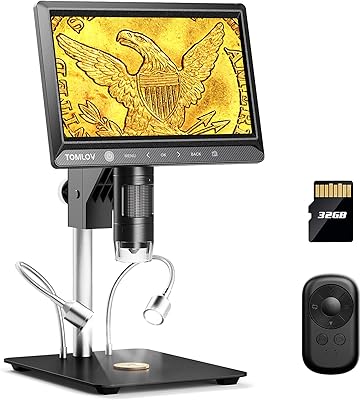
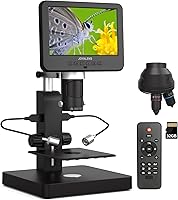
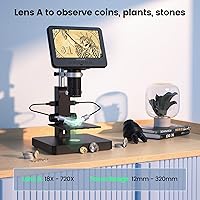
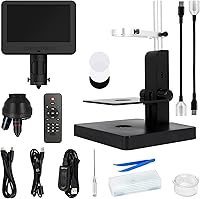
The JOYALENS JL246PS 3-Lens Digital Microscope occupies an interesting middle ground — part coin collector's tool, part entry-level biology scope, and part family science kit. What sets it apart from traditional microscopes right away is the 7-inch IPS screen, which replaces the eyepiece entirely and lets you view specimens comfortably without hunching over. The body is plastic, the gooseneck lights feel lightweight, and a remote control comes in the box. At its price point, this is firmly a hobbyist and enthusiast device — not a professional lab instrument. Manage expectations accordingly, and it delivers genuine value for curious minds at home.

Features & Benefits

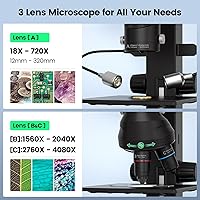
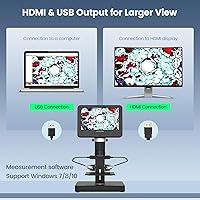
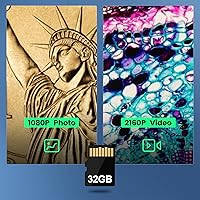
The JL246PS comes with three interchangeable lenses spanning a wide magnification range — from broad surface inspection at the lower end up to around 4080x with the highest-power biological lens. It is worth understanding that high digital magnification does not equal microscope-grade optical clarity at extreme levels; real detail at the top end depends heavily on your specimen and lighting. The built-in screen records at UHD resolution and snaps 24MP stills, which is genuinely impressive for this category. Plug it into a monitor via HDMI to share your view with a group, or connect to a Windows PC to use the included measurement software. The included 32GB card is a thoughtful addition.

Best For

This three-lens microscope is an especially strong fit for error coin collectors who want to inspect die varieties, doubling, or surface damage without needing a computer nearby — the standalone screen handles all of that on its own. Parents shopping for a curious kid will find the included slide set and observation box give the experience a structured starting point, rather than leaving beginners to figure out specimens from scratch. Basic electronics hobbyists can put the lower-power lens to work on circuit board inspection. If you already own a traditional scope and want something more shareable or recordable, the HDMI output makes this digital microscope a practical addition to the bench.

User Feedback

With around 80 reviews and a 4.2-star average, the sample size is modest but still revealing. Buyers consistently highlight the screen clarity and brightness, ease of lens swapping, and the remote control — which genuinely reduces the vibration blur caused by tapping buttons directly on the unit. On the other side, the all-plastic construction feels less substantial than some expect, and the Windows measurement software draws complaints about reliability and a clunky interface. A few reviewers note the biological lenses carry a steeper learning curve than the coin-inspection lens. Parents buying this for children tend to rate it higher than adult hobbyists who arrive with more demanding expectations.

Pros

  • The 7-inch IPS screen delivers a genuinely sharp, comfortable viewing experience that requires no eyepiece squinting.
  • Three interchangeable lenses cover a wide range of use cases, from coin surface inspection to biological slide study.
  • UHD 2160P video recording and 24MP photo capture produce impressive results for a mid-range device.
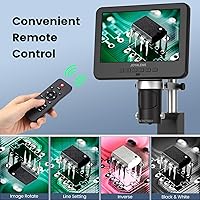
  • The included remote control meaningfully reduces vibration blur during photo and video capture.
  • HDMI output makes it easy to share discoveries on a larger screen with a group.
  • A 32GB card comes included in the box, so you can start saving images immediately.
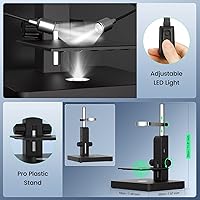
  • The tri-light system — two gooseneck spotlights plus a base bottom light — handles a wide variety of specimen types and lighting conditions.
  • Setup is straightforward, making this digital microscope accessible for beginners and younger users.
  • The standalone screen means no laptop or PC is needed for basic observation and recording.
  • Lens swapping is quick and intuitive, praised consistently by buyers across use cases.

Cons

  • The all-plastic body feels noticeably lightweight and less durable than similarly priced metal-framed alternatives.
  • Maximum magnification is digital, not optical — real image clarity drops off well before the advertised top figure.
  • The Windows measurement software is reported as clunky and unreliable by multiple buyers.
  • No Mac or Linux compatibility for the PC software, limiting measurement features to Windows users only.
  • The biological lenses carry a steeper learning curve than the coin-inspection lens, which can frustrate new users.
  • The review base of roughly 80 ratings offers limited long-term data on durability and component longevity.
  • Gooseneck spotlights, while flexible, feel flimsy and may loosen with repeated repositioning over time.
  • Adult hobbyists with prior microscope experience may find the feature set underwhelming relative to their expectations.
  • No built-in Wi-Fi or app connectivity limits sharing options compared to some competing digital microscopes.
  • The bracket height is fixed at 30cm, which restricts working distance and may not accommodate taller specimens.

Ratings

The JOYALENS JL246PS 3-Lens Digital Microscope scores below are generated by AI after systematically analyzing verified global buyer reviews, actively filtering out incentivized, bot-generated, and duplicate feedback to surface what real users actually experience. With a modest but telling review base, both the strengths that keep buyers satisfied and the friction points that prompt complaints are reflected transparently in every score. This is not a promotional summary — it is a honest, data-driven snapshot of how this digital microscope performs across the use cases that matter most.

Image & Screen Clarity
83%
The 7-inch IPS display consistently earns praise for its brightness and color accuracy, particularly when coin collectors use Lens A to examine die details under the gooseneck spotlights. Buyers frequently mention that viewing on a proper screen — rather than squinting through an eyepiece — makes the whole experience feel more comfortable and accessible.
At the upper digital zoom ranges, image sharpness degrades noticeably, and buyers expecting lab-grade optical clarity at 3000x or 4000x are often let down. The gap between the advertised maximum magnification and what actually looks crisp on screen is wide enough to frustrate users who did not understand the digital-versus-optical distinction before buying.
Magnification Range
74%
26%
The three-lens system covers a genuinely broad spectrum — from wide surface inspection at the low end to biological slide observation at the high end — which is unusual for a single device in this price tier. Coin hobbyists and electronics tinkerers find Lens A particularly well-calibrated for their needs without constant refocusing.
The upper magnification figures are achieved through digital amplification rather than true optical zoom, which means fine cellular structures on biological slides can appear blurry or pixelated at Lens C's extreme settings. Users coming from optical microscope backgrounds find this gap disappointing, and the learning curve for getting usable images from Lenses B and C is steeper than the packaging implies.
Lighting System
86%
The combination of two repositionable gooseneck spotlights and a base bottom light gives users meaningful control over how specimens are lit, which makes a real difference when examining textured coin surfaces or thin biological slides. Buyers appreciate being able to remove and angle the side lights independently to eliminate glare on reflective objects.
The gooseneck arms tend to loosen with repeated repositioning over time, which affects consistent lighting setups during longer observation sessions. A few buyers also noted that the base light intensity is not independently adjustable, which can wash out thinner slides if the ambient brightness is already high.
Build Quality
57%
43%
The unit is stable enough on a flat desktop surface, and the overall assembly feels solid when nothing is being moved or adjusted. For light home use — a coin collection session a few times a week or an occasional biology project — the construction holds up adequately in the short term.
The all-plastic body is the most polarizing aspect of ownership, and buyers handling the unit for the first time consistently describe it as feeling cheaper than they expected at this price point. The gooseneck spotlight arms are the most vulnerable components, and there are credible reports of them becoming loose or losing their hold after a few months of regular use.
Ease of Use
79%
21%
First-time microscope users, including children and parents with no prior experience, generally get up and running within minutes thanks to the screen-based interface and intuitive button layout. The remote control is a particularly appreciated touch for beginners who would otherwise struggle with camera shake when pressing buttons directly on the unit.
Switching between lenses and then dialing in the correct focus and lighting for each one takes practice, and new users often find the biological lenses frustrating until they develop a feel for the adjustments. The instruction manual has been flagged by several buyers as thin on practical guidance for getting the best results from Lenses B and C.
Remote Control
81%
19%
The included remote is one of the more genuinely useful bundled accessories in this category — being able to trigger captures and adjust zoom without touching the microscope body makes a tangible difference in image steadiness, especially at mid-to-high magnification. Buyers who do macro photography or video recording particularly appreciate the no-contact approach.
The remote's range is limited, and it needs to be pointed fairly directly at the receiver to register reliably. A small number of users reported intermittent connectivity issues, particularly after the batteries aged, and the build quality of the remote itself matches the lightweight plastic feel of the main unit.
Photo & Video Quality
77%
23%
At lower and mid-range magnification, the 24MP still captures and UHD video recording produce results that impress buyers who share their discoveries with family or post images online — the coin detail shots in particular look sharp and well-exposed when lighting is set up correctly. The multiple video resolution options, including 120fps at HD, give more flexibility than competitors at this price.
At maximum digital zoom settings, video footage softens considerably and the 24fps UHD cap can result in choppy playback when observing any moving specimen. A few buyers noted that saved files occasionally had inconsistent exposure between frames during video recording, which suggests the auto-exposure algorithm needs refinement.
HDMI & PC Connectivity
68%
32%
The HDMI output works reliably for casting the microscope view to a larger screen, which parents and educators find extremely useful for group viewing during classroom or family science sessions. The ability to display discoveries on a TV without any software installation is a straightforward, no-fuss feature.
The Windows measurement software bundled with the PC connection has drawn consistent criticism for being unintuitive, occasionally crashing, and feeling like an afterthought rather than a polished tool. Mac users have no software access at all, and even Windows users often abandon the software after initial frustration and rely solely on the standalone screen instead.
Included Accessories
82%
18%
Shipping with five prepared biological slides, an observation box, a backdrop board, a remote, and a pre-loaded 32GB memory card is a genuinely complete out-of-box experience compared to many competitors that bundle little beyond the unit itself. For beginners and gifters especially, having ready-to-use slides eliminates the frustrating first step of sourcing specimens.
The five slides cover only a narrow range of specimen types, so curious users quickly exhaust what came in the box and need to purchase additional slide sets separately. The backdrop board, while useful for macro coin photography, feels flimsy and can shift during use if not held in place.
Value for Money
72%
28%
For buyers who understand what they are getting — a screen-based hobbyist tool with versatile lenses and solid media capture — the price-to-feature ratio is reasonable, particularly given the HDMI output, UHD recording, and included accessories that many rivals charge extra for. Error coin collectors and families in particular tend to feel they got fair value from their purchase.
Buyers who purchased expecting professional-grade optics or durable construction tend to feel the price is hard to justify once the plastic build quality and digital-zoom limitations become apparent in daily use. The modest review count also means there is less community reassurance about long-term durability, which adds perceived risk relative to more established brands.
Portability & Size
76%
24%
At 4.2 pounds and with USB-only power requirements, the JL246PS is light enough to move between rooms or pack for a school event without much hassle. The compact footprint fits comfortably on a crowded desk alongside other hobby equipment.
The fixed 30cm bracket height limits working distance flexibility, and users with larger or irregularly shaped specimens occasionally find they cannot position objects ideally beneath the lens. The gooseneck lights also add to the overall spread of the unit, meaning the practical desk footprint is larger than the listed dimensions suggest.
Setup & Assembly
84%
Unboxing to first use typically takes under fifteen minutes for most buyers, with no tools required and clear enough physical assembly that children can participate in setting up with minimal adult help. The standalone nature of the device means there is no software driver installation headache just to get started.
Attaching and calibrating the gooseneck spotlights to the optimal position for a given specimen type is less intuitive than the main assembly, and the manual provides limited guidance on recommended lighting setups for different use cases. First-time users sometimes spend considerable time experimenting before landing on a configuration that works well.
Kid-Friendliness
88%
Parents and teachers report that children between roughly six and fourteen take to this microscope quickly and stay engaged longer than with traditional eyepiece models, largely because the big screen format feels familiar and the remote control adds playfulness to the experience. The included slide set gives kids an immediate starting point without requiring parents to source specimens.
The plastic lenses and gooseneck lights are the most vulnerable points in a child's hands, and parents of younger children note that the components require supervised handling to avoid damage. The higher-power biological lenses also require patience and fine motor skills that younger children often have not yet developed.

Suitable for:

The JOYALENS JL246PS 3-Lens Digital Microscope is a strong pick for anyone who wants a versatile, screen-based magnification tool without the steep learning curve of traditional optical microscopes. Error coin collectors will find it particularly practical — the bright, adjustable lighting and swappable lenses let you inspect die details and surface anomalies on a clear 7-inch display without ever touching a computer. Parents and teachers introducing children to biology will appreciate the included slide set and observation box, which give beginners a structured, ready-to-use starting point. Hobbyists who dabble across multiple interests — checking circuit boards one day, examining rock specimens the next — will get real mileage from the three interchangeable lenses. Anyone who wants to record or share their discoveries, whether by saving clips to the included 32GB card or casting to a larger monitor via HDMI, will find this digital microscope genuinely well-suited to that kind of casual, exploratory use.

Not suitable for:

The JOYALENS JL246PS 3-Lens Digital Microscope is not the right tool for buyers expecting professional-grade optical performance or a robust, lab-quality build. The all-plastic construction, while functional for home use, will feel underwhelming to anyone accustomed to metal-bodied instruments, and it is not built to withstand regular handling in a school or workshop environment. The advertised maximum magnification figures are achieved through digital zoom, which amplifies pixels rather than true optical detail — researchers or serious microscopists who need genuine resolving power at high magnification will be disappointed. The PC software for on-screen measurement is Windows-only and has drawn consistent complaints about reliability, so Mac users or anyone expecting polished desktop integration should look elsewhere. With only around 80 reviews on record, there is also less long-term durability data available compared to more established models in this category.

Specifications

  • Brand & Model: Manufactured by JOYALENS under the model designation JL246PS.
  • Screen: Features a 7-inch IPS LCD display for direct on-device viewing without an external monitor or PC.
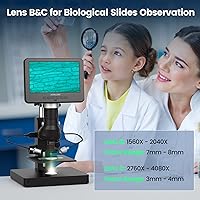
  • Lens Count: Includes 3 interchangeable lenses: Lens A for surface inspection, Lens B and Lens C for biological slide observation.
  • Magnification Range: Lens A covers approximately 18x to 720x; Lens B reaches 1560x to 2040x; Lens C extends from 2760x up to 4080x.
  • Photo Resolution: Captures still images at up to 24MP (5600 x 4200 pixels) saved directly to the included storage card.
  • Video Resolution: Records at UHD 2880x2160 at 24fps, FHD 1920x1080 at up to 60fps, and HD 1280x720 at up to 120fps.
  • Storage: Ships with a 32GB memory card included in the box, ready for immediate photo and video capture.
  • Connectivity: Offers HDMI output for external monitor display and USB connection to Windows PCs for measurement software use.
  • PC Compatibility: Compatible with Windows XP, 7, 8, and 10 for use with the included on-screen measurement software.
  • Lighting System: Equipped with two removable gooseneck spotlights for side illumination and one bottom base light for transmitted lighting of slides.
  • Remote Control: Includes a dedicated remote control for hands-free photo capture, video recording, zoom, and image rotation.
  • Dimensions: Measures 7.5″ long by 7.8″ wide by 11.8″ tall with the bracket at its standard 30cm height.
  • Weight: Weighs approximately 4.2 pounds, making it stable on a desk but portable enough to reposition easily.
  • Material: Body and bracket are constructed from plastic, keeping the overall unit lightweight but less ruggedized than metal-framed alternatives.
  • Power: Powered via 5V USB, compatible with standard USB power adapters or PC USB ports.
  • Included Accessories: Package includes 5 prepared biological slides, an observation box, a backdrop board, remote control, and a 32GB memory card.
  • Viewing Angle: Rated at a 45-degree real angle of view, suitable for flat specimens and standard slide observation.

Related Reviews
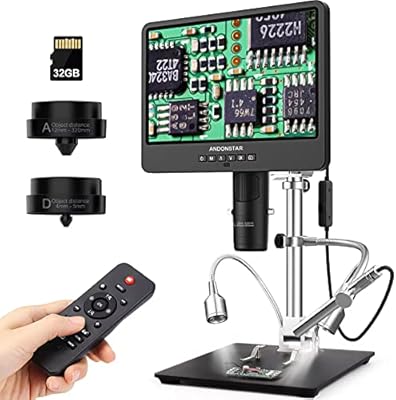
Andonstar AD249S-M 3 Lens HDMI Digital Microscope
85%
92%
Image Clarity
89%
Magnification Range
88%
Build Quality
85%
LED Lighting
78%
Stand Stability
More
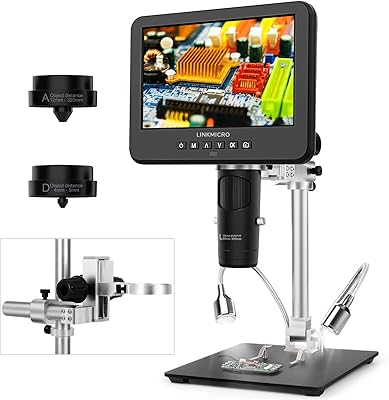
LINKMICRO LM246MS 3-Lens 7-Inch HDMI Digital Microscope
85%
88%
Image Quality
91%
Ease of Setup
85%
Build Quality
90%
Lens Versatility
74%
Display Size
More
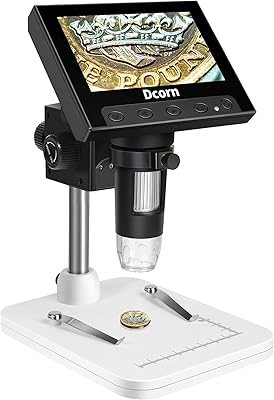
Dcorn 4.3″ LCD Digital Microscope
82%
87%
Image Clarity
81%
Magnification Performance
85%
Ease of Use
92%
LED Lighting Effectiveness
78%
Build Quality
More
Hayve DM7 4.3″ Digital Microscope
78%
92%
Ease of Setup
88%
Display Quality
71%
Magnification Performance
84%
LED Lighting
58%
Build Quality
More
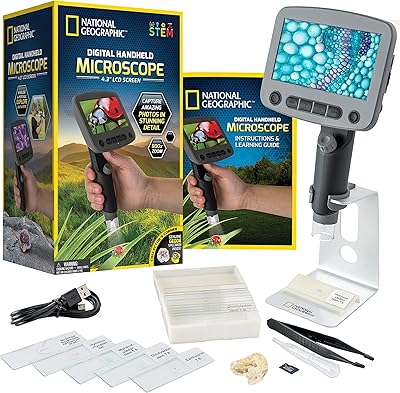
National Geographic Kids Digital Handheld Microscope
81%
88%
Ease of Use for Kids
83%
Image & Screen Quality
71%
Magnification Performance
79%
Battery Life
91%
Kit Completeness & Value
More
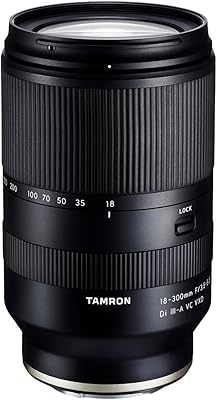
Tamron 18-300mm F/3.5-6.3 Zoom Lens
81%
91%
Autofocus Speed & Accuracy
96%
Zoom Range Versatility
74%
Image Sharpness
88%
Optical Image Stabilization
61%
Low-Light Performance
More
Andonstar AD266S 7-Inch 5-Lens Digital Microscope
74%
83%
Image Clarity
88%
Lens Versatility
81%
Build Quality
79%
Value for Money
76%
LCD Display
More
Ahalfcit Digital Microscope 500X
83%
88%
Magnification Quality
91%
Ease of Use
92%
Portability
83%
Battery Life
89%
Display Quality
More
MAXLAPTER Pocket 100X Digital Microscope
74%
91%
Portability & Form Factor
88%
Ease of Use
63%
Image & Optical Quality
71%
Screen Quality
74%
UV Light Performance
More
TOMLOV DM702 Digital Coin Microscope 10-inch
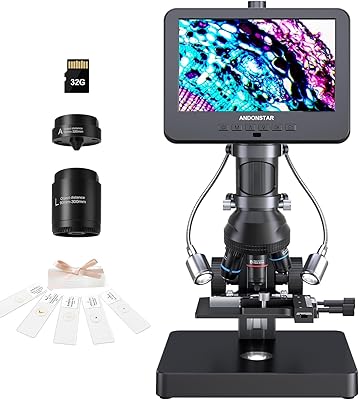
78%
88%
Display Quality
74%
Magnification Performance
83%
Build Quality & Durability
86%
Lighting System
84%
Stand & Working Space
More

FAQ

It works completely standalone. The built-in 7-inch screen handles all viewing, photo capture, and video recording without any PC connection. You only need to connect it to a Windows computer if you want to use the measurement software features.

That top magnification is achieved through digital zoom rather than pure optical resolution, so the practical image quality at extreme settings will be softer than the number implies. For most hobbyist tasks — coin inspection, slide study, insect observation — the lower and mid-range magnifications deliver noticeably sharper, more usable images. Think of the high-end figure as a ceiling, not a guarantee of crisp detail.

Most buyers report that swapping lenses is quick and straightforward — the lenses thread in and out without tools. The main learning curve is less about the physical swap and more about adjusting focus and lighting settings after switching, especially when moving to the higher-power biological lenses.

The measurement software is Windows-only, so Mac users will not be able to use that specific feature. That said, the HDMI output works with any compatible monitor regardless of operating system, and the standalone screen functions independently of any computer at all.

Yes, it tends to be well-received in that age range. The screen-based format is more engaging for kids than a traditional eyepiece, the remote control adds an element of fun, and the included slides give them something to look at right away. Adult supervision is still a good idea when handling the interchangeable lenses.

The tri-light system — two adjustable gooseneck spotlights plus a bottom base light — is one of this microscope's stronger points. In a normally lit room it performs well for surface specimens like coins or rocks. For slide observation, the base light is essential, and most users find the combined lighting adequate without needing a darkened space.

Yes, Lens A at its lower magnification range is well-suited to circuit board inspection — solder joints, component markings, and trace damage are all visible at comfortable working distances. It will not replace a dedicated stereo microscope for fine rework, but for casual inspection and troubleshooting it gets the job done.

The all-plastic construction is the most common concern raised by buyers, and it is a fair one. The unit feels functional rather than rugged, and the gooseneck arms in particular can loosen with repeated repositioning. For light, regular home use it should hold up fine, but it is not built to endure heavy daily handling or accidental drops.

Buyers generally consider it a genuinely useful addition rather than a throwaway accessory. The main practical benefit is reducing the camera shake you get from pressing buttons directly on the unit — especially relevant when capturing images at higher magnifications where even small movements affect sharpness.

Photos are saved as JPEG files and videos in standard MP4 format to the included 32GB card. You can remove the card and read it with any standard card reader, or transfer files via the USB connection to a Windows PC. The formats are widely compatible with most photo viewers and video players.

Where to Buy