Overview

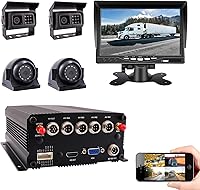
The JOINLGO J2-WS 4-Channel Mobile Vehicle DVR is built squarely for commercial operators — think delivery fleets, shuttle services, and long-haul truckers — not the average driver looking for a simple windshield cam. What sets it apart immediately is the four-channel simultaneous recording paired with a built-in 7-inch IPS screen, meaning you can review footage right in the cab without hunting for a laptop. WiFi and GPS come standard, letting fleet managers check live feeds or track routes remotely — though it is worth stating clearly upfront: this system has no 4G LTE support. Remote access works over WiFi or a local hotspot, not a cellular network. The fanless aluminum chassis signals this is designed to run reliably in demanding vehicle environments for the long haul.
Features & Benefits

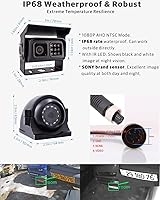
All four cameras record simultaneously at 1080p and 30fps, which in practice means you get clean, usable footage whether you are checking a lane merge on the highway or reviewing what happened at the loading dock at 2 a.m. The cameras carry an IP68 waterproof rating, use Sony IMX323 sensors with WDR, and have IR LEDs for low-light coverage — the kind of setup that holds up in rain or harsh industrial conditions. GPS geo-fencing lets managers set approved routes and receive alerts if a driver strays. Storage is genuinely flexible: dual SD card slots plus a 2.5-inch SATA SSD bay supporting up to 4TB total. The G-sensor event lock automatically preserves footage around hard braking or impacts, which is a real asset when handling insurance disputes.

Best For

This fleet DVR kit is a solid fit for small-to-mid-size commercial operations — delivery companies, school bus contractors, shuttle services — that want thorough camera coverage without committing to a cellular data plan. Owner-operators who want to review yesterday's route right from the driver's seat will appreciate the onboard display, which removes the need to pull footage onto a separate laptop. Driver accountability tools like geo-fencing and event-triggered recording make it appealing to any manager trying to reduce liability exposure. The cameras handle weather, vibration, and temperature swings that would sideline cheaper alternatives. That said, if your operation depends on real-time cellular tracking or cloud access from any location, this system is not designed for that. Also plan ahead: memory cards are sold separately.

User Feedback

Buyers consistently highlight image clarity across all four feeds and the aviation-connector wiring as standout positives — the plug-and-play cabling approach genuinely simplifies installation compared to custom-wired setups. Long-term users report that the fanless aluminum housing holds up well through sustained heat, which matters for vehicles running full shifts in summer. On the flip side, the WiFi pairing process draws frequent criticism: getting the app connected and stable takes patience, and some users note inconsistent behavior depending on phone OS version. The mixed SD-plus-SSD storage configuration can feel unfamiliar to first-time DVR buyers. Overall, hardware reliability earns strong marks, but buyers should budget extra time for the software side of setup and account for the cost of storage media before ordering.

Pros

  • All four cameras record simultaneously at full 1080p — no quality trade-off when splitting channels.
  • IP68-rated metal cameras hold up reliably in rain, dust, and temperature extremes common in fleet work.
  • Sony IMX323 sensors with WDR deliver usable night footage, especially useful for loading dock and overnight route coverage.
  • Built-in 7-inch IPS screen lets drivers or managers review footage on the spot without any extra equipment.
  • Flexible storage options — dual SD card slots plus a 2.5-inch SATA SSD bay — support up to 4TB total capacity.
  • G-sensor automatically locks and preserves event footage around hard braking or impacts, which is valuable for insurance claims.
  • GPS geo-fencing provides real route deviation alerts, giving fleet managers a practical compliance monitoring tool.
  • Aviation-style plug-and-play connectors make installation cleaner and more reliable than bare-wire setups.
  • Fanless aluminum die-cast chassis runs cool and quietly, with no moving parts to fail in a hot vehicle cabin.
  • Two-year warranty provides meaningful coverage for a commercial-use product expected to run continuously.

Cons

  • No 4G LTE support means remote access is limited to WiFi range — useless for tracking vehicles in the field.
  • The companion app has a finicky pairing process that frustrates users without prior DVR setup experience.
  • App stability varies noticeably depending on phone model and OS version, which is a reliability concern for daily use.
  • No storage media included — buyers need to budget separately for microSD cards or an SSD before the unit is functional.
  • The SD card plus SSD storage configuration can confuse first-time commercial DVR buyers during initial setup.
  • At over 10 pounds and requiring dedicated mounting, installation is not a quick weekend job for most operators.
  • Remote live view over WiFi works best in a fixed-location scenario like a depot — it is not a field monitoring solution.
  • The 7-inch onboard screen, while useful, has a modest 1024x600 resolution that can make fine detail harder to read during playback.
  • No mention of included mounting hardware beyond the rearview mirror mount — additional hardware may be needed for truck or bus installs.
  • This mobile vehicle recorder has been on the market since 2018, and the app interface reflects that age compared to newer competitors.

Ratings

Our editorial team trained an AI model on verified global buyer reviews of the JOINLGO J2-WS 4-Channel Mobile Vehicle DVR, actively filtering out incentivized, bot-generated, and single-use reviewer accounts to surface what real fleet operators and commercial drivers actually experience. The scores below reflect a balanced synthesis of both consistent praise and recurring frustrations — nothing is inflated, and the pain points are given equal weight alongside the strengths. Whether this kit fits your operation or falls short depends heavily on your connectivity expectations and technical comfort level, and these ratings are designed to make that call easier.

Video Quality
84%
Operators consistently report that all four feeds hold up well in daylight and well-lit urban conditions, with enough detail to read license plates and identify pedestrians at intersections. The Sony IMX323 sensor with WDR keeps exposure balanced when a vehicle moves between shaded lots and bright sunlight, which is a scenario single-sensor budget cams routinely botch.
In very low ambient light — think unlit rural roads after midnight — footage from the side cameras can appear grainy or washed out depending on IR distance. A handful of users also noted that compression artifacts become visible when reviewing older footage from SD cards that are nearing capacity.
Night Vision
76%
24%
The IR LED array on each camera provides workable nighttime coverage for parking lots, loading docks, and poorly lit depot yards — scenarios where fleet cameras earn their keep. Users running school bus routes with early morning pre-dawn pickups specifically called out the night vision as a reliable safety feature.
IR range diminishes noticeably beyond about 15 to 20 feet, which can leave rear-facing cameras with limited visibility on open roads at highway speed. Reflective surfaces like wet pavement or metal dock doors sometimes cause IR overexposure that washes out detail in the center of the frame.
Build Quality
88%
The aluminum die-cast chassis genuinely stands out from the plastic-bodied competition in this price tier — fleet buyers who have gone through two or three cheaper units in the same vehicle report that this one holds up through sustained heat and vibration without the casing cracking or warping. Camera housings feel dense and purposeful, not hollow.
A small number of buyers noted that the main unit runs warm to the touch after extended recording sessions, which is expected with a fanless design but worth monitoring in enclosed cab environments with limited air circulation. Some cable connectors showed minor wear after a year of regular disconnection for storage swaps.
Camera Durability
91%
The IP68 rating on the cameras is the real deal — buyers running these on refuse trucks, agricultural vehicles, and open-bed delivery vans through full seasons of rain, road spray, and dusty conditions report zero seal failures or lens fogging. Full metal construction means they survive the kind of incidental contact that wrecks plastic-housing alternatives.
The mounting bracket design on the cameras can loosen gradually on vehicles with heavy cabin vibration, like diesel trucks on rough terrain, requiring periodic re-tightening. Replacement cameras are not always easy to source independently if one is physically damaged in an accident.
GPS Accuracy
79%
21%
For the core fleet use case — verifying that a driver followed the correct route and logging location timestamps alongside footage — the built-in GPS module delivers consistent and reliable results. Geo-fence alert triggers generally activate within a reasonable margin of the set boundary, which is sufficient for compliance monitoring.
GPS lock can take one to two minutes after cold-start in covered parking structures or dense urban canyons, which means the first few minutes of a route may not have location data embedded. The geo-fence alert system also requires an active app or WiFi connection to deliver notifications, which limits its real-time usefulness for field vehicles.
Remote Monitoring
58%
42%
For operations where the vehicle returns to a fixed depot with a WiFi network, the live view feature works as described — managers can pull up any channel on a phone or PC browser without complicated software. The extended remote receiver is a thoughtful addition that reduces the need to physically reach the unit for routine controls.
This is the category that generates the most buyer disappointment, primarily because expectations around 4G cellular access are common. WiFi-only remote access is a real operational constraint — once a vehicle leaves the building, live monitoring requires the driver to create a hotspot, which most fleet operators are not set up to do. App connection reliability also varies enough to be a recurring complaint.
Storage Flexibility
86%
The combination of dual SD card slots and a 2.5-inch SATA SSD bay gives this kit more storage headroom than most competitors at this price point — operators running 12-hour shifts across four cameras genuinely need that capacity, and being able to mix media types is a practical advantage. SSD-based storage in particular is appreciated for its faster write speeds and longevity.
No storage is included in the box, which catches some buyers off guard and adds unexpected upfront cost — especially if they opt for high-capacity SSDs. The process of formatting and initializing both card slots and an SSD simultaneously has tripped up first-time commercial DVR buyers who expected a more guided setup process.
Installation Ease
73%
27%
The aviation-style 4-pin connectors are a meaningful upgrade over bare-wire setups — they lock securely, resist vibration loosening, and make camera swaps far less painful than competitors using proprietary or friction-fit connections. Most buyers with basic auto-electrical experience report a manageable first installation.
The unit is physically large and heavy, which means finding a clean, secure mounting location in a smaller van cab requires some creative bracket work that is not documented in the manual. Running camera cables cleanly through a bus or truck body takes time, and the manual does not provide much guidance beyond basic diagrams.
App & Software
53%
47%
When the app is successfully paired and connected over a stable WiFi link, the live view and playback controls work as intended, and the interface is simple enough that drivers can navigate it without training. GPS route overlay during footage review is a useful feature for incident reconstruction.
Initial WiFi pairing is the most friction-heavy part of the entire ownership experience — multiple users across iOS and Android describe a trial-and-error process that can take the better part of an afternoon. App updates have been infrequent, and the interface design reflects the product's 2018 origins rather than current mobile UX standards.
Loop Recording Reliability
82%
18%
Continuous loop recording across all four channels runs dependably — fleet managers who have reviewed weeks of archived footage report no unexplained gaps or corrupted files under normal operating conditions. The G-sensor event lock works correctly and consistently preserves the clips that matter most.
A small number of users have reported that the system occasionally fails to resume loop recording automatically after an abrupt power interruption that bypasses the capacitor backup window. File management across dual SD slots can also become confusing without a consistent naming convention, particularly when pulling clips for insurance purposes.
In-Cab Display
67%
33%
Having a 7-inch screen built directly into the unit is a genuine convenience for owner-operators who want to spot-check camera angles, review the previous day's footage, or confirm GPS lock without needing to connect an external device. The display is bright enough to use in daylight cab conditions.
At 1024x600 resolution, the screen lacks the sharpness needed to catch fine detail in footage — it is adequate for confirmation and navigation but not for close review work. The screen size and placement also means some truck installations position it at an awkward viewing angle from the driver seat.
Value for Money
74%
26%
Compared to dedicated commercial fleet telematics systems that charge subscription fees on top of hardware costs, this mobile vehicle recorder delivers a capable four-camera setup with GPS, onboard display, and flexible storage at a one-time cost — which is genuinely attractive for small operators watching margins.
The no-4G limitation, app reliability issues, and the added cost of sourcing storage media separately all chip away at the value proposition for buyers who did not fully research those constraints before purchasing. Buyers who need cellular connectivity will end up spending more on a supplementary hotspot device anyway.
Long-Term Reliability
81%
19%
The fanless aluminum build has demonstrated real staying power — buyers who have run this fleet DVR kit for two or more years report that hardware failures are uncommon, and the 2-year warranty provides meaningful peace of mind for a device expected to run continuously in a commercial vehicle. Thermal management through passive dissipation has proven adequate for most operating environments.
The software and app ecosystem has not kept pace with the hardware's longevity — buyers who purchased early units report that firmware updates have been sparse and that the companion app has not received substantive improvements since launch, which creates a growing gap between hardware durability and software user experience over time.

Suitable for:

The JOINLGO J2-WS 4-Channel Mobile Vehicle DVR is built for commercial operators who need dependable, multi-angle coverage across a working vehicle fleet — not hobbyists or daily commuters. Small business owners running delivery vans, school bus contractors, and shuttle services will get the most value here, particularly those who want solid incident documentation without paying for a monthly cellular data plan. The built-in 7-inch screen means an owner-operator can review the previous day's footage right from the cab, which is a practical advantage for solo operators without a back-office IT setup. Fleet managers who need geo-fence alerts and G-sensor event locking for driver accountability will find those tools genuinely useful for reducing liability and managing compliance. If your cameras need to handle rain, dust, temperature swings, and the general punishment of daily commercial vehicle use, the IP68-rated, full-metal camera housings are built for exactly that environment.
Not suitable for:

The JOINLGO J2-WS 4-Channel Mobile Vehicle DVR is a poor fit for any fleet operation that depends on real-time remote access over a cellular network — there is no 4G LTE support, and remote viewing only works over WiFi or a local hotspot, which is a hard limitation if your vehicles operate far from a fixed location. Buyers expecting cloud-based video storage or instant footage retrieval from anywhere will need to look at dedicated 4G fleet systems instead. The app pairing process has a known learning curve, so operations without any technical staff on hand may find initial setup frustrating. This is also not the right tool for a personal vehicle owner looking for a compact, discreet dashcam — at over 10 pounds and nearly 13 inches wide, it is a rack-style commercial unit. Finally, budget-conscious buyers should know that storage media is not included, so factor in the added cost of microSD cards or an SSD before purchase.
Specifications

  • Channels: Records four camera feeds simultaneously with no reduction in quality across any channel.
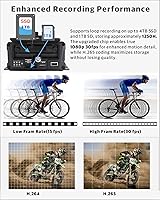
  • Video Resolution: Each channel captures footage at 1920x1080 pixels and 30 frames per second.
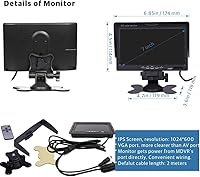
  • Display: Integrated 7″ IPS touchscreen with a 1024x600 resolution for in-cab footage review and menu navigation.
  • Camera Sensor: Sony IMX323 image sensor rated at 2.0MP with Wide Dynamic Range (WDR) for balanced exposure in mixed lighting.
  • Night Vision: Infrared LED arrays on each camera provide low-light and nighttime visibility without requiring external lighting.
  • Field of View: Each camera covers a 120-degree horizontal field of view, suitable for side, rear, and cabin monitoring.
  • Weatherproofing: All included cameras carry an IP68 rating, meaning they are fully dust-tight and can withstand continuous water immersion.
  • Storage Options: Supports two microSD cards (up to 1TB each) and one 2.5″ SATA SSD (up to 4TB); no storage media is included.
  • GPS: Built-in GPS module records location data directly into the video stream and supports programmable geo-fence zones with deviation alerts.
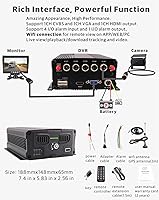
  • Connectivity: WiFi module enables remote live viewing via PC browser or iOS and Android app; 4G LTE is not supported.
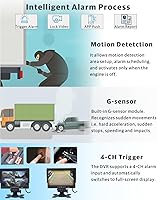
  • G-Sensor: Three-axis G-sensor detects sudden braking, acceleration, or impact events and automatically locks the corresponding footage from being overwritten.
  • Alarm Inputs: Four independent alarm trigger inputs allow the unit to auto-switch to full-screen view and lock footage upon receiving an external signal.
  • Chassis: Aluminum die-cast enclosure with a fanless thermal design allows passive heat dissipation with no moving parts to fail.
  • HDMI Output: Full-size HDMI port allows connection to an external monitor or TV for easier footage playback and review.
  • Delay Recording: The unit can continue recording for up to 24 hours after the vehicle engine is switched off, drawing power from the vehicle battery.
  • Capacitor Backup: An internal capacitor provides approximately 8 seconds of power to safely save and close files during sudden power loss.
  • Dimensions: The main DVR unit measures 12.6 x 8.66 x 15.75 inches, designed for permanent dash or rack mounting in commercial vehicles.
  • Weight: The complete kit weighs 10.33 pounds, reflecting the full-metal construction of both the unit and camera housings.
  • Warranty: Covered by a 2-year manufacturer warranty from JOINLGO, which is above average for this product category.
  • Loop Recording: Continuous loop recording automatically overwrites the oldest unlocked footage when storage capacity is reached, ensuring uninterrupted coverage.

Related Reviews

TIGERSECU TS-2MP-302T04-1TB 4-Channel DVR Recorder
75%
83%
Camera Compatibility
79%
Ease of Setup
62%
Remote Access
76%
Storage Value
81%
Build Quality
More
Planet Audio AC2400.4 4-Channel Car Amplifier
84%
95%
Power Output
89%
Sound Clarity
87%
Bass Performance
82%
Ease of Installation
65%
Thermals/Heat Management
More
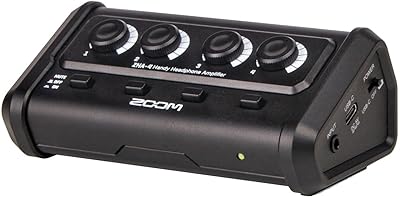
Zoom ZHA-4 Compact 4-Channel Headphone Amplifier
87%
91%
Sound Quality
95%
Portability
75%
Battery Life
88%
Ease of Use
83%
Build Quality
More
Recoil DI800.4 4-Channel Car Audio Amplifier
83%
88%
Sound Quality
92%
Power Output
65%
Thermal Management
84%
Build Quality
91%
Ease of Installation
More
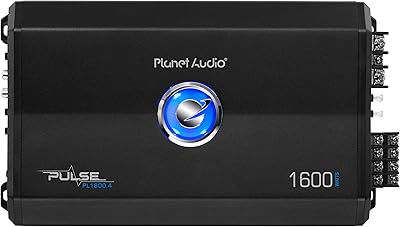
Planet Audio PL1600.4 4-Channel Car Amplifier
72%
88%
Value for Money
84%
Ease of Installation
74%
Sound Quality
58%
Power Output (Real-World)
61%
Build Quality
More
Recoil DI550.4 4-Channel Car Audio Amplifier
74%
91%
Value for Money
78%
Power Output
86%
Ease of Installation
74%
Sound Quality
67%
Build Quality
More
Recoil REA600.4 4-Channel Car Audio Amplifier
84%
89%
Audio Performance
91%
Ease of Installation
85%
Sound Quality at High Volumes
62%
Heat Management
90%
Power Output
More
Crunch PX 1000.4 4-Channel 1000W Amplifier
85%
88%
Sound Quality
85%
Ease of Installation
81%
Build Quality
91%
Power Output
93%
Size & Portability
More
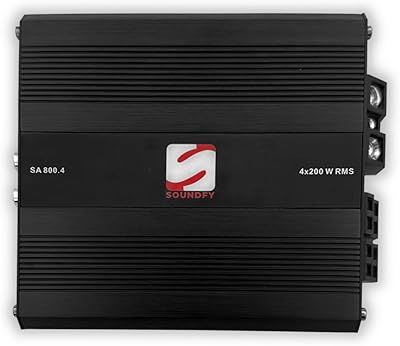
Soundfy SA 400.4 4-Channel Car Amplifier
71%
78%
Value for Money
72%
Sound Quality
63%
Power Output
58%
Build Quality
81%
Thermal Management
More
Rockford Fosgate Power T400-4 400-Watt 4-Channel Amplifier
87%
91%
Performance
89%
Sound Quality
94%
Ease of Installation
88%
Durability
90%
Build Quality
More

FAQ

Not in the way most people expect. The JOINLGO J2-WS 4-Channel Mobile Vehicle DVR uses WiFi for remote access, which means it works over a local network or a mobile hotspot — not a standalone cellular connection. If you need true anywhere-access from a vehicle in the field, you would need a separate 4G hotspot device in the cab, and even then, app stability has been inconsistent for some users.
No, storage media is not included. You will need to supply your own microSD cards (up to 1TB each, two slots available) or a 2.5″ SATA SSD (up to 4TB). Budget for that separately before you expect the unit to start recording on day one.

The wiring side is actually one of the easier parts — the aviation-style 4-pin connectors are designed to be plug-and-play, and most buyers with basic vehicle wiring experience get the hardware up in a few hours. The trickier part tends to be the app and WiFi pairing setup, which has a steeper learning curve. Setting aside time to work through the manual for that portion is worth it.

The IP68-rated, full-metal camera housings are built for exactly that kind of punishment — dust, rain, and wide temperature ranges are part of what that rating accounts for. The main unit also uses a fanless aluminum chassis that handles heat passively, which removes a common failure point in harsh environments.

You set a defined geographic boundary or approved route through the system menu or app, and if a driver strays outside that zone, the unit triggers an alert. It is a useful tool for fleet managers who want a basic compliance check without logging into a full telematics platform. Keep in mind that alerts are tied to the WiFi or app connection, so real-time notification requires that link to be active.

There is an 8-second capacitor backup built into the unit, which is enough time to finalize and save any open video files before shutdown. This prevents file corruption from sudden power cuts, which is a real concern with loop-recording DVR systems. The unit can also keep recording for up to 24 hours post-engine-shutdown if wired to the vehicle battery.

Yes, the system supports fewer than four cameras — you are not required to use all channels at once. This is handy if you are starting with a smaller setup and want to add cameras over time, or if your vehicle layout only needs front and rear coverage.

Footage is saved in standard video file formats readable by most PC and Mac media players, though some users prefer to use the included software for GPS-overlay playback. You can pull files via the USB port or by removing the SD card directly. HDMI output also lets you play footage back on any external monitor or TV without a computer at all.

At 1024x600 resolution it is functional for in-cab monitoring and menu navigation, though it is not a high-definition display by modern standards. Most users find it sufficient for confirming camera angles and spot-checking footage, but detailed review is easier on a larger external monitor via the HDMI port. It is best thought of as a convenience screen rather than a primary viewing station.

Audio recording capability depends on which camera is used for the interior channel — the product listing does not explicitly confirm a built-in microphone on all included cameras. If in-cabin audio documentation is critical for your operation, it is worth confirming with the seller before purchase, as this varies across camera configurations in this kit.

Where to Buy