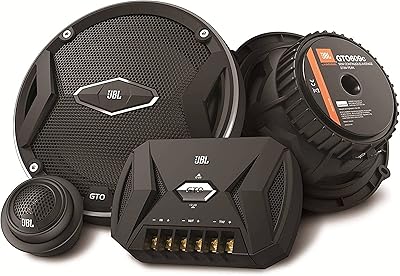
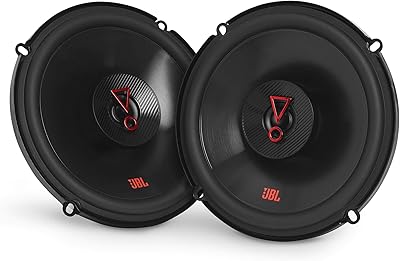
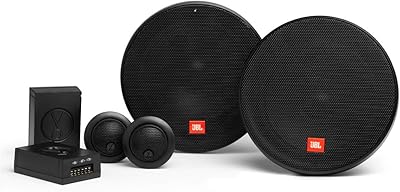
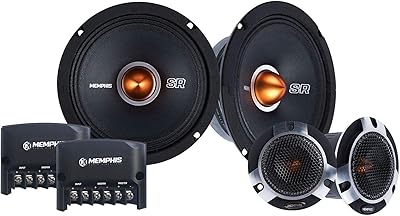
Overview

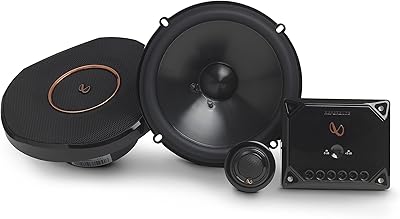
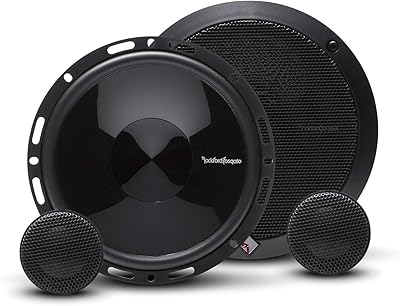
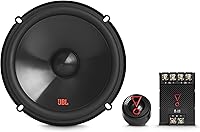
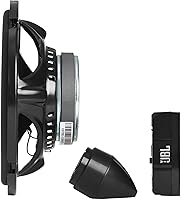
The JBL Stage 3607CF 6.5″ Component Speaker System sits in a sensible middle ground — far above the disposable end of the car audio market, but not chasing the audiophile crowd either. Unlike a coaxial speaker where the tweeter mounts directly on the woofer, a component set keeps the tweeter separate, so you can position it at ear height for a more natural soundstage. The 6.5-inch woofer fits a huge range of vehicles, from compact sedans to mid-size SUVs. Factory speakers rarely age well, and this JBL component set targets that everyday frustration head-on — offering a clear upgrade without demanding an amplifier or a complete audio system rebuild.
Features & Benefits

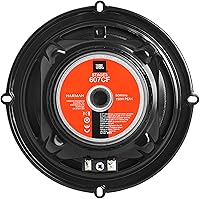
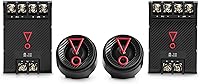
What makes these Stage 3607CF speakers stand out technically starts with the Plus One cone design. By extending the woofer's radiating area slightly beyond the standard size, JBL claims a 2dB efficiency boost — meaning more output from the same power. The edge-driven dome tweeter spreads high frequencies more evenly across the cabin than a typical center-driven unit, which can sound narrow and directional. The vented basket helps the voice coil stay cooler during extended, higher-volume listening. One detail worth flagging: the 3-ohm impedance is lower than the typical 4-ohm, so the speakers draw slightly more current — most modern head units handle this fine, but older factory radios may be worth double-checking. Included crossovers handle the signal split automatically, saving you one more wiring decision.

Best For

This two-way car speaker kit makes the most sense for drivers tired of the flat, muted sound that typically comes out of a factory audio system — but who are not ready to invest in a full amplifier setup. If you are comfortable pulling a door panel and connecting a few spade terminals, the install is genuinely manageable. A 6.5-inch mounting location in the door and a spot for the tweeter on the A-pillar or sail panel are the main space requirements. Keep in mind that the low-end rolls off around 55Hz, so these speakers are built for midrange clarity and vocals, not thumping bass. Podcasts, classic rock, and pop all shine. Heavy bass listeners will want to pair this kit with a dedicated subwoofer.

User Feedback

With around 63 ratings at the time of writing, the feedback pool here is relatively modest, so treat any pattern as directional rather than definitive. That said, the most consistent praise centers on improved vocal clarity — buyers coming from stock speakers frequently note that dialogue and acoustic instruments sound noticeably more detailed. Installation gets a mixed response: most find the included hardware covers common fitments, though some vehicles require additional adapter brackets not in the box. The tweeter draws occasional comments about brightness at higher volume levels, though most users find it acceptable during everyday listening. The 3-ohm impedance has not generated widespread complaints, but it does come up among users with older factory radios. Overall, the picture is cautiously positive for the use case this kit targets.

Pros

  • A meaningful step up from stock speakers, particularly for vocal clarity and midrange detail.
  • The Plus One woofer cone design squeezes noticeably more output from modest, factory-level power.
  • High sensitivity rating means these Stage 3607CF speakers perform well without an external amplifier.
  • Crossovers are included in the box, removing one more variable from the installation process.
  • Both flush-mount and surface-mount tweeter cups offer real flexibility across different vehicle configurations.
  • The 6.5-inch driver size fits a wide variety of mainstream passenger vehicles without custom fabrication.
  • The vented basket design helps keep voice coils cooler during extended, higher-volume listening sessions.
  • JBL brand backing provides more confidence than most similarly priced alternatives from lesser-known labels.
  • The edge-driven dome tweeter spreads high frequencies more evenly across the cabin than typical center-driven designs.

Cons

  • Bass extension rolls off around 55Hz, so genuine low-end depth is simply not part of the package.
  • The 3-ohm impedance sits outside the standard 4-ohm range and may cause compatibility issues with some older factory radios.
  • With roughly 63 ratings available, long-term reliability data is still fairly thin and inconclusive.
  • Installing a component set involves meaningfully more planning and effort than a straightforward coaxial swap.
  • Some buyers report the tweeter can sound slightly harsh or bright when pushed to higher listening volumes.
  • The included mounting hardware does not fit every vehicle, and some installs will require additional adapter rings.
  • No grille is included, leaving the woofer cone exposed once the speakers are installed in the door.
  • The limited warranty may offer less coverage than buyers receive from competing brands at a comparable price level.

Ratings

The scores below for the JBL Stage 3607CF 6.5″ Component Speaker System are generated by our AI after analyzing verified buyer reviews sourced from global markets, with spam, bot-generated, and incentivized feedback actively filtered out before scoring. Each category reflects what real owners actually experienced — from midrange clarity on daily commutes to installation friction and compatibility quirks. Strengths are recognized where they genuinely exist, and meaningful pain points are not glossed over.
Sound Quality
83%
Across daily commutes and longer drives, buyers consistently report that these Stage 3607CF speakers transform the listening experience from flat and lifeless to genuinely engaging. Vocals and acoustic instruments in particular come through with a clarity that is a significant step beyond what most factory speakers can manage.
Sound quality noticeably improves over stock, but buyers with higher expectations — especially those upgrading from another aftermarket system rather than OEM — may find the overall resolution underwhelming. The relatively small review pool also makes it difficult to assess whether these impressions represent a consistent long-term picture.
Midrange Performance
88%
The midrange is where this JBL component set genuinely earns its keep. Listeners who spend hours in the car with podcasts, spoken-word content, or vocal-heavy playlists note that voices sound noticeably more present and textured compared to the compressed, hollow sound typical of factory door speakers.
Midrange performance is strong but not reference-grade — nuanced details like individual instrument separation in dense orchestral or jazz recordings can feel slightly blurred. Buyers accustomed to higher-end component systems may notice a resolution ceiling that the Stage series cannot quite clear.
Bass Response
47%
53%
Upper bass registers — kick drum punch, bass guitar presence, and low-end warmth in pop and rock — come through with reasonable body at everyday listening volumes. For casual listeners, the bass coverage is adequate enough to enjoy a full-sounding mix without immediately reaching for a subwoofer.
The frequency response rolls off around 55Hz, which means any real sub-bass — the low rumble in electronic music, the weight of a cinematic soundtrack, or the chest-filling depth of hip-hop — is simply absent. Bass enthusiasts who routinely listen to EDM, hip-hop, or heavy metal will find this two-way car speaker kit significantly lacking in low-end.
Tweeter Performance
76%
24%
The edge-driven dome tweeter disperses high-frequency detail more broadly across the cabin than a typical center-mounted design, creating a noticeably airier and more open sound on tracks with prominent cymbals, strings, or female vocals. Positioning it at ear level on the A-pillar makes an immediate and meaningful difference to perceived soundstage width.
A recurring note from buyers is that the tweeter can sound somewhat bright or forward when pushed to higher volumes — a characteristic that some find fatiguing on long highway drives. It is manageable with basic head unit EQ, but users who prefer a warmer, more laid-back treble character may find it slightly aggressive.
Value for Money
82%
18%
Buyers get a genuine component speaker system from a well-respected audio brand, complete with crossovers, tweeter cups, and mounting hardware — none of which typically come with budget no-name kits. The improvement over factory speakers is substantial enough that most buyers feel the investment was clearly justified.
The value proposition weakens for buyers who also need to factor in the cost of a separate subwoofer to fill the bass gap these speakers leave. The limited warranty terms also mean long-term ownership costs are harder to predict than with brands offering more generous coverage.
Installation Ease
67%
33%
The included passive crossovers eliminate one of the more intimidating variables in a component install — no external power wiring, no signal processor to configure, just in-line wiring between the head unit and each speaker pair. The dual tweeter cup options also mean most installers can find a workable mounting solution without sourcing additional hardware.
A component install is inherently more involved than swapping in a coaxial speaker — you need to plan tweeter placement, route extra wiring, and mount the crossovers somewhere tidy inside the door. First-timers have noted the process can take a full afternoon, and some vehicles require aftermarket adapter brackets that are not in the box.
Build Quality
79%
21%
The physical build inspires a fair degree of confidence for the price tier — the woofer basket feels solid, and the overall construction has a noticeably more substantial feel than budget alternatives from lesser-known brands. Buyers handling the kit for the first time generally report that it feels like a proper JBL product, not a rebranded generic.
With only a limited warranty and a thin review pool, there is not enough long-term owner feedback to make a definitive call on durability over several years of daily use. A handful of buyers have noted that some plastic components in the tweeter hardware feel less premium than the speaker drivers themselves.
Compatibility
71%
29%
The 6.5-inch woofer size is one of the most universally common factory speaker dimensions, making these Stage 3607CF speakers a realistic drop-in candidate for a wide variety of everyday passenger vehicles. The high sensitivity rating further broadens compatibility by making these speakers work well with modest power outputs, including most factory head units.
The 3-ohm impedance is a legitimate compatibility flag for anyone running an older OEM audio system, since some factory amplifiers were built around a strict 4-ohm load and may not behave predictably with a lower-impedance speaker. This is not widespread for modern vehicles, but it is specific enough to be worth researching before purchasing.
Sensitivity & Efficiency
86%
A 92dB sensitivity rating is genuinely useful in the real world — it means these speakers can produce satisfying volume from the relatively modest power that most factory head units actually deliver. For buyers who want to avoid adding an external amplifier entirely, this high sensitivity is a meaningful and practical advantage.
While sensitivity is excellent for passive factory-radio use, buyers who eventually add an aftermarket amplifier should take care with gain settings — more sensitive speakers pushed hard by a powerful amp can compress or distort more readily at extreme volumes. This is a minor concern for most users but worth noting for anyone planning a future system upgrade.
Included Accessories
78%
22%
The package covers more than just the bare speakers — both flush-mount and surface-mount tweeter cups give installers real flexibility without a separate shopping trip, and the crossovers are included rather than sold as an add-on. For a DIY installer working on a weekend project, having all the core hardware in one box is a genuine time-saver.
Grilles are not included, which means the woofer cone is left exposed once installed — a practical concern for door locations where objects might make contact during regular use. Some vehicles will also need aftermarket mounting adapter rings to properly seat the woofer, and those are absent from the package.
Fitment Range
84%
The 6.5-inch standard sizing opens the door to a huge range of compatible vehicles, from compact hatchbacks to mid-size SUVs and pickup trucks. Buyers rarely report the speaker size itself as a fitment barrier, and the broad compatibility makes this JBL component set a practical choice for households with multiple vehicles of different makes.
Physical fitment of the woofer is generally not the problem — the mounting hardware sometimes is. Some door configurations require depth adapters or spacer rings to clear internal obstructions, and a handful of vehicles have factory speaker openings with unusual screw patterns that the included hardware does not match without modification.
Soundstage & Imaging
81%
19%
The separate tweeter placement is the biggest contributor here — once mounted at ear level on the A-pillar, these speakers create a noticeably wider sense of stereo separation compared to any coaxial alternative. Buyers who listen to live recordings or acoustic albums especially appreciate the way instruments feel positioned across the cabin rather than emanating from a single door.
Soundstage quality depends heavily on tweeter placement — buyers who surface-mount the tweeter on the door rather than at ear height on the A-pillar will get noticeably less imaging benefit. Precision instrument separation in complex mixes is also limited by the overall resolution ceiling of a speaker at this price point.
High Volume Performance
73%
27%
At moderate-to-loud volumes — the kind typical of a highway drive with windows up — the speakers handle output without obvious strain or distortion, partly due to the vented basket design helping to manage heat in the voice coil. For everyday driving volumes, performance remains stable and clean throughout normal listening sessions.
Pushing beyond typical listening levels does introduce some audible strain, and the tweeter brightness noted by certain buyers becomes more pronounced at higher volume settings. The continuous power rating is sufficient for factory radio use but leaves limited headroom if you eventually add more powerful amplification without careful gain management.
Brand Reliability
85%
JBL is a brand with decades of audio engineering history, and that heritage carries real practical weight — it means a degree of quality control, documented support channels, and a track record in car audio that no-name alternatives simply cannot claim. Buyers consistently cite the brand name as a key reason for choosing this kit over cheaper options.
The limited warranty terms are not as reassuring as those offered by some competing brands, and the relatively small number of reviews for this specific model makes it harder to validate long-term reliability independently. Brand reputation is reassuring, but it is not a substitute for a broad, mature owner feedback pool on this particular product.

Suitable for:

The JBL Stage 3607CF 6.5″ Component Speaker System is a strong fit for the everyday driver who wants a genuine improvement over factory audio without committing to a full system overhaul. If your stock head unit still works and the main complaint is flat, muted sound rather than a lack of bass, this two-way kit addresses exactly that. It is particularly well-suited to listeners who spend a lot of time with podcasts, acoustic music, or vocal-heavy genres where midrange clarity makes a real difference. DIY installers with basic wiring confidence will find the job manageable: the included crossovers, flush-mount cups, and surface-mount tweeter hardware cover most common installation scenarios without hunting for extra parts. The 6.5-inch driver size fits a wide range of mainstream vehicles, so physical fitment is rarely an obstacle for sedans, hatchbacks, and smaller SUVs.
Not suitable for:

The JBL Stage 3607CF 6.5″ Component Speaker System is not the right tool for every buyer, and it is worth being upfront about where it falls short. Drivers who want strong, punchy bass will be disappointed — the low-end response starts around 55Hz, meaning genuine bass depth is simply not available without adding a dedicated subwoofer alongside this kit. Buyers who have never pulled a door panel or worked with basic car wiring may find the component installation more demanding than they expected, since the tweeters require their own separate mounting location away from the woofers. Dedicated audiophiles used to higher-tier component systems may also notice real limitations in imaging precision and high-frequency refinement at this price level. A small number of older factory head units may also have compatibility concerns around the 3-ohm impedance draw, so it is worth a quick check before purchasing if you are running a dated OEM radio.
Specifications

  • System Type: Two-way component speaker system with woofer and tweeter mounted separately to allow flexible, ear-level tweeter placement.
  • Woofer Size: 6.5-inch driver built around JBL's Plus One extended cone geometry, which increases the effective radiating surface area beyond a standard 6.5-inch cone.
  • Tweeter Type: Edge-driven dome tweeter designed to spread high frequencies more broadly across the cabin compared to a conventional center-driven dome unit.
  • Cone Design: Plus One extended cone profile enlarges the woofer's radiating area to deliver a claimed efficiency improvement of up to 2dB over standard cone designs.
  • Basket Design: Vented basket frame promotes airflow around the voice coil, helping to manage heat buildup during extended or higher-volume listening sessions.
  • Peak Power: Rated at 250W peak, reflecting the short-term maximum the speaker can tolerate rather than its sustained continuous capacity.
  • RMS Power: Continuous RMS power handling of 50W, representing the reliable operating range for everyday use without risk of driver damage.
  • Sensitivity: 92dB sensitivity measured at 2.83V/1m, indicating the speakers can produce useful output levels even from a factory head unit with modest power output.
  • Impedance: 3-ohm nominal impedance, slightly below the standard 4-ohm rating — compatible with most modern head units, though worth verifying on older OEM systems.
  • Frequency Range: Frequency response spans 55Hz to 20kHz, covering midrange and high-frequency content well but not extending into sub-bass territory.
  • In the Box: Kit includes 2 woofers, 2 edge-driven dome tweeters, 2 passive crossovers, 2 flush-mount cups, 2 surface-mount cups, 4 long screws, and 4 short screws.
  • Crossover Type: Passive crossovers require no external power source and handle the signal division between woofer and tweeter automatically once wired in-line.
  • Mounting Options: Both flush-mount and surface-mount tweeter cups are supplied, giving installers flexibility for A-pillar, sail panel, or surface placement without extra purchases.
  • Item Weight: Complete kit weighs approximately 3.56 pounds, encompassing both woofers, tweeters, crossovers, and all included mounting hardware.
  • Connectivity: Wired connection via standard speaker terminals; no wireless functionality or proprietary adapter cables are included or required.
  • Warranty: Covered under JBL's limited manufacturer warranty — buyers should contact JBL directly to confirm specific terms and coverage duration for their region.

Related Reviews

JBL GTO609C 6.5″ Component Speaker System
77%
88%
Sound Clarity
71%
Bass Performance
84%
Tweeter Quality
74%
Installation Ease
86%
Compatibility with Stock Radios
More
JBL Stage 3627F 6.5-inch Car Speakers
78%
88%
Sound Clarity
61%
Bass Performance
91%
Installation Ease
84%
Value for Money
73%
Build Quality
More
JBL Stage2 604C 6.5″ Component Car Speakers
77%
88%
Sound Clarity
57%
Bass Performance
83%
Tweeter Quality
81%
Ease of Installation
84%
Value for Money
More
MB Quart FSB216 6.5-Inch Component Speakers
73%
84%
Sound Clarity
81%
Soundstage & Imaging
62%
Bass Response
78%
Tweeter Performance
88%
Value for Money
More
JBL Stage 3637F 6.5″ Three-Way Car Speaker
78%
86%
Sound Clarity
54%
Bass Response
83%
High-Frequency Performance
89%
Installation Ease
81%
Value for Money
More
Memphis Audio SRXP62C SRX Pro 6.5″ Component Speaker System
85%
91%
Sound Quality (Bass Response)
89%
Sound Quality (Treble Clarity)
84%
Ease of Installation
88%
Build Quality & Durability
92%
Power Handling & Output
More
Rockford Fosgate T2652-S 6.5″ Component Speaker System
84%
93%
Sound Clarity
89%
Build Quality
91%
Soundstage & Imaging
58%
Installation Experience
94%
High-Frequency Performance
More
KICKER CSS654 6.5-Inch Component Speaker System
79%
91%
Sound Clarity
61%
Bass Performance
88%
Tweeter Quality
67%
Installation Experience
83%
Value for Money
More
Infinity REF-6530CX 6.5-inch Component Car Speakers
78%
88%
Sound Clarity
84%
Tweeter Performance
63%
Bass Response
86%
Soundstage & Imaging
71%
Installation Ease
More
Rockford Fosgate Prime R165-S 6.5” 2-Way Component Speaker System
85%
89%
Sound Quality
75%
Bass Performance
93%
Ease of Installation
88%
Build Quality
85%
Clarity at High Volume
More

FAQ

They work well with a factory head unit and are actually well-suited for that exact setup. The 92dB sensitivity rating means they produce solid output even from the modest power a stock radio delivers — most factory units push somewhere between 15 and 22 watts per channel in real use, which is enough to drive these Stage 3607CF speakers comfortably. You will notice a clear improvement over stock speakers without needing to add an amplifier at all.

A coaxial speaker integrates the tweeter directly into the center of the woofer cone, so the whole unit drops into your existing door opening as a single piece. A component set separates them: the woofer still goes in the door, but the tweeter gets its own dedicated mount — typically on the A-pillar or sail panel at ear height. That separation puts high frequencies where your ears actually are, which tends to produce a noticeably wider and more natural soundstage compared to a coaxial setup.

For most vehicles built in the last ten or so years, it will not be an issue. Impedance is essentially a measure of electrical resistance — a lower number means the speaker draws slightly more current from the amplifier or head unit. Most modern head units are designed to handle loads between 2 and 4 ohms without complaint, and 3 ohms falls squarely in that range. The only scenario where it becomes worth a closer look is if you are running a notably older OEM system that was specifically calibrated for a strict 4-ohm load.

If you have already pulled a door panel and swapped out a coaxial speaker, you have the core skills needed — but plan for a bit more time and thought. The added step with a component install is deciding where to mount the tweeters, since they need their own location separate from the woofers. The included flush-mount and surface-mount cups give you options for the A-pillar or sail panel, and the passive crossovers simply wire in-line between the head unit output and the speakers. Budget an afternoon, especially if it is your first component install.

No, grilles are not included with this kit, which is worth considering if your door panel design leaves the cone exposed to accidental contact. Some buyers pick up universal aftermarket grilles separately, but you will need to measure and confirm the sizing before purchasing them.

Be straight with yourself about this: these are midrange speakers, not a bass solution. The frequency response starts around 55Hz, which handles upper bass reasonably well — kick drums and bass guitar in a mix come through with some body — but there is no real low-end thump or sub-bass presence without a dedicated subwoofer added to the system. For podcasts, acoustic music, or pop, that is rarely a problem. Anyone who prioritizes bass impact will want to pair this two-way car speaker kit with a separate subwoofer.

In many cases, yes — 6.5 inches is one of the most common factory door speaker sizes across sedans, hatchbacks, and SUVs from most major manufacturers. That said, fitment varies by make, model, trim level, and door location. Running your year, make, and model through a speaker fitment guide — most car audio retailers offer one for free — is the safest step before purchasing to confirm whether adapters or brackets are needed.

They are passive crossovers, which means they need no external power connection. You wire them in-line between your head unit output and the speakers, and they handle the signal split between the woofer and tweeter automatically. This keeps the install relatively simple and is one of the main reasons component sets like this one remain manageable for a DIY installer without professional-level experience.

The JBL Stage 3607CF 6.5″ Component Speaker System generally delivers better imaging and high-frequency detail than a same-priced coaxial alternative, primarily because the separate tweeter placement positions high frequencies at ear level rather than pointing them upward from inside the door. The practical trade-off is installation complexity — a coaxial swap is simpler and faster. If you care about soundstage and vocal clarity and are comfortable with a slightly more involved install, the component set is the better choice.
At normal everyday volumes, the tweeter is generally reported as smooth and pleasant by most buyers. A handful of users have noted some brightness or edge when pushed to higher volumes, which is not unusual for dome tweeters at this price tier and can usually be managed with a small cut in the treble using your head unit's EQ. It does not appear to be a widespread or consistent complaint in the available feedback, but if you are particularly sensitive to harsh highs, it is worth keeping in mind.

Where to Buy