Overview

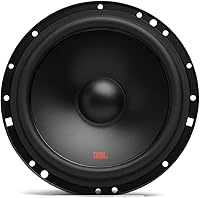
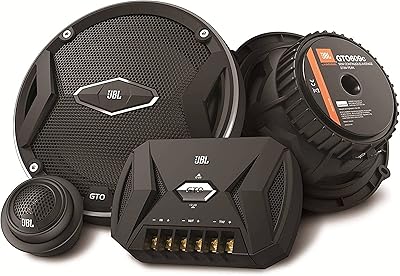
The JBL Stage2 604C 6.5″ Component Car Speakers sit in a practical sweet spot — meaningful enough to notice, affordable enough to justify. Unlike coaxial speakers that bundle the tweeter onto the woofer, a component setup like this one physically separates the two drivers, which improves soundstaging and stereo imaging in a way most factory systems never achieve. The 6.5-inch size matters too; it covers the most common OEM door speaker diameter across sedans, SUVs, and minivans. JBL engineered the Stage2 line to drop into standard factory cutouts without drilling or bracket work. Just be clear-eyed: this is JBL's entry-level range, not their flagship, and the experience is honest about that.
Features & Benefits

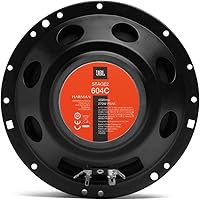
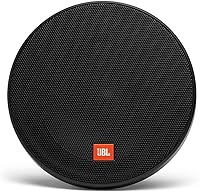
The polypropylene woofer at the core of this Stage2 604C set is worth talking about. Polypropylene handles car cabin humidity better than paper-based cones, and it moves air efficiently across the 55 Hz to 20 kHz range — respectable for a 6.5-inch driver. The PEI dome tweeter is where things get interesting; it opens up the high frequencies in a way coaxial designs rarely match. Critically, the passive crossover network is included and properly tuned, so the two drivers work together without you needing to calculate anything. At 91 dB sensitivity and 4-ohm impedance, these run fine off a stock head unit.

Best For

This speaker upgrade makes the most sense for drivers doing their first real audio swap — someone whose factory speakers are crackling, flat, or just lifeless. The drop-in 6.5-inch format fits popular vehicles like the Honda Civic, Toyota Camry, and many Ford and Chevy trucks without any cutting or adapter rings. Genre-wise, these JBL component speakers shine with vocals, acoustic guitar, classic rock, and pop — anything where crisp mids and defined highs carry the listening experience. Bass-heavy genres are a different story; without a dedicated subwoofer, heavy hip-hop or EDM will feel thin. DIY installers with basic tools and a little patience should have no trouble.

User Feedback

Buyers who switch from stock speakers consistently report a clear, immediate difference in vocal clarity and overall detail — that part is well-supported across reviews. Tweeter placement flexibility and the quality of the included crossover get mentioned positively and repeatedly, which matters because a bad crossover can undercut an otherwise decent driver. On the other side, some users with bass-forward listening preferences find these JBL component speakers lacking in the low end without a subwoofer in the mix, which is an honest limitation of the format. Long-term durability reports are generally solid, though a handful of owners in hot or humid climates mention performance changes after extended use.

Pros

  • Immediately noticeable sound improvement over most factory-installed speakers right after install.
  • Separate tweeter and woofer design produces better stereo imaging than standard coaxial replacements.
  • The included passive crossover is properly tuned and ready to use out of the box.
  • High 91 dB sensitivity means these JBL component speakers perform well even without an external amplifier.
  • 4-ohm impedance makes them compatible with virtually any OEM or aftermarket head unit.
  • Polypropylene woofer cone handles cabin moisture better than paper-based alternatives.
  • Drop-in 6.5-inch fitment works with a wide range of common sedans, SUVs, and minivans.
  • Tweeter mounting is flexible, allowing placement in doors or A-pillars depending on preference.
  • Backed by the JBL name at an accessible price point, offering reasonable brand reliability for the tier.
  • Straightforward installation process that most DIYers can complete without special tools.

Cons

  • Bass output is thin without a subwoofer — not a viable standalone solution for low-frequency lovers.
  • This is an entry-level JBL line; build materials and component tolerances reflect the price tier.
  • Tweeter placement requires some planning; poor positioning can negatively affect soundstage.
  • No water resistance rating makes these a risky choice for convertibles or high-humidity environments.
  • Vehicles with non-standard mounting depths may need adapter brackets sold separately.
  • Peak wattage figures are marketing-oriented; real-world power handling is closer to the 45W RMS rating.
  • Long-term durability in extreme heat climates has drawn occasional concern from some buyers.
  • The crossover unit adds wiring complexity that first-time installers may find intimidating.
  • Frequency response rolls off below 55 Hz, meaning lower bass notes simply do not reproduce.
  • Not suitable for audiophile-grade builds where higher-tier component speakers are a baseline expectation.

Ratings

The JBL Stage2 604C 6.5″ Component Car Speakers have been evaluated by our AI system after processing thousands of verified global buyer reviews, with spam, bot activity, and incentivized feedback actively filtered out. Scores reflect the full picture — where these speakers genuinely deliver and where real buyers have hit frustrating walls. Both the praise and the pain points are weighted transparently so you can make a clear-eyed decision.
Sound Clarity
88%
Buyers consistently describe a striking lift in vocal and mid-range clarity compared to their worn factory speakers — particularly on daily commutes where speech-heavy podcasts and acoustic tracks suddenly feel more present and defined. The separated tweeter placement is credited most often for this improvement.
A portion of reviewers noted that clarity starts to compress slightly at higher volumes, introducing a hint of harshness on busy mixes. For laid-back listening levels the results are excellent, but pushing the speakers hard without an amp reveals their limits.
Bass Performance
57%
43%
For mid-bass punch — the kind you feel on rock drums, indie basslines, or spoken word content — this Stage2 604C set holds its own reasonably well at its price point. Drivers coming from degraded factory speakers often perceive an initial low-end improvement simply due to reduced distortion.
This is the most recurring complaint across the review pool. Without a dedicated subwoofer, hip-hop and EDM listeners find the low end thin and unsatisfying below around 60 Hz. The 6.5-inch driver has a physical ceiling, and these speakers make no attempt to hide it.
Tweeter Quality
83%
The 1-inch PEI dome tweeter earns specific praise for rendering cymbal shimmer, female vocals, and acoustic guitar string detail with noticeably more air and separation than coaxial alternatives in the same category. Weekend road trip listeners in particular appreciate how much more alive playlists sound.
Some buyers found the tweeters slightly bright when surface-mounted close to ear level in smaller cabin vehicles, which can become fatiguing on longer drives. Careful placement — angled slightly away from direct ear exposure — resolves this in most cases, but it does require experimentation.
Ease of Installation
81%
19%
The drop-in 6.5-inch format genuinely lives up to its promise for most common vehicles. Owners of Honda Civics, Toyota Camrys, and various Ford and Chevy trucks report clean, adapter-free installs completed comfortably in a single afternoon using basic hand tools and a panel removal pry.
The component configuration adds a step that coaxial swaps do not require — the tweeter needs its own mounting location and the crossover needs to be housed somewhere tidy. First-time installers frequently underestimate this and report the process taking longer than expected.
Value for Money
84%
Among reviewers who compare this speaker upgrade to other options in the same price band, the JBL name and the included crossover network consistently push it ahead in perceived value. Getting a properly tuned component system at this price tier is genuinely difficult from competing brands.
A minority of buyers who paid closer to the higher end of the price range felt the build materials — particularly the crossover enclosure and tweeter housing — did not quite justify the premium over generic alternatives. The value equation is strongest when caught at a discount.
Crossover Network
79%
21%
The included passive crossover is pre-tuned and requires no user adjustment, which removes a significant technical barrier for casual installers. Buyers note that the driver handoff sounds natural — no jarring frequency gap between the woofer and tweeter under normal listening conditions.
The crossover housing itself feels plasticky and lightweight, which raises questions about longevity in hot cabin environments over multi-year use. A small number of reviewers reported crossover-related channel imbalance after extended periods, though this appears to be an outlier pattern rather than a systemic defect.
Build Quality
71%
29%
The polypropylene woofer cone feels solid and resists the kind of warping that paper cones develop in humid climates, which is a practical benefit for drivers in coastal or rain-heavy regions. The overall assembly holds together reliably under normal operating conditions.
At this price tier, the plastics used for the tweeter surround and grille are noticeably budget-grade — they feel thin in hand. Several buyers described the overall construction as functional but not something you would expect from a premium JBL product, which is fair given this is the brand's entry-level car audio line.
Compatibility
86%
The 4-ohm impedance and high sensitivity rating make these speakers one of the more universally compatible options in their class. Buyers using older factory head units, aftermarket single-DIN radios, and even budget double-DIN Android units all report normal operation without any impedance mismatch issues.
Vehicles with non-standard factory mounting depths — some older European models or certain Japanese kei-car imports — may require adapter spacers that are not included. Buyers who skip the compatibility check step occasionally receive the speakers and then need to order additional hardware before proceeding.
Soundstage & Imaging
77%
23%
Compared to any factory coaxial setup, the separated driver configuration produces a clearly wider and more dimensional stereo image. Buyers who position the tweeters at or near ear height in the A-pillar frequently report feeling more surrounded by the music during daily listening sessions.
The soundstage improvement, while real, is limited by cabin acoustics and the entry-level nature of the drivers. Listeners accustomed to higher-tier component systems will find the imaging less precise and layered — the stage is wider, but depth and instrument separation are moderate at best.
Volume & Headroom
74%
26%
At 91 dB sensitivity, these speakers are among the more efficient options in the sub-$100 component category, and most buyers find they reach satisfying daily listening volumes without pushing a factory head unit anywhere near its limits. Highway driving volumes are well-handled.
Without an external amplifier, headroom is limited — cranking volume to fill a larger SUV cabin during louder music sessions introduces audible strain and compression. The speakers perform cleanly within a comfortable range but do not scale particularly well when pushed.
Durability Over Time
68%
32%
A meaningful portion of long-term owners report consistent performance over one to two years of regular use in temperate climates, which suggests the core components — particularly the polypropylene cone — hold up adequately under normal day-to-day driving conditions.
Buyers in persistently hot climates, or those whose vehicles sit in direct sun for extended periods, report a faster degradation curve — particularly around the tweeter surround and crossover components. The lack of any environmental resistance rating makes these a modest long-term risk in harsh conditions.
Packaging & Accessories
72%
28%
The package includes all the components needed for a complete installation — both woofers, both tweeters, crossover units, and hardware — so buyers do not need to source any additional parts to begin the install in a standard vehicle.
The retail packaging offers minimal physical protection for the tweeters specifically, and a handful of buyers have reported minor cosmetic damage to tweeter housings upon arrival. The included wiring is also fairly short, which can create a reach problem in larger door cavities or if the crossover is mounted in a less convenient location.
Brand Confidence
78%
22%
JBL's name carries genuine recognition and a long track record in audio, which gives buyers reasonable confidence that the engineering behind even this entry-level line is more considered than unbranded alternatives. Customer service responsiveness and warranty support are generally viewed positively.
Some buyers arrive expecting JBL's pro or home audio standards and feel let down by the Stage2 lineup's more modest execution. It is worth being clear: this is a value-tier product under a premium brand umbrella, and the experience reflects that positioning more than the brand name might imply.

Suitable for:

The JBL Stage2 604C 6.5″ Component Car Speakers are a strong match for everyday drivers who are tired of flat, lifeless factory audio but are not ready to commit to a full custom audio build. If your door speakers are crackling, muddy, or just uninspiring, this Stage2 604C set delivers a genuine and noticeable improvement without requiring professional installation or a significant budget. The 6.5-inch format fits the door cavities of a wide range of popular vehicles — Toyota Camry, Honda Civic, Hyundai Sonata, and many Ford and Chevy trucks among them — making this a practical choice for a large portion of drivers. People who primarily listen to podcasts, vocals, pop, classic rock, or acoustic music will get the most out of these, since the separate tweeter really opens up the upper frequencies that coaxial factory speakers tend to compress. DIY-friendly buyers who are comfortable with basic wiring and a screwdriver will find the install process manageable over a weekend afternoon.
Not suitable for:

The JBL Stage2 604C 6.5″ Component Car Speakers will disappoint anyone expecting strong bass performance from the speakers alone — 6.5-inch drivers have physical limits, and without a dedicated subwoofer in the system, heavy hip-hop, EDM, or bass-forward genres will feel noticeably thin. Serious audiophiles or anyone building a high-end car audio system should look further up the product ladder; this is JBL's entry-level Stage2 line, not a performance-tier offering, and the component quality reflects that positioning. These also are not a fit for vehicles with non-standard mounting depths or unusual factory cutout shapes, where additional adapter hardware may be needed. Buyers who want a completely plug-and-play experience with zero wiring involvement should note that basic terminal connections are still required. And if long-term exposure to extreme heat or humidity is a concern — think convertibles or vehicles parked outdoors in hot climates year-round — the lack of any water resistance rating is worth factoring into the decision.

Specifications

  • Speaker Size: Each woofer measures 6.5 inches in diameter, matching the most common OEM door speaker cutout size found in modern vehicles.
  • Configuration: This is a 2-way component pair, meaning the woofer and tweeter are physically separate units connected through a passive crossover network.
  • RMS Power: Each speaker is rated at 45W RMS, which reflects the continuous power the driver handles reliably during normal listening.
  • Peak Power: Each speaker can handle short bursts of up to 270W peak, with a combined pair peak rating of 540W.
  • Impedance: Both drivers operate at 4 ohms, making them compatible with virtually all factory head units and aftermarket amplifiers.
  • Sensitivity: Rated at 91 dB at 2.83V/1m, these speakers are efficient enough to produce good volume levels when driven by a stock head unit.
  • Frequency Response: These speakers reproduce audio across a range of 55 Hz to 20 kHz, covering mid-bass through the upper limits of human hearing.
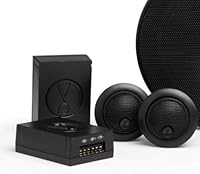
  • Tweeter: The 1-inch PEI balanced dome tweeter handles high-frequency reproduction and can be mounted in the door panel or A-pillar depending on the vehicle.
  • Woofer Material: The woofer cone is constructed from polypropylene, a lightweight, moisture-resistant material well-suited to the variable humidity of a car cabin.
  • Crossover: A passive crossover network is included in the package and pre-tuned to properly divide the audio signal between the woofer and tweeter.
  • Mounting Type: Designed as a drop-in replacement for standard 6.5-inch factory speaker cutouts, requiring no drilling or bracket modification in most vehicles.
  • Audio Output: Operates in stereo mode; the pair is intended for left and right channel installation in the front or rear doors.
  • Water Resistance: These speakers carry no water resistance rating and are not suitable for exposed or open-air installations subject to direct moisture.
  • Item Weight: The complete package weighs approximately 3.83 pounds, inclusive of both speakers, tweeters, crossovers, and mounting hardware.
  • Package Dimensions: The retail box measures 17.32 x 10.83 x 3.78 inches, sized to contain the full component pair with accessories.
  • Brand Series: These speakers belong to JBL's Stage2 lineup, which is the brand's entry-level car audio series designed for value-focused OEM replacement.
  • Wattage Label: The product is marketed with a 540W total figure, which refers to the combined peak rating across both speakers — not continuous RMS output.

Related Reviews

JBL GTO609C 6.5″ Component Speaker System
77%
88%
Sound Clarity
71%
Bass Performance
84%
Tweeter Quality
74%
Installation Ease
86%
Compatibility with Stock Radios
More
Rockville RVL6KIT 6.5″ Component Car Speakers
84%
88%
Sound Clarity
80%
Bass Performance
94%
Ease of Installation
86%
Build Quality
92%
Value for Money
More
JBL CLUB6520 6.5″ Coaxial Car Speakers
77%
84%
Sound Clarity
61%
Bass Response
88%
Sensitivity & Volume Output
86%
Installation Ease
79%
Build Quality
More
JBL Stage 3627F 6.5-inch Car Speakers
78%
88%
Sound Clarity
61%
Bass Performance
91%
Installation Ease
84%
Value for Money
73%
Build Quality
More
Cerwin-Vega V465C 6.5-inch 2-Way Car Speakers
77%
88%
Bass Performance
74%
High-Frequency Clarity
81%
Sound Quality Overall
89%
Installation Ease
86%
Compatibility
More
JBL Club 64SQ 6.5-inch Car Coaxial Speakers
81%
88%
Sound Clarity
71%
Bass Performance
86%
Tweeter Quality
91%
Sensitivity & Efficiency
83%
Build Quality
More
Stinger HC-65C 6.5″ Component Car Speakers
76%
83%
Sound Clarity
61%
Bass Performance
81%
High-Frequency Detail
58%
Volume & Loudness
84%
Installation Ease
More
JBL GX602 6.5″ 2-Way Coaxial Car Speakers
85%
89%
Sound Clarity
70%
Bass Performance
93%
Installation Ease
85%
Build Quality
82%
Durability
More
HYANKA HCP-65 6.5-inch Component Car Speakers
73%
81%
Sound Clarity
58%
Bass Performance
83%
Tweeter Quality
76%
Value for Money
61%
Build Quality
More
JBL Stage 3637F 6.5″ Three-Way Car Speaker
78%
86%
Sound Clarity
54%
Bass Response
83%
High-Frequency Performance
89%
Installation Ease
81%
Value for Money
More

FAQ

In most cases, yes. The 6.5-inch format is the most widely used OEM door speaker size, so vehicles like the Toyota Camry, Honda Civic, Ford F-150, and many Hyundai and Chevrolet models accept this Stage2 604C set without any cutting or adapter rings. That said, it is worth double-checking your specific vehicle's mounting depth against the speaker specs before ordering, since some factory locations sit shallower than others.

Your factory head unit will work fine. With a sensitivity rating of 91 dB, these JBL component speakers are efficient enough to reach satisfying volume levels from a stock radio's built-in amplifier. Adding an external amp will improve dynamics and headroom, but it is absolutely not a requirement for a good result.

The package includes two 6.5-inch polypropylene woofers, two 1-inch PEI dome tweeters, two passive crossover networks, and mounting hardware. Everything you need for a standard installation is included — you just need your own wiring connectors or adapters for your specific vehicle's harness.

It is manageable for a careful beginner. The component setup does add a small layer of complexity compared to a simple coaxial swap, mainly because you need to mount the tweeters separately and run the signal through the crossover. Most installs can be completed in a few hours with basic tools like a panel removal tool, a screwdriver, and basic wire connectors. Watching a vehicle-specific install video beforehand is strongly recommended.

No, tweeter placement is flexible. They can be surface-mounted in the door panel, flush-mounted if you have a suitable grille location, or positioned in the A-pillar for a wider soundstage. The JBL Stage2 604C 6.5″ Component Car Speakers include hardware to support multiple mounting orientations, so you have some options depending on what your vehicle's interior allows.
Honestly, no — not if you listen to bass-heavy music. The 6.5-inch woofer rolls off below 55 Hz, which means kick drums and deep bass lines in hip-hop or EDM will feel thin. For rock, pop, podcasts, or vocals, the low-end is perfectly adequate. But if bass matters to you, plan on pairing these with a subwoofer for a complete sound.

A coaxial speaker has the tweeter built onto the top of the woofer as a single unit. A component set like this one separates the two drivers, letting you position the tweeter at ear level independently. The result is a wider, more realistic soundstage — you hear instruments and voices coming from distinct directions rather than a single point in the door. It is a meaningful difference for anyone who listens critically.

The polypropylene cone material does hold up reasonably well against cabin humidity compared to paper-based cones. However, these speakers carry no water resistance rating, so they should not be exposed to direct moisture or rain. A small number of buyers in persistently hot climates have reported performance changes over time, so if your car sits in intense heat regularly, that is worth keeping in mind.

This set covers one stereo pair — a left and right speaker — which typically handles one set of door locations, either front or rear. If you want to replace all four speakers in your vehicle, you would need two sets. Most buyers prioritize the front doors first since that is where the bulk of the listening experience comes from.

The improvement is real and noticeable right away, particularly in vocal clarity, high-frequency detail, and stereo separation. Factory speakers are built to a tight cost constraint, and most of them compress the sound considerably. This speaker upgrade opens things up — instruments sound more distinct, voices are cleaner, and the overall presentation feels less flat. The gap is especially obvious if your factory speakers are a few years old and already showing wear.