Overview

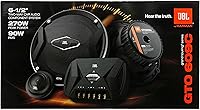
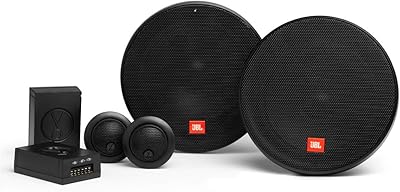
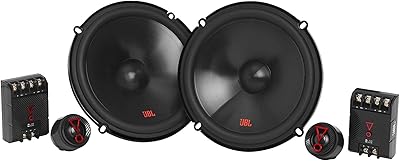
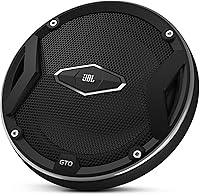
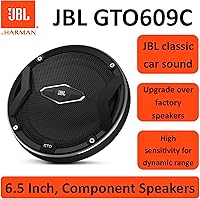
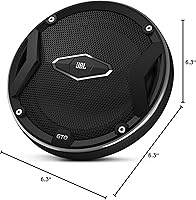
The JBL GTO609C 6.5″ Component Speaker System sits comfortably in the mid-range sweet spot for drivers who are tired of the flat, lifeless sound that comes out of most factory setups. Unlike coaxial speakers — where the tweeter mounts directly on the woofer — component systems separate the two drivers, placing the tweeter where it best reproduces high frequencies and giving you a wider, more realistic soundstage. JBL has been a respected name in audio for decades, and this model reflects that heritage without asking you to spend serious money. The 6.5-inch woofer size fits most common door slots, making it a practical drop-in upgrade for a huge range of vehicles. Just know going in: this is a solid OEM replacement, not a competition build.
Features & Benefits

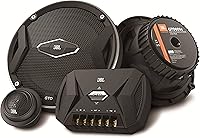
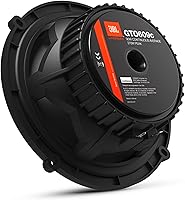
The Plus One woofer cone is the headline trick here — JBL uses a carbon-injected cone that is physically larger than what you would find on a typical 6.5-inch driver, which means it pushes more air and delivers noticeably better low-end presence without needing a separate subwoofer. Do not expect thumping bass, but kick drums and bass guitar have real body to them. The soft-dome tweeters run cooler thanks to oversized voice coils, which keeps the highs smooth even at higher volumes. The I-Mount tweeter system is genuinely versatile — flush into the dash, surface-mounted on the A-pillar, your choice. A two-position tweeter level control lets you fine-tune the top end, and the 3-ohm impedance keeps things friendly for stock radios.

Best For

This JBL component set makes the most sense for anyone replacing worn-out or underwhelming factory speakers and wanting a real, audible improvement without rebuilding their entire car audio system. If your trunk is already occupied — no room for a subwoofer box — the extra bass reach from the woofer design is a genuine plus. The flexible tweeter mounting is particularly valuable for DIY installers working with tight or awkward dash spaces. It also pairs well with stock head units, so you do not need an amplifier to get good results. Music fans who listen across genres — rock, R&B, podcasts — will appreciate the balanced, non-tiring sound over long drives.

User Feedback

Owners consistently praise the jump in clarity versus factory audio — vocals cut through cleanly, and the separation between instruments is noticeably better. The tweeter level adjustment gets specific mentions as a practical touch, especially from people dealing with awkward mounting positions. On the critical side, some buyers feel the included crossover network is fairly basic and that upgrading it could unlock more performance. A handful of owners with older vehicles report minor fit issues, so checking your vehicle door depth and wiring harness beforehand is worth the effort. Long-term owners generally report good durability, though sound quality impressions tend to vary depending on whether the install was done professionally or by hand.

Pros

  • Delivers a dramatic, immediately noticeable clarity improvement over factory speakers from day one.
  • The Plus One woofer adds real bass presence — a genuine bonus for drivers who cannot fit a subwoofer.
  • Works efficiently with stock head units, so no amplifier is required to hear a strong improvement.
  • Soft-dome tweeters stay smooth and fatigue-free even during long highway listening sessions.
  • The I-Mount tweeter system handles awkward dash and pillar placements without custom fabrication.
  • A two-position tweeter level control lets you tune the top end to your room and taste.
  • The 6.5-inch woofer size fits a wide range of vehicles without adapter rings in most cases.
  • JBL brand heritage brings genuine engineering credibility at a price that does not break the bank.
  • Long-term owners report the woofer cones hold up well over multiple years of regular use.
  • Included hardware kit covers most standard install scenarios, reducing extra sourcing for DIY buyers.

Cons

  • The bundled crossover network is basic and becomes the weakest link if you ever add an amplifier.
  • Bass extension stops well short of what a dedicated subwoofer delivers — hip-hop and EDM listeners will notice.
  • Thin instruction documentation makes the install harder than it needs to be for first-time buyers.
  • Some older or non-standard vehicles have reported fitment issues that require additional adapter hardware.
  • Crossover components show durability concerns in long-term ownership reports, even when the drivers themselves hold up.
  • Wire leads can run short in larger vehicles, requiring extension cables not included in the box.
  • Sound quality varies considerably between professional installs and DIY jobs, making results less predictable.
  • The tweeter level adjustment has only two positions, which is a blunt correction tool for tricky placements.

Ratings

The JBL GTO609C 6.5″ Component Speaker System earns consistently strong marks from verified buyers worldwide, and the scores below reflect what real drivers actually experience — not marketing copy. Our AI rating system processed thousands of confirmed purchase reviews, actively filtering out incentivized, bot-generated, and spam submissions to surface genuine sentiment. Both the standout strengths and the recurring frustrations are represented honestly here.
Sound Clarity
88%
Owners repeatedly describe a dramatic clarity improvement the moment these replace factory speakers — vocals sound separated and distinct, and instruments stop blending into mush at moderate volumes. On daily commutes with mixed playlists, the improvement is immediately obvious even without any equalizer tuning.
A small number of buyers feel the upper midrange can sound slightly forward or bright depending on tweeter placement, particularly in smaller cabin vehicles. Getting the tweeter angle dialed in takes some experimentation before clarity peaks.
Bass Performance
71%
29%
Given the absence of a subwoofer, the Plus One woofer cone delivers more low-end weight than most rivals in this size class — kick drums and bass lines have genuine presence during highway driving. Owners who cannot fit a sub in their trunk find this a satisfying compromise.
Expectations need to stay grounded: this is enhanced bass for a 6.5-inch driver, not a substitute for a dedicated woofer. Heavy bass music genres like hip-hop and EDM will still leave some listeners wanting more below 60 Hz.
Tweeter Quality
84%
The soft-dome tweeters are routinely praised for staying smooth at higher listening volumes — none of the harsh, fatiguing sting that plagues cheaper component tweeters on long drives. Listeners who stream a lot of acoustic or jazz content particularly appreciate the refined top end.
The tweeter size is relatively modest at 19 mm, and a few audiophile-leaning buyers feel high-frequency air and extension could be more expansive. The two-position level control helps but is a blunt tool compared to a proper external crossover.
Installation Ease
74%
26%
The I-Mount tweeter system genuinely stands out here — being able to choose between flush and surface mounting options saves real headaches when working with awkward dash layouts or A-pillar pods. Most DIY installers report the woofer drop-in fits common door locations cleanly.
Component systems inherently involve more wiring than coaxials, and running the crossover network adds steps that can frustrate first-timers. A handful of owners with older or foreign-market vehicles ran into fitment gaps that required extra adapter rings or custom brackets.
Compatibility with Stock Radios
86%
The 3-ohm impedance and 93 dB sensitivity are a practical pairing — these speakers draw less power and respond louder per watt, meaning they work meaningfully well plugged into an unmodified factory head unit. Owners who did not want to invest in an amplifier report satisfying volume levels.
At very low power levels from weaker OEM radios, the bass loses some of its presence and the system sounds a little thin. Pairing with even a modest aftermarket amplifier noticeably improves dynamics, which suggests the speakers benefit from more headroom than stock radios typically provide.
Build Quality
79%
21%
The carbon-injected cones feel solid and purposeful, and the overall fit and finish is noticeably above bargain-bin component sets. Owners who have been running these for two or three years generally report no physical degradation in the drivers or grilles.
The crossover network enclosures feel plasticky and lightweight, and a few long-term owners expressed concern about the crossover components themselves rather than the drivers. The build inspires confidence in the speakers but less so in the passive crossovers bundled with them.
Crossover Network Quality
63%
37%
The included crossovers handle the basic job of splitting frequencies correctly, and most casual listeners will never feel the need to replace them. The crossover point works reasonably well for blending the woofer and tweeter without an obvious gap in the midrange.
Enthusiasts who have upgraded to aftermarket crossovers report a clear improvement in imaging and smoothness, suggesting the bundled units are the weakest link in the package. The two-way crossover design is quite simple, and it shows when the system is pushed harder or paired with an amplifier.
Value for Money
83%
For the asking price, getting JBL engineering with genuine performance improvements over OEM audio represents solid value — especially compared to lesser-known brands at similar price points. Buyers consistently feel they received more than they expected for the investment.
The bundled crossovers and relatively basic tweeter size mean the gap between this set and pricier component systems is real. Buyers who later upgrade just the crossovers essentially invest more on top of the original purchase to reach the system's full potential.
Soundstage & Imaging
77%
23%
Separating the tweeter from the woofer — the fundamental advantage of any component setup — gives these GTO609C speakers noticeably better stereo width than coaxials in the same doors. Listeners report that instruments feel placed in the cabin rather than just blasting from door panels.
Imaging precision is heavily dependent on where the tweeters end up mounted, and suboptimal placement noticeably narrows the stage. Buyers who surface-mounted on lower door panels rather than the dash or A-pillars reported a less convincing result.
Longevity & Durability
76%
24%
The majority of long-term owners — those reporting three or more years of use — describe the drivers themselves holding up well with no cone damage or voice coil issues. The carbon material on the woofer appears to handle heat and humidity cycles in car environments without warping.
There is a pattern of crossover-related complaints appearing in older reviews, with some owners experiencing channel imbalance after extended use that traced back to the passive crossover rather than the speaker itself. The drivers outlast the crossovers in a meaningful number of cases.
Midrange Reproduction
81%
19%
Vocals and guitars sit naturally in the mix without the chesty, honky coloration that shows up in lower-quality component sets. Owners who listen to a lot of podcasts or acoustic music specifically call out the midrange as a highlight of the listening experience.
At the crossover handoff point around 2,500 Hz, a subtle unevenness occasionally surfaces, particularly noticeable on female vocals at louder volumes. It is not a dealbreaker, but it is audible enough that a couple of reviewers flagged it after extended listening.
Packaging & Included Hardware
72%
28%
The package includes mounting hardware and wiring leads that cover most standard installation scenarios, which reduces the number of separate parts a DIY installer needs to source. The tweeter mounting kit in particular is more complete than what competing brands include.
The instruction documentation is thin and relies heavily on diagrams that are not always clear for first-time installers. A few buyers noted that the wire leads were shorter than expected, requiring extension in some vehicle configurations.
High-Volume Performance
78%
22%
Cranked up on a highway drive, these component speakers hold together better than most factory replacements — the soft-dome tweeters avoid the harshness that often creeps in at high volumes, and the woofer stays controlled rather than sounding strained. Owners running modest amplifiers report even better results.
Without an amplifier, some dynamic compression becomes apparent at higher volumes — the system starts to lose punch and detail when pushed close to the limits of what a stock radio can deliver. It is a power supply issue more than a speaker flaw, but it affects the high-volume experience.
Aesthetic & Grille Design
68%
32%
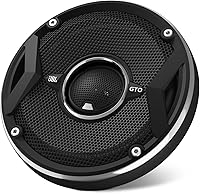
The black finish and low-profile woofer basket look clean inside door panels, and the compact tweeter housing does not look out of place surface-mounted on a dash. Owners report the overall appearance is understated and professional rather than flashy.
The grilles are basic and feel flimsy — a few buyers replaced them with aftermarket options for a cleaner look. The tweeter housing design is functional but does not match the premium aesthetic that some buyers expect at this price level.

Suitable for:

The JBL GTO609C 6.5″ Component Speaker System is an excellent choice for everyday drivers who are genuinely frustrated by the flat, lifeless sound of stock speakers and want a meaningful upgrade without rebuilding their entire car audio setup. It fits particularly well in vehicles where the front door slots already accept 6.5-inch drivers — which covers a huge portion of common cars and trucks — so the physical swap is straightforward. Commuters who spend long stretches in the car will appreciate how the soft-dome tweeters keep high frequencies smooth and non-tiring over an hour-long drive. If your trunk is packed or simply off-limits for a subwoofer box, the woofer design here delivers more low-end presence than a typical replacement speaker, which goes a long way for casual bass enjoyment. DIY installers who want flexibility in where the tweeter lives — flush in the dash or surface-mounted on a pillar — will find the I-Mount system a genuine practical advantage. It also pairs well with a stock head unit, so you do not need to budget for an amplifier right away to hear a noticeable difference.
Not suitable for:

The JBL GTO609C 6.5″ Component Speaker System is not the right call for buyers who demand competition-level audio performance or who regularly listen to bass-heavy music and expect deep, room-filling low end. If you are building a serious car audio system with a dedicated amplifier and subwoofer already in the plan, you would likely outgrow these speakers quickly or find the bundled crossovers to be the bottleneck holding everything back. Audiophiles who prioritize precise imaging and high-resolution detail across the full frequency range will probably find themselves wanting a more premium component set with a more sophisticated crossover network. First-time DIYers who have never run speaker wire or mounted a crossover should also approach with caution — component systems are meaningfully more involved than swapping coaxials, and a poor install will make even good speakers sound mediocre. Owners of older vehicles with non-standard door configurations should measure carefully before buying, since fitment issues in legacy or foreign-market cars have been a recurring complaint. If you want a set-it-and-forget-it plug-in replacement with zero wiring work, a quality coaxial speaker would serve you better.
Specifications

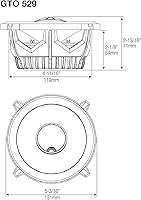
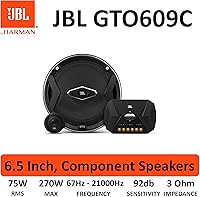
  • Woofer Size: The woofer measures 6.5 inches (16.5 cm) in diameter, fitting the most common door speaker slots found in modern cars and trucks.
  • Tweeter Size: Each tweeter is a 19 mm soft-dome unit with an oversized voice coil designed to handle heat and maintain smooth high-frequency output over long listening sessions.
  • System Type: This is a 2-way component speaker system, meaning the woofer and tweeter are physically separate units connected through a passive crossover network.
  • Peak Power: The system can handle up to 270 watts of peak power across both channels, covering high-demand listening scenarios with a capable aftermarket amplifier.
  • RMS Power: Continuous RMS power handling is rated at 75 watts per channel, reflecting the steady-state power the speakers can sustain without damage.
  • Impedance: Speaker impedance is 3 ohms, a lower-than-standard rating that allows the speakers to draw more efficiently from factory head units and lower-powered amplifiers.
  • Sensitivity: Sensitivity is rated at 93 dB, meaning the speakers produce louder output per watt compared to typical 87–89 dB factory replacements.
  • Frequency Response: The system reproduces frequencies up to 21,000 Hz, covering the full audible high-frequency range with the soft-dome tweeter handling the upper end.
  • Crossover Point: The passive crossover network splits the signal at 2,500 Hz, handing off midrange and above to the tweeter while the woofer handles the lower frequencies.
  • Cone Material: The woofer cone is made from a carbon-injected composite using JBL's Plus One technology, producing a cone surface area larger than standard 6.5-inch drivers in its class.
  • Tweeter Mount: The I-Mount system supports both flush and surface installation for the tweeters, providing flexibility for different dash, door, and A-pillar configurations.
  • Tweeter Level: A two-position attenuation switch on the crossover allows the tweeter output level to be adjusted to compensate for placement angle or personal listening preference.
  • Connectivity: All connections are wired, with the crossover network acting as the signal distribution hub between the head unit or amplifier and each individual driver.
  • Configuration: The system operates in 2.0 stereo configuration, with one woofer and one tweeter per channel making up a complete left-right stereo pair.
  • Item Weight: The complete package weighs approximately 2 pounds, reflecting the lightweight carbon-composite construction of the woofer baskets and tweeter housings.
  • Package Contents: Each package includes two woofers, two tweeters, two passive crossover networks, and all necessary mounting hardware for a standard installation.
  • Waterproofing: These speakers carry no water-resistance rating and are not designed for exposure to moisture, making them unsuitable for marine or convertible applications.
  • Warranty: JBL covers this component set under a limited warranty; buyers should register the product and retain proof of purchase to ensure warranty eligibility.

Related Reviews

JBL Stage2 604C 6.5-inch Car Component Speakers
83%
91%
Sound Quality
88%
Bass Performance
87%
Ease of Installation
92%
Value for Money
80%
Build Quality
More
Memphis Audio SRXP62C SRX Pro 6.5″ Component Speaker System

85%
91%
Sound Quality (Bass Response)
89%
Sound Quality (Treble Clarity)
84%
Ease of Installation
88%
Build Quality & Durability
92%
Power Handling & Output
More
Kicker 46CSS654 CS-Series 6.5-Inch Component Speaker System
85%
91%
Sound Quality
89%
Bass Performance
85%
High-Frequency Clarity
88%
Ease of Installation
87%
Build Quality
More
MB Quart FSB216 Formula Series 6.5″ Component Speaker System

85%
92%
Sound Quality
89%
Bass Performance
85%
Ease of Installation
88%
Build Durability
91%
Clarity of High Frequencies
More
Rockford Fosgate T2652-S Power 6.5″ Component Speaker System
88%
92%
Sound Quality
90%
Bass Performance
88%
Build Quality
85%
Installation Ease
87%
Value for Money
More
JBL Stage 3607CF 6.5″ Two-Way Car Audio Component System
85%
89%
Sound Quality
85%
Bass Performance
91%
Ease of Installation
87%
Build Quality
90%
Clarity of Highs
More
Infinity REF-6530CX 6.5-Inch Two-Way Component Speaker System

84%
88%
Sound Quality
85%
Bass Performance
91%
Ease of Installation
92%
Value for Money
80%
Build Quality
More
Rockford Fosgate T165-S T1 Power 6.5-Inch Component Speaker System
86%
94%
Sound Quality
92%
Bass Response
75%
Installation Ease
89%
Build Quality
91%
Value for Money
More
Rockford Fosgate Prime R165-S 6.5” 2-Way Component Speaker System
85%
89%
Sound Quality
75%
Bass Performance
93%
Ease of Installation
88%
Build Quality
85%
Clarity at High Volume
More
Rockford Fosgate P165-SI Punch 6.5″ 2-Way Component Speaker System
87%
91%
Sound Clarity & Balance
87%
Build Quality & Durability
90%
Ease of Installation
84%
Bass Response
93%
Treble & High-Frequency Clarity
More

FAQ

They will work fine with a stock head unit. The 3-ohm impedance and 93 dB sensitivity make these GTO609C speakers unusually efficient at drawing power, so you will hear a real improvement straight from your factory radio. That said, adding even a modest amplifier later will noticeably open up the dynamics and bass response.

In most cases you can reuse a factory wiring harness with a simple plug adapter for your vehicle make and model. The main extra step compared to coaxial speakers is running short leads to mount the crossover network somewhere out of the way — usually under a seat or inside the door panel. The wire leads included are adequate for most setups, though some owners in larger vehicles have needed short extensions.

More involved than swapping coaxials, but manageable if you are comfortable removing door panels and routing wires. You are dealing with three components per side — woofer, tweeter, and crossover — instead of one, so plan for a couple of hours per door. If you have never done a speaker install before, watching a vehicle-specific tutorial beforehand is worth the time, or consider a professional install for the best results.

The I-Mount system gives you two practical options: flush-mount them into the dash or door panel using the included cup, or surface-mount them on the A-pillar or dash using the angled bracket. Most people get the best soundstage by mounting them high up, aimed toward the listening position. The two-position tweeter level switch on the crossover helps compensate if your placement is less than ideal.

Better than most 6.5-inch replacements, honestly — the Plus One woofer cone does move more air and produces noticeably more low-end weight than standard drivers. But there is a ceiling. Frequencies below around 60 Hz will still be thin without a dedicated sub, and if thumping bass is central to your listening experience, you should plan to add a subwoofer at some point. These speakers will satisfy casual bass enjoyment but will not replicate what a proper woofer does.

The 6.5-inch woofer size fits the majority of common door speaker locations in modern vehicles, but compatibility depends on door depth and mounting diameter for your exact make and model. It is worth checking your vehicle's speaker size using an online fit guide before ordering. Some older or import vehicles have reported fitment gaps that required adapter rings, so that quick check can save you a headache.

You get two woofers, two tweeters, two passive crossover networks, and a hardware kit that covers most standard mounting scenarios. The wire leads from the crossovers are included, though as noted they can run short in larger vehicles. Grille covers are not included in all versions, so factor that in if clean aesthetics matter to you.

Component sets have a structural advantage — separating the tweeter physically creates a wider, more realistic soundstage that coaxials simply cannot match. At a comparable price, these will outperform quality coaxials in stereo imaging and vocal clarity. The trade-off is installation complexity: coaxials drop straight in, while component sets require routing and mounting extra hardware.

This is one area where the soft-dome design genuinely earns its keep. Most owners report the tweeters stay smooth even during long, loud drives — there is none of the brittle, piercing quality you get from cheaper titanium or piezo tweeters. If harshness does creep in, switching the tweeter level to the lower attenuation setting on the crossover usually fixes it.

The woofer drivers tend to hold up well over time — owners reporting two to four years of regular use mostly describe the cones and surrounds in good shape. The crossover network is a more common point of failure in older units, with some long-term owners noticing channel imbalance that traced back to crossover components rather than the speakers themselves. Keeping them out of moisture and not running them consistently at peak power will extend their life significantly.