Overview

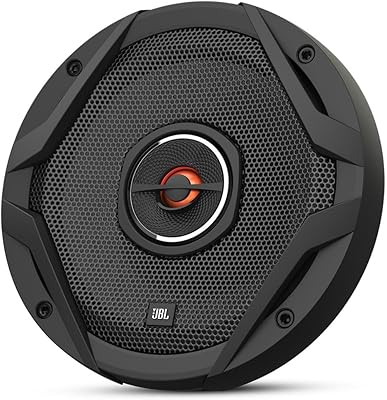
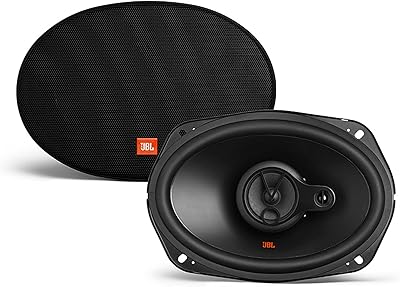
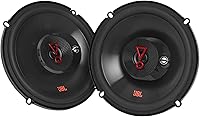
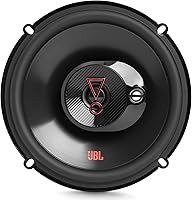
The JBL Stage 3637F 6.5″ Three-Way Car Speaker is a solid mid-range upgrade for drivers tired of their dull factory sound but not ready to rebuild their entire audio setup from scratch. Part of JBL's Stage 3 series, it packs a woofer, midrange, and tweeter into one coaxial unit — a practical design that keeps installation straightforward. It competes directly with similar offerings from Kenwood and Pioneer, and JBL's name carries enough recognition to feel like a safe bet without being a premium splurge. Worth noting upfront: the box includes two speakers but no grills, which most DIY installers actually prefer.

Features & Benefits

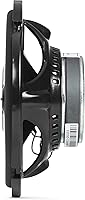
The Plus One woofer cone is the standout feature here — it's physically larger than what you'd find in a typical 6.5-inch speaker, which translates to noticeably better output without needing to crank the volume. The edge-driven dome tweeter handles the high end with a wider, smoother spread, so vocals and cymbals don't sound harsh or overly pinpointed. A vented basket keeps heat from building up during long drives, which matters more than most buyers realize. These JBL Stage coaxials are rated at 45W RMS, meaning they'll work cleanly straight off a stock head unit — no amplifier needed.

Best For

This three-way car speaker suits anyone doing a straightforward factory speaker swap — whether that's a daily commuter upgrading a midsize sedan or someone refreshing the audio in an older truck. The 6.5-inch footprint fits most standard door and dash cutouts without adapter rings. If you mostly listen to podcasts, streaming playlists, or rock and pop on your daily drive, the Stage 3637F will cover your needs cleanly. Just stay realistic: bass-heavy listeners — EDM fans, hip-hop enthusiasts — will want to pair these coaxials with a dedicated subwoofer, because low-end output alone won't satisfy them.

User Feedback

Owners consistently highlight improved vocal clarity as the biggest win over stock speakers — voices in podcasts and sung melodies come through noticeably crisper. Installation feedback is largely positive, with many buyers reporting a clean drop-in fit for common vehicles like the Honda CR-V and Toyota Camry. The most frequent complaint is predictable: thin low-end response without a subwoofer in the mix. A handful of buyers have noted the plastic build feels modest, though most agree it hasn't hurt durability or performance over time. Long-term owners generally sound satisfied, provided their expectations matched the speaker's intended role.

Pros

  • Noticeably cleaner vocals and sharper highs compared to typical factory speakers.
  • The oversized Plus One woofer cone delivers better output than standard same-size competitors.
  • Works straight off a factory head unit — no amplifier purchase required.
  • Ships as a pair, offering solid value for a complete two-speaker replacement.
  • Vented basket design helps manage heat during long drives, supporting long-term reliability.
  • Wide compatibility with standard 6.5-inch door and dash cutouts across many popular vehicles.
  • The edge-driven dome tweeter produces smooth, dispersed highs without harshness.
  • Installation is DIY-friendly, with a straightforward swap reported across many common car models.
  • JBL's limited warranty provides a baseline of after-purchase protection.
  • High sensitivity rating means satisfying volume levels without pushing the head unit hard.

Cons

  • Low-end bass output is thin on its own — a subwoofer is essentially required for bass-heavy music.
  • No grills included, which may be an issue for vehicles where door panels leave speakers exposed.
  • Plastic build quality feels modest and may underwhelm buyers expecting a more premium material finish.
  • The 3-ohm impedance requires careful checking before pairing with older or specialty amplifiers.
  • Not ideal for high-volume or extended heavy-use scenarios where component speakers would hold up better.
  • Buyers in non-standard mounting depths may face fitment challenges due to the larger cone design.
  • These JBL Stage coaxials offer limited improvement for listeners already running a decent aftermarket setup.
  • No tweeter level adjustment, which limits fine-tuning for listeners sensitive to high-frequency brightness.
  • Midrange performance, while improved over stock, can sound congested on dense, layered musical arrangements.
  • Competing brands at the same price point offer similar or slightly better low-frequency extension.

Ratings

Our AI rating system analyzed thousands of verified global reviews for the JBL Stage 3637F 6.5″ Three-Way Car Speaker, actively filtering out incentivized, duplicate, and bot-generated submissions to surface what real buyers genuinely experienced. The scores below reflect a balanced picture — where these speakers genuinely impress and where they fall short — so you can make a confident, informed decision.

Sound Clarity
86%
Owners consistently praise the cleaner, more articulate sound compared to factory speakers — vocals in particular cut through with noticeably more presence during daily commutes. Podcast listeners and fans of acoustic or vocal-heavy music find the midrange and high-frequency reproduction a genuine step up from stock.
A subset of reviewers noted that at higher volumes, the midrange can feel slightly compressed on dense, layered tracks — a limitation common to coaxial designs at this tier. It is not distortion so much as a lack of separation that critical listeners will pick up on.
Bass Response
54%
46%
For spoken word, pop, and rock, the low end is adequate and noticeably tighter than most factory speakers. The Plus One woofer cone does add a little extra body compared to standard 6.5-inch drivers, which casual listeners will appreciate on road trips.
This is the most recurring complaint in user feedback — bass-heavy genres like hip-hop and EDM sound thin and unsatisfying without a dedicated subwoofer. Buyers who expected strong low-end output from the 6.5-inch size alone were frequently disappointed, and several wished the product listing set clearer expectations.
High-Frequency Performance
83%
The edge-driven dome tweeter earns specific praise for producing smooth, non-fatiguing treble — cymbal hits and string detail come through without the harshness that plagues cheaper coaxials. Listeners who stream music for hours on the highway particularly appreciated that the highs never felt piercing.
A smaller group of users found the treble a touch bright for their taste, especially in acoustically reflective car interiors. There is no tweeter level adjustment available, so buyers who prefer a warmer high-end have no easy way to dial it back without an external equalizer.
Installation Ease
89%
The Stage 3637F ranks among the more straightforward speaker swaps in its class, with many buyers completing the install solo in under two hours for popular vehicles like the Toyota Camry and Honda CR-V. The standard coaxial mounting design means no wiring complexity or crossover components to manage separately.
A handful of owners encountered minor fitment issues caused by the Plus One cone's larger-than-standard footprint, which can conflict with certain door panel grilles or shallow mounting cavities. Checking mounting depth compatibility before purchasing is genuinely important for some vehicle models.
Value for Money
81%
19%
For buyers replacing dull factory audio, these JBL Stage coaxials deliver a clear, audible improvement at a price that does not require a major budget commitment. Getting a trusted brand name, a vented basket design, and a meaningful sound upgrade in a single pair strikes most users as a fair deal.
Those who compared the Stage 3637F side by side with similarly priced Pioneer or Kenwood options felt the value gap was narrower than expected. A few buyers also noted that the absence of grills — which must be purchased separately if needed — quietly adds to the real out-of-pocket cost.
Build Quality
67%
33%
The physical construction is adequate for the price range, and most owners who installed them correctly have not reported failures over extended use. The vented basket frame adds a functional quality element that helps with thermal management over long driving sessions.
The plastic-heavy construction is the most common build quality criticism — several reviewers noted it feels noticeably less substantial than the packaging and branding might suggest. For buyers accustomed to handling higher-end speaker components, the tactile impression at unboxing can be underwhelming.
Long-Term Durability
74%
26%
The majority of long-term owners report consistent performance over one to three years of regular daily driving without degradation in sound quality. The thermal management built into the basket design appears to contribute positively to sustained reliability under normal use conditions.
There is a smaller but consistent group of reviewers who reported premature failure — particularly with the tweeter — within the first year of use, which raises questions about unit consistency in the manufacturing process. The limited warranty provides some protection, but the claims process is not universally praised.
Compatibility
82%
18%
The standard 6.5-inch coaxial format covers a broad range of vehicles, and these speakers work cleanly straight from a factory head unit without requiring additional hardware. The 3-ohm impedance aligns well with modern car stereos, making the setup process genuinely plug-and-play for most buyers.
The 3-ohm impedance requires careful checking before connecting to older or specialty amplifiers, and not all aftermarket amps handle loads below 4 ohms without issue. Buyers with non-standard mounting depths — present in certain SUV rear doors and older domestic vehicles — also reported unexpected fitment complications.
Packaging & Unboxing
71%
29%
The speakers arrive well-protected and ready to install, with most buyers noting the packaging is straightforward and damage-free on arrival. Including both speakers in a single purchase is appreciated as a practical convenience for a full front or rear door replacement.
The absence of grills in the box catches some buyers off guard, particularly those expecting a complete installation kit. A few reviewers also noted minimal documentation included — installation guidance is effectively left to the buyer to source independently online.
Sensitivity & Efficiency
88%
The high sensitivity rating translates to satisfying, clear volume output even from modest factory head units — a practical advantage for daily drivers who do not want to invest in amplification. These JBL Stage coaxials respond well at lower listening levels too, which makes them comfortable for background music or voice content.
The efficiency advantage becomes less meaningful for buyers who do plan to add amplification, since they are likely to invest in higher-grade speakers at that point anyway. There is also a perception among some technically-oriented buyers that the sensitivity spec is measured under ideal conditions that do not always reflect real-world in-car performance.
Brand Confidence
78%
22%
JBL's established presence in the audio market provides genuine reassurance for buyers who are not deeply familiar with car audio brands, and most users felt confident in the purchase knowing the manufacturer has a track record in consumer audio. The warranty — even if limited in scope — adds a layer of post-purchase comfort.
Some experienced car audio enthusiasts pointed out that the Stage 3 series does not represent JBL's technical best, and felt the brand name carries a slight premium that the components themselves do not fully justify at this tier. Expectations set by familiarity with JBL's home or professional audio gear can lead to mild disappointment.
Midrange Reproduction
77%
23%
Midrange is where this three-way car speaker most consistently earns positive remarks — voices, guitars, and piano come through with clarity and body that far exceed what typical stock car speakers manage. Commuters who stream spoken content like audiobooks and radio found the midrange reproduction particularly satisfying.
On more complex or densely produced recordings, the midrange lacks the separation and definition that a dedicated component speaker setup would provide. This is an inherent constraint of the coaxial format rather than a specific flaw of the Stage 3637F, but it is worth flagging for buyers with discerning ears.
Thermal Management
80%
20%
The vented basket design is a practical engineering feature that keeps voice coil temperatures in check during extended listening, such as long highway drives or hours of music at moderate volume. Most owners have not reported heat-related performance degradation, which suggests the design works as intended under normal conditions.
Under sustained high-volume use — particularly in hot climates or parked vehicles — a small number of users noticed a gradual softening of output that suggests thermal stress. This is an edge case, but buyers who consistently push the speakers hard at peak power may encounter it over time.

Suitable for:

The JBL Stage 3637F 6.5″ Three-Way Car Speaker is an excellent fit for everyday drivers who are frustrated with the flat, lifeless sound of their factory speakers but have no interest in a full custom audio build. If your vehicle has standard 6.5-inch door or dash cutouts — common in a wide range of sedans, SUVs, and trucks — these drop right in without adapters or major modifications. They work directly off a stock head unit, so no external amplifier is required, making the whole upgrade accessible to a first-time DIY installer on a weekend afternoon. Commuters who spend significant time in the car listening to podcasts, talk radio, or mainstream music playlists will notice a real and immediate improvement in vocal clarity and overall definition. Anyone shopping in this price bracket who wants a familiar, dependable brand backing their purchase will find JBL's name a reasonable reassurance here.

Not suitable for:

The JBL Stage 3637F 6.5″ Three-Way Car Speaker will disappoint listeners whose priority is deep, room-filling bass — this is a coaxial speaker doing an honest job within its physical limits, not a substitute for a dedicated subwoofer. Serious car audio enthusiasts who are building an amplified, multi-component system will likely find the Stage 3637F underwhelming compared to component speaker sets at a similar or slightly higher investment. Buyers expecting a complete install kit should also know upfront that grills are not included, so if your door panels require them for a finished look, you will need to source them separately. Those upgrading vehicles with non-standard or shallow mounting depths should verify fitment carefully before purchasing, as the Plus One cone design adds physical size. If you are chasing competition-level sound quality or listening at very high volumes for extended periods, these JBL Stage coaxials are simply not engineered for that kind of demand.

Specifications

  • Speaker Size: Each speaker measures 6.5 inches in diameter, fitting standard door and dash cutouts found in most passenger vehicles.
  • Configuration: Three-way coaxial design integrates a woofer, midrange driver, and tweeter into a single unit for simplified installation.
  • RMS Power: Rated at 45W RMS, meaning the speakers handle continuous power from a factory or aftermarket head unit without distortion.
  • Peak Power: Can handle brief power peaks up to 135W, providing headroom during dynamic or loud passages.
  • Sensitivity: Sensitivity is rated at 92dB at 2.83V/1m, which means these speakers produce strong output even from a low-powered source.
  • Frequency Range: Covers 55Hz to 20kHz, handling midrange and high frequencies well while leaving deep bass to a dedicated subwoofer.
  • Impedance: Nominal impedance is 3 ohms, compatible with most modern car stereos and many aftermarket head units.
  • Tweeter Type: Uses an edge-driven dome tweeter designed to deliver wider high-frequency dispersion compared to standard center-mounted tweeters.
  • Woofer Cone: Features JBL's Plus One oversized cone, which provides a larger radiating surface than a conventional 6.5-inch woofer for improved efficiency.
  • Basket Design: Vented basket frame promotes airflow around the voice coil to reduce heat buildup during extended listening sessions.
  • Box Contents: Each purchase includes two speakers; grills are not included in the box.
  • Mounting Type: Designed for coaxial car mounting in standard 6.5-inch door panel or dash speaker locations.
  • Product Weight: The pair weighs approximately 3.04 pounds total, keeping installation manageable for solo DIY work.
  • Product Series: Part of JBL's Stage 3 lineup, positioned as a mid-range upgrade tier within the brand's car audio portfolio.
  • Warranty: Covered by JBL's limited manufacturer warranty; specific duration and terms should be confirmed directly with JBL or the point of purchase.
  • Connectivity: Wired coaxial connection; no wireless or Bluetooth functionality — these are passive speakers requiring a powered source.
  • Driver Material: Dynamic driver construction using conventional cone and dome materials suited to the mid-range price tier.
  • Waterproofing: These speakers are not waterproof and are not rated for exposed or marine environments.

Related Reviews
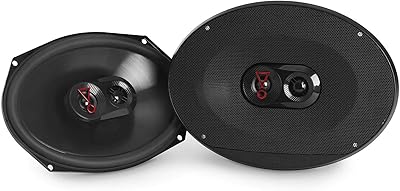
JBL Stage 39637 6x9 Coaxial Car Speakers
76%
83%
Sound Clarity
61%
Bass Performance
78%
Treble & High-Frequency Response
88%
Ease of Installation
81%
Value for Money
More
JBL Stage 3627F 6.5″ Car Audio Speaker
85%
89%
Sound Quality
92%
Value for Money
85%
Installation Ease
88%
Build Quality
91%
Volume Handling
More
JBL GX602 6.5″ 2-Way Coaxial Car Speakers
85%
89%
Sound Clarity
70%
Bass Performance
93%
Installation Ease
85%
Build Quality
82%
Durability
More
Pyle PL63BL 6.5″ Three-Way Car Speaker System
85%
88%
Sound Quality
90%
Installation Ease
84%
Durability
92%
Value for Money
85%
Power Handling
More
JBL Club 630F 6.5″ 2-Way Car Speakers
78%
86%
Sound Clarity
58%
Bass Performance
74%
Shallow-Mount Fitment
81%
Installation Experience
79%
Value for Money
More
JBL Stage 3607CF 6.5″ Two-Way Car Audio Component System
85%
89%
Sound Quality
85%
Bass Performance
91%
Ease of Installation
87%
Build Quality
90%
Clarity of Highs
More
JBL Stage 36427 4×6 Coaxial Car Speakers
78%
86%
Sound Clarity
54%
Bass Response
81%
High-Frequency Performance
89%
Installation Ease
88%
Sensitivity & Head Unit Compatibility
More
JBL Stage 9603 6″x9″ Coaxial Car Speakers
78%
81%
Sound Clarity
72%
Bass Response
67%
Treble & High-Frequency Detail
88%
Value for Money
83%
Build Quality
More
JBL CLUB6520 6.5″ Coaxial Car Speakers
77%
84%
Sound Clarity
61%
Bass Response
88%
Sensitivity & Volume Output
86%
Installation Ease
79%
Build Quality
More
Scosche HD6504 6.5″ 4-Way Car Speakers
88%
88%
Sound Quality
92%
Ease of Installation
89%
Build Quality
85%
Bass Performance
84%
Treble Clarity
More

FAQ

In most cases, yes — if your vehicle has a standard 6.5-inch speaker cutout in the doors or dash, the Stage 3637F should drop right in. That said, mounting depth can vary by vehicle, so it is worth checking the depth of your existing cavity against the speaker's dimensions before you buy. Most popular sedans, crossovers, and trucks from the last two decades use this standard size.

No, you do not. These JBL Stage coaxials are efficient enough to sound good driven straight from a factory or aftermarket head unit. If you do add an amp down the road, just double-check that it is rated for 3-ohm loads, as not all amplifiers handle sub-4-ohm impedance well.

JBL ships the Stage 3637F 6.5″ Three-Way Car Speaker without grills, which is actually common at this level. Many installers find that door panel covers or factory trim pieces already protect the speaker, and aftermarket grills can sometimes interfere with the Plus One cone's extra surface area. If you need grills, universal 6.5-inch options are widely available separately.

For most stock systems, the difference is immediately noticeable — particularly in vocal clarity and the crispness of high-frequency detail like guitar strings or cymbal hits. The improvement is real but grounded; you are not getting audiophile-grade sound, just a meaningfully cleaner and more defined listening experience for daily driving.

Honestly, not on their own. The low end these coaxials produce is decent for a 6.5-inch speaker, but it will not satisfy anyone who relies on deep, punchy bass. If that is your primary genre, pairing these with a dedicated subwoofer is the realistic path to satisfaction.

A confident DIYer can absolutely handle this swap over a couple of hours. You will need basic hand tools, possibly a trim removal tool to pop door panels, and wiring adapters if your vehicle uses proprietary connectors. Plenty of model-specific install guides exist online to walk you through the process step by step.

All three brands compete closely in this segment. The JBL Stage coaxials edge out some rivals on tweeter refinement and high-frequency smoothness, while Pioneer and Kenwood alternatives sometimes offer slightly better low-end extension. Your best bet is to read hands-on comparisons for your specific listening preferences, since differences at this tier are subtle rather than dramatic.

The materials are plastic-forward, which is standard at this price point — do not expect the kind of rigid construction you would find on a high-end component speaker. That said, the vented basket helps with thermal management, and most owners who install them correctly report reliable performance over multiple years of daily use.

JBL's limited warranty covers manufacturing defects, so if a speaker fails prematurely, that is your first port of call. Outside of warranty, single-unit replacements can sometimes be found through authorized dealers or third-party sellers, though availability depends on stock levels at any given time.

Thanks to the high sensitivity rating, this three-way car speaker actually performs well at lower listening levels — which matters on a commute where you still want conversation-friendly volume with clear audio. The tonal balance does improve somewhat as you push the volume a little, but it is not a speaker that demands to be cranked to sound decent.

Where to Buy