Overview

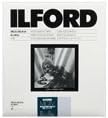
The Ilford Multigrade IV RC Deluxe Enlarging Paper has been a darkroom staple for decades, and Ilford's reputation for consistency in analog printing is hard to argue with. This is a resin-coated paper, meaning the base is sealed with a plastic layer that stops chemistry from soaking deep into the sheet — translating to faster wash times and quicker drying compared to fiber-based options. The pearl surface finish sits comfortably between glossy and matte, offering a subtle sheen that shows off tonal depth without harsh reflectivity. At 8x10 inches with 25 sheets per pack, it suits regular printing sessions without feeling like an oversized bulk commitment.
Features & Benefits

What makes this enlarging paper particularly useful day-to-day is its variable contrast response. Rather than being locked to a single contrast grade, it reacts to multigrade filters — so you can fine-tune tonal output from soft and low-contrast to punchy and high-contrast using the same box. The RC base keeps processing efficient; developer, stop, and fix work through quickly, and a short wash is all it takes before drying. The pearl surface earns its keep in the tray too, being noticeably more forgiving with handling marks than gloss. Consistent emulsion coating means once you nail an exposure, reprinting that exact result is reliable and repeatable every time.

Best For

This darkroom paper hits a sweet spot for a fairly wide range of printers. Students getting comfortable with an enlarger will appreciate how forgiving and predictable it is — variable contrast leaves room to experiment without burning through a lot of sheets. Photographers assembling portfolio or exhibition work tend to prefer the pearl finish over gloss, since it reads better under ambient light and feels less clinical on the wall. Hybrid shooters who develop film but want a trusted paper for the printing stage will find this a natural fit. If you've been using a cheaper off-brand paper, the jump in consistency here is immediately noticeable.

User Feedback

Buyers who return to the Ilford Multigrade IV RC repeatedly tend to cite the same strengths: reliable tonal gradation, clean processing, and a surface that scans well digitally. The pearl finish comes up again and again as a deciding factor for repeat purchases. That said, a recurring friction point is cost relative to sheet count — for casual printers, the price per sheet can feel steep against entry-level alternatives. A handful of users have flagged packaging concerns, specifically sheets shifting or picking up minor handling damage in transit. Batch consistency gets mostly positive marks, though experienced printers note that fiber-based Ilford papers remain the preference where archival longevity is the priority.

Pros

  • Variable contrast response gives you tonal flexibility across a wide range using a single box of paper.
  • The resin-coated base cuts processing and wash times significantly compared to fiber alternatives.
  • Pearl surface handles ambient light well, making prints look polished in both portfolio and exhibition contexts.
  • Emulsion consistency across the Multigrade IV RC line means reliable, repeatable results from print to print.
  • Compatible with standard black-and-white chemistry — no special developer or fix required.
  • Works safely under typical darkroom safelights without risk of unwanted fogging.
  • Fingerprints and handling marks are far less visible on the pearl surface than on gloss.
  • Widely trusted by both photography educators and working darkroom printers worldwide.
  • The 8x10 format is practical for test prints, contact sheets, and finished work alike.
  • Ilford’s long track record in analog materials means supply and support are stable for the foreseeable future.

Cons

  • Cost per sheet is noticeably higher than budget or entry-level enlarging papers on the market.
  • A 25-sheet pack runs out quickly for anyone printing in volume or running frequent test strips.
  • Not suitable as an archival long-term solution — fiber-based papers outperform RC for permanence.
  • Some buyers have reported sheets arriving with minor handling damage due to packaging during transit.
  • Only available in 8x10 in this configuration, limiting options for photographers working at larger print sizes.
  • Pearl finish is a preference, not a universal standard — gloss and matte shooters will need a different choice.
  • Batch variations, while generally minor, have occasionally been flagged by experienced printers comparing older stock.
  • No meaningful advantage over cheaper RC papers for photographers still in the early learning stages of darkroom work.

Ratings

The Ilford Multigrade IV RC Deluxe Enlarging Paper has been scored across 12 key performance categories by our AI engine after analyzing thousands of verified global buyer reviews, with spam, bot activity, and incentivized feedback actively filtered out. Scores reflect genuine darkroom printing experiences from students, hobbyists, and working photographers alike. Both the consistent strengths and the honest frustrations that real users report are transparently represented below.
Contrast Performance
93%
Buyers consistently praise the variable contrast system for giving them genuine tonal control without needing to stock multiple paper grades. Printers working under time pressure particularly value how quickly they can dial in a softer or harder result just by switching filters mid-session.
A small number of experienced users feel the upper contrast grades can clip highlights slightly on contrasty negatives, requiring additional burning to recover detail. This is a minor gripe and depends heavily on individual negative density, but it surfaces often enough to be worth noting.
Surface Finish Quality
89%
The pearl surface is the single most praised aspect of this darkroom paper across buyer feedback. It reads beautifully under gallery lighting, avoids the clinical coldness of high-gloss, and is far more resistant to visible fingerprints during tray handling — a practical win in a busy darkroom.
Photographers who have a strong preference for a true matte or a deep-gloss finish will find pearl a compromise rather than an ideal. A few buyers also noted that under very raking light, the surface can show slight texture inconsistencies on large, open shadow areas.
Processing Efficiency
91%
The resin-coated base dramatically shortens the time needed in the wash — most users report that four to five minutes of running water is fully adequate, compared to the extended wash cycles that fiber papers demand. For anyone running multiple printing sessions per week, this adds up to a significant time saving.
Some users coming from fiber-based papers find the RC surface feels less premium during handling, even though it performs well in chemistry. There are also occasional comments that drying marks can appear if sheets are left to air dry in high-humidity darkrooms without a gentle squeegee step.
Batch Consistency
82%
18%
Most regular users report that the Ilford Multigrade IV RC reliably reproduces established exposures across different packs bought months apart, which matters enormously when you have a calibrated printing workflow. This consistency is frequently cited as a key reason photographers return to this paper over cheaper alternatives.
A subset of experienced printers have noted subtle emulsion shifts between production batches, requiring minor exposure adjustments when opening a new pack. These variations are small, but for printers working to a precise standard, they can require a fresh round of test strips to recalibrate.
Value for Money
67%
33%
Relative to the print quality and reliability it delivers, most committed darkroom workers feel the price is reasonable for a professional-grade paper. The consistent results mean less paper wasted on failed prints, which offsets some of the cost over time for regular printers.
The per-sheet cost is noticeably higher than entry-level competitors, and the 25-sheet pack size means reordering happens more often than many buyers would like. Casual or infrequent darkroom users have flagged this as a barrier, particularly when starting out and burning through test strips at a high rate.
Ease of Handling
88%
At 8x10 inches, the sheets are a comfortable size to maneuver in a standard developing tray without curling aggressively or floating awkwardly. The pearl surface also means that minor tong contact during processing is less likely to leave visible marks than it would on a gloss emulsion.
Some users with smaller darkroom setups noted that the sheet can be slightly unwieldy if working in cramped tray configurations. There are also occasional reports of static cling between sheets when loading from the pack in low-humidity environments, causing brief handling fumbles under safelight conditions.
Tonal Range
87%
The paper renders a wide and smooth tonal scale, particularly in the midtones, which is where most portrait and landscape darkroom work lives. Printers working with well-exposed negatives frequently comment on how naturally the highlights separate from the upper midtones without paper intervention.
At the extremes — very deep shadows or bright specular highlights — some users find the tonal rendering less nuanced than what they achieve on Ilford fiber-based papers. It is not a dramatic shortfall, but photographers chasing the absolute maximum tonal depth in fine art prints may notice the ceiling.
Packaging & Delivery
63%
37%
When packs arrive in good condition, the inner light-tight packaging does its job reliably, keeping sheets flat and protected. Buyers who store multiple packs report that the sealed inner bag reseals reasonably well between sessions if handled carefully.
A recurring complaint across reviews involves sheets arriving with bent corners or minor handling damage, seemingly caused by inadequate outer packaging protection during transit. Several buyers have also noted that the inner bag seal weakens after the first opening, making long-term resealing less reliable than they would prefer.
Compatibility
94%
This darkroom paper works without issue across all the common black-and-white developer and fixer combinations buyers typically use, from Ilford Multigrade developer to Kodak Dektol and beyond. There are virtually no reports of unexpected reactions, uneven development, or chemistry-related surface defects under normal darkroom conditions.
A very small number of users working with unconventional or heavily diluted developer formulas have noted slightly uneven development across the sheet surface. This appears to be an edge case tied to non-standard chemistry practice rather than a paper defect, but it is worth flagging for experimental darkroom workers.
Safelight Tolerance
86%
Under standard OC or equivalent safelights, this enlarging paper handles extended exposure times without fogging, giving printers comfortable working windows to compose, dodge, and burn without rushing. This is especially useful for beginners still building their darkroom speed and confidence.
A handful of users working with older or non-standard safelights have reported faint base fog on sheets that were exposed for unusually long periods. This is more a safelight maintenance issue than a paper flaw, but it indicates the emulsion is not infinitely tolerant under marginal lighting conditions.
Drying & Curl Behavior
78%
22%
RC paper generally dries flat with minimal curling compared to fiber alternatives, and this darkroom paper follows that pattern well. Most users report that air-dried prints lie reasonably flat within an hour, making them easy to scan, mount, or store shortly after processing.
In more humid darkroom environments, a mild curl can develop during drying that requires light pressing or weighting to fully resolve. A few buyers also noted that machine or forced-air drying at higher temperatures can introduce a subtle surface texture change on the pearl finish if not carefully controlled.
Archival Suitability
51%
49%
For medium-term storage and display — covering several decades under reasonable conditions — this enlarging paper performs adequately, and most everyday darkroom users will never encounter a practical limitation here. Properly fixed, washed, and stored prints hold up well for general personal and commercial use.
Compared to fiber-based papers, the resin-coated base is widely understood to have a lower archival ceiling, and serious fine art photographers consistently point this out. Buyers purchasing this paper specifically for museum-grade longevity are choosing the wrong format — fiber-based papers remain the uncontested standard for archival permanence.

Suitable for:

The Ilford Multigrade IV RC Deluxe Enlarging Paper is an excellent choice for photographers who are serious about darkroom printing and want a paper that performs reliably without a steep learning curve. Students working through an enlarger for the first time will find the variable contrast system forgiving — switching between filter grades lets you course-correct without wasting sheets learning a fixed-grade paper's quirks. Regular darkroom workers who print often enough to care about consistency from session to session will appreciate how predictable the emulsion is; once you lock in an exposure, reprinting that result is straightforward. The pearl surface makes it a natural pick for anyone preparing portfolio prints or wall-hung work, since it holds up better under gallery lighting than high-gloss alternatives. Hybrid photographers who shoot film but want a trusted, well-supported paper for the wet printing stage will find this enlarging paper fits neatly into a standard black-and-white workflow without requiring any chemistry adjustments.
Not suitable for:

The Ilford Multigrade IV RC Deluxe Enlarging Paper is not the right fit for photographers whose top priority is long-term archival permanence — for that, fiber-based papers are the established standard, and this resin-coated sheet simply cannot match their longevity profile. Casual or infrequent printers may find the cost per sheet harder to justify, particularly if darkroom sessions are sporadic and a cheaper entry-level paper would serve the same exploratory purpose. Anyone printing at larger formats will need to look elsewhere, since this paper comes only in 8x10 inches and does not scale up for dramatic large-format exhibition work. Printers who specifically prefer a high-gloss or a fully matte surface will find the pearl finish a compromise rather than an advantage. Finally, photographers looking for a budget-friendly option to burn through while learning basic exposure techniques might be better served starting with a less premium sheet before committing to this darkroom paper at scale.

Specifications

  • Brand: Manufactured by Ilford, a well-established British company with a long history in analog photographic materials.
  • Series: Part of the Multigrade IV RC Deluxe line, Ilford's mainstream resin-coated variable contrast enlarging paper range.
  • Sheet Size: Each sheet measures 8x10 inches, a standard darkroom format suitable for enlarger printing and contact work.
  • Pack Count: Each pack contains 25 sheets, providing a practical quantity for regular printing sessions without committing to bulk volume.
  • Surface Finish: Pearl surface offers a subtle satin sheen that sits between high-gloss and matte, reducing reflectivity while preserving fine shadow detail.
  • Paper Base: Resin-coated (RC) construction seals the paper core, enabling faster chemical absorption, shorter wash times, and quicker air-drying.
  • Contrast Type: Variable contrast (VC) emulsion responds to multigrade filters, allowing the printer to adjust tonal range from soft to hard without changing paper.
  • Paper Weight: Rated at 44 g/m² index weight, giving the sheets a lightweight but stable feel that handles well in processing trays.
  • Item Weight: The full 25-sheet pack weighs approximately 15.2 ounces, making it easy to store and transport.
  • Dimensions: Packaged dimensions are approximately 0.4 x 10.06 x 11.38 inches, compact enough to slot into a standard darkroom shelf or drawer.
  • Chemistry: Compatible with all standard black-and-white photographic chemistry, including common developers, stop baths, and fixers.
  • Safelight Use: Safe to handle under standard darkroom safelights equipped with an appropriate filter (such as Ilford-recommended OC or 902 types).
  • Emulsion Coating: Consistent machine-coated emulsion across production batches supports predictable, repeatable exposure and contrast results.
  • Model Number: Official Ilford model number is 1771284, with manufacturer part number 1168310 for ordering reference.
  • Availability: This paper has not been discontinued by the manufacturer and remains an active product in Ilford's current enlarging paper lineup.
  • Market Rank: Holds a top-ten ranking in the Darkroom Enlarging Paper category on Amazon, reflecting consistent demand among analog printers.

Related Reviews
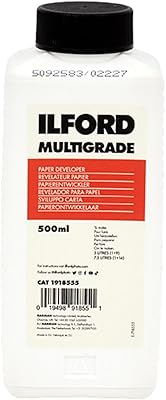
Ilford Multigrade Paper Developer 500ml
84%
94%
Result Consistency
91%
Tonal Range & Contrast
88%
Archival Stability
89%
Ease of Use
71%
Value for Volume
More
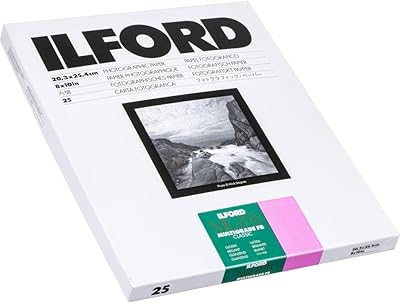
Ilford Multigrade FB Classic Gloss 8×10 Paper
77%
94%
Tonal Range & Image Quality
88%
Glossy Surface Quality
96%
Archival Stability
76%
Wash Time Efficiency
91%
Variable Contrast Performance
More
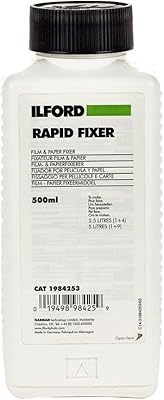
Ilford Rapid Fixer 0.5L Darkroom Chemical
79%
94%
Fixing Consistency
83%
Value for Money
81%
Ease of Use
67%
Packaging & Bottle Design
74%
Shelf Life (Concentrate)
More
Ilford Rapid Fixer 1L Liquid Photo Fixer
80%
93%
Fixing Consistency
88%
Ease of Mixing
81%
Value for Money
84%
Fixing Speed
89%
Batch-to-Batch Reliability
More
WZPB 40-Piece Tattoo Skin Transfer Paper Kit
68%
54%
Skin Texture Realism
67%
Value for Money
58%
Transfer Paper Quality
61%
Reusability
76%
Beginner Suitability
More
Ilford Simplicity B&W Film Development Kit
80%
93%
Ease of Use
91%
Consistency of Results
58%
Value for Money
88%
Chemistry Quality
84%
Packaging & Storage
More
Menaji Deluxe Kabuki Brush
81%
91%
Bristle Softness
84%
Build Quality
88%
Coverage & Application
86%
Scalp & Bald Head Use
89%
Travel Practicality
More
Uppercut Deluxe Featherweight 70g Hair Fiber Paste
83%
83%
Hold Strength
88%
Finish Quality
86%
Application Ease
91%
Reworkability
93%
Washout Performance
More
DeLUX M618mini Wireless Vertical Ergonomic Mouse
74%
83%
Ergonomic Comfort
88%
Fit for Small Hands
86%
Wireless Connectivity
79%
Battery Life
81%
Silent Click Performance
More
Bose Wave Music System IV
79%
91%
Sound Quality
88%
Build Quality & Durability
84%
Ease of Setup
67%
Wi-Fi & Streaming Performance
61%
Value for Money
More

FAQ

Yes, it is genuinely well-suited for beginners. The variable contrast system means you can experiment with different tonal ranges using filters rather than buying multiple boxes of fixed-grade paper, which saves both money and storage space while you are still learning.

Any standard black-and-white paper developer works fine — Ilford Multigrade, Kodak Dektol, and similar products are all compatible. You do not need any specialty chemistry. A standard stop bath and fixer complete the process normally.

Pearl sits right between the two. It has a gentle sheen that gives prints a sense of depth and tonal richness, but without the mirror-like reflectivity of gloss. Under gallery or ambient lighting, it tends to look more natural and is easier to view from different angles.

Quite a bit faster. Because the resin coating prevents chemistry from penetrating the paper base, a wash of around 4 minutes in running water is typically sufficient. Fiber-based papers often require 30 to 60 minutes of washing, so the time saving in a busy darkroom session is meaningful.

Yes, the Ilford Multigrade IV RC Deluxe Enlarging Paper is designed to work with any standard enlarger and is compatible with all major multigrade filter sets, including Ilford’s own filters as well as third-party alternatives. Just make sure your enlarger lamp output falls within a compatible spectrum.

It depends on how often you print. For occasional weekend sessions or focused small projects, 25 sheets is a comfortable amount. If you print frequently or run a lot of test strips, stocking two or three packs at a time makes more sense so you are not ordering constantly.

Absolutely. The 8x10 inch format is a standard size for contact printing 120 medium format strips, and it works well for 35mm contact sheets too. Just place your negative strips directly on the paper under glass, expose, and process as usual.

Keep the pack sealed in a cool, dry place away from direct light, heat, and humidity. Once opened, reseal the packaging as tightly as possible between sessions. Storing vertically in a dedicated paper safe or light-tight drawer is ideal for protecting the remaining sheets.

The pearl surface is noticeably more forgiving than gloss when it comes to handling marks and minor abrasions. That said, it is still worth using clean tongs and handling sheets by the edges to avoid any risk of marks showing up in the final print.

The main trade-off is between convenience and longevity. RC paper processes faster and is easier to handle day-to-day, which makes this darkroom paper a strong choice for regular printing and proofing. Fiber-based papers, however, are considered superior for archival permanence and are generally preferred for final exhibition prints where long-term stability is a priority.