Overview

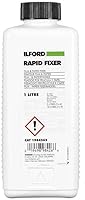
The Ilford Rapid Fixer 1L Liquid Photo Fixer has been a darkroom staple for decades, and Ilford's reputation in analog chemistry is well-earned — few brands carry the same level of trust among serious film photographers. A fixer is the chemical that makes your image permanent, halting development and clearing unexposed silver halides from the emulsion. Skip it or rush it, and your prints fog over time. This liquid fixer comes in concentrated form, meaning you dilute it with water to get your working solution, so that one litre goes much further than it might initially appear. It sits comfortably within Ilford's broader chemistry ecosystem, designed to pair naturally with their developers and stop baths.

Features & Benefits

What makes Ilford's rapid fixer practical for regular darkroom use is how little friction there is in getting it ready. You mix it with water at the recommended dilution and have a working solution in under a minute — no dissolving powder, no clumping, no waiting. The fixing action is noticeably faster than many powder-based alternatives, which matters when you're running a session with multiple prints or rolls. It works across both film and paper, so you're not juggling separate chemicals for different workflows. Perhaps most usefully, the solution gives clear visual cues as it exhausts, which takes much of the guesswork out of knowing when to mix a fresh batch. Storage life, when sealed, is reliably solid.

Best For

This darkroom chemical makes the most sense for photographers who are in the darkroom regularly — weekend printers, film shooters who develop their own rolls, or students in photo programs where consistency matters as much as cost. Home darkroom setups especially benefit from the liquid format, since there's no messy powder to store or accidentally spill. If you're coming from a powder fixer and have dealt with inconsistent mixing or longer clearing times, the switch tends to feel immediately worthwhile. It suits small collective studios processing moderate volumes well too. It isn't, however, the right pick for someone who prints a handful of times a year — the economics only reward regular use.

User Feedback

The consensus among buyers is largely positive, with most praising how reliably this liquid fixer performs across printing sessions, whether on fiber-based or resin-coated papers. Users frequently note that a single litre stretches further than expected, which helps justify the cost over time. When compared to competitors like Kodafix, many darkroom workers feel Ilford's version holds its own in clearing speed and batch consistency. That said, first-time users occasionally flag confusion around dilution ratios, particularly when switching between film and paper applications. A handful of buyers have also raised concerns about the bottle cap not always sealing securely after opening. Minor issues overall, but worth factoring in before purchasing.

Pros

  • Liquid concentrate mixes with water quickly, cutting prep time compared to powder fixers.
  • Works reliably on both black-and-white film and paper, eliminating the need for separate chemicals.
  • Visual exhaustion cues make it straightforward to know when a fresh batch is needed.
  • Consistent performance from batch to batch gives darkroom workers fewer variables to troubleshoot.
  • Sealed bottles store well, so you're not racing against rapid degradation between sessions.
  • Ranks among the top sellers in darkroom chemicals, reflecting long-standing trust in the category.
  • Ilford's rapid fixer pairs naturally with other Ilford chemistry, simplifying workflow decisions.
  • A single litre yields a generous number of working solution batches when diluted as directed.

Cons

  • First-time users sometimes find the dilution instructions confusing, especially when switching between film and paper use.
  • The 1-litre size is not ideal for very high-volume labs that would benefit from larger bulk formats.
  • Bottle cap quality has been flagged by some buyers as unreliable, with occasional sealing issues after opening.
  • Infrequent darkroom users may find the volume difficult to use up before the opened solution degrades.
  • This darkroom chemical only addresses black-and-white workflows, leaving color photographers without a suitable option.
  • Compared to Ilford's own powder variant, the liquid format carries a higher upfront cost per unit.
  • No built-in measuring guide on the bottle can make accurate dilution harder for beginners without a separate reference.
  • Shipping a liquid chemical adds weight and slight packaging risk compared to dry alternatives.

Ratings

The scores below reflect an AI-driven analysis of verified buyer reviews for the Ilford Rapid Fixer 1L Liquid Photo Fixer, collected from global sources and filtered to remove spam, incentivized submissions, and bot activity. Each category is scored independently to give you an honest picture of where this darkroom chemical genuinely excels and where real users have encountered friction. Strengths and pain points are weighted equally so you can make a fully informed decision.

Fixing Consistency
93%
Across hundreds of verified sessions, darkroom workers consistently report that Ilford's rapid fixer delivers repeatable, clean results regardless of paper brand or emulsion type. Fiber-based papers, resin-coated sheets, and various film stocks all clear reliably when the solution is fresh and properly diluted, which matters enormously when you're mid-session and can't afford surprises.
A small number of users have noted that results can become inconsistent as the working solution approaches exhaustion, particularly with dense fiber-based papers. Those who don't track their print count or monitor the solution's appearance occasionally discover under-fixed prints only after drying.
Ease of Mixing
88%
The liquid concentrate dissolves into water almost instantly, which is a genuine practical advantage over powder fixers that require stirring, warming, and waiting. Photographers transitioning from powder variants frequently cite this as the single biggest workflow improvement, especially when setting up a darkroom session quickly.
First-time buyers occasionally struggle with understanding the correct dilution ratio for their specific application, since film and paper require different concentrations. The bottle itself doesn't include printed dilution guidance, meaning new users need to consult Ilford's separate technical data sheet before their first mix.
Value for Money
81%
19%
Because it's a concentrate, a single litre yields a surprisingly large volume of working solution, which helps spread the cost across many printing or development sessions. Regular darkroom users consistently report that the per-session cost works out favorably, particularly when compared to ready-to-use liquid alternatives sold at similar price points.
For photographers who only print occasionally, the upfront cost feels harder to justify since an opened bottle won't last indefinitely. A handful of buyers also noted that the price per litre has crept up over time, making the value equation slightly less compelling than it was a few years ago.
Fixing Speed
84%
Users switching from traditional sodium thiosulfate powder fixers frequently report that clearing times feel noticeably shorter with this liquid fixer, particularly with resin-coated papers. In a busy printing session where multiple prints are moving through the tray sequence, even modest time savings per print add up meaningfully.
The speed advantage is most pronounced with RC papers; fiber-based papers still require thorough fixing times that some users find longer than the product name implies. A few buyers working with older or denser emulsions noted that the rapid fixing claim felt somewhat overstated for their specific use case.
Batch-to-Batch Reliability
89%
One of the most quietly appreciated qualities of Ilford's chemistry is how predictably consistent it is from one bottle to the next. Photographers who have been using this darkroom chemical for years report that they rarely need to adjust their workflow or timing when opening a new bottle, which is a real sign of manufacturing quality control.
There have been isolated reports of slight variation in solution color between bottles, which concerned some detail-oriented users even when performance appeared unaffected. These cases appear rare, but they do create occasional doubt for photographers running critical archival print jobs.
Compatibility
86%
The ability to use a single chemistry for both black-and-white film development and paper printing simplifies stock management considerably, especially for home darkroom workers with limited storage. Users processing a mix of 35mm, medium format, and sheet film alongside various paper types appreciate not having to maintain separate fixer stocks.
The product is strictly limited to black-and-white workflows, which is a hard boundary rather than a nuanced trade-off. Photographers who occasionally experiment with alternative or hybrid processes have noted it does not serve those needs, requiring a completely separate chemistry purchase.
Exhaustion Indicators
77%
23%
The visual discoloration that develops as the working solution ages gives experienced darkroom workers a practical, no-cost way to gauge when to replace it. For photographers who process in regular, predictable batches, the visual cue typically aligns well with their expected print count.
The visual indicator is imprecise compared to using a dedicated fixer test solution, and beginners often find it difficult to judge the exact point of exhaustion by eye alone. Several users have reported accidentally pushing a batch past its useful life because the color change was gradual rather than a clear threshold.
Storage & Shelf Life
79%
21%
A sealed bottle of concentrate stores well over an extended period, which means buying in advance or stocking a spare bottle carries little risk of waste. Users who set up their darkroom for occasional intensive sessions rather than weekly use report the concentrate remaining effective between long gaps in use.
Once opened, the shelf life of the concentrate shortens noticeably, and the working solution itself needs to be used relatively promptly or stored in a completely full, airtight container to slow oxidation. A few buyers in warmer climates have mentioned faster-than-expected degradation after opening.
Packaging Quality
62%
38%
The bottle is reasonably robust for a standard chemical container and holds up well during shipping in most reported cases. Its compact footprint means it fits neatly on a darkroom shelf without taking up disproportionate space.
The bottle cap has drawn repeated criticism from buyers, with a notable number reporting that it does not seal securely after the first opening, raising concerns about leakage during storage or transport. For a liquid chemical product, this is a meaningful practical flaw that Ilford has not visibly addressed across multiple production batches.
Ease of Disposal
58%
42%
Users who are already set up with silver recovery units or have access to a photographic waste disposal service find the disposal process straightforward and consistent with standard darkroom chemical handling. Art schools and collective studios with established protocols manage this aspect without difficulty.
For home darkroom users without specialist disposal arrangements, the silver content in spent fixer creates a genuine logistical challenge that catches some beginners off guard. Several buyers noted frustration at discovering that drain disposal is not environmentally acceptable, which added an unexpected overhead to their darkroom practice.
Documentation & Guidance
71%
29%
Ilford provides thorough and well-structured technical data sheets on their website, which cover dilution ratios, capacity guidelines, and disposal instructions in clear detail. Buyers who take the time to consult these resources before their first use consistently report fewer issues with the product.
The bottle itself ships with minimal printed guidance, which leaves first-time buyers to seek out documentation independently. In an era where many competing chemistry products include basic dilution tables on the label, this feels like an avoidable friction point for newcomers to the Ilford ecosystem.
Brand Trust & Longevity
94%
Ilford's decades-long presence in analog photography carries genuine weight among serious darkroom practitioners, and that trust directly benefits this darkroom chemical. The product has been commercially available since 2003 and holds a top-ten ranking in its category, which is a credible signal of sustained market confidence.
The brand's strong reputation can occasionally work against critical evaluation — some buyers admit they were slower to acknowledge minor performance issues because of their overall trust in Ilford. This doesn't diminish the brand's standing, but it's worth noting that reputation alone shouldn't replace hands-on testing for any specific workflow.

Suitable for:

The Ilford Rapid Fixer 1L Liquid Photo Fixer is a strong match for anyone who spends meaningful time in the darkroom on a regular basis — whether that's a dedicated home printer, a film photographer who develops their own rolls, or a photography student working through a structured curriculum. The concentrated liquid format rewards volume: the more you print or develop, the better the cost-per-session math works out, and the less time you waste measuring and mixing compared to powder alternatives. Art school programs and small collective darkrooms will also find it well-suited, since it behaves predictably across different paper types and emulsions, which matters when multiple people are using the same chemistry. If you're already committed to Ilford developers and stop baths, this liquid fixer slots in naturally without requiring any workflow changes.

Not suitable for:

The Ilford Rapid Fixer 1L Liquid Photo Fixer is not the most practical choice for casual or infrequent darkroom users who print only a few times a year — the volume and cost are harder to justify, and an opened bottle won't last indefinitely. Photographers who exclusively shoot color film or work in C-41 and E-6 processes should also look elsewhere, since this is strictly a black-and-white chemistry solution. If you're completely new to darkroom work and unfamiliar with the concept of dilution ratios, there can be a learning curve in understanding how to prepare the working solution correctly for film versus paper applications. And for high-volume commercial labs or institutions processing very large quantities, a single litre — even when diluted — may not be the most efficient format, making larger bulk options a better fit.

Specifications

  • Brand: Manufactured by Ilford, a UK-based company with a long-standing reputation in black-and-white photographic materials and darkroom chemistry.
  • Model Number: This product is identified by Ilford's part number 1984262, which can be used to verify authenticity and cross-reference with Ilford's official documentation.
  • Format: Concentrated liquid that must be diluted with water before use to produce a ready-to-use working solution.
  • Volume: Each bottle contains 1 litre of concentrated liquid fixer, which yields multiple litres of working solution depending on the dilution ratio applied.
  • Compatible Media: Suitable for use with black-and-white photographic papers and black-and-white films; not formulated for color chemistry processes.
  • Processing Type: Rapid-action fixing chemistry designed to clear unexposed silver halides from the emulsion and permanently stabilize the photographic image.
  • Mixing Method: Dilute the concentrate with water at the appropriate ratio for film or paper use, as specified in Ilford's official technical data sheet.
  • Exhaustion Indicators: The working solution provides visual cues as it becomes exhausted, helping users identify when a fresh batch is required.
  • Dimensions: The bottle measures approximately 8.45″ in length, 3.5″ in width, and 2.83″ in depth, making it compact enough for standard darkroom shelving.
  • Weight: The filled bottle weighs approximately 2.8 pounds, which is standard for a 1-litre liquid chemical container of this type.
  • Storage: When sealed, the concentrate maintains stability over an extended period; once opened, the working solution should be stored in a sealed container away from light and heat.
  • Water Resistance: Processed photographic prints fixed with this solution are not inherently water resistant and should be handled and stored with standard archival care.
  • Coating: No coating is applied to the product itself; this specification refers to the chemical solution rather than any physical protective layer.
  • Availability: This product has not been discontinued by the manufacturer and remains an active part of Ilford's chemistry lineup.
  • Market Standing: Ranked among the top ten best-selling products in the Darkroom Chemicals category on Amazon, reflecting consistent demand from the analog photography community.
  • First Available: This product has been available for purchase since June 2003, indicating a long track record of use and buyer feedback in the darkroom community.

Related Reviews
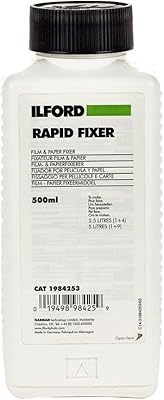
Ilford Rapid Fixer 0.5L Darkroom Chemical
79%
94%
Fixing Consistency
83%
Value for Money
81%
Ease of Use
67%
Packaging & Bottle Design
74%
Shelf Life (Concentrate)
More
Cooler Master 240 Elite Liquid White CPU Liquid Cooler
85%
91%
Cooling Performance
84%
Noise Levels
92%
Ease of Installation
89%
Build Quality
88%
aRGB Lighting Effect
More
novelinks 16-Case 4×6 Photo Storage Box
78%
91%
Value for Money
88%
Organizational System
83%
Capacity
67%
Build Quality
89%
Ease of Use
More
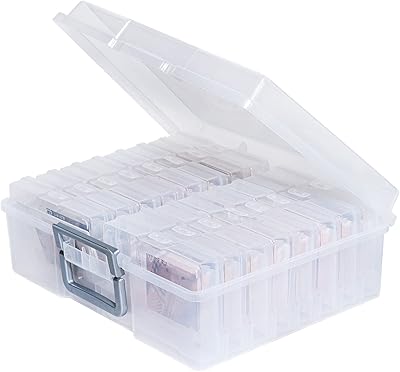
Tamfile 18-Compartment Fireproof Photo Storage Box
77%
93%
Storage Capacity
67%
Fire Protection
88%
Organization System
72%
Build Quality
58%
Password Lock
More
ALINK Photo Storage Box 5 x 7 In, 10 Inner Large Photo Keeper
89%
88%
Build Quality
91%
Ease of Use
87%
Portability
84%
Storage Capacity
92%
Durability
More
DocSafe Fireproof Photo Storage Box with Lock, 16 Inner 4″ x 6″ Photo Cases
84%
94%
Protection (Fireproof & Water-Resistant)
88%
Organization Capacity
84%
Portability & Storage
85%
Durability & Build Quality
78%
Locking Mechanism Security
More
Lovebox Photo Messenger
85%
88%
Ease of Use
80%
App Experience
70%
Connectivity Stability
90%
Design & Build Quality
92%
Interaction Experience (Heart Spin)
More
Biossance Rapid Radiance Set
87%
93%
Hydration Effectiveness
89%
Radiance & Brightening
85%
Skin Texture Improvement
90%
Scent/Fragrance Quality
88%
Absorption & Finish
More
Collistar Lip Primer Fixer
85%
86%
Effectiveness in Enhancing Lipstick Longevity
91%
Hydration and Moisture
88%
Smooth Application and Finish
80%
Performance on Dry or Cracked Lips
85%
Texture and Feel on Lips
More
Datacolor SpyderX Photo Kit Color Calibration Kit
79%
91%
Monitor Calibration Accuracy
88%
Calibration Speed
83%
Color Chart Usability
86%
Spyder Cube Performance
63%
Software Experience
More

FAQ

You always dilute it with water before use — it never goes into the tray or tank at full concentration. The correct dilution ratio depends on whether you are fixing paper or film, so check Ilford's official technical data sheet for the specific figures. Mixing takes under a minute with the liquid format, which is one of its practical advantages over powder alternatives.

Technically the chemistry is compatible with both, but the dilution ratios differ between film and paper use, and paper exhausts a fixer faster than film does. Many darkroom workers prefer to keep separate batches to avoid any risk of under-fixing, especially when working with fiber-based papers that require thorough fixing for archival stability.

Ilford's rapid fixer gives visual cues as it exhausts — the solution gradually discolors and becomes visibly cloudy or yellowish. You can also use fixer test solution drops available from most darkroom suppliers, which give a near-instant reading. If in doubt, err on the side of mixing a fresh batch; under-fixed prints will fog and yellow over time.

Once diluted to the recommended working solution concentration, a single litre of concentrate yields multiple litres of working solution, and a litre of working solution can fix a significant number of prints before exhaustion. The actual number varies depending on print size, paper type, and how thoroughly you fix each print. Many home darkroom users find one bottle lasts through several solid printing sessions.

No, this is strictly a black-and-white chemistry product. Color processes like C-41 or RA-4 require dedicated color fixers or bleach-fix solutions that are chemically quite different. Using a black-and-white fixer in a color process will not give you correct results.

Both Ilford's rapid fixer and Kodafix are well-regarded in the darkroom community and perform comparably for most black-and-white applications. Ilford's version tends to be the preferred choice among photographers already using other Ilford chemistry, partly for consistency and partly because the technical support documentation is thorough and easy to follow. The differences in real-world fixing speed are marginal for most users.

A sealed bottle stores well for a long time, but once opened, you should keep it tightly capped and away from heat and direct light to slow oxidation. Most users find the concentrate remains usable for many months after opening if stored properly. The working solution, once mixed, has a shorter life and should ideally be used within a few weeks or stored in a completely full, sealed bottle to minimize air contact.

Ilford's rapid fixer, like most fixers, contains ammonium thiosulfate or sodium thiosulfate compounds, which have a distinctive chemical smell but are relatively low in acute toxicity compared to some other darkroom chemicals. Good ventilation is still recommended — a window or an extractor fan in your workspace is sensible practice. Always read the safety data sheet available from Ilford's website before using any darkroom chemical at home.

Used fixer contains dissolved silver, which makes it an environmental concern and in many places a regulated waste product. You should not pour large quantities down the drain without treatment. Silver recovery units, chemical waste services, or local disposal guidelines are the recommended routes. Some photography clubs and schools have established disposal protocols you can follow.

Yes, this liquid fixer is a solid choice for beginners, partly because Ilford provides well-written technical guidance and partly because the liquid format is genuinely easier to prepare than powder alternatives. The main learning curve is understanding the dilution ratios for film versus paper use, but that information is clearly documented. Starting with a trusted, widely-used chemistry makes troubleshooting easier since there's plenty of community knowledge available online.

Where to Buy