Overview

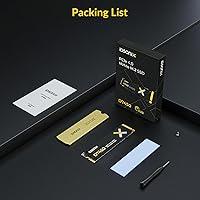
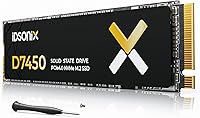
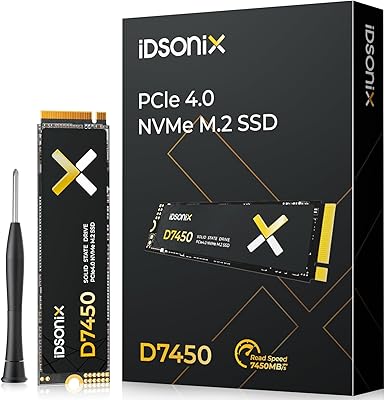
The iDsonix D7450 2TB M.2 NVMe SSD enters a crowded Gen4 market with a clear pitch: strong specs at a price that doesn't demand much deliberation. Made by Dongguan Hao Ren Electronic Technology, a Chinese manufacturer without the household recognition of Samsung or WD, it's reasonable to approach this drive with measured expectations. What sets it apart from bare-board rivals at the same price is that it ships with a copper heatsink included — a practical addition most competitors make you source separately. PS5 compatibility is present, though that's true of any compliant Gen4 drive; the heatsink inclusion is what actually matters for that use case. Advertised numbers look strong on paper; real-world results are what ultimately count.

Features & Benefits

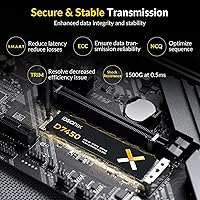
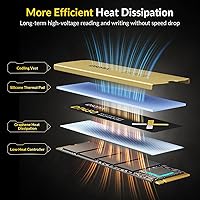
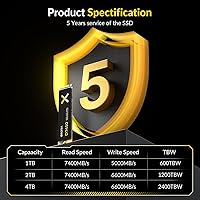
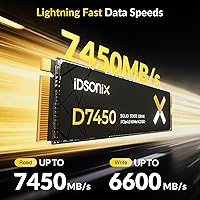
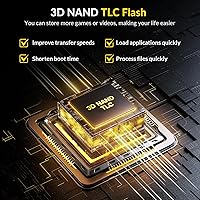
The D7450 runs on a PCIe Gen4 x4 interface with manufacturer-claimed sequential reads of 7,450 MB/s and writes of 6,500 MB/s — solid figures, though sustained throughput on 3D NAND TLC flash typically dips once the write cache saturates during large continuous transfers. For typical workloads — game installs, OS boots, file copies — that rarely matters. The 1,200 TBW rating translates to roughly writing 200GB per day for over 16 years, which comfortably covers most gaming and creative use patterns. The copper heatsink with graphene pad earns its keep during prolonged transfers, actively preventing the thermal throttling that silently caps performance on bare drives. SMART, TRIM, NCQ, and power management support cover the long-term health monitoring basics.

Best For

This Gen4 NVMe drive hits its stride in a few specific situations. PS5 owners expanding storage will appreciate not hunting down a separate heatsink — Sony's console requires one, and it's already included. Budget-conscious PC builders stepping up from SATA or an older Gen3 M.2 will notice a real difference in large sequential workloads like game loading and bulk file transfers. Content creators moving video exports or large raw photo libraries will also find the throughput headroom useful. Where it becomes less compelling is in enterprise or write-intensive environments, which genuinely demand higher TBW ratings and MLC flash. Running a write-heavy pipeline all day, every day? Established brands with longer track records are the safer call.

User Feedback

Sitting at 4.4 out of 5 stars across over 200 ratings and ranked in the top 700 internal SSDs on Amazon, this iDsonix SSD has clearly found an audience well beyond early adopters. Common praise focuses on straightforward installation, speeds that track reasonably close to advertised figures in everyday use, and the build quality of the heatsink. The persistent hesitation is predictable: buyers unfamiliar with the brand question how it holds up over years, not just weeks. A small number of reviews flag inconsistent unit quality, worth noting even if it's not the dominant experience. PS5 users generally report clean, no-fuss installations. The five-year warranty softens the brand-trust concern, though meaningful long-term reliability data for such a new drive simply doesn't exist yet.

Pros

  • Ships with a copper heatsink and graphene thermal pad included, saving a separate purchase for PS5 users.
  • Gen4 x4 interface delivers real-world speed improvements that are clearly noticeable over SATA and Gen3 drives.
  • 2TB capacity at this price point offers genuinely competitive value for the storage tier.
  • 1,200 TBW endurance rating is more than enough for typical gaming, creative, and everyday computing workloads.
  • M.2 2280 form factor fits the widest range of motherboards, laptops, and the PS5 expansion slot.
  • Five-year warranty provides a meaningful safety net for a lesser-known brand.
  • SMART, TRIM, and NCQ support allow standard health monitoring tools to work without any workarounds.
  • Over 200 buyer reviews with a 4.4-star average suggests consistent real-world satisfaction, not just early hype.
  • Broad OS compatibility covers Windows, macOS, and Linux without needing special drivers.

Cons

  • Brand has no established long-term reliability data, making multi-year durability hard to predict with confidence.
  • TLC flash sustained write speeds drop noticeably once the SLC cache is exhausted during large continuous transfers.
  • A handful of buyers have flagged inconsistent unit quality, suggesting some variability in manufacturing tolerances.
  • The heatsink adds physical height that may not fit in slim laptops or tight chassis without a low-profile slot.
  • No independent benchmark data from trusted third-party reviewers is available to verify advertised peak speeds.
  • Warranty support from a Chinese OEM manufacturer may be slower or less straightforward than domestic brand servicing.
  • The drive is relatively new to market, meaning long-term failure rate patterns simply have no data yet.
  • Buyers sensitive to brand trust may find the lack of name recognition a persistent source of doubt post-purchase.

Ratings

The scores below for the iDsonix D7450 2TB M.2 NVMe SSD were generated by our AI system after analyzing verified buyer reviews from multiple global markets, with spam, bot submissions, and incentivized feedback actively filtered out. Each category reflects the honest distribution of real user sentiment — strengths and frustrations weighted equally. Where buyers consistently disagreed, that tension is captured in the scores rather than smoothed over.
Real-World Read Speed
83%
Buyers upgrading from SATA or Gen3 drives consistently describe the D7450 as a noticeable step up in everyday responsiveness — Windows boots faster, large game installs that once crawled now finish quickly, and file transfers that used to take minutes drop to seconds. For the workloads most consumers actually run, the speed feels genuine.
A portion of buyers who ran their own benchmarks found sustained sequential speeds fell short of the advertised peak figures, which is expected behavior for TLC flash once the SLC write cache is exhausted. Those copying very large single files in one session are the most likely to notice the drop-off from peak to native flash speeds.
Thermal Management
86%
The copper heatsink with graphene thermal pad earns consistent praise for keeping the drive cool during extended gaming sessions and large file transfers where bare-board drives would throttle. PS5 users in particular appreciate not having to source a separate solution — the included heatsink fits the console's bay cleanly and meets Sony's coverage requirements.
A small number of laptop users found the heatsink's added height created clearance issues with their specific chassis, making installation impossible without removing it. Without the heatsink, the thermal advantage disappears, which narrows its practical benefit to desktop and PS5 installations where physical space is less constrained.
Value for Money
88%
For buyers comparing dollar-per-gigabyte at the Gen4 tier, the D7450 competes aggressively — especially since the heatsink is bundled rather than sold as an add-on. Reviewers who had previously paid more for a bare Samsung or WD Gen4 drive frequently noted that the iDsonix offering delivers comparable everyday performance at a meaningfully lower outlay.
The value equation depends heavily on the drive holding up over years of use, which remains an open question for a brand without a long reliability track record. If the drive fails outside of a responsive warranty claim process, the upfront savings can quickly feel less compelling against the cost of replacement and data recovery.
PS5 Compatibility
84%
Installation reports from PS5 users are largely positive — the drive is recognized correctly by the console, the heatsink fits within the expansion bay without modification, and game load times improve perceptibly over the console's built-in storage. The all-in-one nature of the package removes a friction point that trips up first-time PS5 upgraders.
PS5 compatibility is not unique to this drive — any compliant Gen4 M.2 SSD qualifies — so buyers should not treat it as a differentiator. A small number of PS5 users noted they had to double-check heatsink seating to ensure a proper fit, suggesting the pre-attached unit is not always perfectly aligned out of the box.
Installation Experience
91%
Across desktop, laptop, and PS5 installations, the majority of buyers describe the process as straightforward and free of driver headaches. Windows recognizes the drive immediately, and the standard M.2 2280 dimensions mean it drops into virtually any compatible slot without adapter or modification. First-time builders found it no more complex than any other M.2 SSD.
Laptop users with tight M.2 slot clearance occasionally found the heatsink created a fitment problem requiring removal before installation, adding a step the packaging does not explicitly warn about. A few buyers also noted the drive arrived without detailed written installation instructions, which could be a stumbling block for complete beginners.
Build Quality
74%
26%
The heatsink feels solid and well-machined for a drive at this price, and the graphene pad makes consistent contact with the drive's surface. Most buyers who handled the unit describe it as more substantial than they expected given the brand and the price point, with no reports of cosmetic defects in the majority of units received.
A recurring minority thread in reviews flags inconsistent unit quality — some buyers received drives where the heatsink was slightly misaligned or the thermal pad was imprecisely cut. This points to quality control variability at the manufacturing level, which is a known risk with smaller-volume Chinese OEM producers.
Sustained Write Performance
67%
33%
For typical consumer write workloads — saving game data, exporting short video clips, copying a folder of files — the drive handles tasks briskly and without hesitation. The SLC cache is generous enough that most day-to-day write operations complete before the cache saturates, keeping the experience fast for the majority of users.
When writing very large files continuously — think moving a 200GB video project or cloning a full drive — TLC flash behavior becomes apparent and speeds drop materially once cached space is exhausted. Content creators working with extremely large raw file sets should factor this in, as sustained write performance is where this drive trails MLC-based alternatives.
Brand Trust & Support
58%
42%
The five-year warranty is a concrete commitment that goes some way toward offsetting the unfamiliarity of the iDsonix name, and buyers who have needed to contact support describe the experience as functional if not fast. The drive's volume of genuine reviews and its strong Best Sellers Rank suggest it has earned real-world adoption beyond a niche early-adopter crowd.
iDsonix simply does not have the established global support infrastructure of Samsung, WD, or Seagate, and warranty claims involving a Chinese OEM often mean longer resolution times and international shipping logistics. Buyers who have come to expect same-day RMA processing or local service centers will find the support experience a step down from what Tier 1 brands provide.
Long-Term Reliability
61%
39%
The 1,200 TBW endurance rating is generous for a consumer TLC drive and provides a reasonable on-paper guarantee of lifespan for gaming and general use. SMART monitoring support means buyers can keep an eye on wear indicators over time using free tools like CrystalDiskInfo rather than flying blind on drive health.
The drive only became available in mid-2025, which means there is simply no long-term failure rate data available yet — a year or two of market history at minimum is needed before reliability can be assessed with real confidence. Buyers making a multi-year storage commitment to a lesser-known brand are, by definition, accepting more uncertainty than they would with a drive that has a proven track record.
Endurance Rating
79%
21%
At 1,200 TBW, the rated endurance comfortably covers what most gamers and home users will write over the drive's entire working life several times over. For a buyer writing 20 to 30GB per day on average, the rated lifespan stretches well beyond the warranty period without concern.
For professional environments involving constant large-volume writes — video surveillance archiving, database transactions, or continuous backup targets — 1,200 TBW is on the modest side and MLC-based enterprise drives offer considerably higher rated endurance per dollar at that workload tier.
Compatibility Breadth
87%
The standard M.2 2280 form factor and broad OS support spanning Windows, macOS, and Linux mean this drive works across an unusually wide range of hardware and software environments without requiring special drivers or partitioning tools. Buyers running dual-boot setups or Linux workstations found it recognized natively without any configuration.
PCIe Gen4 x4 performance is only achievable on motherboards and laptops with Gen4-capable M.2 slots — older Gen3 systems will still accept the drive but cap its speed to Gen3 limits, which removes much of the performance argument for the purchase. Buyers should confirm slot generation before buying.
Packaging & Presentation
72%
28%
The retail box is compact and presents the drive cleanly, which matters for buyers purchasing it as a gift or for a build they want to feel considered. The heatsink arriving pre-attached is a practical touch that reduces out-of-box setup friction for most installation scenarios.
Several buyers noted the absence of a detailed printed installation guide, particularly for PS5 users who are less likely to be experienced PC builders. The packaging also does not clearly communicate the heatsink height, leaving some laptop buyers to discover the clearance issue only after attempting installation.
Power Efficiency
77%
23%
Advanced power management support means the drive scales down its power draw during idle periods, which is relevant for laptop users watching battery life. Buyers using it as a secondary drive in thin-and-light notebooks generally did not report unusual battery drain attributable to the SSD.
Gen4 NVMe drives inherently draw more power under load than their Gen3 or SATA counterparts, and the D7450 is no exception — mobile users running sustained workloads will notice the drive contributing to heat and battery consumption more than a lower-tier alternative would. This is a category-level trade-off, not unique to this drive.

Suitable for:

The iDsonix D7450 2TB M.2 NVMe SSD is a strong fit for budget-conscious buyers who want genuine Gen4 performance without paying a premium for a household brand name. PS5 owners expanding their console storage will find it particularly practical — the included copper heatsink is a requirement for Sony's console, and having it bundled saves both money and the hassle of sourcing one separately. PC builders upgrading aging SATA drives or older Gen3 M.2 sticks will notice a meaningful jump in boot times, game load speeds, and large file transfers. Content creators and video editors who regularly move big project files or export high-resolution footage will appreciate the headroom that 2TB of fast sequential throughput provides. For anyone who monitors drive health over time, built-in support for SMART and TRIM means the D7450 plays well with standard diagnostic tools.
Not suitable for:

Buyers who place long-term brand reliability above all else should think carefully before committing to the iDsonix D7450 2TB M.2 NVMe SSD, since the manufacturer lacks the multi-year public track record of established names like Samsung, WD, or Seagate. Enterprise environments or any workload involving sustained, high-volume daily writes — think video surveillance storage, database logging, or continuous backup targets — are genuinely better served by drives rated for higher TBW endurance and built on MLC flash rather than TLC. Laptop users should verify their specific slot dimensions and thermal headroom, since the included heatsink adds height that not every chassis accommodates. Anyone expecting consistent peak sequential speeds during prolonged bulk transfers may also be disappointed, as TLC drives rely on a write cache that, once filled, reveals the slower native flash speeds underneath. If absolute peace of mind from a warranty support standpoint is non-negotiable, this iDsonix SSD is a riskier bet than paying a modest premium for a Tier 1 brand.

Specifications

  • Capacity: This drive offers 2TB of usable storage, suitable for large game libraries, video projects, and OS installations combined.
  • Interface: It uses a PCIe Gen4 x4 interface, requiring a compatible M.2 slot on the motherboard or PS5 to operate at full speed.
  • Protocol: The drive runs on the NVMe 1.4 protocol, which reduces latency and CPU overhead compared to older AHCI-based storage.
  • Form Factor: Standard M.2 2280 dimensions (80mm length) make it compatible with the vast majority of desktop motherboards, laptops, and the PS5 expansion bay.
  • Sequential Read: Manufacturer-rated peak sequential read speed reaches up to 7,450 MB/s under ideal, cache-warm conditions.
  • Sequential Write: Manufacturer-rated peak sequential write speed reaches up to 6,500 MB/s, though sustained write throughput on TLC flash will vary with workload size.
  • Flash Type: The drive uses 3D NAND TLC flash, which balances cost and capacity well for consumer workloads but has lower write endurance per cell than MLC.
  • Endurance: Rated at 1,200 TBW (terabytes written), which is sufficient for typical gaming or creative use for well over a decade at average daily write volumes.
  • Heatsink: A copper heatsink with an integrated graphene thermal pad is pre-attached to help dissipate heat during sustained read/write operations.
  • Warranty: The manufacturer offers a 5-year limited warranty, which is on par with the standard offered by most major consumer SSD brands.
  • Weight: The complete assembly including heatsink weighs 1.76 ounces, making it lightweight enough for any standard M.2 installation.
  • OS Support: Compatible with Windows 7, 8, 10, and 11, macOS 10.9 and later, and Ubuntu/Linux distributions without requiring proprietary drivers.
  • PS5 Compatible: Meets Sony's requirements for PS5 M.2 SSD expansion, and the included heatsink satisfies the console's mandatory thermal coverage requirement.
  • Health Features: Supports SMART monitoring, NCQ, TRIM, and advanced power management, enabling standard diagnostic tools to track drive health over time.
  • Manufacturer: Produced by Dongguan Hao Ren Electronic Technology Co., Ltd, a Chinese electronics manufacturer without a long-established global consumer brand presence.
  • Package Size: Retail packaging measures approximately 5.12 x 3.54 x 0.74 inches, compact enough for easy storage or gifting.

Related Reviews
iDsonix D7450 1TB M.2 NVMe SSD
85%
94%
Performance
89%
Thermal Management
92%
Read/Write Speed
85%
Compatibility with PS5
88%
Build Quality
More
SanDisk 2TB SSD Plus M.2 NVMe SSD
86%
89%
Performance
92%
Ease of Installation
88%
Reliability
91%
Value for Money
90%
Capacity
More
GAMERKING 2TB M.2 NVMe Internal SSD
75%
78%
Read/Write Performance
82%
Value for Money
91%
Installation Experience
67%
Thermal Management
63%
Long-Term Reliability
More
iDsonix i3000 2TB M.2 SSD
87%
92%
Performance (Speed)
89%
Value for Money
85%
Thermal Management
81%
Setup & Installation
90%
Build Quality
More
Vansuny 2TB NVMe M.2 Internal SSD
78%
88%
Value for Money
79%
Read/Write Speed
91%
PS5 Compatibility
74%
Thermal Management
93%
Installation Experience
More
Fikwot FX991 2TB NVMe SSD
78%
88%
Sequential Read Performance
61%
Sustained Write Speed
93%
PS5 Compatibility
91%
Value for Money
82%
Thermal Management
More
fanxiang S770 2TB NVMe M.2 SSD
79%
88%
Sequential Read Speed
91%
PS5 Compatibility
86%
Value for Money
83%
Thermal Management
74%
Build Quality
More
Ediloca EN870 2TB NVMe M.2 SSD
78%
88%
Sequential Read Speed
79%
Sequential Write Speed
91%
Value for Money
93%
PS5 Compatibility
86%
Installation Ease
More
PNY CS1030 2TB M.2 NVMe SSD
77%
91%
Value for Money
83%
Read Speed Performance
72%
Write Speed Performance
88%
Boot & Load Times
94%
Installation Ease
More
WD_BLACK SN850P 2TB NVMe SSD
86%
93%
Read Speed Performance
96%
PS5 Compatibility & Licensing
94%
Installation Experience
88%
Heatsink Quality & Thermal Management
71%
Value for Money
More

FAQ

Yes, and this is one of the more practical reasons to consider it for a PS5 upgrade. Sony requires a heatsink for the PS5 M.2 expansion slot, and the D7450 ships with a copper unit pre-attached. You can drop it straight into the console without a separate purchase or fitment headache.

Probably not consistently, and that is worth understanding before you buy. Those peak figures reflect sequential reads under ideal, controlled conditions. In day-to-day tasks — loading games, copying files, booting Windows — you will see real-world speeds that are fast and noticeably better than Gen3, but the absolute ceiling rarely sustains during mixed workloads. TLC flash also slows down once the write cache fills during large continuous transfers.

That is a fair and honest concern. iDsonix is not a household name, and its manufacturer does not have the decades-long consumer track record of Samsung or Western Digital. The 4.4-star rating across a meaningful number of reviews suggests most buyers have had positive experiences, and the 5-year warranty provides some recourse if something goes wrong. That said, if brand reputation and long-term support reliability are your top priorities, established names will give you more peace of mind.

TBW stands for terabytes written, which is the total amount of data the drive is rated to accept before wear becomes a concern. If you write around 20GB per day — a reasonable estimate for a gamer or casual creator — 1,200 TBW would last roughly 164 years at that rate. Even heavy users writing 100GB daily would see over 30 years of rated life. For consumer use, the endurance rating is not something you realistically need to worry about.

It uses the standard M.2 2280 form factor, so it will fit any laptop with a compatible M.2 PCIe slot. The main thing to check is whether the heatsink clears your laptop's chassis — some slim notebooks have tight clearance above the M.2 slot. If height is a concern, measure before committing.

It works without special drivers. On Windows 10 and 11, the drive is recognized natively — you just need to initialize and format it in Disk Management if it is being used as a secondary drive. As a primary boot drive, your motherboard BIOS should detect it during OS installation without any extra steps.

It makes a genuine difference during sustained workloads. NVMe drives, especially Gen4 ones running hot, can throttle their performance when they overheat — which means speeds drop to protect the hardware. The copper heatsink and graphene pad pull heat away from the controller and NAND, keeping temperatures in a range where the drive performs consistently. For short tasks it matters less; during longer transfers or gaming sessions, it earns its keep.

It is a noticeable upgrade. SATA SSDs top out around 550 MB/s sequential read. Even accounting for the gap between advertised and real-world speeds, this Gen4 NVMe drive is several times faster for sequential tasks. Boot times, large file copies, and game load times will all improve. If you are coming from a spinning hard drive, the difference is even more dramatic.

The D7450 carries a 5-year limited warranty through iDsonix. Because the manufacturer is based in China and does not have the same domestic support infrastructure as Tier 1 brands, warranty claims may involve shipping the unit back and waiting longer than you might with a local brand. Keep your purchase receipt and check the brand's support channels before buying if after-sales service is a priority for you.

It is compatible with macOS 10.9 and later, so it will work in Macs that have an accessible M.2 slot. Keep in mind that most modern MacBooks use proprietary connectors and are not user-upgradeable, so this is primarily relevant for Mac Pro or hackintosh builds. On a supported machine, no special software is required — just format it in Disk Utility after installation.