Icom IC-7300 HF SDR Transceiver
Overview
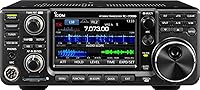
The Icom IC-7300 HF SDR Transceiver arrived in 2016 and quietly reshaped what operators could expect from a mid-tier station radio. Before it, getting a direct-sampling receiver meant spending considerably more or cobbling together a separate SDR setup alongside a conventional rig. Direct sampling converts RF signals to digital much earlier in the receive chain, which translates to better dynamic range and a cleaner noise floor. This HF transceiver covers HF through 6 meters with 100W output, and it remains surprisingly competitive years after launch — a telling sign that Icom got the fundamentals right from the start.
Features & Benefits
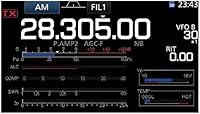
What sets this SDR-based rig apart day-to-day is how many features that once required separate hardware are now built right in. The real-time spectrum scope and waterfall display let you visually scan a chunk of band instantly — genuinely useful during a contest weekend when you are actively hunting for activity. Dual passband tuning paired with solid roofing filters gives real control over adjacent interference, rather than leaning entirely on DSP tricks. Add USB audio and CAT control, and connecting to WSJT-X for FT8 takes minutes instead of an afternoon wrestling with sound card interfaces and virtual COM ports.
Best For
This HF transceiver is a natural fit for the newly licensed operator who wants to start seriously without having to upgrade again in two years. If you are stepping up from a basic handheld or a lower-tier HF rig and want a true station radio that handles digital modes like FT8 and PSK31 with minimal fuss, the IC-7300 earns its place. DX chasers will appreciate the clean receive chain during crowded pile-ups, and the built-in scope removes any temptation to add a separate panadapter. That said, it is a home station radio at heart — if portability or battery operation matters, look elsewhere.
User Feedback
Owners are largely enthusiastic, with receive performance and the waterfall display coming up repeatedly as the reasons people keep this rig on the desk long-term. Digital mode operators consistently praise how straightforward the USB audio setup is compared to older radios that required external sound card dongles and careful level-matching. Criticism exists but stays mild: the touchscreen can feel a step slow compared to a rig built around physical controls, and fan noise at sustained high power is noticeable during long sessions. A handful of newcomers find the menu system steep at first, though most report it becomes second nature after a few weeks of regular operating.
Pros
- Direct-sampling SDR architecture delivers a noticeably cleaner noise floor than comparable analog receivers in this price class.
- The built-in waterfall and spectrum scope eliminate the need for a separate panadapter, saving money and desk space.
- USB audio and CAT control make FT8 and other digital mode setup genuinely fast and frustration-free.
- 100W output is enough for serious HF work including DX chasing and contesting from a home station.
- Dual passband tuning and roofing filters give real, meaningful control over adjacent-channel interference.
- Long-term owner reports consistently point to strong hardware reliability over years of regular use.
- The IC-7300 covers HF through 6 meters, covering the bands most active amateur operators care about daily.
- IF DSP noise reduction is effective and configurable without being overly complicated to adjust on the fly.
- 101 memory channels provide ample storage for frequently used frequencies, nets, and digital mode calling frequencies.
- Resale value has held up well over the years, which is a practical consideration for a premium purchase.
Cons
- The touchscreen response can feel sluggish compared to rigs with dedicated physical controls for every function.
- Fan noise becomes noticeable during extended transmissions at high power levels, which can be distracting in quiet shack environments.
- The menu system has a genuine learning curve for operators coming from simpler or older radios.
- No built-in automatic antenna tuner is included; adding one requires an optional external unit at additional cost.
- Power consumption at full output is substantial, making this a poor fit for battery or off-grid field operation.
- The supplied HM-219 hand mic is considered underwhelming by many owners and is often replaced quickly.
- No coverage above 74.8 MHz means operators interested in VHF or UHF need a completely separate radio.
- At its price point, some competing models like the Yaesu FTDX10 offer alternative receiver architectures worth comparing before committing.
Ratings
The Icom IC-7300 HF SDR Transceiver has been scored by our AI system after analyzing verified owner reviews from amateur radio communities and major retail platforms worldwide, with spam, bot-generated, and incentivized feedback actively filtered out. The scores below reflect a balanced picture of where this HF transceiver genuinely excels and where real-world operators have run into friction — nothing is glossed over.
Receive Performance
Spectrum Scope & Waterfall
Digital Mode Usability
Build Quality
Touchscreen Responsiveness
Menu System & UI Depth
Transmit Audio Quality
Fan Noise
Value for Money
Reliability & Longevity
Ease of Initial Setup
Software & Firmware Support
Band Coverage
Ergonomics & Physical Layout
Suitable for:
The Icom IC-7300 HF SDR Transceiver is an excellent choice for licensed amateur radio operators who are ready to set up a serious home station without stepping into the stratospheric price range of professional-grade equipment. Operators who spend meaningful time on digital modes — FT8 pile-ups, JS8Call nets, or PSK31 ragchews — will find the clean SDR receive chain and dead-simple USB audio integration a genuine quality-of-life improvement over older analog rigs. If you are upgrading from a basic HF radio and have been eyeing a panadapter but dreading the extra cost and desk clutter, this rig removes that equation entirely by putting a real-time spectrum scope front and center. Contest operators who need strong close-in dynamic range on a crowded 20-meter weekend will feel the difference in the receive chain compared to budget alternatives. Long-term reliability data from the owner community also suggests this is a buy-it-once kind of radio for most home station operators.
Not suitable for:
The Icom IC-7300 HF SDR Transceiver is not the right tool for operators who need portability, low power consumption, or field-deployable performance — it runs on 13.8V DC and draws substantial current at full power, making battery or solar operation inconvenient at best. Operators looking primarily for a mobile or QRP rig should look at purpose-built alternatives rather than trying to force this home station radio into a backpack. Buyers who prefer a traditional knob-heavy control layout may find the touchscreen interface occasionally frustrating, particularly in cold weather or when wearing gloves during portable events. Absolute beginners who are still figuring out HF propagation basics might feel overwhelmed by the menu depth and the breadth of DSP configuration options before they have developed an intuition for what those adjustments actually do. Finally, if your operating is exclusively VHF and above, this rig simply does not cover those bands and would be the wrong investment entirely.
Specifications
- Output Power: Transmit power is 100W on SSB, CW, RTTY, and FM modes, and 25W on AM.
- RX Frequency: The receiver covers 0.030–74.800 MHz, spanning medium wave through the 6-meter band.
- Receiver Type: Uses a direct-sampling SDR architecture that digitizes RF signals early in the chain for improved dynamic range and reduced noise.
- Dimensions: The unit measures 9.4″ wide by 9.4″ deep by 3.7″ tall, sized for a standard desktop shack position.
- Weight: The radio weighs 8.4 pounds without accessories, making it a fixed-station rather than portable unit.
- Power Supply: Requires a regulated 13.8V DC supply; it does not include an AC power supply in the box.
- Memory Channels: Stores up to 101 memory channels for quick recall of frequently used frequencies and modes.
- Display: Features a built-in color touchscreen with a real-time spectrum scope and scrolling waterfall for band monitoring.
- Connectivity: Includes a rear-panel USB-B port that provides both CAT control and two-way audio for digital mode operation.
- Filtering: Dual passband tuning and IF DSP allow precise control over bandwidth and adjacent-channel interference rejection.
- Antenna Tuner: A compatible optional automatic antenna tuner can be added; no tuner is included in the standard package.
- Included Items: Package contains the 7300 transceiver, DC power cable, HM-219 hand microphone, installation hardware, and a user manual.
- Microphone: The HM-219 hand mic ships standard; the radio accepts compatible aftermarket microphones via its standard connector.
- Noise Reduction: Onboard IF DSP noise reduction is adjustable and operates independently of any connected computer or software.
- Manufacturer: Designed and manufactured by Icom, a Japanese company with a long history in amateur and professional radio equipment.
Related Reviews
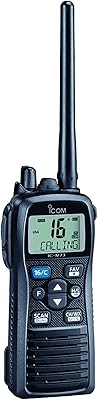
ICOM IC-M73 Handheld VHF Marine Radio
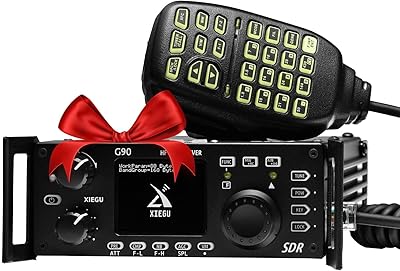
Xiegu G90 HF Amateur Radio Transceiver
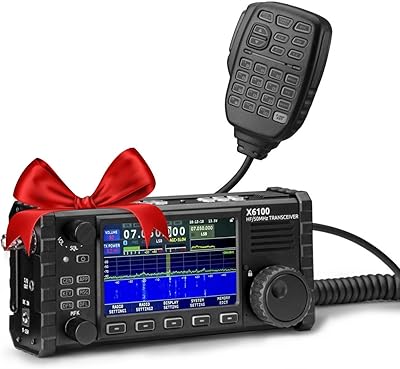
Xiegu X6100 HF Radio Transceiver 10W
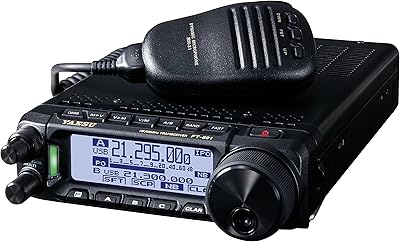
Yaesu FT-891 HF/50 MHz All Mode Transceiver

Icom IC-A16B Aviation Handheld Radio
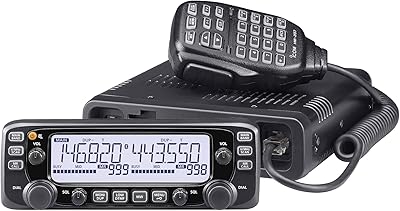
Icom IC-2730A Dual Band VHF/UHF Mobile Radio
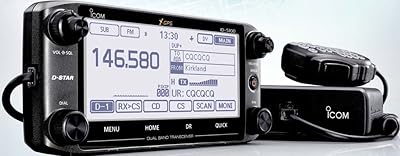
Icom ID-5100A Dual-Band Mobile Ham Radio Transceiver
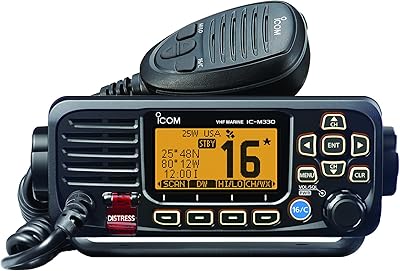
ICOM M330 Fixed-Mount VHF Marine Radio
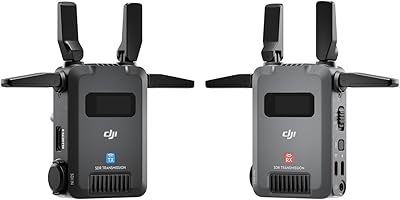
DJI SDR Transmission Wireless Video System