Overview

The Icom IC-A16B Aviation Handheld Radio is built for pilots who treat their radio as a working tool, not a shelf piece. Icom has decades of credibility in professional RF communications, and that pedigree shows here — the construction feels solid, the controls are deliberate, and nothing about it feels consumer-grade. The built-in Bluetooth sets it apart from older handhelds that still require a cable for every headset connection. Beyond the wireless convenience, the IP67 waterproof rating and MIL-STD-810-G certification mean this airband radio is tested for the kind of rough handling and weather exposure that actual field use demands. It is a serious piece of kit for serious aviators.

Features & Benefits

One of the IC-A16B's most practical advantages is its support for both 8.33 kHz and 25 kHz channel spacing — essential for European airspace operations where 8.33 kHz is mandatory, and still the norm domestically. The 6-watt RF output gives it a modest but real edge over most 5-watt competitors in range and signal penetration. Bluetooth pairing with compatible wireless headsets works reliably after initial setup, though at this price tier it feels expected rather than extraordinary. The 17-hour battery comfortably covers a full flying day without a recharge. One thing worth knowing before you buy: the OPC-2401 adapter required for third-party headsets is sold separately, which catches some buyers off guard and adds to the overall cost.

Best For

This aviation handheld is a strong fit for student pilots who want a dependable backup radio during dual instruction or solo cross-countries — though the price may give budget-conscious trainees pause. Flight instructors and ground crew will appreciate the rugged housing and powerful speaker output in noisy ramp environments. Pilots who regularly transit European airspace will find the 8.33 kHz support genuinely necessary rather than a nice-to-have. It also makes sense for backcountry and bush pilots where weather exposure is a real risk and a waterproof radio is not optional. Anyone already invested in a wireless aviation headset will find the Bluetooth integration makes this airband radio a particularly convenient portable option.

User Feedback

Among verified buyers, the IC-A16B holds a strong 4.6-star rating — and the praise is consistent: audio clarity and build quality come up repeatedly, with many pilots noting the speaker performs well even in loud cockpit environments. Bluetooth pairing gets positive marks for being straightforward after the first setup. On the critical side, the missing OPC-2401 adapter is the most common complaint — buyers expecting out-of-the-box headset compatibility with their existing gear are often surprised by the extra purchase required. Battery life in real-world use tracks closely with the rated figure, which is reassuring. A handful of reviewers mention that the premium price is justifiable for professional use but may feel steep for occasional flyers.

Pros

  • Dual 8.33 kHz and 25 kHz channel spacing makes it fully operational in both European and domestic airspace.
  • 6-watt RF output gives this airband radio a real range advantage over most 5-watt portable competitors.
  • Built-in Bluetooth allows clean wireless pairing with compatible aviation headsets, removing cockpit cable clutter.
  • IP67 waterproof rating and MIL-STD-810-G certification mean it survives real field conditions, not just lab tests.
  • Battery life holds up across a full flying day, with real-world performance closely matching the rated figure.
  • The 1500 mW speaker cuts through cockpit and ramp noise without needing to press the radio close to your ear.
  • Backlit LCD and illuminated keypad make low-light preflight checks and night operations genuinely practical.
  • Icom's long track record in professional RF communications backs the IC-A16B with credible brand reliability.
  • At 9.1 ounces, the radio is light enough to carry in a flight bag without adding noticeable weight.
  • The included sit-in rapid charger is a thoughtful inclusion that speeds up turnaround between flying sessions.

Cons

  • The OPC-2401 headset adapter for third-party compatibility is sold separately, adding unexpected cost at checkout.
  • The premium price is a genuine barrier for student pilots already managing high training expenses.
  • Bluetooth, while functional, is expected at this price point rather than a standout feature over the competition.
  • Buyers with older non-Bluetooth aviation headsets face extra expense before the radio works the way they expect.
  • No indication of included carrying case or holster, which is a noticeable omission given the price tier.
  • Users who only fly domestically and never need 8.33 kHz spacing are paying for a capability they will never use.
  • Occasional-use pilots may struggle to justify the cost versus more affordable handhelds with fewer advanced features.
  • The 100-channel memory, while sufficient for most, may feel limited for pilots managing complex multi-frequency operations.

Ratings

The Icom IC-A16B Aviation Handheld Radio earns a strong overall standing across verified buyer reviews worldwide, with our AI-driven scoring system filtering out incentivized, bot-generated, and outlier feedback to surface what real pilots and aviation professionals consistently report. The scores below reflect a transparent synthesis of both the genuine strengths and the recurring frustrations that surface across hundreds of ratings. Where this airband radio excels, the data says so clearly — and where it falls short, that is reflected too.

Audio Clarity
93%
Audio quality is the single most praised aspect of this radio across buyer feedback. Pilots report being able to hear ATC transmissions clearly even in high-noise training environments and on busy ramps, where weaker radios force you to press the unit against your ear just to follow a readback.
A small number of users noted that audio can sound slightly compressed at maximum volume when the speaker grille is partially blocked by a palm grip. This is a minor ergonomic quirk rather than a technical flaw, but worth noting for users who tend to cup the radio tightly.
Build Quality
91%
The physical construction of the IC-A16B consistently draws praise from buyers who have owned cheaper aviation handhelds before. The housing feels solid and purposeful in hand, with buttons that have a tactile, confident click rather than the mushy feel common on budget-tier radios.
A few reviewers noted minor cosmetic scratching on the display area after routine flight bag use, suggesting a protective lens cover would be a welcome addition. The overall structural integrity remains unquestioned, but the surface finish could be more scratch-resistant at this price level.
RF Transmission Range
88%
The 6-watt output gives this airband radio a noticeable range edge over the 5-watt portables it competes against, and pilots operating in mountainous or terrain-challenged areas specifically call this out as a deciding factor. Ground-to-air communication in training scenarios tends to hold up reliably at distances where cheaper radios begin to struggle.
Range expectations should still be realistic — this is a portable handheld, not a panel-mount transceiver. A small number of users in particularly demanding RF environments reported that the range advantage over 5-watt units was less dramatic than anticipated in practical use.
Battery Life
84%
Real-world battery performance tracks closely to the rated figure for most users, which is not always the case with manufacturer claims on portable electronics. Pilots who fly full training days or multiple legs report comfortably finishing the day without needing to recharge, which is the practical benchmark that matters.
Users who transmit heavily — flight instructors giving frequent radio calls, for instance — do report noticeably shorter runtimes than the rated maximum. The 17-hour figure assumes a balanced transmit-to-listen ratio, so heavy talkers should temper expectations or carry a backup battery solution.
Bluetooth Connectivity
79%
21%
Bluetooth pairing is described as straightforward by the majority of users, with the connection holding stable once established. Pilots who fly with Bluetooth-capable aviation headsets report a genuine quality-of-life improvement from cutting the audio cable, particularly during busy cockpit phases where cable management is a nuisance.
A portion of buyers noted that initial pairing behavior can vary depending on headset brand and firmware version, requiring a retry or two before it locks in reliably. At the premium price this radio commands, Bluetooth feels like a baseline expectation rather than a standout feature, and the implementation is solid but not exceptional.
Channel Spacing Flexibility
92%
Support for both 8.33 kHz and 25 kHz channel spacing is a practical necessity for any pilot flying internationally, and this radio handles both without any setup friction. European-based buyers and transatlantic ferry pilots rate this capability highly, noting that many comparably priced handhelds still lack it.
For pilots who fly exclusively within North America and will never operate in 8.33 kHz airspace, this capability adds no operational value — it simply means they are paying for a feature they will not use. It is a non-issue functionally, but worth factoring into value assessment for strictly domestic flyers.
Weather & Dust Resistance
89%
The IP67 rating and MIL-STD-810-G certification are backed by buyer reports from pilots who have used this radio in rain, high humidity, and dusty backcountry airstrip environments without issues. Buyers operating in the Pacific Northwest and coastal regions specifically commend how the radio handles sustained exposure to moisture.
The IP54 rating that applies when the speaker grille is exposed is a slight step down in protection, and a handful of users noted they were unaware of this distinction when they purchased. It is not a dealbreaker, but pilots operating in extreme conditions should be aware the highest protection rating requires the grille to be covered.
Keypad & Display Usability
82%
18%
The illuminated keypad and backlit LCD make low-light preflight operations and night flying considerably easier than on radios without this feature. Buyers doing dawn departures or flying into evening operations specifically note that the display is legible without needing a flashlight to confirm a frequency entry.
The LCD display is functional rather than feature-rich — some users accustomed to newer radios with larger or higher-contrast screens found the IC-A16B display to be on the smaller side. Readability in direct bright sunlight received a few negative mentions, though this is a common limitation across most portable LCD-based radios.
Headset Compatibility
63%
37%
When the OPC-2401 adapter is in hand, the IC-A16B plays well with a wide range of standard aviation headsets, including popular models from well-known brands. Buyers who researched this requirement before purchasing report no compatibility issues with wired connections once the adapter is included in the setup.
The OPC-2401 adapter is not included in the box, and this is the most consistent complaint across the review pool. Buyers expecting plug-and-play wired headset compatibility out of the box are routinely caught off guard, and the added cost of the adapter is a source of frustration for an otherwise premium-priced package.
Ease of Programming
76%
24%
Manual frequency entry and basic memory channel programming can be done directly from the keypad without any software, which most pilots with prior radio experience find intuitive after a brief read of the manual. The logical menu structure earns positive comments compared to some competing brands with more convoluted interfaces.
Buyers who are new to programmable aviation radios described a moderate learning curve with the IC-A16B, particularly for setting up multiple memory channels quickly. Optional programming software helps considerably for bulk setup but requires an additional purchase, which adds friction for less tech-comfortable users.
Portability & Weight
86%
At 9.1 ounces, the radio sits in a practical weight range for extended handheld use or flight bag carry. Flight instructors who keep it accessible through multiple back-to-back lessons appreciate that it does not add meaningful load to an already-heavy kit bag.
The radio is not the smallest option in its class, and a few buyers noted that with the battery installed it feels slightly bulkier than competing models. This is unlikely to be a dealbreaker for most buyers, but pilots prioritizing absolute compactness should compare physical dimensions side by side before deciding.
Value for Money
71%
29%
Buyers who use the IC-A16B regularly in professional or serious training contexts generally feel the price is justified by the build durability, RF performance, and feature depth. Flight instructors and frequent flyers consistently rate satisfaction higher than occasional users who may not use the full feature set.
The value proposition is harder to defend for student pilots on tight budgets or casual flyers who only need a basic backup radio. When factoring in the separately purchased headset adapter, the effective cost of a complete setup pushes noticeably higher, and that total spend gives some buyers pause.
Included Accessories
58%
42%
The sit-in rapid charger included in the box is a practical and appreciated inclusion — it charges the radio efficiently and is sturdy enough for regular desk or counter use. The battery arriving already included removes at least one additional purchase from the equation.
Beyond the charger and battery, the accessory bundle feels lean for a radio at this price point. The absence of a belt clip holster, carry case, or the headset adapter means buyers need to budget for extras that competing products sometimes bundle in, which undermines the perceived out-of-box completeness.
Night & Low-Light Operation
83%
The combination of the illuminated keypad and backlit display makes this radio notably more usable in low-light scenarios than aviation handhelds without these features. Pilots flying night cross-countries or doing evening pattern work report being able to make frequency changes confidently without disrupting cockpit lighting discipline.
The backlight brightness is not adjustable on the fly, which a handful of users noted can be slightly distracting in a very dark cockpit if the screen illuminates brightly during a night flight. It is a minor operational consideration, but one worth knowing for pilots who prioritize night vision preservation.

Suitable for:

The Icom IC-A16B Aviation Handheld Radio is the right choice for pilots who need a portable, capable airband radio that can genuinely handle the demands of regular flight operations. Student pilots will find it a trustworthy backup during training, especially in busy airspace where audio clarity and reliable transmission matter. Flight instructors and ground crew working noisy ramp environments will appreciate the powerful speaker output and rugged housing that holds up to daily abuse. Pilots who fly across European airspace will find the 8.33 kHz channel spacing support not just convenient but operationally necessary. For backcountry and bush pilots exposed to rain, dust, and rough handling, the IP67 waterproof rating provides real peace of mind rather than just a marketing checkbox. Anyone already using a Bluetooth-compatible aviation headset will find the wireless integration practical and worth having on a portable radio at this level.

Not suitable for:

The Icom IC-A16B Aviation Handheld Radio is harder to recommend for buyers on a tight budget, particularly student pilots who are already managing significant training costs — the price sits firmly in premium territory, and adding the separately sold OPC-2401 adapter for third-party headset compatibility pushes the total investment higher still. Casual aviation enthusiasts who only fly occasionally and mainly need a simple handheld for occasional listening or ramp use will likely find the feature set excessive for their needs. Buyers expecting a fully plug-and-play headset solution out of the box will be disappointed, as the adapter required for most non-Icom headsets is not included and must be purchased separately. Those looking for the absolute cheapest path to a functional aviation handheld should look at lower-tier options that sacrifice some durability and range but get the job done at a fraction of the cost. If Bluetooth connectivity is not a priority and weather sealing is not needed, there are capable airband radios available for considerably less.

Specifications

  • RF Output: Transmits at 6W PEP and 1.8W carrier power, providing stronger signal coverage than the 5W output common in competing portable aviation radios.
  • Frequency Range: Covers 108 MHz to 137 MHz, spanning the full civil aviation airband used for both navigation (VOR/ILS) and communication frequencies.
  • Channel Spacing: Supports both 8.33 kHz and 25 kHz channel spacing, making it fully compliant for operations in European airspace and compatible with North American standards.
  • Channels: Stores up to 100 user-programmable memory channels for quick access to frequently used frequencies.
  • Speaker Output: Delivers 1500 mW of audio power through its built-in loudspeaker, sufficient to remain clearly audible in high-noise cockpit and ramp environments.
  • Bluetooth: Integrated Bluetooth enables wireless pairing with compatible aviation headsets, eliminating the need for a physical audio cable during flight.
  • Battery Life: The included lithium-ion battery provides up to 17 hours of operating time per charge under typical use conditions.
  • Battery Type: Powered by a 3.7V rechargeable lithium-ion battery pack, which is included in the box along with a sit-in rapid charger.
  • Water Resistance: Rated IP67 for full dust protection and temporary water submersion, and IP54 when the speaker grille is exposed, ensuring reliable use in wet or dusty conditions.
  • Durability Standard: Tested to MIL-STD-810-G military standards for shock, vibration, temperature extremes, and humidity resistance.
  • Display: Features a backlit LCD screen paired with an illuminated keypad, allowing comfortable operation during night flights or low-light preflight preparations.
  • Headset Port: Includes a standard aviation headset jack compatible with third-party headsets when used with the separately purchased OPC-2401 adapter.
  • Weight: Weighs 9.1 ounces, keeping it light enough for extended handheld use or flight bag carry without adding significant load.
  • Dimensions: Measures approximately 9.69 x 8.66 x 3.31 inches in packaged form, with the radio itself being a compact handheld unit.
  • Charger Included: Ships with a sit-in rapid charger that cradles the radio for convenient desktop charging between flying sessions.
  • Voltage: Operates at 3.7V via its integrated lithium-ion battery system.
  • Manufacturer: Designed and produced by Icom America, a company with a long-standing reputation in professional and amateur radio communications equipment.

Related Reviews
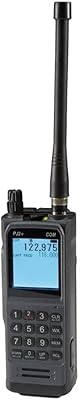
Sporty's PJ2+ COM Aviation Handheld Radio
81%
88%
Ease of Use
85%
Performance & Range
78%
Build Quality
92%
Display & Screen Size
84%
Weather Functionality
More
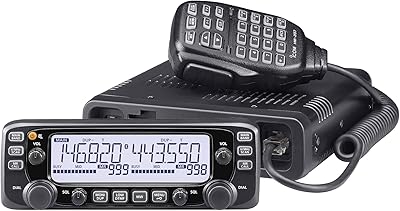
Icom IC-2730A Dual Band VHF/UHF Mobile Radio
78%
93%
Transmit Power
91%
Dual-Band Receive
88%
Build Quality
89%
Audio Clarity
54%
Menu Navigation
More
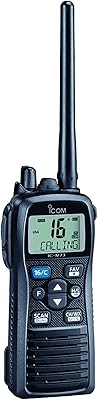
ICOM IC-M73 Handheld VHF Marine Radio
82%
93%
Build Quality
91%
Waterproofing
89%
Ergonomics & Grip
84%
Transmit Power & Range
82%
Battery Life
More
Retevis RM21 Handheld Marine VHF Radio
81%
86%
Audio Clarity
83%
Waterproofing & Durability
91%
Floating & Overboard Detection
88%
Battery Life
82%
Noise Cancellation
More
Retevis RM01 Handheld Marine Two-Way Radio
74%
83%
Waterproofing & Water Resistance
91%
Floating Ability
58%
Battery Life & Power System
74%
Audio Clarity & Receive Quality
81%
NOAA Weather Alert Reception
More
Retevis RT55 Handheld Marine Radio
86%
91%
Waterproof Performance
88%
Ease of Use
84%
Sound Quality
92%
Build Quality
72%
Battery Life
More
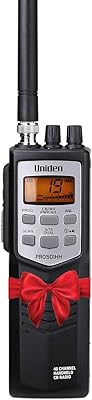
Uniden PRO501HH 40-Channel Handheld CB Radio
74%
78%
Build Quality
82%
Transmission Clarity
74%
Reception Quality
61%
Battery Performance
59%
Range (Real-World)
More
Uniden PRO401HH 40-Channel Handheld CB Radio
77%
86%
Audio Clarity
67%
Range Performance
61%
Battery Life & System
79%
Build Quality
91%
Ease of Use
More
Cobra HH50WXST Handheld CB Radio
87%
86%
Performance
89%
Sound Quality & Noise Reduction
91%
Portability & Size
92%
NOAA Weather Alerts
84%
Build Quality & Durability
More
Midland 75-822 Handheld CB Radio
76%
91%
Ease of Setup
78%
Build Quality
74%
Audio Clarity
88%
NOAA Weather Reception
53%
Talk Range
More

FAQ

It can, but not straight out of the box. To connect a standard third-party aviation headset via the headset jack, you will need the OPC-2401 adapter, which is sold separately. Alternatively, if your headset supports Bluetooth, you can pair it wirelessly without any adapter at all.

No, it is not included. This catches a fair number of buyers off guard, so it is worth budgeting for it separately if you plan to use a wired third-party headset. Make sure to add it to your order if that applies to your setup.

Yes, it supports both 8.33 kHz and 25 kHz channel spacing. If you regularly fly in European airspace, where 8.33 kHz is mandatory for most frequencies, this radio meets that requirement without any workarounds.

Most users report that the initial pairing process is straightforward and that the connection holds stable during flight. It is worth noting that Bluetooth performance can vary depending on the headset model you are using, but there are no widespread reports of dropouts or sync issues under normal operating conditions.

Absolutely — it works perfectly well on standard 25 kHz spacing used across North American general aviation. The 8.33 kHz capability is simply there when and if you need it, and it does not complicate domestic use in any way.

Real-world feedback suggests the battery holds up close to the rated figure under typical mixed use — some listening, some transmitting. Heavy transmit use will reduce the runtime, but for a normal flying day involving standard radio calls, most users find they do not need to recharge mid-day.

IP67 means the radio is rated for full dust ingress protection and can be submerged in up to 1 meter of water for up to 30 minutes. That goes well beyond splash resistance. When the speaker grille is exposed, the rating shifts to IP54, which still handles rain and spray without any issues.

It is a capable and reliable option for that use case, but the price is worth acknowledging honestly. If budget is a concern during training, there are more affordable handhelds that will get the job done for basic backup use. That said, if you plan to keep flying long-term, the IC-A16B is built to last and grow with you.

You can program memory channels directly from the keypad without any external software. For pilots managing a large number of frequencies, optional programming software is available separately and makes bulk entry easier, but it is not required for everyday use.

The 1500 mW speaker output is notably louder than what you get on many competing handhelds, and user feedback consistently highlights audio clarity as one of the strongest points of this airband radio. In most light aircraft cockpits and on the ramp, it is easy to hear without straining.