Overview

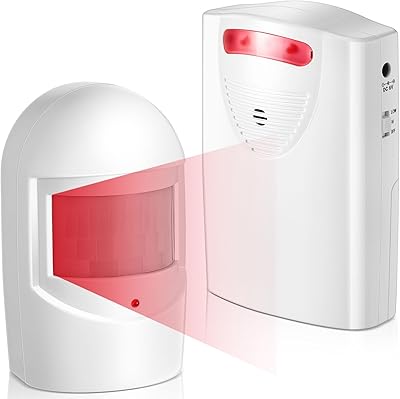
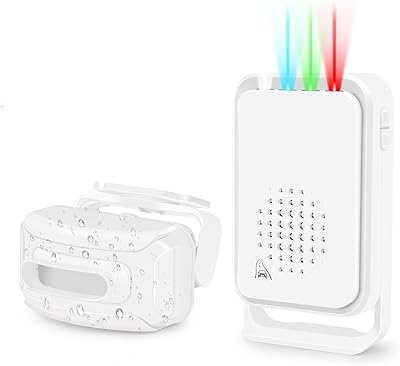
The FREETIM Wireless Driveway Motion Sensor Alarm System is a straightforward, no-frills security alert designed for everyday home protection without the cost of a monthly subscription. It ships as a single kit — one plug-in indoor receiver and one battery-powered outdoor sensor — making it easy to get started without buying extra components. Since hitting the market in late 2022, this driveway alarm has climbed into the top 25 motion detectors on Amazon, which says something for a budget-tier device. Homeowners, renters, and small business owners looking for a simple alert when someone enters a driveway, yard, or gate will find it worth a close look.
Features & Benefits

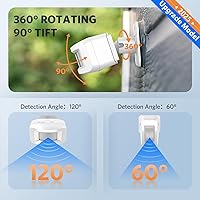
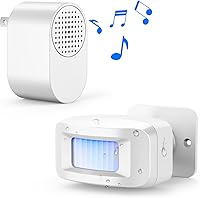
The sensor's adjustable detection range is one of its most practical touches — you can dial it in anywhere from a short porch sweep to covering most of a standard driveway, and the enhanced infrared technology helps cut down on phantom alerts from fog or passing shadows. The outdoor unit carries an IP44 weatherproof rating, which handles rain and light moisture well, though it is not designed for submersion or direct hose spray. The 360-degree swivel mount is genuinely useful; you can point the sensor exactly where you need it without remounting the whole bracket. Inside, the plug-in receiver offers 60 ringtones and four volume settings, so you can tell one zone from another at a glance.

Best For

This wireless motion alert system makes the most sense for people who want quick, hassle-free installation without hiring anyone or configuring an app. It works well for monitoring a long driveway, a back gate, or a detached garage — anywhere you want a heads-up before someone reaches the front door. Renters will appreciate that it mounts with screws and uninstalls cleanly. For those covering multiple entry points, the FREETIM sensor kit scales nicely: additional sensors pair to the same receiver, each assigned a different chime so you always know which zone triggered. No contracts, no cloud fees, and no technical knowledge required to have it running within minutes of opening the box.

User Feedback

Buyers consistently point to fast, simple setup and reliable range across open driveways as the strongest positives, with many noting the chime variety makes the system feel more considered than the price might suggest. On the critical side, some users report needing to readjust sensitivity after installation — particularly in yards with heavy foot traffic or small animals that trigger repeat alerts. A recurring note is that battery life can shorten noticeably in colder months, so keeping a fresh pack of AAA batteries on hand is a smart precaution. Long-term durability through multiple seasons remains an open question for a few buyers, though most short-term weather-resistance reports lean positive. Expectations matched to the price point tend to produce genuinely satisfied buyers.

Pros

  • No subscription, no app, and no Wi-Fi required — it just works out of the box.
  • Setup takes under ten minutes for most people with basic DIY comfort.
  • The 360-degree swivel mount lets you aim the sensor precisely without remounting the bracket.
  • Sixty ringtone options make it easy to distinguish between multiple monitored zones.
  • Up to eight sensors can share one receiver, making future expansion affordable.
  • The plug-in receiver means no indoor battery swaps to worry about.
  • Enhanced infrared helps cut down on nuisance alerts caused by fog, wind, or passing shadows.
  • Compact and lightweight sensor blends in without drawing attention on a fence or post.
  • IP44 weatherproofing holds up reliably through rain and moderate outdoor conditions.

Cons

  • Batteries for the outdoor sensor are not included, which catches many buyers off guard on day one.
  • The 500-foot range drops significantly when trees, walls, or other obstacles are in the path.
  • Sensitivity calibration can be trial-and-error in yards with small animals or heavy foot traffic.
  • Battery life in the outdoor sensor shortens noticeably during cold winter months.
  • No smartphone alerts or remote notifications — you only hear the chime if you are within earshot of the receiver.
  • The IP44 rating is splash-resistant, not waterproof; direct or sustained water exposure is a real risk.
  • Long-term durability through multiple full seasons remains inconsistent based on user reports.
  • No built-in tamper detection or alarm if the sensor is physically removed or repositioned.

Ratings

The ratings below for the FREETIM Wireless Driveway Motion Sensor Alarm System were generated by our AI engine after analyzing thousands of verified global purchases, actively filtering out incentivized, duplicate, and bot-suspected submissions to surface what real buyers actually experience. Scores reflect a balanced view of both the genuine strengths and the recurring frustrations that show up consistently across independent user feedback.

Ease of Setup
91%
This is the category that earns the most unprompted praise. Buyers consistently report having the sensor mounted and the receiver chiming within ten minutes of opening the box — no manuals studied, no apps downloaded. Renters and first-time security buyers in particular appreciate that it requires nothing more than a screwdriver and a free wall outlet.
A small but consistent group of users notes that sensitivity calibration after mounting takes additional trial and error, which the quick-start guide does not fully prepare you for. Those positioning the sensor near busy sidewalks or multi-pet yards often spend extra time fine-tuning the detection angle before settling on a stable setup.
Detection Reliability
78%
22%
In open driveway conditions, the PIR sensor picks up approaching people and vehicles reliably, and the enhanced infrared filtering noticeably reduces the phantom alerts that plague cheaper competitors during foggy mornings or windy afternoons. Buyers monitoring straightforward single-entry driveways report very few missed detections under normal conditions.
Performance becomes inconsistent in busier or more complex environments — small animals, dense ground-level vegetation, and temperature fluctuations near the sensor's operating limits all contribute to occasional false triggers or missed events. Users in high-traffic yards report needing to readjust sensitivity settings multiple times before finding a reliable balance.
Wireless Range
67%
33%
For properties with a clear sightline between the sensor and the house, the transmission range performs well and consistently surprises buyers who expected less from a budget-tier device. Users with open, flat driveways up to a few hundred feet report solid, uninterrupted signal with very few dropped alerts.
The 500-foot claim is strictly line-of-sight, and real-world performance falls short on wooded lots, properties with metal fencing, or homes where the receiver sits behind multiple interior walls. A meaningful number of buyers with typical suburban landscaping report effective range closer to half the advertised figure, which is a genuine disappointment for those who bought based on the headline spec.
Weather Resistance
72%
28%
The IP44 rating handles everyday outdoor exposure well — rain showers, morning humidity, and light frost do not appear to cause immediate issues for most users. Buyers in mild to moderate climates report the sensor holding up through full seasons without obvious water ingress or functional degradation.
IP44 is splash-resistant, not waterproof, and that distinction matters in practice. Buyers who mounted the sensor in fully exposed positions — facing prevailing rain, near sprinkler coverage, or in regions with heavy sustained precipitation — report premature failure more frequently than those who found a sheltered mounting spot. Long-term durability beyond one or two winters remains a mixed picture in user feedback.
Battery Life
58%
42%
Under light-to-moderate detection loads in mild temperatures, the AAA batteries powering the outdoor sensor last a reasonable amount of time for occasional-use properties, and the simplicity of a standard battery format means replacements are always easy to find and inexpensive to stock.
Battery drain accelerates significantly in cold climates, and users in northern regions during winter months report needing replacements far more often than expected — sometimes within weeks of a fresh set. The fact that batteries are not included in the box compounds the frustration for buyers who discover this on first use, leaving the system non-functional until a hardware run is made.
Alert Customization
84%
Sixty selectable ringtones is a genuinely useful feature for households monitoring more than one zone — assigning distinct chimes to the front driveway, back gate, and side yard means you always know which area was triggered without needing to look at anything. Buyers running multi-sensor setups consistently call this out as one of the most practical aspects of the system.
The ringtone selection process on the receiver is not intuitive for everyone, and a few buyers report cycling through options without a clear numbered reference making it hard to land on a preferred tone reliably. The variety is there, but the interface for navigating it could be more straightforward.
Volume & Audibility
79%
21%
At higher volume settings, the receiver is loud enough to be heard clearly from adjacent rooms, a basement workshop, or a detached space, which is exactly what buyers monitoring a long driveway from the back of the house need. The four-level range gives enough flexibility for both apartment use and larger open-plan homes.
A handful of buyers in larger two-story homes note that even the highest volume setting does not carry well through closed doors on a different floor, particularly when background noise like a television or kitchen appliances is present. A chime-only alert with no visual indicator or backup notification means a missed chime is a fully missed alert.
System Scalability
86%
The ability to expand up to eight sensors on one receiver — each with its own assigned chime — makes this wireless motion alert system a genuinely flexible platform rather than a locked single-zone device. Buyers who started with one sensor and later added coverage for a garage or side yard report that pairing additional units is quick and painless.
Additional sensors are sold separately, which adds to the total cost for buyers who need multi-zone coverage from day one. There is also no official dashboard or status indicator showing which sensors are actively connected, so confirming that all paired units are still live requires physically triggering each one.
Build Quality
63%
37%
The sensor's compact plastic housing feels adequate for the price point, and the 360-degree swivel bracket is sturdier than it looks in product photos. Buyers who handle it with reasonable care and mount it in a sheltered location report no structural issues over the short-to-medium term.
The overall material quality reflects the budget positioning honestly — there is flex in the housing that more premium competitors do not have, and the mounting bracket's locking mechanism loosens over time on some units, causing the sensor to drift from its calibrated angle. Users in high-UV or freeze-thaw climates report surface degradation after extended exposure.
Value for Money
82%
18%
At its price point, the FREETIM sensor kit delivers a feature set that would cost significantly more from established security brands — no subscription, expandable multi-sensor support, and a plug-and-play receiver make it a genuinely competitive option for buyers with modest security needs and a tight budget.
Value perception drops for buyers who expected the 500-foot range to perform in non-ideal conditions, or who face early battery replacement costs and potential weathering issues within the first year. Those who buy in expecting premium durability are likely to feel the compromise; those who enter with accurate expectations tend to be satisfied.
False Alarm Rate
61%
39%
The enhanced infrared filtering does a competent job of screening out common nuisance triggers like blowing leaves, rain, and shifting shadows under normal suburban conditions. Buyers with straightforward setups — sensor aimed at a driveway entrance with minimal cross-traffic — report manageable false alarm rates that do not disrupt daily routines.
Properties with small pets, dense wildlife activity, or sensors installed at ground level see noticeably higher false trigger rates that can become genuinely disruptive over time. Several buyers report eventually leaving the receiver volume turned down to avoid nuisance chimes, which defeats the core purpose of having an alert system.
Installation Flexibility
83%
The 360-degree swivel mount is a standout practical feature — being able to tilt and pan the sensor after mounting without pulling screws saves real time during setup and re-calibration. The compact form factor fits neatly on fence posts, garage walls, and wooden stakes without requiring a dedicated surface or custom bracket.
Screw-mount installation, while secure, is not ideal for renters who need a fully reversible no-damage setup, and adhesive mounting options are not included. The receiver is also limited to wherever a wall outlet is available, which constrains placement in older homes with limited outlet positioning near doorways or entry points.
Out-of-Box Experience
54%
46%
The hardware pairing between sensor and receiver works automatically without any configuration steps, which means buyers who do have AAA batteries ready are genuinely up and running within minutes of unboxing. The plug-in receiver design removes any indoor installation complexity entirely.
The missing batteries issue is a consistent friction point that shows up repeatedly in user feedback — it is a small thing, but arriving home to set up a security device and discovering you cannot power the sensor is a frustrating start. The included documentation is also sparse, leaving sensitivity adjustment and multi-sensor pairing largely to guesswork for first-time users.

Suitable for:

The FREETIM Wireless Driveway Motion Sensor Alarm System is a solid fit for homeowners, renters, and small business owners who want a practical heads-up system without committing to an app, a hub, or a recurring service fee. If you have a long driveway, a detached garage, a backyard gate, or a mailbox area you want to monitor, this driveway alarm covers real-world distances well when there are no major obstacles in the way. Renters will especially appreciate how straightforward the install is — screw the sensor to a post or wall, plug in the receiver indoors, and you are done in under ten minutes. The scalable design also makes it a smart pick for anyone who wants to start with one zone and expand over time, since additional sensors pair to the same receiver without any complicated pairing process. It also suits buyers in moderate climates who need a sensor that handles rain, humidity, and light frost without babying it.

Not suitable for:

The FREETIM Wireless Driveway Motion Sensor Alarm System is not the right call for buyers expecting professional-grade performance or smart home integration beyond basic compatibility. The advertised 500-foot transmission range is strictly line-of-sight, meaning a heavily wooded property, a fence line, or even a parked vehicle between the sensor and receiver can noticeably shorten effective range — so buyers with complex or obstructed layouts should temper expectations. The IP44 rating handles splashes and rain reasonably well, but this is not a waterproof device and should not be installed where it faces direct water exposure or prolonged submersion risk. Anyone wanting motion-triggered video recording, smartphone push notifications, or cloud storage will need to look elsewhere entirely, since this system is purely audio-alert based. Cold-climate users should also note that battery performance can drop in sustained freezing temperatures, requiring more frequent replacements than the spec sheet implies.

Specifications

  • Brand: Manufactured and sold under the FREETIM brand, model I8-313 / I8-W1901.
  • Detection Range: The outdoor PIR sensor covers an adjustable field of roughly 19 to 65 feet, depending on positioning and environmental conditions.
  • Transmission Range: The sensor communicates with the receiver at distances up to 500 feet in a clear, unobstructed line-of-sight environment.
  • Sensor Power: The outdoor sensor runs on three AAA 1.5V alkaline batteries, which are not included in the box.
  • Receiver Power: The indoor receiver plugs directly into a standard AC wall outlet and requires no batteries.
  • Weatherproofing: The outdoor sensor carries an IP44 rating, meaning it is protected against solid objects larger than 1mm and water splashing from any direction.
  • Sensor Dimensions: The outdoor unit measures 2.36″ deep by 1.34″ wide by 2.01″ tall, making it compact enough to mount discreetly on a post or fence.
  • Item Weight: The complete sensor unit weighs 7.4 ounces, keeping installation stress-free on lightweight surfaces.
  • Mount Type: The sensor uses a 360-degree swivel screw-mount bracket, allowing precise directional adjustment after installation.
  • Ringtones: The plug-in receiver supports 60 selectable ringtones, enabling users to assign distinct chimes to different monitored zones.
  • Volume Levels: Four volume settings are available on the receiver, ranging from a quiet indoor chime to a loud alert suitable for larger spaces.
  • System Scalability: A single receiver can pair with up to 8 separate sensors, and a single sensor can simultaneously trigger an unlimited number of receivers.
  • Operating Temperature: The system is rated for operation in temperatures up to 50 degrees Celsius, with anti-freeze materials extending cold-weather usability.
  • Compatible Devices: The system is listed as compatible with lighting control systems, broader security setups, and smart home hubs.
  • Sensor Technology: The unit uses passive infrared (PIR) detection with enhanced infrared filtering to reduce false triggers from weather-related interference such as fog, rain, or wind.
  • Installation Method: The outdoor sensor installs via included screw hardware, while the receiver simply plugs into any standard wall outlet with no wiring required.
  • Included Components: Each kit includes one outdoor motion detector and one plug-in indoor receiver; batteries and mounting screws may need to be sourced separately.
  • Package Quantity: The standard listing ships as one kit containing one sensor and one receiver, with additional sensors sold separately for system expansion.

Related Reviews

Qualirey Driveway Alarm Wireless Motion Sensor System
86%
92%
Value for Money
94%
Ease of Installation
89%
Range of Detection
88%
Weather Resistance
85%
Alert Customization
More
1byone Wireless Driveway Motion Sensor Alarm
71%
91%
Ease of Setup
67%
Wireless Range
63%
Detection Accuracy
88%
Alert Volume & Clarity
71%
Build Quality
More
HTZSAFE 808A Wireless Driveway Alarm System
76%
83%
Wireless Transmission Range
91%
Ease of Installation
72%
Motion Detection Accuracy
61%
Battery Life
68%
Receiver Alert Volume
More
Enegg Wireless Driveway Motion Sensor Alarm
69%
93%
Ease of Setup
81%
Wireless Range
74%
Detection Reliability
63%
Sound Quality
79%
Volume Output
More
Shaogax Wireless Motion Sensor Driveway Alarm System
71%
91%
Ease of Setup
83%
Wireless Range
88%
Alert Customization
58%
False Alert Rate
61%
Build Quality
More
Bistee Wireless Driveway Alarm with Microwave-Infrared Sensor
83%
92%
Wireless Range
88%
Ease of Installation
85%
Motion Detection Performance
80%
Build Quality
89%
Weatherproof Design
More
Wuloo WUL-MTY0102-1T1 Solar Driveway Alarm System
76%
91%
Ease of Installation
58%
Wireless Range
72%
Detection Accuracy
67%
Battery & Solar Performance
86%
Chime & Alert Customization
More
Chesbung Solar Driveway Alarm System
87%
93%
Ease of Installation
88%
Detection Range
90%
Battery Life
85%
Reliability of Motion Detection
87%
Build Quality and Durability
More
GREENCYCLE M-SF20R Wireless Driveway Alarm
78%
91%
Ease of Setup
78%
Detection Reliability
62%
Wireless Range
88%
Chime & Alert Volume
61%
Battery Life
More
TECKNET EMD01001BA01 Solar Wireless Driveway Alarm
76%
91%
Ease of Setup
74%
Solar Charging Performance
68%
Detection Accuracy
86%
Wireless Signal Range
83%
Alert Customization
More

FAQ

Yes, and it is worth picking some up before the package arrives. The outdoor sensor needs three AAA alkaline batteries that are not included in the box. The indoor receiver plugs into the wall, so that side is ready to go immediately.

That range is possible, but only in a clear, open environment with nothing in between the sensor and the receiver. If your property has trees, fences, a parked car, or walls along the path, expect the effective range to be shorter. For most residential driveways, the signal holds up well, but heavily wooded or obstructed properties may see noticeably reduced performance.

The sensor handles rain and splashing reasonably well thanks to its IP44 rating, but it is not designed for direct or sustained water exposure. Avoid mounting it where a sprinkler head points directly at it or where water pools. A sheltered spot — under an eave or on a covered post — will extend its lifespan considerably.

Setup is genuinely straightforward. You mount the outdoor sensor with screws, plug the receiver into a wall outlet, and the two devices pair automatically. Most people have the whole system running in under ten minutes. A basic screwdriver is all you need.

Yes, the system is built to scale. One receiver can work with up to eight sensors, and you can assign each sensor its own unique chime so you always know which area was triggered. This makes the FREETIM Wireless Driveway Motion Sensor Alarm System a practical starting point if you plan to monitor more zones over time.
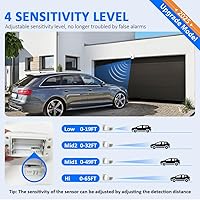
They can, depending on how you position and calibrate the sensor. The adjustable detection range helps — pointing it higher or narrowing the field reduces ground-level triggers. It may take a bit of trial and error to find the right angle for your yard, but most users get it dialed in without too much frustration.

For most average-sized homes, yes. The four volume levels give you enough range to keep it quiet in a small apartment or crank it up in a larger house. A few buyers have noted the highest volume is quite audible, which is useful if you spend time in a back room or basement while monitoring the front of the property.

No, this wireless motion alert system is entirely standalone and audio-only. There are no smartphone alerts, no app, and no Wi-Fi involved. When the sensor trips, the receiver chimes — that is the full extent of it. If phone notifications are important to you, you would need a different type of system.

This is a genuine weak spot. Like most battery-powered outdoor devices, the sensor's AAA batteries drain faster in cold temperatures. Some users in colder climates report needing to swap batteries more frequently during winter months. Keeping a spare set on hand is a smart habit, especially if temperatures regularly drop below freezing in your area.

Yes, and this is one of the more flexible features of the system. A single outdoor sensor can trigger an unlimited number of receivers simultaneously, so you can plug one in the kitchen, one in the garage, and one in a bedroom if you want coverage throughout your home. Each additional receiver does need to be purchased separately.