Overview

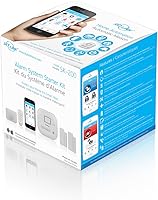
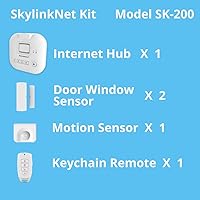
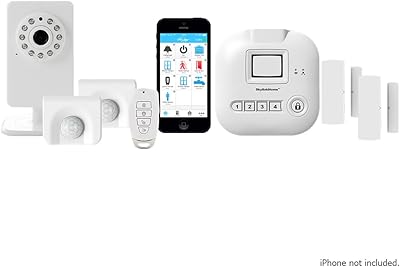
The Skylink SK-200 Wireless Home Security System arrived on the market back in 2014, and that context matters when you're setting expectations. This is an entry-level, DIY-friendly starter kit aimed squarely at renters and first-time homeowners who want basic protection without signing up for a monitoring contract. The box includes an internet hub, two door/window sensors, a motion sensor, a keychain remote, and the necessary cables — enough to cover a small apartment right out of the box. No monthly fees is the headline advantage here, and it's a real one. Just don't expect this to rival modern professional-grade systems.
Features & Benefits

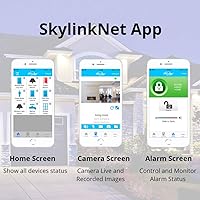
What the SkylinkNet hub system gets right is its approachable feature set. Through the companion smartphone app — compatible with both iOS and Android — you can arm or disarm the system and check sensor status from anywhere with a data connection. Push notifications fire instantly when a door opens or motion is detected, and you never pay extra for that convenience. The wireless range tops out around 300 feet, which sounds impressive but can shrink significantly in buildings with thick walls or multiple floors. IFTTT compatibility adds useful flexibility if you already use smart home routines, though this isn't a deep home automation hub by any stretch.

Best For

This wireless starter kit is best suited to specific living situations, and being honest about that matters. Renters benefit most — the self-adhesive mounting leaves no permanent marks, and taking the whole system along when you move is straightforward. Studio apartments, condos, and small vacation homes are ideal coverage scenarios given the sensor count in the base kit. Budget-conscious beginners exploring smart home security without a subscription commitment will find this a reasonable starting point. If you're already running IFTTT automations and want to pull a basic alarm into that ecosystem, this DIY alarm system fits naturally without demanding a steep learning curve.

User Feedback

Buyer sentiment for the SkylinkNet hub system skews positive on two fronts: quick setup and the relief of no recurring fees. Most owners report getting alerts within minutes of installation, which is genuinely satisfying at this price tier. The friction tends to appear later. App reliability is a recurring sore point — the software hasn't always kept pace with iOS and Android updates since 2014, and some users encounter connectivity hiccups. Range also underperforms in multi-story or concrete homes. Battery life holds up reasonably well in low-traffic areas, though heavy use drains sensors faster than the spec implies. Long-term owners are split, with some still relying on this DIY alarm system years later and others eventually moving on.

Pros

  • No subscription or monthly monitoring fee required — ever.
  • Self-adhesive installation means no drilling, no damage, and no landlord complaints.
  • The starter kit includes enough hardware to cover a small home right out of the box.
  • Smartphone alerts for door, window, and motion activity arrive quickly and reliably in most setups.
  • The system can expand to over 100 sensors, so you are not locked into the starter configuration.
  • IFTTT support lets you connect this DIY alarm system to a broader smart home routine.
  • UL-listed components offer a basic assurance of build and safety standards.
  • Lightweight and portable — easy to pack up and reinstall in a new home.
  • Setup takes under an hour for most users with no technical background required.
  • A one-year warranty provides a reasonable safety net for an entry-level purchase.

Cons

  • The companion app has not consistently kept pace with recent iOS and Android updates.
  • Real-world wireless range drops significantly in concrete buildings or multi-story layouts.
  • Batteries are not included, which is an inconvenient omission given how many sensors need them.
  • No professional monitoring option exists if you want a human response as a backup.
  • The hardware and software design reflects a 2014 launch — newer competitors offer more polish.
  • There is no built-in camera support or video monitoring capability in the base system.
  • The system depends entirely on your internet connection — no offline or cellular fallback.
  • Long-term buyers report mixed results, with some experiencing hub connectivity issues after extended use.
  • The keychain remote feels dated compared to the app-first controls common in modern security kits.
  • App reliability concerns make this a risky choice for users who travel frequently and depend on remote access.

Ratings

The ratings below for the Skylink SK-200 Wireless Home Security System were generated by our AI engine after analyzing thousands of verified global buyer reviews, with spam, bot-submitted, and incentivized feedback actively filtered out before scoring. Each category score reflects the honest distribution of real user experiences — not manufacturer claims — so both the genuine strengths and the recurring frustrations are weighted equally. Where this wireless starter kit earns praise, the scores show it; where buyers have consistently run into problems, those pain points are reflected without softening.
Value for Money
84%
Buyers who prioritize avoiding monthly fees consistently rate this as one of the best low-cost entry points into home security. For renters or budget-conscious first-timers, the upfront cost feels justified given how much comparable monitored systems charge annually in subscription fees alone.
A handful of long-term owners feel the value proposition weakens over time as the app ages and competitor systems offer newer hardware at similar prices. Those who end up replacing sensors or upgrading to a more capable platform feel the initial savings were partially offset by transition costs.
Ease of Setup
88%
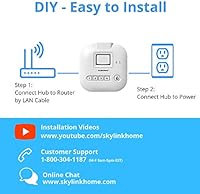
The plug-and-play design genuinely delivers for most users — plug the hub into the router, peel the adhesive backing off the sensors, and follow the app prompts. Reviewers with zero technical background regularly report completing a full installation in under an hour, which is a realistic expectation for this type of system.
A smaller segment of buyers encounter hiccups during the app-pairing process, particularly when connecting the hub to certain router configurations or dual-band Wi-Fi networks. The setup instructions included in the box are described by some as vague, making troubleshooting feel unnecessarily frustrating for less confident users.
App Reliability
57%
43%
When the app behaves as intended, users appreciate the clean ability to arm and disarm the system remotely and get a quick read on sensor status from anywhere. For buyers running older smartphone operating systems, the experience tends to be noticeably more stable and consistent.
This is the category that generates the most sustained criticism. The SkylinkNet app has not kept reliable pace with evolving iOS and Android updates since the product launched in 2014, and a meaningful portion of recent reviewers report dropped connections, delayed notifications, or outright login failures — issues that undermine the system's core promise.
Sensor Performance
73%
27%
Door and window sensors are described as responsive and accurate in everyday apartment and small home use. The motion sensor's 15-second reset window is a deliberate design choice that reduces false alert spam in areas with intermittent foot traffic, and most users in appropriate environments appreciate that behavior.
In larger or structurally complex homes, sensor reliability drops as wireless signal competes with thick walls or floor separations. A subset of users also notes that the motion sensor can miss events if movement is slow or occurs near the sensor's edge coverage zones.
Wireless Range
61%
39%
For small apartments, studios, and single-story condos — which are the ideal use cases for this DIY alarm system — the wireless reach is more than adequate. Sensors placed within a single floor of the hub almost universally report solid, consistent communication.
The 300-foot specification is an open-air benchmark that most real-world environments never approach. Buyers in multi-story homes, older brick buildings, or properties with concrete construction frequently report sensors dropping connection or failing to trigger reliably at distances that should theoretically be well within range.
Push Notifications
69%
31%
When the app is stable and the internet connection is healthy, the notification system works promptly — buyers report alerts arriving within seconds of a door opening or motion triggering, which is the core reassurance this type of system needs to deliver.
Notification reliability is tightly coupled to app stability, which is inconsistent. Users who experience app disconnections often only discover a missed alert after the fact, and there is no secondary fallback alert channel — no SMS, no email — if the push notification fails to deliver.
Build Quality
66%
34%
The sensors feel appropriately solid for a budget security kit, and the hub itself has held up physically for most long-term owners without cracking or discoloring. Several buyers note that units purchased years ago still show no physical wear despite everyday use.
The plastic construction across sensors and the hub reads as cost-conscious rather than premium, and a portion of buyers describe the keychain remote as feeling particularly cheap. The overall aesthetic is functional but dated compared to the cleaner hardware designs common in current-generation security systems.
Battery Life
71%
29%
Sensors placed on low-traffic entry points — a bedroom window or a side door — regularly last well beyond six months on a single set of AAA batteries, which aligns reasonably with the high-hour specification Skylink advertises for low-activity conditions.
High-traffic sensors, such as a frequently used front door, drain batteries considerably faster than the spec implies. Several buyers are also mildly irritated that batteries are not included given how many sensors ship in the kit, and the lack of a low-battery warning in the app has caught some users off guard.
Expandability
79%
21%
The architecture supporting up to 100 additional devices is a genuine long-term advantage for users who want to grow their coverage incrementally. Buyers who start with the base kit and add sensors room by room report that the pairing process for new devices is consistent with the initial setup experience.
The actual range of compatible expansion accessories available for purchase has narrowed over the years as the product line has aged. Some buyers find that locating specific compatible sensors through current retail channels requires more effort than it did when the system first launched.
Smart Home Integration
62%
38%
IFTTT compatibility is a meaningful bonus for users who already run smart home automations — connecting an alarm event to a smart light scene or a notification service adds genuine utility without requiring any additional hardware investment.
The integration depth is limited strictly to what IFTTT can bridge, and there is no native compatibility with major platforms like Amazon Alexa or Google Home. Users who expect this to function as a true smart home hub rather than an alarm system with a light IFTTT layer tend to come away underwhelmed.
Long-Term Reliability
58%
42%
A loyal segment of buyers has run this DIY alarm system for three or more years without major hardware failures, crediting the physical sensors and hub for outlasting expectations at this price tier. For static, low-demand installations, the hardware longevity is a genuine point in its favor.
The bigger long-term risk is software, not hardware. As the platform ages without consistent updates, app compatibility issues compound over time, and buyers who upgrade their smartphones frequently are more likely to encounter friction. The system's long-term viability is increasingly dependent on Skylink's commitment to maintaining the app.
Portability
83%
Renters moving between apartments consistently highlight how straightforward it is to peel off the sensor adhesive pads and reinstall the system in a new location with minimal fuss. The hub is compact and light enough to pack without any special considerations.
Adhesive residue can occasionally remain on surfaces after removal, particularly on painted wood or older door frames, which requires a small cleanup effort. Buyers who move frequently may also find that re-pairing sensors to a new router and Wi-Fi network is the most reliably frustrating part of the relocation process.
Alarm & Alert Audibility
64%
36%
For light deterrent purposes in a small apartment, the onboard alert and push notification combination is enough to make an intruder aware they have been detected and to alert a nearby owner. Users primarily using this system in compact single-room spaces report it meets basic expectations.
The system lacks a loud standalone siren, which is a meaningful gap for buyers expecting an audible deterrent in larger spaces or for situations where a smartphone alert cannot be seen immediately. This is categorically a notification-based alarm, not a standalone loud-alarm system.
Documentation & Support
52%
48%
Basic setup documentation covers the initial installation steps adequately for users who follow directions carefully, and the IFTTT integration has enough online community documentation outside of Skylink's own resources to help motivated users get it configured.
Skylink's official customer support response times draw consistent criticism in reviews, and the included printed manual is considered thin by most buyers who encounter any issue beyond a straightforward setup. Online troubleshooting resources from Skylink themselves are sparse relative to what users expect from a connected home product.

Suitable for:

The Skylink SK-200 Wireless Home Security System is a practical fit for renters, apartment dwellers, and condo owners who want genuine peace of mind without the burden of a long-term monitoring contract. Because the sensors mount with adhesive rather than screws, you can take the entire setup with you when you move — a real advantage for anyone who doesn't own their walls. Small households covering a studio, one-bedroom apartment, or compact vacation property will find the included sensor count covers their space adequately from day one. First-time security buyers who feel intimidated by complex installations will appreciate that this DIY alarm system is genuinely up and running in under an hour. It also appeals to budget-minded smart home tinkerers who already use IFTTT automations and want to pull basic alarm functionality into their existing routines without paying a premium.
Not suitable for:

Buyers expecting the Skylink SK-200 Wireless Home Security System to perform like a modern, professionally monitored security platform are likely to come away frustrated. The system launched in 2014, and the app ecosystem has not always kept pace with current iOS and Android versions, which is a real concern for anyone who relies heavily on smartphone integration. Larger homes — particularly multi-story houses or buildings with thick concrete or brick walls — will find the 300-foot theoretical sensor range falls short in practice. Families or homeowners who need around-the-clock professional response, camera integration, or local backup if the internet goes down should look at more current offerings. If you're expecting deep smart home control beyond basic IFTTT triggers, this wireless starter kit will disappoint — it is an alarm system, not a home automation hub.

Specifications

  • Brand & Model: Manufactured by Skylink under the model designation SK-200, part of their SkylinkNet connected home security line.
  • Dimensions: The internet hub measures 4.2 x 5 x 4.8 inches and weighs approximately 1 pound.
  • Connectivity: The hub connects to your home router via the included ethernet cable and communicates with sensors wirelessly.
  • App Compatibility: The SkylinkNet companion app is available for both iOS and Android smartphones and tablets.
  • Sensor Range: Wireless sensors communicate with the hub at a maximum specified range of 300 feet under open, unobstructed conditions.
  • Kit Contents: The starter kit includes one internet hub, two door/window sensors, one motion sensor, one keychain remote, a power adapter, an ethernet cable, and mounting accessories.
  • Expandability: The system supports up to 100 additional Skylink-compatible sensors and controllers added at any time after initial setup.
  • Battery Type: Sensors are powered by AAA lithium batteries, which are required but not included in the box.
  • Battery Life: Skylink specifies a battery life of approximately 4,320 hours, though real-world duration varies depending on sensor activity frequency.
  • Installation: Sensors attach via self-adhesive backing, requiring no drilling or professional installation — the hub simply plugs into power and ethernet.
  • Alert Method: The system delivers real-time push notifications to your smartphone whenever a sensor detects motion or a door or window is opened.
  • Smart Home: The SkylinkNet hub is compatible with IFTTT, allowing integration with a range of third-party smart home devices and automation services.
  • Certification: Components in this system carry UL Listed certification, indicating they meet established safety and performance standards.
  • Monitoring Fees: No monthly subscription, monitoring contract, or recurring fee of any kind is required to use the full feature set of this system.
  • Warranty: Skylink provides a one-year limited warranty covering manufacturer defects from the date of purchase.
  • Power Source: The internet hub is mains-powered via the included adapter; individual sensors run entirely on AAA lithium batteries with no wired power needed.
  • Control Method: The system can be armed and disarmed through the smartphone app or the included physical keychain remote.
  • Launch Date: This product first became available in August 2014, making it one of the earlier consumer Wi-Fi-connected alarm systems on the market.

Related Reviews
SKYLINK SK-250 Wireless Home Security Alarm System
75%
88%
Ease of Setup
67%
App Performance
82%
Sensor Reliability
54%
Camera Quality
83%
Smart Home Integration
More
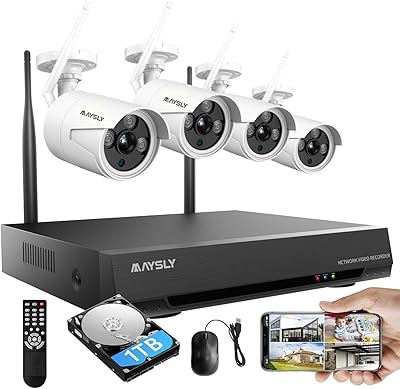
Maysly May-NVR4 8CH 1080P Wireless Security Camera System
72%
83%
Ease of Setup
88%
Daytime Image Quality
76%
Night Vision Performance
71%
Wireless Reliability
67%
App & Remote Viewing
More
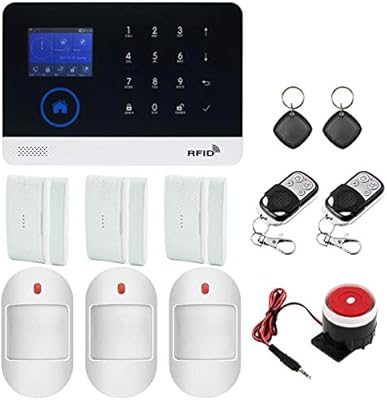
KEEPWORD WiFi GSM Wireless Home Security System
69%
83%
Value for Money
88%
Ease of Installation
71%
App Performance
74%
Sensor Reliability
58%
WiFi Connectivity
More
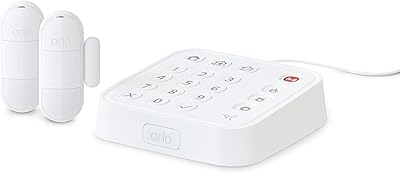
Arlo SS1201 Home Security System
76%
91%
Ease of Installation
88%
Sensor Versatility
74%
App Experience
57%
Subscription & Value Transparency
82%
Build Quality & Hardware Design
More
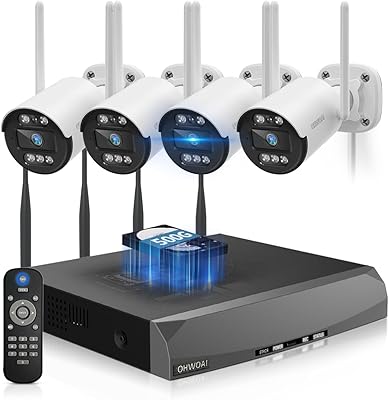
OHWOAI CSOH-05SW3MP05 Wireless Security Camera System
74%
83%
Image Clarity
71%
Night Vision
86%
Ease of Setup
54%
Video Smoothness
78%
App Experience
More
iLive iHB227B Wireless CD Home Stereo System
71%
83%
Value for Money
58%
Sound Quality
91%
Ease of Setup
54%
Build Quality
76%
Alarm Functionality
More
SOVMIKU SFWK-4HD313-1T 1TB Wireless Security Camera System
74%
83%
Image Quality
79%
Night Vision
86%
PTZ Coverage
71%
Auto-Tracking
58%
Wi-Fi Reliability
More
CasaCam VS802 Wireless Security Camera System
70%
91%
Ease of Setup
58%
Video Quality
83%
Motion Detection
93%
Local & Offline Operation
78%
Portable Monitor
More
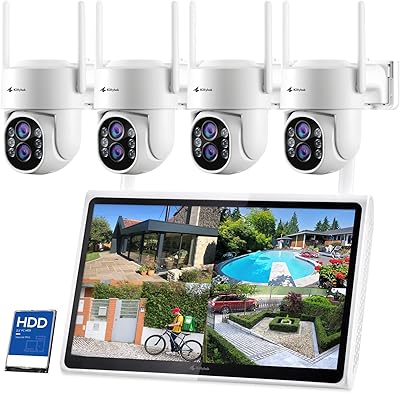
Kittyhok KDS30T4 4-Camera PTZ Security System

73%
83%
Ease of Setup
78%
Video Clarity
69%
Night Vision Performance
66%
Auto-Tracking Accuracy
81%
Smart Detection Reliability
More
TUGARD G20 Smart Home Security System Kit
77%
91%
Value for Money
86%
Ease of Setup
78%
Dual-Network Reliability
67%
App Performance
72%
Sensor Coverage & Range
More

FAQ

Correct — there is no subscription, no monitoring contract, and no hidden recurring charge. You buy the hardware once and the push notifications, app control, and sensor alerts all work without any ongoing payment. That is genuinely one of the strongest arguments for this wireless starter kit at its price point.

It is straightforward for most people. You plug the hub into your router and a power outlet, download the SkylinkNet app, and follow the pairing steps for each sensor. The sensors themselves stick on with adhesive pads — no drilling required. Most users report being fully up and running within 30 to 60 minutes.

Yes, and this is actually one of the best use cases for this DIY alarm system. The door and window sensors use adhesive mounting, so there is nothing to screw in and nothing to patch when you move out. It is a genuinely renter-friendly design.

In an open environment, yes, but real-world performance is usually shorter. Concrete walls, multiple floors, or dense building materials can reduce the effective range considerably. For a standard apartment or small single-story home, range is unlikely to be an issue, but buyers in larger or structurally complex properties should be aware of this limitation.

Unfortunately, no. The hub relies on your home internet connection to communicate with the app and deliver push notifications. If your router loses power or your ISP has an outage, remote alerts and app control will not function. There is no cellular backup or local offline mode built into this system.

Yes, the SkylinkNet hub system supports up to 100 compatible sensors and controllers in total. Skylink sells additional door/window sensors, motion detectors, and other accessories separately. This makes it possible to start small and expand coverage over time as your needs or budget allow.

This is one of the more honest concerns to flag with this product. The system launched in 2014, and the app has had inconsistent updates over the years. Some users report it running fine on current iOS and Android versions, while others encounter connectivity or stability issues. It is worth checking recent app store reviews before purchasing if reliable smartphone integration is critical to your setup.

To a degree, yes. This wireless starter kit supports IFTTT, which means you can create basic automations that link it to other IFTTT-compatible devices — things like smart lights, plugs, or notification services. That said, it is not a full smart home hub, so do not expect deep native integrations with platforms like Google Home or Amazon Alexa.

Skylink's official spec puts battery life at around 4,320 hours, which sounds impressive on paper. In practice, duration depends heavily on how active your sensors are — a front door that opens dozens of times daily will drain batteries faster than a rarely touched window sensor. Many users report getting several months to over a year of life per set of batteries in low-to-moderate traffic areas.

No, there is not. The SkylinkNet hub system is designed entirely around self-monitoring through your smartphone. If a sensor triggers while you are asleep or without your phone, no third party will be notified on your behalf. For buyers who want a human response as a backup — especially for vacation homes or periods of extended travel — a system with optional professional monitoring would be a better fit.