

Overview

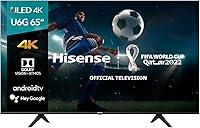
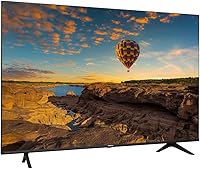
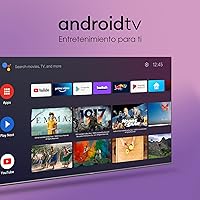
The Hisense 65U6G 65-inch 4K Smart TV arrived at a moment when Hisense was actively pushing into territory long dominated by Samsung and LG, and it sits firmly in the mid-range segment — not a bargain-bin buy, but far from flagship pricing. Released in 2021, it now circulates heavily in the used and clearance market, making it an even sharper consideration for budget-conscious shoppers. Android TV powers the smart side, which means access to thousands of apps including Netflix, Disney+, and YouTube right out of the box. That said, strong specs on paper don't always translate perfectly to the living room — real-world performance depends heavily on your setup and expectations.

Features & Benefits

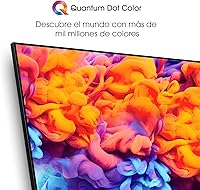
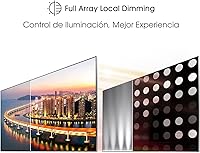
The Quantum Dot panel at the heart of this Hisense QLED does more than add a marketing badge — it meaningfully expands color volume, pushing saturation levels well beyond what a standard LCD can manage. Pair that with 600-nit peak brightness distributed across 60 full-array local dimming zones, and you get noticeably better contrast handling than edge-lit competitors in this price class, though 60 zones across a 65-inch screen is modest, so expect some blooming in demanding high-contrast scenes. Dolby Vision and Dolby Atmos support adds genuine HDR versatility for streaming services and physical media alike. FilmMaker Mode is a thoughtful inclusion, automatically disabling motion smoothing to honor the director's original framing and pacing.

Best For

This mid-range 65-inch TV hits a sweet spot for a fairly specific buyer: someone who wants big-screen QLED picture quality without spending flagship money. If you are upgrading from an older 1080p set, the jump in clarity and color depth will feel substantial. Casual streamers watching Netflix or Prime Video in a moderately lit room will be well served here. The dual voice assistant support — both Alexa and Google Assistant — makes it a natural fit for households already running smart home devices. One honest caveat: the 60Hz panel means competitive gamers and live sports fans will hit a ceiling that higher-refresh rivals simply do not have.

User Feedback

Owners of the 65U6G tend to land in two camps. The majority — particularly those upgrading from older or cheaper sets — are genuinely impressed by the color vibrancy and out-of-box brightness, and setting up Android TV is straightforward enough that even less tech-savvy users get running quickly. Where sentiment gets mixed is in darker viewing environments: the local dimming, while functional, does not fully suppress blooming around bright objects on black backgrounds, which bothers more critical viewers. A handful of users have flagged occasional menu lag and inconsistent voice assistant responses. Long-term reliability is broadly acceptable, with firmware updates having resolved some early software hiccups over time.

Pros

  • Quantum Dot color delivers visibly richer, more saturated images than standard LCD sets in this size class.
  • Full-array local dimming provides better contrast control than edge-lit panels at comparable prices.
  • Dolby Vision and HDR10+ support covers all the major HDR formats used by streaming platforms.
  • Android TV gives access to a wide app library without needing an external streaming stick.
  • Dual voice assistant support — Alexa and Google Assistant — works well for smart home households.
  • FilmMaker Mode is a genuine, thoughtful feature that casual and semi-serious movie watchers will appreciate.
  • At 65 inches, the 65U6G offers a commanding screen size that smaller mid-range rivals simply cannot match at the same price point.
  • Setup is straightforward, and the learning curve for the Android TV interface is minimal for most users.
  • 600-nit peak brightness handles moderately lit rooms well without washing out HDR highlights.

Cons

  • The 60Hz panel is a noticeable disadvantage for fast gaming or sports compared to 120Hz competitors.
  • Local dimming blooming in high-contrast dark scenes is a recurring complaint from more critical viewers.
  • Android TV can feel sluggish navigating menus, especially as the platform ages on older hardware.
  • Hisense software update support has been inconsistent, raising questions about long-term smart TV functionality.
  • Built-in speaker performance is adequate at best — most buyers will want a soundbar to match the screen size.
  • No VRR or ALLM support limits the appeal for current-generation console gamers wanting a responsive setup.
  • Brand perception and third-party repair support lag behind Sony, Samsung, and LG for buyers who factor in resale value.
  • Being a 2021 model, finding it new at retail is increasingly difficult, and used unit condition varies widely.

Ratings

Our AI-generated scores for the Hisense 65U6G 65-inch 4K Smart TV were produced by analyzing thousands of verified global user reviews, with spam, bot-generated, and incentivized feedback actively filtered out before scoring. Each category reflects the honest consensus of real owners — capturing both what genuinely impressed them and what let them down. The result is a transparent, balanced snapshot of where this mid-range QLED overdelivers and where it falls short of expectations.

Picture Quality
78%
22%
Most owners are genuinely struck by how vivid and color-rich the image looks straight out of the box, especially when streaming HDR content on platforms like Netflix or Disney+. The Quantum Dot layer makes a visible difference in color saturation compared to non-QLED sets at this size, and daylight scenes in particular look punchy and well-defined.
In darker rooms, the picture quality story gets more complicated — blooming around bright objects in dark scenes is noticeable enough that movie enthusiasts regularly flag it as a frustration. Color accuracy in the default picture mode also skews oversaturated, and dialing it in properly requires time spent in the settings menu.
Brightness & HDR Performance
81%
19%
The 600-nit peak brightness genuinely holds up in moderately lit living rooms, where glare and ambient light would wash out weaker panels. Dolby Vision content looks impressive during bright cinematic sequences, and users watching nature documentaries or action films in mixed lighting consistently report satisfaction with how highlights are handled.
Peak brightness is only achieved in limited window highlights, not sustained across the full panel, so the overall experience in a bright room can feel inconsistent. HDR10+ and Dolby Vision performance, while present, does not reach the impact levels of higher-nit flagship screens, which some buyers find underwhelming after the spec sheet builds expectations.
Local Dimming
62%
38%
Full-array local dimming gives this Hisense QLED a structural advantage over edge-lit TVs at comparable prices, producing better black depth and more controlled contrast during mixed-light scenes. For casual viewing of standard streaming content, the improvement over no local dimming at all is noticeable and appreciated by the average buyer.
Sixty dimming zones across a 65-inch panel is modest by current standards, and the limitations show clearly in demanding content — dark sci-fi films, night scenes in dramas, or any content with a small bright object against a black background will exhibit visible halo blooming. Critical viewers and home theater enthusiasts consistently rate this as the 65U6G's most significant weakness.
Motion Handling
58%
42%
For relaxed viewing of sitcoms, reality TV, or slower-paced dramas, motion on this mid-range 65-inch TV is perfectly acceptable and causes no real issues in everyday use. FilmMaker Mode is a thoughtful touch that automatically turns off motion processing for cinematic content, which a subset of users genuinely appreciates for preserving the intended film look.
The 60Hz native panel is a hard ceiling that no software processing can fully compensate for, and it becomes apparent during live sports, action sequences, or fast camera pans where judder and blur are more visible than on 120Hz rivals. Users who switched from a 120Hz TV to this set consistently mention the step down in motion clarity as an adjustment they struggle to ignore.
Gaming Performance
53%
47%
Game Mode does reduce input lag to a usable level for casual console gaming, and for single-player narrative games — RPGs, adventure titles, platformers — the experience is genuinely comfortable. The broad HDMI connectivity means connecting a PS5 or Xbox Series X is straightforward, even if the panel cannot take full advantage of their output capabilities.
The 60Hz refresh rate is the defining limitation for gaming, preventing the TV from delivering the smoother experience that current-generation consoles are designed to provide. There is no VRR or ALLM support, which means screen tearing and inconsistent frame pacing are real possibilities during graphically demanding titles, frustrating buyers who purchased this TV partly for gaming use.
Smart TV & Interface
67%
33%
Android TV offers one of the most complete app ecosystems available on a smart TV platform, and most users find that every streaming service they need is accessible without any workarounds or external devices. The Google Play Store access and Chromecast built-in functionality add flexibility that more closed smart TV systems simply cannot match.
The interface responsiveness is a consistent complaint, with users describing noticeable lag when navigating menus or switching between apps, particularly as the platform ages on older hardware. Hisense's Android TV implementation has also been slower to receive OS-level updates than Sony's, meaning the software experience may stagnate over time.
Voice Assistant Integration
71%
29%
Having both Alexa and Google Assistant available on a single TV is a genuine practical convenience for mixed smart home households, removing the need to choose one ecosystem at purchase. Basic commands — adjusting volume, switching inputs, launching apps — work reliably and respond quickly enough for everyday use.
More complex voice commands and smart home routines can be hit or miss, with multiple users noting that the assistant sometimes mishears commands or returns irrelevant results. The experience is adequate but not polished, and dedicated smart speaker users will notice a gap in responsiveness and accuracy compared to standalone Echo or Nest devices.
Audio Quality
55%
45%
The built-in speakers are serviceable for casual news watching or background TV use, and Dolby Atmos decoding does produce a slightly wider, more enveloping sound than basic stereo output for content that supports it. For a secondary bedroom TV or a room where audio is not the priority, most users find it acceptable.
For a 65-inch screen, the built-in audio consistently underwhelms — bass is thin, volume at higher levels can sound strained, and the spatial separation that Atmos promises is largely theoretical without a proper speaker array. A significant portion of buyers report purchasing a soundbar within months of setup specifically because the built-in audio does not match the visual experience.
Build Quality & Design
69%
31%
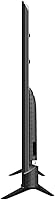
The physical construction is clean and modern enough that it does not look out of place in a well-furnished living room, and the slim profile at just over 3 inches deep sits comfortably on most TV stands. The overall fit and finish is better than what buyers typically expect at this price tier, with no widespread reports of structural defects.
The stand design and remote control are the two most commonly criticized physical elements — the remote in particular feels lightweight and plasticky in a way that does not match the screen's visual performance. Some users also note that the bezel, while thin, has minor flex when the TV is handled during setup or mounting.
Connectivity
84%
The port selection covers all practical bases for a typical home entertainment setup, with HDMI, USB, Ethernet, Wi-Fi, and Bluetooth all present and working reliably. Users connecting streaming sticks, game consoles, soundbars, and cable boxes simultaneously report having enough inputs without needing an HDMI switch.
HDMI 2.1 is absent, which limits bandwidth for the highest frame rate and resolution combinations that newer consoles can output. Bluetooth connectivity, while functional for headphones or keyboards, has drawn some complaints about occasional pairing inconsistencies during initial setup.
Value for Money
83%
Measured against what buyers actually pay — particularly in the used and clearance market where this 2021 model now circulates — the 65U6G consistently earns high marks for delivering features like Quantum Dot color, full-array local dimming, and Dolby Vision at a size and price combination that is hard to beat outright. First-time 4K buyers and households upgrading from aging 1080p sets frequently describe it as one of the better purchases they have made.
The value equation weakens if you are paying close to the original launch price in a market where 2023 and 2024 models now offer 120Hz panels and better gaming features at comparable costs. Buyers who later discover the 60Hz and local dimming limitations sometimes feel the price-to-performance ratio was not as strong as the spec sheet implied.
Setup & Ease of Use
77%
23%
Initial setup is genuinely user-friendly — Android TV walks users through the process clearly, and connecting to Wi-Fi, signing into a Google account, and accessing streaming apps typically takes under 15 minutes. Less tech-savvy buyers, including older users setting up a TV for the first time, consistently report the process as straightforward and stress-free.
Post-setup picture calibration requires some patience to get the most out of the panel, as the default picture mode is not optimized for accuracy. Users who skip calibration and stick with factory settings are often getting a noticeably different image than what the hardware is capable of.
Long-term Reliability
66%
34%
The majority of owners who have used the 65U6G for two or more years report no major hardware failures, and the panel itself holds up well under normal daily use without degradation in brightness or color consistency. Firmware updates have, over time, resolved some of the early software instability issues that affected units in the first year.
Hisense's customer support infrastructure and warranty service response times have drawn criticism from users who encountered issues, particularly outside major urban areas. The 2021 model year also raises a legitimate question about how much longer the Android TV platform will receive meaningful software support from Hisense specifically.

Suitable for:

The Hisense 65U6G 65-inch 4K Smart TV is a strong fit for buyers who want a genuinely large, color-rich screen without stretching into premium territory. If you are stepping up from a 1080p set that is several years old, the improvement in color depth and overall clarity will feel like a real leap rather than an incremental upgrade. Casual to moderate streamers — people whose primary use is Netflix, Disney+, Amazon Prime Video, or YouTube in a normally lit living room — will find the picture quality punches well above what the price suggests. Households already running Alexa or Google Assistant devices will appreciate the native integration, since the TV slots into an existing smart home setup without friction. It also works well as a secondary living room or bedroom screen where pure cinematic accuracy is less critical than size and everyday watchability.

Not suitable for:

Buyers with more demanding expectations should think carefully before committing to this Hisense QLED. The 60Hz native refresh rate is a genuine limitation for anyone who plays fast-paced competitive games or watches a lot of live sports — motion in high-action content can look soft compared to 120Hz panels now common on rival sets at similar or slightly higher prices. Home theater enthusiasts who watch a lot of content in fully darkened rooms will likely be frustrated by the local dimming performance; 60 zones across a 65-inch screen means blooming around bright objects on dark backgrounds is noticeable enough to break immersion during cinematic material. Buyers prioritizing long-term software support should also weigh the fact that this is a 2021 model, and Android TV update cadence on Hisense sets has historically been inconsistent. If picture accuracy for filmmaking content or advanced gaming features like VRR or ALLM are on your checklist, this TV does not cover those bases.

Specifications

  • Screen Size: The panel measures 64.5 inches diagonally, sold as a 65-inch class display with a 16:9 aspect ratio.
  • Resolution: Native 4K UHD resolution at 3840x2160 pixels delivers four times the pixel density of a standard 1080p screen.
  • Display Technology: LCD panel with Quantum Dot (QLED) layer and Hisense ULED processing for expanded color volume and contrast enhancement.
  • Peak Brightness: Reaches 600 nits peak brightness, which is well above average for this price tier and handles moderately lit rooms comfortably.
  • Local Dimming: Full-array local dimming with 60 independent zones allows more precise backlight control than edge-lit alternatives, though blooming can occur in demanding dark scenes.
  • Refresh Rate: Native 60Hz refresh rate, which is adequate for most streaming and casual viewing but limits performance for fast-motion gaming or live sports.
  • HDR Support: Compatible with Dolby Vision, HDR10+, and HDR10, covering the major HDR formats used across streaming platforms and physical media.
  • Audio: Built-in speakers with Dolby Atmos decoding provide a wider soundstage than standard stereo, though an external soundbar is recommended for serious listening.
  • Smart Platform: Runs Android TV, giving access to thousands of apps including Netflix, Disney+, YouTube, and the Google Play Store.
  • Voice Assistants: Supports both Amazon Alexa and Google Assistant natively via the included voice remote, allowing hands-free control and smart home integration.
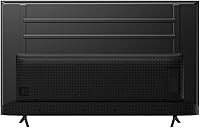
  • Connectivity: Includes HDMI, USB, Bluetooth, Wi-Fi, and Ethernet ports, covering all standard home entertainment and networking connections.
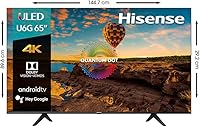
  • Dimensions: Set measures approximately 56.97″ wide, 32.87″ tall, and 3.11″ deep with stand attached.
  • Weight: Weighs approximately 44 pounds (20 kg) with stand, which is typical for a 65-inch LCD panel of this construction.
  • Power Draw: Rated at 260 watts during operation, which is within the normal range for a full-array 65-inch LCD television.
  • Special Modes: FilmMaker Mode disables motion smoothing and post-processing automatically to preserve the original frame rate, color, and aspect ratio intended by content creators.
  • Game Mode: Dedicated Game Mode reduces input lag for console connections, though the 60Hz ceiling remains a hard limit regardless of the mode activated.
  • Model Year: Released in April 2021 as part of Hisense's U6G lineup, placing it in the mid-generation QLED market segment for that year.

Related Reviews
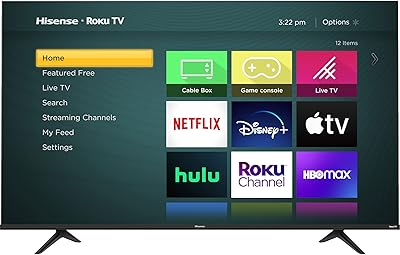
Hisense 65-Inch R6090G 4K UHD Roku Smart TV
83%
87%
Picture Quality
91%
Ease of Use (Roku Interface)
88%
Alexa Voice Control Integration
85%
Connectivity Options
72%
Sound Quality
More
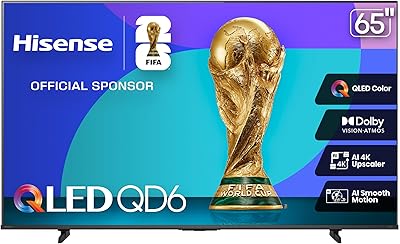
Hisense 65-inch QD6 QLED 4K Smart TV
76%
81%
Picture Quality
78%
Brightness & HDR Performance
72%
Motion Handling
76%
Gaming Performance
69%
Smart TV & Interface
More
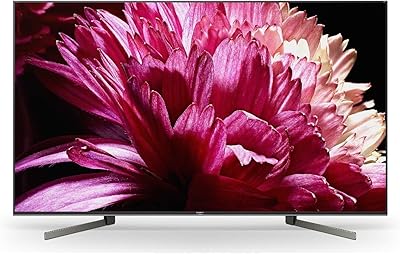
Sony X950G 65-Inch 4K Smart TV
85%
93%
Picture Quality
82%
Sound Quality
75%
Ease of Setup
88%
Smart TV Features
90%
Gaming Performance (HDR)
More
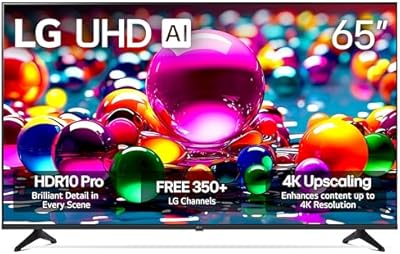
LG 65UA7700P 65-inch 4K Smart TV
83%
92%
Picture Quality
72%
Sound Quality
88%
Ease of Setup
85%
Smart Features / WebOS
90%
Gaming Performance
More
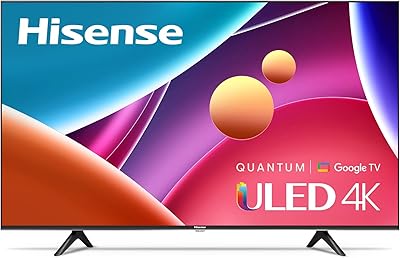
Hisense U6 65-inch Mini-LED 4K Smart TV
78%
84%
Picture Quality
91%
Gaming Performance
82%
HDR Performance
79%
Motion Handling
76%
Local Dimming & Contrast
More
Hisense 50U6G1 50-Inch ULED 4K Smart TV
82%
89%
Picture Quality
84%
Sound Quality
92%
Value for Money
91%
Setup and Installation
75%
Usability and Interface
More
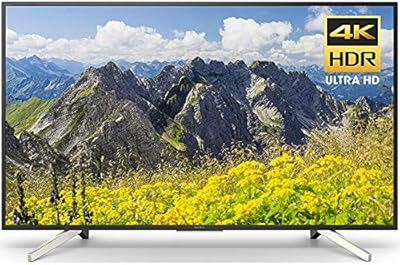
iFFALCON 65F75 65-Inch QLED 4K Smart TV
76%
83%
Picture Quality
81%
Gaming Performance
74%
HDR Performance
78%
Design & Build
86%
Smart TV & Software
More
LG 65UN7300PUF 65-inch 4K Smart UHD TV
85%
89%
Picture Quality
87%
Ease of Use
91%
Voice Control Functionality
85%
Smart Features (webOS)
92%
Value for Money
More
Samsung 65-Inch The Frame LS03F 4K QLED Smart TV
86%
91%
Picture Quality
96%
Design & Aesthetics
84%
Ease of Setup
89%
Gaming Performance
80%
Sound Quality
More
Hisense 50R7E 50-Inch 4K Roku Smart LED TV
84%
87%
Picture Quality
92%
Roku Streaming Performance
90%
Value for Money
65%
Sound Quality
70%
Brightness in Well-lit Rooms
More

FAQ

Yes, the 65U6G supports both voice assistants natively, and you can switch between them depending on your preference or existing smart home setup. Most users stick with whichever ecosystem they already use — Alexa if they have Echo devices, Google Assistant if they are on Nest or Chromecast. Both work reasonably well for basic commands, though neither is as snappy as a dedicated smart speaker.

It depends on what you play. For single-player story games, RPGs, or casual titles, 60Hz is perfectly fine and most people will never notice. Where it becomes a real limitation is competitive multiplayer gaming — first-person shooters, racing games, or anything where fast reaction times matter. If that describes your gaming habits, you would be better served by a TV with a native 120Hz panel.

It is decent but not exceptional. With 60 dimming zones across a 65-inch screen, the TV does a reasonable job improving contrast compared to edge-lit sets, but in fully darkened rooms watching movies with lots of dark scenes, you will likely notice some blooming — a faint glow around bright objects on black backgrounds. It is not a dealbreaker for most viewers, but it is noticeable enough that dedicated home theater users tend to find it frustrating.

Android TV has one of the broadest app selections of any smart TV platform, including Netflix, Disney+, Amazon Prime Video, YouTube, Hulu, Apple TV, HBO Max, and many more via the Google Play Store. The interface is similar to what you would find on a Chromecast with Google TV, so if you have used that before, it will feel familiar almost immediately.

Yes, it is VESA mount compatible, which means standard third-party wall mounts will work. Just make sure to check the specific VESA pattern before purchasing a mount, and given the TV weighs around 44 pounds, use a mount rated for that weight and have a second person help during installation.

In terms of raw specs, the 65U6G holds up well — Quantum Dot color and full-array local dimming are genuine advantages over many competitors at this price point. Samsung's own QLED lineup at comparable prices often edges ahead in software polish and long-term update support, while TCL's competing models can offer similar picture performance. Where Hisense sometimes lags is in smart TV software refinement and brand-level after-sales support, which matters more to some buyers than others.

Feedback on the remote is mixed. It includes a voice button and works fine functionally, but the build quality feels lightweight, and a fair number of owners describe it as one of the less impressive parts of the package. If the remote becomes an issue, universal remotes and third-party options are compatible with the TV.

Because this is a 2021 model running Android TV on Hisense hardware, future update support is not guaranteed long-term. Hisense has historically been inconsistent about pushing OS-level updates compared to brands like Sony. The TV should continue to function normally for years, but you may not see major Android TV version upgrades down the road.

Honestly, not much. The built-in speakers can decode Dolby Atmos signals, but the physical speaker array inside a flat-panel TV cannot reproduce the spatial audio effect Atmos is designed for. You will get marginally better stereo separation than a TV without Atmos processing, but the real benefit only shows up when paired with an Atmos-capable soundbar or home theater system.

It depends heavily on the price you find it at. At its original launch price, it was competitive. Now that it is a few years old and primarily available used or through clearance channels, it can represent excellent value if the unit is in good condition. Just factor in that you are buying aging software and a 60Hz panel in a market that has moved on — newer sets at similar prices now offer 120Hz and better gaming features. For a casual household TV, though, it still holds its own.