
Overview

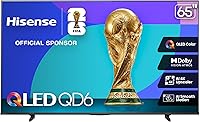
The Hisense 65-inch QD6 QLED 4K Smart TV arrived in early 2025 as Hisense’s entry into the mid-range QLED space, and it makes a strong first impression for the money. At 65 inches, it’s sized for a proper living room centerpiece rather than a secondary setup. What separates the QD6 from similarly priced rivals like TCL’s Q6 or Samsung’s entry-level QLEDs is the inclusion of both Dolby Vision and Atmos — features that typically cost considerably more. Being a 2025 launch means real-world feedback is still accumulating, so early adopter experiences carry more weight than usual here.

Features & Benefits

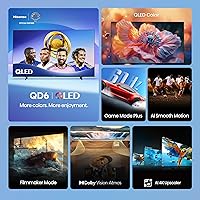
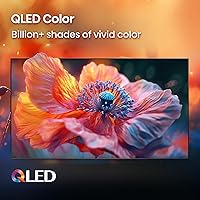
The QD6’s quantum dot panel produces noticeably richer colors than a standard LED display — greens look genuinely green, reds don’t bleed into orange, and skin tones stay grounded. Dolby Vision handles HDR tone-mapping well for a panel at this price, though black levels won’t rival OLED. The AI 4K Upscaler does a decent job cleaning up broadcast content that was never shot for a 4K screen. For gaming, VRR and ALLM are real and functional — input lag drops considerably once Game Mode Plus activates. MEMC smooths fast-motion sports, though heavy interpolation can introduce a soap-opera effect that’s worth adjusting in settings.

Best For

This 65-inch Fire TV hits a sweet spot for a specific kind of buyer. If you want a large, color-rich screen without spending flagship money, the QD6 delivers where it counts. Casual console gamers get real low-latency features that typically appear only on pricier sets. Alexa households will appreciate how naturally this TV slots into existing smart home routines — asking the remote to switch inputs or dim lights actually works without extra configuration. Sports fans benefit from MEMC keeping live action sharp. It also works well as a capable secondary TV for a den or larger bedroom.

User Feedback

Early owners of the QD6 consistently praise its color vibrancy and how bright the picture feels relative to what they paid. That said, the Motion Rate 120 label causes real frustration — the panel is natively 60Hz, and Hisense uses frame interpolation to hit that figure, not a true high-refresh panel. Worth knowing upfront. The Fire TV interface draws mixed reactions: it’s responsive and well-organized, but ad rows are impossible to remove and feel intrusive to some users. A handful of buyers also report minor Bluetooth remote pairing hiccups at first setup, though most resolve with a firmware update. Overall sentiment leans positive for the price.

Pros

  • QLED quantum dot panel delivers color vibrancy that noticeably outperforms standard LED sets at this price.
  • Dolby Vision HDR support is rare at this price tier and adds real dynamic range to compatible streaming content.
  • VRR and ALLM make the QD6 a capable casual gaming TV without requiring a premium price tag.
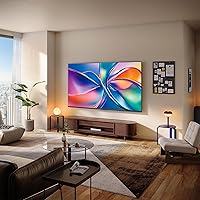
  • 65-inch screen size offers genuine cinematic scale for living rooms without a steep price premium.
  • Fire TV interface is fast, well-organized, and deeply integrated with Alexa voice control.
  • MEMC motion processing keeps live sports broadcasts sharp and blur-free during fast-paced action.
  • AirPlay 2 and Apple HomeKit support broadens ecosystem compatibility beyond Amazon devices.
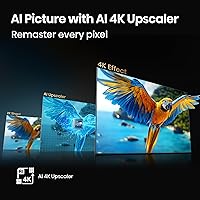
  • AI upscaling meaningfully improves the watchability of cable broadcasts and older 1080p content on a large screen.
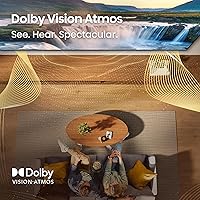
  • Dolby Atmos decoding adds appreciable audio width and depth compared to standard stereo TV speakers.
  • At 28.9 pounds, it is light enough for a straightforward two-person wall-mount installation.

Cons

  • Native refresh rate is 60Hz — Motion Rate 120 is a processed figure, not a true hardware spec.
  • Black levels and shadow detail fall noticeably short of OLED panels in dark or dimly lit rooms.
  • Fire TV home screen displays persistent ad rows that cannot be fully removed by the user.
  • Bluetooth remote pairing failures at first setup appear frequently enough in early reviews to be a real concern.
  • Built-in speakers lack bass weight, making a soundbar effectively a necessary add-on for movie watching.
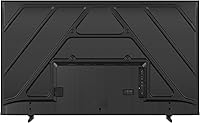
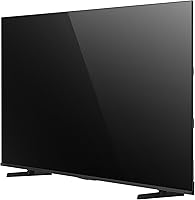
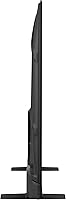
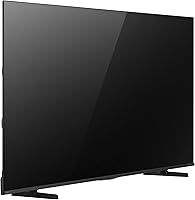
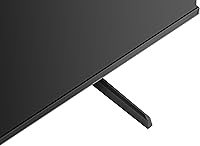
  • The center-only stand configuration is incompatible with narrower TV furniture and media consoles.
  • HDMI port bandwidth specs are not clearly documented, creating confusion when connecting multiple 4K devices.
  • Heavy MEMC settings introduce a soap-opera effect on film content that requires manual calibration to correct.
  • Alexa voice commands occasionally misfire on ambiguously titled content, requiring fallback to manual navigation.
  • As a March 2025 launch, long-term reliability and firmware stability data are still limited.

Ratings

The Hisense 65-inch QD6 QLED 4K Smart TV earns its scores from AI analysis of verified global buyer reviews, with spam, bot-generated, and incentivized submissions actively filtered out before any scoring is applied. What emerges is a clear-eyed picture of where this 65-inch Fire TV genuinely impresses and where it falls short of its marketing promises. Both the standout strengths and the recurring frustrations are reflected transparently in every category below.

Picture Quality
81%
19%
The quantum dot layer makes a real difference at this price point. Colors in nature documentaries and sports broadcasts look rich and punchy without feeling artificially oversaturated. Most buyers upgrading from a basic LED panel are genuinely struck by the improvement in color depth.
Black levels are the QD6’s weakest visual link — as expected from an LCD panel, dark scenes in movies show visible backlight glow rather than true blacks. Viewers coming from OLED sets will notice the difference immediately in dim room conditions.
Brightness & HDR Performance
78%
22%
Dolby Vision content on streaming platforms like Netflix looks noticeably more dynamic than standard HDR, with highlights in bright outdoor scenes popping well. The panel gets adequately bright for daytime viewing in a normally lit living room without washing out.
Peak brightness in HDR doesn’t quite match the spec-sheet ambition. Very bright rooms or windows behind the viewer can diminish the HDR impact, and the Dolby Vision performance, while present, doesn’t reach the levels seen on higher-tier QLED panels costing significantly more.
Motion Handling
72%
28%
MEMC processing keeps live sports and fast-action sequences reasonably sharp, which is genuinely useful for Premier League or NFL broadcasts where blur on fast panning shots would otherwise be distracting. Most sports-focused buyers rate this aspect positively for the price tier.
The Motion Rate 120 label is a source of consistent buyer frustration — the panel is natively 60Hz, and the higher number refers to processing interpolation. Heavy MEMC settings introduce a noticeable soap-opera effect on film content, so calibration time is needed to find the right balance.
Gaming Performance
76%
24%
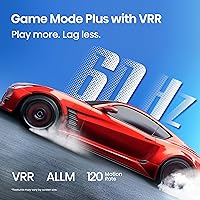
Game Mode Plus with VRR and ALLM is functional and genuinely reduces input lag to competitive levels for casual console gaming. PS5 and Xbox Series X owners report a smooth, tear-free experience during fast-paced titles when the mode is active.
The native 60Hz panel is the hard ceiling for gaming. Competitive or frame-rate-sensitive gamers who rely on 120fps output will not find it here despite the Motion Rate 120 branding. Early adopters also flagged occasional ALLM activation delays when switching between apps and game inputs.
Smart TV & Interface
69%
31%
Fire TV is genuinely responsive and the unified home screen works well for households already using Prime Video, Alexa, or Echo devices. Finding content across apps is faster than on some competing smart TV platforms, and Alexa voice commands handle input switching and volume reliably.
Persistent ad rows on the Fire TV home screen are impossible to fully remove and are one of the most cited complaints across buyer reviews. Users who watch a lot of non-Amazon content find the interface pushes Prime Video and sponsored content more aggressively than feels comfortable.
Audio Quality
74%
26%
Dolby Atmos decoding is a genuine inclusion at this price and adds an appreciable sense of width and depth to action movie soundtracks compared to standard stereo TV speakers. Dialogue clarity is above average for built-in speakers in this category.
The physical speaker output lacks real bass weight, which makes explosions and low-end music feel thin. Buyers who care about audio will want a soundbar, as the Atmos label here describes decoding capability rather than a truly immersive speaker configuration.
AI Upscaling
71%
29%
The AI 4K Upscaler handles standard-definition cable broadcasts better than expected, softening compression artifacts and sharpening edges enough that older content remains watchable on the large 65-inch panel. Streaming in 1080p also benefits noticeably.
The upscaling does introduce occasional over-sharpening on faces and fine textures, creating an artificial crispness that some buyers describe as looking processed rather than natural. It performs better on action-heavy content than on close-up dialogue scenes.
Value for Money
88%
For buyers comparing this Hisense QLED against rivals at a similar price, the combination of Dolby Vision, Dolby Atmos, VRR, and a 65-inch QLED panel is genuinely hard to beat without spending considerably more. Most owners feel the feature-to-price ratio is the QD6’s strongest argument.
The value case weakens if your priorities are black-level performance, true 120Hz gaming, or an ad-free smart TV experience. In those specific use cases, spending more on an alternative may deliver better return on investment.
Build Quality & Design
73%
27%
The QD6 has a clean, minimal bezel design that looks contemporary on a TV stand or wall mount. At under 29 pounds, it is manageable for a two-person wall-mounting job without professional help.
The stand design only offers a center-mount configuration, which can be limiting for narrower TV furniture. The plastic build feels appropriate for the price but lacks the premium material finish found on upper-tier Hisense models or Samsung’s mid-range lineup.
Setup & Installation
77%
23%
Out-of-box setup is guided by Fire TV’s well-designed onboarding flow, and Amazon account linking makes initial configuration quick for existing Prime members. The included stand assembly is straightforward with clearly labeled hardware.
Bluetooth remote pairing issues appear consistently enough in early buyer reviews to be worth flagging. A small but recurring group of owners report needing a firmware update or manual re-pair before the voice remote works reliably out of the box.
Alexa & Smart Home Integration
82%
18%
For households already running Alexa routines, the QD6 slots in naturally — controlling lights, checking sports scores mid-game, or switching HDMI inputs by voice all work without extra configuration. Apple AirPlay 2 and HomeKit support expands compatibility beyond just the Amazon ecosystem.
Alexa’s TV-specific commands occasionally misfire when content titles are similarly named or ambiguous. Non-Amazon smart home platforms get secondary treatment, and Google Home users will find the integration noticeably less polished.
Connectivity
79%
21%
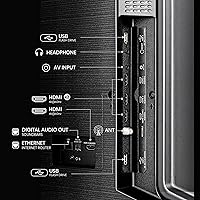
The port selection covers the practical bases: multiple HDMI inputs, USB ports for media playback, Bluetooth for headphones or keyboards, and dual-band Wi-Fi for stable streaming. ARC support on the main HDMI makes soundbar pairing clean.
The specific HDMI configuration — including how many ports support full 4K at higher bandwidth — is not clearly documented in the included materials, which has caused some confusion among buyers connecting multiple devices simultaneously.
Remote Control
66%
34%
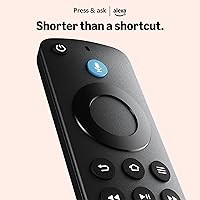
The Alexa voice remote is compact and the shortcut buttons for major streaming services reduce the number of steps to get to content. Build quality of the remote feels adequate for daily use.
Dedicated shortcut buttons are skewed toward Amazon’s own services, and there is no backlit keypad, making late-night use in a dark room unnecessarily awkward. The pairing issue mentioned in setup feedback extends to the remote specifically for a subset of early buyers.

Suitable for:

The Hisense 65-inch QD6 QLED 4K Smart TV makes the most sense for buyers who want a genuinely large, color-rich screen without stretching into premium territory. If you primarily watch Netflix, Prime Video, or live sports and you're upgrading from an older 1080p or basic LED set, the jump in color depth and overall picture vibrancy will feel substantial. Casual console gamers on PS5 or Xbox Series X who want functional low-latency features — VRR, ALLM, and a responsive Game Mode — without paying flagship prices will find the QD6 punches above its weight class. Households already running Alexa smart home routines will appreciate how naturally this 65-inch Fire TV integrates into that ecosystem, handling voice commands for inputs, volume, and connected devices without any extra setup. It also works well as a den TV or a second living room screen where absolute picture perfection matters less than size, smart features, and reliable everyday performance.

Not suitable for:

The Hisense 65-inch QD6 QLED 4K Smart TV is not the right call if deep blacks and contrast are central to how you judge picture quality. As an LCD panel, it cannot match the per-pixel dimming of OLED, and dark scenes in movies will show noticeable backlight bloom in a dim room. Competitive gamers who depend on a true native 120Hz panel for high-frame-rate titles should look elsewhere — the QD6 is natively 60Hz, and the Motion Rate 120 figure is an interpolation claim, not a hardware specification. Buyers who are sensitive to advertising on smart TV interfaces will find Fire TV’s persistent promotional rows genuinely frustrating, and there is no way to fully disable them. If your household is deeply embedded in the Google ecosystem rather than Amazon’s, the smart home integration experience will feel noticeably less cohesive. Finally, anyone expecting audiophile-grade built-in sound should budget for a separate soundbar, as the Dolby Atmos label here reflects decoding support rather than a premium speaker array.

Specifications

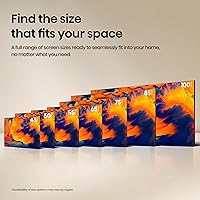
  • Screen Size: The panel measures 65 inches diagonally, making it well-suited for living rooms where viewing distances of 8 to 12 feet are typical.
  • Display Type: Uses a QLED LCD panel with a quantum dot layer that expands the color volume beyond what standard LED backlighting can produce.
  • Resolution: Native 4K UHD resolution delivers a 3840 x 2160 pixel image for sharp detail on compatible streaming, disc, and broadcast sources.
  • Refresh Rate: The panel has a native 60Hz refresh rate; the advertised Motion Rate 120 figure refers to frame interpolation processing, not a hardware 120Hz panel.
  • HDR Support: Compatible with Dolby Vision and HDR10+, covering the two most widely adopted HDR formats used by major streaming platforms and physical media.
  • Audio Format: Supports Dolby Atmos decoding, which extracts object-based spatial audio metadata from compatible streaming and disc sources for improved soundstage width.
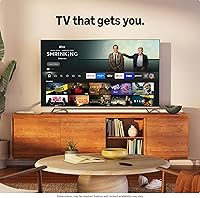
  • Smart Platform: Runs Amazon Fire TV as the native operating system, providing a unified home screen with access to major streaming apps and Alexa voice control.
  • Voice Control: Alexa is built directly into the included remote, allowing hands-free content search, smart home control, and general queries without a separate Echo device.
  • Gaming Features: Game Mode Plus includes Variable Refresh Rate (VRR) and Auto Low Latency Mode (ALLM) to reduce input lag and eliminate screen tearing during console gameplay.
  • Motion Tech: MEMC (Motion Estimation, Motion Compensation) processing interpolates frames to reduce blur during fast-motion content such as live sports broadcasts.
  • Upscaling: An AI 4K Upscaler uses machine learning models to enhance sub-4K content including standard-definition cable and 1080p streaming to near-4K clarity.
  • Connectivity: Equipped with HDMI, USB, Bluetooth, and dual-band Wi-Fi; also supports AirPlay 2 for wireless streaming from Apple devices and Apple HomeKit for smart home integration.
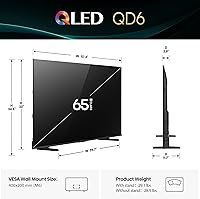
  • Dimensions: The TV body measures 57.2″ wide, 33″ tall, and 2.8″ deep without the stand attached.
  • Weight: Weighs 28.9 pounds without the stand, which is manageable for a two-person wall-mount installation without professional assistance.
  • Power Draw: Rated at 190 watts during normal operation, which is typical for a 65-inch LCD panel in this class.
  • Power Input: Designed for standard 120-volt AC household outlets, with the power cable included in the box.
  • In the Box: Package includes the TV, stand hardware, power cable, Alexa voice remote, quick setup guide, and two AAA batteries for the remote.
  • Model Number: The exact model identifier is 65QD6QF, which can be used to verify firmware updates and confirm compatibility with wall mount brackets (VESA pattern should be verified separately).

Related Reviews
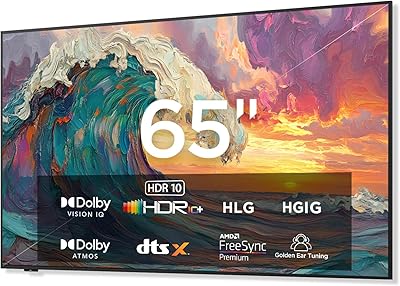
iFFALCON 65F75 65-Inch QLED 4K Smart TV
76%
83%
Picture Quality
81%
Gaming Performance
74%
HDR Performance
78%
Design & Build
86%
Smart TV & Software
More
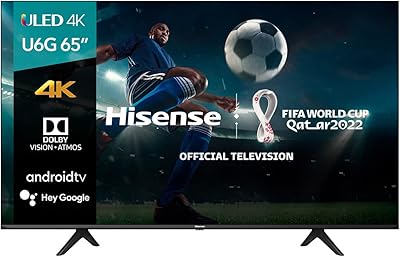
Hisense 65U6G 65-inch 4K Smart TV
70%
78%
Picture Quality
81%
Brightness & HDR Performance
62%
Local Dimming
58%
Motion Handling
53%
Gaming Performance
More
Hisense 43″ E6 QLED 4K Smart TV
76%
88%
Picture Quality
54%
Motion Handling
83%
HDR Performance
67%
Smart TV Interface
58%
Audio Performance
More
TCL 65A300W NXTVISION 65-inch QLED Smart TV
79%
93%
Design & Aesthetics
88%
Anti-Glare Performance
76%
Picture Quality
84%
Ambient & Art Display
89%
Installation & Setup
More
TCL 65Q650G 65-Inch Q6 QLED 4K Smart TV
83%
91%
Picture Quality
88%
Gaming Performance
74%
Sound Quality
68%
Ease of Setup
92%
Value for Money
More
Roku Plus Series 65-Inch 4K QLED Smart TV
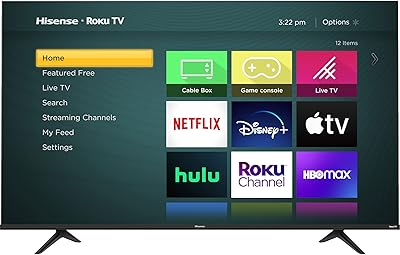
87%
94%
Picture Quality
89%
Ease of Setup
91%
Streaming Performance
88%
Design and Build
75%
Sound Quality
More
Samsung 65-Inch Neo QLED QN70F 4K Smart TV
86%
94%
Picture Quality
91%
Gaming Performance (144Hz)
86%
Smart Features & Alexa Integration
89%
Build Quality
88%
Ease of Setup
More
Hisense 65-Inch R6090G 4K UHD Roku Smart TV
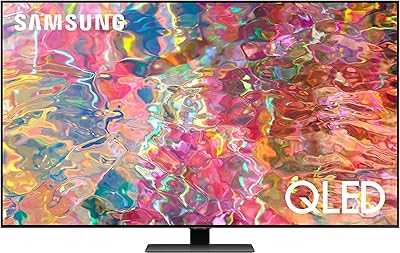
83%
87%
Picture Quality
91%
Ease of Use (Roku Interface)
88%
Alexa Voice Control Integration
85%
Connectivity Options
72%
Sound Quality
More
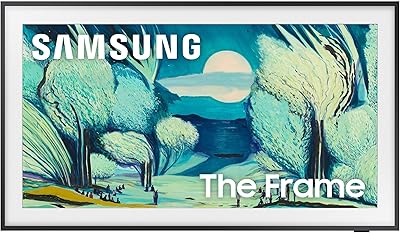
Samsung 65-Inch The Frame LS03F 4K QLED Smart TV
86%
91%
Picture Quality
96%
Design & Aesthetics
84%
Ease of Setup
89%
Gaming Performance
80%
Sound Quality
More
Samsung Q80B 65-inch QLED 4K TV
78%
88%
Picture Quality
91%
Gaming Performance
83%
HDR Performance
67%
Local Dimming
76%
Smart TV & Interface
More

FAQ

This is one of the most important things to understand before buying. The QD6 has a native 60Hz panel, meaning it physically refreshes the image 60 times per second. The Motion Rate 120 figure refers to Hisense’s frame interpolation processing, not a true hardware refresh rate. For most TV watching and casual gaming it is perfectly fine, but competitive gamers who need genuine 120fps output will need to look at a different panel.

Yes, and it works well for casual gaming. VRR and ALLM are both supported, so the console and TV negotiate low-latency mode automatically when you switch to a game. The 60Hz ceiling means you will not get 120fps gameplay, but for 60fps titles the input lag in Game Mode Plus is competitive for this price class.

Unfortunately, no. Amazon’s Fire TV interface includes sponsored content rows that cannot be fully disabled. You can rearrange the home screen to push your most-used apps to the front, which helps reduce how prominent the ads feel day to day, but they cannot be eliminated entirely. This is a known trade-off with any Fire TV-based television.

The Hisense 65-inch QD6 QLED 4K Smart TV is an LCD panel, which means it cannot turn off individual pixels the way OLED can. In a dark room, you will notice some backlight glow behind dark scenes rather than true blacks. For bright room viewing and daytime sports it holds up very well, but if most of your watching happens in a pitch-dark home theater setup, an OLED will deliver noticeably better contrast.

Yes, both AirPlay 2 and Apple HomeKit are supported. You can mirror or cast content from an iPhone, iPad, or Mac directly to the QD6 without needing an Apple TV box. HomeKit support also lets you control the TV from the Apple Home app alongside other smart home devices.

You will need a VESA-compatible wall mount bracket — check Hisense’s official documentation or the back of the TV for the exact VESA hole pattern before purchasing a bracket. At under 29 pounds, the TV itself is light enough that two people can typically handle the installation without professional help.

For most buyers the Alexa voice remote pairs automatically during initial setup. However, early buyer reports do flag occasional Bluetooth pairing failures where the remote does not connect properly straight out of the box. If that happens, the usual fix is to complete a firmware update first and then manually re-pair the remote through the TV settings menu.

The built-in speakers are adequate for casual daytime TV watching, and Dolby Atmos decoding does add some sense of width compared to plain stereo. That said, they lack real bass output, so action movies and music feel noticeably thin at higher volumes. If sound quality matters to you at all, pairing this TV with even a budget soundbar makes a meaningful difference.

It handles cable and 1080p streaming content better than you might expect on a 65-inch screen. The upscaler reduces compression artifacts and sharpens edges so that older content remains watchable at large screen sizes. It can occasionally over-sharpen faces in close-up scenes, giving skin a slightly artificial look, but for general cable viewing most buyers find it a net positive.

Both are 60Hz QLED LCD panels competing in the same budget tier, so the core display technology is closely matched. The QD6 differentiates itself with native Fire TV integration and the inclusion of both Dolby Vision and Dolby Atmos, which TCL’s Q6 lineup has not consistently offered at this price. TCL tends to score points on local dimming zone implementation in some configurations, so picture quality comparisons can shift depending on the specific model year and variant you are looking at.