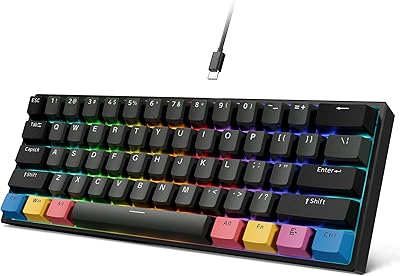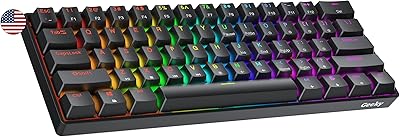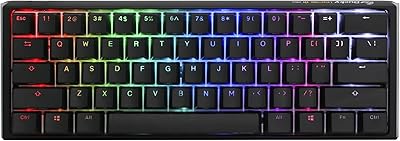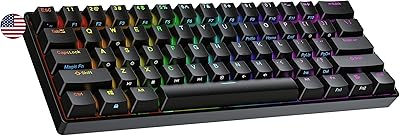
Overview

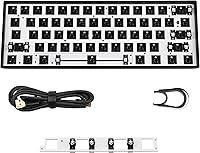
The GTSP GK61X 60% Mechanical Keyboard Kit is one of the more accessible entry points into the custom keyboard hobby, sitting in the budget-to-mid-range tier where it competes with boards like the Redragon K530 and Epomaker SK61. The kit ships with a hot-swap PCB, mounting plate, ABS case, stabilizers, and a USB-C cable — everything you need to get building. What it does not include is equally important: no switches or keycaps are in the box, so budget for those separately. The brand name on the listing is Guffercty kred, but the actual manufacturer is GTSP, worth knowing if you ever need driver support or firmware documentation.

Features & Benefits

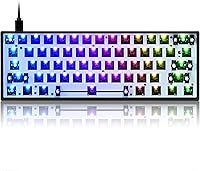
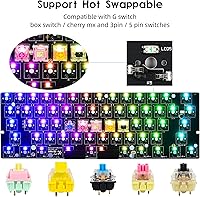
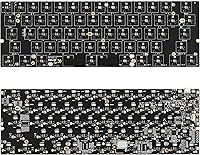
The real draw of this 60% hot-swap board is its hot-swappable PCB, which accepts both 3-pin and 5-pin switches from Cherry MX, Gateron, and Kailh. That means you can pull a switch out and drop a new one in within seconds — no desoldering, no heat gun. The per-key RGB SMD lighting is genuinely bright and customizable through downloadable driver software, though the software itself has some quirks worth noting. The 60% layout sheds the numpad, function row, and navigation cluster, freeing up a surprising amount of desk real estate. At roughly 1.1 pounds, the ABS plastic case keeps things light, though it does flex noticeably under firm typing pressure.

Best For

The GK61X kit is a natural fit for first-time builders who want to learn the hobby without risking an expensive PCB on their first solder job — the hot-swap design removes that barrier entirely. If you run a clean, minimal desk, the compact 60% footprint will feel like a revelation after years of fighting a full-size board for mouse space. Gamers who prefer a wired, low-latency connection over wireless will appreciate the USB-C setup. It also makes good sense for anyone who enjoys switch rolling — buying a few sets and rotating them to find a favorite feel and sound. It is less ideal if you rely heavily on the function row or dedicated arrow keys day to day.

User Feedback

Builders consistently praise the hot-swap sockets as reliable and tight — no wobble after repeated switch swaps, which is not always the case at this price point. The stabilizers, however, draw the most complaints. Out of the box, stab rattle is noticeable and most users recommend lubing before finishing the build. The driver software is functional but clunky, with occasional hiccups on newer Windows versions. The ABS case divides opinion: some find it adequate for a starter build, others notice a hollow sound profile that a foam mod can partially fix. A handful of users question the value proposition when competing kits surface at similar prices with better stabilizers. On balance, the kit delivers on its core promise but rewards buyers who go in prepared.

Pros

  • Hot-swap sockets accept both 3-pin and 5-pin switches, making switch changes genuinely quick and painless.
  • Broad compatibility with Cherry MX, Gateron, and Kailh switches gives you a wide selection to build around.
  • Per-key RGB SMD lighting is bright, even, and fully programmable for those willing to spend time in the driver.
  • The 60% layout frees up substantial desk space, which makes a real difference on smaller workstations.
  • USB-C connectivity with a detachable cable is a practical touch that most boards at this price still skip.
  • At around 1.1 pounds, the kit is light enough to toss in a bag without thinking twice.
  • The all-in-one bundle — PCB, plate, case, stabs, and cable — removes a lot of the sourcing headache for new builders.
  • Switch sockets hold firmly after repeated swaps, with minimal wobble reported by experienced builders.

Cons

  • Switches and keycaps are not included, so the true out-of-pocket cost is higher than the kit price alone.
  • Stock stabilizers rattle noticeably and almost always need lubing before the board sounds and feels acceptable.
  • The driver software is clunky, poorly documented, and has reported issues on newer Windows versions.
  • The ABS plastic case flexes under firm typing pressure and produces a hollow sound profile without modification.
  • RGB uniformity can be inconsistent across units, with some buyers reporting dimmer or misaligned LEDs.
  • Brand identity is muddled — listed under Guffercty kred but made by GTSP, which complicates warranty and support searches.
  • No wireless option exists, which rules it out for anyone wanting a cleaner, cable-free desk setup.
  • Value perception suffers when competing hot-swap kits appear at similar prices with better stock stabilizers.

Ratings

The GTSP GK61X 60% Mechanical Keyboard Kit scores here reflect AI-driven analysis of verified buyer reviews collected globally, with spam, bot activity, and incentivized feedback actively filtered out before scoring. Ratings are assigned across categories most relevant to this type of DIY keyboard kit, covering everything from the hot-swap experience to software reliability. Both the genuine strengths and the recurring frustrations are weighted honestly — no category has been inflated to flatter the product.

Hot-Swap Experience
88%
The hot-swap sockets are consistently praised as the kit's standout feature, with builders reporting that swapping between switch sets takes under a minute per key with a basic switch puller. Socket retention stays firm even after ten or more swap cycles, which matters a lot for enthusiasts who treat switch testing as part of the hobby.
A small number of users have reported bent pins when forcing 5-pin switches into sockets at an angle, which is usually operator error but speaks to a learning curve for first-timers. Socket longevity beyond very heavy repeated swapping is less documented, leaving some uncertainty for long-term use.
Switch Compatibility
84%
Support for Cherry MX, Gateron, and Kailh in both 3-pin and 5-pin formats gives builders access to the vast majority of mainstream switch options without worrying about compatibility. This is genuinely useful for beginners who are still deciding which switch feel they prefer.
Less common switch brands outside the big three are hit-or-miss, and the PCB does not support optical or hall-effect switches, which limits future upgrade paths for enthusiasts who want to explore beyond conventional mechanical options.
Build Quality
62%
38%
For a kit in this price tier, the overall assembly feels cohesive and the PCB itself is well-constructed with clean solder joints and consistently placed switch sockets. The mounting plate adds enough rigidity to the typing surface that the board does not feel cheap under moderate typing pressure.
The ABS plastic case flexes noticeably when pressed at the corners, and the hollow resonance it produces is a common complaint, especially from users who have typed on aluminum-cased boards before. At this price it is expected, but it does affect the perceived quality of the finished build.
Stabilizer Quality
48%
52%
The stabilizers are pre-installed and functional, which at minimum saves the hassle of sourcing and fitting them yourself. Some builders on softer switches report the rattle is tolerable enough for casual use without modification.
Stock stab rattle is the single most consistent complaint across buyer feedback — on the spacebar and larger modifier keys, the clatter is noticeable enough to undermine an otherwise decent typing experience. Nearly every experienced builder recommends lubing the stabilizers before finalizing the build, which adds time and cost.
RGB Lighting
79%
21%
Per-key SMD RGB is genuinely vibrant when paired with translucent or shine-through keycaps, and the range of programmable effects covers the basics that most users actually want — single color, reactive, and wave patterns among them. Brightness levels are competitive with prebuilt boards sold at higher prices.
LED uniformity is not perfectly consistent across units, with some buyers noticing dimmer keys or slight color shifts on individual LEDs in static lighting modes. This is less visible during animated effects but becomes apparent on solid single-color setups.
Software & Programmability
51%
49%
The driver does cover the core use cases — remapping backlight zones, setting effects, and configuring basic macros — and for users who just want to set a lighting profile and leave it, the software gets the job done after some trial and error.
The interface feels dated and is poorly documented, and compatibility issues on Windows 11 have been reported by multiple users. Mac users get no driver support at all, and there is no open-source firmware alternative officially supported, which frustrates the more technically inclined segment of the buyer base.
Typing Feel
74%
26%
With a good switch choice and lubed stabilizers installed, the GK61X kit types pleasantly — the mounting plate gives the PCB enough feedback resistance that keystrokes feel deliberate rather than mushy. Builders who spent time dialing in their switch and lube combination report being genuinely happy with the result.
The baseline typing experience before any modification is average at best, largely due to stab rattle and the resonant case. The kit rewards effort but does not deliver a polished feel out of the box the way some pricier prebuilts do.
Layout & Desk Footprint
83%
The 60% form factor is a real desk-space win for anyone running a gaming or productivity setup where mouse room matters. Gamers in particular appreciate reclaiming several inches of horizontal space that a tenkeyless or full-size board would occupy.
New users consistently underestimate how much they rely on dedicated arrow keys and the function row until they no longer have them. The adjustment period is real, and for anyone in a data-heavy workflow the missing numpad can be a dealbreaker that no amount of key remapping fully compensates for.
USB-C Connectivity
86%
The detachable USB-C cable is a thoughtful inclusion that most keyboards at this price point still skip, and it makes cable management and transport considerably easier. The wired connection itself is stable with no reported latency or dropout issues.
The stock cable is serviceable but not particularly high quality — the braid and connectors feel budget-grade and some buyers replace it fairly quickly. There is no wireless mode available, which is a genuine limitation for users who prefer a cleaner cable-free desk.
Kit Completeness
66%
34%
Having the PCB, plate, case, stabilizers, and cable bundled together removes a meaningful amount of sourcing friction for a first-time builder and keeps the initial ordering process simple. For someone new to the hobby, not having to source each component individually is a real convenience.
The omission of switches and keycaps means the advertised price is only part of what you will actually spend, and buyers who do not realize this upfront feel misled. Competing kits at similar price points sometimes bundle at least a switch sampler, making this kit feel comparatively sparse.
Value for Money
67%
33%
As a bare starting point for a custom build, the GK61X kit delivers a functional hot-swap platform at a price that does not demand a large upfront commitment. For hobbyists who already own switches and keycaps, the cost-per-feature ratio holds up reasonably well.
When you factor in the cost of switches, keycaps, and potentially stabilizer lube, the total spend climbs noticeably above the kit price alone. At that total, a few competing options in the market offer better stock stabilizers or a more refined case for a similar or only slightly higher investment.
Beginner Accessibility
81%
19%
The hot-swap design removes the single biggest barrier to entry in custom keyboard building — soldering — and the kit format means there are no compatibility puzzles to solve beyond picking a switch. Most builders report having the board assembled and functional within an hour on their first attempt.
Documentation and setup guidance are minimal, and the driver software has little in the way of helpful tutorials or tooltips. Beginners who run into stabilizer rattle or LED issues may struggle to find official support and will need to rely on community forums for troubleshooting.
Sound Profile
58%
42%
With the right linear or tactile switch installed and stabilizers properly lubed, the board can produce a reasonably satisfying typing sound that compares favorably to budget prebuilts. Builders who added case foam report a meaningful improvement in thock and reduction of echo.
Stock, the hollow ABS case amplifies ping and rattle rather than dampening it, which is a persistent complaint in builder forums. Achieving a genuinely good sound profile requires additional modifications beyond what the kit alone provides, adding both cost and effort.
Portability
77%
23%
At 1.1 pounds with a compact 60% footprint, the kit is easy to slip into a bag for travel or commuting, and the detachable cable means one less thing to worry about snagging. Remote workers who split time between home and office appreciate having a familiar keyboard that travels without hassle.
The ABS case offers no meaningful protection for the switches if the board is carried loose, and no travel case or carrying pouch is included. Without keycaps installed the exposed switch stems are also vulnerable, which matters during transport.

Suitable for:

The GTSP GK61X 60% Mechanical Keyboard Kit is a strong match for anyone taking their first real step into the custom keyboard hobby, particularly those who want to experiment with different switches without committing to a soldering setup. It works well for gamers and remote workers who run tight desk setups and genuinely benefit from losing the numpad and function row. If you are the type who enjoys tinkering — swapping in a set of tactile switches one week and linears the next — the hot-swap PCB makes that kind of exploration low-effort and low-cost. It also suits RGB enthusiasts on a budget who want per-key lighting they can customize rather than a static backlight. Anyone comfortable doing a basic stabilizer lube job will get noticeably better results and will likely find the overall package worth the price.

Not suitable for:

The GTSP GK61X 60% Mechanical Keyboard Kit is not the right choice for buyers expecting a ready-to-type experience straight out of the box — you still need to source switches and keycaps separately, which adds real cost and decision-making overhead. Users who depend on a dedicated function row, number pad, or arrow keys for their daily workflow will find the 60% layout genuinely disruptive, not just an adjustment. Professionals who need reliable, well-supported software for macro or remapping work should be cautious, as the driver has a history of inconsistent behavior across operating systems. Those who prioritize build quality and case rigidity over price will likely outgrow the ABS plastic construction quickly. If you are comparing kits side by side at this price tier and want better stock stabilizers without any tuning, other options on the market may serve you better.

Specifications

  • Form Factor: 60 percent layout with 61 keys, omitting the numpad, function row, and dedicated navigation cluster.
  • PCB Type: Hot-swappable PCB with pre-installed switch sockets compatible with both 3-pin and 5-pin mechanical switches.
  • Switch Compatibility: Works with Cherry MX RGB, Gateron RGB, and Kailh switches in both 3-pin and 5-pin configurations.
  • Lighting: Per-key RGB SMD backlighting with support for multiple programmable effects including static color and wave patterns.
  • Connectivity: Wired USB-C connection with a detachable cable included in the box.
  • Case Material: Acrylonitrile Butadiene Styrene (ABS) plastic construction for the outer case and mounting plate housing.
  • Dimensions: The assembled board measures 11.4″ long by 4″ wide by 1.4″ tall.
  • Weight: Complete kit weighs approximately 1.1 pounds without switches or keycaps installed.
  • Software: Downloadable driver software enables full backlight customization and basic macro programming on Windows.
  • Kit Contents: Box includes the hot-swap PCB, metal mounting plate, ABS case, pre-installed stabilizers, and a USB-C cable.
  • Not Included: Mechanical switches and keycaps must be purchased separately and are not part of the kit.
  • Manufacturer: Designed and produced by GTSP, marketed under the Guffercty kred brand name on retail listings.
  • Model Number: Official model designation is GK61X, shared across color variants of the same PCB and case design.
  • OS Compatibility: Driver software is primarily designed for Windows; Mac and Linux users may face limited programmability support.
  • Stabilizers: Plate-mount stabilizers come pre-installed on the PCB but are generally recommended for lubing before final assembly.
  • Release Date: The GK61X kit was first made available for purchase in August 2021.

Related Reviews
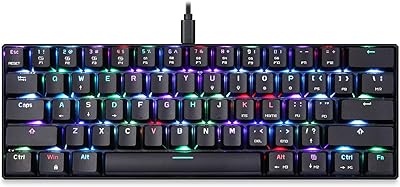
MOTOSPEED CK61 60% Mechanical Keyboard
85%
89%
Typing Experience
92%
RGB Lighting Customization
85%
Build Quality
91%
Key Switch Smoothness
94%
Portability/Size
More
Pauroty 60% Wireless Mechanical Keyboard
86%
88%
Connectivity Options
75%
Battery Life
93%
Portability
84%
Ergonomics
91%
RGB Customization
More
OHY XVX H61 60% Mechanical Keyboard
87%
87%
Build Quality
89%
Typing Experience
91%
Customization Options
85%
RGB Backlighting
92%
Ease of Setup
More
Geeky GK61 60% Mechanical Gaming Keyboard
85%
88%
Build Quality
91%
Customizability
85%
RGB Lighting
90%
Portability
80%
Typing Experience
More
Ducky One 3 Mini 60% Mechanical Keyboard
81%
91%
Build Quality
88%
Typing Sound & Acoustics
86%
Switch Feel
93%
Hot-Swap Functionality
89%
Keycap Quality
More
BOYI GMK67 65% Aluminum Alloy Mechanical Keyboard Kit
86%
89%
Build Quality
91%
Typing Experience
87%
Customization Flexibility
85%
Connectivity Options
75%
Ease of Assembly
More
YMDK GH60 GK61 RGB Hot Swap Mechanical Keyboard Kit
85%
89%
Value for Money
91%
Ease of Assembly
94%
Customization Options
85%
Switch Compatibility
88%
Build Quality
More
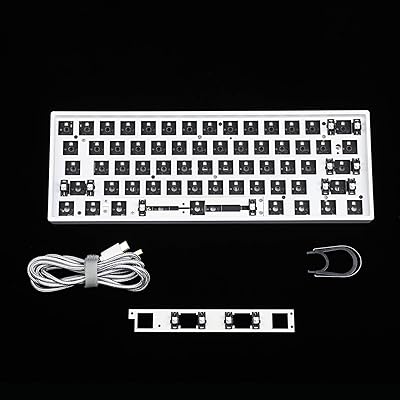
Ranked Nova N60 60% Hot Swappable Mechanical Gaming Keyboard
83%
91%
Customization Flexibility
86%
Build Quality
93%
RGB Lighting
88%
Ease of Use
65%
Keycap Quality
More
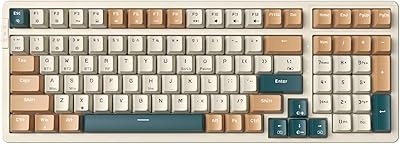
Satechi SM3 Full-Size Mechanical Keyboard
79%
91%
Build Quality
88%
Typing Experience
86%
Multi-Device Connectivity
89%
Mac Compatibility
83%
Battery Life
More
Merdia Triple Mode 100-Key Wireless Mechanical Keyboard
74%
88%
Value for Money
84%
Wireless Connectivity
81%
Typing Experience
83%
Hot-Swap Functionality
67%
Build Quality
More

FAQ

No, they do not. The kit includes the PCB, case, plate, stabilizers, and cable — but switches and keycaps are sold separately. This catches a lot of first-time buyers off guard, so make sure to budget for those components before ordering.

The hot-swap PCB is compatible with Cherry MX, Gateron, and Kailh switches, covering the most popular options in the hobby. It supports both 3-pin and 5-pin switch formats, so you have a wide range to choose from. If you buy 5-pin switches and encounter fit issues with certain keymap positions, simply clip the two additional pins — it is a common and safe practice.

The GTSP GK61X 60% Mechanical Keyboard Kit is one of the more beginner-friendly options at this price point precisely because of the hot-swap PCB — you do not need a soldering iron or any technical skill to install switches. That said, you should expect to do a bit of research on which switches you prefer and ideally lube the stock stabilizers before finishing the build for the best experience.

Almost universally, yes. The stabilizers that come pre-installed are functional but tend to rattle and feel scratchy straight out of the box. Applying a thin layer of dielectric grease or Krytox to the stabilizer wire and housing makes a noticeable difference in sound and feel. It takes about 20 minutes and is well worth the effort.

The per-key SMD RGB is genuinely bright and vibrant on most units, especially with translucent or shine-through keycaps. Some buyers have reported slight inconsistencies in LED brightness between keys, which is more noticeable on static single-color modes than on animated effects. Overall it performs well for the price tier.

The Windows driver is functional for setting lighting modes and programming basic macros, but the interface is not particularly polished and some users have run into compatibility issues on Windows 11. On macOS, the board will work as a standard HID keyboard out of the box, but the driver software itself is Windows-only, so you lose access to RGB programming and macro customization on Mac.

Yes. The kit functions as a plug-and-play keyboard on any system without the driver installed. You will lose the ability to customize lighting effects or remap keys, but for basic typing and gaming it works immediately on connection.

It is a meaningful adjustment if you are coming from a full-size or tenkeyless board. You lose dedicated function keys, arrow keys, and the numpad, all of which are accessible through function-layer shortcuts instead. Most users adapt within a week or two, but if you rely heavily on the numpad for data entry or the function row for software shortcuts, the 60% layout may not be the right fit for your workflow.

It is reasonably solid for everyday typing, but ABS plastic does flex slightly under firm pressure and the case produces a somewhat hollow sound profile compared to aluminum alternatives. For a kit in this price range, the build quality is typical — not outstanding, but not flimsy either. Adding foam inside the case is a popular modification that reduces the hollowness noticeably.

Hot-swap sockets generally hold up well for dozens of swap cycles without degrading, and many users report no issues after swapping switches ten or more times. The sockets on this kit have received generally positive feedback for retention. As with any hot-swap board, pulling switches straight out rather than at an angle will extend socket life considerably.