

Overview

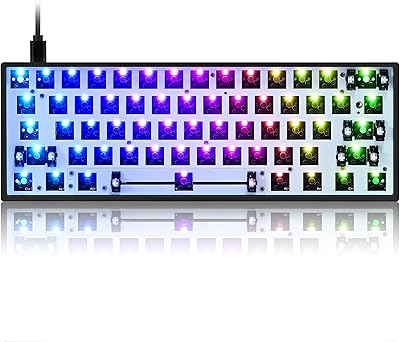
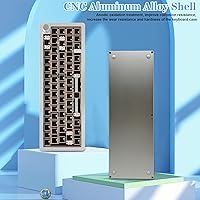
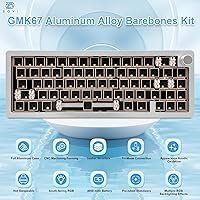
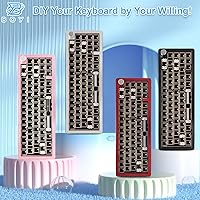
The BOYI GMK67 65% Mechanical Keyboard Kit sits in an interesting spot — it's a barebones kit built for hobbyists who want real custom keyboard quality without spending flagship money. The 65% layout keeps things compact while holding onto arrow keys, a practical compromise many typists genuinely appreciate. What stands out immediately is the CNC-machined aluminum shell — at this price tier, that kind of build rigidity is uncommon. Tri-mode wireless support across Bluetooth 5.0, 2.4GHz, and USB-C is also rare in kits at this price. One thing to be clear about upfront: switches and keycaps are sold separately, which is actually a feature — it gives you full control over how your board sounds and feels from day one.

Features & Benefits

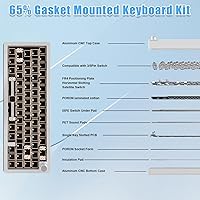
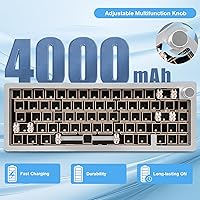
The gasket-mount construction, reinforced with PORON foam layers, is what separates this barebones keyboard kit from cheaper tray-mount alternatives. Typing on a gasket board has a noticeably softer, bouncier feel — less ping, less harshness on each keystroke. The hot-swap PCB supports both 3-pin and 5-pin switches from Cherry MX, Gateron, Kailh, and compatible brands, so you can drop in your preferred switches without a soldering iron. Tri-mode connectivity handles real daily use well: 2.4GHz for low-latency wireless, Bluetooth for device-hopping, and USB-C when reliability matters most. The 4000mAh battery handles extended wireless sessions comfortably, south-facing LEDs improve RGB visibility through keycaps, and the rotary knob adds media control that many boards at this price simply skip.

Best For

This 65% aluminum board makes the most sense for a few specific types of buyers. If you are new to the custom keyboard hobby and want a solid gasket foundation to experiment on, this kit delivers without demanding a serious financial commitment. Students and remote workers who juggle multiple devices will appreciate how the wireless modes handle different setups without much fuss. Compact desk users benefit from a layout that reclaims space without losing arrow keys. If you care about typing sound, the pre-installed foam dampening gives you a quieter starting point compared to bare PCB kits. This is less about pushing competitive gaming performance and more about building something personal and genuinely usable every day.

User Feedback

Community reception for the GMK67 kit has been largely positive, with buyers frequently noting how substantial the aluminum shell feels — a genuine surprise at this price point. The gasket flex and pre-installed foam earn specific praise once buyers settle on their switch choice and dial in their preferred sound profile. That said, not everything is universally smooth. VIA compatibility has been inconsistent across different firmware batches, so checking community forums before committing is worth your time if remapping matters to you. A handful of buyers also flag disappointment that optical switches are unsupported — mechanical only, no exceptions. Wireless latency in 2.4GHz mode satisfies most casual users, but competitive gamers still tend to prefer wired for peace of mind.

Pros

  • CNC-machined aluminum shell feels genuinely premium and rigid, outperforming plastic kits at similar price points.
  • Gasket-mount with PORON foam delivers a noticeably softer, cushioned typing feel right out of the box.
  • Hot-swap PCB supports both 3-pin and 5-pin switches, giving you broad compatibility without soldering.
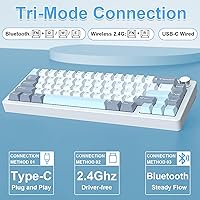
  • Tri-mode wireless covers Bluetooth 5.0, 2.4GHz, and USB-C wired — unusually versatile for this price tier.
  • The built-in 4000mAh battery handles extended wireless use without requiring constant recharging.
  • South-facing RGB LEDs produce cleaner light diffusion through most keycap sets compared to north-facing alternatives.
  • The rotary knob adds practical media control that many competing kits at this price simply omit.
  • Pre-installed foam dampening gives the GMK67 kit a better baseline sound profile than bare-PCB alternatives.
  • 65% layout retains arrow keys, striking a practical balance between compactness and everyday usability.
  • Wide device compatibility across PC, Mac, tablets, and smartphones makes this barebones keyboard kit genuinely multi-platform.

Cons

  • Switches and keycaps are not included, so the true total cost is higher than the kit price alone suggests.
  • Optical switch users are completely locked out — only mechanical switches are supported, with no exceptions.
  • VIA firmware compatibility has been inconsistent across production batches, which can frustrate users expecting smooth remapping.
  • 2.4GHz wireless latency, while acceptable for casual use, is not reliable enough for competitive or latency-sensitive gaming.
  • At 3.23 pounds, this 65% aluminum board is noticeably heavy for a compact layout, making portability less practical.
  • No switches or keycaps in the box means first-time builders must research and budget additional components before typing a single key.
  • Software customization support is not as polished or well-documented as established brands like Keychron or QMK-native boards.
  • The knob, while useful, is fixed in position and cannot be relocated to suit different hand preferences or layouts.

Ratings

Our scores for the BOYI GMK67 65% Mechanical Keyboard Kit are generated by AI after analyzing verified global user reviews, with spam, bot-submitted, and incentivized feedback actively filtered out before scoring. The ratings transparently reflect both the genuine strengths enthusiasts praise and the recurring pain points real buyers have flagged across communities and retail platforms. Every category below is weighted against real-world usage context, not manufacturer claims alone.

Build Quality
91%
The CNC-machined aluminum shell consistently earns high praise from buyers who compare it against plastic competitors at similar prices. Users routinely describe it as feeling noticeably dense and rattle-free straight out of the box, which builds confidence in the kit's longevity even before a single switch is installed.
The board's substantial weight — over three pounds for a 65% layout — catches some buyers off guard, especially those hoping to carry it between home and office regularly. A handful of users also note minor surface finishing inconsistencies around the knob cutout on some units.
Typing Feel
88%
The gasket-mount structure with PORON foam layers produces a noticeably softer, bouncier keystroke response that tray-mount boards at this price simply cannot match. Buyers who pair it with lubed linear switches frequently describe the resulting sound profile as genuinely satisfying, even by enthusiast standards.
The out-of-the-box experience before switch installation is hard to assess, and some users feel the flex is slightly more pronounced than they expected from an aluminum build. The typing feel also varies quite a bit depending on which switches and keycaps are chosen, which means the baseline experience is difficult to predict.
Wireless Performance
74%
26%
The 2.4GHz mode handles everyday tasks — web browsing, document editing, casual gaming — without any perceptible lag for most users. Being able to flip between three connection modes without re-pairing each time is a genuine convenience feature that remote workers and multi-device users appreciate in day-to-day use.
Competitive gamers testing input latency in 2.4GHz mode against wired mode report measurable differences under controlled conditions, and the consensus is that wired remains the safer choice for latency-critical play. Bluetooth mode, while stable for productivity tasks, occasionally experiences brief dropout moments reported by users on older host devices.
Value for Money
89%
Buyers consistently point out that getting an aluminum CNC case, gasket mounting, hot-swap PCB, and tri-mode wireless in a single kit at this price tier is genuinely unusual in the current market. The GMK67 kit is frequently cited in community discussions as one of the more honest value propositions in the budget-to-mid custom keyboard space.
The total build cost rises meaningfully once you factor in switches and a keycap set, which many first-time buyers underestimate when budgeting. Users who expected a complete typing experience at the listed price occasionally feel misled, even though the barebones nature is clearly disclosed in the product listing.
Software & Programmability
61%
39%
VIA compatibility gives this barebones keyboard kit a real advantage for users who want to remap keys and assign macros without diving into complex firmware flashing. When it works correctly, the visual layout editor in VIA is approachable even for complete beginners to keyboard customization.
VIA support has proven inconsistent across different firmware batches, with some units requiring manual JSON file loading or firmware reflashing to get remapping working at all. Community threads suggest this is an ongoing pain point, and buyers who expected reliable plug-and-play programmability have expressed clear frustration when their specific unit did not cooperate.
Battery Life
78%
22%
With RGB disabled or kept at low brightness, the 4000mAh battery comfortably handles several days of regular wireless use for most buyers, which compares favorably to smaller cells found in competing kits. Users who work primarily in Bluetooth mode for productivity tasks report that charging is an infrequent interruption.
Running full RGB brightness significantly reduces real-world endurance, and some buyers feel the marketed battery claims assume minimal lighting usage without making that context clear. A few users have also noted that battery drain continues slowly even when the board is supposedly idle, suggesting the sleep mode behavior could be more aggressive.
RGB Lighting
82%
18%
South-facing LEDs make a meaningful practical difference when using keycap sets with south-facing legends, producing cleaner and more even light diffusion than north-facing alternatives at this price. The sheer range of available color effects and per-key addressability gives the board a visually polished look that photographs and streams well.
Users with shine-through or top-printed keycaps may not notice a significant visual improvement over standard LED implementations, making the south-facing advantage somewhat situational. A few buyers report that the default RGB cycling animations are difficult to control without proper VIA access, which ties back to the software inconsistency issues noted elsewhere.
Hot-Swap Experience
86%
The hot-swap sockets handle repeated switch swaps well according to buyers who have cycled through multiple switch types during their build experimentation. No soldering skills are needed, and first-time builders frequently mention how accessible the installation process felt compared to their expectations going in.
A small number of users report that socket pins can feel slightly loose after many swap cycles, which is a known limitation of budget hot-swap implementations rather than a flaw unique to this kit. Optical switch users are entirely excluded from the PCB design, which is a non-negotiable hardware constraint that occasionally draws criticism in reviews from buyers who did not check compatibility beforehand.
Sound Profile
83%
The pre-installed foam dampening gives this 65% aluminum board a noticeably quieter starting baseline than comparable bare-PCB kits, which open-plan office users and bedroom typists both appreciate. Community sound tests consistently show that the kit responds well to additional modifications like tape mod or PE foam for those who want to push the acoustic quality further.
Without switches and keycaps installed, it is impossible to evaluate the final sound profile before committing to a switch choice, which adds an element of uncertainty to the build process. The aluminum case can amplify higher-pitched switch sounds more than a polycarbonate or ABS shell would, which is worth considering when selecting switches.
Connectivity Versatility
87%
Having all three connection modes — Bluetooth 5.0, 2.4GHz, and USB-C wired — in a single kit allows buyers to cover genuinely different use cases without buying separate boards. Students and remote workers who switch between a workstation, personal laptop, and tablet throughout the day find this flexibility practically useful rather than just a spec checkbox.
The 2.4GHz dongle adds a small USB receiver to manage, which is a minor inconvenience for users with limited USB ports or those who use the keyboard across multiple computers. Bluetooth device memory capacity is functional but not deeply featured compared to higher-end wireless boards that support more stored profiles.
Knob Functionality
76%
24%
The rotary encoder knob is a thoughtful inclusion that many competing kits at similar prices skip entirely, and buyers who use it for volume control during media consumption or video calls find it genuinely convenient after a short adjustment period. It feels mechanically solid with no reported wobble issues in the majority of user accounts.
The knob position is fixed by the case design and cannot be relocated, which some left-handed users or those with non-standard desk setups find slightly awkward. Programming the knob to perform custom functions beyond the defaults requires VIA access, which as noted carries its own reliability caveats.
Beginner Friendliness
84%
The no-solder hot-swap PCB removes the single biggest technical barrier for newcomers to the custom keyboard hobby, and the gasket-mount foundation means beginners start with a quality base rather than an entry-level compromise. Online communities have embraced this kit as a recommended starting point precisely because the build process is manageable for someone doing it for the first time.
New builders still need to independently research and purchase compatible switches and keycaps, which requires a learning curve around compatibility, pricing, and aesthetic preferences that the kit itself does not guide you through. VIA configuration issues can also frustrate beginners who expected plug-and-play programmability without any troubleshooting.
Portability
58%
42%
The compact 65% footprint makes the physical desk footprint small enough to work comfortably on a crowded desk or in a shared workspace, and the wireless modes eliminate cable management entirely for users who do not need wired performance.
At 3.23 pounds, this barebones keyboard kit is noticeably heavy for its size, making bag-based commuting less comfortable than users anticipate when ordering based on the 65% layout size alone. The aluminum construction that earns high marks for rigidity is directly responsible for the weight penalty, so there is no easy resolution to this trade-off.

Suitable for:

The BOYI GMK67 65% Mechanical Keyboard Kit is a strong fit for anyone taking their first real steps into custom keyboard building who wants a legitimate foundation rather than a toy-grade starter kit. The gasket-mount structure and hot-swap PCB mean you can experiment with different switches over time without needing any soldering skills, which lowers the barrier to learning significantly. Students and remote workers who operate across multiple devices will find the tri-mode wireless particularly practical — switching between a laptop, tablet, and phone without cable management headaches is genuinely useful in daily life. The compact 65% layout works especially well for people with limited desk space who still need arrow keys for navigation-heavy tasks like spreadsheet editing or coding. Anyone drawn to the tactile and acoustic side of keyboard customization will also appreciate starting with a pre-foamed gasket base that already sounds better out of the box than most budget alternatives.

Not suitable for:

Buyers who want a ready-to-type keyboard they can plug in and use immediately should look elsewhere — the BOYI GMK67 65% Mechanical Keyboard Kit is a barebones kit, meaning switches and keycaps are sold separately, and budgeting for those components is non-negotiable. If you rely on optical switches specifically, this kit does not support them, which is a hard technical limitation with no workaround. Competitive gamers who prioritize absolute minimum input latency will find that wired remains the only truly reliable option for high-stakes play, and if wireless gaming is your primary use case, managing those expectations matters. Users who need a full-size or tenkeyless layout for heavy numpad use will find the 65% footprint simply too limiting regardless of how good the build quality is. Finally, anyone expecting plug-and-play VIA remapping without any troubleshooting should be aware that firmware compatibility has varied across production batches, so some technical patience may be required.

Specifications

  • Layout: 65% compact form factor with a dedicated arrow key cluster, offering a reduced footprint without sacrificing navigation keys.
  • Dimensions: The board measures 12.6″ long by 4.7″ wide by 1.6″ tall, making it well-suited for tighter desk setups.
  • Weight: The assembled kit weighs 3.23 pounds, reflecting the density of its full aluminum alloy construction.
  • Case Material: The outer shell is CNC-machined from aluminum alloy, providing a rigid, rattle-free structure uncommon at this price tier.
  • Mount Style: Gasket-mounted design uses PORON foam gaskets between the plate and case to absorb vibration and soften the typing feel.
  • Plate Material: Includes an FR4 fiberglass plate as the primary option, with a polycarbonate plate also available for a slightly more flexible sound profile.
  • PCB Type: Hot-swap PCB accepts both 3-pin and 5-pin mechanical switches without soldering, using standard MX-footprint hot-swap sockets.
  • Switch Support: Compatible with Cherry MX, Gateron, Kailh, and most MX-style mechanical switches; optical switches are not supported.
  • Connectivity: Supports three connection modes: Bluetooth 5.0, 2.4GHz wireless via USB dongle, and wired USB-C.
  • Battery: Built-in 4000mAh lithium-ion battery powers wireless operation and is recharged via the USB-C port.
  • RGB Lighting: South-facing SMD LEDs support up to 16.8 million colors, with the south-facing orientation improving light diffusion through most keycap profiles.
  • Knob: A multifunction rotary encoder knob is included and can be programmed to control volume, media playback, or other mapped functions.
  • Software: VIA-compatible firmware allows key remapping and macro assignment, though compatibility should be verified against your specific firmware batch.
  • Key Rollover: Supports full N-key rollover (NKRO) in wired mode, ensuring every simultaneous keypress is registered accurately.
  • Compatible Devices: Works with PC, Mac, laptops, tablets, smartphones, and gaming consoles across all three connection modes.
  • What Is Included: The kit ships with the keyboard case, PCB, and plate assembly — switches and keycaps are sold separately and not included.
  • Battery Indicator: An onboard LED indicator displays the current battery status, alerting the user when a charge is needed.
  • Wireless Standard: The 2.4GHz mode uses a proprietary USB nano-receiver dongle for low-latency wireless performance suitable for general and productivity use.

Related Reviews
Higround Trailhead 65% Mechanical Gaming Keyboard
80%
91%
Out-of-Box Sound Quality
88%
Switch Feel & Smoothness
84%
Build Quality & Weight
61%
Stabilizer Quality
89%
Hot-Swap Functionality
More
BOYI K104Pro Retro Mechanical Keyboard
78%
88%
Typing Feel
84%
Switch Performance
71%
Wireless Reliability
79%
Battery Life
86%
Keycap Quality
More
GTSP GK61X 60% Mechanical Keyboard Kit
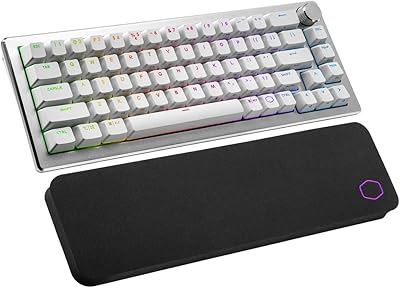
72%
88%
Hot-Swap Experience
84%
Switch Compatibility
62%
Build Quality
48%
Stabilizer Quality
79%
RGB Lighting
More
Cooler Master CK721 65% Wireless Mechanical Keyboard
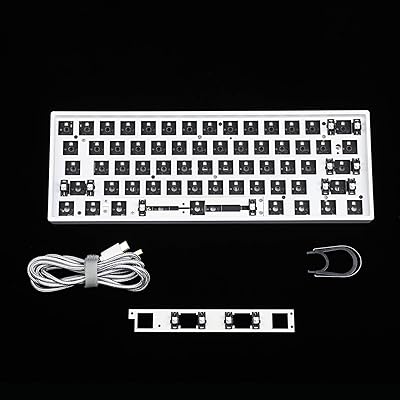
77%
84%
Build Quality
81%
Wireless Performance
83%
Typing Experience
61%
Battery Life
53%
Software (MasterPlus+)
More
YMDK GH60 GK61 RGB Hot Swap Mechanical Keyboard Kit
85%
89%
Value for Money
91%
Ease of Assembly
94%
Customization Options
85%
Switch Compatibility
88%
Build Quality
More
Higround Basecamp 65% Mechanical Gaming Keyboard SKYSTONE - White Flame Switch
87%
88%
Build Quality
91%
Typing Experience
93%
Customization Options
90%
RGB Lighting
86%
Ease of Use
More
ZIYOU LANG RK-T8PR0 65% Mechanical Gaming Keyboard and Mouse Combo
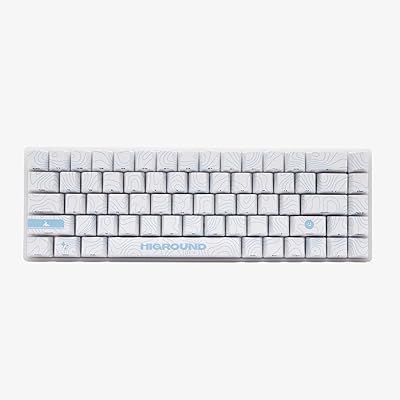
86%
87%
Build Quality
90%
Ergonomics
93%
RGB Lighting Customization
68%
Mouse Responsiveness
88%
Compatibility
More
Merdia Triple Mode 100-Key Wireless Mechanical Keyboard
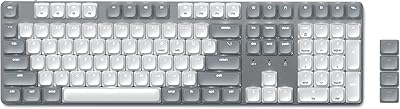
74%
88%
Value for Money
84%
Wireless Connectivity
81%
Typing Experience
83%
Hot-Swap Functionality
67%
Build Quality
More
Satechi SM3 Full-Size Mechanical Keyboard
79%
91%
Build Quality
88%
Typing Experience
86%
Multi-Device Connectivity
89%
Mac Compatibility
83%
Battery Life
More
MOTOSPEED CK61 60% Mechanical Keyboard
85%
89%
Typing Experience
92%
RGB Lighting Customization
85%
Build Quality
91%
Key Switch Smoothness
94%
Portability/Size
More

FAQ

You will need to purchase switches and keycaps separately — the kit includes only the case, PCB, and plate. Think of it as the foundation for your build. Most buyers pair it with budget-friendly switches like Gateron Yellow or Akko switches to keep total costs reasonable.

Not at all. The PCB uses hot-swap sockets, so you simply push switches in by hand until they click into place. No tools, no soldering iron, no technical background required. It is genuinely one of the more beginner-friendly builds available at this price point.

Almost certainly, yes. The GMK67 kit uses a standard MX-footprint hot-swap PCB, so any MX-compatible keycap set will fit. The one thing worth noting is that the south-facing LEDs pair best with keycaps that have legends on the south-facing side of the key, which is common in most modern keycap sets.

The 2.4GHz mode performs well enough for casual and even moderately competitive gaming, and most users report no noticeable lag during regular play. That said, for truly latency-sensitive competitive gaming, wired USB-C remains the more reliable choice. Bluetooth is best reserved for productivity and multi-device switching rather than gaming sessions.

Real-world battery life depends heavily on whether your RGB is on and at what brightness level. With RGB off or dimmed, most users report multi-day to week-long usage between charges. With RGB running at full intensity, expect considerably shorter sessions. The 4000mAh capacity is on the generous side for this class of keyboard, so most casual users are satisfied.

Yes, the board works on both platforms. You may need to remap a few keys to match Mac conventions — swapping Alt and Command, for example — which you can do through the VIA software. Bluetooth pairing works on macOS without any additional drivers.

FR4 is a stiffer material that produces a crisper, more defined keystroke sound, while polycarbonate (PC) is slightly more flexible and tends to produce a softer, higher-pitched sound profile. Neither is objectively better — it comes down to your personal preference for how your board sounds and feels under your fingers.

Yes. Bluetooth 5.0 pairing works with iOS and Android tablets, and the board can store multiple Bluetooth profiles so you can switch between devices without re-pairing each time. It is a genuinely practical setup for anyone who writes or takes notes across different devices.

VIA is a browser-based or desktop tool that lets you remap keys, create macros, and adjust lighting without flashing new firmware. The BOYI GMK67 65% Mechanical Keyboard Kit is listed as VIA-compatible, but it is worth checking community forums to confirm your specific firmware version is supported before counting on it. When it works, the interface is visual and approachable even for beginners.

Yes, quite a bit actually. The gasket mount and pre-installed foam already do a lot of the heavy lifting compared to bare-PCB kits, but switch choice makes the biggest difference. Linear switches with factory lube, or pre-lubed options like Gateron Milky Yellow, will noticeably reduce noise. You can also add PE foam or tape mod the PCB if you want to go further, and this kit is well-suited for both modifications.

Where to Buy