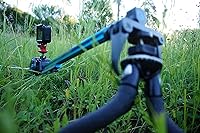
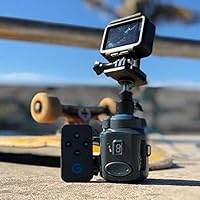
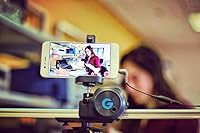
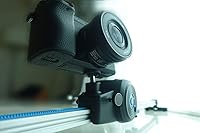
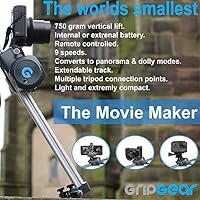
Overview

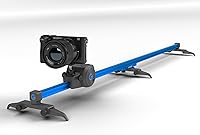
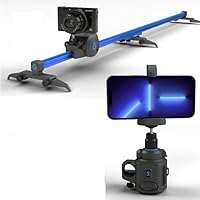
The Grip Gear MovieMaker Motion Control Camera Slider is a pocket-sized motion control tool built for solo creators who want cinematic movement without hauling a full rig on the road. It pulls double duty as both a linear slider and a panorama mount — reposition the motor and you shift between two completely different shot types without buying separate gear. Crucially, it runs with no app required, which puts it ahead of Bluetooth-dependent competitors that need your phone just to start a move. Grip Gear has noted use by National Geographic crews, adding some credibility, though this compact slider is clearly aimed at enthusiast creators, not broadcast productions.
Features & Benefits

The standout feature on this 2-in-1 slider is the Ping Pong mode, which bounces the camera back and forth on a loop automatically — useful for interview setups or repeating B-roll that needs constant movement without a crew. Swapping the motor between positions converts it from a linear track shot to a full panoramic pan in just a few minutes. The USB-rechargeable battery covers roughly 2.5 hours of shooting, which is enough for most single-location sessions. It handles iPhones, Androids, GoPros, and lighter mirrorless bodies across multiple mount orientations — horizontal, vertical, or inverted. The base track is about 20 inches; longer tracks reaching up to 6 meters are sold separately.

Best For

This compact slider hits a real sweet spot for travel vloggers and run-and-gun creators who shoot light and move quickly. It works particularly well for time-lapse sequences and looping social content — the kind of slow, controlled motion that adds visual interest to YouTube or Instagram Reels without requiring a full production setup. Beginner filmmakers will appreciate the zero-software approach; there is nothing to configure beyond pressing a button. Still photographers crossing over into video will find the entry point refreshingly low. One honest caveat: if you regularly use heavier full-frame mirrorless cameras, you may hit the weight limits this motion control kit was designed around.

User Feedback

Buyers consistently highlight how fast the motion control kit sets up compared to full-size sliders — that quick-deploy experience is the most praised aspect by a clear margin. Build quality earns solid scores for the price, with the reinforced joints holding up well under regular use. Battery life largely aligns with the 2.5-hour claim during normal sessions, though creators doing long outdoor time-lapses have noted it can fall short. The recurring complaint is motor noise, which becomes a problem when shooting in quiet interview or voiceover settings where the mic picks it up. A smaller group noted that heavier mirrorless bodies can feel unstable on the base track length.

Pros

  • No app or Bluetooth required — just mount and press start, which alone separates it from most competitors.
  • Converts between a linear slider and a panorama mount by repositioning the motor, giving you two tools in one kit.
  • Ping Pong auto-loop mode lets solo creators set a continuous move and step in front of the camera hands-free.
  • Fits in a backpack without dedicated case padding, making it one of the most packable motion control options available.
  • USB recharging is a practical convenience that eliminates the need for spare disposable batteries on location.
  • Works with iPhones, Android phones, GoPros, and lighter mirrorless cameras without requiring additional adapters for most setups.
  • Vertical and inverted mounting opens up overhead and low-angle shot types that fixed sliders simply cannot offer.
  • Build quality has held up well for creators using it regularly across travel and outdoor shoots over extended periods.
  • The learning curve is short enough that most buyers are shooting usable footage within the first session.

Cons

  • Motor noise is loud enough to bleed into audio recordings in quiet interview or indoor podcast environments.
  • The base track length limits shot travel distance; longer moves require purchasing extension tracks at additional cost.
  • Heavier mirrorless cameras with large lenses push the slider toward its stability ceiling, producing visible jitter in footage.
  • Battery performance drops noticeably in cold outdoor conditions, falling short of the stated runtime during extended time-lapses.
  • Adjusting speed or direction mid-shoot requires physically reaching the unit, which disrupts solo shooting flow.
  • No wireless remote is included or officially available as an add-on, a gap that competing products at this price tier have closed.
  • Panning speed range bottoms out faster than ideal, limiting very slow cinematic sunrise or sunset arc shots.
  • Some phone mounts for wider or larger smartphone models require third-party adapters not included in the box.
  • The motor housing uses plastic components that feel inconsistent with the otherwise solid metal track construction.

Ratings

The scores below for the Grip Gear MovieMaker Motion Control Camera Slider were generated by our AI system after analyzing verified purchase reviews from buyers worldwide, with spam, bot-submitted, and incentivized feedback actively filtered out before any score was calculated. What you see reflects the real distribution of opinion — the genuine highlights and the recurring frustrations that actual creators experienced in the field. Both sides of the story are represented here, so you can make a confident, informed call before buying.
Portability & Form Factor
93%
Creators consistently describe pulling this compact slider out of a backpack or carry-on with zero fuss — it genuinely fits where full-size rigs do not. Travel vloggers shooting in airports, markets, or tight hotel rooms repeatedly call out its size as the single biggest reason they chose it over competing options.
A small group of users noted that at nearly 2 pounds, it is not ultralight by mirrorless shooter standards, especially when paired with a heavier camera body and tripod. Those counting every gram for hiking or backpacking trips may find the combined kit weight adds up faster than expected.
Ease of Setup
91%
The no-app-required operation is the most praised aspect across hundreds of reviews — buyers coming from Bluetooth-dependent sliders describe the switch as a genuine relief. Mount the camera, press a button, and you are rolling; there is no firmware pairing, no connectivity drop, no phone dependency whatsoever.
A handful of users found the motor-swapping process between slider and panorama modes slightly fiddly the first few times, particularly when working alone in the field. Once you have done it a few times it becomes second nature, but the first outing without reading the manual carefully can produce some frustration.
Motion Smoothness
78%
22%
For lightweight setups — smartphones, GoPros, and compact mirrorless bodies — the linear slides and panoramic pans come out impressively smooth on camera. Time-lapse sequences and slow B-roll moves consistently produce usable, professional-looking footage that holds up well on YouTube and social platforms.
Load the track with a heavier full-frame mirrorless body and smoothness degrades noticeably, with some users reporting micro-jitter in longer slide movements. The motor was clearly optimized for lighter payloads, and pushing it beyond that comfort zone shows up plainly in the final footage.
Motor Noise
54%
46%
In outdoor environments or scenarios where ambient sound is present, the motor hum stays buried well enough that it rarely causes a problem in practice. Creators shooting travel content, street scenes, or nature footage generally report no issue with the noise floor at all.
In quiet interview setups, podcast recordings, or any situation where a directional mic is running nearby, the motor noise becomes a recurring and serious complaint. Multiple reviewers specifically flagged that they had to either reposition the slider farther from the mic or abandon certain shot types altogether during dialogue-heavy recordings.
Build Quality
82%
18%
The reinforced joints and solid track construction earned consistent praise from creators who put this 2-in-1 slider through regular travel use over months. Several long-term reviewers noted that the unit held up well through bag drops, outdoor humidity, and the general wear of a working creator kit.
A small but vocal group reported loosening at the joint connections after extended use, particularly on units used daily rather than occasionally. The plastic components on the motor housing also drew some criticism from buyers who felt the overall build did not fully match the mid-range price point.
Battery Life
74%
26%
For typical single-location shoots — an afternoon session, a corporate event, or a day of travel vlogging — the USB-rechargeable battery holds up reliably and the USB recharge is a practical convenience. Most users doing standard creative work report the runtime aligns closely with the stated specification.
Creators running extended outdoor time-lapses, particularly in colder temperatures, found real-world runtime falling noticeably short of the 2.5-hour claim. A few buyers also noted that the battery indicator provides minimal feedback, making it hard to judge remaining charge mid-shoot without simply running it down.
Camera Compatibility
79%
21%
The range of supported gear is genuinely broad — iPhones, Android devices, GoPros, and lighter mirrorless cameras all mount cleanly using the multiple quarter-inch thread points built into the track. Creators switching between a GoPro for action content and a Sony mirrorless for more polished work appreciated not needing separate rigs.
Heavier mirrorless bodies, particularly full-frame cameras with larger lenses attached, push the motion control kit toward its stability limits and occasionally beyond them. Phone mount compatibility also drew some criticism, with users noting that wider or larger-format smartphones required additional third-party adapters not included in the box.
Ping Pong Mode Usefulness
83%
The automatic back-and-forth loop mode earned genuinely enthusiastic feedback from creators doing talking-head content, product showcases, and looping social videos. Being able to set a continuous move and then step in front of the camera without touching the device again is a real practical advantage for solo operators.
Some users found the bounce endpoints slightly abrupt rather than eased, which creates a small jolt visible in footage if the move is not carefully framed and edited around. A few reviewers also noted the mode is less useful at the base track length, where the travel distance between endpoints feels limited.
Track Length (Base)
61%
39%
For close-up product shots, portrait reveals, and short lateral moves on a desk or tabletop, the base 20-inch track covers the most common use cases competently. Creators working in confined spaces — small studios, apartments, or vehicle interiors — often found the base length appropriate for their actual needs.
A significant number of buyers expressed frustration that meaningful longer shots require purchasing extension tracks sold separately, which adds cost that was not always clear at the point of purchase. The base track feels limiting for landscape time-lapses or wide establishing shots where a longer travel distance would meaningfully improve the visual result.
Value for Money
77%
23%
Stacked against single-function sliders at a similar price, the dual-mode design offers measurable extra utility that buyers who actually use both modes tend to appreciate. For beginner and intermediate creators stepping into motion control for the first time, the entry cost feels proportionate to what the kit delivers.
Experienced shooters comparing this against dedicated sliders in the same bracket often feel the motor and track quality do not quite justify the price when the extension tracks are factored in. If you need longer shots regularly, the real total cost climbs faster than the initial listing suggests.
Panorama Mode Quality
76%
24%
Smooth 360-degree and partial-arc pans for time-lapse and hyperlapse work are where the panorama configuration genuinely earns its place, particularly on lighter smartphone and GoPro setups. Landscape and architectural photographers crossing into video found this mode opened up shot types they could not achieve with a standard slider alone.
Heavier camera rigs introduce wobble during panoramic moves that lighter setups avoid entirely, narrowing the effective use case for creators shooting with larger mirrorless systems. A few users also found the panning speed range limited, with the slowest available speed still moving faster than ideal for very long, cinematic sunrise or sunset pans.
Solo Creator Usability
88%
The combination of one-button operation, no app dependency, and the Ping Pong auto-loop makes this one of the most genuinely solo-friendly motion control options available at its price tier. Single-operator creators repeatedly describe being able to set a move, walk around to the front of the camera, and shoot without any assistance.
Adjusting move parameters mid-shoot — changing speed or reversing direction — still requires physically reaching the unit, which can interrupt a solo shooting flow if the slider is mounted at an awkward angle. A wireless remote option would address this, but none is currently included or officially offered as an accessory.
Learning Curve
89%
Unlike app-controlled competitors that require onboarding across multiple software screens, most buyers describe being up and running with the motion control kit within minutes of opening the box. The physical, button-driven interface is intuitive enough that even creators with no prior slider experience rarely mention confusion past the first session.
The motor-swapping process to toggle between slider and panorama modes has a brief but real adjustment period, and the included documentation varies in quality according to some reviews. A clearer quick-start visual guide would help first-time users avoid the trial-and-error period a minority of buyers described.
Mounting Flexibility
81%
19%
The ability to run the track vertically or inverted — not just flat on a tripod — opened up genuinely creative shot options that buyers commented on specifically, particularly for overhead product videos and low-angle ground shots. The multiple quarter-inch thread points give solid integration with most standard tripod heads and magic arms.
A few users noted that inverted mounting with heavier cameras introduced vibration the flat horizontal orientation did not produce, limiting this flexibility in practice for anyone shooting with more than a compact mirrorless or action camera. Accessory compatibility with non-standard mounts also required workarounds that were not immediately obvious from the packaging.

Suitable for:

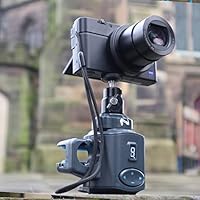
The Grip Gear MovieMaker Motion Control Camera Slider is built for the kind of creator who shoots alone, moves often, and needs cinematic motion without a dedicated camera assistant or a van full of gear. Travel vloggers will find it fits naturally into a carry-on or day bag alongside their main kit, and the one-button operation means less time troubleshooting and more time capturing. Social media creators producing time-lapse content, looping B-roll, or slow panning shots for Instagram Reels and YouTube will get strong, repeatable results from this 2-in-1 slider without needing to learn complex software. Beginner filmmakers stepping into motion control for the first time will appreciate that there is no app to configure, no Bluetooth connection to maintain, and no steep ramp-up period before the footage starts looking polished. Still photographers crossing into video work will also find this motion control kit a low-risk, practical entry point that immediately broadens the visual range of their output.
Not suitable for:

The Grip Gear MovieMaker Motion Control Camera Slider was not designed to carry heavy full-frame mirrorless cameras with large lenses attached, and buyers who shoot that way regularly will hit its weight and stability limits quickly. Professional videographers or cinematographers who need cinema-grade smoothness, precise programmable speed ramps, or multi-axis motion control will find this compact slider underpowered for their workflow. If you plan to record dialogue, interviews, or podcast-style content in a quiet room, the motor noise is a genuine operational problem that has frustrated enough users to be taken seriously. The base 20-inch track also matters: anyone expecting long, sweeping landscape or architectural shots out of the box needs to know that extended track sections are sold separately, adding real cost to the total package. If your budget is already stretched, factoring in those optional extensions may shift the value equation considerably.
Specifications

  • Dimensions: The unit measures 2 x 20 x 3 inches in its standard configuration, making it compact enough to slip into most camera bags without dedicated padding.
  • Weight: The complete kit weighs 1.87 pounds, which is light enough for daily travel carry but worth accounting for when combined with a full tripod and camera body.
  • Track Length: The base track spans 20 inches; optional extension tracks are sold separately and can expand the total travel distance up to 6 meters.
  • Motion Modes: Three motion modes are supported: linear slide, panoramic pan, and Ping Pong loop, which automatically bounces the camera back and forth between two set endpoints.
  • Battery Type: The unit is powered by a 1 x 9V battery (included) and features a USB-rechargeable internal cell that supports approximately 2.5 hours of continuous operation per charge.
  • Charging Method: Recharging is handled via USB, eliminating the need for proprietary chargers or disposable battery replacements during typical shooting sessions.
  • Camera Compatibility: The slider is compatible with iPhones, Android smartphones, GoPro action cameras, and lighter mirrorless cameras via standard quarter-inch threaded mount points.
  • Mount Points: Multiple quarter-inch threaded ports are distributed along the track, allowing flexible positioning of cameras, accessories, and third-party mounting hardware.
  • Mounting Orientations: The kit supports horizontal, vertical, and inverted mounting configurations, enabling overhead, low-angle, and conventional eye-level shot setups.
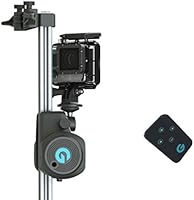
  • App Requirement: No companion app or Bluetooth connection is required; all motion modes and settings are controlled directly through physical buttons on the unit.
  • Motor Design: The motor unit is modular and can be repositioned between the slider track and the panorama mount base to switch between the two primary motion modes.
  • Manufacturer: The product is manufactured by Grip Gear Ltd, a company with production experience serving professional crews including National Geographic field teams.
  • Model Number: The official model number is 76216, and the Amazon ASIN is B075S79Q9C for reference when sourcing accessories or replacement parts.
  • Availability: The product has been commercially available since January 2019 and is confirmed as not discontinued by the manufacturer as of the latest listing data.
  • Market Rank: The kit holds a Best Sellers Rank of approximately #48 in the Camera Sliders category on Amazon, placing it among the top-ranked options in its segment.
  • Mounting Accessory: A panorama mount base is included in the kit, allowing the motor to be transferred from the slider track for 360-degree and partial-arc panning shots without purchasing a separate head.

Related Reviews
GVM Motorized Camera Slider 31″
86%
92%
Smoothness of Motion
85%
App Control Experience
90%
Portability and Weight
88%
Build Quality and Durability
84%
Ease of Setup and Use
More
GVM 120cm Motorized Carbon Fiber Camera Slider
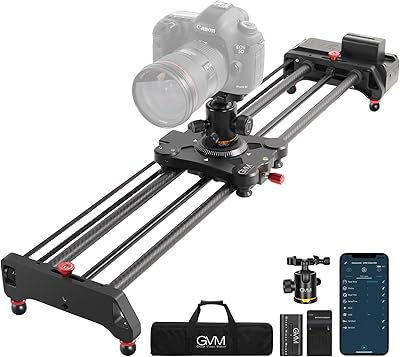
79%
88%
Motion Smoothness
83%
Build Quality
67%
App Control & Connectivity
91%
Shooting Mode Versatility
86%
Portability & Weight
More
Zecti ZT-706 47″ Motorized Camera Slider
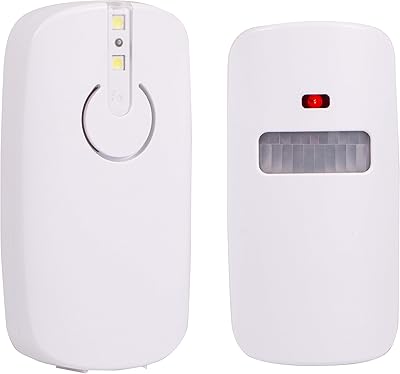
77%
88%
Motion Smoothness
83%
Build Quality & Materials
67%
App Control & Connectivity
81%
Load Capacity & Stability
84%
Time-Lapse Performance
More
GVM G5-J120D Motorized Camera Slider
76%
88%
Build Quality
84%
Motion Smoothness
66%
Remote Controller Usability
83%
Load Capacity
81%
Shooting Modes Versatility
More
Power Gear 36014-S1 Wireless Driveway Alarm
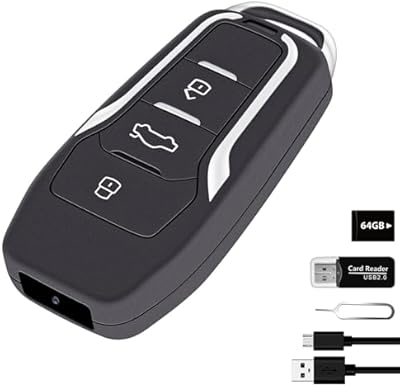
70%
91%
Ease of Installation
68%
Detection Reliability
54%
False Alert Frequency
72%
Wireless Range Performance
78%
Volume & Alert Audibility
More
KEHZKCT 64GB Mini Hidden Nanny Camera
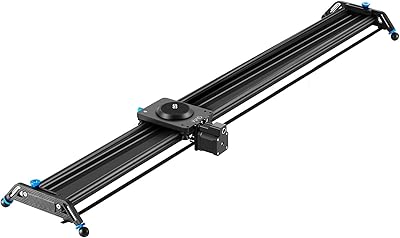
78%
88%
Disguise & Concealability
83%
Video Clarity
91%
Ease of Setup
62%
Battery Life
86%
Storage & Recording Capacity
More
Samsung Gear 360 (2017 Edition) 4K Camera
82%
91%
Video Quality
88%
Portability
65%
Battery Life
80%
Build Quality
85%
Ease of Use
More
NEEWER ER1-100 100cm Motorized Camera Slider
70%
78%
Motor Smoothness
61%
App Control & Connectivity
66%
Build Quality & Materials
71%
Ease of Setup
74%
Value for Money
More
Sound Around Gear Pro Sports Action Camera GDV285BK
80%
91%
Value for Money
93%
Waterproof & Durability
82%
Video Quality
85%
Battery Life
78%
Ease of Use
More
NEEWER ER1-120 120cm Motorized Camera Slider
79%
88%
Motion Smoothness
91%
Noise Level
84%
Build Quality
61%
App Control & Interface
79%
Remote Control (RT-08)
More

FAQ

No, and that is actually one of its clearest advantages over a lot of competitors. Everything is controlled directly on the unit itself using physical buttons — no Bluetooth pairing, no app download, no phone needed at all. You can leave your phone in your pocket or use it as your camera simultaneously.

Smartphones (iPhone and Android), GoPros, and lighter mirrorless cameras are the sweet spot. If you are shooting with a compact Sony or Fujifilm mirrorless body and a standard kit lens, you should be fine. Where it starts to struggle is with heavier full-frame bodies or larger lenses — the motor was not built to push that kind of load smoothly.

For most tabletop product shots, portrait reveals, and close B-roll moves, the base 20-inch track is genuinely workable. If you are planning wide landscape time-lapses or longer cinematic slides, you will want the extension tracks — just factor that into your budget upfront since they are sold separately.

Outdoors or in a room with ambient noise, it is mostly a non-issue. In a quiet indoor setting — especially if you have a directional mic running nearby — the motor hum is audible enough to be a real problem. If you are recording interview dialogue or voiceover while the slider is moving, you will likely need to position it away from the mic or avoid using it during takes with sound.

Yes, it supports horizontal, vertical, and inverted mounting. The inverted setup works well for overhead product shots or mounting below a surface for creative angles. Just note that heavier cameras can introduce more vibration when the track is not in its standard horizontal position.

Ping Pong mode sets the slider to automatically reverse direction when it reaches each endpoint, creating a continuous back-and-forth loop without you having to touch anything. It is particularly useful for solo shooting — set your framing, activate the loop, and step in front of the camera. It also works well for looping social media content or ambient B-roll that runs on repeat.

The stated runtime is around 2.5 hours, and most users doing standard indoor or controlled outdoor shoots find that figure holds up reasonably well. Cold weather and extended time-lapse sessions tend to drain it faster than the spec suggests, so if you are planning a long outdoor shoot, bringing a USB power bank as backup is a smart move.

Yes, extension tracks are available and can bring the total travel length up to 6 meters when fully extended. They are sold separately, not included in the base kit, so make sure you account for that additional cost if longer moves are central to your intended use.

It is actually one of the more beginner-friendly options at this price level, specifically because there is no software to learn. Most buyers report being up and running with usable footage within their first session. The motor-swapping process between slider and panorama mode has a short learning curve, but nothing that takes more than a couple of tries to get comfortable with.

The reinforced joints and metal track construction have earned consistent praise from creators who use this 2-in-1 slider regularly over months of travel. The main weak point flagged by long-term users is the plastic motor housing, which feels slightly less substantial than the rest of the kit. For occasional to moderate use, the build holds up well; if you are using it daily in demanding conditions, handle the motor unit with a bit more care.