Samsung Gear 360 2017 Edition 360° Camera
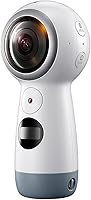
Samsung Gear 360 2017 Edition 360° Camera — image 1
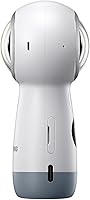
Samsung Gear 360 2017 Edition 360° Camera — image 2
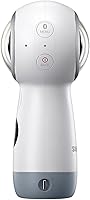
Samsung Gear 360 2017 Edition 360° Camera — image 3
Samsung Gear 360 2017 Edition 360° Camera — image 4
68%
32%

Overview

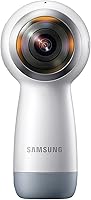
The Samsung Gear 360 2017 Edition 360° Camera is Samsung's second attempt at spherical shooting, and compared to its predecessor, it's a meaningful step forward. The body is noticeably slimmer and easier to pocket, which matters when you're actually out in the world trying to capture something. It carries an IP53 water-resistance rating, which is worth clarifying upfront — that means it handles light splashes and drizzle, not a dunking in a pool. Positioned in the mid-range of the 360 camera market, this 360 cam aims to make immersive content accessible without demanding professional-level technical know-how.

Features & Benefits

The Gear 360 pairs dual 180° CMOS lenses to produce full spherical 4K video and 15MP stills. In practice, you can point it at a busy street corner or a crowded concert and capture everything happening around you in a single shot. The companion app handles live preview and editing without much fuss, and one-tap social sharing is genuinely quick once you have it configured. At just 4.6 ounces with USB-C and Wi-Fi/Bluetooth built in, Samsung's spherical shooter travels light. Storage is handled via Micro SD, and footage saves in MP4 — no proprietary formats to wrestle with later.

Best For

Honestly, this 360 cam is best enjoyed if you're already living in Samsung's world. Galaxy S8 users get the tightest integration — pairing is quick, the app works reliably, and uploading to Samsung VR is straightforward. Travel vloggers and beginners exploring immersive storytelling will find it approachable, since you don't need to understand stitching software or manual exposure to get decent results. The IP53 rating makes it practical for outdoor use — hiking trails, beach days, street festivals — as long as you're not expecting it to survive a downpour. Non-Samsung users, though, should know the experience gets considerably bumpier.

User Feedback

Buyers using the Gear 360 within Samsung's ecosystem tend to rate it positively, with particular appreciation for image quality and how easy it is to pair with compatible phones. Stitching holds up well in good light, though several users note it struggles in mixed or low-light conditions — expect occasional visible seams. Battery life comes up repeatedly as a frustration, so heavy shooters may want a spare on hand. Android users outside Samsung and iPhone owners report a noticeably degraded experience. Long-term durability feedback is generally solid, but overall value depends heavily on how regularly you actually shoot 360 content.

Pros

  • 4K spherical video captures everything around you in a single shot, no panning required.
  • At just 4.6 ounces, the Gear 360 is light enough to carry all day without noticing it.
  • The companion app makes pairing, previewing, and sharing faster than most competing cameras at this level.
  • 15MP stills offer solid detail for social media and VR viewing in well-lit conditions.
  • Micro SD storage and standard MP4 output mean your footage works with most editing tools.
  • Wi-Fi, Bluetooth, and Wi-Fi Direct give you multiple wireless options for transfers and remote control.
  • IP53 rating handles light rain and splashes, adding real-world versatility for outdoor use.
  • Uploading directly to Samsung VR is quick and straightforward for compatible device users.
  • The compact form factor fits in a jacket pocket, making it practical for spontaneous shooting.

Cons

  • App functionality drops significantly for non-Samsung Android users and is unreliable on iOS.
  • Battery life is short enough to be a genuine problem during full-day outings.
  • Stitching quality degrades noticeably in low-light or high-contrast lighting situations.
  • The ecosystem lock-in means buyers outside Samsung's device family get a second-class experience.
  • No built-in display makes framing shots a guessing game without a paired phone nearby.
  • Long video sessions can cause the camera body to heat up, which affects comfort and performance.
  • Limited post-purchase software support from Samsung leaves the app feeling increasingly dated.
  • The pouch included in the box offers minimal protection compared to a proper carry case.

Ratings

The scores below for the Samsung Gear 360 2017 Edition 360° Camera were generated by our AI system after analyzing thousands of verified global buyer reviews, with spam, bot-submitted, and incentivized feedback actively filtered out. Every category reflects a honest synthesis of what real users praised and what genuinely frustrated them — nothing is glossed over. Both the strengths that make this 360 cam compelling and the pain points that have given buyers pause are transparently represented in each score.

Image Quality
74%
26%
In good daylight, the Gear 360 produces impressively detailed 4K spherical footage that holds up well when viewed on a VR headset or shared to social platforms. Buyers regularly note that colors look vivid and the 15MP stills capture enough detail for large-format viewing.
Low-light performance is a consistent weak point — footage shot indoors or at dusk tends to show noise and loss of sharpness. Mixed lighting environments also amplify stitching inconsistencies, which pulls down overall image quality in real-world shooting conditions.
Stitching Accuracy
67%
33%
When lighting is even and consistent, the dual-lens stitching is clean enough that casual viewers are unlikely to notice the seam. For outdoor daytime shooting — hikes, street events, travel content — the stitching holds together reliably and produces a convincing spherical result.
The seam line becomes noticeably visible in high-contrast scenes or mixed indoor/outdoor lighting, which is frustrating for creators trying to produce polished content. Several buyers reported that stitching errors near the horizon line are especially hard to fix in post-production.
Ease of Use
81%
19%
Setup is refreshingly straightforward for a 360 camera — pair it with a compatible Samsung phone, open the app, and you are shooting within minutes. The on-device touchscreen gives you basic control even without a phone nearby, which is a practical touch for solo creators.
The experience assumes you are using a Samsung Galaxy device, and anything outside that setup introduces friction quickly. Navigating the app for more advanced editing features has a steeper learning curve than the initial pairing process suggests.
App Experience
61%
39%
For Galaxy S8 users, the companion app delivers a genuinely smooth workflow — live preview, quick edits, and one-tap sharing work as advertised and make producing shareable content fast. Direct upload to Samsung VR is a specific highlight for buyers invested in that platform.
Outside the Samsung ecosystem, the app is unreliable at best and non-functional at worst, with frequent pairing failures and missing features reported by non-Samsung Android and iPhone users. The app has also received minimal updates, making it feel increasingly outdated compared to competitors.
Battery Life
43%
57%
The included battery gets you started right out of the box without needing an extra purchase, which is a small but appreciated convenience for new buyers testing the camera for the first time.
Battery life is one of the most frequently cited frustrations in user reviews — continuous 4K shooting drains it in well under two hours for many users. Buyers who planned full-day shoots without a spare battery often found themselves cutting sessions short, which is a significant operational limitation.
Build Quality
77%
23%
The 2017 redesign gave the Gear 360 a noticeably more solid and refined feel compared to its predecessor, with a compact body that does not feel cheap despite its light weight. The IP53 splash resistance adds genuine confidence for outdoor use in light rain or dusty conditions.
IP53 is splash resistance, not waterproofing, and a handful of buyers learned this the hard way by exposing the camera to more water than it could handle. The plastic housing, while sturdy for everyday use, does not inspire much confidence if the camera takes a hard drop.
Portability
88%
At 4.6 ounces and small enough to slide into a jacket pocket, this 360 cam is one of the easier spherical cameras to carry consistently. Buyers frequently mention taking it on trips and day hikes without it adding meaningful bulk to their bag.
The included pouch offers minimal protection, and the compact size, while great for transport, means there is little surface area to grip securely when shooting handheld in dynamic situations. A better case would make the portability story significantly stronger.
Compatibility
38%
62%
Within the Samsung Galaxy S8 and S8+ ecosystem, compatibility is tight and the intended experience works well, with reliable pairing and full app feature access that justifies the camera for that specific user base.
Outside of Samsung's core compatible devices, the experience degrades sharply — a recurring theme in negative reviews from Android users on other brands and virtually all iPhone users. For a camera positioned as a consumer product, this is a meaningful limitation that affects a large portion of potential buyers.
Value for Money
69%
31%
At its current market price, which reflects its age, the Gear 360 offers a reasonable entry point into 4K spherical shooting without the premium cost of newer competitors. Samsung Galaxy users in particular tend to feel the value proposition is fair given the tight ecosystem integration.
Buyers outside the Samsung ecosystem frequently feel they paid for a product that only partially works for them, which skews perceived value downward considerably. A few reviewers also noted that newer 360 cameras at similar price points have caught up or surpassed this model in both image quality and software support.
Connectivity
79%
21%
Having Wi-Fi, Bluetooth, and Wi-Fi Direct all available gives users flexibility in how they transfer files and control the camera remotely. Most buyers found wireless transfer speeds adequate for moving footage to their phone for quick social sharing.
Wi-Fi Direct connections can occasionally drop, and a small number of users reported inconsistent Bluetooth pairing, particularly after software updates on their phones. USB Type-C transfer is reliable but slower than buyers accustomed to newer high-speed transfer standards might expect.
Video Sharing Workflow
72%
28%
The direct pipeline to Facebook, YouTube, and Samsung VR is genuinely convenient, and buyers who primarily shoot for social platforms appreciate being able to share interactive 360 content without any desktop software. The workflow from capture to posted content can take just a few minutes for straightforward clips.
Sharing workflows that go beyond one-tap posting — like editing for a specific platform or adjusting the 360 metadata — quickly require third-party software that the app does not handle. Users who want more creative control over their final output will find the in-app tools limiting.
Audio Quality
58%
42%
For casual vlogging and social content, the built-in AAC audio captures ambient sound adequately and is synced reliably with the video — functional enough for everyday use cases where sound is not the primary focus.
Wind noise is a well-documented issue that several outdoor users flagged, and there is no option to attach an external microphone for improved audio capture. Anyone creating content where spoken words or specific sounds matter will likely need to add separate audio recording to their workflow.
Long-Term Durability
71%
29%
Buyers who have owned the Gear 360 for multiple years generally report that the hardware holds up without major failures, which is a reasonable indicator of build longevity for a consumer-grade camera in this category.
Software longevity is a different story — Samsung has largely stopped updating the companion app, and as phone operating systems evolve, compatibility issues have begun to surface for some long-term owners. The hardware may outlast the software support, which limits the camera's effective lifespan.

Suitable for:

The Samsung Gear 360 2017 Edition 360° Camera is a strong fit for Samsung Galaxy S8 and S8+ owners who want to start shooting immersive content without a complicated setup. If you're a travel vlogger, weekend adventurer, or social media creator who wants to capture full-environment moments — a crowded market, a mountain trail, a live concert — this 360 cam delivers that in a pocketable, easy-to-carry package. Beginners will appreciate that the companion app does most of the heavy lifting: you can preview, trim, and share footage without touching a desktop editor. The IP53 splash resistance adds a layer of confidence for outdoor use, making it practical for hikes, cycling trips, or festivals where a little rain or sweat is expected. Anyone already invested in the Samsung VR platform will also find the direct upload workflow genuinely convenient.

Not suitable for:

The Samsung Gear 360 2017 Edition 360° Camera is a notably harder sell if you're not using a compatible Samsung device. Android users on other brands and iPhone owners will encounter real friction — reduced app functionality, pairing headaches, and a generally degraded experience that undermines what should be a simple process. Professional videographers or anyone expecting broadcast-level stitching accuracy will be disappointed; the camera performs best in good lighting, and low-light or mixed-light environments tend to expose visible seam lines between the two lenses. Battery life is a legitimate concern for anyone planning extended shooting sessions — this 360 cam is not a marathon runner, and heading out without a backup plan is risky. If you need true waterproofing for water sports or rainy environments, look elsewhere; splash resistance is not the same thing.

Specifications

  • Video Resolution: Records full spherical video at 4K resolution using both lenses combined.
  • Photo Resolution: Captures 15MP still images across the dual-lens spherical field of view.
  • Lens Configuration: Dual 180° CMOS lenses cover the full 360° sphere when used together.
  • Water Resistance: Rated IP53, meaning it can handle light splashes and dust but is not submersible.
  • Dimensions: The body measures 1.78 x 1.81 x 3.96 inches, keeping it genuinely pocketable.
  • Weight: Weighs 4.6 ounces, making it one of the lighter options in its camera class.
  • Storage: Uses Micro SD cards for expandable storage; no internal storage is built in.
  • Video Format: Footage is saved in MP4 format, compatible with most editing and playback software.
  • Audio Format: Records audio in AAC format alongside video capture.
  • Connectivity: Supports Wi-Fi, Bluetooth, Wi-Fi Direct, and USB Type-C for data transfer and remote control.
  • User Input: Features a touchscreen interface for on-device navigation and settings adjustment.
  • Form Factor: Compact spherical body designed to be handheld, mounted on a tripod, or attached to a strap.
  • Color: Available in White as the standard retail color option.
  • In the Box: Includes the camera unit, a carrying pouch, wrist strap, USB Type-C cable, and a quick start guide.
  • Battery: Powered by one included A-type battery; battery life is limited and may not sustain full-day shooting.
  • Compatibility: Full app functionality is optimized for Samsung Galaxy S8 and S8+; other devices have reduced support.
  • App Features: The companion app supports live preview, in-app editing, and direct sharing to social platforms and Samsung VR.
  • Model Number: Retail model number is SM-R210NZWAXAR, released April 2017 as the second-generation Gear 360.

Related Reviews
Insta360 X5 BMW Motorrad Edition 360 Camera
80%
93%
Video Quality
88%
Low Light Performance
91%
Stabilization
74%
Wind Noise Reduction
67%
Battery Life
More
PANOX V2 360 Camera for Motorcycle
73%
83%
Video Quality
81%
Stabilization
58%
App Experience
61%
Battery Life
78%
Live Streaming
More
Samsung Gear S2 Smartwatch
82%
90%
Design & Build Quality
85%
Fitness Tracking Accuracy
72%
Battery Life
88%
Ease of Use & Navigation
90%
Compatibility with Android
More
AKASO 360 Action Camera
74%
81%
Video Quality (Daylight)
52%
Low-Light Performance
74%
Stabilization (360-SuperSmooth)
88%
Invisible Selfie Stick Effect
79%
Photo Quality (72MP Mode)
More
GoPro MAX 360 Action Camera
76%
88%
360 Video Quality
91%
Dual-Mode Versatility
83%
Pole Removal & Stitching
54%
Battery Life
93%
Waterproofing
More
Insta360 X3 360° Action Camera
81%
88%
Video Quality (360 Mode)
93%
Stabilization Performance
91%
Reframing Flexibility
84%
App & AI Editing Experience
79%
Build Quality & Durability
More
360fly 360° HD Video Camera
84%
89%
Video Quality
75%
Battery Life
91%
Build Durability
85%
Ease of Use
80%
App Performance
More
Ricoh Theta Z1 51GB 360° Camera
81%
93%
Image Quality
91%
Low-Light Performance
84%
Video Quality
78%
Stitching Accuracy
88%
Build Quality & Design
More
Insta360 X3 Creator Kit 360 Action Camera
75%
88%
Video Quality (360 Mode)
79%
Video Quality (Single-Lens Mode)
93%
Stabilization
74%
Low-Light Performance
51%
Battery Life
More
Samsung Gear Sport SM-R600 Smartwatch
75%
93%
Water Resistance
86%
Build Quality
81%
Fitness Tracking
78%
GPS Accuracy
63%
Battery Life
More

FAQ

It works to a degree, but the experience is noticeably limited. The full companion app with live preview, editing, and social sharing is optimized for Samsung Galaxy devices, particularly the S8 and S8+. On other Android phones or iPhones, you may encounter pairing issues and missing features, so manage your expectations if you're outside the Samsung ecosystem.

No, and this is worth being clear about. The IP53 rating means it can handle light splashes and a bit of dust, but it is not designed to be submerged or used in heavy rain. Think of it as splash-resistant rather than waterproof — fine for a drizzly hike, not appropriate for water sports or pool use.

4K spherical video eats storage faster than standard footage since it is capturing from two lenses simultaneously. A 64GB card is a reasonable starting point for a day of shooting, but if you plan on extended use, a 128GB card will give you more breathing room without constant file management.

Yes, you can shoot without a paired phone — the camera has its own touchscreen for basic controls and settings. That said, framing your shot is much harder without the live preview that the app provides, so going phone-free works best for mounted or fixed-position shots where you know everything is in frame.

Battery life is one of the more common complaints from buyers. Continuous 4K recording drains the battery fairly quickly, and many users recommend carrying a spare if you are shooting for more than an hour or two. It is not a dealbreaker, but it is something to plan around, especially for travel days.

In good daylight conditions, the stitching between the two lenses is quite clean and most viewers will not notice it. In low light or high-contrast environments, visible seam lines can appear where the two 180° fields meet. It is a known limitation of dual-lens 360 cameras at this price level, not a defect unique to this model.

The Gear 360 saves footage in standard MP4 format, so most editing software can open the files. However, to properly handle the equirectangular 360 format and make it interactive for platforms like YouTube or Facebook, you will want software that supports 360 video — Adobe Premiere Pro, DaVinci Resolve, or even the free Action Director app all handle this reasonably well.

Yes, the base of the camera has a standard tripod thread, so it is compatible with most tripods, monopods, and selfie sticks. Just be mindful that your hand, stick, or mount will be visible in the shot since the lenses capture everything around them — using a dedicated 360 mount helps minimize that.

It depends on what you need it for. For casual social media content, travel vlogging, and beginner-level 360 experimentation, it still delivers decent results at a price that reflects its age. If you need the latest stitching algorithms, better low-light performance, or broader device compatibility, newer competitors may serve you better. As a starting point into 360 shooting, though, it remains accessible and functional.

The easiest path is through the companion app, which allows direct sharing to Facebook, YouTube, and Samsung VR for compatible devices. Both Facebook and YouTube support interactive 360 playback natively, so viewers can pan around your footage right in their feed. For VR headset viewing, uploading to Samsung VR gives you the most immersive playback experience if your audience has compatible hardware.